
Sulfur Filter Well Water: Eliminate Odors and Protect Your Pipes
That unmistakable "rotten egg" smell isn't just a nuisance—it's your well water's way of telling you something is wrong. The culprit is hydrogen sulfide gas, a problem we see all the time in Southwest Florida's groundwater. The good news is that a dedicated sulfur filter for well water from Water Medic is a reliable, permanent fix that gets rid of the smell and protects your home's plumbing.
Why Your Well Water Has That Rotten Egg Smell
If you've ever braced yourself for a rotten egg smell before turning on the faucet, you know exactly what we're talking about. It's one of the most common complaints we hear from homeowners with private wells, especially here in Southwest Florida. That odor comes directly from hydrogen sulfide (H₂S) gas dissolved in your water.
So, where does it come from? Usually, it's one of two things. It could be naturally occurring sulfates in the groundwater that certain bacteria feed on, converting them into H₂S gas. Or, it might be from sulfur-reducing bacteria that have set up shop in your well system, thriving where there's little oxygen.
Either way, the result is the same: foul-smelling water that can also tarnish your silverware, leave stains on your laundry, and slowly eat away at your pipes and plumbing fixtures.

The Scale of the Sulfur Problem
This isn't just an isolated issue affecting a few homes; high sulfate levels are a major challenge for groundwater systems across the country. An EPA report on rural water systems found sulfate in 55% of groundwater supplies. Some of those wells had concentrations hitting 1,000 mg/L, which is way beyond what's considered acceptable.
Ignoring the problem simply isn't an option. While hydrogen sulfide is the usual reason for that smell in your well, it’s worth noting that a similar sulfuric scent is also added to natural gas as a safety warning for leaks. The smell is a clear signal that something needs your attention.
With over 25 years of experience tackling this exact problem right here in Southwest Florida, we've seen it all. We know the local water chemistry inside and out, which lets us pinpoint the root cause and install a sulfur filter for well water that solves the problem for good.
Getting rid of that sulfur smell starts with figuring out where it's coming from. If you're curious, you can find answers to other common questions from homeowners on our well water FAQs page.
This guide will walk you through everything you need to know, from testing your water to choosing the right filtration system for your home.
Where Does That Rotten Egg Smell Actually Come From?
To get rid of that rotten egg smell for good, you first have to know what you're up against. Think of the ground under your house as a massive, ancient sponge made of limestone and other porous rocks. Over millions of years, this sponge has been soaking up all sorts of minerals. When you turn on your tap, you're pulling water straight from this complex underground system, and that's where the sulfur problem begins here in Southwest Florida.
The issue really boils down to two main culprits that are often found together. First, you have naturally occurring sulfates. These are just minerals that dissolve into the groundwater as it flows through our limestone aquifers. On their own, sulfates are completely odorless, but they create the perfect conditions for the second part of the problem.
The second, and much more obvious, part of the equation is a specific type of microorganism: sulfur-reducing bacteria. These little guys love environments with very little oxygen, like the inside of a well casing or your home's plumbing. They essentially "eat" the sulfates in the water, and their digestive process produces hydrogen sulfide (H₂S) gas. That gas is what you're smelling.
Florida's Unique Geological Challenge
The groundwater here is complicated. While some sulfates get into the water from the atmosphere, research shows that most of it comes from those geologic and biological processes right under our feet. Unfortunately, human activity can make a bad situation worse. Things like agricultural fertilizers and wastewater can seep into the ground, adding even more "food" for those sulfur-producing bacteria. If you want to dive deeper, this in-depth research on groundwater contaminants breaks down the diverse sources.
Understanding these local factors is everything. It's the reason a generic sulfur filter for well water you might grab off the shelf at a big-box store almost never works long-term. Those systems simply aren't built for the unique chemistry of our local water. They might cover up the smell for a little while, but they don't tackle the root of the problem, leaving you right back where you started.
A real, lasting solution always starts with a proper diagnosis. You can't fix a problem if you don't truly understand it, which is why a professional water analysis is the non-negotiable first step.
A comprehensive water test tells you everything you need to know. It will measure the exact concentration of sulfates, confirm the presence of sulfur bacteria, and identify other troublemakers like iron that can clog up a filtration system. Only with that data can you choose a system that's properly sized and configured to knock out that sulfur smell for good. Our team specializes in this diagnostic work, making sure you get the right fix the first time.
Finding The Right Sulfur Filtration System
Picking the right sulfur filter for your well isn't a one-size-fits-all deal. The best technology for your home depends entirely on its unique water chemistry, and jumping into a solution without a proper diagnosis is like trying to find the right key for a lock in the dark.
Fortunately, our team at Water Medic can install several tried-and-true systems to get rid of that rotten egg smell for good. Some systems essentially "air out" the problem, while others use a chemical reaction to trap it. The key is to match the solution to the source and concentration of sulfur in your well. Making that decision starts with understanding the main players in sulfur filtration.
This decision tree gives you a great visual of how different well water odors point to different problems, each needing its own specific fix.
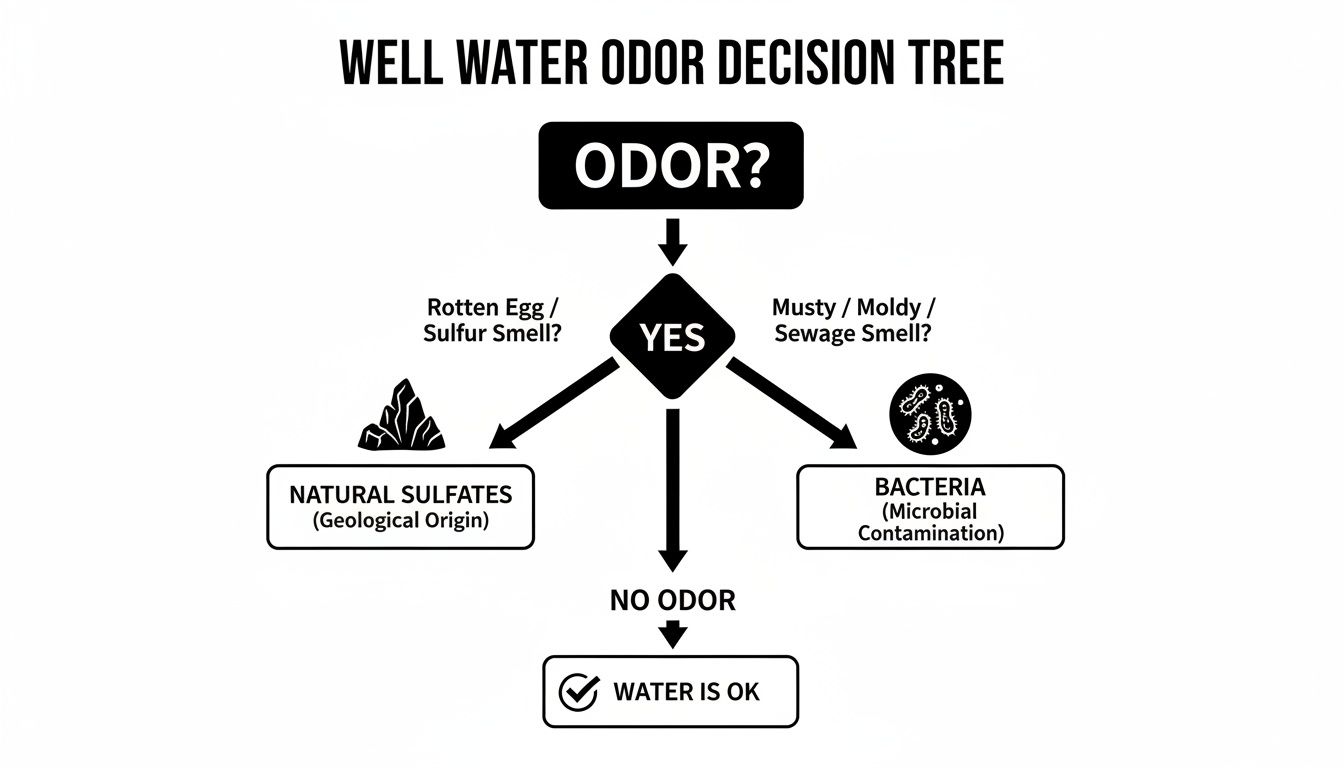
The big takeaway here is that while that classic rotten egg smell points to sulfur, other issues like a musty or earthy odor are often caused by bacteria. This is exactly why a comprehensive water test is the non-negotiable first step.
Comparing Common Sulfur Removal Technologies
To help you navigate the options, we've put together a quick comparison of the most common and effective sulfur removal technologies we install. This table breaks down how each one works, what situations it's best for, and our honest take on its performance based on years of fieldwork right here in Southwest Florida.
| Filtration Method | How It Works | Best For | Pros and Cons | Our Expert Take |
|---|---|---|---|---|
| Aeration | Injects oxygen into the water, which reacts with hydrogen sulfide gas (the smell) and turns it into a solid particle that can be filtered out. | Moderate to high sulfur levels (over 1 ppm), especially when it's the primary issue. | Pros: Very effective, chemical-free, low operating cost. Cons: Requires a secondary filter, can be noisy, takes up more space. | This is a workhorse solution. It's our go-to for many homes because it's so reliable and doesn't require adding chemicals to your water. It just breathes the problem out. |
| Oxidizing Filters | Uses a special media (like manganese greensand or other catalytic materials) to create a chemical reaction that changes the sulfur gas into a solid, trapping it in the filter bed. | Moderate sulfur levels (1-6 ppm) and situations where both sulfur and iron are present. | Pros: All-in-one tank, tackles multiple contaminants. Cons: Media needs periodic regeneration or replacement, can be sensitive to water pH. | These are fantastic dual-purpose systems. If you've got that "rotten egg and rusty nail" combo smell, an oxidizing filter is often the most efficient fix. |
| Activated Carbon | Adsorbs (not absorbs) hydrogen sulfide gas, trapping the odor molecules in its porous surface, much like a sponge. | Very low sulfur levels (under 1 ppm) or as a final "polishing" step. | Pros: Simple, inexpensive initial cost. Cons: Media gets "full" quickly and needs frequent replacement, not suitable for high sulfur. | Think of carbon as a great finishing touch, not the main event. It's perfect for minor odor issues but will get overwhelmed quickly with a real sulfur problem. |
| Ozone Injection | A powerful oxidizer, ozone gas is injected into the water, instantly destroying sulfur compounds and also killing bacteria. | High to severe sulfur levels, and when disinfection is also needed for iron bacteria. | Pros: Extremely effective, fast-acting, kills bacteria. Cons: Higher upfront cost, more complex system to maintain. | Ozone is the heavy hitter. It's a powerful, chemical-free option for tough water challenges, especially when you're dealing with bacteria on top of a strong sulfur smell. |
Ultimately, the right system is the one that's sized and configured for your water. A system that works wonders for your neighbor might be completely wrong for your well, even if you live on the same street.
The single most important factor in selecting the right system is a professional water analysis. Without knowing your exact sulfur levels, pH, and the presence of other contaminants like iron or tannins, any choice is just a guess.
A Closer Look At Other Filtration Methods
While the methods in the table are the most common, a few other technologies play a role depending on the situation.
-
Specialized Carbon Filters: Standard carbon filters are great for taste and odor, but they have their limits with sulfur. However, some advanced systems use catalytic carbon, which is specifically designed to handle higher levels of hydrogen sulfide. You can learn more about specialized carbon filters to see how they fit into a complete whole-home solution.
-
Whole-House Reverse Osmosis (RO): This is the ultimate purification powerhouse. A whole-house RO system uses pressure to force water through a very fine membrane, removing nearly everything that isn't pure H₂O, including the sulfates that cause the smell. While it delivers incredibly pure water, it's typically reserved for the most severe contamination issues due to its cost, complexity, and water usage.
The best path forward always begins with data. We can help you get a clear picture of what's in your water and recommend a sulfur filtration system that will provide a lasting, effective solution for your home.
The Hidden Costs of DIY Water Filter Installation
It’s tempting to try and save a few dollars by installing a sulfur filter for well water on your own. On paper, it looks straightforward. But when you’re dealing with the complexities of a modern well system, a small mistake during a weekend project can quickly spiral into some very expensive problems.
I’ve heard this story more times than I can count. A homeowner heads to the hardware store, grabs a filter, and spends a Saturday putting it in. For a week or two, everything seems great.
Then the trouble starts. The shower pressure suddenly drops. A slow, persistent drip appears at one of the fittings. And worst of all, that nasty rotten egg smell starts creeping back into the water, sometimes even stronger than before.
This isn't just bad luck. It’s often the result of a system that wasn't sized correctly for the home’s water demand or wasn't plumbed properly to work with the existing well pump and pressure tank. What started as a cost-saving measure has now become a source of constant frustration and mounting repair bills.
Why Professional Installation Matters
Connecting a whole-house filter is so much more than just cutting into a pipe. It requires a deep understanding of your entire water system—from the horsepower of your well pump to the unique water chemistry we see here in Southwest Florida.
A professional gets it right from the start, making sure every component works together in harmony. We calibrate the system to your home's specific flow rate and water quality, preventing common DIY pitfalls like pressure loss or filtration that doesn't actually work. Getting it done right the first time is the best way to avoid emergency plumbing calls and the cost of replacing equipment that failed way too early.
Choosing a professional installer isn't just about convenience; it's about protecting your investment. Most manufacturers' warranties are voided by improper installation, leaving you on the hook for any future equipment failures.
When you look at the big picture, professional installation is almost always the most cost-effective way to get clean, odor-free water. It buys you peace of mind, guarantees your system performs at its best from day one, and saves you from the expensive headache of fixing a project gone wrong.
If you’re curious, you can contact us for a free estimate to see just how affordable a professional, worry-free installation can be. Let our team handle the technical stuff so you can just turn on the tap and enjoy the good water.
Keeping Your Sulfur Filter Working Like New
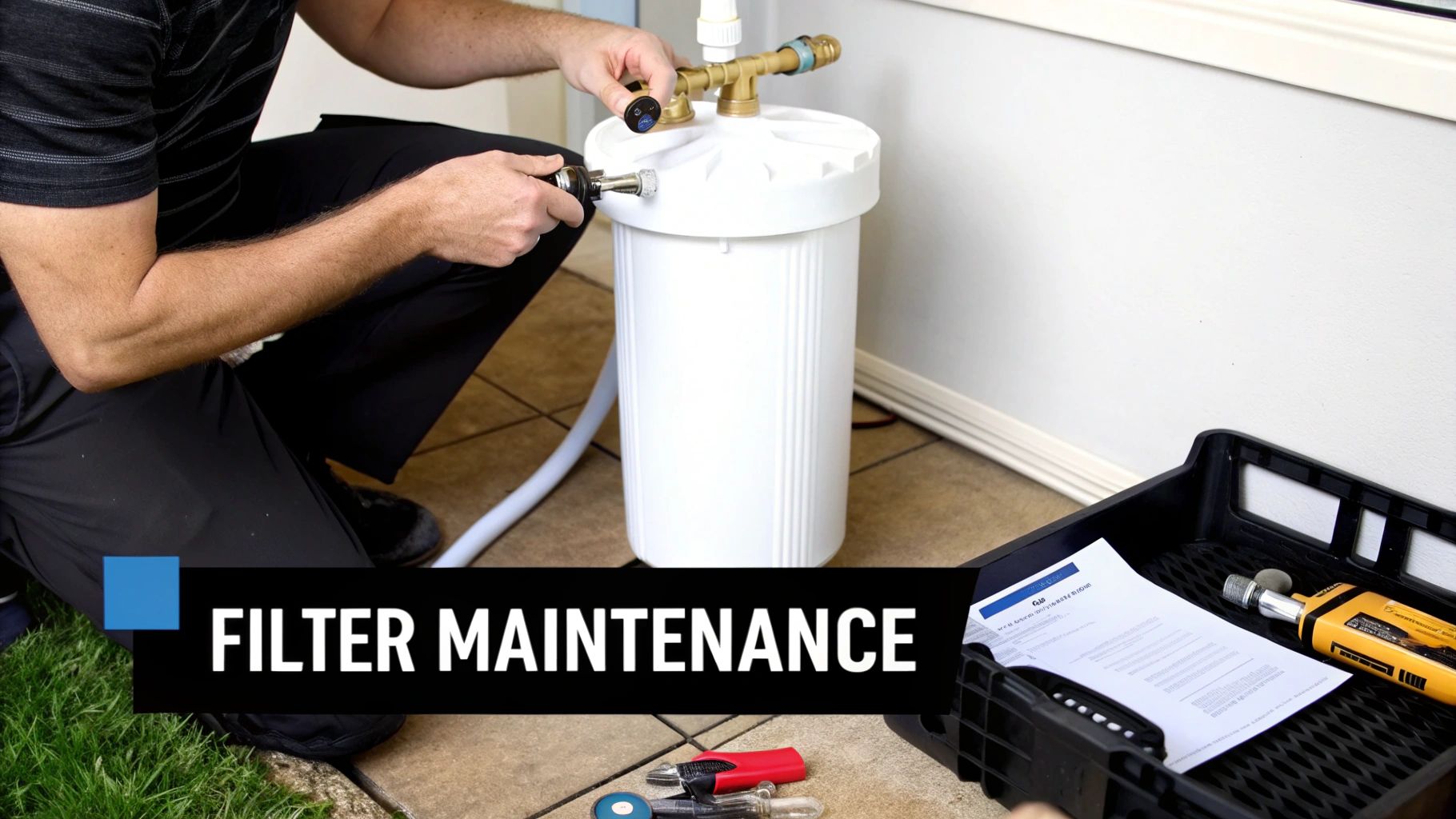
You’ve invested in a sulfur filter to protect your home and family, and just like any other important piece of equipment, it needs a little routine care to keep it performing at its best. Think of it like changing the oil in your car—it’s the simple, consistent upkeep that prevents major headaches and costly repairs down the road. If you let it slide, you're just inviting that nasty rotten egg smell to come right back.
This isn't just a friendly recommendation; it's essential. Contaminated groundwater is a serious issue affecting millions. Globally, an estimated 17 million people are exposed to health risks from groundwater with sulfate levels above what the WHO considers safe. Even here in the U.S., surveys have found sulfate concentrations soaring as high as 770 mg/L. These numbers drive home why a reliable sulfur filter for well water is so critical, especially with Southwest Florida’s unique limestone aquifer geology. Learn more about the global impact of groundwater sulfate.
Essential Maintenance for Your System
So, what does this "upkeep" actually look like? The exact checklist will vary based on your specific system, but most filters depend on a few key maintenance tasks to keep them running smoothly.
-
Filter Media Regeneration: If you have an oxidizing filter, its job is to trap sulfur particles. Over time, that filter media gets full. Regeneration is just a fancy word for a cleaning cycle that flushes out all those trapped contaminants, giving the media a fresh start.
-
Backwashing Cycle Checks: Both aeration and oxidizing systems use a backwashing cycle to rinse the filter media and keep it from getting clogged with gunk. You’ll want to make sure this cycle is programmed correctly and running on schedule. If it’s not, water flow and filtration quality will suffer.
-
Pre-Filter Replacement: Many setups include a sediment pre-filter as the first line of defense, catching sand, silt, and other larger particles. These cartridges need to be swapped out every few months, otherwise, they’ll clog up and kill your home's water pressure.
Sticking to a regular maintenance schedule is the secret to keeping your water clean and your system running for years. It’s no surprise that homeowners increasingly prioritize easy home upkeep, as simple maintenance routines add a ton of value and peace of mind.
Professional Care for Ultimate Peace of Mind
Let's be honest, keeping track of these maintenance tasks can feel like one more thing on an endless to-do list. That’s where we can step in. Our maintenance plans are designed to take the burden completely off your shoulders, ensuring your equipment is always in top shape.
Professional maintenance isn't just for convenience—it's about protecting your investment. We make sure your system is finely tuned to protect your plumbing and appliances, guaranteeing clean, odor-free water all year long.
When our experts handle your system’s upkeep, there’s no guesswork involved. We’ll take care of the filter changes, double-check all the system settings, and make sure every component is working exactly as it should. Take a look at our hassle-free monthly maintenance plans and let us do the work for you.
Got Questions About Sulfur Filters? We've Got Answers.
When you're dealing with well water issues, a lot of questions can pop up. It's completely normal. To help you sort through it all, here are some straightforward answers to the questions we hear most often from homeowners right here in Southwest Florida.
How Long Does a Sulfur Filter Last?
The honest answer? It really depends on the type of system you choose and just how much sulfur is in your water. Think of it like tires on a car—the quality and how hard you drive them matters.
A basic activated carbon filter might need its media replaced every 1 to 3 years. On the other hand, a more robust system, like one using an oxidizing filter, can often go for a solid 5 to 10 years before the media needs to be changed out.
Our goal is always to install high-quality, durable systems built for the long haul. Plus, our professional maintenance plans are designed to help you get every last bit of life out of your equipment, keeping it running at peak performance year after year.
Will a Sulfur Filter Get Rid of the Iron, Too?
Yes, absolutely. Many of the best sulfur removal systems are fantastic at tackling iron at the same time. This is a huge win for homeowners since sulfur and iron often show up together, causing that one-two punch of rotten egg smells and ugly rust-colored stains.
Systems that use aeration or oxidation are especially good at knocking out both problems. The key, however, is knowing exactly what you're up against.
The only way to know for sure is with a professional water test. We can analyze your water and recommend a single, efficient system that targets all your specific contaminants, saving you money and hassle down the road.
What's the Average Cost of a Whole House Sulfur Filter?
The price tag can swing quite a bit based on the technology, the size of your home, and how severe your sulfur problem is. Some filters might seem cheaper upfront, but they often require more maintenance or don't solve the problem completely.
More advanced systems, like aeration or oxidation, tend to be a better long-term investment because they offer a more reliable and permanent solution.
We're big believers in transparency. That's why we offer free, no-pressure consultations where we come out, test your water, and give you a detailed quote tailored specifically to your home. You'll know exactly what to expect, with no surprises.
Ready to finally enjoy fresh, clean, odor-free water from every single tap in your house? Contact Water Medic of Cape Coral today for a free water analysis and a personalized quote. Visit us at https://watermedic.com to schedule your appointment.