
Best Time to Spray for Mosquitoes: Expert Timing 2026
Last night's backyard plan probably looked simple enough. A few chairs by the pool, the grill going, kids in and out of the water, maybe a late dinner after sunset. Then the mosquitoes showed up right on cue, and the whole evening turned into a retreat indoors.
That is a common mistake. Property owners spray at the wrong time, in the wrong weather, then blame the product when timing was the primary problem. Mosquito control works best when you treat adult mosquitoes during their active window, not when it is convenient. Public-health guidance says dusk is the best time for fogging adult mosquitoes, and the practical advice for property care stays consistent, late afternoon or early evening gives you the best chance to contact flying adults while reducing spray loss from heat and UV exposure.
That same timing mindset matters around pools, fountains, birdbaths, and other water features. If you refill them with poor-quality water, you make mosquito prevention harder and create more work for yourself later. A whole-house reverse osmosis system keeps those refills cleaner from the start, which supports a tighter mosquito-control routine instead of working against it.
Introduction to Mosquito Spray Timing
A Cape Coral family can do everything right on paper and still lose the evening. They light the grill too early, run the yard fan, and spray in the middle of a hot afternoon. By the time the sun drops low enough to make the patio comfortable, mosquitoes are already active, and the treatment has done little more than drift and evaporate.
The best time to spray for mosquitoes is a timing decision, not a luck decision. Adult mosquitoes are most active at dawn and dusk, so that is when spray has the best chance to hit flying adults and reduce pressure around the property. Dusk is the better choice for fogging, because contact with active mosquitoes is highest then. If you want real knockdown, spray when the mosquitoes are out, not when the deck is full.
Timing beats brute force
Late-day treatment usually makes more sense than a random daytime pass because heat works against you. Midday spraying loses effectiveness faster, especially when surfaces are hot and the air is moving. Spray also has to cover more than the patio. Pool decks, shaded corners, and the edges of landscaping all matter, because that is where mosquitoes settle and wait.
Operational guidance also points homeowners toward repeat applications every 21 to 30 days during the active season, because one treatment does not hold the line for long (Specter Service).
Practical rule: if you only spray once and call it done, you are not controlling mosquitoes. You are interrupting them.
The best operators think in terms of windows, not wishful thinking. They watch the clock, the weather, and the local mosquito cycle. They also keep the water side of the property in order, because clean refill water and clean surroundings reduce the mess that encourages nuisance conditions around patios, pools, and decorative features. A whole-house reverse osmosis system fits that approach well, because it helps keep refill water cleaner before it ever reaches the pool or other water features. That gives mosquito control one less problem to fight.
Understanding Mosquito Activity Patterns
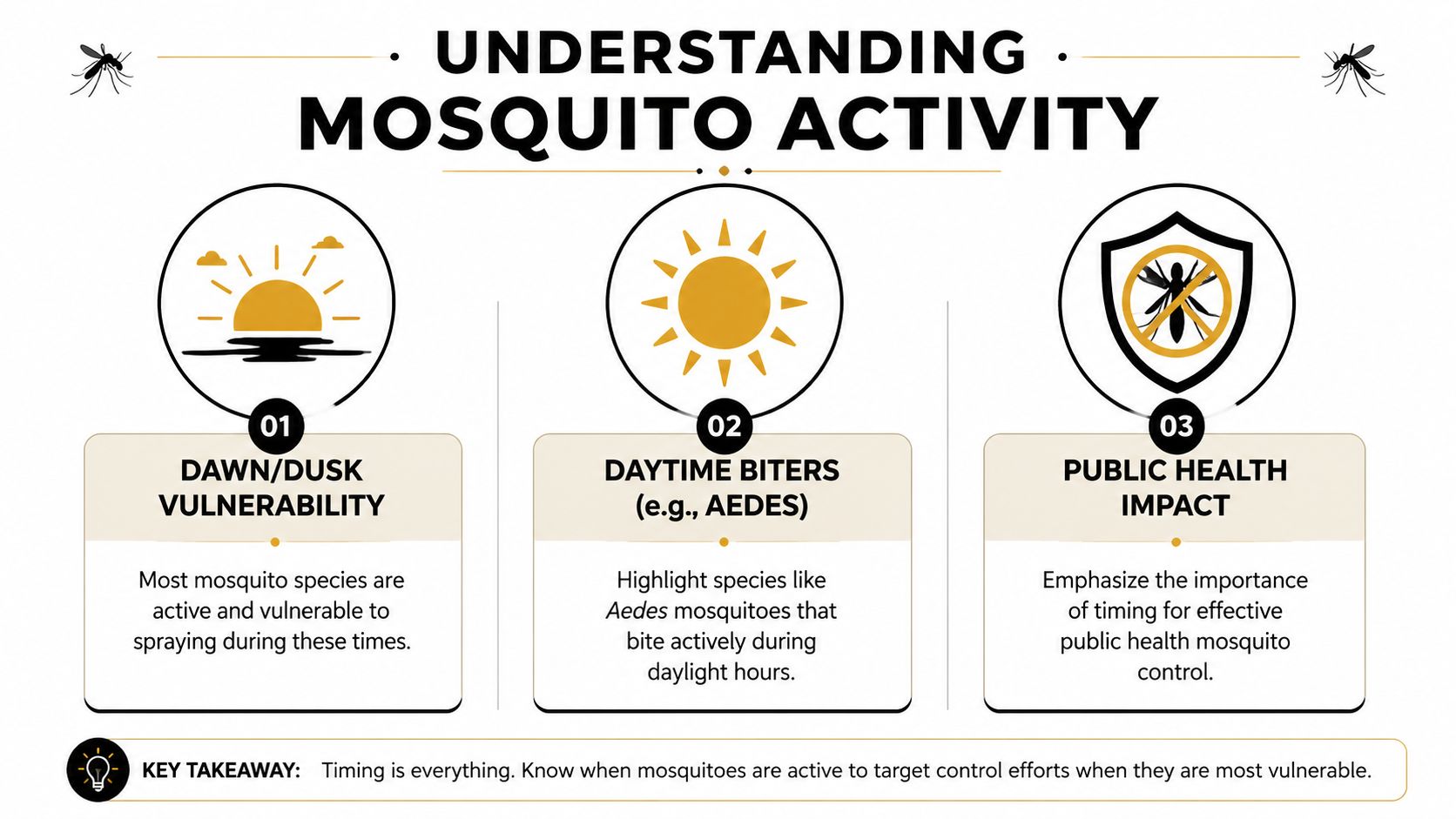
Mosquitoes move on their own schedule, and property owners who ignore that schedule waste spray. The best results come when you target adult mosquitoes during dawn and dusk, because that is when they are most active and most likely to be hit by treatment (Tick Control).
Why the clock matters
Direct sun works against spray. Heat can break down insecticides faster, and mosquitoes usually stay tucked into shaded, damp resting spots when midday conditions are harsh. A hot-afternoon application often misses the insects you want to control and leaves you with more drift and less useful coverage.
Species behavior still matters. Some mosquitoes bite during the day, so no one should treat a single hour as the only workable window. For adult control around homes, the practical rule stays the same, spray when the mosquitoes are active and airborne, not when they are hidden in cover. Public-health and pest-control guidance keeps steering homeowners toward the cooler edges of the day for that reason.
The window most homeowners should use
Use a simple rule. Spray in late afternoon through dusk, or early morning before the day heats up. That timing lines up with the mosquito-activity pattern and gives the product a better chance to land where it counts. The point is not to chase a perfect minute on the clock. The point is to match treatment to mosquito behavior and to avoid wasting product in harsh daytime conditions.
Homes with steady evening mosquito pressure need consistent scheduling, not random passes. One-off daytime spraying looks productive, but it often misses the primary activity window. If your yard stays active after sunset, treat for that period and keep the schedule steady through the season.
Keep the water side of the property in order, too. Clean refill water and cleaner surfaces reduce the conditions that let mosquitoes linger around patios, pools, and decorative features. A whole-house reverse osmosis system supports that effort by helping keep refill water cleaner before it reaches the pool or other water features, which gives mosquito control one less problem to fight.
Weather and Local Conditions in Southwest Florida
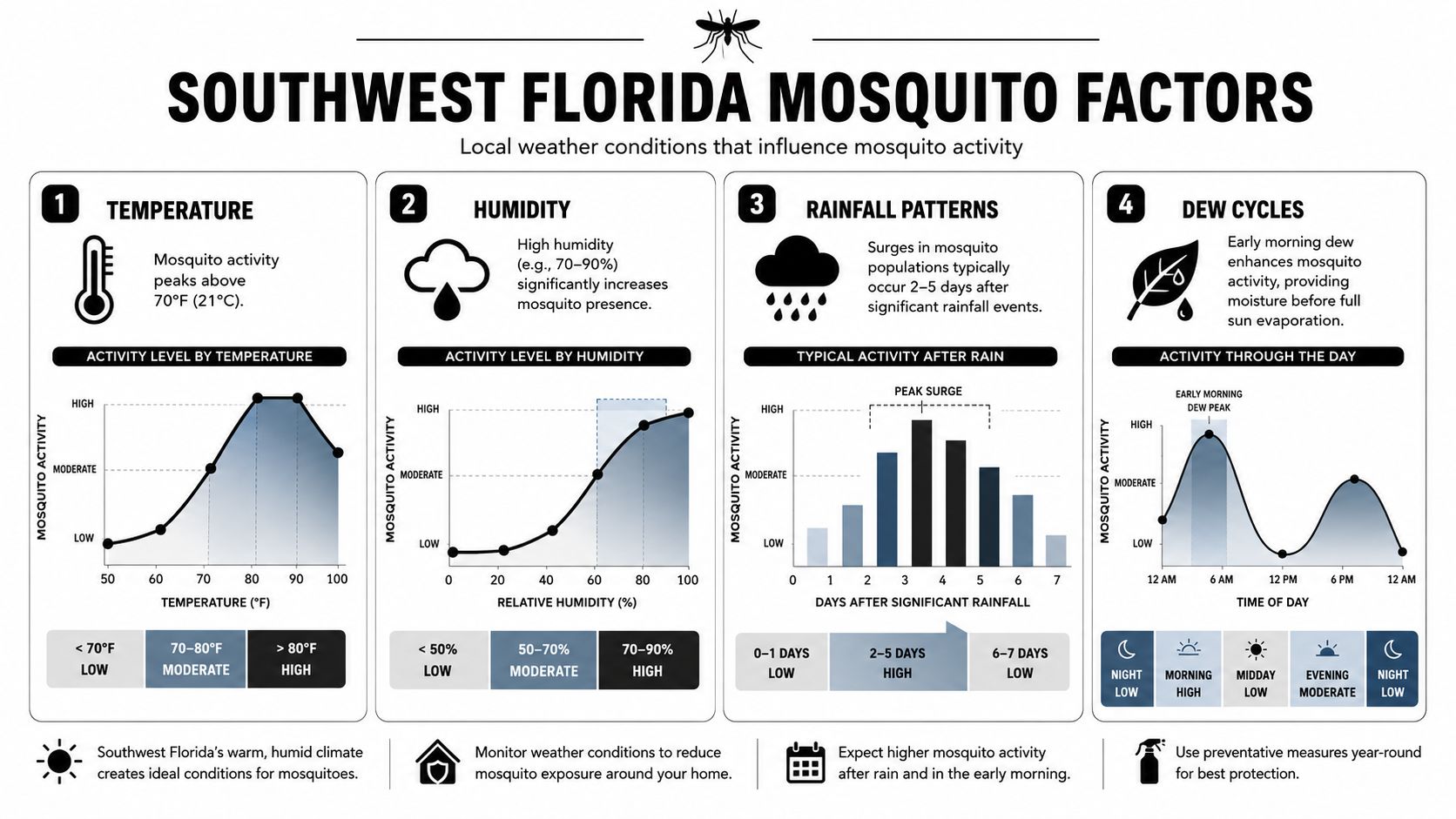
Southwest Florida changes the rules. Heat lingers, humidity hangs in the air, and rain can reset the whole yard in one afternoon. That means the best time to spray for mosquitoes depends on more than daylight. It depends on whether plants are dry, wind is low, and the spray can stick where it needs to.
Dry surfaces beat wet assumptions
County vector-control guidance is blunt about this, spray when plants are dry, wind is low, and the treatment is timed to active mosquito periods, often a day after rainfall (Cass County Vector Control). That advice matters in humid coastal areas because wet foliage and recent irrigation can weaken barrier sprays before they have a chance to do their job.
A good operator doesn't spray right after a shower and hope for the best. They wait for the leaves to dry, check that the wind isn't carrying product away, and then hit the property when mosquitoes are moving. That's the difference between a visible mist and meaningful control.
Mosquito work gets better when you stop thinking only about time of day and start thinking about surface conditions.
Rain, dew, and heat all change the outcome
Afternoon storms and morning dew both push mosquito behavior and treatment results in different directions. After rain, standing water and damp plant cover can make mosquitoes more active around the yard. Early morning dew can keep surfaces wet long enough to interfere with coverage if you spray too early. Heat also matters because a hot deck or wall can shorten how long product stays effective.
The practical play is simple. After rain, inspect standing water, let foliage dry, and then treat in the cooler active window. If irrigation ran late, don't rush the spray just because the calendar says it's time. In this market, weather beats habit every time.
Safety When Spraying Near Pools and Water Systems
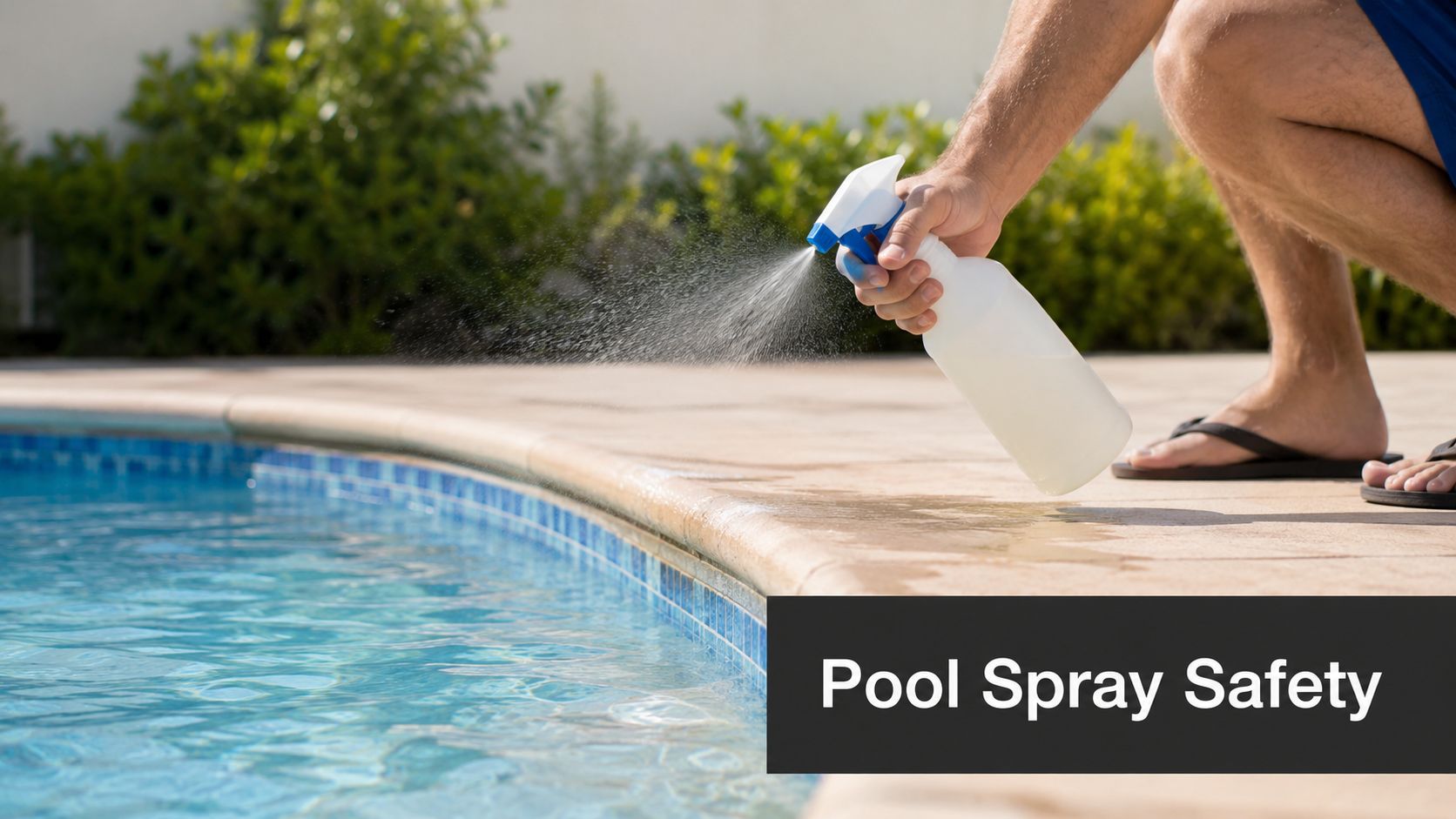
A pool deck is not the place for sloppy spraying. If you're treating around water features, the goal is to control mosquitoes without turning the swim area into a chemical mess. That means you protect the water, keep drift down, and time the work so people and pets aren't in the way.
Use the pool area like a controlled zone
Start by clearing the deck. Move towels, cushions, toys, and food out of the spray path. If the treatment is going around a pool, keep the spray directed at the perimeter, vegetation edges, and resting zones where mosquitoes hide, not directly into the water or across open lounge space. For pool owners who want a clean reference point for ongoing care, this pool service resource is worth a look.
Don't spray into a breeze and hope it lands where you want. Wind carries product fast across coping, screens, and furniture, and the whole job gets sloppier from there. Keep the treatment focused, and make sure the area can stay clear until the product settles.
Keep the service rhythm tight
Poolside mosquito control works best when it's tied to the rest of the property routine. If you know a spray treatment is coming, schedule it when the deck won't be busy, then keep everyone off the area until it's safe to return. That's not overcautious, it's good property management.
The same discipline helps with equipment and water features. Clean surroundings make maintenance easier, and a clean water system supports cleaner refills for fountains and other decorative features. You're reducing mess at the source instead of trying to fix it after mosquitoes have already settled in.
Whole House Reverse Osmosis Benefits for Mosquito Prevention
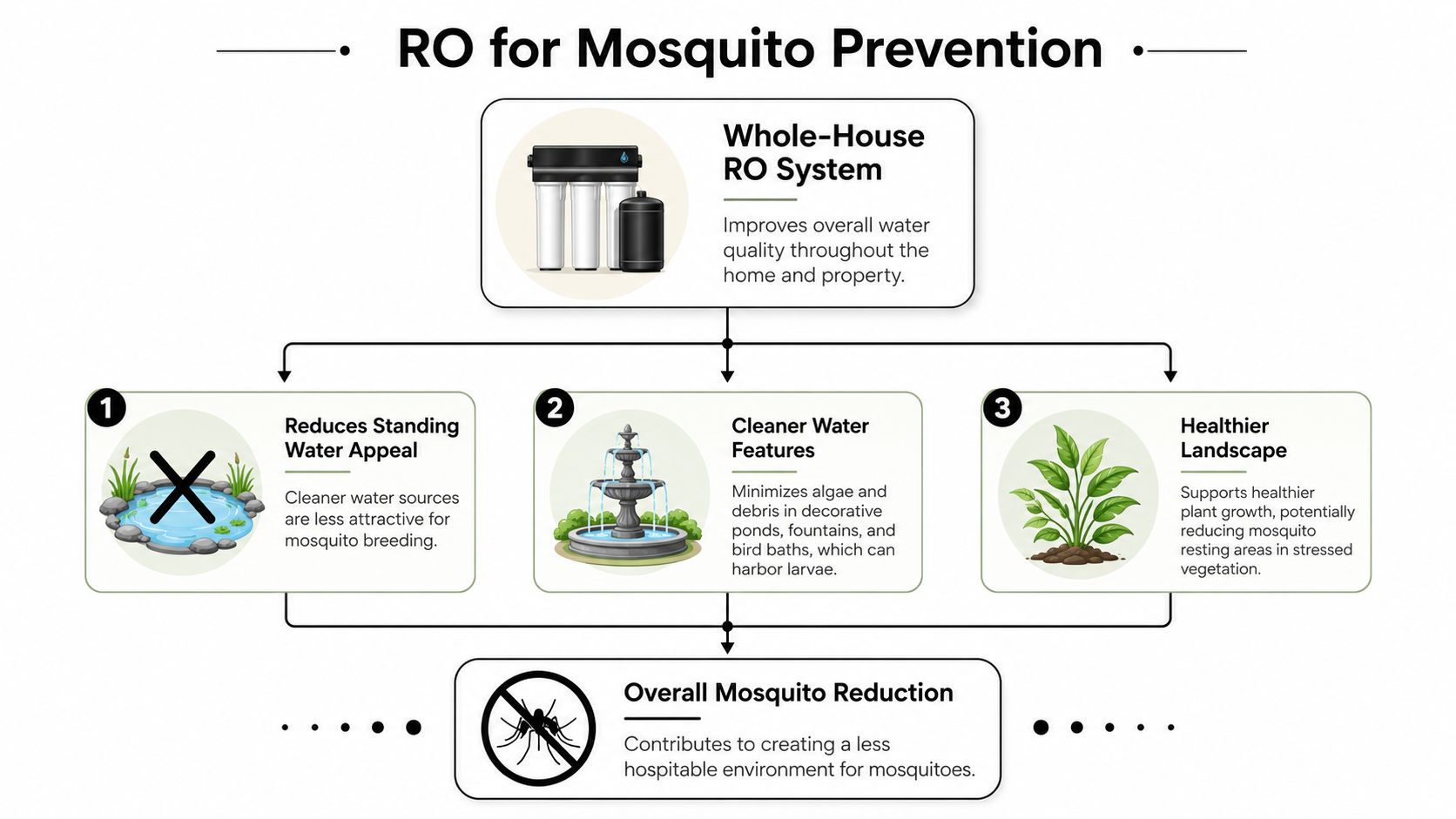
Many consider mosquito control to begin and end with spray timing. That's too narrow. A whole-house reverse osmosis system helps on the water side of the property, and that matters because refilled water features should stay cleaner, clearer, and less attractive to the grime buildup that makes maintenance harder.
Cleaner water supports cleaner features
When you refill birdbaths, fountains, and similar features with purified water, you're starting from a better baseline. Cleaner water helps limit the residue, algae, and debris that can collect in decorative features and make them harder to maintain. That doesn't replace mosquito control, but it supports it by keeping those areas easier to manage.
Whole-home purification also helps homeowners stay more consistent. If the water going into the system is already cleaner, the same maintenance routine goes further. That matters around patios, maintained grounds, and other places where mosquitoes like to rest near moisture and shade. For more on the system itself, see whole home reverse osmosis installation details.
Best practice: use the spray to hit adults, and use clean water habits to stop your features from becoming maintenance problems.
Why this matters for year-round property care
A mosquito plan should never be one-dimensional. If the yard, pool area, and water features all pull in different directions, you end up fighting the same problem over and over. A whole-house RO setup gives you a cleaner water foundation across the property, which is especially useful in homes with decorative features, irrigation touchpoints, and heavy outdoor use.
That's the part most guides skip. They talk about adult mosquitoes, but they ignore the water environment that keeps the property harder to manage. In a place like Cape Coral, where outdoor living is year-round, that gap shows up fast. Clean water doesn't kill mosquitoes by itself, but it absolutely makes the rest of the control plan easier to keep on track.
Scheduling Frequency and DIY versus Professional Services
A homeowner with a sprayer usually works in bursts. A professional works on a schedule. That difference matters because mosquito pressure returns fast after treatment, so recurring service is the only way to stay ahead of it during the active season.
DIY has limits
DIY spraying can work if the problem is light, the yard is small, and you stay disciplined enough to keep the schedule. It still takes the right gear, careful chemical handling, and enough attention to hit shaded resting spots instead of spraying open air. Miss the timing or skip a cycle, and the mosquitoes are right back.
Professional service gives you consistency
A professional schedule, monthly or quarterly depending on the property and service model, removes the guesswork. The value is not in some miracle product, it is in steady timing, better coverage, and fewer missed spots. That matters for larger yards, dense plants, community pools, and properties where outdoor use does not stop when the weather shifts.
If you are doing it yourself, be honest about the workload. If you manage a property, consistency is the whole game, and consistency usually means a service plan instead of a garage shelf full of half-used bottles. For properties that also rely on clean water systems, pair mosquito control with monthly maintenance support so the water side does not create extra work for your spray schedule.
Actionable Prevention Tips for Homeowners and Property Managers
Set a simple property checklist and make someone responsible for it. Walk the perimeter at the same time each week, empty anything that catches water, and document problem spots so you know which areas keep drawing mosquitoes back. That gives you a real maintenance record instead of guesswork.
Use the spray plan to target trouble areas, not the whole yard at random. Focus on the spots that stay cool and protected, like dense hedges, under decks, along fence lines, and around equipment pads where moisture tends to linger after irrigation or rain. If your property has repeat mosquito pressure, mark those locations on a map and treat them first every time.
Protect the water side of the property too. Pool service crews, irrigation techs, and homeowners all need to stay aligned so one system does not create extra work for the others. If you maintain fountains, birdbaths, or other refill points, keep the water quality clean and the maintenance calendar consistent with monthly maintenance support. That keeps the whole property easier to manage, not just the visible patio.
For properties that also run on a whole-house reverse osmosis system, keep that system on the same service rhythm as mosquito control. Cleaner water reduces scale, residue, and the kind of equipment buildup that turns routine upkeep into a bigger job. It also helps the property feel consistently maintained, which matters for homes with pools, guest areas, or frequent outdoor use.
Train staff or family members to report standing water the same day they see it. A cracked planter saucer, clogged drain, or slow leak is small on its own, but it becomes a steady mosquito source if nobody calls it out. Give them one rule, report water fast, and handle it before the next spray cycle.
A CTA for Water Medic of Cape Coral.