
How to Eliminate Black Inside Toilet Tank Residue
You lift the toilet tank lid because the bowl looks dingy or the flush seems off. Instead of clear water and clean porcelain, you find a black, slimy film clinging to the walls and corners. You scrub it out, hit it with bleach, close the lid, and hope that's the end of it. Then it comes back.
That cycle frustrates a lot of homeowners in Cape Coral and across Lee County, especially those on private wells. The mistake is treating black inside toilet tank residue like a simple cleaning problem when it's usually a water quality problem first. If minerals are feeding bacterial biofilm, no amount of wiping will solve it for long.
Most advice online stays stuck on surface cleaning. That's too shallow. If your well water carries manganese or sediment, the tank is just one of the first places you'll see the evidence. The smart fix is to clean the tank once, confirm what's in the water, and stop feeding the buildup at the source with the right whole-house treatment. In many homes, that means looking hard at a whole-house reverse osmosis system instead of chasing stains fixture by fixture.
Introduction to Black Inside Toilet Tank Issues
A homeowner usually notices this problem the same way. The guest bathroom starts looking neglected even though nobody uses it much. The toilet bowl gets a dark ring, the tank smells stale when opened, and inside the tank there's a black coating that looks like mold. It's ugly, persistent, and it keeps coming back after cleaning.
That's why black inside toilet tank buildup deserves more attention than a quick wipe with a brush. In low-use bathrooms, water sits still for long stretches. If that water also contains manganese or iron from a private well, the tank becomes a perfect place for residue to form and return.
Why a simple cleaning rarely holds
Many homeowners assume black tank residue means poor housekeeping. It usually doesn't. It often points to a combination of still water, mineral content, and microbial growth that keeps regenerating because the incoming water never changed.
If you're on a private well, ask two blunt questions:
- Is this only in one toilet: If yes, the tank may be the first visible trouble spot.
- Are you seeing dark residue elsewhere: If yes, the well water itself needs attention.
- Does the problem return after a thorough cleaning: If yes, surface treatment isn't enough.
- Has anyone tested the water for manganese and iron: If not, you're guessing.
Practical rule: If the black residue returns after a proper cleaning, stop buying more toilet cleaners and start looking at the water feeding the tank.
Why private well owners should care
This isn't just about appearance. Repeated buildup means more scrubbing, more chemical use, more irritation, and more wear on fixtures. It also means you're spending time treating a symptom instead of the source.
For homeowners who rely on well water, I recommend thinking bigger than the toilet tank. A whole-house water treatment strategy, especially a whole-house reverse osmosis system, can stop the mineral side of the problem before the biofilm gets a foothold anywhere in the home.
Common Causes of Black Inside Toilet Tank Residue
Open the tank lid on a well-water toilet that keeps growing black slime, and you are usually looking at a water problem, not a cleaning problem. In private well homes, the residue often forms where two conditions meet. Mineral-rich water feeds the tank, and bacteria build a film on the surfaces those minerals leave behind.
The black residue inside toilet tanks is often tied to Aureobasidium bacteria reacting with manganese in the water and forming a biofilm that bleach may not fully remove, as explained in this review of black residue in toilet tanks. That same source also notes that manganese can start causing black staining and slime problems at relatively low levels, which is why private well owners run into this issue more often than they expect.
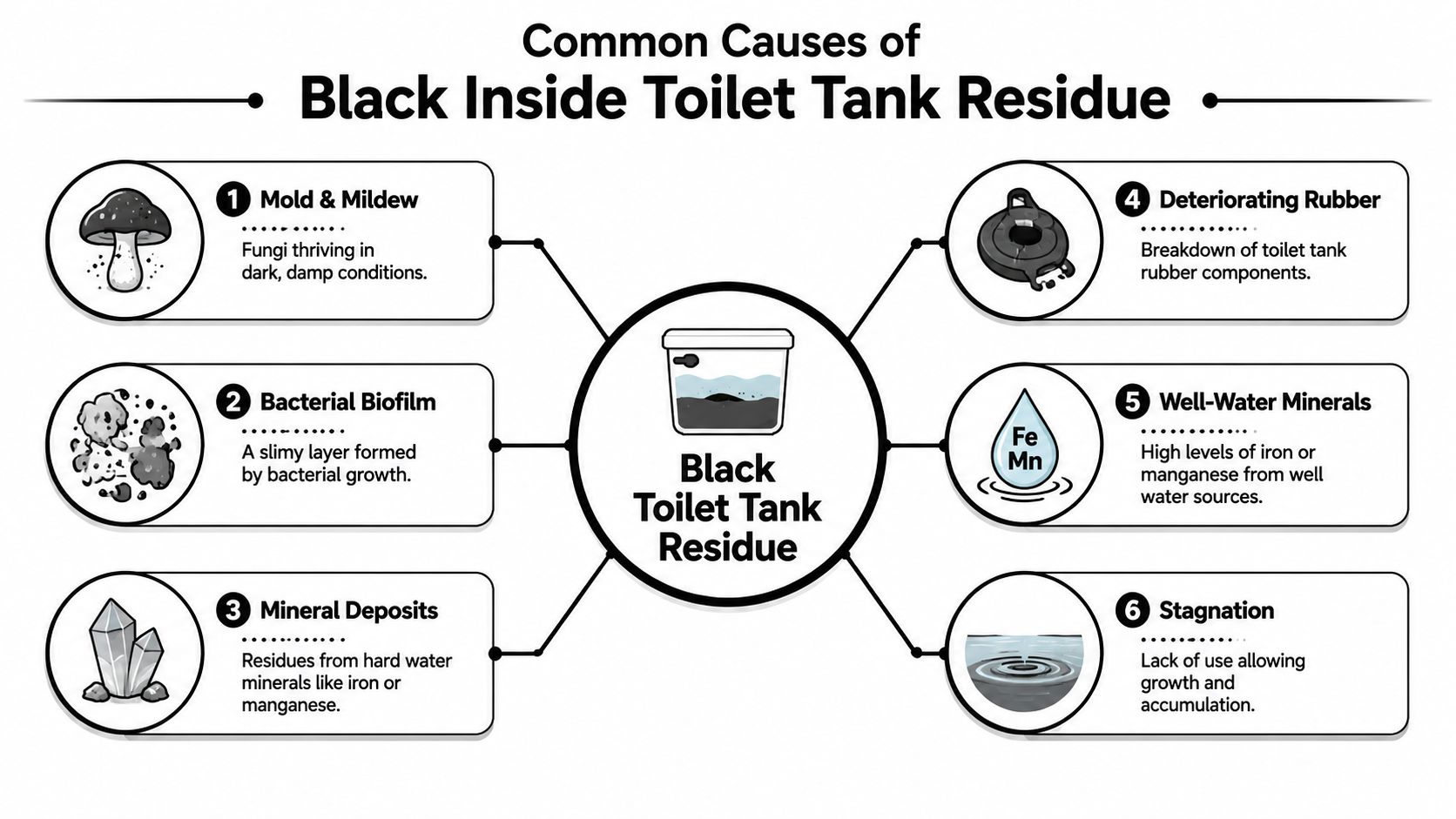
The six causes that matter
Several triggers can create black residue, but in well-water homes, mineral content and microbial growth usually do the heavy lifting.
- Bacterial biofilm forms the slimy layer that sticks to tank walls, refill lines, and corners.
- Manganese and iron give that growth a steady supply of material to cling to and discolor.
- Mold and mildew can add dark staining in damp tank interiors.
- Stagnant water gives bacteria more time to establish in toilets that sit unused.
- Sediment and mineral scale roughen the surface and make cleanup harder.
- Worn rubber flappers or seals can shed black particles that look similar but behave differently.
What private wells change
Municipal water and private well water do not create the same maintenance problems. Well water often carries manganese, iron, hardness, and sediment in combinations that basic toilet cleaners cannot fix. That is why scrubbing the tank helps for a week or two, then the black film comes right back.
This is the part many cleaning guides miss. If manganese is entering the house with every refill, bacteria keep finding fresh material to colonize. The toilet tank becomes the first obvious symptom, but the source is the incoming water.
Don't confuse debris with biofilm
Rubber breakdown leaves loose black flecks or soft fragments near flappers, seals, and gaskets. Biofilm looks different. It smears, clings, and returns in a patterned layer along wet surfaces.
Check both. Replace failing tank components if they are shedding. Then address the water itself, because new parts will not stop residue caused by mineral-fed bacterial growth.
In a private well home, black toilet tank residue usually points to manganese plus biofilm. Clean the tank, then treat the water feeding it. A whole-house reverse osmosis system is the best way to stop the cycle at the source.
Cleaning and Disinfecting Your Toilet Tank
You lift the tank lid, scrub off the black coating, and feel done. Two weeks later, it is back on the walls and around the waterline. That pattern usually means you are cleaning a symptom, not just dirt. In well-water homes, black residue often includes bacterial biofilm feeding on manganese and other minerals that keep entering with every refill.

The cleaning method I recommend
Start with safety and with the right expectations. Wear gloves, crack a window, and use a nylon brush or non-scratch pad. Skip metal tools because scratches give slime and mineral film more places to grab.
Then clean the tank in this order:
- Shut off the supply and drain the tank. Flush until the water level drops as far as possible. Sponge out the rest if needed so the cleaner contacts the stained surfaces directly.
- Apply a cleaner to the walls, corners, and under the rim of the tank. Use distilled white vinegar for lighter mineral film, or use hydrogen peroxide when the residue feels slick and smeary, which usually points to biofilm. As noted earlier, both are common toilet-tank cleaning options.
- Let it sit long enough to work. Rushing this step leaves the bonded film behind.
- Scrub every wet surface. Focus on corners, around bolts, behind the float, and along the waterline where black buildup returns first.
- Rinse and refill. Flush until loosened material is gone.
- Check the rubber parts before you close the lid. If the flapper or seals are shedding black flecks, replace them now.
Use the cleaner that matches the residue
Vinegar is the better choice for scale and mineral film. Hydrogen peroxide is usually better for the slimy layer that smears under a brush. If you have private well water, that distinction matters. Mineral deposits and biofilm often build together, and a quick wipe-down misses both.
Bleach is not my first recommendation here. It can lighten the staining, but it does not reliably remove the film that lets new growth attach. Clean the surface completely, then address the incoming water. That is the step that stops homeowners from repeating this job over and over.
What to avoid
A few mistakes make the tank harder to keep clean:
- Do not use metal brushes or scrapers. Scratched surfaces hold buildup faster.
- Do not mix cleaners. Rinse fully before switching products.
- Do not drop tablets into the tank and call it solved. In well-water homes, that is cosmetic maintenance at best.
- Do not ignore repeat growth. If black slime keeps returning, the water feeding the toilet needs treatment.
For a practical upkeep plan after the deep clean, follow this monthly toilet and water fixture maintenance routine.
Clean the tank thoroughly once. Then stop feeding the problem. In private well homes, whole-house reverse osmosis is the best fix when manganese and biofilm keep bringing black residue back.
Routine Steps to Prevent Black Tank Slime
You clean the tank, close the lid, and a few weeks later the black film is back. That usually means the toilet is not the root cause. In private well homes, stagnant water gives biofilm time to spread, and minerals in the incoming water help it grab hold again.
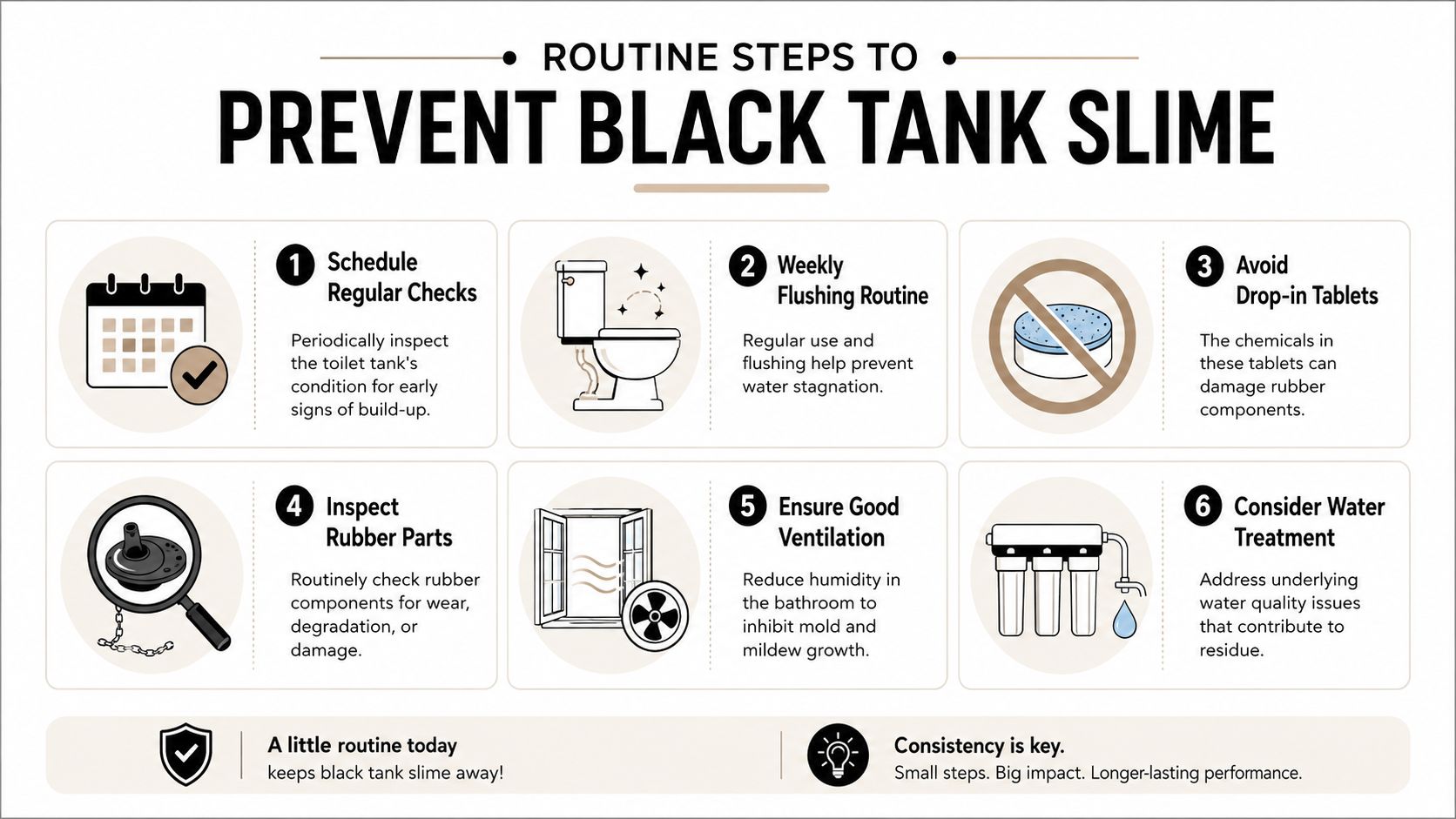
The habits that make a difference
Start with water movement. Flush toilets that do not get regular use every week. Guest baths, basement bathrooms, and powder rooms are the usual trouble spots because the water sits too long.
Then keep the tank on a short inspection cycle. Lift the lid during normal bathroom cleaning and look for a dull film, black streaking near the waterline, or residue collecting around corners and hardware. Early buildup wipes off fast. Established slime turns into a repeat job.
Skip the lazy fixes. Tank tablets are not a real prevention plan, especially in well-water homes. Some mask the problem, some are hard on components, and none remove the minerals and bacteria feeding the residue in the first place.
Build a workable home routine
Use a routine that homeowners will keep up with:
- Flush low-use toilets weekly. Regular refill cycles reduce stagnation.
- Check inside the tank during bathroom cleaning. Catching film early prevents heavier growth.
- Control bathroom moisture. Run the exhaust fan and fix slow leaks or sweating supply lines so damp conditions do not help residue return.
- Follow a scheduled upkeep plan. A simple monthly toilet and fixture maintenance routine keeps this from turning into another deep-cleaning project.
Prevention works best when the source water is handled
Routine care slows black slime down. It does not change what your well water brings into the house.
That distinction matters. In many private well systems, black tank residue is not just a housekeeping issue. It is a water quality issue involving minerals such as manganese along with bacterial biofilm. If you only flush more often and wipe the tank more often, you are managing symptoms.
Fix the water, and the tank gets easier to keep clean. That is why whole-house reverse osmosis stands out. It cuts down the dissolved material that keeps feeding the problem at every fixture, not just in one toilet.
Water Treatment Options with Emphasis on Reverse Osmosis
If black toilet tank residue keeps returning, compare treatment methods by one standard only. Do they remove the material feeding the problem, or do they just catch some of the visible fallout? For many private well homes, the answer points straight to whole-house reverse osmosis.
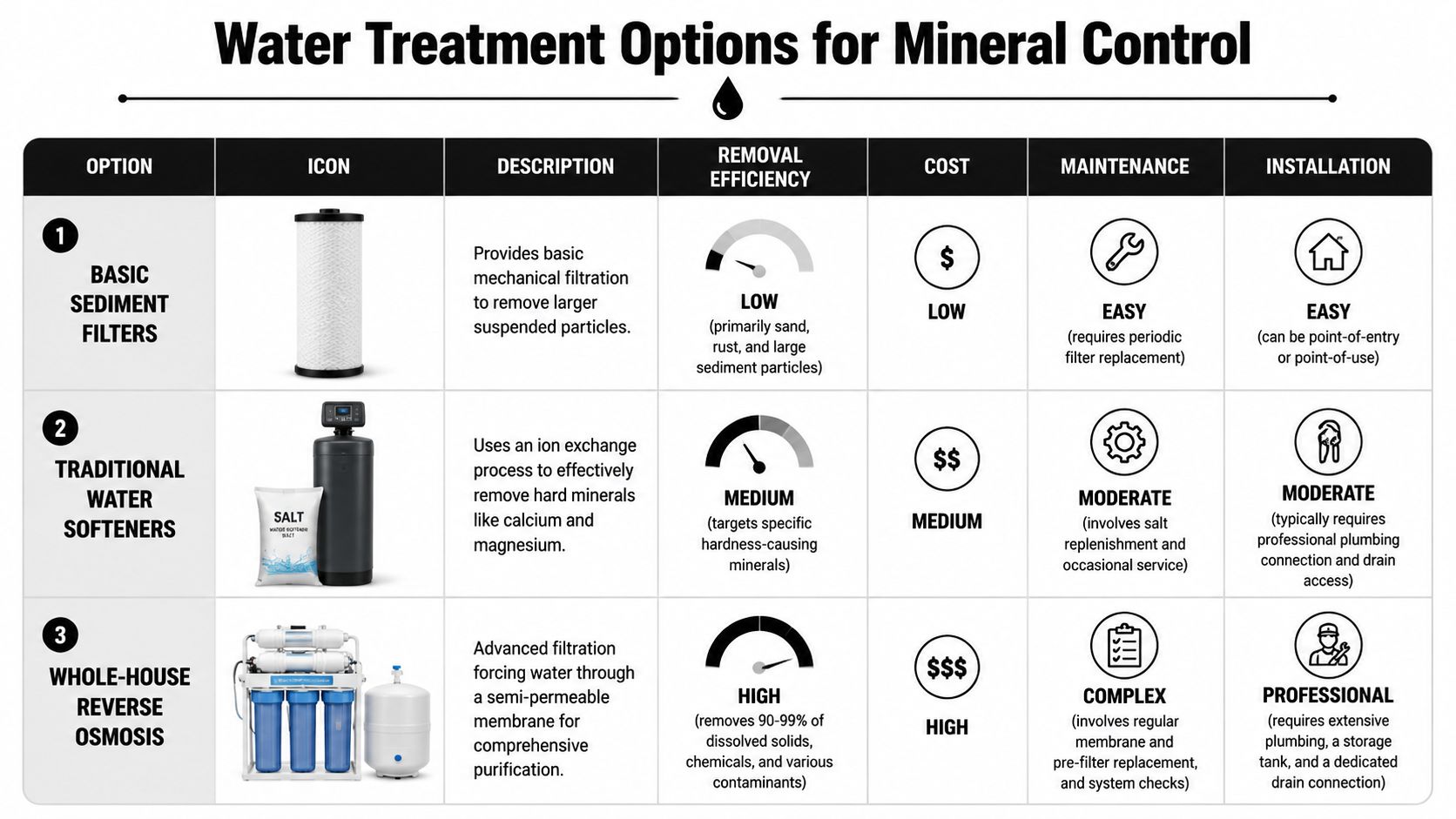
Comparison of Water Treatment Options
| Option | Removal Efficiency | Maintenance Frequency | Cost Range |
|---|---|---|---|
| Sediment Filters | Low for dissolved mineral issues, better for larger particles | Periodic cartridge changes | Low |
| Water Softeners | Medium for hardness minerals | Ongoing service and replenishment | Medium |
| Whole-House Reverse Osmosis | High for broad dissolved contaminant reduction | Scheduled professional maintenance | High |
Why sediment filters and softeners fall short
Sediment filters are useful. They catch larger particles and can protect equipment downstream. They are not a complete answer when manganese is dissolved in the water rather than floating as visible grit.
Traditional water softeners help with hardness minerals. In the right setup, they can be part of a broader treatment train. But if your goal is to stop stubborn black residue tied to source water contamination, they usually aren't the strongest standalone option.
Why whole-house reverse osmosis is the right long-term play
Whole-house reverse osmosis treats the problem at the entry point to the home. Instead of trying to manage symptoms in each toilet, faucet, and shower, it reduces a wide range of dissolved contaminants before they ever reach those fixtures. That's the strategic advantage.
The comparison graphic above describes whole-house RO as having high removal efficiency and removing 90-99% of dissolved solids, chemicals, and various contaminants. For homeowners on private wells, that broad reduction is exactly why RO deserves priority over piecemeal fixture cleaning.
There's another reason to take source-water treatment seriously. Failing to address the source water mineral load results in a more than 75% recurrence rate within 3 months, even after thorough cleaning, according to this analysis of recurring black toilet stains.
If you're evaluating solutions, start with a detailed look at a whole-house reverse osmosis system. For private well homes with recurring black residue, it's the most complete fix because it addresses what's entering the house, not just what you can see in one tank.
The best toilet tank cleaner is better water.
When to Contact Water Medic for Help
DIY cleaning makes sense once. Repeating it every few weeks doesn't. If black residue keeps returning, the smart move is to get the water and treatment setup evaluated by a company that specializes in water quality, not general plumbing.
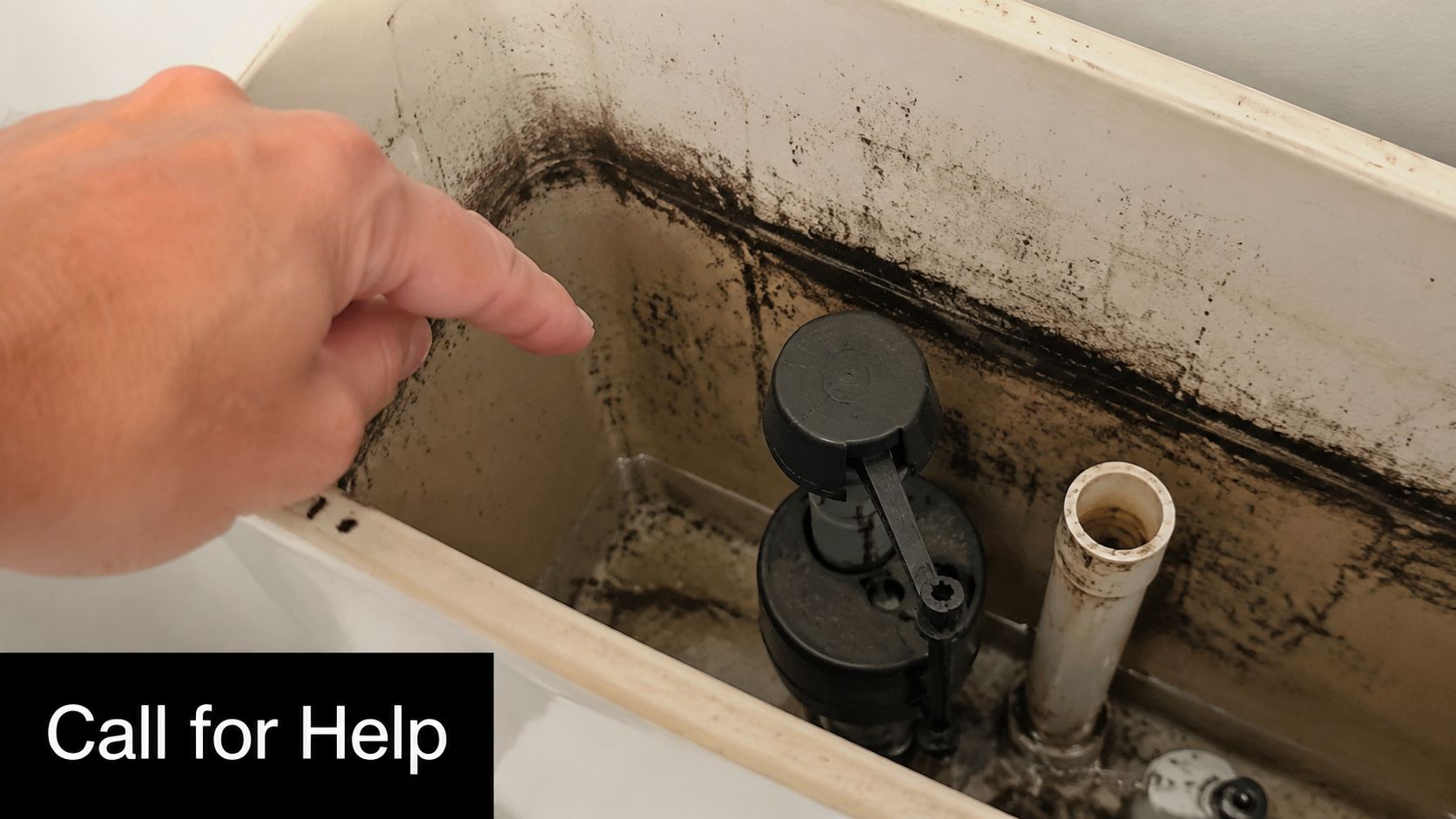
Signs you need professional water treatment help
Some situations should move you out of DIY mode quickly.
- The tank turns black again after a full cleaning. That points back to source water or persistent biofilm conditions.
- You see black sediment in multiple faucets. That can indicate a broader well-water issue rather than an isolated toilet problem.
- Your home uses private well water and no one has tested it recently. You need actual water data before buying another filter or cleaner.
- You want one solution for the entire house. Treating one bathroom at a time wastes time.
Why a specialist matters
Water treatment isn't guesswork when it's done correctly. A qualified team can test for manganese, iron, and sediment patterns, then recommend the right sequence of treatment equipment. In some homes, that starts with sediment control. In many well-water homes with recurring staining and fixture issues, the proper answer is a whole-house RO approach.
That matters because the objective isn't just a cleaner toilet tank. It's cleaner water across the house, less residue on fixtures, less maintenance, and fewer recurring headaches.
Get the right help fast
If you're done scrubbing black inside toilet tank slime and watching it return, stop chasing short-term fixes. Get a proper evaluation and a treatment plan built around your actual water.
Use the Water Medic contact page to schedule a consultation and move the problem out of the bathroom and back to where it belongs, the incoming water supply.
If you're dealing with recurring black tank residue, well-water staining, or mineral-driven buildup anywhere in the house, Water Medic of Cape Coral can help you identify the source and recommend the right treatment, including whole-house reverse osmosis for long-term control.