
Average Cost of Septic Pumping and Why It Matters
The average cost of septic pumping in the United States ranges from $290 to $700, and in Florida the average is around $410, with a typical range of $320 to $530. If you're a Southwest Florida homeowner staring at a service invoice or trying to avoid the next one, that's the number you should budget around.
Thinking about septic costs typically begins only when the yard smells off, the tank is overdue, or a service company is suddenly on the schedule. That's understandable, but it's backward. Septic pumping is maintenance you have to do. Better water treatment is how you reduce stress on the rest of the home at the same time. If you own a house on a private well in Cape Coral or Lee County, the smarter conversation isn't just what septic pumping costs. It's what poor water quality is costing you everywhere else.
Understanding Your Septic System and Its Costs
You walk outside after a normal week at home and catch an odor near the yard. By the end of the day, you are checking the tank location, calling for service, and rearranging your schedule around a problem that never feels convenient.
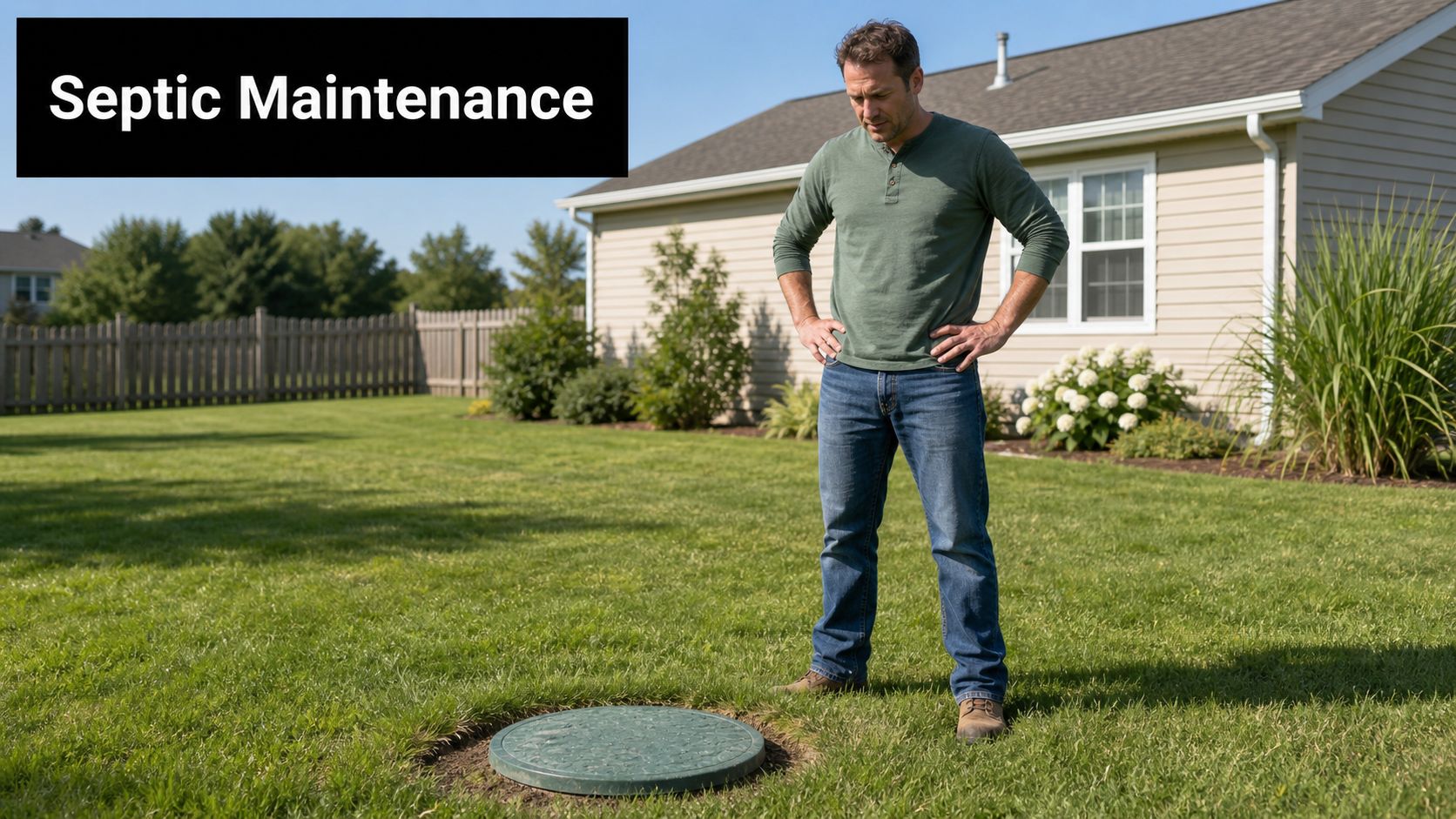
That is how septic maintenance shows up for many homeowners. It feels sudden, but the system has been working in the background the whole time. Solids settle in the tank. Wastewater flows out to the drain field. Pumping removes buildup before it turns into a backup, slow drain, foul smell, or a much more expensive repair.
A pumping bill covers more than one task. You are paying for the truck, the crew, waste hauling, disposal, tank access, and the extra time required if lids are buried or the system has been neglected. In Southwest Florida, access problems and overdue service are two of the fastest ways to turn routine maintenance into an annoying expense.
The bigger mistake is treating septic pumping as the entire water conversation.
Your septic system responds to what your home sends into it every day. That includes laundry discharge, shower water, dishwasher flow, and everything coming off your fixtures and appliances. If your house runs on poor-quality well water with heavy mineral content or other contaminants, the strain does not stop at faucets and water heaters. It affects the full plumbing cycle of the home, including what eventually reaches the septic system.
Practical rule: If septic service is the first time you think seriously about water quality, you waited too long.
Pumping is necessary maintenance. It is still reactive maintenance. It deals with accumulation after the fact.
A smarter approach is to look at the whole path water takes through the property and improve it at the entry point. For homeowners in Cape Coral, Lee County, and nearby parts of Southwest Florida, that means paying attention to source water quality before it creates wear across the house. Better treatment supports cleaner water for fixtures, appliances, plumbing, and the wastewater stream your septic system has to handle.
If you want to spend less time reacting to water-related problems, start earlier. Maintain the septic tank on schedule, then fix the quality of the water entering the home. That is the move that protects more than one component.
The Average Cost of Septic Pumping in 2026
You book a routine septic pump and expect a manageable maintenance bill. Then the quote comes in higher than expected, and now a basic service call feels like another hit to the house budget. That is exactly why homeowners need a realistic number before the tank is full and the problem is urgent.
The national average for septic pumping is commonly cited in the midrange hundreds, and Florida usually lands close to that range. For a typical home, routine pumping is usually a few hundred dollars, while larger tanks, difficult access, or neglected maintenance push the bill higher. Earlier cost data also shows that a standard 1,000 gallon tank usually sits near the lower end of normal residential pricing, while unusually difficult jobs can climb well above the average.
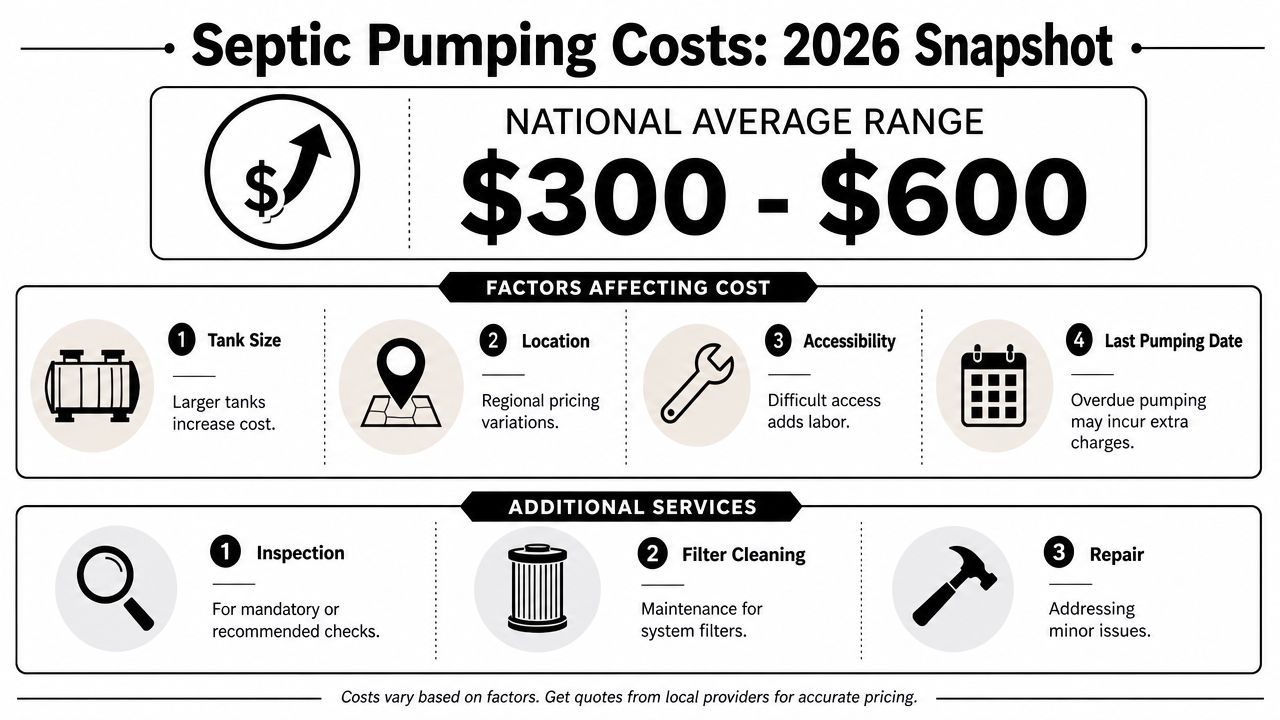
For Southwest Florida homeowners, the useful takeaway is simple. Budget for routine pumping as a recurring home service, not a one-time surprise. If your tank is easy to reach and you stay on schedule, the price usually stays reasonable. If the lid is buried, the tank is overdue, or the property creates extra labor, expect to pay more.
That is the short-term number. The smarter question is what keeps routine septic costs from turning into frequent water-related repairs across the rest of the house.
Poor source water does more damage than many homeowners realize. Hard water and heavy mineral load shorten appliance life, foul fixtures, and create extra wear throughout the plumbing system. If you also rely on well equipment, keeping your well pump system in good working order matters because every water problem upstream shows up somewhere else downstream, including in the wastewater your septic system has to process.
My recommendation is straightforward. Keep septic pumping in the budget, but stop treating it as the full plan. Pumping is a reactive expense. Better water treatment is the move that protects pipes, fixtures, appliances, and the septic system from unnecessary strain at the same time.
Key Factors That Drive Your Septic Pumping Bill
A septic bill changes for reasons you can understand and control. That matters, because homeowners often assume the price is arbitrary when it usually isn't. If you know what service companies look at, you'll know how to keep the cost closer to routine maintenance and farther from a surprise call.
The big variables behind the invoice
Tank size is the obvious factor. More capacity usually means more work, and larger systems often cost more to service. The level of accumulated solids also matters. A tank that's been left too long can require more effort than one that's been maintained on schedule.
Access is another major driver. If crews can reach the tank cleanly, the appointment stays simple. If the lid is difficult to locate or the site is awkward to work around, labor rises.
Here's a quick view of the main cost drivers:
| Cost Factor | Impact on Price | Example |
|---|---|---|
| Tank size | Larger tanks usually cost more to pump | A larger residential tank may price above a standard tank |
| Accessibility | Harder access increases labor | Buried or difficult-to-reach lids can push costs up |
| Solids buildup | Heavier accumulation can add work | An overdue tank may require more extensive service |
| Service timing | Urgent calls cost more | Emergency pumping adds extra fees |
Routine service versus emergency service
This is the part homeowners underestimate. Emergency septic services carry an additional fee of $150 to $300, and that 25 to 40 percent increase often comes from preventable situations tied to skipped routine inspections, according to Splash Plumbing's pricing discussion on septic pumping factors.
That's why waiting is bad math. You're not just risking a more stressful appointment. You're choosing a more expensive one.
Skip the emergency premium. Routine maintenance is cheaper, easier to schedule, and far easier on your household.
What to do before you book service
Don't just ask for a price and hope for the best. Get your house in order before the truck arrives.
- Confirm tank size: If you know the tank size, the estimate gets tighter.
- Check access points: Make sure the service area is clear and easy to reach.
- Know the last pumping date: An overdue tank can change the expected scope.
- Ask about related components: If your system includes added equipment, note it up front.
If your property includes support equipment tied to water movement or transfer, it also helps to understand those systems before any service call. Homeowners who want a better handle on that side of the property should review residential water pump information and make sure every part of the home's water setup is being maintained intentionally, not reactively.
The bottom line is simple. A septic invoice gets worse when homeowners delay, guess, or ignore the broader water system around it.
Beyond the Pump A Proactive Approach to Home Water Health
Your septic tank gets pumped, the invoice gets paid, and life goes back to normal. Then the stains keep building on fixtures, soap keeps struggling in the shower, appliances keep collecting scale, and the septic system keeps receiving the same poor-quality water byproducts day after day. That cycle is expensive, and it keeps homeowners stuck in reaction mode.
If your home uses untreated well water, the problem reaches far beyond the tank. Mineral-heavy or contaminated water affects plumbing, water-using appliances, cleaning results, and every drain line in the house. Your septic system is part of that chain, not a separate issue.
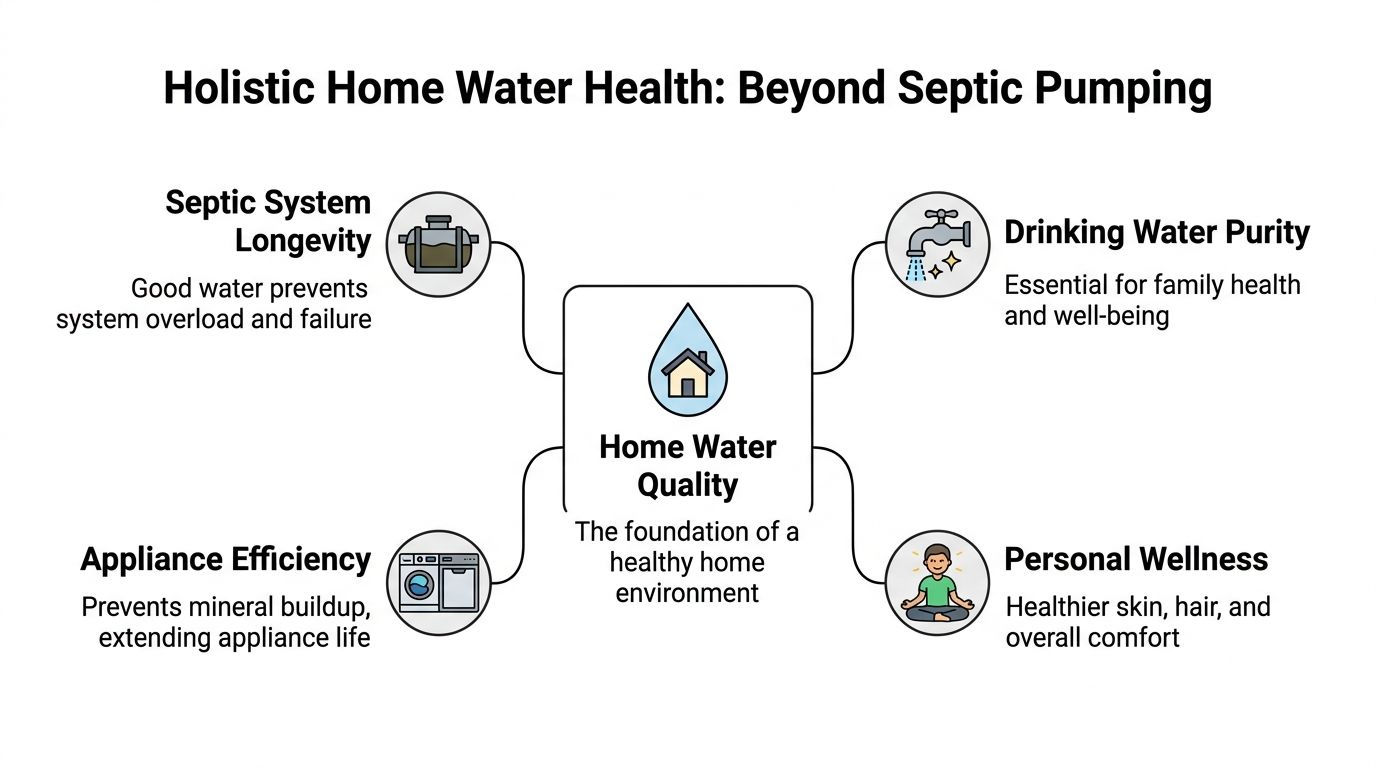
Septic maintenance is only part of the picture
Many Southwest Florida homeowners treat septic pumping like the main water-health job. It isn't. It is one cleanup step inside a much bigger system.
Start at the source. If incoming water carries minerals, sediment, and other problem contaminants into the home every day, the house pays for it in several ways. Fixtures get residue. Appliances work harder. Cleaning takes more effort. More chemical cleaners often get used to fight stains and buildup, and all of that ends up moving through your drains and into the septic system.
That is why I tell homeowners to think about the whole system, not just the tank.
- Better source water reduces buildup across the home: Less scale and residue means less wear on plumbing fixtures and equipment.
- Cleaner water cuts down on harsh cleaning habits: If surfaces, showers, and toilets stay cleaner with less effort, fewer aggressive products get flushed into the system.
- Your septic system benefits indirectly: Reducing upstream water quality problems helps reduce the stress created by constant downstream cleanup.
Why proactive beats reactive
Reactive maintenance is always more frustrating. It also keeps you spending money on symptoms instead of causes.
A proactive plan starts with water treatment at the point of entry. You improve the water before it reaches your pipes, water heater, laundry, showers, and drains. That protects more than drinking water. It protects the infrastructure that poor water wears down first.
For homeowners who want a disciplined service routine instead of scattered fixes, review monthly water treatment maintenance options and treat water quality like home infrastructure management.
Better water is not a cosmetic upgrade. It is a practical way to reduce wear, reduce cleanup, and stop asking your septic system to handle the fallout from poor source water.
In Southwest Florida, that matters. Hard well water and other persistent water quality issues do not stay contained to one faucet or one appliance. They affect the entire home, and the smart move is to correct the water before it creates more maintenance downstream.
The Ultimate Solution A Whole House Reverse Osmosis System
A Southwest Florida homeowner usually notices the pattern the same way. Scale keeps building on fixtures. Laundry never looks quite right. The water heater works harder than it should. Cleaning products get used faster, and everything that goes down the drain ends up as one more burden on the septic system.
That is why I recommend a whole house reverse osmosis system for homes with broad water quality problems. It treats the water at the point of entry, before poor source water can work through your plumbing, appliances, surfaces, and drains.

For septic owners, that matters.
Septic pumping is a reactive expense. Whole-house RO is a source-level fix. If you improve the water entering the home, you reduce the mineral load, residue, and cleanup habits that create wear throughout the property and add avoidable stress downstream.
What makes whole-house RO different
A whole-house RO system treats water for the entire property, not just one sink or refrigerator line. That changes the value equation. You are protecting showers, toilets, faucets, the water heater, laundry equipment, dishwashers, and all the plumbing that moves water through the house.
According to This Old House's reverse osmosis cost guide, the purchase and installation cost for a whole-house RO system ranges from $1,000 to $4,800 or more, with an average cost of about $2,475. The same source says point-of-use RO systems range from $150 to $1,300.
Those are different categories with different jobs. A small under-sink unit improves one outlet. A whole-house system protects the home as a system.
Why this is the right upgrade for the right house
I do not advise homeowners to chase one symptom at a time. That approach keeps you buying temporary fixes while untreated water keeps circulating.
A whole-house RO system improves daily water use across the board:
- Fixtures and appliances get cleaner water: That helps reduce mineral buildup and wear.
- Bathing, laundry, and cleaning improve: Better water changes daily life in ways a single-tap filter never will.
- Household discharge is cleaner overall: Less residue and less aggressive cleanup supports a healthier maintenance pattern for septic homes.
- The whole property gets one coordinated solution: You stop patching problems room by room.
Installation takes planning
This is a real infrastructure upgrade, not a weekend add-on. Whole-house RO systems need space, correct sizing, pretreatment when required, and proper integration with the home's plumbing. If you want to see what that looks like in practice, review this whole-home reverse osmosis system option and compare it to the piecemeal approach many homeowners start with.
That difference matters. Poor design creates frustration. Proper design protects the house.
Who should take whole-house RO seriously
Some homes benefit from whole-house RO far more than others.
- Private well homes: You carry the responsibility for source water quality.
- Homes with water problems in more than one room: If the issue shows up in sinks, showers, laundry, and appliances, isolated filters will not solve it.
- Long-term homeowners: This is a smart move for people protecting property condition, not chasing the cheapest short-term fix.
- Septic homeowners tired of reactive maintenance: If you are paying to deal with consequences over and over, start higher up the chain.
My advice is simple. If poor water is affecting the whole house, fix the whole house. A well-designed whole-house RO system helps protect your plumbing, your equipment, your cleaning routine, and your septic system from the constant wear untreated water creates.
Is a Whole House RO System a Smart Financial Move
A Southwest Florida homeowner pays to pump the septic tank, replaces a scaling water heater, buys another set of cartridge filters, and still hates the water. That pattern is expensive because every fix happens after the damage and frustration are already in the house.
A whole-house RO system changes the math. You treat the incoming water once, at the entry point, instead of paying for the same water problem in pieces across plumbing, appliances, fixtures, cleaning, and septic maintenance.
Compare the spending pattern, not just the price tag
The wrong way to judge whole-house RO is to stare at the installation cost in isolation. The right way is to compare two spending habits over time.
| Approach | What it looks like | Financial character |
|---|---|---|
| Reactive home water management | Pump the septic tank, replace worn parts, buy add-on filters, keep correcting water-related problems | Repeated costs, poor predictability, little long-term protection |
| Whole-house RO investment | Improve the quality of all water entering the home | Planned spending, broader protection, better control |
That distinction matters for septic owners. Septic pumping is maintenance you should expect. Repeated wear from poor water quality is the extra bill you should work to reduce. If hard minerals, sediment, and other contaminants are stressing the systems that use water throughout the house, you are paying for bad input over and over.
Installation is expensive because it is real infrastructure
Whole-house RO is not a gadget. It is a serious plumbing upgrade that needs correct sizing, pretreatment when required, storage planning, drain considerations, and proper installation.
That upfront cost can feel heavy. It still beats years of fragmented spending on avoidable water problems.
I recommend asking three blunt questions before you decide:
- Are water problems showing up in more than one part of the house?
- Are you spending money repeatedly instead of solving the root cause?
- Do you plan to stay in the home long enough to benefit from lower wear and better water quality?
If the answer is yes, a whole-house RO system is a smart financial move. It protects more than drinking water. It helps protect the plumbing system, appliances, fixtures, cleaning performance, and the septic system from the steady punishment poor water creates.
Frequently Asked Questions About Water Treatment and Septic Systems
Homeowners usually ask the same final questions once they start connecting septic maintenance with whole-home water quality. Good. Those questions matter.
How often should a septic tank be pumped
The EPA recommends pumping a septic tank every 3 to 5 years, and that routine maintenance typically costs $250 to $500 per service. The same EPA guidance warns that sticking to that schedule is critical because drain field repairs can exceed $15,000, as explained by the EPA's septic system maintenance guidance.
That's the maintenance baseline. Ignore it and you're gambling with one of the most expensive systems on the property.
Does better water treatment replace septic pumping
No. It complements it.
A whole-house RO system doesn't eliminate the need for septic pumping. What it does is support a more thoughtful approach to the entire water environment in your home. You still maintain the septic tank on schedule. You also stop acting like the tank is the only water system worth caring about.
Why focus so heavily on whole-house RO instead of small filters
Because most whole-home water problems aren't isolated to one tap. If your concerns affect drinking water, shower water, cleaning water, and the equipment that uses water, a small point-of-use device is too narrow. Whole-house RO is built for whole-house problems.
Is a whole-house RO system worth considering for well water homes in Southwest Florida
Yes, especially if you want one solution that addresses water quality across the property. Well water homeowners often need a complete strategy, not a patchwork one. Septic maintenance keeps one critical system functioning. Whole-house RO helps improve the water feeding the rest of the home every day.
What's the simplest way to think about this decision
Use this rule. Pump your septic tank on schedule because you have to. Improve your home's incoming water quality because it's the smarter long-term move.
If you're ready to stop treating water problems one symptom at a time, talk to Water Medic of Cape Coral. They help Southwest Florida homeowners improve water quality with professional treatment solutions, including whole-house reverse osmosis systems designed to protect the entire home.