Choosing Home Water Filtration Systems for Pure Water
You turn on the tap, fill a glass, and see crystal-clear water. It looks perfectly fine, but what if it’s hiding something? A home water filtration system is your last line of defense, a final checkpoint that purifies water right before you drink it, cook with it, or bathe in it. Think of it as a personal bodyguard for your home's water, standing between the city's treatment plant and your family. At Water Medic, we specialize in providing that security.
Why Your Tap Water Isn't as Clean as You Think
Water has a long, winding journey to get to your faucet. Along the way, it can pick up all sorts of unwanted hitchhikers. While your city's treatment plant does a good job of meeting federal safety standards, that doesn't mean the water is pristine by the time it flows from your tap.
It's a bit like a package leaving a factory. It starts out perfectly sealed, but after a long trip on bumpy roads and through various hands, who knows what condition it's in upon arrival? Your home's plumbing is that "final mile," where old pipes and fixtures can introduce new problems.
This uncertainty is why so many homeowners are taking matters into their own hands. In fact, the global market for home water filters was valued at around $25.4 billion in 2025 and is expected to soar to nearly $39 billion by 2033. People are more aware than ever of what might be lurking in their water. You can find more details in this analysis of the home water filtration market.
Common Contaminants Hiding in Plain Sight
Even water that looks and smells fine can carry a host of invisible impurities. The first step to cleaner water is knowing what you're up against. We've run countless professional water tests, and homeowners are often shocked by what we find.
Here are a few of the usual suspects:
- Chlorine: This is what cities use to disinfect the water supply. While it kills bacteria, it also leaves behind that distinct "pool water" taste and smell. It’s also notorious for drying out your skin and hair.
- Heavy Metals: If you have an older home, lead and other heavy metals can seep into your water from aging pipes. These pose serious long-term health risks, especially for kids.
- Pesticides and Herbicides: Runoff from farms and lawns can contaminate water sources, and municipal treatment doesn't always catch everything.
- Emerging Threats: Things like microplastics and trace amounts of pharmaceuticals are new-age problems. We’re still learning about their long-term health effects, but they're being found in water supplies more and more often.
Investing in a home water filtration system is not just about improving taste; it’s a proactive investment in your family’s health and well-being, providing peace of mind with every drop.
Taking Control of Your Family's Health
When you rely only on the city's water treatment, you're handing over control of your water quality. Installing a filtration system puts that power right back where it belongs—with you.
It's a simple, effective way to guarantee that the water your family depends on every day is as clean and safe as it can be. As your trusted partner for water quality solutions, we can help you pinpoint your exact water issues and find the perfect system to solve them.
Decoding Water Filtration Technologies
Walking into the world of home water filtration can feel a bit overwhelming. You'll hear terms like "adsorption," "semipermeable membrane," and "UV sterilization," and it's easy to get lost in the jargon. But don't worry—it’s simpler than it sounds.
Think of each filtration method as a specialized tool in a toolbox. Each one is designed to fix a specific problem with your water, whether it's an odd taste, a funky smell, or something you can't even see. The goal isn't to find the single "best" filter, but to put together the right combination of tools for your home's unique water.
Let's break down the most common players in the game.
Activated Carbon Filters: The Taste and Odor Sponges
If you've ever dealt with water that tastes or smells like chlorine, an activated carbon filter is your new best friend. Imagine a sponge, but on a microscopic level. The surface of the activated carbon is covered in tiny pores, creating a massive area to trap contaminants.
It works through a process called adsorption, where impurities literally stick to the carbon's surface like tiny magnets. This makes it a real workhorse for improving the general quality and appeal of your water.
- Chlorine: Carbon is fantastic at grabbing the chlorine that cities add for disinfection, getting rid of that "public pool" taste for good.
- Volatile Organic Compounds (VOCs): This is a fancy term for things like pesticides, herbicides, and other industrial chemicals that you definitely don't want in your glass.
- Sediment: It also helps catch bigger particles like silt and rust before they get to your faucet.
Because they're so good at tackling these common issues, carbon filters are a core part of most filtration setups. To get a better idea of how they fit into a whole-home solution, feel free to explore our advanced carbon filter options.
This infographic gives you a great visual of the journey your water takes and where different contaminants can sneak in.
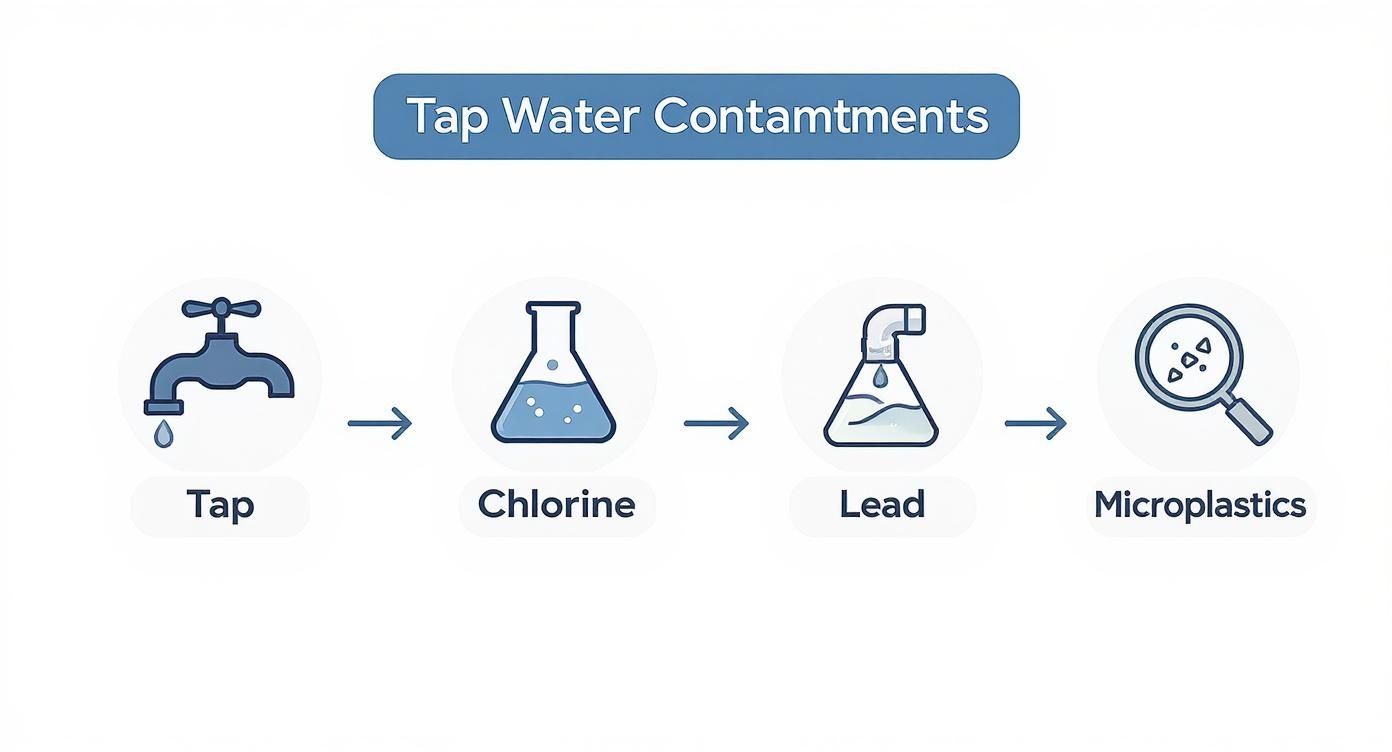
As you can see, impurities like chlorine and lead can enter your water long after it leaves the treatment plant. That's why having a good filter right in your home is so important.
Reverse Osmosis: The Purity Gatekeeper
While activated carbon is a sponge, reverse osmosis (RO) is more like a microscopic bouncer at an exclusive club. An RO system uses pressure to push water through a special filter called a semipermeable membrane. The pores in this membrane are so incredibly tiny that pretty much only pure water molecules are allowed through.
Everything else gets left behind.
This process is the gold standard when it comes to purification. It’s unbelievably thorough.
Reverse osmosis is one of the most effective methods for removing the widest range of contaminants, often capable of eliminating over 99% of total dissolved solids (TDS) from water.
An RO system is designed to take out a long list of tough contaminants, including:
- Heavy metals like lead, arsenic, and mercury.
- Dissolved salts and minerals (the stuff that causes hard water).
- Fluoride and nitrates.
- Even some microscopic threats like certain bacteria and viruses.
For anyone who wants the ultimate peace of mind about their drinking water, an RO system is tough to beat.
UV Purifiers: The Microbe Neutralizers
Now, let's talk about a totally different approach. Unlike filters that physically block or trap things, a UV purifier is all about sterilization. It uses a powerful ultraviolet lamp to zap microorganisms like bacteria, viruses, and cysts with UV light.
This light scrambles their DNA, which means they can no longer reproduce or make you sick. The key thing to remember is that it doesn't remove them—it just renders them completely harmless. Think of it as a final, chemical-free security checkpoint for your water, which is especially useful for homes with well water where bacterial contamination is a bigger concern.
Comparing Popular Water Filtration Methods
To make things a little clearer, here’s a quick-glance table comparing these popular filtration technologies. This should help you see side-by-side what each method does best.
| Filtration Type | What It Removes | Best For | Maintenance Needs |
|---|---|---|---|
| Activated Carbon | Chlorine, VOCs, pesticides, bad tastes/odors, sediment. | Improving the general taste and smell of city water. | Regular filter cartridge replacement (every 3-12 months). |
| Reverse Osmosis | Dissolved solids, heavy metals (lead, arsenic), salts, fluoride, nitrates. | Achieving the highest level of drinking water purity. | Membrane and pre-filter changes (annually or as needed). |
| UV Purification | Bacteria, viruses, protozoa, and other microorganisms. | Disinfecting water from private wells or as a final safety step. | Annual UV bulb replacement and quartz sleeve cleaning. |
As you can see, there’s no one-size-fits-all answer. The best systems often use a combination of these technologies to cover all the bases.
Choosing the Right Technology for Your Home
A great water filtration system is often a team effort. You might see a setup that starts with a sediment pre-filter, moves to an activated carbon filter for taste, then to an RO membrane for ultimate purity, and finishes with another carbon "polishing" filter.
But how do you know what your team needs? It all comes down to what's in your water to begin with. Without testing, you're just guessing.
That's why a professional water analysis is the absolute best first step you can take. Our experts can test your water and help you build a system that targets your specific issues, ensuring every drop you and your family drink is clean, safe, and tastes great.
The Unseen Threat of Microplastics in Your Water
One of the biggest concerns in water quality today is something you can't even see: microplastics. These are incredibly tiny plastic particles, typically less than five millimeters long, that are turning up everywhere—from the deepest oceans to the water flowing right out of our taps.
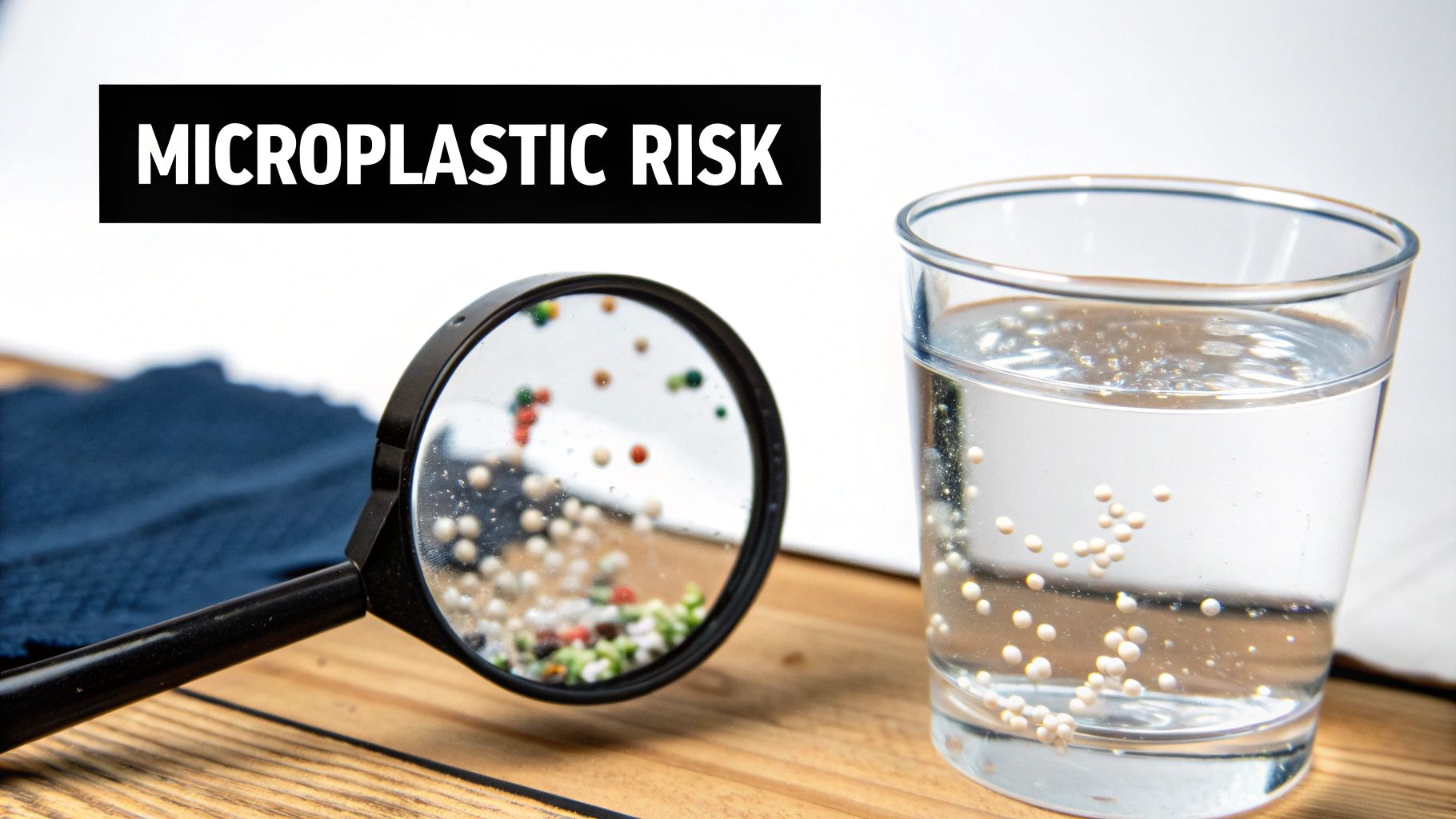
These tiny fragments come from all sorts of places. They break off from larger plastic items, shed from synthetic clothing in the wash, and escape from personal care products. They eventually find their way into our water supplies, and because they're so small and durable, many traditional water treatment plants just can't filter them all out.
This is a huge reason why more and more people are looking into home water filtration systems. In fact, worries about microplastics are a major driver behind the growth of the global home water filtration market, which is expanding at a rate of about 10.5% per year through 2030. People want filters that can handle these modern contaminants. You can dive deeper into the details on this market growth trend to see how consumer demand is shaping the industry.
The Challenge of Standard Filtration
Unfortunately, when it comes to tackling a microscopic problem, not all filters are up to the job. Many common filters you see on the shelf just aren't designed to catch particles this small.
- Basic Pitcher Filters: These are great for improving taste by removing chlorine with activated carbon, but their filter pores are way too large to stop microplastics.
- Faucet-Mounted Filters: While often a step up, many still don't have the fine-tuned filtration needed to reliably capture these tiny plastic bits.
So while these simpler filters can make your water taste and smell better, they can leave you exposed to invisible contaminants. To deal with something as widespread as microplastics, you need a more powerful and precise solution.
Reverse Osmosis: The Gold Standard for Microplastic Removal
This is where advanced filtration really shines. If you're serious about getting microplastics out of your water, reverse osmosis (RO) is your most effective line of defense.
Think of an RO system's membrane as a microscopic gatekeeper. The pores in this membrane are unbelievably small—around 0.0001 microns. That’s tiny enough to block not just microplastics, but a whole host of other unseen contaminants that might be in your water.
An RO system goes way beyond microplastics. It can remove up to 99% of all dissolved solids, including heavy metals like lead, "forever chemicals" like PFAS, and dissolved salts. It delivers a level of purity that other common filters simply can't achieve.
By pushing water through this high-tech membrane, an RO system physically separates pure water molecules from nearly everything else. This process ensures the water you drink and cook with is exceptionally clean. For anyone looking to protect their health from these emerging threats, it’s the most reliable strategy out there.
Our specialized filtration systems are engineered to provide exactly this level of protection, targeting even the smallest and most stubborn contaminants. If you’re concerned about what might be hiding in your water, take a look at our Microplastic Removal Solutions to learn how you can get total peace of mind.
Beyond Drinking Water: The Whole-House Advantage
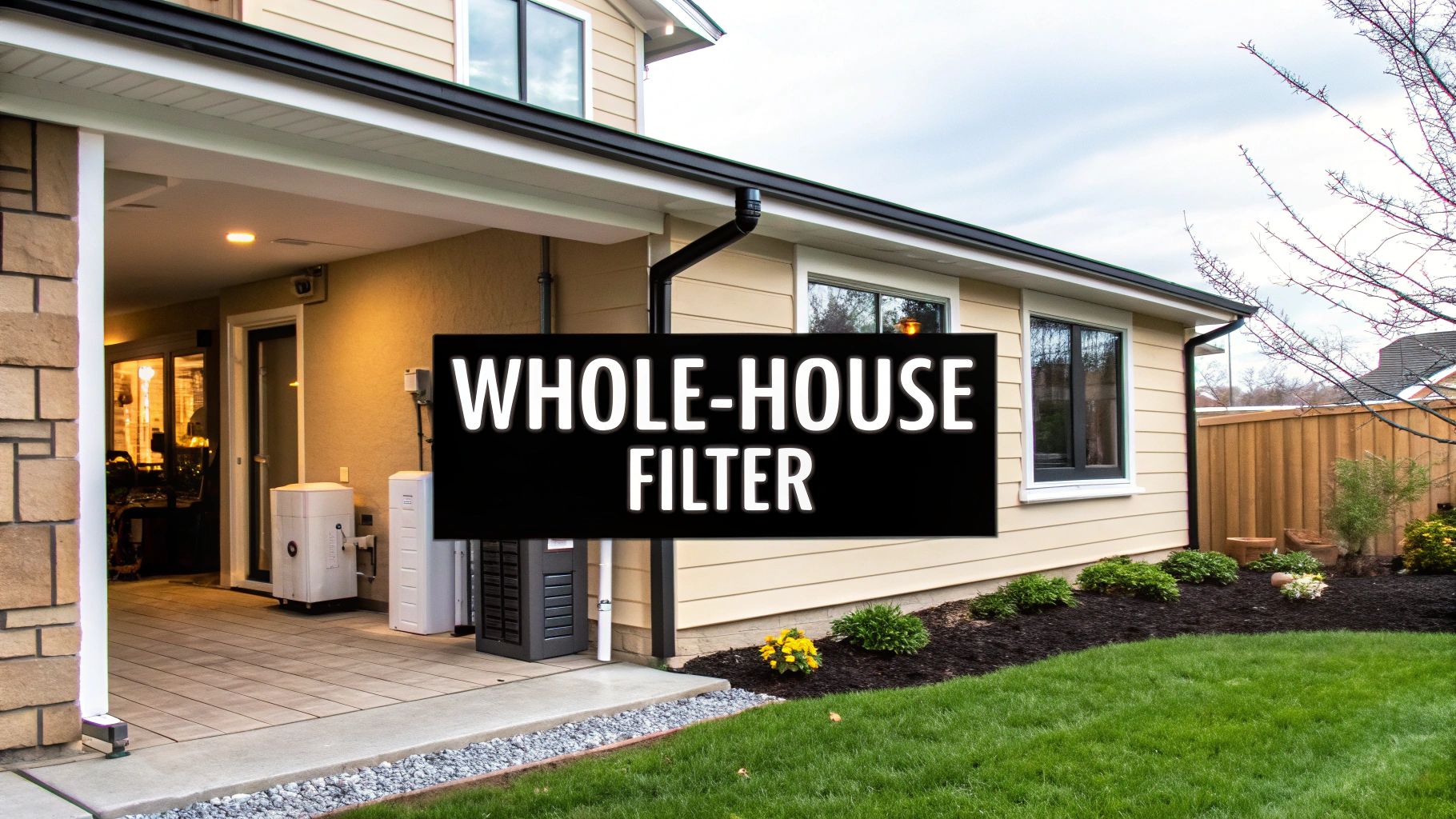
When we think about water filters, our minds usually go straight to the kitchen sink. And that makes sense—we want pure, clean drinking water. But what about the water you use for everything else? A whole-house system takes filtration to the next level, treating every drop of water right where it enters your home.
Think of it this way: you wouldn't just put a surge protector on your TV and leave your expensive computer and other electronics unprotected. A whole-house filter is like a surge protector for your entire plumbing system, delivering clean, filtered water to every tap, shower, and appliance. It's a comprehensive upgrade that protects your home from the inside out.
Protect Your Appliances and Plumbing
One of the biggest, yet often overlooked, perks of a whole-house system is how it safeguards your appliances. Hard water minerals, sediment, and even the chlorine from city water are constantly working against your home's infrastructure.
Your dishwasher, washing machine, and especially your water heater are on the front lines. The calcium and magnesium in hard water build up into a crusty limescale inside pipes and on heating elements. This scale forces your appliances to work much harder, driving up energy bills and leading to premature breakdowns.
Investing in a whole-house water system is really an investment in the longevity of your home. By removing corrosive elements like chlorine and scale-forming minerals, you can sidestep costly repairs and significantly extend the life of your plumbing and appliances.
Filtering this stuff out at the source means your appliances run more efficiently and last longer. It’s a proactive move that can genuinely save you thousands in replacement costs down the road.
Experience Better Showers and Softer Skin
The difference filtered water makes isn't just mechanical; you can actually feel it. Municipal water is treated with chlorine to make it safe, but that same chemical can be incredibly harsh and drying.
When you shower in chlorinated water, your skin and hair absorb it. The result? Dryness, itchiness, and hair that feels dull and brittle. A whole-house filter strips out chlorine and other chemicals before they even get to your bathroom.
The improvement is immediate:
- Softer Skin: Your skin can finally hold onto its natural moisture, leaving it feeling healthier and less tight.
- Healthier Hair: Without harsh chemicals stripping away natural oils, your hair becomes shinier and feels much less brittle.
- Less Irritation: Many people with sensitive skin or conditions like eczema find a huge amount of relief after making the switch.
It completely changes your daily shower, turning it from a necessary chore into something that feels genuinely clean and refreshing.
A Smart Investment for Your Entire Home
At the end of the day, a whole-house system is one of those home improvements that pays you back in every single room. The benefits all add up, improving your quality of life while protecting your property. You get the peace of mind that comes from knowing the water for cooking, cleaning, and bathing is just as pure as the water you drink.
This is about tackling water quality at the source, not just sticking a bandage on the problem at one faucet. For those who want the absolute gold standard in purity everywhere in their home, it’s worth looking into a whole-home reverse osmosis system. You can learn more about our advanced whole-home RO solutions to see how they provide truly exceptional purification.
Finding the Perfect Filtration System for Your Home
https://www.youtube.com/embed/7yXNY6gbdws
Navigating the world of home water filtration systems can feel a little overwhelming. But finding the right one really just comes down to matching the right technology to your home's unique water profile. Think of it like a personalized health plan—a generic, off-the-shelf solution rarely addresses your specific needs. To find that perfect fit, you first need a clear diagnosis of what's in your water.
The absolute most important step you can take is to understand your water's chemistry. Without this crucial information, you’re just guessing. Grabbing a filter from the store shelf is a shot in the dark that might not touch the real problems, like heavy metals or the minerals making your water hard.
Why Guesswork Isn't Good Enough
Every home's water is different. Seriously. Your neighbor's water quality could be a world away from yours, even if you live on the same street. Things like the age of your pipes, whether you have city or well water, and even local environmental factors all play a part. This is exactly why a one-size-fits-all approach to water filtration almost always falls short.
Here are the key things you need to nail down for an effective solution:
- Your Water Source: Are you on a municipal supply or a private well? City water is treated with chemicals like chlorine, while well water can be more prone to picking up bacteria and sediment.
- Family Size and Water Usage: A family of five will put a much bigger demand on a system than a couple, which directly impacts the size and capacity you'll need.
- Identified Contaminants: The specific junk in your water—whether it's hardness minerals, lead, or even microplastics—is what determines the best type of filtration technology for the job.
The only way to choose a truly effective home water filtration system is to start with a professional water analysis. It removes all the guesswork and gives you a clear roadmap to the purest, safest water for your family.
This data-driven approach makes sure your investment is a smart one and that your water is genuinely clean.
The Critical Role of a Professional Water Test
A professional water test is the bedrock of any solid filtration strategy. Your city's water report provides a decent big-picture view, but it can't tell you what the water picks up traveling through miles and miles of pipes to your faucet. Our comprehensive analysis tests your water right at the tap, giving you a precise, real-time snapshot of its quality.
We measure key indicators like Total Dissolved Solids (TDS), water hardness, and chlorine levels. This analysis shows us exactly what needs to be removed, which lets us recommend a system that’s perfectly suited to your home. For many homeowners worried about what's in their drinking water, a targeted solution makes the most sense. For example, you can explore under-sink reverse osmosis systems that deliver incredible purity right where you need it most—the kitchen tap.
Making an Informed and Lasting Decision
Of course, your budget is a key part of the equation. It’s not just about the initial purchase price, but the total cost of ownership over time. Thinking about the long-term upkeep is vital, because just like any other important part of your home, consistent and regular property maintenance is what guarantees top performance and a long lifespan for your system.
Once you have a handle on these factors, you can move forward with confidence. The whole process starts with knowing what's in your water. Let our experts provide the clarity you need to make the best choice for your household. Schedule your free, no-obligation water test today and take that definitive first step toward better health and peace of mind.
Got Questions About Home Water Filtration? We Have Answers.
Thinking about a home water filtration system is a big step, and it's totally normal to have a lot of questions. This is an investment in your home and your family's health, after all, so you need clear, honest answers. We've gathered some of the most common questions we hear from homeowners to help you feel confident in your decision.
Our job is to cut through the confusion and give you the knowledge you need to pick the right solution. Let's get into it.
How Do I Know What's Really in My Water?
This is always the first—and most important—question people ask. The answer is actually simpler than you'd think. While your city's water quality report gives you a broad overview, it doesn't tell you the whole story. It can't account for what happens to the water as it travels through miles of pipes to get to your house. Old plumbing can introduce contaminants that weren't there when the water left the treatment plant.
The only way to be certain about what’s coming out of your tap is to test it right there.
A professional in-home water analysis is the definitive first step. It gives you a precise snapshot of your water's chemistry—revealing hardness levels, chlorine, and Total Dissolved Solids (TDS)—so you can get a filtration strategy that actually targets your specific problems.
Our certified technicians can perform a detailed, in-home water analysis to pinpoint exactly what's affecting your water quality. This approach lets us recommend a system that’s a perfect fit for your home, not just a generic guess. Take the guesswork out of it and schedule a complimentary water test with us today to find out what's going on.
Are Water Filtration Systems Expensive to Maintain?
It's smart to think about ongoing costs, but it’s better to see maintenance as an investment that pays you back in more ways than one. The exact cost depends on the system, of course, but it’s usually far more affordable than the alternatives. For example, replacing filters each year typically costs much less than what a family spends on bottled water—a habit that costs the average person over $600 a year.
Maintenance really depends on the technology:
- Simple Carbon Filters usually need to be swapped out every few months to a year.
- Reverse Osmosis Systems have several filters and a membrane, with parts that last anywhere from one to several years.
Beyond that, a whole-house system actively saves you money by protecting your appliances. By getting rid of hard water minerals and corrosive chlorine, it stops the scale buildup that wrecks dishwashers, washing machines, and water heaters. That means fewer costly repair bills and not having to replace them prematurely. We even offer service plans to make maintenance predictable and easy on your budget. You can contact us to learn about our maintenance packages and find one that works for you.
Can I Just Install a Filtration System Myself?
Going the DIY route can be tempting, but this is one area where calling in a pro really pays off. Sure, simple screw-on faucet filters are designed for anyone to install, but more advanced home water filtration systems are a completely different ballgame.
Complex units like under-sink reverse osmosis systems or whole-house filters have to be integrated perfectly with your home’s plumbing. A small mistake during installation can lead to big problems, from slow leaks that cause water damage to incorrect pressure settings that stop the system from working right. Worst of all, a DIY job can often void the manufacturer's warranty, leaving you high and dry if something goes wrong.
Our expert installers make sure your system is set up for top performance from day one. They handle the tricky plumbing connections, calibrate everything correctly, and test it all to make sure it runs without a hitch. Trusting a professional gives you peace of mind and protects your investment for years to come.
Ready to feel the difference that truly clean, pure water makes for your family? The experts at Water Medic of Cape Coral have over 25 years of experience designing and installing the perfect water solutions for Southwest Florida homes. Let us help you take the next step. Visit https://watermedic.com to schedule your free water analysis and discover the right system for your home.