
10 X 20 Pool Guide for Southwest Florida Owners
A 10 x 20 pool is a 200-square-foot rectangle holding approximately 6,000 to 6,750 gallons of water, making it a highly efficient but locally demanding small residential option. In Cape Coral, that compact footprint doesn't eliminate maintenance work, because intense sun, tropical debris, rain, and heavy use can change the water quickly.
The most popular advice about a small pool is that it will automatically be cheap and easy to own. That's only partly true. A smaller pool uses less water than a larger backyard design, but its limited volume gives mistakes less room to hide. A missed test, a clogged basket, or several days of debris can affect the entire swimming environment faster than many homeowners expect.
There's another water decision worth considering alongside pool care. A pool may be the most visible water system on your property, but your household also depends on the water entering the home. A whole house reverse osmosis system treats water at the point of entry, which is a different application from pool filtration. NSF explains that point-of-entry reverse osmosis systems are generally installed near the water meter for municipal supplies or near a pressurized storage tank for well water, with NSF/ANSI 58 serving as the relevant reverse osmosis standard.
For a Cape Coral or Lee County homeowner, the practical question isn't only whether a 10 x 20 pool fits. It's whether the pool design, maintenance routine, and household water treatment plan match the way the property is used.
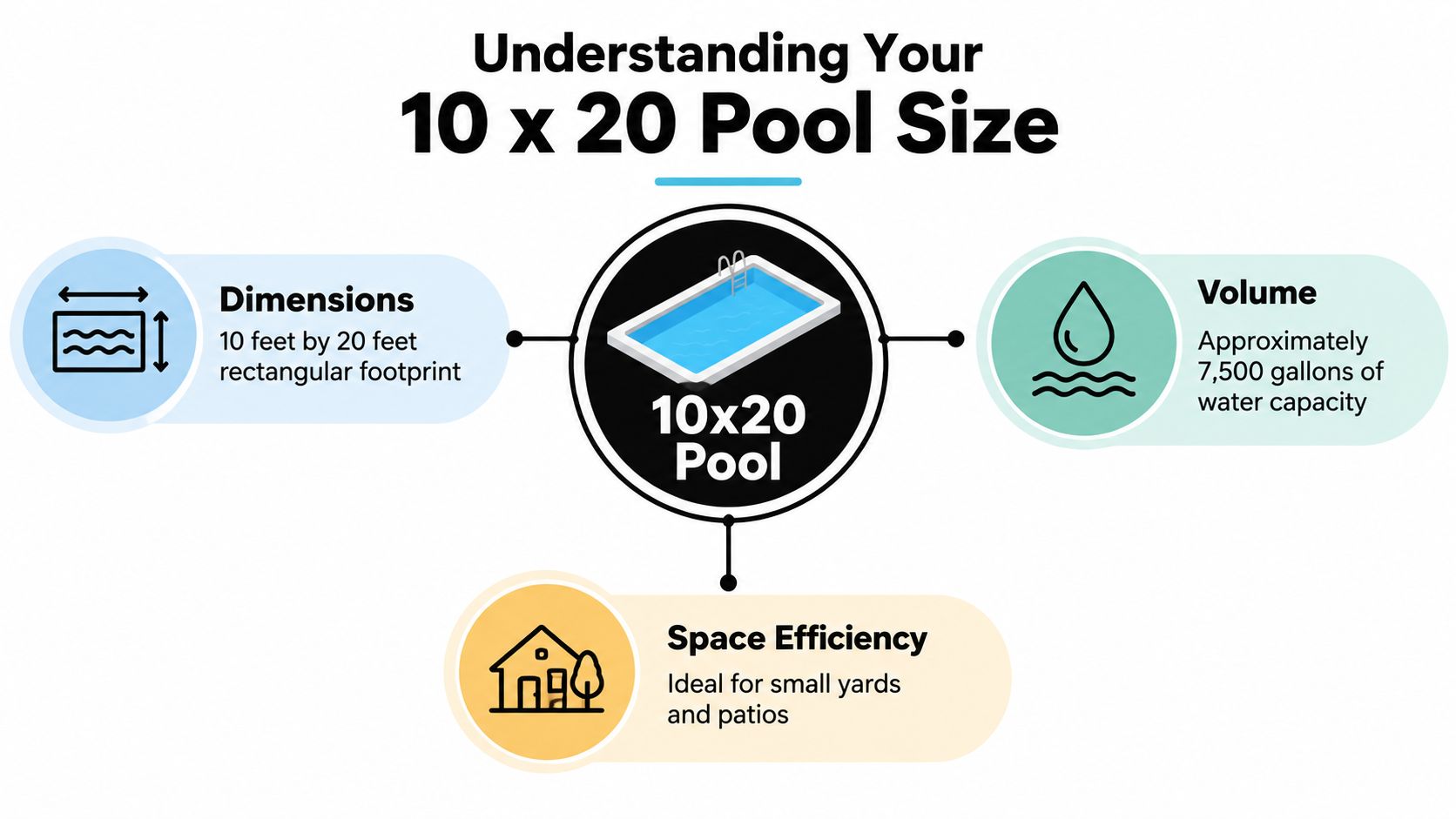
Understanding Your 10 x 20 Pool Size
Owning a small pool requires precise management. A 10 x 20 pool may look modest on a site plan, but every design choice affects the water that must be circulated, tested, heated, and treated.
The footprint is straightforward. Ten feet multiplied by twenty feet gives you a 200-square-foot rectangle. That size has become a durable benchmark for a small residential inground pool, appearing in size guides alongside formats such as 16 x 32, 18 x 36, and 20 x 40. Pool-size guidance from Latham Pool places the 10 x 20 format within the average small inground category.
What the footprint means in daily use
The rectangle can support casual swimming, cooling off, family play, or a lounge-oriented layout, but it isn't a full-size lap pool. The same footprint can feel very different depending on whether the design prioritizes shallow recreation, a deeper lounging area, steps, benches, or other features.
Typical depth guidance varies by design. Latham describes small-pool depth ranges from around 3 feet 2 inches to 5 feet, or approximately 4 feet 10 inches in another design context, so two pools with identical surface dimensions may require different service settings and water-volume calculations. The pool's shape on paper is only the starting point.
That principle also applies to household water treatment. A whole-house reverse osmosis system isn't a substitute for the pool's pump, filter, sanitizer, or testing routine. It treats water as it enters the residence, while the pool remains a separate body of water with its own circulation and chemical requirements.
Practical rule: Choose the pool's depth and features first, then size the maintenance routine around the water volume rather than relying on the label “small pool.”
In a compact Cape Coral yard, space efficiency can be valuable. You may have room for a pool, deck, access route, equipment area, and landscaping, but the available swimming area is only part of the decision. Palm debris, screened enclosures, shade, and the location of the equipment all affect how convenient the pool will be to own.
Calculating Water Volume and Depth Variables
The 200-square-foot surface area doesn't tell you how much water the pool holds. Average depth is the critical variable, because water volume increases linearly as depth increases.
The standard relationship is:
Gallons ≈ length × width × average depth × 7.5
For a 10 x 20 pool, each additional foot of average depth adds about 1,500 gallons. SwimmingPool.com's pool-volume calculator uses this standard relationship, which is useful when discussing chemical dosing, filtration, and heating expectations with a service provider.
A pool with an average depth of 4.5 feet works out to approximately 6,750 gallons using the more precise relationship of length × width × average depth × 7.48 gallons per cubic foot. Independent pool references commonly place this format around 6,000 to 6,750 gallons, depending on the average depth and design assumptions, as outlined by The Size's pool reference guide.
Why depth changes the operating plan
Depth affects more than the initial fill. It changes the amount of sanitizer required, the time needed to circulate and heat the water, and the way rainfall or splash-out affects the overall balance.
A shallow family design may respond differently from a deeper recreation-oriented design, even when both are ten feet wide and twenty feet long. If a homeowner uses a generic gallon estimate instead of the actual average depth, chemical additions can be either inadequate or excessive. Neither approach is a substitute for testing.
The same discipline applies when a homeowner evaluates a whole-house reverse osmosis system. The correct design depends on the residence's incoming water conditions, the installation location, storage arrangement, and the system's certified specifications. A pool's volume shouldn't be used to size household drinking-water treatment, and household water treatment shouldn't be represented as a replacement for pool sanitation.
A useful handoff for service providers
Before requesting maintenance or treatment recommendations, record:
- Average depth: Include the shallow and deep areas rather than quoting only the maximum depth.
- Pool features: Steps, benches, ledges, and unusual shapes affect the practical water-volume estimate.
- Usage pattern: Frequent swimming, gatherings, and splash-out can change the service burden.
- Water source: Tell the provider whether the home uses municipal water or a private well.
That information gives a technician a better starting point than the footprint alone. It also prevents the common mistake of treating every 10 x 20 pool as though it contains exactly the same amount of water.
Above-Ground vs. Inground Installation Options
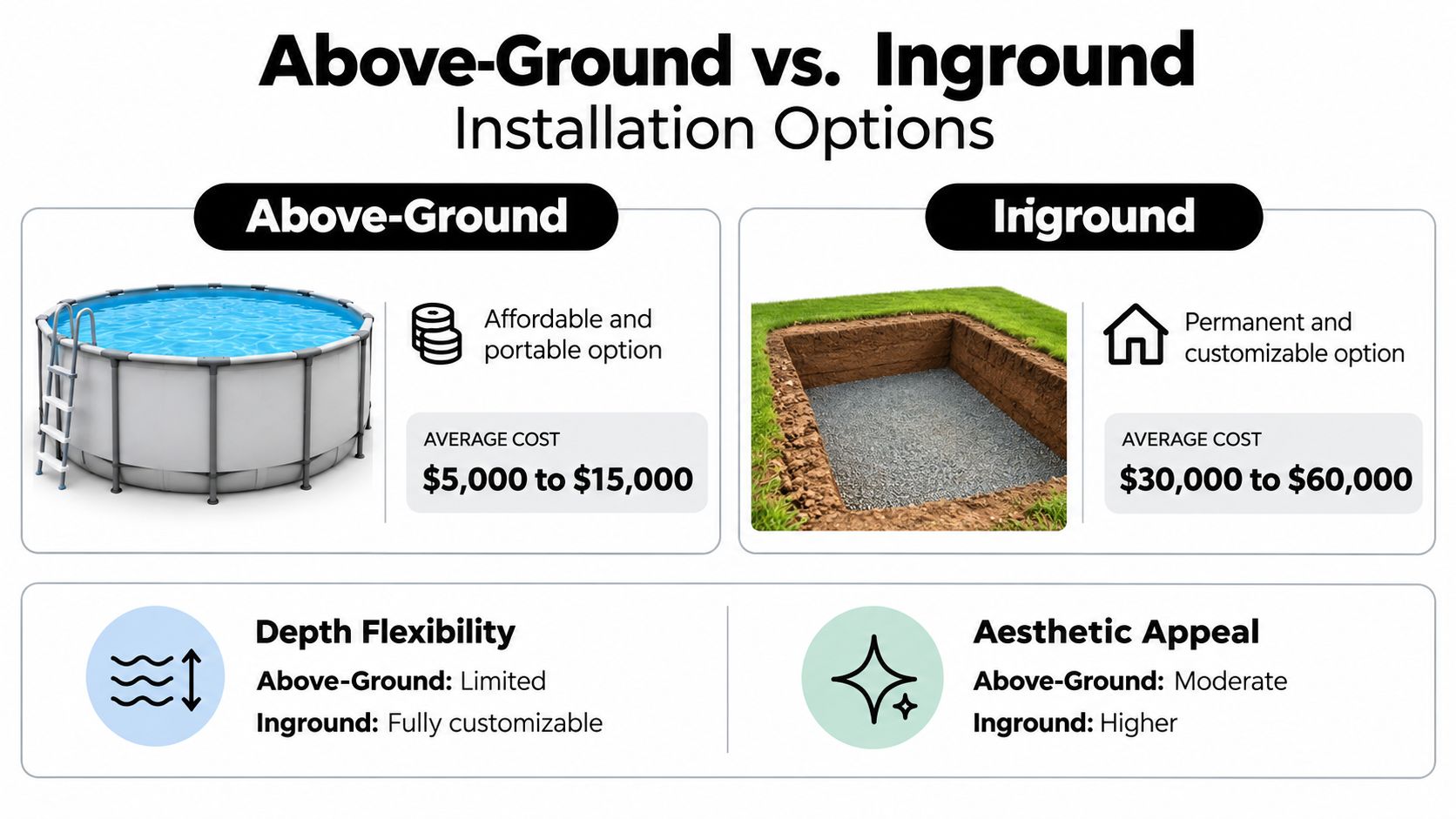
A 10 x 20 above-ground pool and a 10 x 20 inground pool share a footprint, but they don't provide the same ownership experience. The above-ground option generally emphasizes speed, portability, and a lower commitment to the yard. The inground version is a permanent feature with more control over depth, finish, access, and surrounding hardscape.
Above-ground trade-offs
Above-ground construction can make sense when the homeowner wants a seasonal or lower-commitment installation. It may also suit a yard where excavation, access, or long-term site modifications are concerns. The trade-off is that the surrounding structure can feel more utilitarian, and depth and shape options are usually more limited.
An above-ground pool still needs disciplined care in Southwest Florida. The water remains exposed to heat, rain, leaves, and heavy use. A lower initial commitment doesn't remove the need for circulation, water testing, basket cleaning, and debris removal.
Inground trade-offs
Inground construction integrates more naturally with a patio and outdoor surroundings. The Latham guidance linked earlier identifies the 10 x 20 format as a standard small inground benchmark, with depth flexibility that can support shallow family use, lounging, or compact recreation.
That flexibility comes with more planning. The homeowner must consider the pool shell, deck, safety features, equipment placement, access for service, and the long-term appearance of the yard. A permanent pool also deserves a maintenance plan that protects the investment rather than treating service as an occasional cleanup.
For homeowners comparing broader swimming pool service options, the key question is whether the provider can support the actual equipment and usage pattern, not merely whether the pool is described as small.
Where reverse osmosis fits
Whole-house reverse osmosis belongs in a separate part of the decision. It can address household water treatment at the point where water enters the residence, but it doesn't replace the pool's dedicated equipment or chemical controls. If a home uses well water, the homeowner should discuss the incoming water conditions with a qualified treatment provider before selecting a system.
A compact pool saves space. It doesn't remove the need to make separate decisions about household water quality and pool water care.
The best installation choice is the one that matches the property, budget, intended use, and willingness to maintain it. Above-ground and inground designs can both work, but neither should be selected on purchase price alone.
Southwest Florida Maintenance and Care Requirements
Cape Coral pools operate in an environment that is harder on water clarity than a generic national size chart suggests. Strong sunlight affects sanitizer demand, warm conditions encourage algae pressure, rain can dilute or alter the balance, and tropical debris repeatedly loads the skimmer and filter.
A small pool can react quickly because its total water volume is limited. When debris or swimmer load enters the water, the same contamination is distributed through fewer gallons than it would be in a larger pool. That doesn't mean the pool is unmanageable. It means the routine has to be consistent.
A practical Cape Coral routine
Start with physical removal. Empty baskets, skim leaves, brush areas where debris settles, and keep the water moving through a clean filter. A screened enclosure can reduce some debris, but it doesn't eliminate pollen, dust, insects, windblown material, or organic matter.
Test after weather changes and heavy use rather than waiting for the water to look cloudy. CDC guidance recommends a pH range of 7.0 to 7.8 and testing disinfectant and pH at least twice daily, with more frequent testing when use is heavy. Homeowners should follow the product labels and their service provider's plan for the specific pool and equipment.
The CDC also recommends at least 1 ppm free chlorine for pools. If cyanuric acid is used, the CDC recommends at least 2 ppm chlorine in pools, because stabilizer changes the minimum recommended level. The CDC's home-pool treatment guidance also distinguishes pools from spas, where the minimum free-chlorine recommendation is 3 ppm.
Rain, sun, and debris pressure
After a major rain event, don't assume clear-looking water is balanced. Check the chemistry, inspect the baskets, and watch shaded or poorly circulating areas for early signs of algae. Keep vegetation trimmed away from the enclosure and equipment area where practical, because reducing organic debris lowers the workload on the filtration system.
Heating also deserves a realistic plan. A smaller volume may be easier to heat, but repeated heat loss from evaporation, exposure, or uncovered operation can still affect energy use. A cover, appropriate run scheduling, and clean filtration support more predictable performance.
For homeowners who prefer a scheduled approach, monthly pool maintenance service can provide recurring testing, water balancing, basket cleaning, brushing, and vacuuming as needed. The value is consistency. A technician can identify a trend before a small chemistry deviation becomes a visible water-quality problem.
A whole-house reverse osmosis system should be evaluated separately. It may be appropriate for household water entering the residence, especially when the water source and treatment goals justify point-of-entry treatment, but pool maintenance still requires its own testing and sanitation routine.
Estimating Installation and Annual Costs
The purchase price is only one part of owning a 10 x 20 pool. The more useful question for a homeowner is what the pool will demand in the second year, when the novelty has worn off and regular service, testing, cleaning, and equipment attention become part of the household routine.
Cost guides commonly classify a 10 x 20 pool as small. HomeAdvisor's pool-maintenance cost guidance places annual maintenance estimates around $400 to $900, while broader references show small 10 x 20 pools ranging from about $60 for a one-time visit to $350 to $1,050 overall, depending on service frequency and scope.
Those figures are useful benchmarks, not promises for Cape Coral. Southwest Florida conditions can push actual upkeep higher when the pool is used heavily, surrounded by vegetation, exposed to storm debris, or maintained throughout the year. A smaller footprint may reduce the amount of water and treatment product required, but it doesn't guarantee fewer visits or less labor.
What changes the service bill
Service frequency usually matters more than the label “small.” A lightly used pool in a clean, open yard may need a different schedule from a heavily used pool beneath palms or near dense landscaping.
Consider these cost drivers:
- Debris load: Frequent skimming, basket emptying, and filter attention add labor.
- Water testing: Unchecked chemistry can create corrective work that routine testing would have prevented.
- Usage: Swimmers, guests, and splash-out increase the need for inspection and adjustment.
- Equipment condition: Dirty filters and poorly maintained circulation equipment can reduce efficiency.
- Household water treatment: A whole-house reverse osmosis system is a separate investment with its own installation and service considerations.
Compare scope, not just price
A low service quote may cover only a visit and basic chemical addition. Another plan may include testing, balancing, brushing, vacuuming, basket cleaning, and inspection of the equipment area. Ask for the exact scope, visit frequency, included materials, and response process before comparing proposals.
Homeowners considering payment options can review pool and water-treatment financing information as part of the larger project budget. Financing doesn't make ownership free, so the monthly obligation should be considered alongside recurring service and treatment costs.
The clearest budget separates installation from ownership. Set aside room for routine care, weather-related cleanup, replacement consumables, and household water treatment if that is part of the property's broader water plan. That approach is more reliable than assuming the smallest pool automatically creates the smallest maintenance bill.
Permitting and Site Preparation Checklist
A compact pool still requires careful site planning. The water surface may occupy only 200 square feet, but the project also needs safe access, equipment space, surrounding circulation, and room for service work.
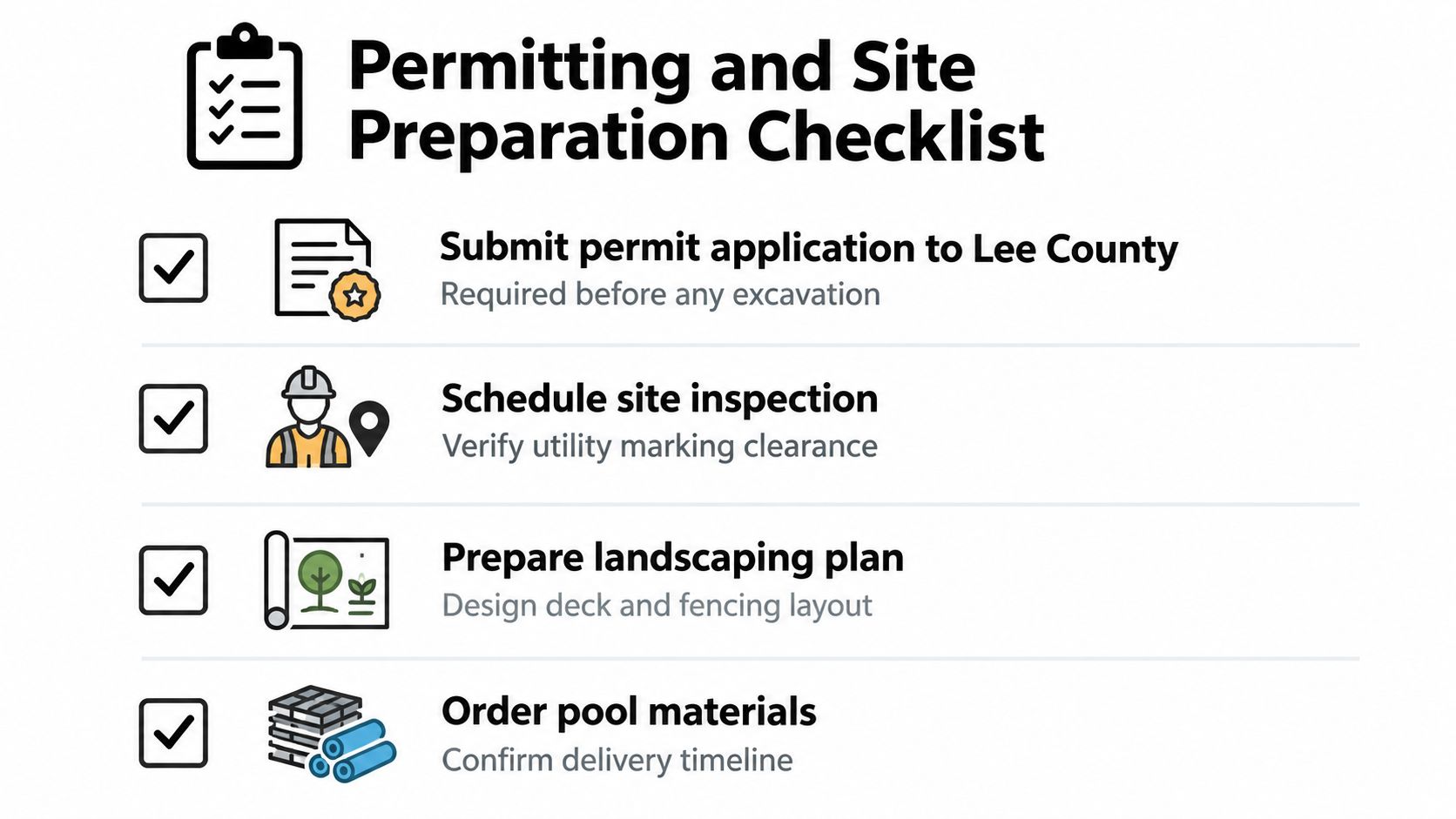
Before excavation, verify the current requirements with the relevant City of Cape Coral and Lee County offices or use a qualified pool contractor familiar with local approvals. Requirements can vary with the property, pool type, safety features, setbacks, and site conditions, so don't rely on an old neighbor's project as your standard.
Verify the site before ordering materials
Use a written checklist:
- Submit the permit application. Confirm which local office handles the application and what drawings, site plans, and safety details are required.
- Arrange utility marking and inspection. The excavation area should be cleared through the appropriate marking process before work begins.
- Confirm property constraints. Verify setbacks from property lines, structures, easements, and other features with the approving authority.
- Plan the deck and enclosure. Show access paths, gates, equipment location, drainage design, and landscaping on the site plan.
- Confirm delivery access. Check whether trucks, shell deliveries, excavation machinery, or lifting equipment can reach the backyard.
- Coordinate the inspection schedule. Ask who requests each inspection and what must be visible when the inspector arrives.
Include the home's water plan
If the residence is on a private well, discuss whole-house reverse osmosis before finalizing the equipment area. NSF identifies point-of-entry systems as treating water for the residence as it enters, so the installation location and storage arrangement should be resolved independently from the pool layout.
Good preparation prevents avoidable changes. It also gives the pool service team enough room to reach baskets, filters, pumps, heaters, and controls without damaging new landscaping.
When to Hire Local Pool Service Experts
DIY care can work for an attentive homeowner who has time to test, brush, skim, inspect, and respond after weather changes. The challenge in Southwest Florida is consistency. A pool can look acceptable while its chemistry, circulation, or debris load is moving in the wrong direction.
Professional service becomes especially useful when the pool is used often, the yard produces heavy debris, the owner travels, or the property is managed for tenants or guests. It also makes sense when the homeowner doesn't want to interpret test results, calculate adjustments, or coordinate recurring equipment care.
Signs your routine needs support
Bring in a qualified local provider when:
- Water clarity changes repeatedly: Recurring cloudiness or algae pressure calls for diagnosis, not repeated guesswork.
- Testing gets skipped: A schedule that isn't followed won't protect the pool consistently.
- Weather creates repeated cleanup: Storm debris and rain events can create a workload that is difficult to handle around work and family commitments.
- Equipment needs attention: Filters, pumps, heaters, and controls require inspection and appropriate servicing.
- The property has separate water-treatment needs: Whole-house reverse osmosis should be assessed by a provider who understands point-of-entry treatment and the home's water source.
A local specialist also understands that a 10 x 20 pool in Cape Coral isn't operated like the same pool in a cooler or less debris-prone market. The service plan should reflect sun exposure, landscaping, usage, water source, and whether the pool operates throughout the year.
Water Medic of Cape Coral provides whole-house reverse osmosis systems and residential and commercial pool services, including recurring maintenance and pool equipment service, so homeowners can address household water treatment and pool care through clearly separated service plans. The right arrangement is the one that gives the technician enough information to maintain the pool properly and gives the homeowner a defined scope of work.
A small pool can be an efficient choice, but only when the owner budgets for the environment as well as the footprint. Consistent testing, timely cleaning, appropriate equipment care, and a correctly evaluated household water-treatment system protect the convenience that made the 10 x 20 design attractive in the first place.
If you're planning a 10 x 20 pool in Cape Coral or Lee County, visit Water Medic of Cape Coral to discuss whole-house reverse osmosis, recurring pool maintenance, and pool equipment service. Ask for a practical plan based on your water source, pool usage, debris exposure, and preferred service frequency.