
Brown Spots on Bathroom Ceiling: SW Florida Solutions
You walk into the bathroom, look up, and there it is. A brown spot spreading across the ceiling over the shower or near the vent. Most homeowners want to believe it's old paint, a little mildew, or something they can cover with one coat and forget.
That's the wrong move.
In Southwest Florida, brown spots on a bathroom ceiling usually mean moisture has been where it doesn't belong. Sometimes the cause is obvious. Often it isn't. A hidden leak, trapped shower humidity, roof intrusion on an upper floor, and even paint failure can all leave similar-looking stains. If you only treat the surface, the stain usually comes back.
There's also a less obvious issue that too many people ignore. The water moving through your home can make these stains uglier, harder to remove, and more likely to keep showing up on fixtures, paint, and other surfaces. That's where smart homeowners stop thinking only about repair and start thinking about the whole house water environment.
What Those Ugly Brown Spots on Your Ceiling Really Mean
You finish a shower, grab a towel, and notice a tan or brown ring spreading above you. A week later, it looks darker. That spot is a moisture signal, and it usually means water or heavy humidity has already moved through paint, drywall, or the joint compound in the ceiling.
Paint rarely creates a true brown ceiling stain by itself. Water does. In a Southwest Florida bathroom, that usually points to moisture building up repeatedly, a plumbing issue above the room, or outside water finding a path in from the roof or attic.
The three usual suspects
Common causes for bathroom ceiling stains include:
- A plumbing leak above the bathroom: If there's a tub, shower, toilet, or water line overhead, start there.
- Condensation from daily steam: Long showers, weak fan performance, and our heavy humidity keep the ceiling damp long enough to discolor.
- A roof or attic moisture path: In a top-floor bathroom, rain intrusion, attic condensation, or HVAC-related moisture can stain the same area.
Repainting before you find the source wastes time and money. The spot will bleed back through, and the ceiling can soften, peel, or feed mildew while the problem keeps going. If you need help finding the source fast, schedule professional leak detection for bathroom ceiling stains.
There's another factor homeowners miss. Bad water quality can make these stains nastier. Hard water and mineral-heavy water leave more residue on fixtures, around vents, on paint, and on any surface that stays damp. In bathrooms, that means moisture problems look worse, clean up poorly, and return faster.
That matters in Southwest Florida. Homes here deal with constant humidity already. Add mineral-heavy water and you get more visible staining, more buildup, and more signs that your home's water and moisture systems need attention, not a quick cosmetic fix.
My advice is simple. Treat a brown spot on the bathroom ceiling as an early warning. Fix the moisture source first, then address the water quality feeding the bigger pattern across the house. Water Medic handles both sides of that problem, from finding hidden leaks to recommending whole-home water treatment that helps prevent recurring staining and surface damage.
Identifying the Source Leak vs Condensation vs Paint
The fastest way to solve brown spots on a bathroom ceiling is to diagnose by location and behavior. Don't guess. Check the obvious path first.
Independent repair guidance recommends this sequence: verify whether the stain is active, inspect the plumbing directly above the mark, then check non-plumbing sources such as HVAC condensate or roof intrusion if the bathroom is on an upper floor, as outlined in Angi's guide to brown spots on ceilings.
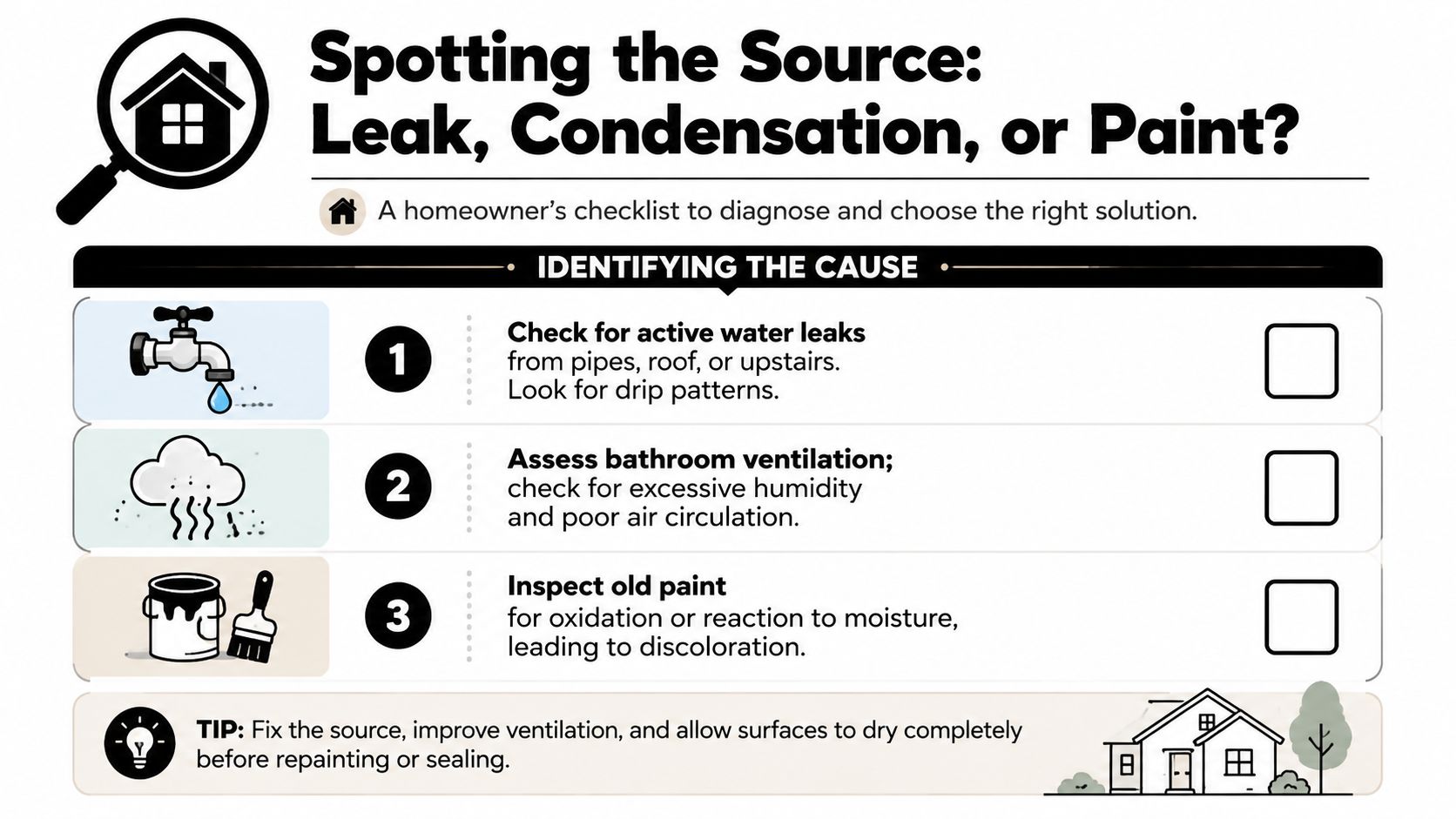
Start with one question
What's above the stain?
That answer cuts the search time down fast.
| Location of stain | Most likely direction to inspect | What to check first |
|---|---|---|
| Bathroom below another bathroom | Plumbing | Toilet wax ring, supply lines, sink drain, shower valve, caulk joints |
| Top-floor bathroom ceiling | Roof, attic, condensation, HVAC | Roof path, attic moisture, condensate issues |
| Spot above shower with no obvious leak | Condensation or paint issue | Fan performance, steam buildup, paint condition |
How to tell if it's active
Use your eyes and your hand. You don't need fancy tools for an initial check.
- Darker center: Often points to ongoing moisture.
- Soft drywall or bubbling paint: Suggests the material has stayed wet.
- Only shows up after showers: Condensation or paint-related moisture is more likely.
- Gets worse after rain: Think roof or attic path.
- Directly under a fixture: Suspect plumbing first.
Leak clues homeowners miss
If the stain is under another bathroom, inspect these first:
- Toilet area. A failing wax ring can let moisture travel where you won't see it from above.
- Supply lines and shutoffs. Slow drips often leave no puddle on tile but still feed the ceiling below.
- Sink drain connections. These can leak only during use.
- Shower valve wall and trim. Water can escape behind finished surfaces.
- Caulk and joints. Failed caulk lets water move out of the wet zone and into framing.
If you need help tracing the exact source, professional leak detection services save a lot of drywall guesswork.
When it's not really a leak
Not every brown mark means a broken pipe. Some bathroom ceiling spots are surface mildew from condensation. Others are a paint problem.
Mosby Building Arts notes that many brown spots on bathroom ceilings are mildew growing on the paint surface from condensation, and in some cases there is “likely nothing wrong” with the attic, roof, or venting, as explained in their bathroom ceiling mildew article.
That's why pattern matters. If the stain is concentrated above the shower, near corners, or around areas that stay steamy, you may be dealing with humidity and surface growth rather than hidden structural water entry.
The Hidden Contributor How Your Water Quality Makes Stains Worse
You fix the ceiling spot, repaint it, and a few months later the bathroom still looks tired. The stain may be gone, but the room keeps showing the same pattern. Cloudy glass. Crusty shower heads. Toilet rings. Dingy caulk. That points to a second problem many articles miss. Your water quality is making the bathroom harder to keep clean and harder to keep looking finished.
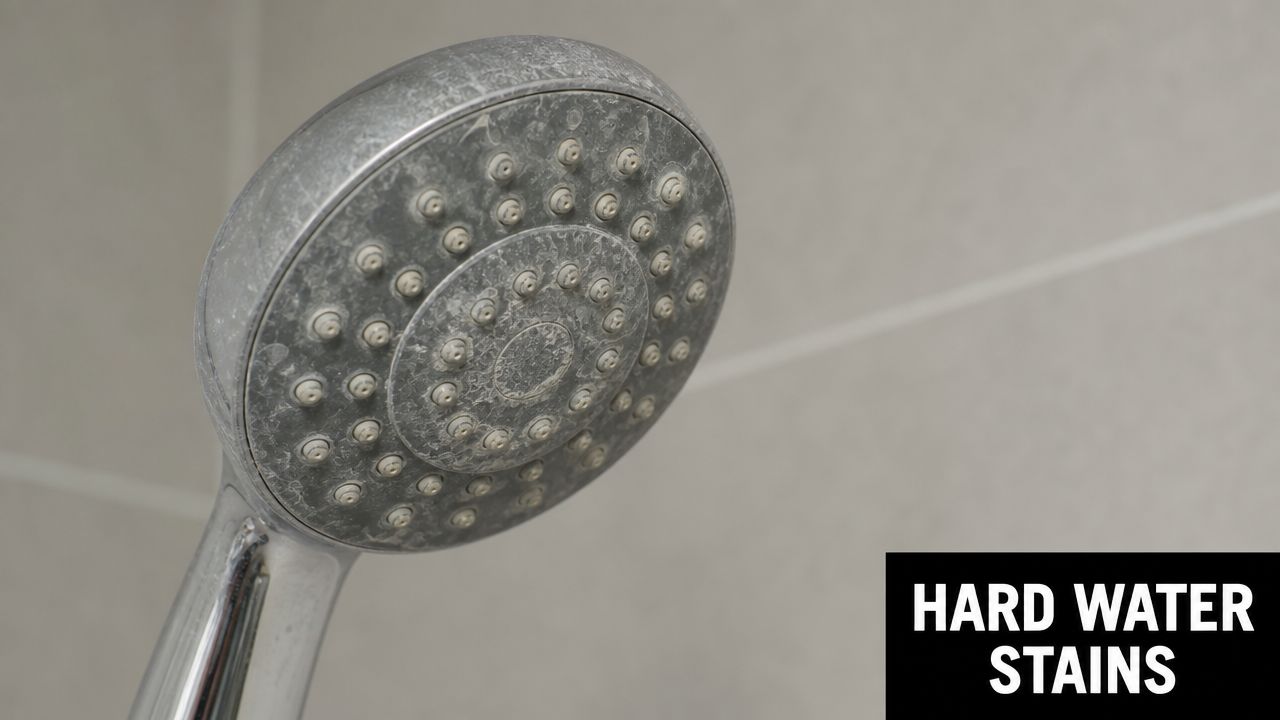
Why the stain looks worse than you expect
Water leaves more than moisture behind. As it moves through surfaces, evaporates, and cycles through a humid bathroom, it can leave mineral residue, discoloration, and grime that make a brown spot stand out faster and look dirtier than it should.
In Southwest Florida, that matters. Homes here deal with hard water, mineral buildup, and constant humidity at the same time. A ceiling stain may start with a leak, steam exposure, or paint failure, but poor water quality adds another layer of residue that makes cleanup harder and cosmetic damage more obvious.
The bathroom exposes the bigger house problem
Bathrooms usually show water quality issues first because every surface gets hit over and over.
You see the pattern on:
- Shower heads and trim
- Glass enclosures
- Tile and grout
- Toilet bowls
- Caulk lines
- Painted surfaces exposed to daily steam
If those surfaces are always collecting film and scale, the ceiling is part of the same story. The brown spot is one symptom. The bigger issue is water entering the house with minerals and contaminants that keep showing up anywhere moisture evaporates.
The paint issue homeowners keep misreading
Some brown marks are tied to paint stress, not active mold growth. Realtor.com explains that humidity can pull surfactants in paint to the surface, leaving brown streaks or spots that homeowners often misidentify. Their guidance on brown spots and streaks in bathrooms also points to the appropriate fix: clean the surface correctly, use the right paint, and reduce the moisture load causing the problem.
Poor water quality makes that cycle worse. Mineral residue and constant moisture leave bathroom finishes under more stress, so ceilings and walls stain faster and stay ugly longer.
Why treating the whole house makes more sense
Replacing a shower head or repainting the ceiling only treats the symptom. If the home has ongoing water quality problems, the residue keeps coming back on fixtures, glass, tile, and painted surfaces.
That is why I recommend a whole-home reverse osmosis water treatment system for many Southwest Florida homes. It addresses what is entering the property in the first place, helps cut down on mineral buildup throughout the house, and supports cleaner fixtures, cleaner wet areas, and lower maintenance over time.
A brown spot on the bathroom ceiling should make you inspect for moisture. It should also make you look at the quality of the water your house uses every day. In a lot of homes, both problems are active at once.
Your Step-by-Step Remediation and Repair Guide
Once you know what caused the stain, fix it in the right order. The order matters. If you skip steps, the spot usually bleeds back through.
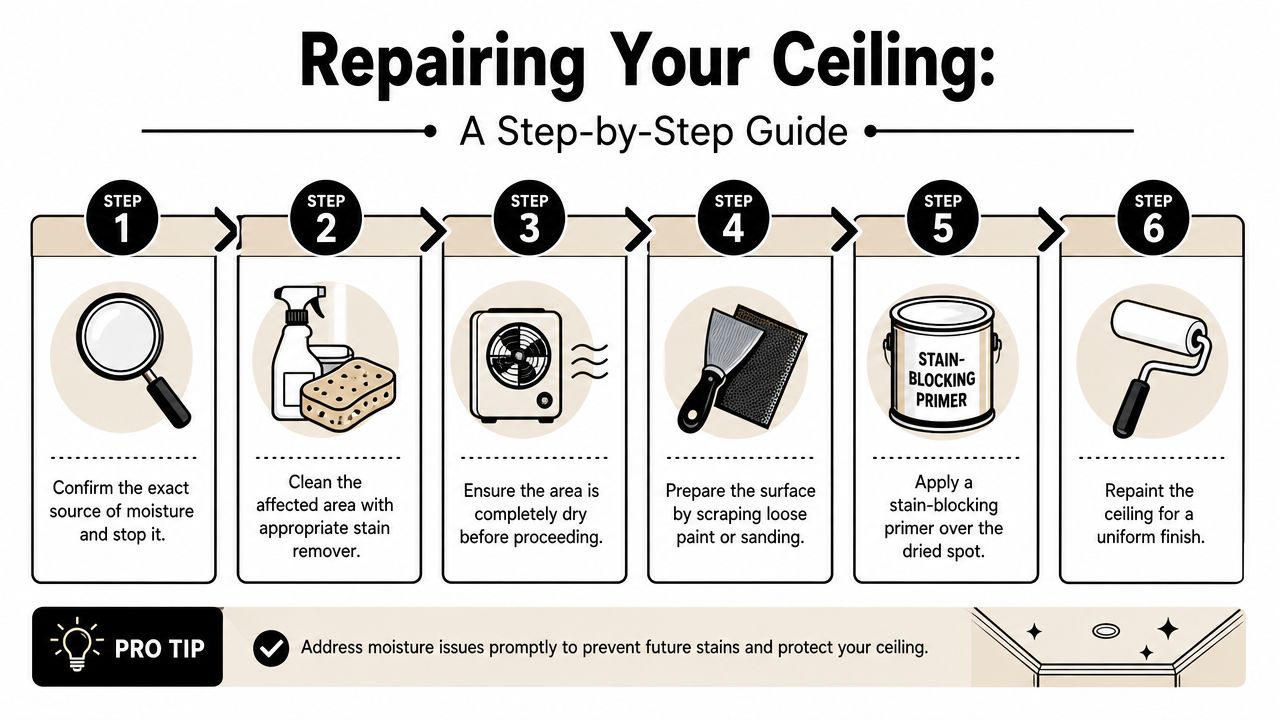
The non-negotiable sequence
Use this sequence every time:
- Stop the moisture source first. If the leak or condensation pattern is still active, nothing you apply to the ceiling will hold.
- Clean the visible contamination. Remove surface grime, mildew, or residue.
- Dry the substrate completely. Rushing this step often leads to failure in DIY projects.
- Scrape and sand any loose material. You need a stable surface.
- Apply a stain-blocking primer. Don't paint directly over the spot.
- Repaint with a bathroom-appropriate finish.
That repair workflow aligns with independent guidance that says you should isolate and stop the moisture source, dry the substrate thoroughly, then seal with a stain-blocking primer before repainting, rather than painting directly over the stain, as described in the earlier Angi reference.
Don't misread a paint failure
Some brown marks aren't hidden leaks. They're surfactant leaching from moisture-stressed paint.
That's important because bleach won't fix paint chemistry. Realtor.com's guidance on surfactant leaching says humidity can cause soap-like ingredients in paint to migrate to the surface, and the better remedy is cleaning, repainting with a higher-quality bathroom paint, and reducing steam exposure. If the stain looks more like drips, beads, or amber streaking than a soaked drywall halo, consider paint before you tear open the ceiling.
If the ceiling is dry, the stain is superficial, and the mark appears mostly after heavy bathroom use, inspect the coating before assuming there's a pipe leak.
Here's a visual walkthrough of basic repair steps:
Best repair choices for a humid bathroom
A few direct recommendations:
- Use a true stain-blocking primer: This is what prevents the old mark from bleeding through the new finish.
- Choose bathroom-rated paint: Flat ceiling paint in a steam-heavy room often fails sooner.
- Replace damaged drywall if it's soft: Don't try to save material that has lost integrity.
- Improve airflow before repainting: Otherwise the new finish goes back into the same bad environment.
What not to do
Avoid these common mistakes:
- Painting over a damp spot
- Cleaning mildew but ignoring the fan
- Assuming every brown mark is mold
- Repairing the cosmetic damage before finding the source
- Using standard low-grade paint in a high-steam bathroom
A clean-looking ceiling isn't a finished repair unless the room stays dry enough to keep it that way.
Proactive Prevention for Humid Southwest Florida Homes
Prevention in Southwest Florida comes down to two things. Control the air. Control the water.
Too many homeowners handle only one side of the equation. They run the fan but ignore the water quality. Or they upgrade filtration at the sink but leave a steam-soaked bathroom unchanged. If you want brown spots on bathroom ceilings to stop coming back, you need both.
Control the room humidity
Some bathroom ceiling spots are nothing more than mildew feeding on condensation. Mosby Building Arts notes that many brown spots are surface mildew from bathroom moisture and that there may be “likely nothing wrong” with the attic, roof, or venting in some cases. That's why humidity management matters.
What works in real homes:
- Run the exhaust fan during every shower
- Keep it running after the shower
- Open the bathroom door when possible
- Wipe down heavy condensation
- Watch ceilings above the shower line and corners first
If steam sits on the ceiling day after day, paint and surface finishes will tell you.
Control the water entering the house
This is the long-term move most homeowners put off too long.
A bathroom with cleaner, better-treated water is easier to maintain. Fixtures stay cleaner. Residue problems ease up. Surface staining pressure drops. You spend less time chasing the same visible issues around the room. That's why whole-house reverse osmosis makes so much sense in Southwest Florida. It addresses the condition of the water across the property, not just at one drinking tap.
Here's the plain version. If your home's water is working against every wet surface in the house, no amount of bathroom repainting is a complete strategy.
A simple prevention framework
| Prevention area | What to focus on | Why it matters |
|---|---|---|
| Air moisture | Fan use, post-shower drying, airflow | Reduces condensation and surface mildew |
| Water quality | Whole-home treatment | Reduces residue and ongoing surface stress |
| Finish durability | Bathroom-grade primer and paint | Helps coatings hold up in wet rooms |
The homeowners who get the best long-term results usually stop treating the bathroom as a separate problem. They treat it as part of the house's full moisture and water-quality system.
When to Call the Experts Water Medic and Other Specialists
Some ceiling spots are simple. Some aren't. The hard part is knowing when you've crossed the line from maintenance into real damage.
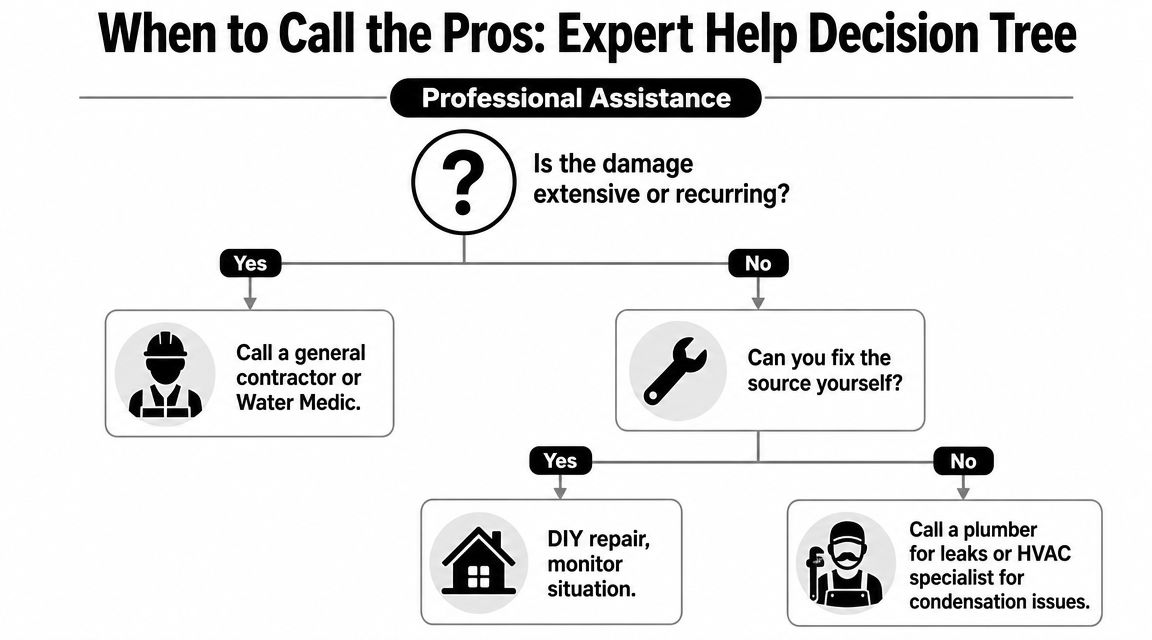
Call the right pro for the right problem
Use this decision guide:
- Call a plumber if the stain sits below a bathroom fixture or supply line and you suspect a plumbing leak.
- Call a roofer if the bathroom is on the top floor and the mark changes after storms.
- Call an HVAC specialist if condensate, vent sweating, or air-handling equipment may be involved.
- Call a mold or remediation specialist if the ceiling is soft, the area keeps returning, or contamination has spread.
- Call a water treatment specialist if the room shows broader signs of poor water quality, recurring residue, or staining problems throughout the house.
The recurring-stain rule
If you've cleaned, dried, primed, and repainted the area and it still comes back, stop throwing cosmetic fixes at it.
That usually means one of two things. The moisture source was never fully solved, or the bathroom is living inside a bigger whole-home water quality problem that keeps accelerating surface damage and residue issues.
Reappearing stains are diagnostic information. Treat them that way.
When broader help makes sense
A lot of homeowners start with the ceiling and end up discovering a house-wide pattern. Spotting on glass. Crust on fixtures. residue around faucets. Coatings that don't hold up well in wet rooms. That's when it makes sense to look at the full range of home water services instead of isolated repairs.
If the stain is widespread, the drywall is compromised, or the cause remains unclear, bring in help early. It's faster, cleaner, and usually cheaper than opening the same ceiling twice.
If you're dealing with brown spots on a bathroom ceiling in Southwest Florida, don't settle for a patch job that ignores the bigger issue. Water Medic of Cape Coral helps homeowners solve water problems at the source with whole-home treatment solutions designed for local conditions. If your bathroom stains keep coming back, your fixtures show heavy residue, or you want a smarter long-term fix, contact Water Medic of Cape Coral and ask about a whole house reverse osmosis system.