
Aerated Shower Head Guide for Southwest Florida Homes
You know the feeling. You turn on the shower in a Cape Coral or Lee County home, expect a solid blast, and get a thin spray that makes you wonder if the fixture is failing or the water just isn't cooperating. In Southwest Florida, that frustration is common on private wells, especially when mineral buildup starts choking the small passages inside the shower head.
An aerated shower head can help, but only if you understand what it's doing and what your water is doing to it over time. These fixtures are built to mix air into the stream so the spray feels fuller while using less water, and that design matters even more when you're trying to balance comfort, conservation, and long-term maintenance in hard-water homes. 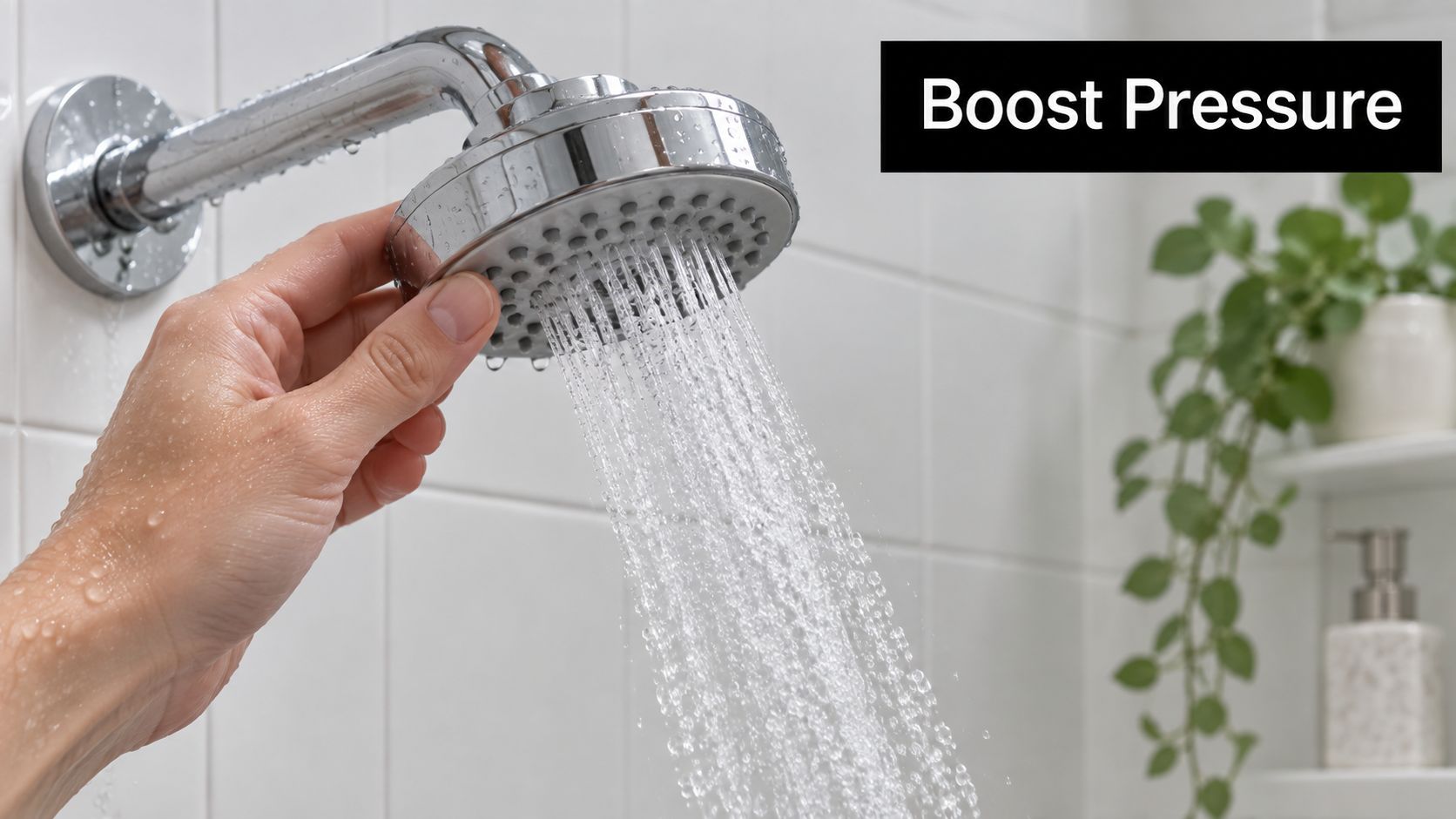
If your goal is a shower that still feels strong without wasting water, start by looking at the fixture, then look at the water quality feeding it. Water Medic's aerator service is a reminder of the bigger point, the nozzle is only part of the story. In real homes, the upstream water quality often decides whether a shower head performs well for months or slowly chokes itself into disappointment.
Why Your Shower Pressure Feels Weak and What an Aerated Shower Head Does About It
A homeowner in Southwest Florida usually notices the problem the same way. The shower starts weak, the spray feels scattered, and the natural reaction is to blame the fixture alone. Sometimes that's fair, but often the core issue is a mix of flow design, mineral buildup, and a water system that's working harder than it should.
An aerated shower head doesn't just reduce flow. It changes how the spray feels by mixing air into the stream so the water comes out fuller and more satisfying, much like a whipped cream dispenser folds air into liquid to create volume. The shower may use less water, but the user often perceives more coverage because the stream is broken into a softer, airier pattern.
That distinction matters in Cape Coral and Lee County, where well water and scaling can make a normal shower head feel tired long before it's worn out. A fixture that's designed to feel generous at the nozzle can still underperform if the tiny openings inside it are restricted by deposits. That's why product marketing alone isn't enough for local homeowners.
Practical rule: if the shower feels weak after cleaning, the fixture may be telling you more about water quality than about the shower head itself.
The conservation side is real too. The federal efficiency shift created by the Energy Policy Act of 1992 capped residential showerheads at 2.5 gallons per minute at 80 psi and pushed the market toward lower-flow designs, including air-mixing models that preserve the feel of a larger spray. Before that, showerheads often exceeded 5 GPM, so the modern shower head market was built around doing more with less water. High Sierra's history of the shower lays out that shift clearly.
For a homeowner, the question isn't whether aeration exists. It's whether the fixture can deliver a comfortable shower in your house, on your water, without becoming another maintenance chore.
How Aerated Shower Heads Work Inside
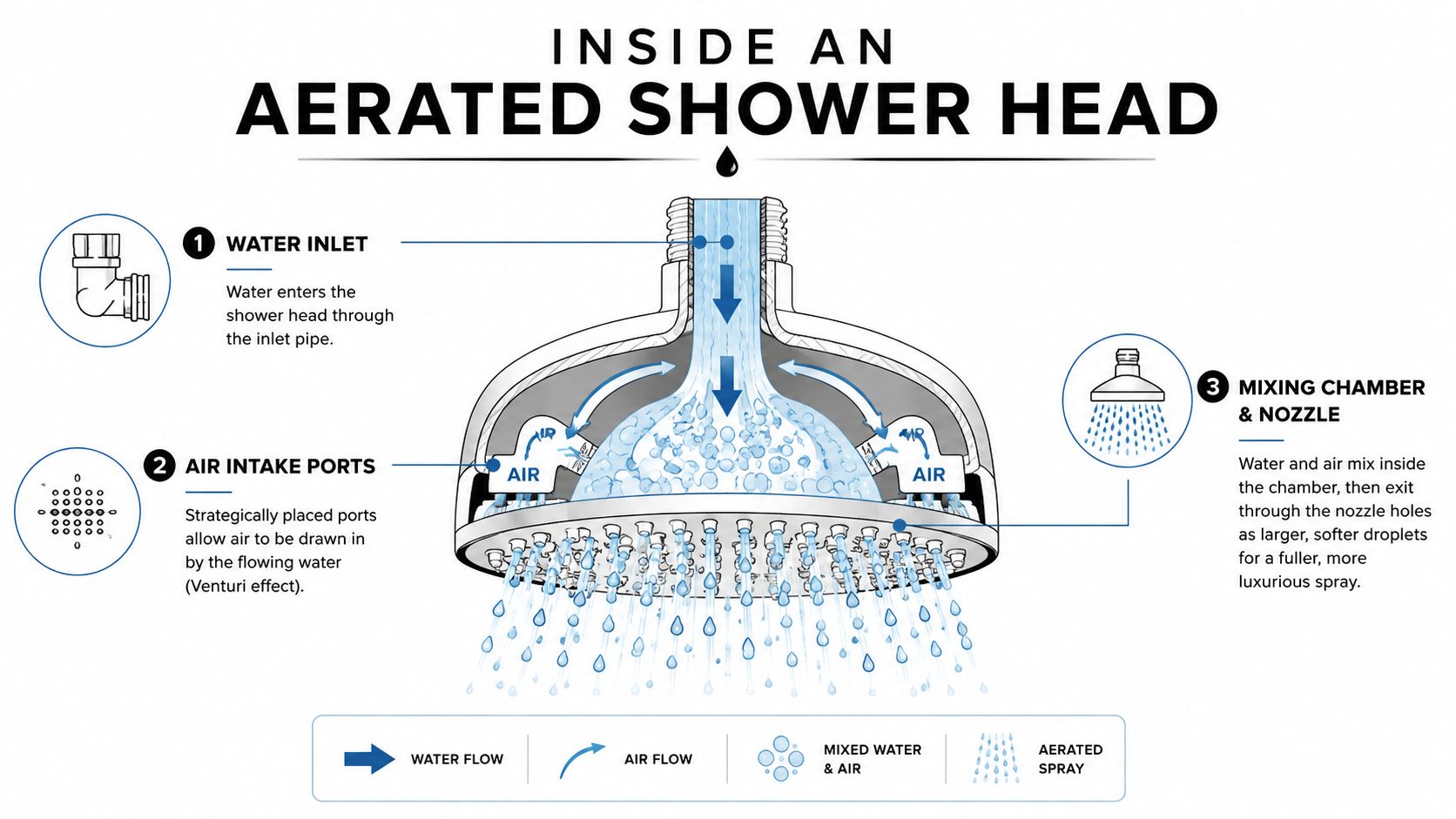
The inside of an aerated shower head is more engineered than many expect. Water enters through internal passages, moves through a nozzle plate or injector geometry, and pulls air into the stream before it exits. That air gives the spray a fuller feel even when the fixture is using less water.
The nozzle is doing real work
This is not a simple spray plate with holes punched through it. One patented design uses orifices of about 0.036 to 0.052 inches in diameter and a nozzle plate thickness of 0.02 to 0.035 inches, which shows how tightly the internal geometry has to be controlled for the aeration effect to work. The patent drawing and dimensions make the point plain, the design is sensitive to clogging, pressure stability, and whatever is coming in from upstream.
That is why cheap knockoffs usually disappoint. If the inlet openings, mixing chamber, and nozzle plate are not matched correctly, you get weak spray, uneven droplet size, or a head that clogs too easily. The fixture is a pressure-sensitive device that depends on clean flow paths.
Southwest Florida homeowners should pay attention to the intake side, too. This internal air injection overview shows the basic idea clearly, air has to enter cleanly and mix at the right point, or the spray falls apart.
The efficiency targets matter as well. EPA WaterSense showerheads are certified only when they deliver no more than 2.0 gallons per minute at 80 psi, and many aerated models are sold with flow restrictors in the 1.5 to 2.0 GPM range. EPA WaterSense showerhead guidance confirms that modern low-flow showering is built around that narrow band of performance.
Good aeration needs clean geometry. If the ports and intake passages are partially blocked, the shower may still use less water, but it will not feel good doing it.
The federal efficiency standard from 1992 forced manufacturers to solve that problem well. The better designs found a middle ground, lower flow, stronger perceived spray, and a fixture that could survive normal use without feeling punishing. That is the engineering standard you should expect, not a gimmick that only narrows the stream.
The Real Tradeoffs Between Water Savings and Shower Comfort
A lot of product pages act like every low-flow shower head feels the same. It doesn't. The key decision is between a shower that feels fuller with air mixed in and one that delivers water in a more direct, non-aerating way. Both can save water, but they don't behave the same in daily use.
Aerated versus laminar in plain English
An aerated shower head tends to feel fuller because air is folded into the stream, which helps the spray seem larger even at a lower flow rate. A laminar low-flow head sends out a more direct stream with less air mixed in, so it often feels different on the skin and can retain heat better as water travels from the head to you. That difference matters to people who care most about hot shower comfort.
| Feature | Aerated Shower Head | Laminar Low-Flow Head |
|---|---|---|
| Perceived spray volume | Fuller, air-mixed spray | More direct stream, different feel |
| Hot water temperature retention | Can feel cooler because of air mixing | Often keeps heat better |
| Water savings | Strong conservation profile | Strong conservation profile |
| User acceptance | Often easier to like right away | Can be preferred by users who dislike airy spray |
The conservation side is backed by actual field results. United Utilities reported that fitting an aerated showerhead reduced shower flow by 28%, or 3.2 L/min on average, while maintaining customer satisfaction. The same report said home trials showed an average 28% reduction in water and energy use when an existing showerhead was replaced with an aerated model and shower habits stayed the same. United Utilities project report is useful because it ties comfort and savings together instead of treating them as opposites.
CSIRO's earlier air-shower concept also showed that aeration could cut water use by about 30% while increasing the apparent volume of the shower stream. Based on the average Australian household using about 200,000 litres per year and showers accounting for nearly one-third of that total, the estimated savings were roughly 15,000 to 20,000 litres per household annually. The CSIRO summary shows why aeration became such a durable efficiency strategy.
The catch is simple. If a shower feels cooler or users compensate by staying under it longer, some of the energy advantage gets diluted. In Southwest Florida, I'd rather see a homeowner choose the fixture people will keep using than install the most conservative model and hate it.
Hard Water and Mineral Buildup Challenges in Southwest Florida
Southwest Florida's water conditions are where generic shower head advice falls apart. On a private well, the same tiny openings that make an aerated fixture work are the same openings that mineral scale loves to attack. Once those passages start narrowing, the shower pattern degrades fast.
Why the small parts fail first
Aerated shower heads rely on very small intake paths and nozzle geometry, so sediment and mineral deposits don't have to build up much before the spray changes. Delta's flow-cleaning guidance notes that showerhead filters and screens can clog with debris or mineral buildup and may need vinegar cleaning, which matches what I see in hard-water homes. The problem is not dramatic failure, it's slow restriction.
That's the maintenance tradeoff most buyers ignore. The head may be designed to feel like it has higher pressure, but the perceived pressure only holds if the ports stay open. Once scaling starts, the fixture can still be “working” while the user feels like the shower has gone soft.
For homeowners in Cape Coral and Lee County, that usually means regular cleaning isn't optional. It's part of owning the fixture.
- Calcium Carbonate Scale: Forms on internal surfaces and narrows the water path.
- Magnesium Deposits: Build up inside screens and openings, especially on well-fed systems.
- Reduced Airflow in Ports: The aeration effect weakens when intake passages are blocked.
- Decreased Spray Pattern: The shower starts to feel uneven or weak before it looks visibly dirty.
The practical cleaning routine is straightforward. Remove the head, soak it in vinegar, rinse it, and inspect the screen or aerator openings before reinstalling it. If the spray has gone from full and even to choppy and directional, the head is already telling you it needs attention.
Maintenance beats replacement. A well-cleaned shower head lasts longer and feels better than a neglected premium one.
This is also where whole-house water treatment starts to make more sense than point fixes. Water Medic's water softeners are one example of a broader upstream approach, because reducing the mineral load before it reaches the fixture protects more than just the shower head.
Installation Compatibility and When to Treat Water Upstream First
A good shower head still needs the right home behind it. If the incoming water is too low, too dirty, or too scale-heavy, no clever nozzle can completely save the experience. That's why installation compatibility and upstream treatment have to be considered together.
Check the basics before you buy
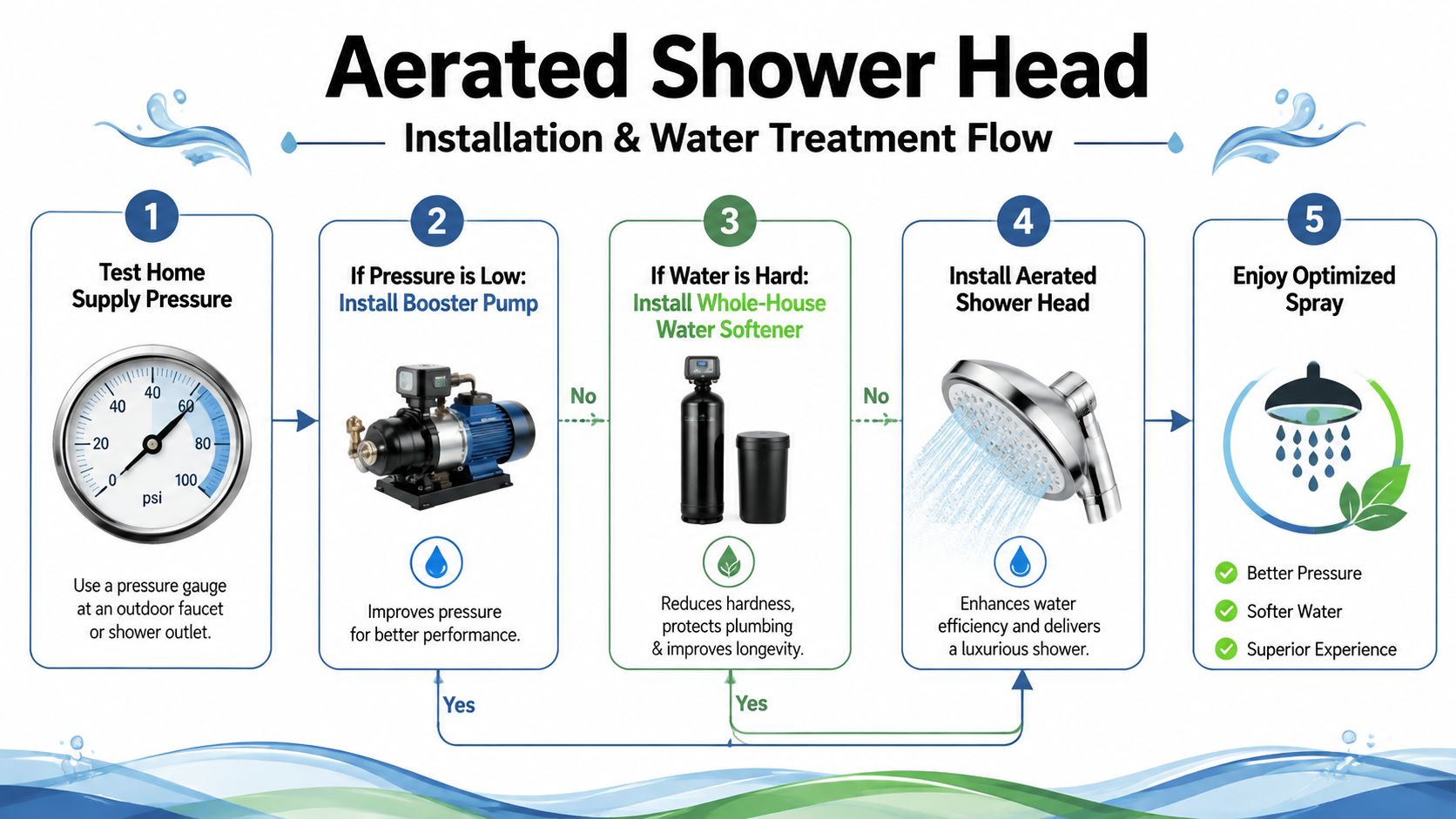
Start with the shower arm connection and the actual supply pressure. Most residential shower heads use standard threading, but the key issue is whether the fixture has enough incoming pressure to create a satisfying spray after aeration and flow restriction are factored in. If the pressure is marginal, a premium head won't magically fix the problem.
The next question is water quality. If your house sits on a private well with hard water, iron staining, or recurring mineral scale, the shower head is just the first thing that will show it. In those homes, I'd think upstream first, fixture second.
Treat the water once at the source if you keep replacing the same fixture again and again.
That's where a whole house reverse osmosis system earns its place in the conversation. Point-of-use cleaning and shower head swaps are symptom-level fixes. Whole-house treatment addresses the water before it reaches the shower, faucets, and appliances, which is the only way to slow the cycle of buildup across the home.
A few practical rules make the decision clearer:
- If the shower feels weak but the water is clean, the fixture may be the right upgrade.
- If the shower feels weak and the head scales up quickly, water treatment should come first.
- If multiple fixtures show buildup, the problem is upstream, not local.
- If you want fewer maintenance calls, treat the water before it reaches the bathroom.
Water Medic of Cape Coral also services standard aerator systems, including checking the aerator for cleanliness, cleaning and sanitizing it if needed, and adding air to tanks if necessary. That kind of service matters because it reflects the same reality homeowners face, fixture performance depends on what's happening in the water, not just what's hanging on the wall.
Choosing the Right Water Solution for Your Southwest Florida Home
Pick the solution based on the water in your house, not the marketing on the box. If you've got a single bathroom, decent incoming water, and a simple goal of reducing flow without making the shower feel dead, an aerated shower head can be a sensible upgrade. If your well water leaves deposits fast, I'd focus on treatment first and the fixture second.
Households with multiple bathrooms, renters, or HOA-managed properties should think even more broadly. Standardizing fixtures can help with maintenance, but it won't solve the root cause if the water itself is creating scale on every aerator and spray plate. In those cases, a whole house reverse osmosis system gives you a cleaner baseline for every fixture in the home.
For property managers, the logic is even sharper. Guests and residents care about comfort first, and they notice when a shower head feels weak or clogs frequently. A lower-maintenance water strategy protects satisfaction better than swapping fixtures over and over.
The decision is simple enough:
- Choose an aerated shower head if the goal is a quick efficiency upgrade and your water quality is manageable.
- Pair it with point-of-use cleaning if you're willing to maintain it regularly.
- Go upstream with whole-house treatment if hard water, scale, or inconsistent fixture performance keeps coming back.
If you want a straight answer before buying another shower head, get your water tested and build from there. Water Medic of Cape Coral can evaluate what's in your well water and help you decide whether a fixture change, aerator service, or a whole-house reverse osmosis system makes the most sense for your home. Visit Water Medic of Cape Coral to talk through your water conditions and choose the right fix before another shower head gets clogged, coated, and disappointing again.