Landscape Grading Cost: A Florida Homeowner’s 2026 Guide
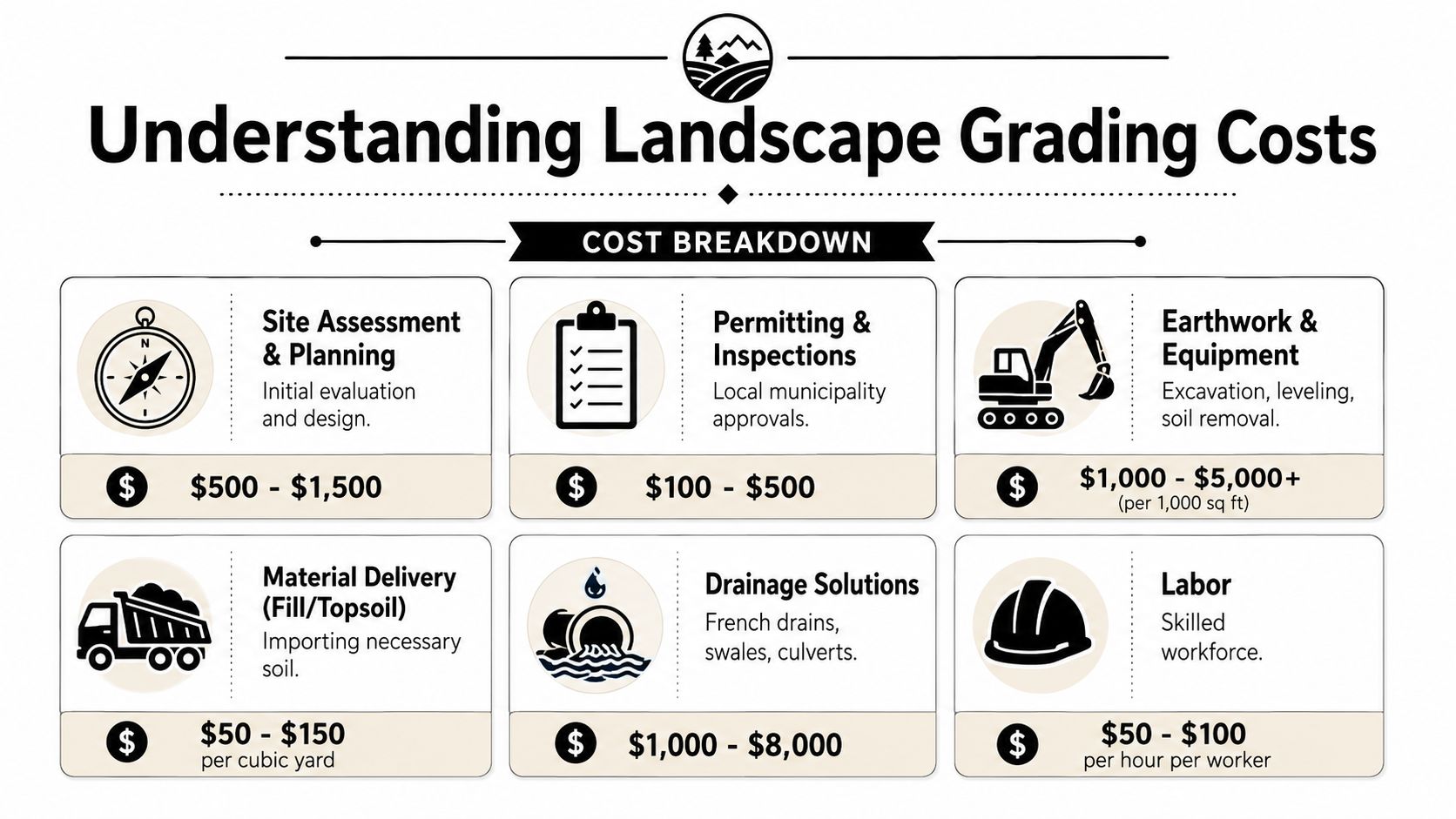
For a standard residential lot, yard grading cost usually falls between $770 and $3,000. On a per-square-foot basis, grading typically runs $0.08 to $2.00 per square foot, and steep or difficult yards cost more.
That's the number most Florida homeowners start with when they're planning a backyard project. You're pricing excavation, trying to understand site prep, and figuring out what it will take to get a lawn, patio, or pool built correctly. That's smart. But if you stop at grading, you're only budgeting for the ground under the project, not the quality of the project once it's finished.
A new pool is a perfect example. Homeowners spend serious money getting the site cut, leveled, compacted, and shaped for drainage. Then they fill that brand-new pool with whatever water is coming into the house. In Southwest Florida, that's often the most expensive mistake in the whole project, not because the water looks bad on day one, but because untreated water keeps working against your pool surface, equipment, and comfort long after the grading crew leaves.
Your Florida Backyard Project Starts Here
A typical Florida backyard project starts the same way. You walk outside, look at the soggy patch near the lanai, the uneven grade, or the future spot for the pool, and you start searching for site grading cost because you need a number before you can do anything else.
That first question is practical. If the yard isn't level, if water doesn't move where it should, or if the pool pad isn't prepared correctly, the rest of the project doesn't matter. The pavers won't sit right. The turf won't drain right. The pool shell and surrounding deck won't have the stable base they need.
What most homeowners are really buying
They're not buying dirt work. They're buying a finished outdoor space that looks good, drains well, and stays easier to maintain.
For a Florida homeowner building a pool, grading is only the opening move. The contractor has to shape the lot, account for runoff, and create a base that supports the pool build and the surrounding hardscape. That part is visible. You can see the bobcat, the cut and fill, the reshaped lot lines.
The next part gets ignored because it's less dramatic. Water quality.
Practical rule: If you're willing to pay to prepare the soil correctly, you should care just as much about the water that will run through the house and into the pool.
The real planning mistake
Homeowners often split backyard planning into disconnected buckets. One budget for grading. Another for the pool. Another for landscaping. Water treatment gets pushed off as something optional.
That's backward.
If you're on a private well in Cape Coral or anywhere in Lee County, water quality isn't a finishing touch. It's part of the infrastructure of the home. And even on municipal water, the quality of the water entering your pool and circulating through your house affects maintenance, comfort, and long-term ownership costs.
The smartest way to approach a backyard build is simple:
- Start with the grade: Get the site level, stable, and ready.
- Protect the investment: Think about the water before the pool is filled.
- Upgrade the whole house: Treat the source water, not just the symptoms.
That's how you avoid spending thousands on a beautiful backyard that becomes harder to maintain than it should be.
Decoding Landscape Grading Costs
If you want the short answer on grading cost, plan for a wide range. Basic yard leveling can stay relatively modest. A pool-prep job climbs fast once the crew has to reshape elevations, move fill, correct drainage, or work around tight access.
That price spread is exactly why cheap quotes cause trouble. Homeowners compare square-foot pricing, then find out later that compaction, hauling, cleanup, and finish contouring were never included.
What actually changes the price
A grading quote rises or falls based on the site in front of the contractor, not the size of the lot on a Zillow listing.
| Cost factor | What it means for your project |
|---|---|
| Slope | More slope means more excavation, more machine time, and tighter elevation control. |
| Access | Narrow gates, fencing, and limited side-yard entry slow production and can require smaller equipment. |
| Soil movement | Cutting high areas and filling low ones adds labor, material, and hauling. |
| Drainage shaping | Pool areas need precise water flow planning, not rough leveling. |
| Permits and cleanup | Disposal, approvals, and site restoration can add real cost. |
Analysts at Thumbtack's land grading cost breakdown found a broad consumer price range for grading work, with labor, permits, and clearing all affecting the final bill. That matches what homeowners see in Florida. The first number on the estimate rarely tells the full story.
Flat yard pricing versus pool-prep pricing
A basic leveling job and a pool-ready grade are different scopes of work. Treat them that way.
A simple yard correction may only require minor reshaping. Pool prep usually demands more. The contractor has to create the right elevations, support future decking, and leave the site ready for excavation and drainage planning. If the lot has a real slope, the price jumps again because the crew is doing more than smoothing dirt. They are changing how the property handles water.
That matters long after construction ends.
A poorly graded yard can leave you with runoff problems, soggy edges around the deck, and extra maintenance. Then the next expense shows up. The water going into the pool itself. If you are already spending serious money to prepare the ground, do not ignore the quality of the water that will fill the pool and run through the house every day.
Ask every grading contractor one blunt question: “Does this quote include compaction, drainage contour, soil movement, and cleanup?” If the answer is vague, the estimate is incomplete.
My recommendation
Shop grading by scope, not by headline price. Get specific. Ask whether the quote includes compaction under future hardscape, finish elevations, drainage direction, topsoil handling, and a realistic equipment-access plan.
Pay for the yard to be shaped correctly the first time. Then protect the rest of the investment. If cash flow is the issue, review financing options for site work and water upgrades instead of stripping important items out of the project. That approach costs less than fixing drainage mistakes and filling a new pool with water that creates staining, scaling, and constant maintenance.
Grading for a New Pool The Florida Factor
Pool grading in Florida is its own category of decision-making. A flat yard on paper can still become a complicated excavation once the crew starts dealing with sandy soil, runoff patterns, and how water behaves during summer storms.
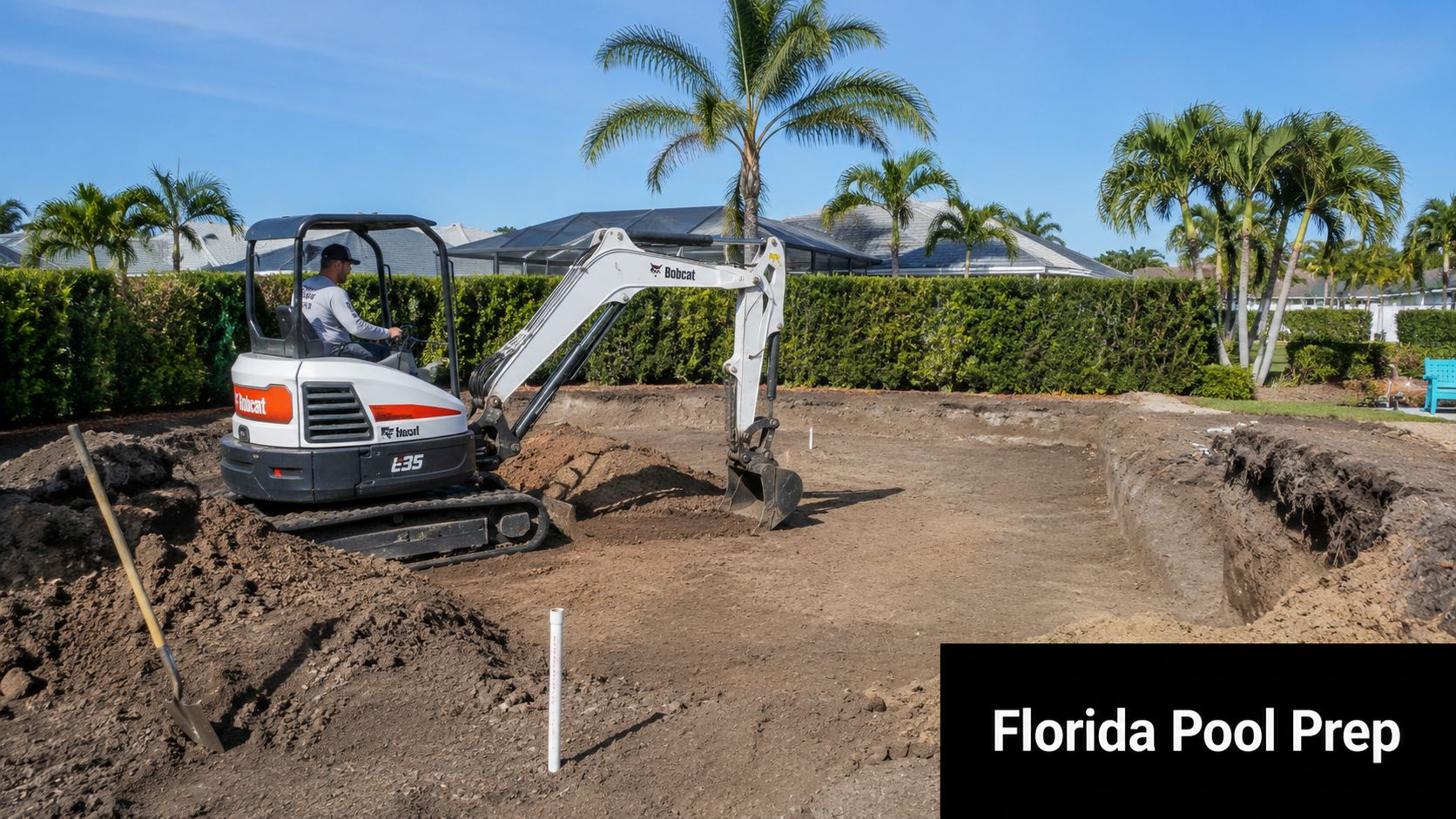
A pool site has to do more than look level. It needs a stable base, proper elevations around the shell, and a yard plan that won't leave you with standing water near decking, screen enclosures, or planted areas. In Southwest Florida, that means thinking about rain volume, drainage direction, and how the surrounding yard will perform after the first hard season of weather.
Why this part matters more than homeowners think
A lawn can tolerate small imperfections. A pool project can't.
The deck area, surrounding grade, and transitions between hardscape and soil all need to work together. If they don't, you end up with washout, nuisance puddling, and maintenance headaches that nobody talks about when they're comparing pool finishes and tile.
That's why I tell homeowners to think in systems, not line items. The excavation, the grading, the drainage behavior, the fill material, and the final water all belong to the same project.
The question most people ask too late
After you spend thousands getting the yard and pool site prepared correctly, what water are you using to fill and maintain that pool?
That's not a side question. It's the next major cost decision.
If you're already investing in a new backyard, you should also think about the quality of the water feeding the home and the pool system. A beautifully built pool still has to live with the water that enters it. Homeowners planning that full picture should review pool services built for Southwest Florida conditions before the project is complete.
A properly graded yard protects the pool from the outside. Properly treated water protects it from the inside.
The Hidden Expense of Poor Water Quality
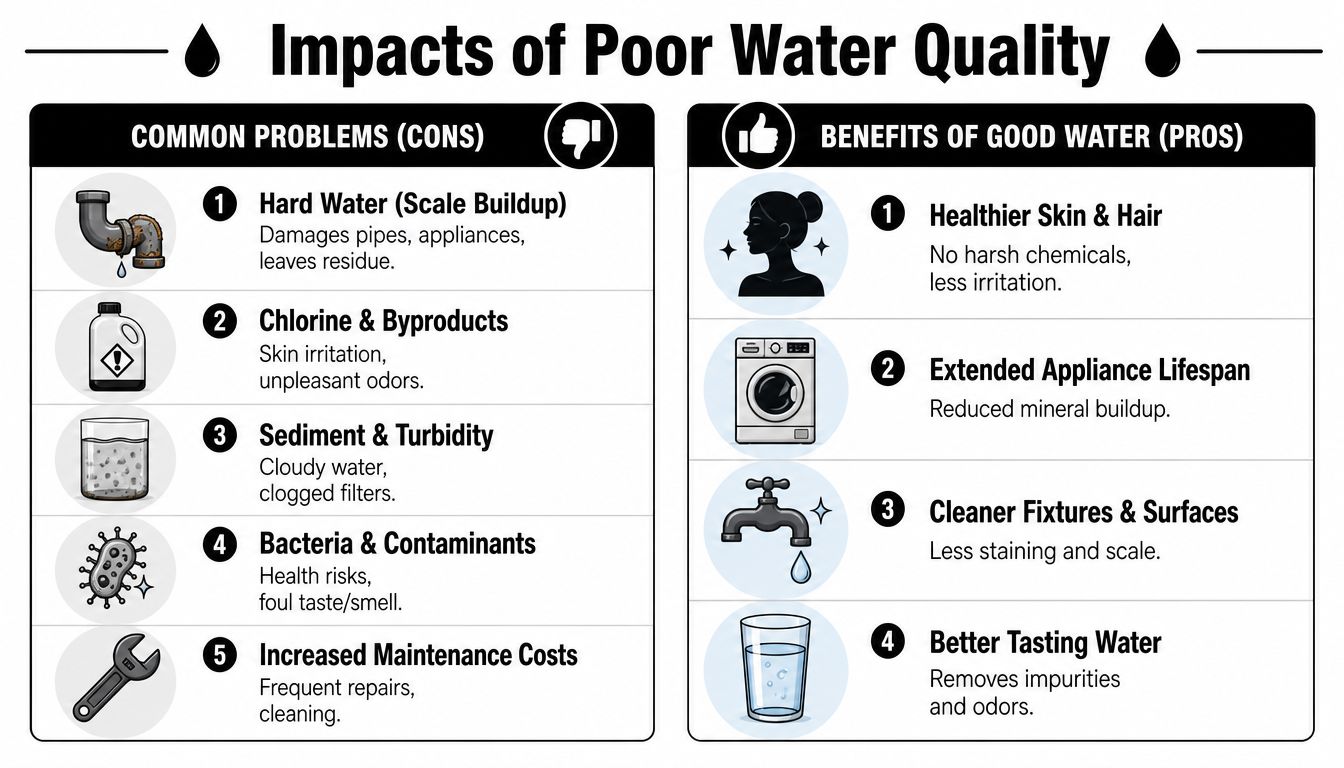
Most homeowners notice bad water quality only after it starts leaving evidence. White residue on tile, stubborn film on fixtures, water that feels harsh, staining that won't brush away, or a pool that takes more chemical babysitting than expected. By then, the damage to convenience and comfort is already happening.
What untreated water does to a new pool environment
In Southwest Florida, homeowners often deal with mineral-heavy water, chlorine, sediment, and other contaminants. You don't need dramatic contamination to create expensive results. Ordinary untreated source water can leave scale on surfaces, push your pool chemistry out of balance faster, and make water feel rough on skin and hair.
For a new pool owner, that creates three immediate headaches:
- Surface appearance gets worse: Scale and staining make a fresh finish look older, faster.
- Equipment works harder: Filters and heaters perform better with cleaner water.
- Maintenance gets more annoying: The more impurities you start with, the more you're compensating later.
The home feels it too
This isn't only about the pool.
The same untreated water enters showers, laundry, kitchen taps, and every fixture in the house. If the water is carrying high mineral content or noticeable chemical taste and odor, the home never feels as clean or comfortable as it should. Dishes spot. Laundry feels stiff. Bathing can leave skin and hair less comfortable than properly treated water does.
Clean water changes daily living in ways homeowners notice immediately. Better feel, better taste, cleaner surfaces, and less frustration.
Why cheap fixes disappoint
A point-of-use filter under one sink doesn't solve whole-home water quality. A hose-end filter won't protect the full system feeding your household. Basic cartridge filtration may help with sediment or taste in a limited way, but it won't deliver the broad treatment serious Florida water conditions often require.
That's why homeowners who are already investing in a pool build should stop thinking in patches. You don't fix a whole-property water problem with a partial-device mindset.
A new pool increases how much attention you pay to water. That's a good thing. It usually exposes a bigger truth. If the water isn't right for the pool, it probably isn't right for the house either.
The Premier Solution Whole House Reverse Osmosis
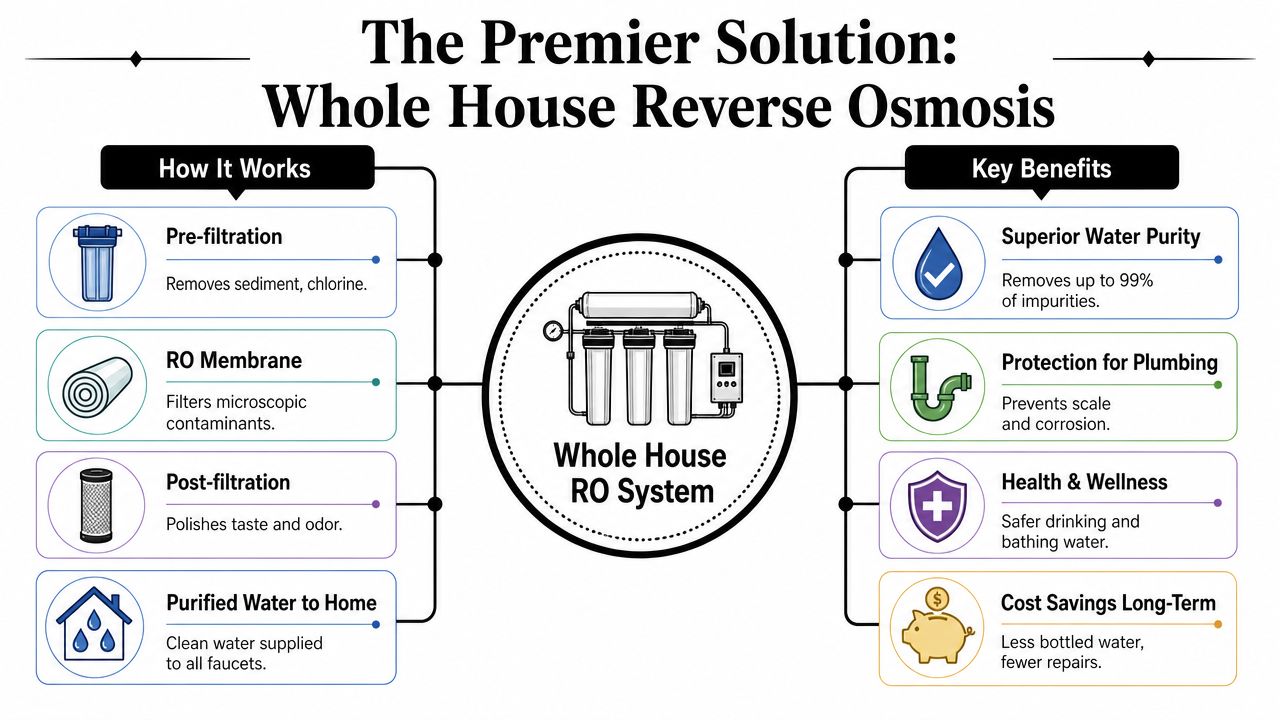
If you want the strongest answer to poor source water, install a whole house reverse osmosis system. Not a drinking-water-only unit. Not a small add-on. A real system that treats the water entering the home so every tap, shower, appliance, and water-use area benefits.
According to Bob Vila's 2026 whole-house reverse osmosis cost guide, the average cost of a whole-house reverse osmosis system is $2,200, with a typical market range spanning from $1,500 to $4,800 depending on system efficiency, size, and brand.
That's the number many homeowners resist at first. I think that's shortsighted. If you're already spending on grading, excavation, decking, finishes, and outdoor living upgrades, this is one of the smartest infrastructure purchases you can make.
What the system actually does
A whole house RO system treats water in stages.
First, pre-filtration removes sediment and reduces unwanted compounds that would interfere with the main treatment process. Then the RO membrane does the heavy work, filtering out a very high level of dissolved impurities. After that, post-filtration polishes the water before it moves through the house.
The result is simple. Cleaner water reaches the places where you live with it every day:
- Showers and tubs
- Kitchen taps
- Laundry
- Fixtures and surfaces
- Pool fill water and related household use
The broad appeal of whole house RO is that it handles the root problem at entry, not at one sink.
Why I recommend whole house treatment for pool homeowners
A new pool makes water quality impossible to ignore. You're filling a large, visible, expensive feature with the same source water your household uses every day. If that source water is harsh, mineral-heavy, or unpleasant, the pool becomes another place where those issues show up.
Whole house treatment gives homeowners control. It improves the quality of water entering the home and supports a better ownership experience overall. Better-feeling showers matter. Better-tasting water matters. Cleaner-looking surfaces matter. So does reducing the conditions that contribute to scale and nuisance buildup.
Another source, ESP Water Products' overview of whole-house reverse osmosis systems, says most homeowners spend about $3,000, with systems generally ranging from $1,000 to $8,000+ depending on filtration stages and capacity. The exact system depends on the home, the water source, and how aggressively you want to treat the incoming water.
What separates a serious system from a weak one
Not all water treatment setups deserve the same confidence. When evaluating a whole house RO solution, focus on these factors:
- System sizing: A unit has to match household demand. Oversimplified systems disappoint quickly.
- Pre-treatment design: Good RO performance depends on protecting the membrane and managing incoming water correctly.
- Water source fit: Well water and municipal water don't present identical treatment challenges.
- Service support: The system is only as good as the company behind installation and ongoing maintenance.
“Treat the source, not the symptom” is the right philosophy for Florida water.
My opinion on cost
For many homeowners, a whole house RO system lands in the same category as site drainage, proper compaction, and quality pool equipment. It's not glamorous, but it protects everything downstream.
If you compare it to the overall cost of a backyard build, the value is obvious. A system with the right capacity and design upgrades the way your home feels every day, not just the way the pool looks on installation week. Homeowners who are serious about long-term water quality should look closely at whole house reverse osmosis options designed for Southwest Florida homes.
Protecting Your Pool and Enhancing Your Home
The best part of a whole house RO system is that the payoff isn't limited to one room or one fixture. You feel it across the property.
What your pool gets
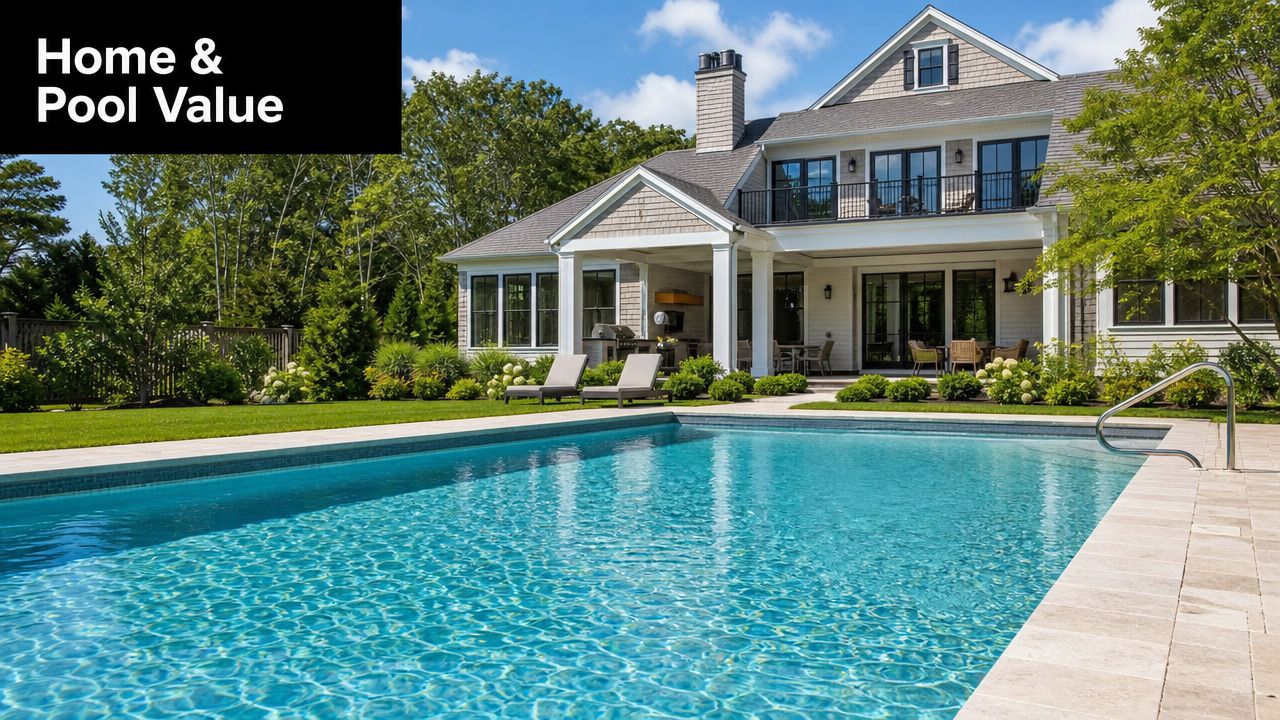
Your pool benefits from starting with better water quality, especially when you're trying to protect appearance and reduce the usual frustrations that come with mineral-heavy water.
Here's what homeowners tend to value most:
- Cleaner visual finish: Better source water helps reduce the conditions that contribute to cloudy-looking water, scale, and surface dullness.
- More comfortable swimming: Water that's gentler on skin and hair improves the experience people care about.
- Less day-to-day irritation: Pool ownership feels easier when you're not fighting poor source water from the start.
What the house gets
Consequently, whole house RO becomes an obvious upgrade rather than a niche add-on.
| Area of the home | Benefit of treated water |
|---|---|
| Kitchen | Drinking and cooking water tastes cleaner and smells better. |
| Bathrooms | Showers feel better, and surfaces stay cleaner-looking. |
| Laundry | Fabrics usually feel better than they do with harsh untreated water. |
| Fixtures and finishes | You spend less time battling residue and visible buildup. |
A lot of homeowners think they're buying water treatment for the pool. They're not. They're buying a better standard of living for the whole property.
You can regrade a yard once. You live with your water every day.
The lifestyle argument is stronger than the maintenance argument
Yes, protecting equipment and reducing nuisance buildup matter. But the lifestyle side is what usually wins homeowners over. Better-tasting water. Better showers. A pool that feels better to swim in. Less visible residue around the home. Those are upgrades people notice fast.
That's why I don't view whole house RO as a luxury item for high-end homes only. In Florida, especially for homeowners on private wells or with challenging source water, it's a practical answer that pays you back in comfort, appearance, and confidence.
Checklist for Choosing a Water Treatment Pro
Don't choose a water treatment company the same way you'd choose a gadget online. You need local judgment, system design experience, and real service support.
What to look for
- Local experience: Choose a company that understands Southwest Florida water conditions, not one giving generic national advice.
- Whole-house specialization: You want a team that works with complete treatment systems, not just basic under-sink filters.
- Pool awareness: If you're building or maintaining a pool, the company should understand how household water quality affects that investment.
- Well water knowledge: Many local homeowners need treatment suited to private well conditions.
- Clear recommendations: Good professionals explain the right system for your property instead of pushing a one-size-fits-all package.
What to ask before you hire
Ask simple, direct questions:
- What system do you recommend for my water source?
- How will this improve water across the whole house?
- What ongoing service does the system require?
- Do you have long-term experience in this area?
The right company won't dodge those questions. They'll answer them plainly and build a solution that fits the home, the water, and the way you use the property.
If you're planning a new pool, reworking your yard, or finally ready to solve tough water issues the right way, Water Medic of Cape Coral is the company to call. With over 25 years of experience in Southwest Florida, they specialize in whole house reverse osmosis systems, well water solutions, and pool services that protect your investment and improve daily life.