
A Homeowner’s Guide to Well Water System Repair
When the water from your faucet starts sputtering or your shower pressure suddenly dies, it feels like your whole house grinds to a halt. Learning to spot the early warning signs of a failing well is the first step toward getting things fixed quickly and correctly. It’s all about figuring out if you're dealing with a minor hiccup or a major problem that needs a professional eye. A fast diagnosis from our expert team can save you from bigger, more expensive damage down the road and get your home's most vital resource flowing again.
Decoding the Signs of Well System Failure

A well water system almost never fails out of the blue. It usually sends out clues—some subtle, some not so much. If you know what to look for, you can act fast and maybe even avoid a complete no-water emergency. Instead of just guessing, you can start methodically narrowing down what’s really going on underground.
For many homeowners, the first sign of trouble is weirdly fluctuating water pressure. One minute, your kitchen sink is running strong; the next, it's just a disappointing trickle. That kind of inconsistency often points directly to an issue with the pressure tank or the well pump itself, problems our technicians are experts at diagnosing.
Common Red Flags to Watch For
Don't ignore what your well system is trying to tell you. Paying attention now can be the difference between a simple fix and a full-blown replacement.
Here are the most common signs that you might need a professional well water system repair:
- No Water at All: This one's impossible to miss. It could be something simple like a tripped circuit breaker, or it might be a dead well pump. Your first move should always be to check the electrical panel. If that doesn't solve it, our team can quickly diagnose the root cause.
- Sputtering Faucets: If your taps are spitting a mix of air and water, it's a clear sign that air is getting into your plumbing. This could come from a bad check valve or even a leak in the pipe deep inside the well casing.
- Pump Cycling Constantly: Is your well pump kicking on and off all the time, even when you're not using any water? That "short cycling" is a classic symptom of a faulty pressure switch or a waterlogged pressure tank.
- Skyrocketing Electric Bills: If your power bill suddenly jumps for no obvious reason, your well pump might be running nonstop. This usually means it's fighting a losing battle against a leak or a failing motor just to keep the pressure up.
These issues are often linked. Spotting one can lead you right to another, which is why a systematic approach is key. But it's also about knowing when to throw in the towel and call for backup. Our technicians can pinpoint the exact cause, saving you a ton of time and frustration.
Interpreting Strange Noises and Murky Water
Beyond pressure and flow, your own eyes and ears can tell you a lot about your well's health. Any new or strange noises coming from your pressure tank or pump are major red flags that you need to investigate immediately.
A repetitive clicking sound near the pressure tank often points to a failing pressure switch. Grinding or rattling from the well head itself? That could be the bearings in the pump motor giving out. These are mechanical problems that won't fix themselves—they only get worse and cause more damage over time.
A well system is a huge investment. Keeping up with maintenance and jumping on repairs isn't just about convenience; it's about protecting your property's value. Ignoring those early warnings almost always leads to bigger, more expensive headaches.
Likewise, pay close attention to any changes in your water's appearance, taste, or smell. If your water suddenly turns cloudy, sandy, or full of gunk, the well screen might have failed or the pump could be sitting too low in the well. This is more than just a quality problem; that sediment can chew up your plumbing fixtures and appliances from the inside.
To help you get started, here's a quick-reference table to match what you're seeing with the most likely culprits.
Common Well System Symptoms and Their Likely Causes
| Symptom | Possible Cause | Next Step |
|---|---|---|
| No water flow | Tripped breaker, failed pump, pressure switch issue | Check your electrical panel first. If that's not it, it's time to call a professional to test the pump and switch. |
| Pulsing or sputtering water | Waterlogged pressure tank, leak in the drop pipe | Check the air pressure in your tank. If it’s low or the tank is waterlogged, it needs professional service. |
| Pump runs constantly | Leak in the plumbing, faulty check valve, worn-out pump | Inspect for visible leaks. If none are found, the issue is likely underground or with the pump itself, requiring an expert. |
| Cloudy or gritty water | Failing well screen, pump is set too low | Collect a water sample. This often requires pulling the pump to inspect the well components. |
While our comprehensive water treatment solutions can address quality concerns, it's crucial to fix the root mechanical issue first. Maintaining private wells is a global challenge; the water infrastructure repair market is valued at around $100.33 billion and continues to grow. This highlights the widespread need for reliable water services and how it directly impacts homeowners like you.
Getting to the Bottom of Well Pump and Pressure Tank Problems
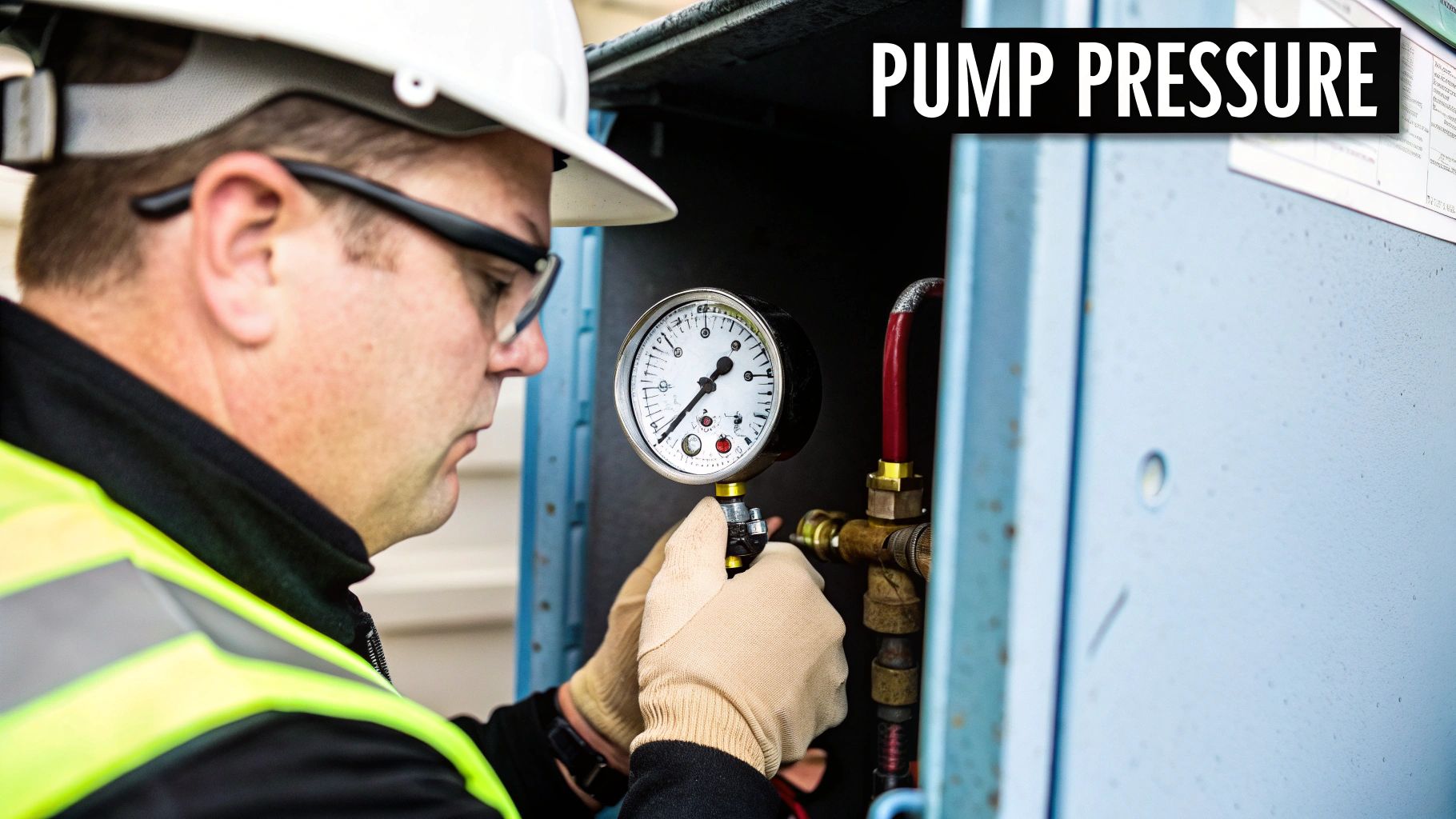
When your water pressure starts acting up, the culprit is often buried deep in the heart of your system: the well pump and its partner, the pressure tank. These two are a team. If one starts to fail, you can bet the other is feeling the strain. Moving beyond just a quick visual check means learning to recognize what trouble really looks and sounds like.
It can feel a little daunting to diagnose issues with these core components, but you can get to the bottom of it by being methodical. The trick is to pay close attention to how your system is behaving. Is the pump making a new, strange noise? Is the pressure tank making the pump kick on and off like crazy? Figuring this out is your first real step toward a successful well water system repair.
Listening for Signs of Well Pump Distress
Your well pump is a workhorse, but like any heavy-duty machine, it will start to give you audible clues when it’s in trouble. A healthy submersible pump runs almost silently down in the well, so when you start hearing new noises, it’s time to listen up.
Learning to decode these sounds is key. For example, if you hear a grinding or gravelly noise, it could mean the pump's bearings are shot. It could also mean it's sucking up sand or sediment, which will chew up the impellers in no time. A loud hum that doesn't actually result in water moving could signal a seized motor or a serious electrical issue—a problem best left to our trained technicians.
- Constant Running: If your pump just won't shut off, that’s a major red flag. This usually points to a significant leak somewhere between the pump and your house, a bad check valve, or a pump that’s just too worn out to build enough pressure to satisfy the switch. This will absolutely torch your pump's motor and send your electric bill through the roof.
- Short Cycling: This is when the pump kicks on and off rapidly, sometimes just seconds apart. It's one of the most common—and most destructive—symptoms we see. This constant start-and-stop action puts an incredible amount of stress on the motor and all the electrical components, guaranteeing premature failure.
Short cycling is almost always tied to a pressure tank problem. But if you ignore it, you're essentially guaranteeing a much more expensive pump replacement is in your near future. To get a better handle on the different kinds of pumps and what they need, you can explore our guide to well pump services and see how our team approaches these complex situations.
Diagnosing Your Pressure Tank
The pressure tank's job is to act like a small water tower for your house, holding a reserve of pressurized water so the pump doesn’t need to fire up every time you wash your hands. When the tank fails, the whole system loses stability, which directly causes that destructive short-cycling we just talked about.
The most common point of failure is a ruptured bladder or diaphragm inside the tank. This is what separates the air cushion from the water. When it tears, water rushes into the air side, and the tank becomes "waterlogged." A waterlogged tank can't maintain pressure, forcing the pump to cycle constantly to keep up.
There are a couple of simple tests you can do. First, just knock on the side of the tank. The top half should sound hollow (that's the air), and the bottom should sound solid and dull (that's the water). If the whole thing sounds solid when you tap it from top to bottom, it's almost certainly waterlogged.
A malfunctioning pressure tank doesn't just cause annoying water pressure fluctuations; it actively shortens the lifespan of your well pump. Addressing a faulty tank promptly is one of the most cost-effective repairs you can make to protect your entire well system investment.
Another essential check is the air pressure. This is critical: you must kill the power to the well pump at the circuit breaker and completely drain all the water from the tank before doing this. With the tank empty, use a regular tire pressure gauge on the air valve, which is usually on top of the tank.
The air pressure should be set 2 PSI below your pressure switch's cut-in setting. For example, if your switch is set to 40-60 PSI, the tank's air pressure should be 38 PSI. If the pressure is way off, or if water spits out of the valve when you check it, the internal bladder has failed. The only fix is to replace the tank.
While these diagnostic steps can definitely point you in the right direction, remember that you're dealing with high-pressure water and high-voltage electricity. Our technicians have the specialized tools and, more importantly, the experience to safely and accurately pinpoint the problem, ensuring the repair is done right without causing any new issues.
Hands-On Well Water System Repair Techniques
Diving into a well water system repair can feel a bit daunting, but not every issue requires an emergency call to a pro. Some jobs are definitely within reach for a confident DIYer. The key isn't just knowing how to do something, but understanding why you're doing it. That’s what turns a simple fix into a lasting solution that protects your well equipment and your home's water supply.
While safety is always the first priority, empowering homeowners with knowledge is also crucial. A common repair like swapping out a pressure switch is manageable if you're careful. But then you have bigger jobs, like wrestling a heavy pressure tank into place, where having a professional on hand can save you a world of trouble and expense.
Replacing a Faulty Pressure Switch
Think of the pressure switch as the brain of your well system. It’s a small, unassuming box that tells the pump when to kick on and when to shut off. If it goes bad, you'll either get no water at all, or you'll hear your pump clicking on and off constantly. It's a very common failure point, but because it's wired directly into your home's electrical system, you absolutely have to respect the power you're dealing with.
First things first: shut off all power to the well pump at the circuit breaker. Don't just flip the switch—double-check it with a voltage tester to be certain it's dead. Next, you’ll need to drain the system. Just open a faucet somewhere in the house and let it run until the water trickles to a stop. This takes all the pressure off the lines you'll be working on.
The switch is typically a small gray or black box mounted on a pipe near your pressure tank. Here’s the general process for swapping it out:
- Document and Disconnect: Pop the cover off the switch and take a quick, clear photo of how the wires are connected. This is your roadmap for later. Then, carefully disconnect the wires coming from the power source and the ones heading to the pump.
- Remove the Old Switch: Grab a wrench and carefully unscrew the old switch from the pipe it's attached to. A little water will likely spill out, so be ready for it.
- Install the New One: Wrap the threads of the new switch with Teflon tape to create a good seal. Screw it onto the pipe, getting it nice and snug, but don't go crazy and overtighten it.
- Rewire It: Using that photo you took, connect the wires to the correct terminals on the new switch. Once everything is secure, put the cover back on.
After that, you can turn the power back on and let the system fill and pressurize. While it sounds simple, many DIY attempts go sideways because of things like corroded wires or an incorrectly set switch. A professional service call ensures it's all done safely and calibrated correctly for reliable operation.
Tackling a Pressure Tank Replacement
Replacing a pressure tank is a whole different beast. This is a much bigger and more physically demanding job. These tanks are heavy and awkward to begin with, and they're ten times worse when they've failed and are logged with water. The job involves not just plumbing, but also careful draining and precise pre-charging to avoid leaks and future problems.
Getting the pre-charge on the new tank right is absolutely critical. It's just like checking the air pressure in a tire—you use a standard pressure gauge on the tank's air valve. The golden rule is to set the air pressure 2 PSI below your pump's cut-in pressure. If you get this wrong, the new tank will cause the same rapid pump cycling you were trying to fix.
An improperly installed pressure tank won't just fail to solve the problem—it can actively destroy your well pump. Getting the pre-charge pressure and the plumbing connections perfect is non-negotiable for the long-term health of your system.
So, how do you decide whether to repair or replace a component? It often comes down to age, the component's condition, and a simple cost analysis. This is the kind of thought process we go through when assessing a pump.
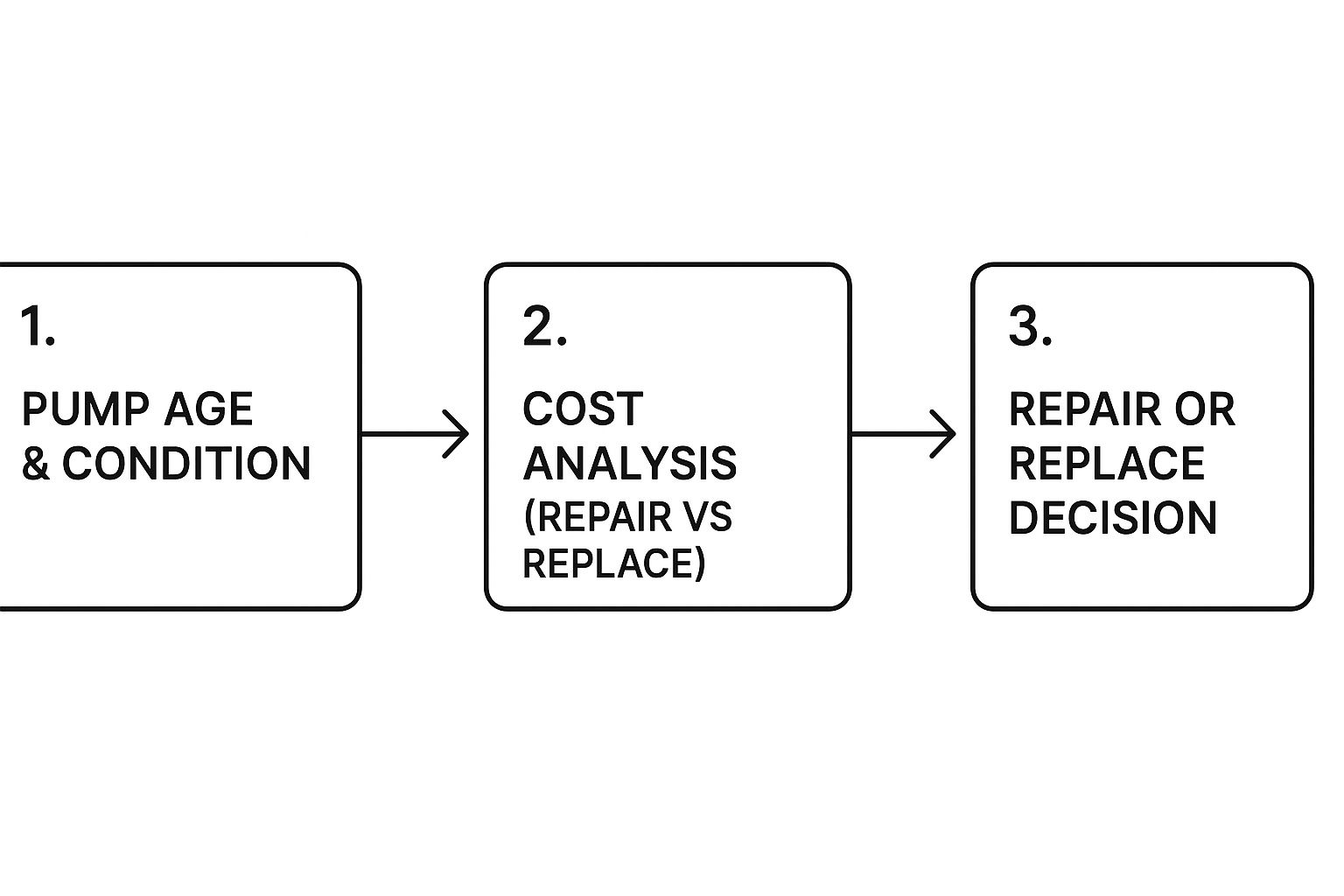
As you can see, after a thorough evaluation, it really boils down to a cost-benefit analysis to find the most effective long-term solution. A complex job like a tank replacement really highlights the value of bringing in an expert. Certified technicians have the right tools, the muscle to handle the heavy lifting, and the experience to perform the precise calibration that ensures your new tank performs perfectly from day one. This need for skilled water infrastructure work isn't going away; in fact, the related market for services like well drilling is projected to hit $22.78 billion. You can read more about the trends in water infrastructure repair to see just how interconnected these services are.
Critical Safety Precautions for Any Well Repair
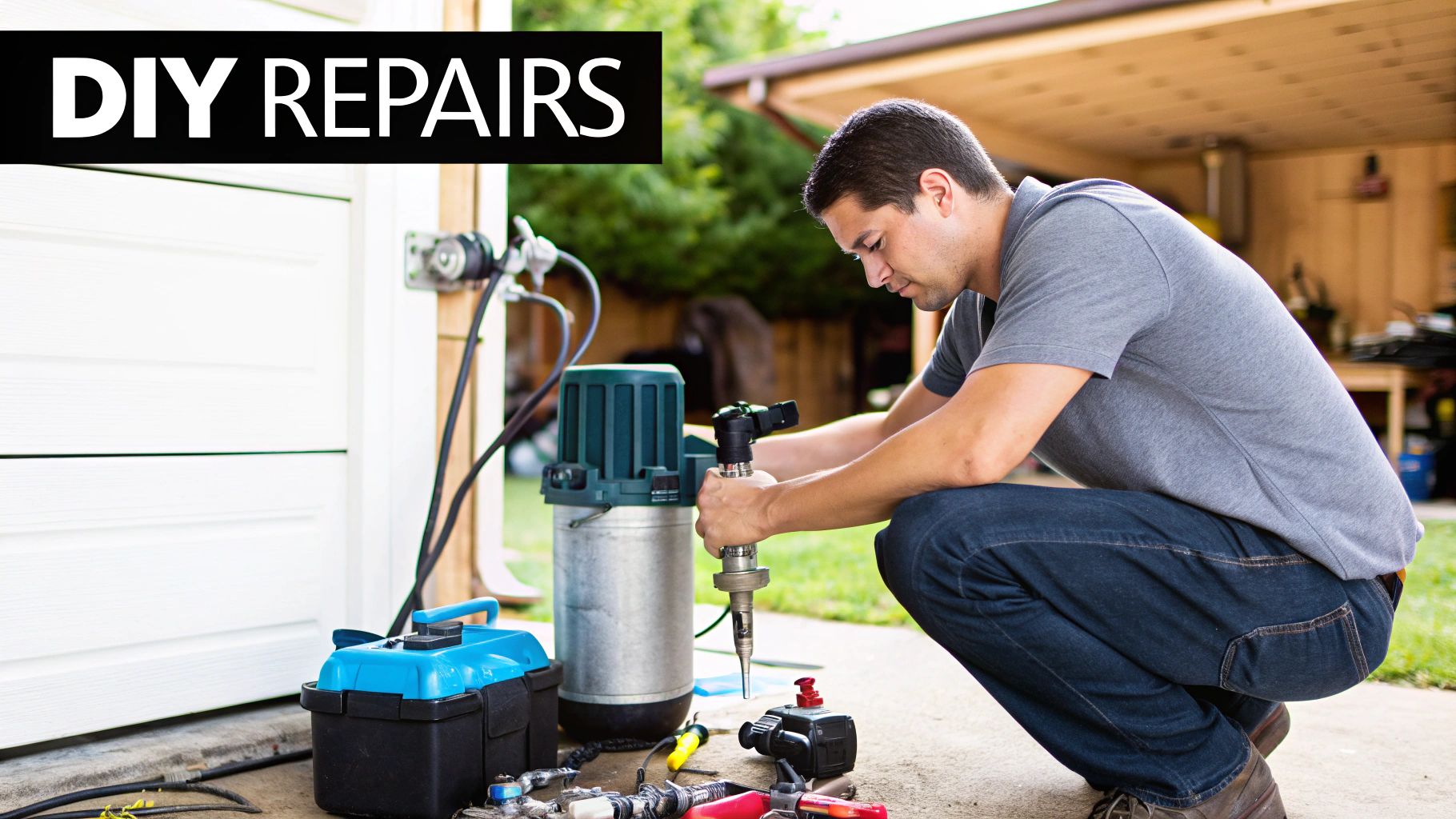
Before you even think about picking up a wrench to work on your well, we have to talk about safety. This isn't just a friendly reminder—it's the most critical part of this entire guide. Well systems are a mix of high-voltage electricity and highly pressurized water, a combination that can be incredibly dangerous if you don't give it the respect it demands.
Skipping these steps is not an option. The risks are serious, and your safety has to come first. It’s exactly why our technicians go through so much training; we handle these dangers every day so our customers don’t have to.
Master the Power Shutdown
The absolute first rule of any repair is to kill the power. I mean, completely. Your well pump runs on a dedicated 240-volt circuit, which is more than enough to cause severe injury or death. Just flipping a switch somewhere isn't enough.
You need to walk over to your main electrical panel and find the double-pole breaker for the well pump. Switch it firmly to the "OFF" position. I always tell people to take it one step further: get a non-contact voltage tester and check the wires at the pressure switch. It’s the only way to be 100% certain the circuit is dead.
Never assume the power is off. Always test it to be sure. This single action is the most important safety step you can take before touching any part of your well system.
Safely Depressurize the System
Once you've handled the electrical risk, the next hazard is the water pressure packed into your system. That pressure tank in your basement or crawlspace is holding water under a lot of force, usually somewhere between 40 and 60 PSI. If you try to loosen a pipe or a fitting before relieving that pressure, you can turn a small part into a dangerous projectile and cause an instant flood.
Here’s how to safely bleed the pressure out of the system:
- Open a faucet. With the power still off, find the nearest faucet and open it all the way. A bathtub spigot or an outdoor hose bib works great because they let water out fast.
- Let it drain. You'll see water gush out at first, then slow down to a trickle as the pressure tank empties.
- Wait until it stops. Keep that faucet open until the water stops flowing entirely. This is how you know the pressure is gone from the tank and the pipes.
Only when the water has completely stopped is it safe to start unscrewing things.
Recognizing When to Call the Experts
Following these safety rules is non-negotiable for any DIY work. But honestly, they also show you just how risky this job can be. Our team is trained, insured, and has the right equipment to manage these hazards without a second thought. We have the specialized tools and years of experience to deal with everything from tricky electrical problems to wrestling heavy equipment.
If you read these steps and feel even a little bit hesitant, that’s your cue to stop and call a professional. You shouldn’t have to risk your own safety just to get your water running again. For a fix that's both secure and reliable, you can always count on our expert well repair services.
When It’s Time to Call in the Well Repair Pros
Knowing your way around your well system is a fantastic skill for any homeowner. A little troubleshooting can save you time and money. But, and this is a big but, there’s a world of difference between a simple DIY fix and a problem that needs a professional’s touch for a safe, lasting well water system repair.
Knowing when to put down the wrench and pick up the phone isn’t admitting defeat. It’s making the smart call to protect your family’s safety, your property, and the significant investment you have in your well. Trying to muscle through a major repair without the right training or equipment can turn a manageable issue into an expensive disaster. This is where our trained and insured technicians come in, making sure the job is done right the first time.
Red Flags: These Issues Need an Expert
Some repairs are just not weekend warrior projects. They often involve heavy-duty equipment, tricky electrical work, or even potential health risks. If you run into any of these situations, it’s a clear sign to call a professional service team.
Here’s when you should absolutely get an expert on the line:
- Pulling the Well Pump. If you think your pump has died, the only way to be sure is to pull it out of the well casing. This is a tough, risky job that requires a specialized pump hoist. Trying to pull it by hand can lead to a dropped pump, torn wiring, or a snapped pipe deep in the well. That’s a mistake that can easily cost thousands to fix.
- Tricky Electrical Problems. Is your pump tripping the breaker the second it kicks on? Is the pressure switch acting possessed? Figuring these things out takes more than a basic voltage tester. Our pros use advanced multimeters to safely trace shorts, test motor windings, and pinpoint faulty capacitors without any guesswork.
- You Suspect Contamination. If your water suddenly smells off, tastes funny, or has a strange color, you could be dealing with contamination. A professional needs to check the well’s integrity, find the contamination source, and perform a proper shock chlorination to get your water safe to drink again.
Trying to save a couple of hundred bucks on a complex repair can quickly spiral into a multi-thousand-dollar nightmare. A pro’s value isn't just in fixing the problem—it's in preventing catastrophic mistakes and giving you a solution that lasts.
The Pro Advantage: Specialized Tools and Real-World Experience
When our technicians show up, they’re not just carrying a standard toolbox. We’re equipped with specialized gear the average homeowner simply doesn't have, letting us diagnose and solve problems with surgical precision. From pump hoists that can safely lift a pump from hundreds of feet down to diagnostic tools that pinpoint the sneakiest electrical faults, we have the right tool for any job.
Having access to this equipment saves time, eliminates guesswork, and prevents further damage to your system. But even more important is the years of hands-on experience our team brings to your property. We’ve seen just about everything that can go wrong with a well and know exactly how to handle it. You aren’t just paying for a repair; you’re buying peace of mind. For an immediate assessment from our equipped experts, check out the full range of our professional well repair and maintenance services.
The professional water maintenance sector is a massive $15 billion industry for a reason—people need reliable, clean water. This market is even expected to grow to almost $25 billion by 2033, as more homeowners turn to experts to manage aging wells and address water quality concerns. You can discover more insights on the well maintenance market to see the trend for yourself. When you need a guaranteed, permanent fix, calling a pro is always the right move.
Still Have Questions About Your Well System? We've Got Answers.
Even after you've done some basic troubleshooting, it’s completely normal to have more questions. When it comes to something as vital as your home's water supply, you want to be sure you're making the right call. We get asked a lot of the same questions out in the field, so we’ve put together some straight answers to the most common concerns.
This should help you get a better handle on what to expect when dealing with a well system repair.
What’s a Typical Well Repair Bill Look Like?
This is usually the first question on everyone's mind, and the honest answer is: it varies. A lot. The final cost depends entirely on what’s gone wrong.
Something relatively minor, like swapping out a bad pressure switch, is a common fix that might only set you back a few hundred dollars. But if the problem is bigger—say, your submersible pump has given up the ghost—you could be looking at a repair bill in the thousands. The depth of your well, the type of pump needed, and the labor required all play a huge role. We always provide a clear, itemized estimate before we start any work, so there are no surprises.
How Long Should a Well Pump Last?
A well-installed, quality submersible pump should give you 8 to 15 years of solid service. What often shortens that lifespan is the water quality itself and how hard the pump has to work.
If you have very hard water or a lot of sediment, it can be tough on the pump's internal parts, causing them to wear out faster. An improperly installed pump that cycles too often will also fail prematurely. If your pump is creeping past that 10-year mark and acting up, replacing it is often a smarter long-term investment than paying for another repair.
"Sputtering faucets are more than just an annoyance; they're a clear distress signal from your well system. Ignoring this symptom is like ignoring a check engine light—it often points to a deeper issue that can cause serious, expensive damage if left unaddressed."
Why Are My Faucets Sputtering?
That sputtering, spitting mix of air and water coming from your faucets is a dead giveaway that air is getting into your water lines. This is a classic symptom with a few potential culprits.
- A failing check valve might be letting water drain back into the well, pulling air in.
- You could have a small leak somewhere in the drop pipe that runs down to your pump.
- A waterlogged pressure tank can cause the pump to cycle on and off rapidly, which can also introduce air into the system.
It might seem like a small thing, but that air means you have a breach in what should be a sealed system. It needs to be diagnosed and fixed before it burns out your pump's motor.
Is There a Way to Boost My Home’s Water Pressure?
Absolutely. In most situations, we can definitely improve your water pressure. The pressure switch is the component that tells your pump when to turn on and off, and it has adjustable settings. A technician can fine-tune these settings to give you the stronger flow you're looking for.
It's a delicate balance, though. Cranking the pressure up too high puts a ton of strain on everything—your pipes, your fixtures, even your washing machine and dishwasher. We can evaluate your entire system and find that sweet spot where you get great pressure without risking leaks or damaging your plumbing. For more detailed answers, you can also explore our comprehensive well water FAQs.
When you need reliable, expert service for your well water system, trust the professionals with over 25 years of experience. For a lasting solution and peace of mind, contact Water Medic of Cape Coral at https://watermedic.com.