Best Well Water Treatment Systems for Your Home
When it comes to well water, there's no one-size-fits-all fix. The best treatment systems are the ones designed specifically for your water. You might be dealing with hard water scale, rust stains from iron, or even invisible bacteria. A truly effective setup often means combining a few different technologies—like a water softener, an iron filter, and a UV purifier—to make sure every drop from your tap is clean, safe, and tastes great.
Why Your Well Water Needs a Treatment System
Having a private well is fantastic—you're in complete control of your own water source. But that freedom comes with a big responsibility. Unlike city water, which is treated and tested under strict federal rules, your well water is entirely up to you. It comes straight from the ground, which means it can pick up all sorts of contaminants that affect its safety, taste, and even how it treats your home's plumbing.
Many well owners don't think about treatment until a problem becomes too obvious to ignore. Those tell-tale signs are your water's way of crying out for help.
The Obvious (and Not-So-Obvious) Signs of Trouble
Some issues are impossible to miss because they leave physical evidence behind. Seeing that chalky white scale on your faucets and in your kettle? That’s a dead giveaway for hard water, a problem that can quietly clog your pipes and ruin appliances like your water heater and dishwasher. If you're scrubbing reddish-brown stains out of sinks, tubs, and even your laundry, you're looking at an iron problem. It's not just ugly; it makes your water taste metallic, too.
Other problems hit your other senses. That nasty "rotten egg" smell is hydrogen sulfide gas, while a musty, earthy odor often points to organic matter or certain bacteria. These things can make something as simple as a glass of water or a hot shower a pretty miserable experience.
But the biggest worry is what you can't see, smell, or taste. Invisible threats like bacteria, nitrates from nearby farms, and other chemicals can pose serious health risks without ever giving you a clue they're there.
The First Step to a Real Solution
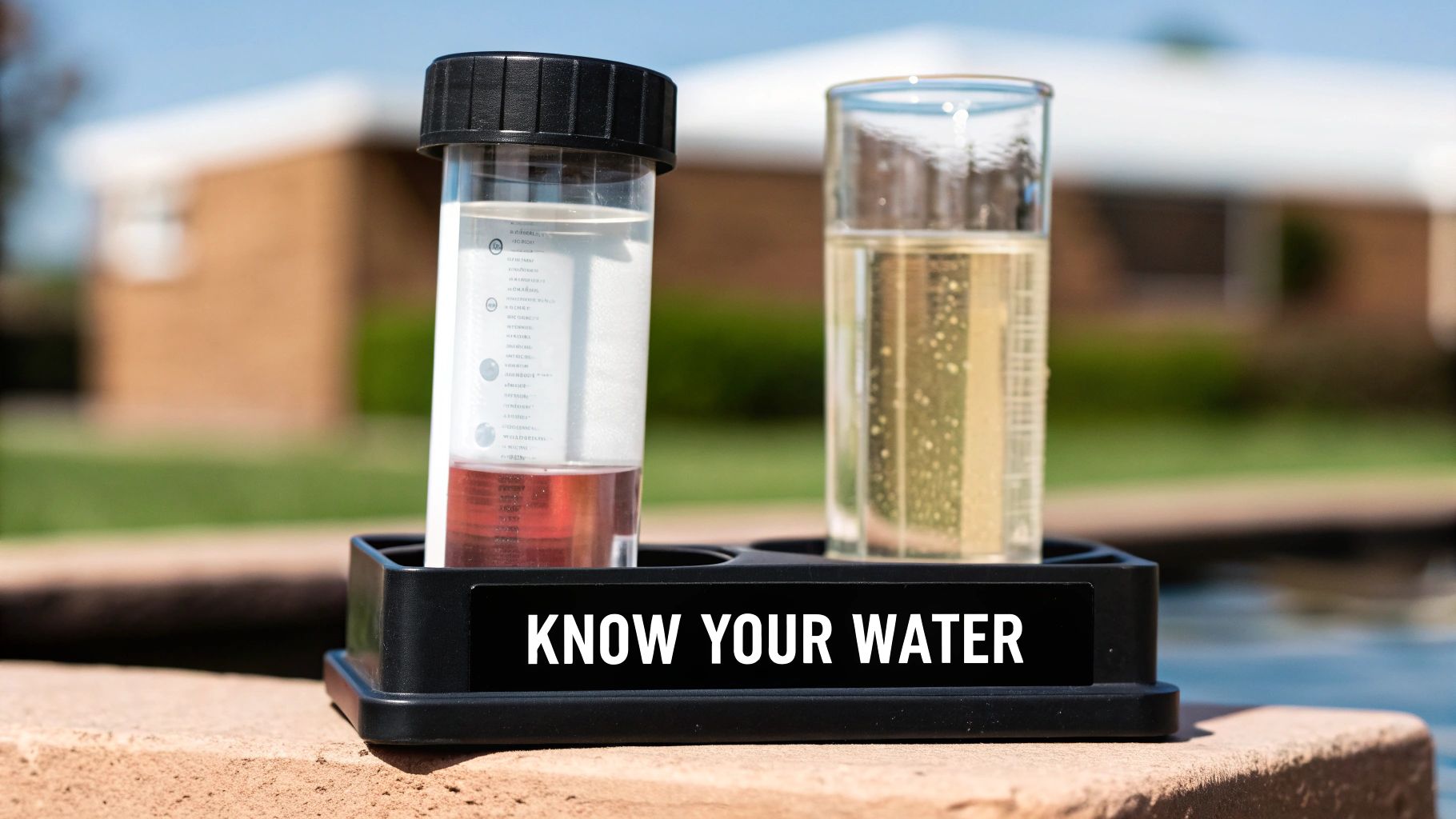
Trying to guess what's wrong with your water is a recipe for frustration. You might buy a filter to get rid of a funny smell, only to completely miss a more dangerous contaminant lurking beneath the surface. That’s why getting your water professionally tested is the only way to start. It takes all the guesswork out of the equation.
A comprehensive water test gives you a clear, scientific report on what’s actually in your water. We can pinpoint the exact minerals, chemicals, and bacteria and tell you their concentration levels. With that data in hand, we can design a system that solves your water problems for good, not just put a band-aid on the symptoms. It’s the only way to be sure you're investing in the right technology to protect your home, improve your daily life, and—most importantly—keep your family safe.
Don't wait for bad water to cause damage you can't undo. Get in touch with us to schedule your water test today and take the first real step toward having pure, safe, and amazing-tasting water right from your well.
Decoding Your Water Test Results
Getting a water analysis report back can feel like you’ve been handed a chemistry exam. It’s a page full of technical terms, acronyms, and numbers that holds the key to perfect water, but only if you can make sense of it. This report is, without a doubt, the single most important tool for designing the best well water treatment systems. It takes you from guessing what’s wrong to knowing exactly what you’re up against.
Don’t let the data intimidate you. Think of it as a diagnostic check-up for your home’s water. Every number on that page tells a story about what’s happening in the ground beneath your feet and how it’s showing up in your daily life. Our job is to translate that complex science into a simple, effective action plan.
Translating Key Contaminants into Real-World Problems
Let's break down some of the usual suspects we find in well water reports and what they actually mean for you. Once you understand the problems, finding the right solution becomes much clearer.
Some issues you can see, smell, or taste, while others are completely hidden. This table is a quick guide to connect common symptoms with their potential source.
Common Well Water Contaminants and Their Effects
| Contaminant | Sign / Symptom | Potential Effect on Home & Health |
|---|---|---|
| Hardness (Calcium & Magnesium) | White, chalky scale on fixtures; soap that won't lather; stiff laundry. | Clogs pipes and appliances, reduces energy efficiency, and causes dry skin and hair. |
| Iron (Fe) & Manganese (Mn) | Red, brown, or black stains in sinks, toilets, and laundry; metallic taste and smell. | Stains everything it touches; can ruin clothing and gives water a foul, rusty taste. |
| Nitrates (NO3) | Odorless, colorless, and tasteless. | A serious health risk, especially for infants and pregnant women. Only detectable through testing. |
| Bacteria (Coliform & E. coli) | Can be odorless and tasteless; may sometimes cause a slight earthy or slimy feel. | A red flag for potential contamination from septic systems or runoff. E. coli can cause severe illness. |
Understanding what these contaminants do is the first step. You can now see why a one-size-fits-all filter from a big-box store often fails—it might help with a bad taste but does nothing to stop the scale buildup wrecking your pipes or the invisible health risks lurking in your water.
Pinpointing these specific issues is the foundation of effective water treatment. A generic, off-the-shelf filter might reduce a bad taste, but it won't address the root causes of staining, scale buildup, or invisible health threats.
From Data to a Definitive Solution
Your water test results give us the exact numbers we need to build your system right the first time. For example, knowing your hardness level in "grains per gallon" tells us precisely how to size a water softener so it runs efficiently without wasting tons of salt and water.
It also helps us identify the type of problem. Iron, for instance, can be ferric (visible rust particles) or ferrous (dissolved and invisible). One might be handled with a simple sediment filter, while the other requires a specialized iron filtration system. That’s a critical distinction.
This analytical approach is more important now than ever. The global water treatment market, already valued at over USD 74.6 billion, is expected to double by 2035, driven by a growing need for reliable, safe drinking water. In North America alone, the market for treating industrial water surpassed USD 2.46 billion in 2024, highlighting just how crucial clean water technology has become. You can read more about the growing global need for water treatment on Future Market Insights.
This is where our expertise makes all the difference. We don’t just email you a report and wish you luck. We sit down with you and explain what each line means for your home, your family, and your appliances. By combining that hard data with our decades of hands-on experience in Southwest Florida, we design a treatment system that zeroes in on your specific water problems and eliminates them for good.
Have more questions about what could be in your well? Our guide covering frequently asked well water questions offers additional insights.
Comparing the Best Well Water Treatment Systems
Once your water test results have pulled back the curtain on what's flowing through your pipes, it's time to play matchmaker. You need to connect the problem with the right solution. This is where a little know-how goes a long way, because not all water filters are created equal. Choosing the right technology is the secret to getting that perfectly clean, safe water you're after.
Think of it like building a team of specialists. You wouldn't call a plumber to fix your wiring, and you can't expect a simple sediment filter to handle bacteria. Every piece of equipment has a very specific job, and our expertise is in putting together the perfect team for your home's unique water challenges.
Targeting Specific Problems with Specialized Technology
The usual suspects in well water—hardness, iron, bacteria, and other general impurities—each need a dedicated fix. Trying to use one generic filter to tackle multiple, complex issues is a surefire way to get frustrating results and waste money.
Here’s a look at how different systems solve specific problems:
- Water Softeners for Hardness: These are the undisputed champs against scale buildup. Using a process called ion exchange, they grab the calcium and magnesium minerals that make water "hard." The result? Water that lathers up beautifully, leaves your dishes spotless, and protects your pipes and appliances from damaging mineral deposits.
- Iron Filters for Stains and Metallic Tastes: If you're tired of fighting those stubborn reddish-brown stains in your sinks and toilets, an iron filter is your best friend. These systems are built to oxidize and trap iron particles, stopping them long before they can ruin your fixtures and laundry.
- UV Purifiers for Bacteria and Viruses: For the invisible threats like E. coli and other microorganisms, a UV purifier is the ultimate bodyguard for your water. It zaps them with powerful ultraviolet light, scrambling their DNA and rendering them harmless without adding a single chemical to your water.
This infographic gives you a quick visual breakdown of the main treatment types and how they fit into a complete system.
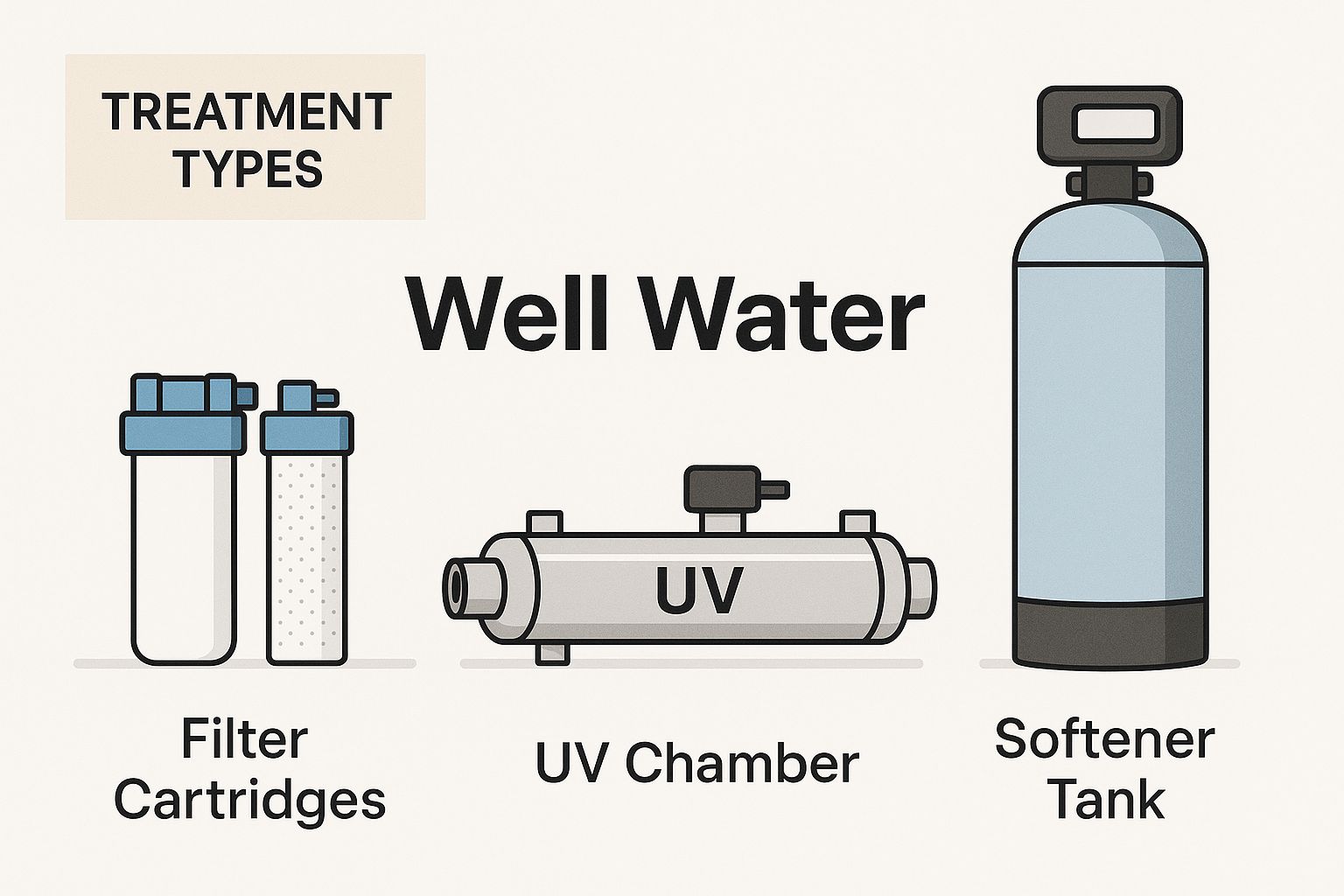
As you can see, different components—like filters, softeners, and UV purifiers—are often combined to create a comprehensive solution that leaves no stone unturned.
Building a Multi-Stage System for Complete Purity
In many cases, especially here in Southwest Florida, a single piece of equipment just won't cut it. Your water test might come back showing high levels of hardness and iron, with some bacteria tagging along for the ride. This is where a professional, multi-stage approach is so important.
We design and install systems where each component works in harmony. For example, a sediment pre-filter might catch sand and grit first. Next, a water softener tackles the hardness, followed by an iron filter that pulls out the metallic elements. Finally, a UV light provides a sterilizing pass, ensuring every drop is perfectly treated before it reaches your tap.
A properly designed multi-stage system isn't just a collection of parts; it's a carefully engineered process where each stage prepares the water for the next, maximizing efficiency and effectiveness across the board.
The need for this kind of advanced water treatment isn't just a concern for homeowners; it’s a massive global priority. In the industrial world, the oil and gas sector faces huge challenges with wastewater. The market for treating this "produced water" was valued at USD 8.82 billion in 2024 and is projected to more than double by 2034. You can learn more about this growing industry on Precedence Research.
The Ultimate Solution for Purity: Reverse Osmosis
For homeowners who want the absolute highest standard of water purity—no compromises—there is another powerful option. A whole-house reverse osmosis (RO) system is the pinnacle of water treatment technology.
Reverse osmosis works by pushing water through an incredibly fine semi-permeable membrane. This membrane is so precise that it strips out up to 99% of all dissolved solids, including minerals, salts, chemicals, and even microscopic contaminants that other systems might miss. While smaller RO systems for a kitchen sink are common, a whole-house system delivers this ultra-pure water to every single faucet in your home.
This gives you unparalleled peace of mind, knowing the water you drink, cook with, and bathe in is exceptionally clean. We specialize in designing these powerful systems for homeowners who want the best water quality possible. You can explore the benefits by checking out our guide on whole-home reverse osmosis.
At the end of the day, picking the right system always comes back to your water test results. With an expert analysis, we can build a solution that perfectly matches your needs, ensuring you invest wisely in clean, safe, and great-tasting water for years to come.
Exploring Advanced and Specialty Treatment Solutions
Sometimes, standard systems like water softeners and iron filters just can't cut it. Your water test might come back with something particularly nasty, or you might have a problem that’s too stubborn for a conventional fix. When that happens, it’s time to bring in the heavy hitters.
This is where we get into the more specialized tools of the trade—the kind of equipment designed for very specific, difficult jobs. Think of them as the special forces of water treatment.
Tackling Tough Contaminants Head-On
Let's talk about that awful rotten-egg smell. While some sulfur odors can be managed with basic filters, a really strong, persistent smell often requires a more aggressive approach. This is where an ozone generator becomes a real game-changer.
Instead of just trapping contaminants, ozone systems inject a powerful oxidizing agent (ozone) directly into your water. This process literally obliterates the odor-causing bacteria and sulfur compounds at a molecular level. It's an incredibly effective way to get fresh, clean-smelling water without dumping in a bunch of chemicals.
For more complex issues like chemical contamination from agricultural runoff, you might need something even more robust. An advanced oxidation process (AOP) combines powerful oxidants like ozone with UV light to break down a wide range of organic pollutants that other systems simply can't handle. It's the ultimate safeguard against unseen threats.
The Rise of Smart Water Treatment
Technology is making our homes smarter, and water treatment is no exception. We're seeing a big shift where smart systems are becoming the new standard, giving homeowners a level of control and insight we've never had before.
These aren't just filters with a fancy light on them. True smart water treatment systems use Internet of Things (IoT) technology to connect to your phone, delivering real-time data on water quality and system performance.
A smart system is like having a technician on call 24/7. It constantly monitors how everything is working, tracks your water usage, and sends you an alert before a minor hiccup turns into a major headache. It’s the closest you can get to a truly hands-off approach.
Imagine getting a push notification telling you it's time to add more salt or that a filter needs changing. This proactive monitoring keeps your equipment running perfectly, saving you the hassle of manual checks and the guesswork of maintenance schedules. It’s simply a modern, more reliable way to manage your home's water.
This move toward smarter, more effective solutions is a massive trend. The global water treatment system market is expected to jump from USD 4.65 billion in 2024 to a whopping USD 8.68 billion by 2032. You can read more about this explosive growth in a report from Data Bridge Market Research.
This isn't just about bells and whistles; it’s about having systems that are both powerful and incredibly convenient. Whether you're battling a severe water quality issue or just want the most advanced, worry-free system available, these next-generation solutions are the answer.
Understanding System Costs and Maintenance
When you're looking into one of the best well water treatment systems, it’s easy to get fixated on the initial price. But this isn't just another home appliance; it's a long-term investment in your family’s health, the lifespan of your pipes, and the performance of everything from your dishwasher to your water heater. To make a smart decision, you have to look at the whole picture—from the day it's installed to its routine upkeep years down the line.
Think of it like buying a car. The sticker price is just the beginning. You also have to consider fuel economy, insurance, and regular oil changes. A water treatment system is no different. A cheap, off-the-shelf unit might seem like a bargain, but it can quickly turn into a money pit with higher running costs and frustrating performance issues.
Breaking Down the Initial Investment
The upfront cost really comes down to two things: the equipment and the professional installation. What kind of equipment you need depends entirely on your water test results. A simple sediment filter for cloudy water is a world away from a multi-stage system designed to tackle hard minerals, iron bacteria, and potential viruses all at once.
This is exactly where getting expert guidance pays off. We don’t just sell boxes; we engineer solutions. Our team digs into your water report to build a system with everything you need and nothing you don't. This approach keeps you from overpaying for features you’ll never use or, worse, underinvesting in a system that won't actually fix your water problems.
Professional installation is the other half of the puzzle. It guarantees that every component is properly sized, seamlessly connected, and perfectly calibrated for peak performance right from the start. This protects your home from leaks and ensures your new system works efficiently for years to come.
Planning for Ongoing Maintenance
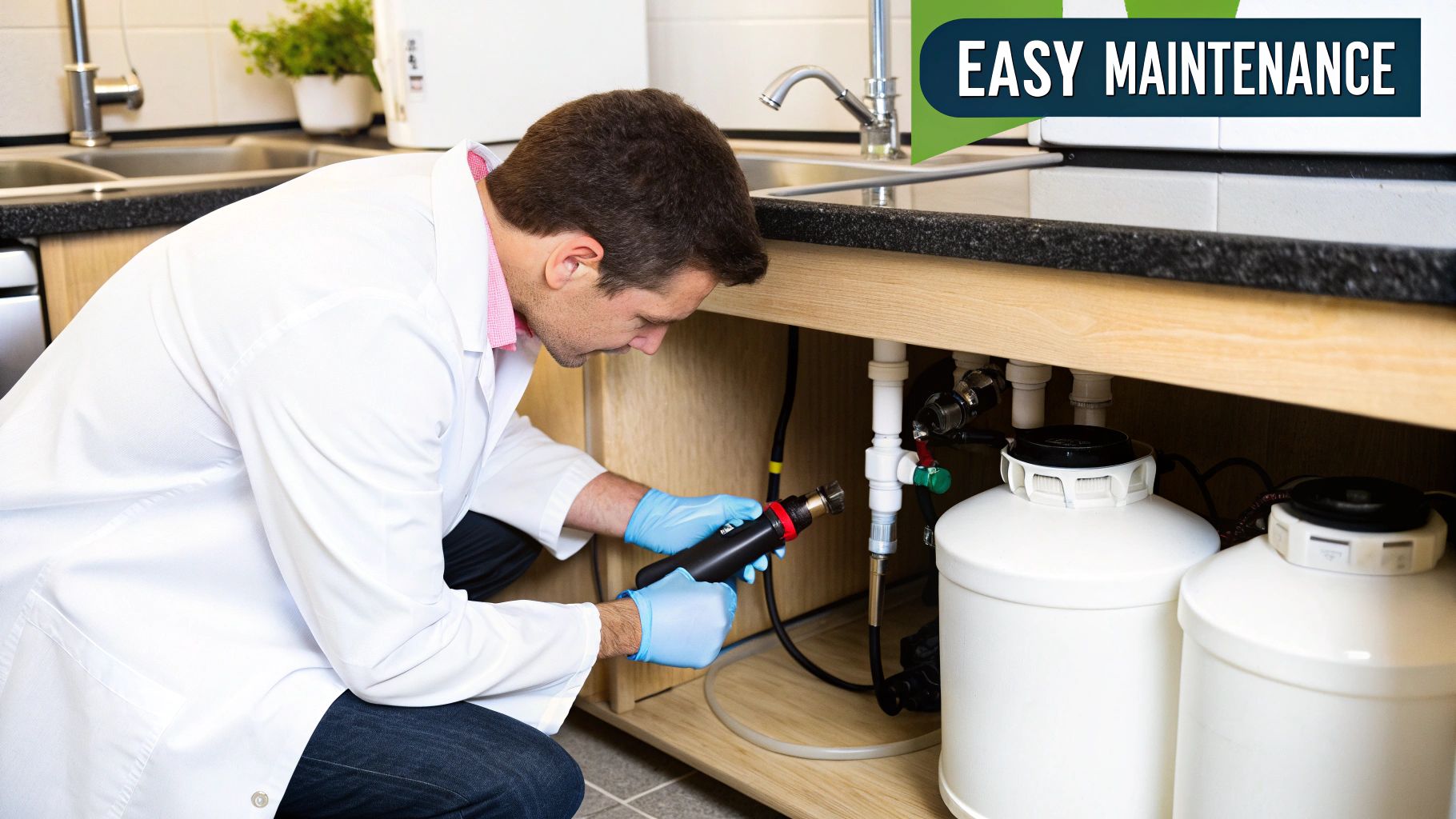
Like any hard-working piece of equipment, your water treatment system needs a little TLC to keep it in top shape. The good news is that the maintenance is usually straightforward and predictable, but it's absolutely crucial for protecting your investment and keeping your water safe.
Here’s a look at typical upkeep tasks:
- Salt Refills: Water softeners need salt to do their job, so you’ll top off the brine tank periodically.
- Filter Changes: Sediment filters, carbon filters, and reverse osmosis membranes all have a limited lifespan and need to be replaced on a schedule.
- UV Bulb Replacement: The lamp in a UV purifier needs to be swapped out about once a year to ensure it's still effectively neutralizing microorganisms.
The real value of a professionally installed system is how it minimizes these long-term costs. A properly sized and calibrated system runs more efficiently, using less salt and electricity and extending the life of filters and components.
Going the DIY route or settling for a bargain-bin system often means getting hit with hidden expenses. An undersized softener can chew through hundreds of extra pounds of salt a year, while cheap filters clog up fast, wrecking your water pressure and demanding constant replacement. Our focus on premium systems and expert installation is all about delivering maximum efficiency and reliability, saving you real money over the life of your system.
The True Return on Your Investment
At the end of the day, a high-quality water treatment system pays for itself, and then some. It guards your expensive appliances against damaging scale buildup, puts an end to rust-stained sinks and tubs, and lets you kick the bottled water habit for good.
But the biggest return is the peace of mind you get from knowing the water your family drinks, cooks with, and bathes in is genuinely clean and safe.
We believe in being upfront about costs and helping you find a solution that works for your budget. To see what a system designed specifically for your home's water would look like, we invite you to get a free quote. We also offer flexible financing options to help make this essential home upgrade more accessible.
The Value of Professional Installation and Service
You've done the hard work of picking the right equipment, which is a huge step. But the most critical part of getting perfect well water is still ahead: the installation. Even the best well water treatment systems will fail if they aren't installed and calibrated correctly. This is where your investment is either protected or put at serious risk.
Going the DIY route might seem like a smart way to save a few bucks upfront, but I've seen it lead to incredibly costly mistakes time and time again. An improperly connected system can cause significant leaks and water damage. Worse yet, an incorrect setup can cripple the system's efficiency, tank your home's water pressure, and even damage your well pump or plumbing.
The Risks of a DIY Approach
Installing a water treatment system is much more than just connecting a few pipes. It's about understanding water flow rates, pressure dynamics, and the precise calibration needed for your specific water chemistry. Getting it wrong comes with some serious headaches.
- Voided Warranties: Most top-tier manufacturers will flat-out void their warranty if the system isn't installed by a certified professional.
- Reduced Efficiency: Incorrect sizing or calibration means your system won't perform as advertised, letting contaminants slip right through.
- Potential for Damage: A botched installation can lead to slow leaks you don't notice for months or put so much strain on your well pump that it fails prematurely.
Peace of mind comes from knowing the job was done right the first time. Our certified technicians ensure every component is perfectly sized, seamlessly integrated, and calibrated for optimal performance from day one, safeguarding your home and your investment.
To give you a clearer picture, let's break down the two paths you can take.
Professional Installation vs DIY Approach
Here's a straightforward comparison highlighting why a professional touch isn't just a service—it's long-term value and safety for your home.
| Factor | Professional Installation (Our Service) | DIY Installation |
|---|---|---|
| Expertise | Decades of experience with local water issues, ensuring correct system sizing and placement. | Guesswork based on manuals and online videos, which can't account for unique plumbing quirks. |
| Warranty | Full manufacturer warranty is protected and valid. | High risk of voiding the warranty on your expensive new equipment. |
| Safety | Guaranteed leak-free connections and proper integration with plumbing and electrical systems. | Potential for leaks, water damage, and even risks to your well pump and home plumbing. |
| Performance | System is calibrated for your specific water test results, guaranteeing optimal contaminant removal. | Often results in poor performance, low water pressure, and inefficient use of salt or media. |
| Long-Term Cost | Higher initial investment but prevents costly future repairs and ensures system longevity. | Lower upfront cost but often leads to expensive repairs, re-installation costs, and property damage. |
Ultimately, professional installation protects your investment and ensures the system does what you paid for it to do.
From Research to Resolution
Our service is about more than just turning a wrench; we provide a complete, end-to-end solution. We make sure every connection is secure, every setting is dialed in for your water quality, and that you know exactly how to operate your new system. This expert attention to detail is what separates a system that just "works" from one that works perfectly.
And if any issues pop up down the road, our expertise in well water repair means you have a trusted partner ready to help.
You've researched the problems lurking in your water. Now, it's time to put a real, lasting solution in place. Let our water specialists handle this final, most important step.
Schedule your free consultation today, and let us turn your hard-earned knowledge into clean, safe, and great-tasting water for your entire home.
A Few Final Questions About Well Water Treatment
Even with all this information, you probably still have a couple of questions rattling around. That's completely normal. Let's tackle some of the most common ones we hear from homeowners, so you can feel totally confident in your decision.
How Long Does A Well Water System Actually Last?
You're making a real investment, so you want it to last. The good news is that a high-quality, professionally installed system is built like a tank. With regular, proper maintenance, you can easily expect your system to run for 10 to 15 years, sometimes even longer.
Of course, a few things can affect that lifespan. The type of system and the specific junk in your water play a big role. For instance, a system battling extremely high iron levels has to work a lot harder than one just softening the water, which might mean it needs more attention to hit that 15-year mark. This is exactly why getting professional advice and sticking to a service schedule is so crucial.
Will A Treatment System Kill My Water Pressure?
This is probably the number one concern we hear, and thankfully, it's one you don't need to worry about. When a system is sized correctly for your home and installed by a pro, you shouldn't notice any difference in your water pressure. We make sure the equipment can handle your family's water usage without breaking a sweat.
Where do the horror stories of weak showers come from? Almost always from a DIY job gone wrong. An undersized unit or improper plumbing can create a bottleneck in your water line, choking the flow. Professional installation is the key to keeping your water pressure strong and steady.
Couldn't I Just Buy Bottled Water Instead?
Grabbing a case of water at the store feels cheap, but it's a classic example of a short-term fix that costs a fortune over time. Think about it: the endless cycle of buying bottled water for drinking and cooking adds up to thousands of dollars over the years. It's a constant drain on your wallet.
But the bigger issue is that bottled water only solves a tiny piece of the puzzle. A whole-home system cleans the water at every tap. That means you get safe, great-tasting water for showering, washing clothes, and running your appliances, protecting them from scale and sediment buildup. It’s an investment that pays you back all over the house, not just at the kitchen sink.
Ready to get clean, safe water from every tap in your home? The experts at Water Medic of Cape Coral have over 25 years of experience designing and installing the perfect systems for Southwest Florida's unique water challenges.