Best Water Filtration Systems for Well Water
When you have a private well, you’re in the driver’s seat for your water supply. That's a great feeling, but it also means you're the one solely responsible for its quality and safety, especially here in Southwest Florida. The best water filtration systems for well water aren't a single device; they're usually a team of filters working together—think sediment filters, iron filters, water softeners, and UV purifiers—all chosen based on what a water test reveals. After all, unlike city water, your well water gets no treatment before it reaches your tap.
Why Filtering Your Well Water Is Non-Negotiable
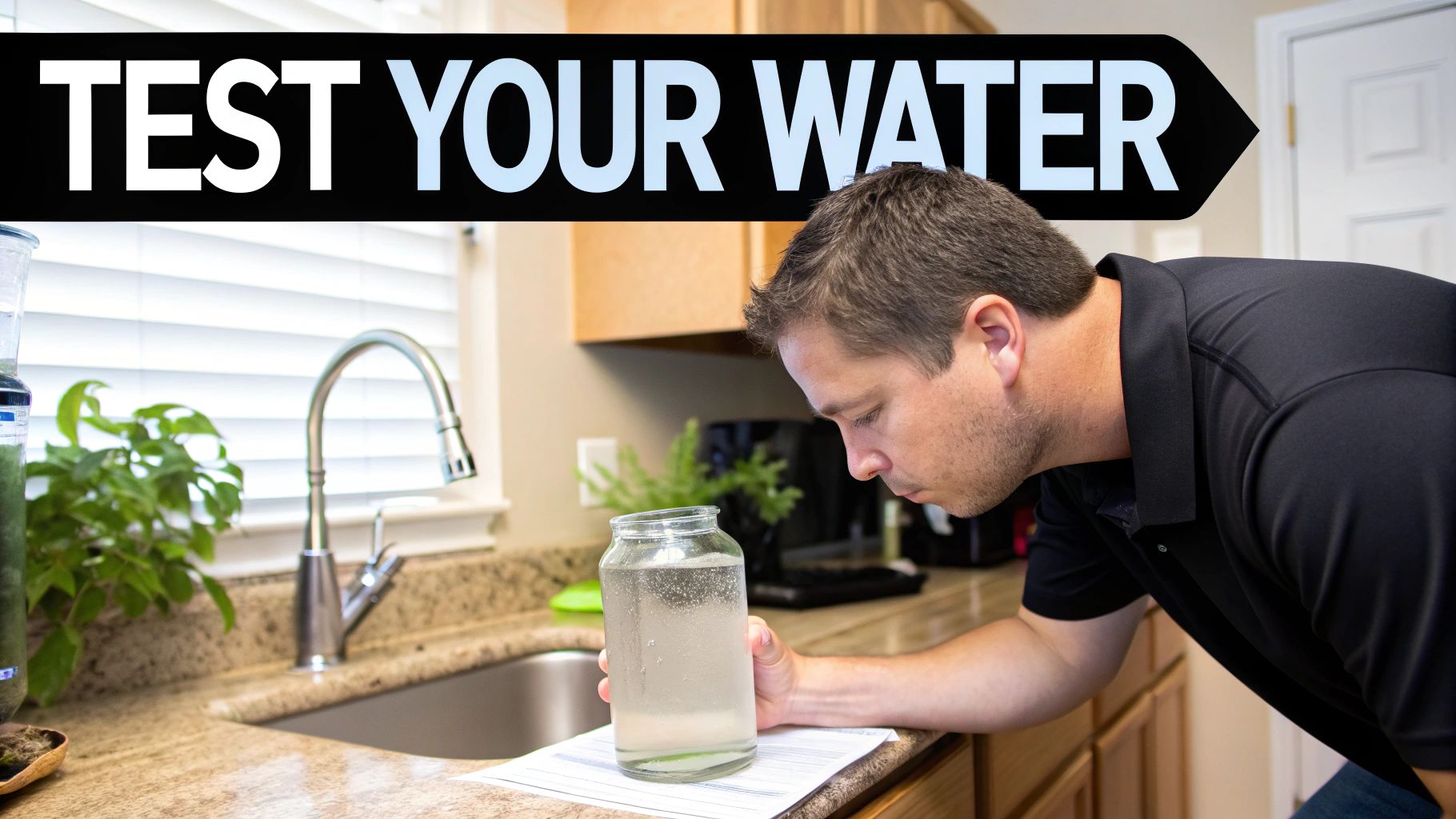
Owning a well gives you a fantastic sense of self-sufficiency, but it comes with a serious catch. City water is treated and tested constantly before it ever gets to a home. Well water, on the other hand, comes straight out of the ground. That means whatever is in the local aquifer can end up in your glass.
For those of us in Southwest Florida, this brings its own unique set of problems. Our local geology often means high levels of minerals, resulting in incredibly hard water that wreaks havoc on pipes and appliances. This is usually the first thing people notice—that chalky white scale on faucets or the slick, filmy feeling on your skin after a shower.
But the issues with untreated well water can be much deeper than just hardness. The things you can't see, taste, or smell are often the biggest concerns.
Your well is a direct tap into the groundwater. It’s vulnerable to everything from farm runoff and septic systems to naturally occurring bacteria. Just because your water looks clear doesn't mean it's safe, and that's a gamble no family should ever have to make.
Why a Store-Bought Filter Won't Cut It
That simple pitcher filter you can grab off the shelf? It’s made for city water, mostly just to pull out a bit of chlorine and make it taste better. It stands no chance against the heavy-duty challenges of well water.
Those basic filters get clogged and overwhelmed by sediment, iron, and hardness minerals almost immediately. Not only do they stop working, but they can sometimes become a breeding ground for the very bacteria you’re trying to avoid.
To truly safeguard your home and family, you need a real strategy. The journey to pure, safe well water always begins with one critical step: finding out exactly what's in your water.
That's where we come in. A one-size-fits-all approach just doesn't work for wells and won't give your family the protection it deserves. The only way to choose the right system is to first identify the specific contaminants you're up against. We offer comprehensive, professional water testing that gives you a complete profile of your water's chemistry and biology. This allows us to design a filtration system that solves your specific water problems, ensuring every drop in your home is clean, safe, and dependable.
Understanding Common Well Water Contaminants
Before we can even talk about solutions, we have to know exactly what we’re dealing with. Choosing a water filtration system without first understanding your water’s chemistry is like a doctor prescribing medicine without a diagnosis—it’s a shot in the dark. The groundwater here in Southwest Florida has its own unique fingerprint, often carrying a mix of minerals, microbes, and other elements that can affect everything from your health to your plumbing.
Pinpointing these specific contaminants is the critical first step toward getting the best water filtration systems for well water. So, instead of guessing, let’s get familiar with the usual suspects you might find coming out of your tap.
As you can see, the problems in well water fall into three main buckets.
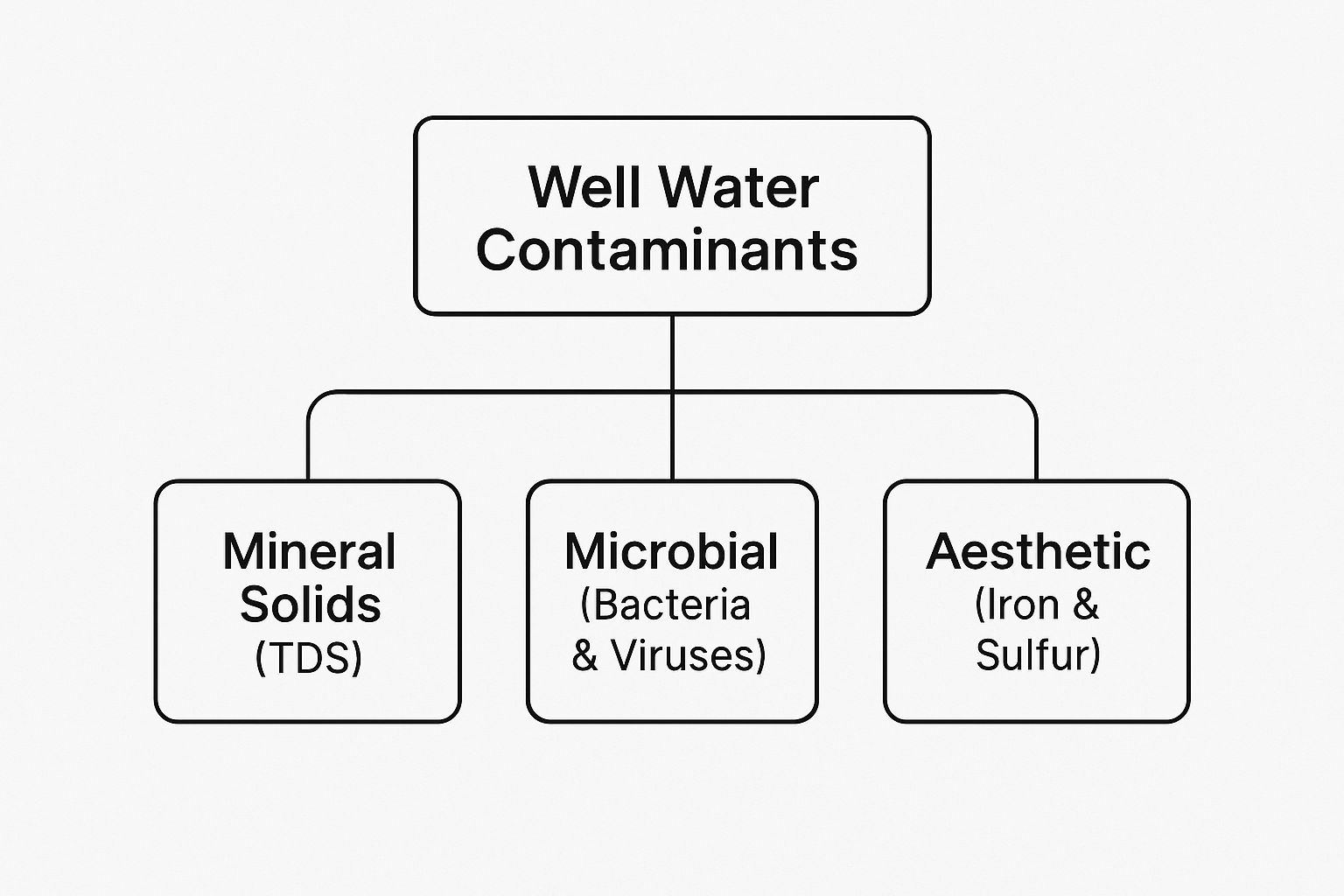
This really drives home the point that the issues range from invisible health threats like bacteria to very noticeable problems like mineral buildup and foul odors.
The Invisible Load: Minerals and Solids
One of the most frequent complaints we hear stems from a high concentration of Total Dissolved Solids (TDS). That sounds technical, but it’s really just a catch-all term for the minerals, salts, and organic matter dissolved in your water. Think of it as adding a spoonful of sand to a glass of water—even after you stir and it dissolves, the grit is still there.
High levels of minerals like calcium and magnesium are the direct cause of hard water. You've seen the evidence: stubborn white scale on faucets, soap that won’t lather, and appliances like water heaters and dishwashers that fail years before they should. Left unchecked, these dissolved solids can slowly but surely corrode your pipes from the inside out, setting you up for costly plumbing repairs down the road.
The Hidden Threat: Microbial Contaminants
Even if your water looks pristine, it can harbor microscopic dangers. Bacteria, viruses, and protozoa like E. coli, Giardia, and Cryptosporidium can easily seep into well systems, particularly after heavy rains or if a septic system is nearby. These aren't just nuisances; they pose a direct and serious risk to your family's health.
This isn’t just a local problem, either. The World Health Organization found that at least 1.7 billion people worldwide drink from a source contaminated with microbes, leading to an estimated 505,000 deaths from diarrheal diseases each year. That statistic is a sobering reminder of why treating raw, unfiltered water is non-negotiable. You can explore more on this global health crisis on cognitivemarketresearch.com.
As a well owner, you are your family's municipal water department. Without a proper filtration and purification system, there is nothing standing between these harmful microorganisms and your kitchen tap.
Nuisances You Can See and Smell
Finally, we have the contaminants that make their presence known every single day. They might not always be a direct health threat, but they can absolutely ruin the experience of using your water.
To get a clearer picture, let's look at the most common culprits we find in Southwest Florida wells.
Common Well Water Contaminants and Their Effects
| Contaminant | Common Source | Potential Effect |
|---|---|---|
| Iron | Natural mineral deposits in soil and rock | Reddish-brown stains on fixtures and laundry, metallic taste. |
| Manganese | Natural mineral deposits | Blackish stains on fixtures, unpleasant taste and odor. |
| Hydrogen Sulfide | Decaying organic matter, sulfur bacteria | A distinct "rotten egg" smell in both hot and cold water. |
| Bacteria/Viruses | Septic systems, agricultural runoff | Gastrointestinal illnesses, infections, and other serious health issues. |
| Hardness (Calcium & Magnesium) | Dissolved limestone, chalk, and dolomite | Scale buildup in pipes and on fixtures, soap scum, appliance failure. |
| Tannins | Decaying vegetation | Yellow or brownish color in water, earthy taste. |
These issues are more than just minor annoyances; they're giant red flags that your water chemistry is off balance.
Ignoring them means accepting ongoing damage to your home and a lower quality of life. The only way to know for sure which of these are in your water—and in what amounts—is through a professional water analysis. That test gives our team the hard data we need to design a system that solves your exact problems, guaranteeing your water is finally clean, safe, and enjoyable to use.
A Look at the Top Filtration Technologies for Wells
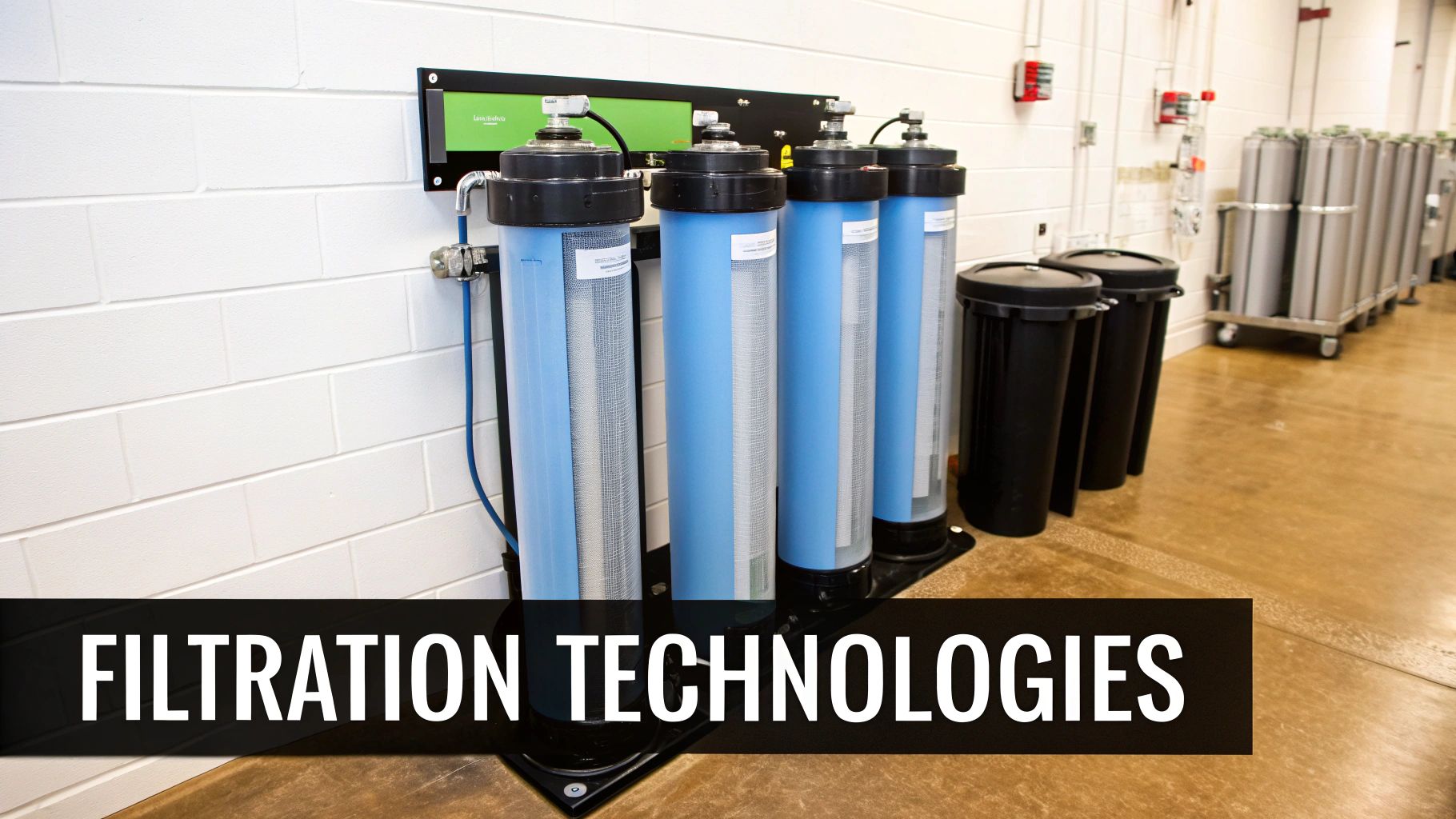
Choosing the right filtration system isn't about finding one magic bullet. It’s about assembling a team of specialists. Think of it this way: each filtration technology has a specific job, and when you combine them correctly, you get one of the best water filtration systems for well water. The key is knowing what each component does so you can build a solution that targets your specific water problems.
Here at Water Medic, we don’t do guesswork. We design our systems using a lineup of proven technologies, carefully selecting each one to solve a particular issue that shows up in your water test. This approach means you get exactly what you need—nothing more, nothing less.
Reverse Osmosis: The Ultimate Purifier
Think of Reverse Osmosis (RO) as the ultimate security checkpoint for your water. It works by forcing water through a special membrane filled with microscopic pores. These pores are so tiny that they block an incredible range of contaminants from getting through, while pure water molecules are pushed to the other side.
This process is a powerhouse for removing things like:
- Total Dissolved Solids (TDS), including the salts and minerals that make water "hard."
- Heavy Metals like lead, arsenic, and mercury.
- Nitrates and Sulfates, which often come from agricultural runoff.
Because RO is so thorough, it's often the heart of any system designed for the purest drinking water. It tackles the health-related contaminants that other filters might miss, making it a strong foundation for any well water treatment plan.
Activated Carbon: The Contaminant Sponge
Activated Carbon filters work on a principle called adsorption. Imagine the carbon as a giant, porous sponge. As water flows through it, all sorts of chemicals and organic compounds get trapped and stick to its massive internal surface area.
This technology is fantastic for improving how your water tastes, smells, and looks. For a deeper dive, it helps with understanding different filtration media like carbon filters, which have applications beyond just water treatment.
Its main targets are:
- Chlorine and its byproducts, which cause that swimming pool taste and smell.
- Pesticides and Herbicides that can seep into groundwater.
- Volatile Organic Compounds (VOCs) and other industrial chemicals.
By grabbing onto these substances, activated carbon makes a huge difference in the taste and smell of your water. If you want to learn more about how they work in a complete system, you can explore our guide on high-quality carbon filters.
Water Softeners and Iron Filters: The Heavy Lifters
If you’re dealing with the classic signs of well water—scale buildup and rust-colored stains—then you need the heavy lifters. Water softeners are built specifically to go after calcium and magnesium, the two minerals responsible for the hard water scale that clogs pipes and wrecks appliances.
Specialized iron filters, on the other hand, are designed to tackle dissolved iron. They oxidize it, which basically forces it out of the water so it can be filtered away. This is what stops those ugly reddish-brown stains from ruining your sinks, toilets, and laundry.
A common mistake is thinking a single filter can solve every problem. In reality, hard water and high iron levels require dedicated solutions. Combining them with other technologies is what creates a truly effective and lasting system.
UV Purification: The Microbial Bodyguard
The final line of defense for many well water systems is UV Purification. This is your chemical-free bodyguard. It uses a powerful ultraviolet lamp to neutralize any microbiological threats lurking in your water. As water flows past the UV light, it zaps bacteria, viruses, and cysts like Giardia.
The UV light doesn't technically kill them, but it scrambles their DNA so they can't reproduce. This makes them completely harmless and unable to make you sick. For any well owner worried about contamination from nearby septic systems or surface runoff, it’s an absolute must-have.
The demand for these solutions is climbing fast. The global water purifier market is projected to jump from $48.1 billion in 2025 to a massive $88.8 billion by 2034. RO continues to be the top choice for removing heavy metals and chemicals, while UV is often paired with carbon filters to provide a one-two punch against microbial threats—a combination that’s proven to work against the unique challenges of well water.
At the end of the day, the best systems never rely on just one technology. Our experts at Water Medic take your water test results and figure out the perfect combination of these specialized tools. That way, we know every potential contaminant is being handled, guaranteeing your well water is clean, safe, and great-tasting from every tap in your house.
How to Choose the Right Filtration System
Picking the right water filtration system can feel overwhelming, but it really boils down to a few straightforward factors. Instead of just guessing, the best way forward is to let your water itself tell you what it needs. Think of it as a diagnosis before the prescription.
The single most important tool in this entire process? Your water test report. This isn't just a piece of paper; it's the blueprint we use to design the perfect system for your home. It tells our experts exactly what’s in your water—and at what levels—so we can select the right tools for the job.
Start With Your Water Test Results
A professional water analysis is the bedrock of any smart filtration strategy. It gives us the hard data needed to move beyond one-size-fits-all solutions and get specific. For example, high iron levels demand a dedicated iron filter, plain and simple. If bacteria shows up, a UV purification system becomes non-negotiable.
Without that report, you're flying blind—buying a solution without truly knowing the problem. Our team uses your specific results to handpick the technologies that will actually work, creating a personalized plan that targets your home's unique water chemistry.
Consider Your Household's Needs
Once we know what to filter, the next question is how much water you use. To get this right, we'll walk through a few practical points to make sure your system is sized correctly.
- Daily Water Usage: A family of five obviously has different needs than a couple. We look at your peak demand to ensure the system can keep up without causing a frustrating drop in water pressure, especially when the shower, dishwasher, and washing machine are all running at once.
- Maintenance Willingness: Let's be honest—are you a hands-on type, or do you prefer a "set it and forget it" approach? Some systems need simple filter changes, while others require adding salt regularly. We’ll find a system that matches how much time you want to spend on upkeep.
- Budget: We firmly believe everyone deserves safe, clean water, and we can find a solution that works for your budget. We’ll also break down the long-term value, like how a quality system can save you money on appliance repairs and completely eliminate the need for bottled water.
Choosing a water filtration system isn't just about buying a piece of equipment. It's about investing in a long-term solution that protects your family's health and your home's plumbing. A system designed by an expert based on your specific needs will always outperform a generic, off-the-shelf product.
Point of Entry vs. Point of Use Systems
Another key decision is whether you need to treat all the water coming into your house or just the water at a specific tap. Both approaches have their place, and the right one for you depends on your water test and your main goals.
Point-of-Entry (POE) systems, often called whole-house systems, are installed right where the main water line enters your home. They treat every single drop, protecting not just your drinking water but also your pipes, fixtures, and expensive appliances from troublemakers like hardness minerals, iron, and sediment. For the ultimate in comprehensive protection, you can learn more about our whole-home reverse osmosis solutions, which deliver the highest level of purification for your entire property.
Point-of-Use (POU) systems are smaller units installed at a single faucet, usually under the kitchen sink. These are a fantastic and affordable choice if your primary concern is the quality of the water you drink and cook with. An under-sink reverse osmosis system, for instance, can give you incredibly pure water right where you use it most.
Let Our Experts Guide You
More and more people are becoming aware of what’s in their well water, and the market reflects that. The global residential market for household water filtration systems is projected to hit $12.24 billion by 2025 and grow to $26.64 billion by 2033. This boom shows a clear demand for reliable, effective solutions that homeowners can count on. Discover more insights about this growing market trend at archivemarketresearch.com.
Instead of trying to piece together a solution from parts and pieces, let our team cut through the confusion for you. We don’t just sell boxes; we design custom water treatment solutions that work.
Schedule a free, in-home consultation with us today. We'll review your water test, assess your home's unique setup, and recommend the best water filtration system to give you complete peace of mind.
Why Professional Installation and Maintenance Matter
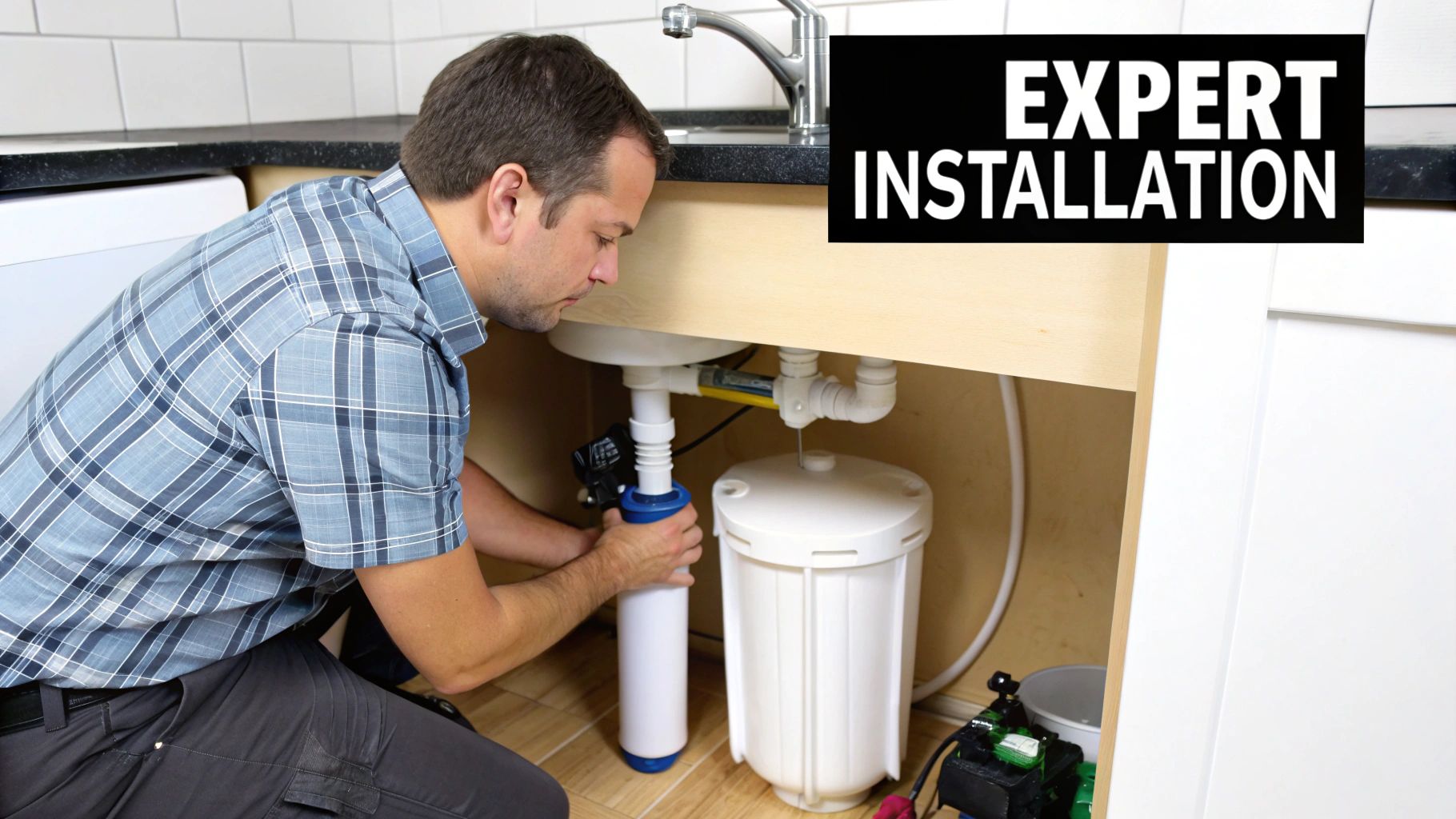
Choosing one of the best water filtration systems for well water is a fantastic first step toward protecting your family and your home. But the equipment itself is only half the battle. Think of it this way: even the most powerful engine won't perform if it’s not installed and tuned correctly. That’s where professional expertise isn't just a nice-to-have, it's essential.
A DIY approach might look tempting as a way to cut costs, but it can quickly backfire. A seemingly small mistake, like an improperly sealed connection, can create slow, hidden leaks that lead to serious mold and water damage. Worse yet, an incorrect setup can completely undermine the system’s purpose, letting contaminants slip right past the filters and into your drinking water.
The Risks of Improper Installation
Going it alone means you're taking on some serious risks—risks our trained technicians know how to avoid. Installing a whole-house system is a precise job. It involves dialing in the right water pressure, making every connection watertight, and programming the system to regenerate or backwash at the correct intervals.
From plumbing connections to learning how to properly install polyethylene tanks for storage, every step matters. Without a professional touch, you could be looking at:
- Reduced Filter Efficiency: An incorrect setup can let water create little channels to bypass the filter media altogether. You think your water is clean, but it's not getting the full treatment you paid for.
- Costly Property Damage: It only takes one loose fitting to cause thousands of dollars in repairs to your floors, drywall, and cabinets.
- Voided Warranties: Many top brands require professional installation to keep their warranties active. A DIY job could mean you’re on your own if a part fails.
Our team brings over 25 years of experience to every job, making sure your system is installed flawlessly for peak performance from day one.
Long-Term Performance Through Expert Maintenance
Installation is just the starting line. A water filtration system is a hard-working piece of equipment, and just like your car, it needs regular tune-ups to stay in top shape. Over time, filters clog, membranes wear down, and UV bulbs lose their power. If you forget or delay this maintenance, the quality of your water will start to drop.
That’s why we created our managed maintenance plans—to take the guesswork and hassle completely off your plate. No more trying to remember schedules or hunting down the right replacement parts. Our team handles it all.
Investing in professional maintenance isn't just about protecting your equipment; it's about guaranteeing the long-term safety and quality of your family's water supply. It transforms your filtration system from a one-time purchase into a reliable, ongoing solution.
With our managed service, you can rest easy knowing your water is always pure. We stick to a precise schedule, replacing components at just the right time to keep your system running at 100% efficiency. This proactive care protects your investment, extends the life of your equipment, and gives you something priceless: total peace of mind.
Your Partner for Clean Well Water in Southwest Florida
Having your own well is a great benefit, but it also means you're in charge of your water's quality. Getting pure, clean water isn't about just buying a filter off the shelf; it's about building a smart, targeted system. The first step, always, is getting to know your water inside and out with a detailed analysis. Once you know exactly what you're dealing with, you can pick the right tools for the job.
That’s where we come in. We’re not just selling equipment; we live and work here, so we understand the specific water challenges found across Southwest Florida. Our whole focus is on giving local families like yours reliable, effective water treatment systems that you can count on for years to come.
How We Get You There
You can stop wondering about what's in your water. The route to having clean, safe water flowing from every tap in your house is actually pretty straightforward, and we'll walk you through it.
- Professional Water Analysis: We don't guess, we test. A thorough analysis tells us exactly what’s in your water—from minerals and chemicals to any unwelcome microbes.
- Custom System Design: With those results in hand, we’ll design one of the best water filtration systems for well water specifically for your home. This might mean combining a workhorse like a reverse osmosis system with an iron filter or a UV purifier to tackle your unique water profile.
- Expert Installation and Support: Our technicians make sure everything is installed correctly for peak performance. And we don't just disappear after installation; we’re here for you for any maintenance down the road.
Clean, safe, and great-tasting water shouldn't be a luxury—it's a fundamental part of a healthy home. We can help you get total confidence in every glass you pour.
Ready to take the first step? Schedule your free, no-obligation water test and have a chat with one of our experts today.
Got Questions About Well Water Filtration? We’ve Got Answers.
When you're dealing with well water, it's natural to have a lot of questions. As the go-to experts in Southwest Florida, we’ve pretty much heard them all. Let's clear up some of the most common concerns homeowners have.
Our aim is to arm you with the right information so you can feel confident about the water your family uses every day.
How Much Does a Well Water Filtration System Cost?
This is usually the first thing people ask, and honestly, it really depends on what's in your water. A basic setup with a sediment and carbon filter might only run you a few hundred dollars.
But for the kind of stubborn issues we often see around here—like iron, sulfur, and hardness—a more robust, multi-stage system is usually necessary. A system that includes a water softener, a dedicated iron filter, and a UV purifier will be an investment of several thousand dollars.
Think of it this way: the cost matches the level of protection your water requires. That's why we always start with a free, in-home consultation. We'll test your water and give you an exact, no-pressure quote, ensuring you only invest in the equipment you actually need.
How Long Do These Filtration Systems Last?
When a quality system is installed correctly and looked after, the main components like the tanks and valves can easily last 10-15 years, sometimes even longer. The real secret to longevity is keeping up with routine maintenance.
This mostly just means swapping out the filters and media on schedule. Here's a typical timeline:
- Sediment Filters: Need to be changed every 3-6 months.
- Carbon Filters: Last anywhere from 6-12 months.
- RO Membranes: A reverse osmosis membrane can work effectively for 2-5 years.
- UV Bulbs: Should be replaced annually to maintain their germ-killing power.
We offer managed maintenance plans that take all this off your plate, making sure your system performs at its best for its entire lifespan.
The biggest mistake we see is people letting maintenance slip. It not only makes the system less effective but can also shorten its life, costing more in the long run.
Can a Filtration System Fix That Rotten Egg Smell?
You bet it can. That nasty "rotten egg" odor is from hydrogen sulfide gas, a very common complaint with well water in our region. A simple carbon filter might take the edge off, but it's rarely strong enough to solve the problem completely.
The best way to tackle it is with a dedicated aeration system or a specialized iron and sulfur filter. These systems are built specifically to target and remove hydrogen sulfide, leaving your water clean, fresh, and completely odor-free. It's a perfect example of why a water test is non-negotiable—it tells us exactly what technology will fix your specific problem.
Want to dive deeper? Check out our full well water FAQ page for more expert insights.
At Water Medic of Cape Coral, we're not just selling hardware; we're providing lasting peace of mind about your water. If you're tired of worrying about what's coming out of your tap, contact us today to schedule your free consultation and water test.