
Active Solar Energy for Homes in Southwest Florida
By the end of 2024, global operational solar thermal capacity reached 544 GWth, producing about 443 TWh of annual solar thermal energy. For a Cape Coral homeowner, though, active solar energy usually starts with a pool, hot water, or a pump, not a field of rooftop electricity panels.
You may already be feeling the problem on a hot Southwest Florida afternoon. The pool pump runs through the brightest part of the day, the water still feels cooler than you want, and the electric bill climbs while the system works. Active solar reframes that setup. Instead of treating solar as only photovoltaic panels that make electricity, think of it as equipment that uses collectors, pumps, valves, and controls to capture and move heat where your home can use it.
That distinction matters for homeowners in Cape Coral and Lee County, especially those with private wells, large pools, or outdoor equipment that operates regularly. A properly designed system can move warmed water through a pool loop, preheat domestic water before it reaches an existing heater, or power a dedicated pump with a small photovoltaic array. The right choice depends on your roof, shade, water use, pool habits, and equipment layout.
What Active Solar Energy Means for a Florida Home
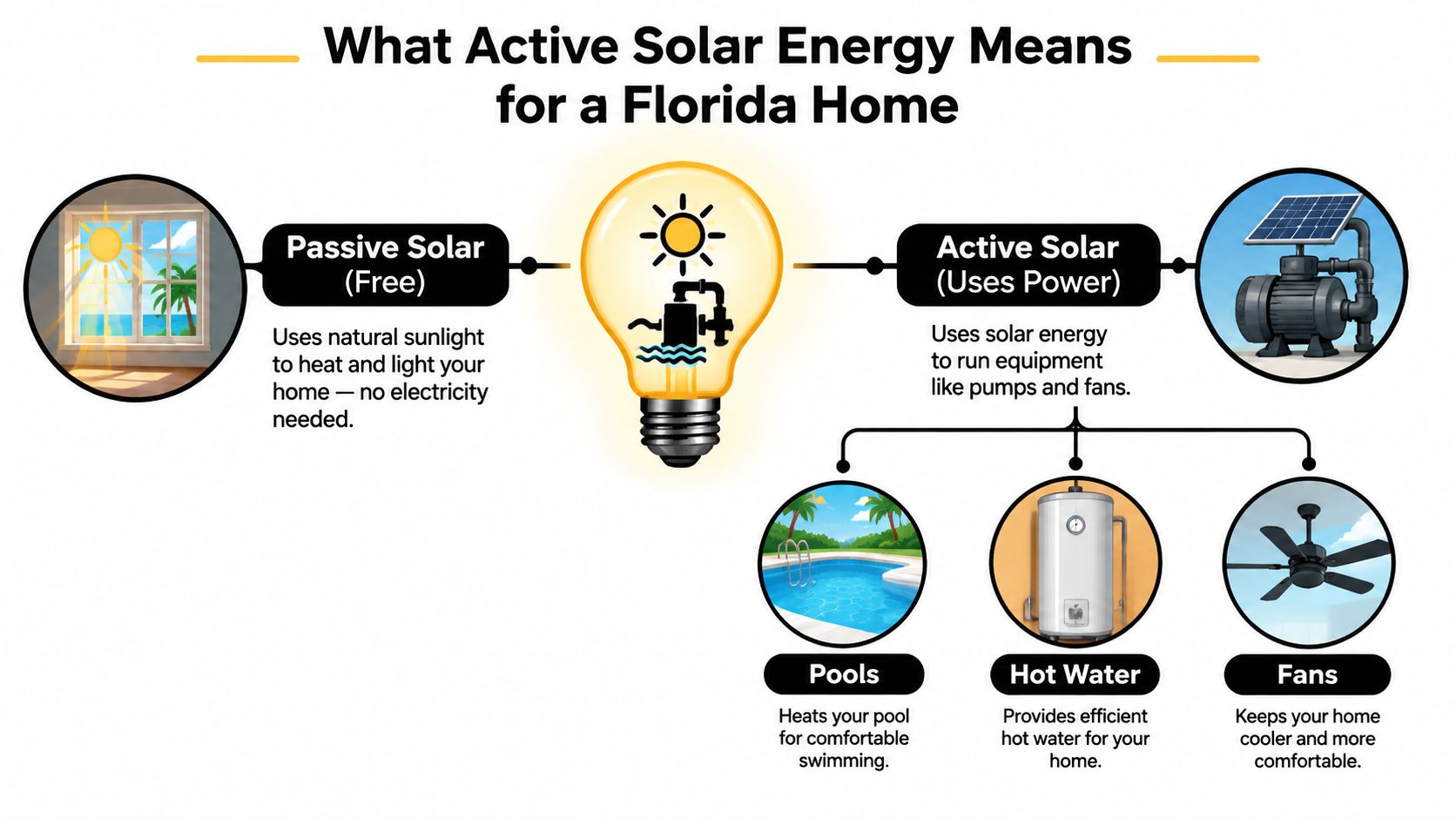
A Cape Coral homeowner running the pool pump around midday in August is already thinking about solar timing, even if the equipment isn't solar-powered. The sun is strongest while the pump is operating, but a conventional pump just circulates water. An active solar energy system adds components that collect heat and direct it into the water or fluid being moved.
Active solar generally uses mechanical equipment. A typical thermal loop includes solar collectors, a circulating pump, a controller, and a place to store or absorb the heat. For a pool, the pool itself acts as the storage mass. For domestic hot water, an insulated preheat tank can hold solar-warmed water before the existing water heater finishes the job.
Passive solar works differently. It relies on building orientation, windows, shading, insulation, and thermal mass. A home may absorb sunlight through well-placed glazing without a pump or controller. Active solar adds a working loop, much like using a garden hose to carry warmth from one location to another.
Why Florida homes are a practical fit
Southwest Florida offers strong sunlight, long warm seasons, and many properties with pools. Those conditions favor systems that heat water rather than trying to heat outdoor air, which quickly loses warmth in open, humid surroundings. A collector loop can send heat directly into a pool or water tank, where the energy remains useful.
The distinction also helps prevent a common buying mistake. A homeowner asking for “solar” may need one of three different designs:
- Pool heating: Collectors warm circulating pool water before returning it to the pool.
- Domestic hot water: Thermal collectors warm a preheat tank for showers, laundry, and other household use.
- Solar-driven pumping: A dedicated PV array supplies electricity to a DC or AC pump.
The system isn't useful because panels appear on a roof. The pump must move fluid, the controller must make sensible decisions, and the storage side must accept the heat. The next question is how those four working pieces operate as one system.
How the Core Components Work Together
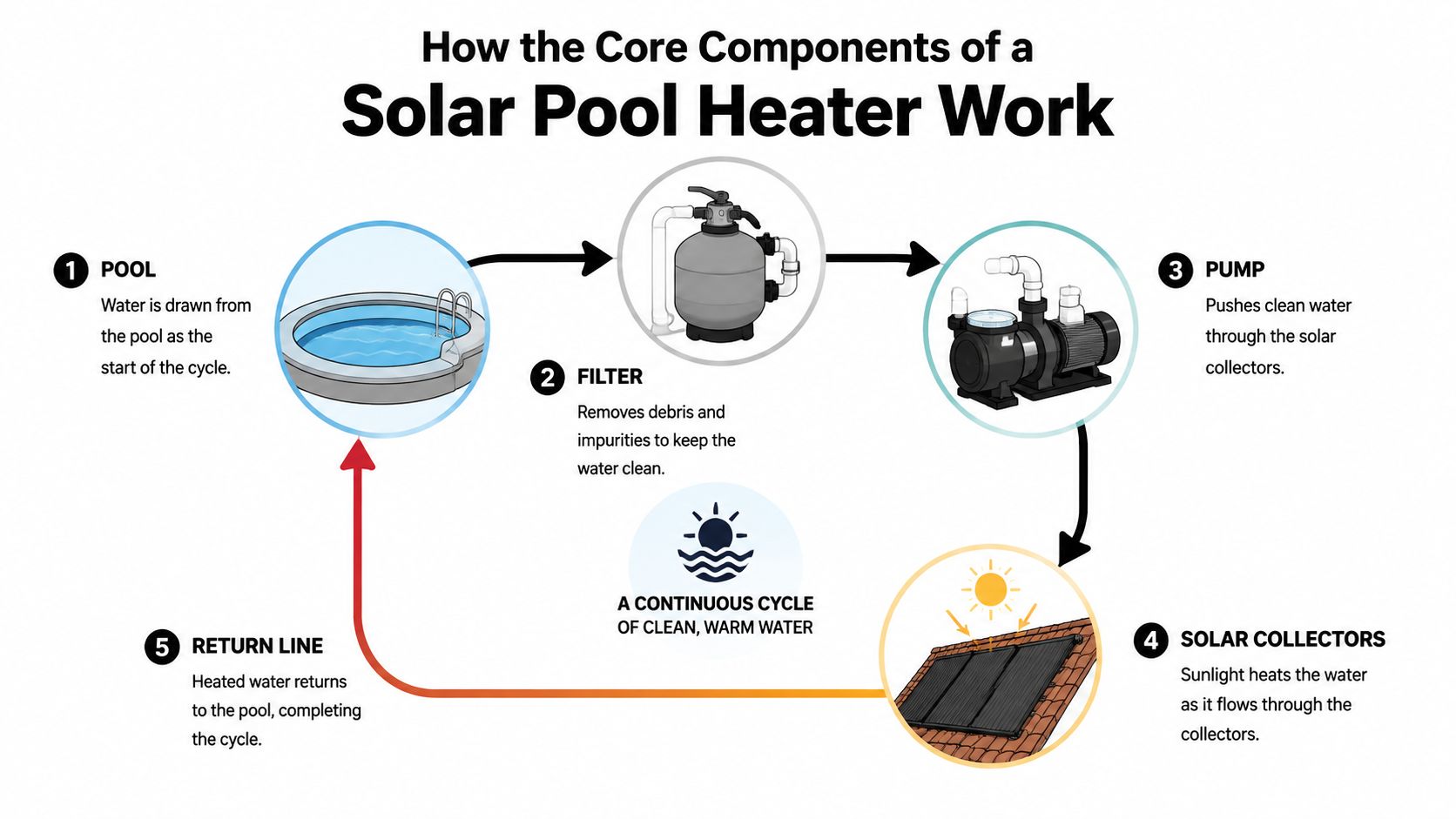
A pool-heating loop is the easiest example to understand. The existing pool water first passes through the filter, then the pump sends it toward the solar collectors. The collectors absorb sunlight and transfer that heat to the water before a return line sends the warmer water back to the pool.
Collectors do the heating
A local installer may propose unglazed polymer collectors or rubber mat collectors for a pool. These are designed to warm pool water directly and usually suit the mild conditions around Cape Coral. Glazed flat-plate collectors use a covered, insulated design and are more commonly associated with domestic hot water, where higher operating temperatures and a protected heat-transfer loop matter.
Roof-mounted collectors often sit on a suitable south-facing roof plane or on a rack. The best location isn't automatically the largest roof surface. Shade, pipe routing, roof condition, wind exposure, and access for service all affect the design.
The pump moves the water
The circulating pump provides the pressure that pushes water through the collectors. Depending on the equipment, an installer may use a single-speed or variable-speed pump selected for the system's flow needs and resistance. A variable-speed pump can offer useful control, but the correct choice depends on the whole pool system, not on the pump label alone.
Think of the pump as a garden hose with a purpose. The hose carries water, but the system needs a control that decides when carrying that water is worthwhile.
Practical rule: The pump should run for solar heating when the collectors can add useful warmth, not simply because the sun is visible.
The controller protects the value of the loop
A differential temperature controller compares collector temperature with pool or tank temperature. When the collectors are warmer, it activates the solar pump or opens the appropriate valve. When clouds, shade, or evening conditions make the loop unproductive, the controller stops circulation.
That small control box prevents the system from sending cooler water through the collectors when doing so would reduce the benefit. It also gives a homeowner a recognizable component to ask about during a quote.
Storage is the destination
For a pool system, storage is simple. The pool absorbs the heat. A domestic hot-water system uses an insulated preheat tank, which supplies warmed water to the existing water heater. The backup heater remains important because solar availability changes with weather and household demand.
Main Residential Applications in Cape Coral and Lee County
Homeowners usually compare three active solar applications. They share the same basic idea, but their collectors, controls, storage arrangements, and best use cases differ.
| Application | Best Fit | Typical Effort | Southwest Florida Use |
|---|---|---|---|
| Solar water heating | Homes with substantial hot-water demand | Roof collectors, preheat tank, pump, controls, and backup connection | Showers, laundry, and household hot water |
| Solar pool heating | Pool owners who want a longer comfortable swimming season | Unglazed collectors, valves, pump controls, and roof or ground mounting | Pool temperature management during much of the year |
| Solar-driven pumps | Irrigation, pool circulation, or well-boosting locations where dedicated power is useful | Small PV array, pump, controller, wiring, and equipment mounting | Remote or inconvenient pump locations |
Solar water heating
A flat-plate collector or evacuated-tube array can transfer heat to a preheat tank. The existing water heater then supplies backup heat when the tank doesn't meet demand. This setup can make sense for a larger household, frequent guests, or a property where electric water heating represents a noticeable part of energy use.
Roof area and shading deserve close attention. Mature oaks, palms, and neighboring two-story homes can reduce useful collection time. An installer should evaluate the actual roof plane and household hot-water pattern rather than sizing the array from roof area alone.
Solar pool heating
Pool heating is often the most natural active-solar application for Cape Coral homes. Unglazed polymer or rubber mat collectors use the pool's circulation loop and return warmed water to the pool. The design works best when the available roof or rack area has good sun exposure and the pool owner values swimming beyond the hottest part of summer.
A pool cover can still matter. It reduces heat loss when the pool isn't being used, while the solar loop adds warmth during suitable daylight conditions. Homeowners comparing equipment and service options can review swimming pool services in Cape Coral as part of the broader pool-care decision.
Solar-driven pumps
A small dedicated PV array can power a DC pump directly or supply an AC pump through the proper equipment. This approach suits irrigation, pool circulation, or well-boosting applications where grid power is inconvenient or where the homeowner wants a separate solar-powered load.
The tradeoff is that pump performance depends on sunlight and system sizing. A battery or backup arrangement may be appropriate when the pump must operate during low-light periods. A site assessment should confirm whether the property needs direct daytime operation, stored energy, or a conventional backup connection.
Installation Considerations for Southwest Florida Homes
Active solar installation in Cape Coral is mostly a design exercise. The sun is available, but the installer still needs to decide where collectors belong, how equipment will handle local weather, and how the system will interact with the home's existing components.
Start with roof geometry and shade
A south-facing roof plane can be useful, but it isn't the only possible location. Roof pitch, tile or shingle material, available area, access, and pipe routing all affect the final layout. A flat roof may need a properly engineered rack, while a steep or fragmented roof may make ground mounting more practical.
Shade deserves an honest review. Palm fronds, mature oaks, chimneys, and nearby two-story homes can cover collectors during the hours when they need direct sun. An installer should examine seasonal shade rather than judging the site from a single midday visit.

Choose roof or ground mounting deliberately
Smaller lots may not have much unused ground space, but a ground-mounted pool collector can simplify access and service when the roof is shaded or crowded. The installer must still account for circulation distance, elevation, structural support, and the visual impact on the property.
Roof mounting can preserve yard space, but collectors and piping need secure attachment. Ask how the proposed system will be supported on tile or shingles and whether the work includes proper flashing and weather sealing.
Plan for storms and coastal conditions
Freeze protection is usually a minor concern in Southwest Florida compared with colder regions, but the designer should still explain how the system handles unusual cold snaps. Hurricane exposure deserves more attention. Strapping, wind-rated components, attachment methods, and code compliance should appear in the proposal, not remain vague promises.
Coastal salt air can accelerate corrosion on exposed metal components. A contractor should identify where stainless steel, coated hardware, protective enclosures, or other corrosion-conscious materials are appropriate.
Account for well water
Private-well owners may see water conditions that differ from municipal supplies. Hard water can contribute to scaling in heat exchangers and other water-contact components, which makes material selection, filtration, flushing, and service access important. Treat this as a design input, not a reason to dismiss active solar.
Costs, Savings, and Payback Expectations
Active solar economics depend on the application, local electricity pricing, how often the equipment operates, and how much heat the home would otherwise purchase. A low equipment price doesn't guarantee a strong result if the roof is shaded, the pool is rarely used, or the system is oversized.
The following planning ranges are commonly used for Cape Coral discussions, but they should be treated as estimates requiring a written site-specific proposal.
| Application | Installed Cost Range | Annual Savings | Payback Period | Typical Lifespan |
|---|---|---|---|---|
| Solar pool heating | $3,500 to $7,000 | $400 to $700 | About 5 to 18 years | 15 to 25 years |
| Glazed solar water heating | $6,000 to $10,000 | $150 to $300 | About 20 to 67 years | 15 to 25 years |
| PV-driven pump retrofit | $800 to $2,500 | $100 to $200 | About 4 to 25 years | 15 to 25 years |
These figures are planning estimates, not verified data from the supplied sources, so a homeowner should not use them as a promise of savings or payback. The actual result depends on Florida utility rates, operating schedules, shade, pool-cover use, water demand, equipment condition, and financing terms.
A pool system is easier to justify when the pool is used through much of the year and the alternative is expensive electric or fuel-based heating. A pump retrofit can fit a remote load with a predictable daytime schedule. Solar water heating requires more careful math because the upfront system cost can be substantial relative to household hot-water savings.
The right comparison isn't “solar or no solar.” Compare the proposed system with a heat pump, a pool blanket, a more efficient pump schedule, or a conventional replacement.
For broader household planning, homeowners can review available financing options before comparing monthly payments with expected operating savings. Don't sign based only on a payback slogan. Request the assumptions behind the estimate.
Routine Maintenance That Keeps Systems Working
Active solar equipment needs regular attention, even though the sun supplies the heat. Southwest Florida adds salt air, heavy storms, outdoor debris, birds, and water-quality concerns to the maintenance list.
A manageable inspection routine
A homeowner can perform a short visual check each quarter. Look for leaves, debris, bird nesting, cracked collector surfaces, loose-looking supports, unusual staining, and signs of hard-water scaling. Don't climb onto a roof without appropriate safety equipment and experience. A ground-level inspection and a service call are better than an avoidable fall.
Check the pump and valves during normal operation. Listen for changes in sound, confirm that the controller responds when the collectors are warm, and inspect accessible filters according to the equipment instructions. Solar water-heating systems may also need an anode rod inspected and replaced as part of tank care.
A local service visit makes sense when the system needs a flow check, controller testing, heat-exchanger inspection, fluid evaluation, or work near the roof. Well-water conditions can make professional review especially valuable.
Seasonal checklist for local conditions
- Pre-summer pump-up: Confirm valves, filtration, controller settings, and visible collector condition before peak pool use.
- Mid-summer shade check: Look for new palm growth, tree limbs, or construction that now shades collectors.
- Post-hurricane inspection: Check from the ground for shifted panels, damaged supports, loose covers, or unusual equipment noise. Arrange professional service before restarting questionable equipment.
- Winter slow-season review: Clean accessible areas, review operating performance, and schedule repairs while demand is lower.
Most visual checks are homeowner-friendly, but collectors, pumps, heat exchangers, and roof attachments deserve a yearly review from a contractor familiar with local water and weather conditions. A consistent monthly maintenance service can also help property managers and pool owners keep routine inspections from being forgotten.
Choosing and Buying the Right Active Solar Setup
The best buying path starts with the load, not the panel. Decide whether your priority is pool comfort, domestic hot water, or a dedicated pump. Then compare the available roof or ground area with actual household use, shading, equipment location, and the desired operating schedule.
Request itemized proposals from two or three licensed Lee County contractors. Each quote should identify collector type, usable area, pump model, controller, valves, storage or backup connection, mounting method, permits, expected maintenance, and the assumptions behind any performance estimate.
A proposal deserves closer review if it gives vague temperature or savings promises, omits collector certifications such as SRCC ratings, or pushes an oversized system without connecting the size to your pool volume, hot-water demand, or pump load. Ask how the design handles clouds, storms, backup operation, corrosion, and well-water scaling.
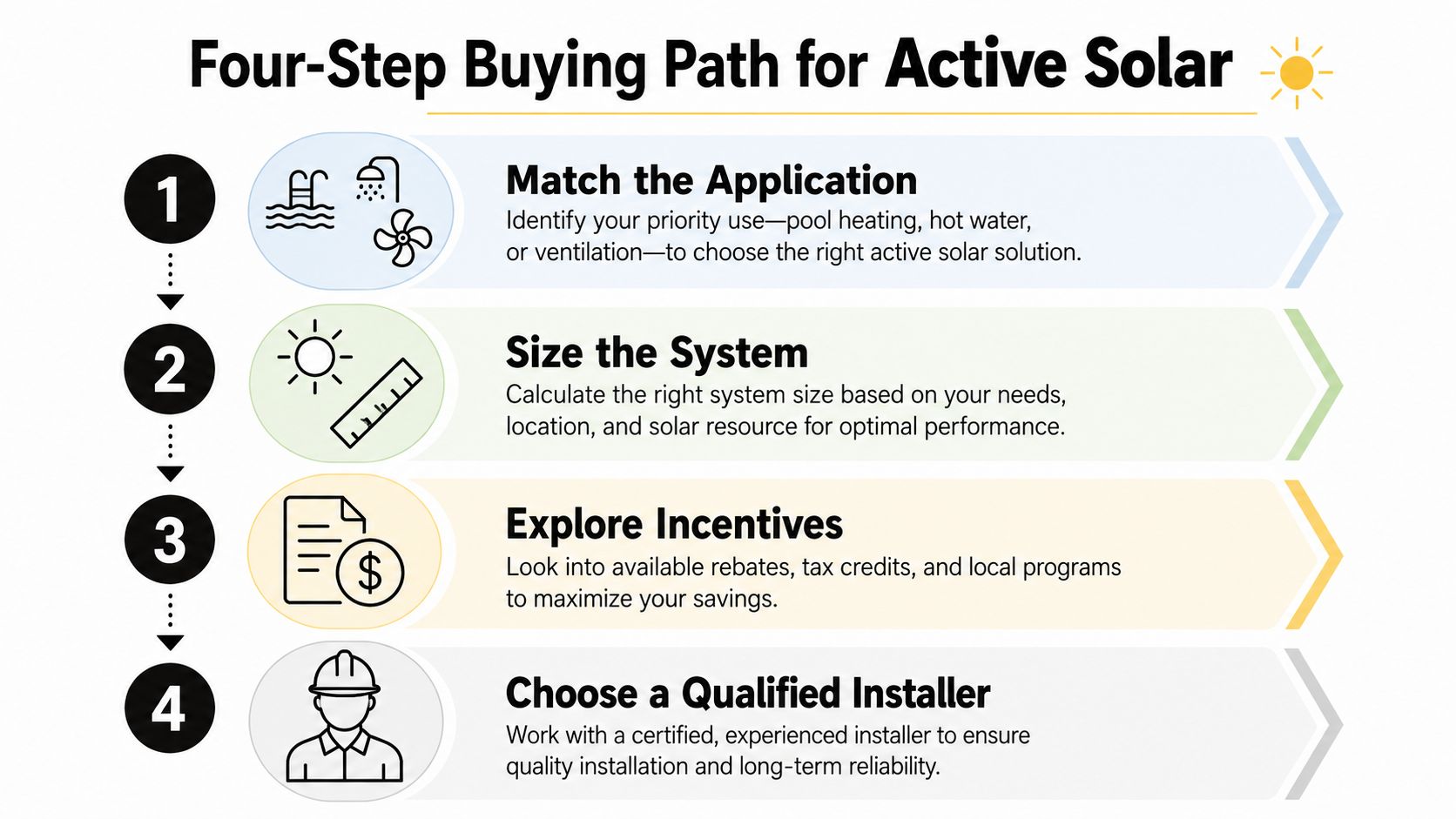
Before signing, confirm any available utility rebate or incentive directly with the relevant provider. Program rules can change, and eligibility may depend on certified equipment, permits, installation timing, or contractor qualifications.
It's time to request a site assessment when your pool heating costs feel excessive, your domestic water heater works hard, your pump sits far from convenient power, or you're planning a remodel that could improve roof access and equipment placement. A specialist should leave you with a written design, clear equipment names, realistic operating expectations, and a maintenance plan.
Water Medic of Cape Coral helps Southwest Florida homeowners evaluate water treatment and pool-service needs that can affect active-solar planning, including whole-house reverse osmosis and pool equipment care. Visit Water Medic of Cape Coral to discuss your property, schedule a professional assessment, and get practical guidance for the next step.