
A Practical Pool Pump Run Time Calculator for Florida Homeowners
How long should your pool pump run? Forget the old "8 hours a day" myth—that advice is costing Southwest Florida homeowners a fortune. There's a much smarter way, and it starts with a simple formula: (Pool Volume in Gallons ÷ Pump Flow Rate in GPM) ÷ 60 = Hours for One Turnover.
Given our intense sun and heavy use, you’ll want to aim for 1.5 to 2 turnovers every day to keep your water crystal clear.
Stop Overpaying on Your Pool's Electric Bill
It’s the number one question every pool owner in Cape Coral asks. Getting this answer right is the first real step toward big savings and a healthier pool. Guessing your pump's run time or sticking with outdated advice is like throwing money down the drain every single month.
Our team at Water Medic has seen it firsthand: homeowners can slash their energy costs just by dialing in their pump schedule. But this is about more than just saving money. It's about getting healthier, clearer water more efficiently. When your pump runs for the correct amount of time, it circulates chemicals properly, keeps algae from taking hold, and pulls out debris before it becomes a real headache.
Understanding the Core Variables
Before you can calculate anything, you need to know what numbers you're working with. It really boils down to three key pieces of information. Once you have these, all the guesswork disappears.
To get an accurate run time, you need to know three things about your setup. This table breaks down what they are and where to find them.
Your Core Pump Run Time Calculation Variables
| Variable | What It Means for Your Pool | Where to Find This Number |
|---|---|---|
| Pool Volume | The total amount of water your pool holds, measured in gallons. | Often found in your home's closing documents, the pool builder's contract, or you can calculate it based on dimensions. |
| Pump Flow Rate | How quickly your pump moves water, measured in gallons per minute (GPM). | Check the pump's label, the owner's manual, or the manufacturer's website for the specifications of your model. |
| Desired Turnover Rate | The number of times you want all the water to pass through the filter in 24 hours. | This is a target you set. For Southwest Florida, the professional standard is 1.5 to 2 turnovers daily. |
Getting these three numbers right is the foundation for an efficient, cost-effective pool.
At Water Medic of Cape Coral, we start every pool assessment with these numbers. They form the foundation of an efficient and cost-effective maintenance plan that keeps your pool swim-ready all year long.
The Evolution of Pump Efficiency
Pool pump technology has come a long way, and so have the best practices for running them. Back in the 90s, single-speed pumps were the norm, and they absolutely needed to run 8 to 12 hours a day.
Fast forward to today. With the rise of modern variable-speed pumps, optimized run times can be as low as 4-6 hours, cutting energy consumption by up to 80%. For a typical 20,000-gallon residential pool here in Florida, hitting a target of 1.5 turnovers daily can easily result in 65-75% savings on your pump's energy costs.
That old advice isn't just outdated—it’s actively costing you money. The goal is no longer about running the pump for a set number of hours. It's about achieving a specific number of turnovers as efficiently as possible. That simple shift in thinking is the key to unlocking major savings.
To truly stop overpaying, it helps to understand broader strategies for home energy use. This guide on how to reduce your electricity bill offers great general advice. Properly managing your pool pump is a huge part of this, and if you aren't sure where to start, our team can provide a professional pool inspection to give you a clear, actionable plan.
Finding the Numbers That Actually Matter
To get your pump's run time right, you have to stop guessing and start measuring. The whole calculation really comes down to three key numbers that define your pool's unique setup. Getting a handle on your pool's volume, your pump's flow rate, and the right turnover rate is what separates an efficient, crystal-clear pool from one that's constantly costing you money and headaches.
This isn't just about plugging numbers into a formula. It’s about understanding what they mean for your pool right here in Southwest Florida. Let's dig into each one.
First Up: Calculating Your Pool's Volume
Before you do anything else, you need to know exactly how much water you're working with. Your pool's volume, measured in gallons, is the foundation for everything. While it sounds complicated, it's usually easier to find than you think. Often, you can dig up this number in your home's closing documents or the original contract from your pool builder.
If that paperwork is long gone, you can figure it out with a tape measure and some simple math. Most pools in our area are one of a few common shapes.
- Rectangular Pools: Length x Width x Average Depth x 7.5 = Total Gallons
- Oval Pools: Length x Width x Average Depth x 5.9 = Total Gallons
- Circular Pools: Diameter x Diameter x Average Depth x 5.9 = Total Gallons
Now, if you have a free-form or kidney-shaped pool, things get a little trickier. The easiest way to get a close estimate is to break it down mentally into smaller, regular shapes (like a big rectangle with a semi-circle on each end), calculate their volumes, and then just add them together.
Getting a precise volume for a custom-shaped pool can be a real challenge. If you're not confident in your math, our professional pool inspection services can nail down the exact figures for your pool's volume and equipment. That way, you know you're starting with the right data.
Next: What's Your Pump's Real-World Flow Rate?
The second piece of the puzzle is your pump's flow rate, which is measured in Gallons Per Minute (GPM). Simply put, this tells you how many gallons of water your pump can move in one minute. You can typically find the manufacturer's GPM rating right on a label on the pump or buried in the owner's manual.
Here’s the catch, though: that number on the sticker is a best-case scenario achieved in a perfect lab. Your pump's actual, real-world flow rate is almost always lower.
So, why the gap between the rating and reality? It all comes down to resistance in your plumbing system.
- Dirty Filters: A sand or cartridge filter packed with gunk is like a roadblock for water, making the pump work much harder.
- Clogged Baskets: Skimmer and pump baskets stuffed with leaves and debris choke off the flow before it even gets going.
- Plumbing Design: Every foot of pipe, every sharp 90-degree turn, and any undersized piping adds friction that slows the water down.
A big drop in flow rate is a big problem. It means your pump has to run longer and longer to move the same amount of water, which sends your FPL bill soaring. This is why our weekly pool service packages aren't just about keeping things clean; they're about keeping your system efficient.
Finally: Setting the Right Turnover Rate for Florida
The last number you need is the turnover rate. This is just how many times you want all the water in your pool to pass through the filter system within a 24-hour period. This isn't a one-size-fits-all number; it's a target you set based on your local climate and how much the pool is used.
In a mild, dry climate, turning the water over once a day might be fine. But here in Southwest Florida? Not a chance. Between the intense sun, sticky humidity, and summer downpours, a single turnover is a recipe for algae. The sun’s UV rays absolutely torch chlorine, creating the perfect breeding ground for an unwanted green bloom.
From all our years of experience here in Cape Coral, we strongly recommend aiming for 1.5 to 2 turnovers every single day. This more aggressive schedule is crucial for keeping chemicals properly mixed and pulling out contaminants before they get a foothold. Think of it less as a "best practice" and more as a non-negotiable strategy for keeping your pool pristine and safe in our demanding environment.
The Smart Upgrade: Why a Variable-Speed Pump Is a Game-Changer
If you're still running an old single-speed pool pump, I can tell you right now it's the biggest energy hog in your backyard. The difference between those old workhorses and a modern variable-speed pump (VSP) is truly night and day. Upgrading isn't just about getting new equipment; it's one of the smartest financial moves you can make for your pool's health and your wallet.
The real magic of a VSP is its ability to run at different speeds. Instead of roaring at full power all the time—whether it needs to or not—it can be set to run at a much lower, quieter speed for longer periods. This simple adjustment gives you far better filtration while absolutely slashing your energy consumption.
The Power of Dialing It Back
Think about it like driving your car. Flooring the gas pedal between stoplights burns a ton of fuel. But cruising at a steady 55 MPH on the highway? That's where you get incredible efficiency. A single-speed pump is permanently stuck with its pedal to the metal, while a VSP is your smooth, energy-saving cruise control.
Here’s the part that surprises most homeowners: running your pump at half the speed doesn't just cut your energy use by half. Thanks to a principle called the Pump Affinity Law, it actually reduces power consumption by nearly 88%. Even a small drop in motor speed leads to a massive decrease in energy use, letting you get the full water turnover you need without the eye-watering electric bills.
To keep your pool crystal clear, you need to balance three key things: your pool's volume, the pump's flow rate, and your desired turnover rate. This is where a VSP gives you total control.
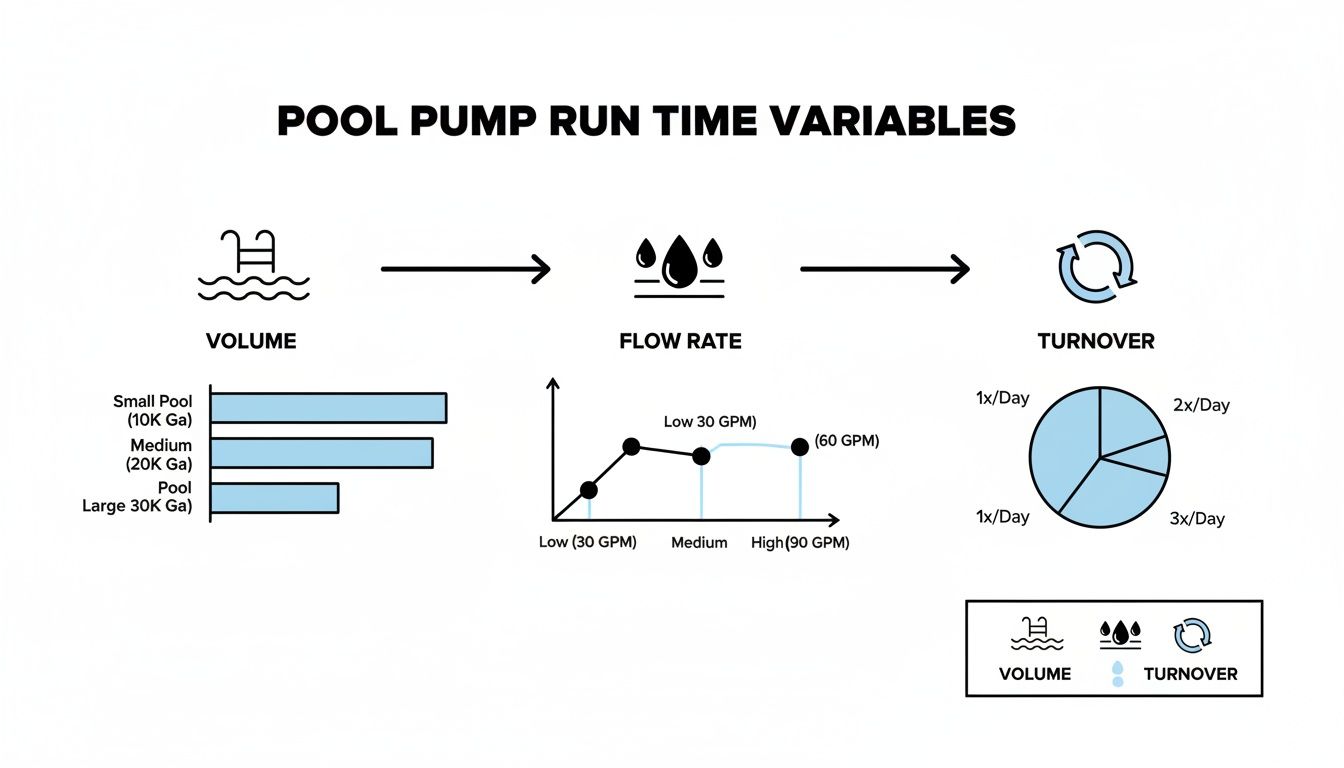
As you can see, a VSP allows you to perfectly dial in the flow rate, matching it to your pool’s specific volume to achieve the ideal turnover as efficiently as possible.
Annual Cost Showdown: Single-Speed vs. Variable-Speed
The numbers don't lie. When we break down the annual costs for a typical 20,000-gallon pool here in Southwest Florida, the financial argument for upgrading becomes impossible to ignore. A VSP delivers real, measurable savings that often pay for the initial investment in a surprisingly short time.
| Feature | Single-Speed Pump | Variable-Speed Pump (VSP) |
|---|---|---|
| Energy Usage | High (Runs at one fixed, max speed) | Low (Adjusts speed for the task) |
| Typical Run Time | 8-10 hours/day at full blast | 12-24 hours/day at low, efficient speeds |
| Est. Annual Cost | $700 – $1,200 | $150 – $300 |
The takeaway is clear: sticking with an outdated single-speed pump means you're overpaying by hundreds, if not a thousand, dollars every single year.
Key Takeaway: The single most impactful upgrade a pool owner can make for both water quality and energy savings is a variable-speed pump. We’ve seen clients cut their pool-related energy costs by up to 90%, with the pump often paying for itself in under two years.
Getting the Most Out of Your Investment from Day One
Just swapping out the pump isn't the whole story. To unlock those incredible savings, a VSP needs to be programmed correctly for your specific pool. This is where professional expertise really makes a difference.
At Water Medic of Cape Coral, we don't just install new pumps—we optimize them. We’ll help you explore the best variable-speed pump options for your Southwest Florida pool and then dial in the settings perfectly.
A custom schedule we might create for you could include:
- A long, low-speed cycle for whisper-quiet daily filtration.
- A medium-speed cycle to power your robotic cleaner effectively.
- A short, high-speed cycle for backwashing or when you need to circulate chemicals fast.
This tailored approach ensures you get the absolute best performance and maximum efficiency from your new equipment. A properly programmed VSP is a quiet, reliable workhorse that keeps your water pristine while saving you a small fortune.
How to Build the Perfect Pump Schedule
Once you've figured out your pump's ideal run time, you're halfway there. But here in Southwest Florida, when you run that pump is just as critical as for how long. The right schedule can be the difference between a sparkling oasis and a summer-long battle with cloudy water and algae.
The real challenge is finding that sweet spot between cost and effectiveness. You've got two main schools of thought: run the pump during off-peak hours to save a few bucks, or run it when the sun is actively trying to destroy your pool's chemistry.
The Great Debate: Daytime vs. Nighttime Pumping
At first glance, running your pump overnight seems like a no-brainer. Electricity rates are often lower, so why wouldn't you? Well, that strategy has a major flaw in our climate. The biggest threat to your pool's clarity is the intense Florida sun, which mercilessly burns off chlorine and fuels algae growth, especially between 10 AM and 4 PM.
If your pump is just sitting idle during those hours, the water is stagnant. That’s an open invitation for algae to take hold. By running the pump during peak sun, you ensure freshly sanitized water is constantly circulating, actively fighting back against the sun's harsh effects.
So, what's the practical solution?
- For single-speed pumps, the best compromise is often a split schedule. Try running it for a few hours in the morning and a few more in the late afternoon.
- If you have a variable-speed pump, you have the ultimate advantage. You can run it on a low, energy-sipping speed for a long overnight cycle and then ramp it up to a medium speed during the afternoon for maximum protection without breaking the bank.
Adjusting Your Schedule for Florida's Seasons
Your pump schedule should never be a "set it and forget it" affair. Our weather demands a more hands-on approach that adapts to the changing seasons. The needs of your pool in July are completely different from its needs in January.
Here’s how we adjust schedules for our clients:
-
Summer (May – September): This is when your pool—and your pump—are working their hardest. Between the heat, sun, and daily downpours, you need to be running the pump for the full calculated time to achieve 1.5 to 2 turnovers daily. The rain introduces all sorts of organic junk that throws off your water balance, so more filtration is a must.
-
Winter (December – February): During our cooler, drier months, your pump can take a bit of a break. Algae growth slows way down, and the sun isn't nearly as intense. You can often cut your run time by 25-40%, aiming for just one solid turnover per day. It’s a great way to save on your electric bill during the off-season.
Don't make the classic mistake of turning your pump off completely in the winter. Stagnant water is always a bad idea, setting you up for potential equipment damage and a much tougher opening in the spring.
Handling Special Events and Storm Recovery
Life happens, and sometimes your pool needs a little extra help. A good pump schedule is flexible enough to handle the unexpected events that put a heavy load on your water.
Think about these common scenarios we see all the time:
-
After a Big Pool Party: A dozen swimmers can introduce more sunscreen, sweat, and oils than a week of normal use. Plan on running your pump for an extra 4-6 hours after the party wraps up to make sure everything gets filtered out properly.
-
Following a Heavy Storm: Those Florida thunderstorms are notorious for dumping leaves, pollen, and dirt straight into your pool. After a storm, clean out your skimmer and pump baskets, then let the pump run until the water is clear again. This simple step is your best defense against the debris decaying and feeding an algae bloom.
This strategic, proactive approach to scheduling is a cornerstone of our maintenance philosophy. It ensures your pool is always ready for you to enjoy. It's the same mindset we build into our weekly pool service packages, where we handle all these adjustments for you, so you never have to think about it.
Why Maintenance Is Key to Pump Efficiency
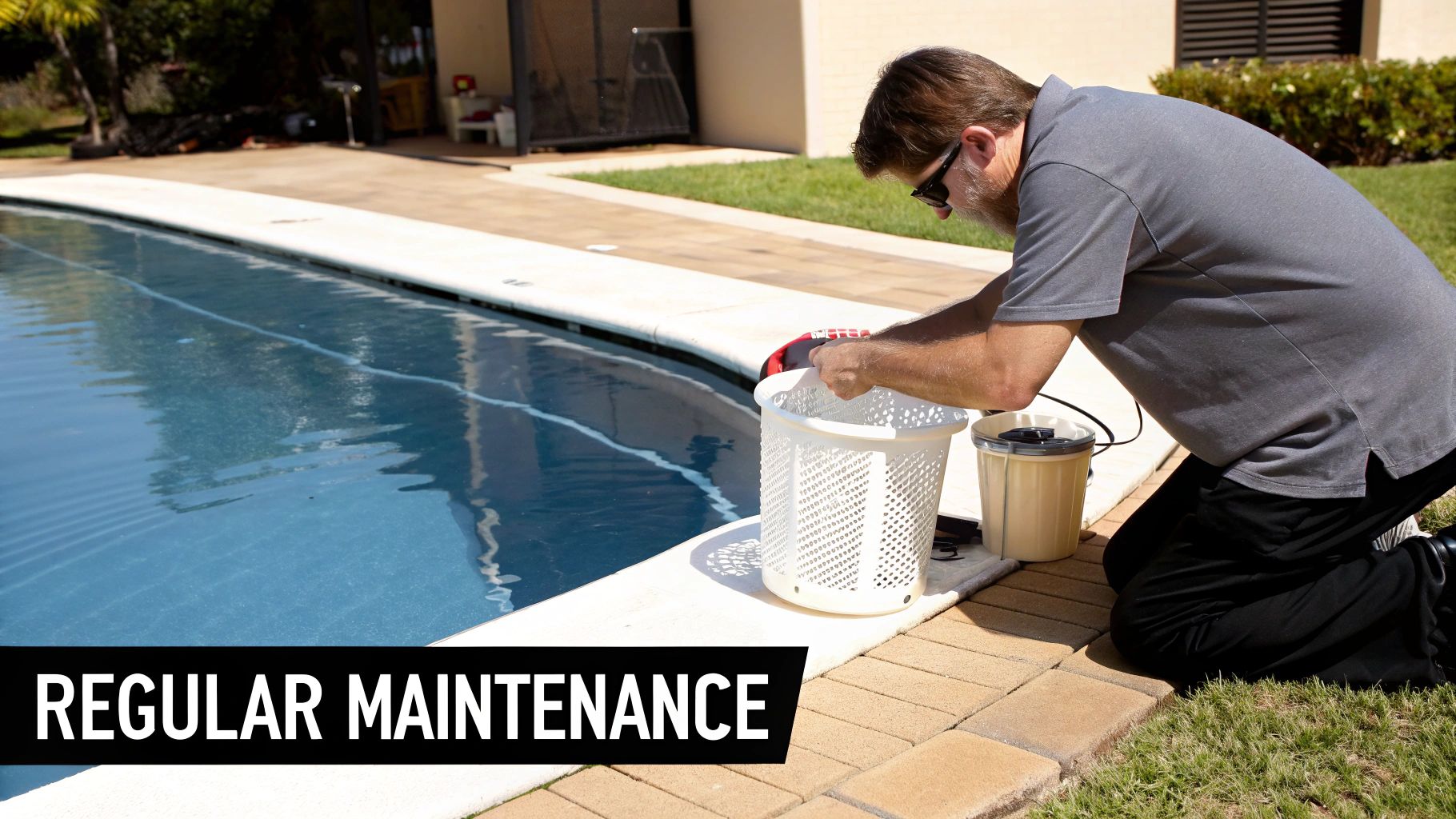
Even after you’ve perfectly dialed in your schedule with a pool pump run time calculator, all that effort goes right out the window if your equipment is struggling. There's a direct, undeniable link between basic maintenance and how efficiently your pump actually runs.
When you skip the simple stuff, you force your pump to work much harder to do its job. This not only causes premature wear and tear but also leads to a surprising spike in your electric bill. Think of it like driving your car with the parking brake on—sure, you’ll move, but you’re burning way more fuel and putting a ton of strain on the engine. A clogged filter or a skimmer basket packed with leaves creates that same kind of resistance in your pool’s circulation system.
Your Essential Homeowner Maintenance Checklist
While you can't beat having a pro look things over, there are a few critical tasks every Southwest Florida pool owner should be doing. These simple checks make a huge difference in your pump's performance and lifespan, ensuring it operates closer to its intended flow rate and keeping your run-time calculations accurate.
Here’s a quick list of what you should be checking regularly:
- Empty Skimmer and Pump Baskets Weekly: This is your first line of defense. When these baskets get clogged, they restrict water flow right from the start, forcing the pump to strain just to pull water into the system.
- Check and Clean Your Filter Regularly: It doesn't matter if you have a cartridge, sand, or D.E. filter—a dirty one kills efficiency. Keep an eye on the pressure gauge. A rise of 8-10 PSI above its normal "clean" reading is your sign that it’s time for a cleaning or backwash.
- Inspect for Leaks: Take a quick look for any drips or puddles around your equipment pad. An air leak on the suction side is especially bad, as it can cause the pump to lose prime and run dry, which can destroy the motor in no time.
- Keep Vents Clear: Your pump motor needs to breathe to stay cool. Make sure its air vents are free of debris like leaves, mulch, or dirt to prevent overheating, especially during our brutal summers.
It's also worth noting that good pool maintenance can extend to the area around the pool. For instance, a quality fake turf installation around pools can help keep grass clippings and dirt out of the water, preventing them from clogging up your filters and skimmers in the first place.
Why Professional Maintenance Protects Your Investment
Doing these basic checks is a great start, but it’s no substitute for the deep, diagnostic eye of a trained professional. A technician from Water Medic of Cape Coral goes way beyond just emptying baskets. We provide the kind of comprehensive oversight that protects your entire system and keeps every component running at its absolute best.
A well-maintained pump not only uses less energy but also lasts significantly longer. We often see neglected pumps fail years earlier than they should, turning a preventable issue into a costly replacement.
During a professional service call, our technicians are trained to spot the things most homeowners miss. We look for subtle signs of wear on seals and gaskets, listen for unusual motor noises that could signal failing bearings, and check that all electrical connections are secure and free of corrosion. This preventative approach is the key to avoiding sudden, expensive breakdowns.
If you have a feeling your system just isn't performing like it used to, our expert technicians can diagnose the problem and handle any necessary pool equipment repair to get it back to full efficiency. At the end of the day, professional maintenance is an investment in reliability and long-term savings, making sure the heart of your pool—the pump—operates exactly as it should.
Common Pool Pump Questions Answered
Even with a handy calculator, real-world questions always pop up. Here in Cape Coral, our technicians hear a lot of the same concerns from pool owners. Let's walk through some of the most common questions we answer in the field.
Can I Save Money by Only Running My Pool Pump at Night?
It’s tempting to think you can shave a few bucks off your power bill by only running the pump during off-peak hours at night. While you might save a little, it's generally a bad strategy for keeping your water clean, especially here in Florida.
The sun is your pool's biggest enemy. Its powerful UV rays burn off chlorine and create the perfect environment for algae to take hold. That’s why the most important time to circulate your water is during the day.
A much better approach, particularly if you have a variable-speed pump, is to split the schedule. You can run a long, slow cycle overnight to handle basic filtration and then kick it into a higher gear for a few hours during the hottest part of the afternoon. This strategy gives you the best of both worlds—you get the energy savings and a sparkling, algae-free pool.
My Pool Is Green. Should I Just Run the Pump 24/7?
Yes and no. Running the pump continuously is a crucial first step when you're battling a green pool. Think of it as an emergency measure. That 24/7 circulation is essential for filtering out dead algae and mixing in the large amount of shock needed to kill the bloom.
But—and this is a big but—a green pool means you have a serious chemical problem that constant circulation alone won't solve. It’s a symptom, not the disease. This is where getting professional help can save you a ton of time and money. Our team can quickly figure out why your pool turned green, fix the underlying imbalance, and get you on a maintenance plan to make sure it never happens again.
Tackling a green pool is more than just circulation; it requires a precise chemical and filtration strategy. Trying to guess your way through it often leads to more frustration and expense. A professional diagnosis from Water Medic of Cape Coral gets your pool back to blue faster.
How Do I Know if My Pump's Flow Rate Is Accurate?
That GPM (Gallons Per Minute) number on the side of your pump? That’s what it achieved in a perfect lab setting. Your real-world flow rate is almost always lower. Every pipe, every 90-degree turn, and even a dirty filter creates resistance that slows the water down.
While you could install a flow meter for a precise reading, the best real-world test is simply to look at your water. Is it crystal clear with your calculated run time? If so, your estimate is good enough. But if you’re constantly fighting cloudy water, it's a huge clue that your actual flow is much lower than you think. Our technicians can perform a full system check-up to find those bottlenecks and get your circulation system working at its best.
For more answers, you can also explore our extensive pool FAQs page.
When you're ready to take the guesswork out of pool care, trust the local experts. Water Medic of Cape Coral offers professional maintenance, repair, and upgrade services to ensure your pool is always efficient, safe, and ready to enjoy. Contact us today for a comprehensive pool system evaluation.