Swimming Pool Maintenance Cleaning A Pro’s Guide For Florida Homes
Keeping a pool pristine in Southwest Florida isn't just a nice-to-have—it's essential. Between the relentless sun, pop-up rain showers, and thick humidity, our local climate is a perfect storm for pool problems. Algae can explode overnight, and your chemical balance can go haywire in a heartbeat. Good swimming pool maintenance cleaning is the only thing standing between you and a green, murky mess.
Your Guide To A Flawless Southwest Florida Pool
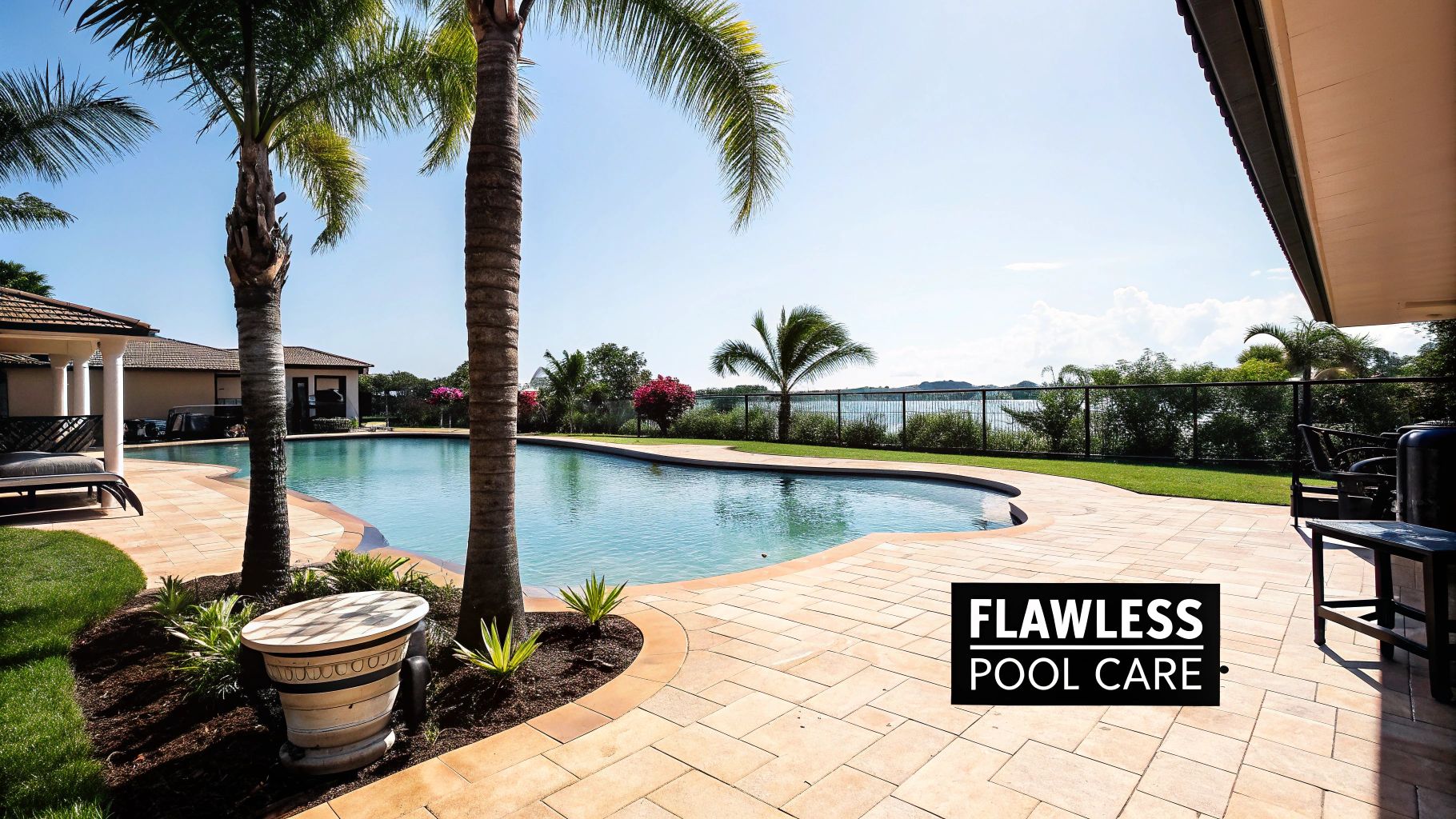
Your pool is the heart of your backyard. It's where memories are made and where you escape the heat. But keeping it swim-ready in our demanding climate takes real work. Let things slide, and you're not just looking at a dirty pool—you're facing expensive equipment repairs and water that's just not safe to swim in.
This guide cuts through the generic advice you find online and gets straight to what actually works here in our corner of Florida. We're going to tackle the real-world challenges we see every day and share the strategies we've honed at Water Medic of Cape Coral over the last 25 years.
Why Local Expertise Matters
Pool care isn't a one-size-fits-all job. The advice that works for a pool owner in a dry climate like Arizona will fail you miserably here. The mix of intense sun and constant moisture creates a unique set of headaches for us.
We see the same problems pop up all the time:
- Rapid Chlorine Depletion: The Florida sun is brutal. It literally cooks the chlorine right out of your water, leaving it vulnerable to all sorts of nasty bacteria and algae.
- Constant Debris: Our beautiful tropical landscape comes at a price. Palm fronds, flower petals, and layers of pollen mean your skimmer and filter are always on the clock.
- Algae Blooms: Warm water is a paradise for algae. One minute your pool is crystal clear, and the next, it's starting to get that dreaded greenish tint.
Knowing what you're up against is half the battle. This guide will walk you through checklists and pro tips to help you conquer these local challenges.
A well-maintained pool isn’t just about looking good. It's about protecting a major investment and keeping your family safe. Regular upkeep stops harmful contaminants from taking over and helps your expensive pump and filter last years longer.
Of course, a sparkling pool looks even better with a clean backdrop. For tips on keeping your whole property looking sharp, this guide on general house exterior cleaning offers some great advice on pressure washing and other techniques.
Our goal here is to give you the confidence to handle your swimming pool maintenance cleaning effectively. We’ll help you figure out what you can realistically do yourself and when it’s time to call in a pro like Water Medic of Cape Coral.
To see what a difference our weekly care can make, check out our swimming pool services. Think of this as your personal handbook for a beautiful, stress-free pool.
Weekly and Monthly Routines: Your Blueprint for a Perfect Pool
Keeping a pool pristine in Southwest Florida is all about getting into a consistent rhythm. A proactive routine is your single best defense against the headaches we all want to avoid—think surprise algae blooms or a strained pump motor on the hottest day of the year. Don't look at these checklists as a list of chores; see them as your personal playbook for a flawless pool, saving you from expensive, last-minute fixes.
This kind of consistency is the very foundation of the professional pool service industry, which brought in a staggering $7.2 billion in the U.S. alone. That number tells you just how much people value reliable pool care, especially here in Cape Coral where our pools are practically part of the family. On the flip side, letting routine tasks slide can easily cost homeowners $3,000-$6,000 a year in DIY repairs and emergency calls. It’s a classic case of an ounce of prevention being worth a pound of cure.
Before we dive into the weekly and monthly specifics, let's get a bird's-eye view of the schedule. The Southwest Florida climate puts unique demands on our pools, so staying on top of this timeline is key.
SWFL Pool Maintenance Task Frequency
This table breaks down the essential tasks and how often they should be on your radar.
| Task | Weekly | Monthly | Seasonally |
|---|---|---|---|
| Skim Surface & Floor | ✔️ | ||
| Empty Baskets | ✔️ | ||
| Brush Walls & Tile Line | ✔️ | ||
| Vacuum Pool | ✔️ | ||
| Inspect Equipment | ✔️ | ||
| Clean Filter | ✔️ | ||
| Deep Clean Filter | ✔️ | ||
| Test All Chemicals | ✔️ | ||
| Shock the Pool | ✔️ | ||
| Check Salt Cell | ✔️ | ✔️ |
Following this schedule will keep your pool looking great and running smoothly, preventing most common problems before they even start.
Your Weekly Pool Care Essentials
These are your high-frequency to-dos, the things that keep your pool looking clean and feeling healthy day-to-day. If you skip a week, especially in the thick of a Florida summer, you’re practically rolling out the welcome mat for problems.
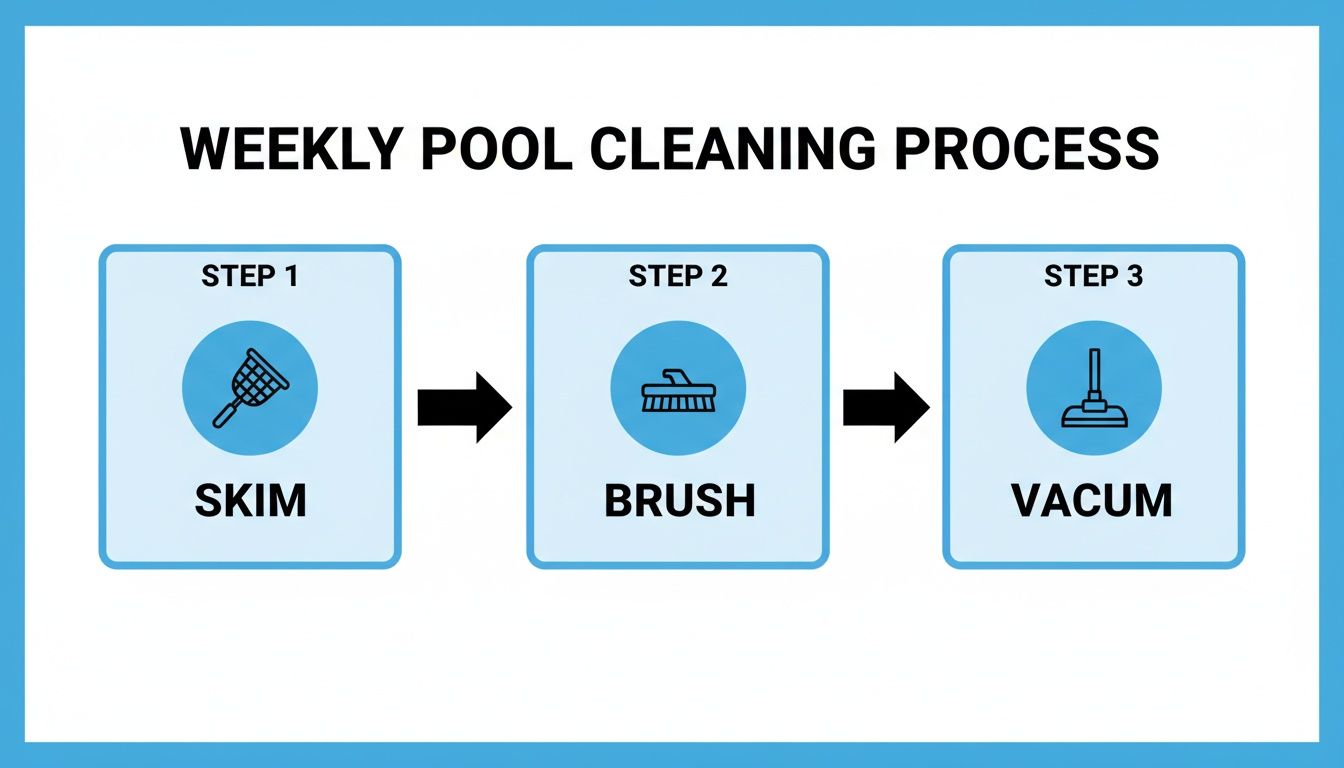
- Skim the Surface and Floor: Grab a long-handled net and get all those leaves, bugs, and palm fronds out of there. It’s not just about aesthetics; that organic junk sinks, decomposes, and starts eating up your chlorine. It’s basically a free meal for algae.
- Empty Skimmer and Pump Baskets: Think of these baskets as your pool’s bodyguards. They catch the big stuff before it gets to your pump and causes a clog. Clearing them weekly keeps the water flowing strong and takes a huge amount of strain off your pump motor. A clogged basket makes the pump work way too hard, which will absolutely shorten its lifespan.
- Brush the Walls, Steps, and Tile Line: Algae spores are sneaky—they’re microscopic and love to latch onto pool surfaces. A good weekly brushing knocks them loose and sends them floating, where your filter and sanitizer can zap them. Give extra attention to the corners, steps, and that waterline ring where gunk loves to build up.
- Vacuum the Pool: Whether you’re using a trusty manual vac or have an automatic cleaner doing the work, a weekly vacuum is a must. It sucks up all the fine dirt and debris that brushing and skimming can’t get, keeping the floor sparkling and starving out any potential algae.
This weekly rhythm is second nature to our technicians at Water Medic of Cape Coral. It’s the core of our weekly swimming pool services—we handle all of it, so you can just focus on enjoying the water.
Pro Tip: Here’s a little trick we use: always brush your pool walls towards the main drain at the bottom. It’s a simple thing, but it helps the circulation system pull all that freshly-brushed debris straight into the filter.
Your Monthly Deep-Dive Checklist
While the weekly tasks keep the pool looking good, the monthly checks are all about protecting its long-term health. These deeper inspections are your best bet for catching equipment issues before they turn into wallet-draining disasters.
Inspecting Your Pool Equipment
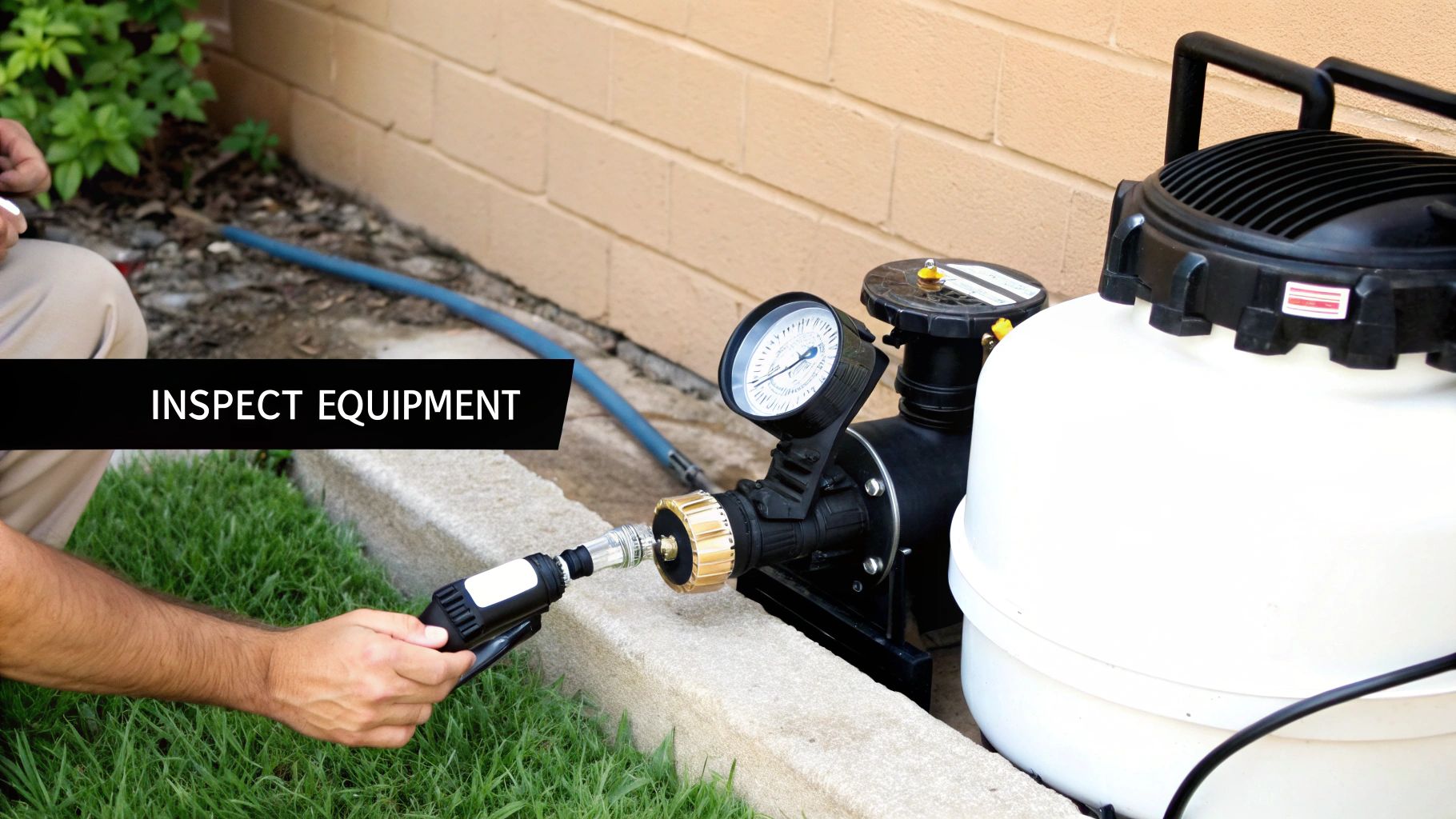
Once a month, just take a few minutes to walk over to your equipment pad and give everything a once-over. You don’t need an engineering degree for this—just use your eyes and ears. Is the pump motor making any new, strange noises, like a grinding sound or a high-pitched squeal? Do you see any drips or leaks around the plumbing and seals? Even a tiny leak can signal a failing O-ring that needs to be replaced. A quick look now can save you from a major repair bill down the road.
Cleaning Your Pool Filter
Your filter is the quiet workhorse of your pool system, trapping all the tiny particles that make water cloudy. But over time, it gets clogged and needs a good cleaning to stay effective. The process depends on what kind of filter you have:
- Cartridge Filters: Pull the cartridge element(s) out and give them a thorough rinse with a garden hose. A high-pressure nozzle works best to get all the gunk out from between the pleats.
- Sand Filters: This is where you’ll "backwash." You’ll reverse the flow of water through the filter, which flushes all the trapped debris out to the waste line.
- Diatomaceous Earth (DE) Filters: The process is similar to a sand filter—you’ll backwash it first, but then you need to add a fresh scoop of DE powder through the skimmer to recoat the filter grids.
A clean filter doesn’t just mean clearer water; it also lowers the pressure on your pump, helping it run more efficiently and last longer. This is a crucial step in our comprehensive monthly pool maintenance service, where we guarantee your filtration system is operating at 100%. Honestly, proper filter care is a non-negotiable part of any serious swimming pool maintenance cleaning strategy.
Mastering Pool Chemistry For Crystal-Clear Water
Let's be honest, nothing ruins a beautiful Southwest Florida day faster than a cloudy, uninviting pool. Getting that sparkling, crystal-clear water isn't magic—it's chemistry. And while that might sound intimidating, it’s the absolute cornerstone of a safe and healthy swimming environment.
Think of your pool water as a delicate ecosystem. When everything is in balance, it’s perfect. When one thing is off, it can trigger a cascade of problems, from algae blooms to equipment damage. This is where a little know-how goes a long way.
The first step, before you even think about chemicals, is getting the physical debris out. You have to skim, brush, and vacuum first. This groundwork makes your chemicals far more effective because they can focus on the microscopic threats you can't see, not leaves and dirt.
The Five Pillars Of Pool Chemistry
To really get a handle on your pool's health, you need to track five key chemical levels. They all work together, so a change in one will almost always affect the others. It’s a bit of a balancing act.
- Free Chlorine (FC): This is your workhorse. It's the active sanitizer that relentlessly kills bacteria, algae, and other unwanted guests. Here in Florida, the sun just burns through chlorine. You need to keep a close eye on it, aiming for 1-3 parts per million (ppm).
- pH Level: This simply tells you how acidic or alkaline your water is. If your pH creeps too high, your chlorine gets lazy and stops working effectively. If it drops too low, the acidic water will sting your eyes and start eating away at your pool finish and equipment. The sweet spot is a narrow window between 7.2 and 7.6.
- Total Alkalinity (TA): Think of this as the anchor for your pH. It keeps the pH from swinging wildly every time it rains or you add chemicals. Without the right TA level, you’ll be chasing your pH balance all week. Keep it between 80-120 ppm.
- Calcium Hardness (CH): This is all about the amount of dissolved calcium in the water. Too little (soft water), and the water will try to get its calcium fix by pulling it right out of your pool's plaster or pebble finish. Too much, and you'll see ugly white scale forming on your tile line and inside your equipment. The target is 200-400 ppm.
- Cyanuric Acid (CYA): This is basically sunscreen for your chlorine. CYA forms a weak bond with chlorine, protecting it from being destroyed by the sun's UV rays. For a pool that gets blasted by the Florida sun, a CYA level of 30-50 ppm is absolutely essential to avoid burning through expensive chlorine.
Real-World Scenario: The Afternoon Downpour
Here’s a classic SWFL situation: a massive afternoon thunderstorm rolls through. You might think, "Great, free water for the pool!" But that rainwater is acidic and has zero chemicals in it, which instantly throws your carefully balanced chemistry into chaos.
After a big rain, your pH and alkalinity will plummet, and your chlorine level will be heavily diluted. This is prime time for an algae bloom to take hold. You can test the water yourself and start adding chemicals, but the order and amount are critical. If you try to fix the pH before the alkalinity, you'll just be fighting a losing battle.
This is where professional experience really pays off. A Water Medic technician understands the chemistry's chain reaction. We’ll correct the alkalinity first to create a stable foundation, then dial in the pH, and finally, bring the sanitizer level back up. It’s a methodical approach that prevents a green pool and saves you from wasting money on chemicals.
The Right Way To Add Chemicals
Handling pool chemicals demands respect. It's not just about what you add; it’s about how you add it to keep everyone safe and get the best results.
Safety First:
- Always read the label. Every single time.
- Never, ever mix different chemicals together outside of the pool. The reaction can be dangerous.
- The golden rule: Always add chemicals to a bucket of pool water, not water to dry chemicals.
The Correct Order:
For consistent results, follow this sequence when you need to make several adjustments:
- Adjust Total Alkalinity first.
- Next, tackle the pH.
- Finally, add your Chlorine or other sanitizers.
Keeping your pool balanced is an ongoing task, not a one-and-done job. It's the most important part of any solid swimming pool maintenance cleaning routine. While home testing is a good habit, nothing beats the peace of mind that comes from knowing an expert has dialed in your water perfectly, making it not just clear, but genuinely safe for your family.
Getting Hands-On: Pool Equipment Checks and Fixes
Your pool's water chemistry can be perfect, but it won't stay that way for long if the equipment isn't happy. The pump, filter, and skimmers are the heart and lungs of your pool, working around the clock to keep everything circulating and clean. When they're running smoothly, the whole system just works.
You don't need to be a pool pro to spot trouble. A little regular attention is all it takes to catch small issues before they become catastrophic failures. Just using your eyes and ears can save you from a major headache and a hefty repair bill down the line.
Your Quick Inspection Checklist
Make it a habit to swing by your equipment pad every couple of weeks. A quick look is often enough to see a problem developing, long before it messes with your water quality. This is the essence of smart swimming pool maintenance cleaning.
- Listen to Your Pump: A healthy pump motor has a steady, low hum. Get to know that sound. If you start hearing anything new—a high-pitched squeal, a grinding noise, or rattling—that's your cue to investigate. It often points to worn-out bearings or debris stuck where it shouldn't be.
- Look for Leaks: Give all the pipes, seals, and fittings a good once-over. Even a slow, steady drip is a sign of trouble. Leaks can let air into the system, causing the pump to lose its prime and potentially burn out the motor.
- Check the Filter's Pressure Gauge: Think of this gauge as your filter's report card. Right after you clean it, take note of the "clean" pressure reading, which is usually somewhere between 10-25 PSI. When that pressure climbs 8-10 PSI above your starting point, it's telling you it's clogged and needs to be backwashed or cleaned.
Common Problems You Might Encounter
Even with the best care, things can go wrong. Here are a couple of classic issues we see all the time in Southwest Florida pools.
The Pump Is Dead or Keeps Shutting Off
If your pump won't turn on at all, start with the obvious: check the circuit breaker. If the breaker is fine or keeps tripping, you're likely dealing with an electrical problem or a motor that's on its last legs. This is not a DIY fix—water and electricity are a dangerous mix.
A pump that turns on but then shuts itself off is probably overheating. This can happen if it's not getting enough ventilation or if internal parts are failing and creating too much friction.
The Pump Is Running, but No Water Is Moving
This is what we call "losing prime." It means the pump is just spinning air instead of pulling water. The usual suspects are a low water level in the pool (it needs to be above the skimmer opening), a clogged skimmer or pump basket, or an air leak on the suction side—often from a worn-out O-ring on the pump lid.
A pump running dry is a recipe for disaster. Water acts as a coolant for the pump's seal. Without it, the seal can overheat and fail in just a few minutes, causing a significant leak and a much bigger repair job.
When to Wave the White Flag and Call a Pro
Knowing how to troubleshoot the basics is great, but knowing your limits is even better. Trying to tackle a complex repair like replacing a motor bearing without the right tools and experience can turn a small problem into a very expensive one.
It’s no surprise the global pool maintenance market is expected to hit USD 45.49 billion. The industry is shifting toward preventing problems before they start—a philosophy we live by. For homeowners here in Southwest Florida, having an expert you can trust means your equipment lasts longer and runs better. You can read more about this trend in the full pool maintenance market report from GlobeNewswire.
The moment you suspect a serious equipment issue, the smartest and safest move is to get a professional diagnosis. Our technicians can pinpoint the real problem fast. You can learn more about our approach by reading up on our pool equipment repair services. Protecting your investment means knowing when to hand the wrench over to someone who does this every day.
When It’s Time to Call the Pros
Taking care of your own pool can be satisfying, but there are definitely times when even the most committed DIYer needs to call for backup. Knowing when to hand over the reins not only saves you a massive headache but can also prevent a small issue from turning into a costly disaster.
So, when should you pick up the phone? Certain problems are clear signals. If you're fighting a stubborn algae bloom that just laughs at your efforts, or if your water turns cloudy or green out of nowhere, it's a sign of a deeper imbalance.
The same goes for equipment. If your pump starts making a weird grinding noise or the filter just can't seem to hold pressure, it's much smarter—and cheaper in the long run—to get a professional diagnosis instead of pulling things apart yourself.
The Water Medic Advantage
Here in Southwest Florida, our pools are in a constant battle with the sun, rain, and humidity. Having a reliable local pro on your side is non-negotiable, and that’s where Water Medic of Cape Coral comes in.
With over 25 years of hands-on experience right here in the area, we've truly seen it all. We’re not just some faceless company; we're your neighbors, and we’re passionate about keeping your backyard oasis sparkling and safe.
What makes us different? It boils down to a few core things:
- We Actually Show Up: It sounds simple, but we pride ourselves on unmatched reliability. When we say we'll be there, we're there. You can count on consistent, professional service every single time.
- Local Expertise That Matters: Our technicians are experts on the unique challenges our climate throws at us, from rebalancing chemistry after a torrential downpour to staying ahead of algae during the summer swelter.
- Protecting Your Investment: We see our job as protecting your property's value. Proper, regular care by a professional extends the life of your pool's surface and all that expensive equipment.
Choosing a professional service isn't just about convenience. It's about safety, peace of mind, and getting your weekends back. You can just relax, knowing your pool is perfectly balanced and ready for your family to jump in.
Why Weekly Service Is a No-Brainer Here
In a demanding climate like ours, a weekly professional service is your best defense. This constant oversight is absolutely critical for safety. It’s a sad fact that 358 child drownings occur each year in the U.S., with most happening in residential pools.
For homeowners and property managers in Cape Coral, our weekly swimming pool maintenance cleaning ensures your pool isn't just a beautiful feature but a safe one. If you want to dive deeper, you can find more industry data in the latest report on swimming pool cleaning services.
Ultimately, our goal is to take the work out of pool ownership so you can focus on the fun. Stop spending your free time fighting with cloudy water or worrying about your pump. Let the seasoned pros at Water Medic handle it.
Ready to see what a difference we can make? Request a free consultation for our weekly swimming pool services and let us give you back your perfect pool.
Your Top Pool Maintenance Questions Answered
When it comes to keeping your pool in perfect shape, especially here in Southwest Florida, a lot of questions come up. We get calls all the time from homeowners in Cape Coral dealing with the same handful of tricky situations. So, let's tackle some of the most common questions we hear, drawing from our 25+ years of hands-on experience in this unique climate.
Think of this as your go-to cheat sheet for those nagging issues that always seem to pop up when you'd rather be relaxing.
How Often Should My Pool Be Serviced Here in Florida?
In Southwest Florida, weekly professional service is the gold standard. I can't stress this enough. Our intense sun, constant rain, and high humidity create a perfect storm that can turn a beautiful pool into a mess in just a few days.
- The sun burns through chlorine at an incredible rate, leaving your water vulnerable.
- A classic Florida downpour can completely throw off your water chemistry, especially pH and alkalinity.
- All that warm, humid air is basically an open invitation for algae to move in.
A weekly visit means your sanitizer levels stay where they need to be, and a trained eye can catch small equipment quirks before they become big, expensive headaches. It's all about being proactive. That's exactly why our weekly plans at Water Medic are built for this climate—to keep your pool swim-ready, no matter what the forecast says.
What Are the Signs of a Pool Leak and What Should I Do?
Catching a leak early can save you a ton of money on your water bill and prevent serious damage to your pool deck or equipment. The classic signs are a water level that drops more than a quarter-inch a day, soggy patches in the yard around the pool, or the feeling that you're constantly having to top off the water.
If you think you have a leak, the first thing to do is the "bucket test." Just place a bucket on a pool step and fill it with pool water until it's level with the water outside the bucket. Mark both levels. Check it again in 24 hours. If the pool's water level has dropped more than the water in the bucket, you've almost certainly got a leak.
But finding where it's coming from is the real challenge. Instead of guessing, your best bet is to call in a professional. At Water Medic of Cape Coral, we have specialized equipment to pinpoint the exact source of the leak and figure out the best way to fix it.
A proactive approach is key. Don't ignore the signs of a leak. What starts as a small drip can quickly escalate into a more serious structural issue if left unaddressed. Professional leak detection is an investment in your pool's longevity.
Is a Saltwater Pool Easier to Maintain Than a Chlorine Pool?
This is probably one of the biggest myths in the pool world. A saltwater pool has a salt cell that generates its own chlorine, which is a huge convenience—no more buying, hauling, and storing heavy buckets of chlorine tablets.
However, a saltwater system is not maintenance-free. You still have to keep a close eye on pH, alkalinity, and stabilizer, just like with a traditional chlorine pool. That salt cell also needs to be inspected and cleaned regularly to keep calcium scale from building up, which can kill its efficiency and shorten its life. The bottom line is that both systems require consistent attention to keep the water balanced and safe.
The choice really boils down to what you prefer. Do you like the softer feel of saltwater, or are you more comfortable with the traditional chlorine routine? Our techs at Water Medic of Cape Coral are experts with both, so we can help you keep whichever system you have running perfectly.
Why Is My Pool Cloudy Even Though the Chlorine Is Normal?
Cloudy water when the chlorine reads "normal" is incredibly frustrating, but it’s a problem we see all the time. It’s a dead giveaway that something other than your sanitizer is out of whack. It almost always comes down to one of three things.
First, look at your other chemical levels. If your pH or alkalinity is imbalanced, it can make your chlorine sluggish and ineffective, allowing tiny particles to cloud up the water.
Next, think about your filtration. A dirty or clogged filter can't do its job, plain and simple. It might also be that you're not running your filter long enough—in our Florida heat, you should be aiming for 8-12 hours a day.
Finally, high levels of Total Dissolved Solids (TDS) can also give the water a hazy, dull look. If you’ve checked the basics and are still stuck with a cloudy pool, our team at Water Medic can run a full water analysis to get to the root of it and get your water sparkling again.
Don't let pool problems ruin your weekend. For reliable, expert swimming pool maintenance cleaning in Southwest Florida, trust the team that’s been doing this for over two decades. Let Water Medic of Cape Coral handle the hard work so all you have to do is enjoy your pool.