Best Saltwater System for Pool: Your Guide to the Perfect Upgrade
For anyone looking for the best saltwater system for pool enjoyment, modern salt chlorinators are almost always the answer. These systems create that silky-soft water everyone loves, offering a truly luxurious swimming experience without the harshness of traditional chlorine. It's no wonder they've become a top choice for families ready to upgrade their backyard oasis.
Why Southwest Florida Pool Owners Are Switching to Saltwater
Maintaining a traditional chlorine pool in Southwest Florida is a tough gig. Our intense sun, high humidity, and nearly year-round swimming season create a perfect storm for pool problems. The relentless UV rays burn off chlorine incredibly fast, leaving homeowners in a constant battle of testing, adding chemicals, and trying to keep sanitizer levels stable. This is exactly why so many of your neighbors are making the switch to salt with professional help from Water Medic.
A saltwater pool isn't chlorine-free—it's actually a smarter, automated chlorine factory right in your backyard. The salt chlorine generator uses a safe, low-voltage current to convert a small amount of dissolved salt in the water into pure, fresh chlorine. This process, known as electrolysis, keeps sanitizer levels steady and consistent in a way that hand-dosing with tablets or liquid chlorine just can't match, especially under the Florida sun.
The Benefits Outweigh the Initial Cost
Yes, there's a higher upfront investment for a saltwater system, but the long-term payoff is significant. The advantages are especially clear in our local climate.
- Softer, Gentler Water: The difference is immediate. Saltwater feels incredibly smooth and is far less abrasive on your skin and eyes. You can say goodbye to that dry, itchy feeling, red eyes, and faded swimsuits.
- Reduced Chemical Handling: No more lugging heavy buckets of chlorine tablets or jugs of liquid shock from the store. A saltwater system drastically cuts down on how often you have to handle harsh chemicals.
- Lower Long-Term Costs: While the initial setup costs more, pool owners typically save 40-60% on their annual chemical expenses. Salt is much cheaper than chlorine, and you'll be using a lot less of it over the years.
This shift isn't just a feeling; the numbers back it up. In many suburban areas, about 58% of new pool buyers are now choosing saltwater systems, mostly to avoid skin and eye irritation. This trend is driving a global market expected to hit $1.98 billion by 2030. Here in Florida, the adoption rate for new residential pools is already approaching 70% as more people recognize the safety and convenience. You can discover more about this growing trend in pool sanitation.
The key to unlocking these benefits is choosing the right system and having it installed correctly. At Water Medic, we specialize in helping homeowners make a smooth transition. We'll make sure your new system is perfectly calibrated for your pool's specific needs and our unique climate. A professional pool maintenance plan from our team is the best way to protect your investment and guarantee a hassle-free swimming experience all year long.
Understanding How Salt Chlorinators Work
Let's clear up one of the biggest myths right away: saltwater pools are not chlorine-free. It's a common misunderstanding, but the reality is much more elegant. A salt system is essentially your own personal chlorine factory, tucked away with your pool equipment, producing pure sanitizer whenever you need it.
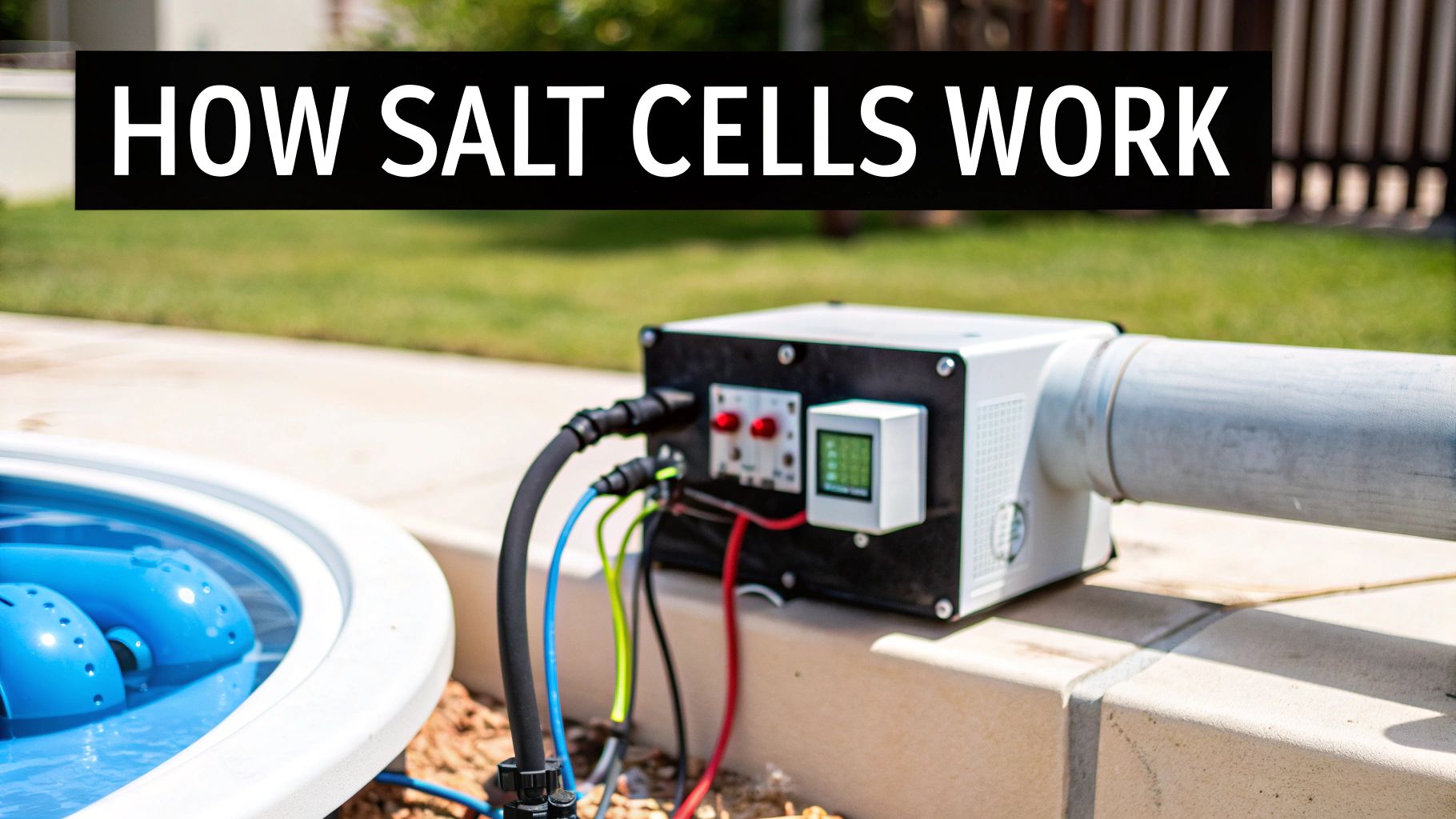
The science behind it all is a process called electrolysis. First, our technicians add a specific amount of high-purity, pool-grade salt directly into the water. This creates a solution that’s only about one-tenth as salty as the ocean, so you barely notice it.
As your pump circulates the water, it pushes this mild saltwater through the heart of the system—the salt chlorine generator, which we in the industry just call the "cell." Inside this cell is a series of coated metal plates that receive a safe, low-voltage electrical current from a control box.
The Science of Sanitization
When the salt water flows across these energized plates, electrolysis works its magic. It splits the salt molecules (sodium chloride, or NaCl) apart, instantly converting the chloride into fresh, pure chlorine (hypochlorous acid). This is the very same sanitizer that keeps your pool water pristine and safe.
This on-demand production is a game-changer. It eliminates the drastic "peaks and valleys" of sanitizer levels common with manual chlorine additions, resulting in more stable and consistently clean water.
This newly made chlorine gets right to work, neutralizing algae, bacteria, and any other unwelcome contaminants in your pool. Once it has done its job, the chlorine naturally reverts back to salt, and the whole cycle starts over again.
You end up with a clever, closed-loop system that recycles the same salt over and over. This is exactly what creates that silky-smooth water feel and the steady, reliable water chemistry that has made saltwater pools a favorite here in Southwest Florida. Our expert pool maintenance services are designed to keep this system running perfectly, giving you a crystal-clear pool without the daily chore of adding chemicals.
Comparing the Top Saltwater Pool Systems
When you're trying to pick the best saltwater system for your pool, you have to look past the brand names and really get into what matters for a Southwest Florida lifestyle. A system that works just fine in a cooler, drier place might not hold up to our intense sun, surprise downpours, and the fact that we use our pools pretty much all year. This is where a real, honest comparison of the big players like Hayward, Pentair, and CircuPool makes all the difference.
We're not just going to rattle off a generic feature list. Instead, let's break down what actually impacts performance right here in our backyards. We’re talking about things like chlorine output (a huge deal when the sun is trying to burn it all off), how long that expensive salt cell is going to last, and any smart features that make life easier, like self-cleaning modes that fight the mineral scale that loves our local water.
Key Decision-Making Factors for Florida Pools
When we're sizing up these systems, a few key things really stand out. A system's power to crank out enough chlorine on a scorching August afternoon is just as critical as its ability to last for years to come.
- Chlorine Output Capacity: This is measured in pounds per 24 hours, and it basically tells you how much sanitizing muscle the system has. For big pools, or any pool in sunny Florida that gets a lot of use, you need a system with some serious output to keep the water clean.
- Salt Cell Lifespan: The cell is the engine of your saltwater system, and it's also the priciest part to replace. A longer lifespan, usually rated in hours (10,000 hours is a good benchmark), means you're getting more bang for your buck over time.
- Warranty and Support: A solid warranty isn't just a piece of paper; it’s peace of mind. We look for brands that actually stand by their products and offer good support, because you don't want to be stuck waiting for a part in the middle of swim season.
- Smart Features: Today’s systems often come with self-cleaning functions, digital displays, and can even link up with your pool automation system. These aren't just flashy extras—they genuinely cut down on the work you have to do and help keep your water chemistry dialed in.
There's a good reason these systems are getting so popular. North America makes up over 40% of the entire salt chlorine generator market, which was a USD 318 million industry in 2024. Here in Florida, that trend is even stronger—nearly 70% of new pools are going saltwater because people know they're comfortable and reliable. New tech like app-controlled chlorinators is making them even better, with some models saving homeowners up to 25% on electricity. You can learn more about the surging demand for salt chlorine generators and find out why 80% of users report being happier with them.
Feature Comparison of Leading Saltwater Systems
To give you a clearer picture of how these top contenders stack up, we've put together a straightforward comparison of the models we install and service all the time here in Southwest Florida. This table zeroes in on the specs that should really drive your decision.
| System Brand/Model | Max Pool Size (Gallons) | Chlorine Output (lbs/24hr) | Cell Lifespan (Hours) | Key Features | Average Cost |
|---|---|---|---|---|---|
| Hayward AquaRite S3 | 40,000 | 1.45 | 10,000 | OmniHub smart control, clear cell for easy inspection | $1,800 – $2,200 |
| Pentair IntelliChlor IC40 | 40,000 | 1.40 | 10,000 | Full diagnostic tracking, push-button operation | $1,500 – $1,900 |
| CircuPool CORE35 | 35,000 | 1.50 | 10,000 | USA-made titanium cell, user-friendly interface | $1,100 – $1,400 |
This table shows that while they all seem similar, the details are what matter. A slightly higher chlorine output or a smart control feature could be exactly what you need for your pool.
Here’s a pro tip we always share with our clients: choose a system rated for a slightly larger pool than what you actually have. This little trick lets the generator run at a lower setting, which dramatically extends the life of the salt cell and puts less wear and tear on the whole system.
In the end, the perfect system really comes down to your pool, how you use it, and what you're looking to spend. One person might love the high-tech smart controls of the Hayward system, while their neighbor might prefer the no-nonsense durability and great value of a CircuPool model.
Our team at Water Medic can walk you through the options and give you a personalized recommendation based on what you actually need. Feel free to contact us for a free consultation to find the perfect fit for your Southwest Florida pool.
The True Cost of Owning a Saltwater Pool
When people start looking into saltwater systems for their pools, the first question is always about the price. Let's be upfront: the initial investment is higher than what you'd pay for a traditional chlorine setup. That first bill covers the salt chlorine generator and, just as importantly, professional installation.
Skimping on the setup is a mistake we see too often. Think of it less as a purchase and more as setting up a long-term investment for your home. When a certified Water Medic technician installs your system, they're calibrating it specifically for your pool's volume and our demanding Southwest Florida climate. A proper install from day one sidesteps a lot of common headaches and gets you the most out of your equipment.
Long-Term Savings and Return on Investment
Here’s where you start to see the real payoff. Over time, the savings on chemicals are significant. Most of our clients report saving 50-70% on their annual chemical budget compared to the old days of constantly buying chlorine pucks, shock, and algaecides. Your salt system makes its own chlorine as needed, which means far fewer trips to the pool supply store.
This isn't just a local trend; it's happening everywhere. The global market for saltwater pool systems hit about USD 1.5 billion in 2024 and is on track to more than double, reaching USD 3.1 billion by 2033. That kind of growth shows a major shift in what homeowners want: less hands-on chemical work and lower running costs.
This chart breaks down some of the most popular systems by chlorine output, cell lifespan, and average cost so you can see how they stack up.
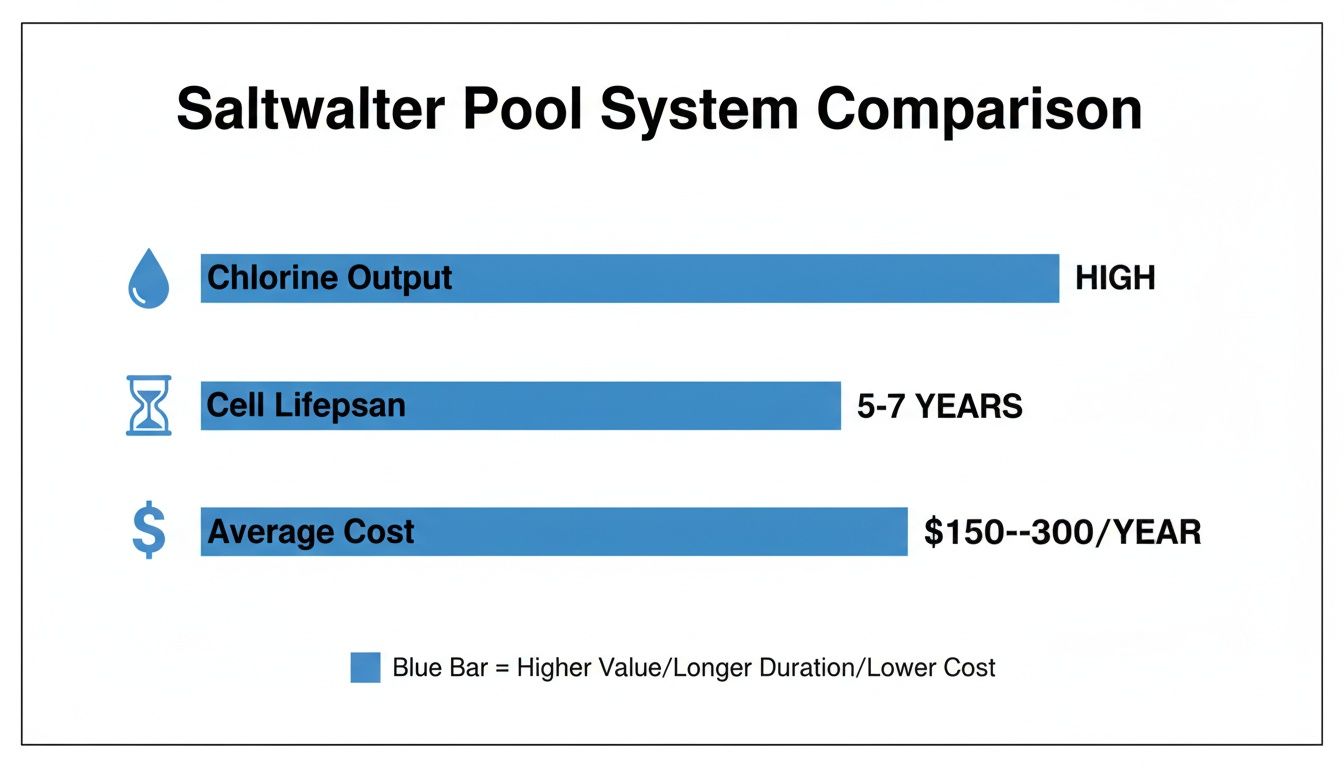
You can see that the units with a higher price tag often pay you back with a longer cell life and more efficient chlorine generation, which saves money in the long run.
Factoring in Ongoing Maintenance Costs
Of course, no pool system runs for free. The main ongoing cost you'll have with a salt system is replacing the salt cell, which usually has a lifespan of 3-7 years. While it's a notable expense, it’s usually balanced out by the hundreds you've saved on chemicals each year leading up to it.
You'll also need to add more pool-grade salt every now and then, but only to replace what gets splashed out or removed during backwashing. The salt itself doesn't evaporate. When you add everything up, the total cost of ownership for a saltwater pool is surprisingly manageable.
The consistent, automated nature of a salt system not only saves money but also time. This means less worrying about water chemistry and more time enjoying your pristine pool.
By choosing the right system and having it installed correctly, you're not just buying equipment. You're adding real value to your home and your free time. To keep that investment protected and running perfectly, take a look at our monthly maintenance plans. They're designed to keep your saltwater pool in top shape all year.
Professional Installation and Ongoing Maintenance
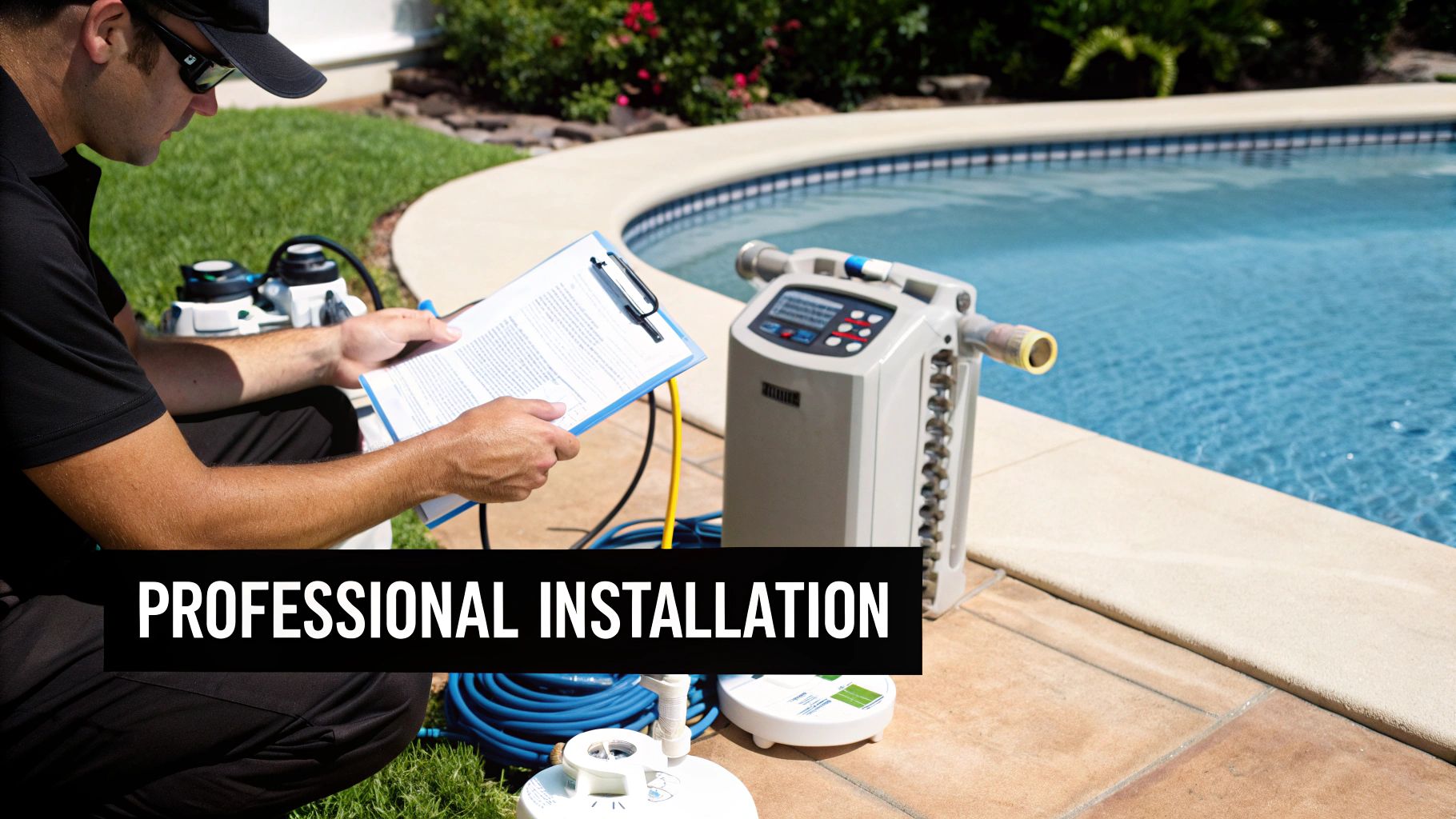
Picking out the best saltwater system is the fun part, but how it's installed is what really makes or breaks its performance down the road. It might be tempting to go the DIY route to save a few bucks, but converting a pool to salt involves tricky electrical and plumbing work that's really a job for a pro. A botched installation can lead to an inefficient system, damaged equipment, or even create serious safety risks.
A seasoned pool technician will make sure every piece of the new system fits perfectly with your existing equipment. They’ll handle plumbing the control unit and the salt cell, wiring everything to code, and getting those initial settings just right. Crucially, a professional ensures the system is correctly sized for your pool's gallonage—a detail that’s key for effective chlorine production and preventing the salt cell from burning out too soon.
The Installation Process and Initial Startup
Once all the hardware is mounted and connected, the startup phase begins. This is more involved than just flipping a switch. It’s a deliberate process designed to create a perfectly balanced and healthy swimming environment right from the start.
Here's what our Water Medic professionals do:
- Initial Salt Addition: The right amount of high-purity, pool-grade salt is added directly to the pool to reach the target salinity, which is usually between 3,000 and 3,500 parts per million (PPM).
- System Calibration: Your technician will power up the system and dial in the chlorine output. This setting is based on your pool's size, how many people use it, and the intense Southwest Florida sun.
- Water Chemistry Balancing: After the salt has had time to completely dissolve and circulate, a full water test is done. This step balances the pH, alkalinity, and stabilizer levels to make sure the chlorine being produced is as effective as possible.
A professional installation is your best defense against common saltwater pool issues. An experienced technician anticipates potential problems, like ensuring proper bonding to prevent corrosion of metal components, protecting your investment from the start.
Simplified Ongoing Maintenance Routines
Let's be honest, one of the biggest draws of a saltwater pool is the easier maintenance. Gone are the days of lugging and pouring heavy buckets of chlorine. But "low maintenance" isn't the same as "no maintenance." You still need to perform some regular checks to keep your system humming and your water crystal clear.
Your new routine mostly involves glancing at the control panel for any alerts and doing a few quick tests. You’ll want to check your water chemistry weekly to keep the pH and alkalinity in the sweet spot. Every so often, you'll need to visually inspect the salt cell for any white, flaky calcium buildup, as this can get in the way of chlorine production.
For pool owners who’d rather just enjoy their pool without worrying about the upkeep, Water Medic offers a specialized salt system pool service to manage everything for you. We make sure your system is always running at its best, which protects your equipment and guarantees that perfect water quality you're after. After you've chosen your system, getting it installed correctly is paramount. For some broader advice, these tips for choosing a reliable remodeling contractor can be useful for any home project.
Why Choose Water Medic for Your Saltwater System?
Picking the right saltwater system is a great first step, but who you choose to install it is just as important. For homeowners here in Southwest Florida, a saltwater pool isn't just a nice-to-have; it's a practical answer to our unique climate. At Water Medic of Cape Coral, we’re here to make sure your switch to saltwater is smooth and rewarding.
We’ve been working with pools in this area for over 25 years. That’s more than just installing equipment—it's about understanding the whole picture of water quality. Our team knows exactly what we're up against, from the high mineral content in our local water to the intense Florida sun that can throw everything off balance. This hands-on experience means we can recommend, install, and maintain a system that’s genuinely right for your pool.
We’re Pool and Water Experts—A Rare Combination
Here’s what really makes us different: we’re not just a pool company. We’re also certified water treatment specialists. This dual expertise gives us a perspective that most other companies just don't have. We don't just look at your pool's chlorine levels; we look at the source water itself, making sure your pool chemistry is perfectly balanced and your new equipment is protected from the get-go.
Trusting your saltwater conversion to a team that specializes in both pools and water treatment is the smartest way to protect your investment and ensure that crystal-clear, low-maintenance pool you’ve been dreaming of.
Let us put our decades of local knowledge to work for you. Give Water Medic a call today for a free, no-pressure consultation, and let's find the perfect saltwater system for your pool.
Your Saltwater Pool Questions, Answered
If you're thinking about making the switch to salt, you probably have a few questions. That’s a good thing. We’ve heard them all over the years, and we want to give you straight answers so you can feel good about your decision.
One of the first things everyone asks is, "Will my pool taste like the ocean?" The answer is a firm no. A saltwater pool has only about 1/10th the salinity of the ocean. It’s such a mild concentration that it’s more like the salinity of a human teardrop—you’ll notice the soft, silky feel on your skin, not a salty taste.
Will Salt Corrode My Pool Equipment?
This is another big one. People worry about salt eating away at their pool equipment, and it's a valid concern if things aren't done right. While it’s true that salt can be corrosive to some metals, this problem is completely avoidable with a professional installation and proper maintenance.
A skilled technician will make sure all your pool components are properly bonded and the system is calibrated perfectly from day one. Keeping your water chemistry balanced is the best way to prevent any issues down the road. Our team at Water Medic specializes in setting up these systems to protect your entire pool investment for the long haul.
The key takeaway is that salt itself doesn't cause problems—improper installation and neglected maintenance do. A well-managed saltwater system is safe for all modern pool equipment and surfaces.
How Often Will I Need to Add Salt?
Many people picture themselves lugging heavy bags of salt to the pool every week, but the reality is much simpler. Salt doesn't evaporate out of the water like chlorine or water does. The salt you add is used over and over again by the chlorine generator.
You’ll only need to add more salt to replace what’s lost from heavy splash-out, backwashing your filter, or fixing a major leak. For most pool owners, this means only adding salt a few times a year. If you want to dig deeper into other common questions, check out our comprehensive pool owner FAQs.
Ready to experience the benefits of a saltwater pool without the hassle? The expert team at Water Medic of Cape Coral is here to guide you. Contact us for a free consultation and discover the best saltwater system for your pool. https://watermedic.com