
how to remove fluoride from drinking water: quick guide
So, you’re wondering how to remove fluoride from drinking water? The most dependable way to do it right at home is with a specialized filtration system. I'm talking about something more advanced than your average pitcher filter, like reverse osmosis. Standard filters often let fluoride slip right through, but high-performance systems from Water Medic are specifically designed to catch and drastically reduce it, putting you back in charge of your water quality.
What to Know About Fluoride in Your Florida Tap Water
Here in Southwest Florida, we get asked all the time, "What's really in my water?" Fluoride is almost always part of the answer. It's added to most municipal water supplies on purpose—a practice called community water fluoridation—because it's proven to help prevent tooth decay. For decades, it’s been a cornerstone of public dental health.
But times have changed, and a lot of people now want the final say on what's in the water their family drinks. It's not about arguing against public health initiatives. It's simply about personal choice and controlling the total amount of fluoride you get from all sources—water, toothpaste, food, you name it.
Why Do Some People Want to Remove It?
The conversation around fluoride isn't as black-and-white as it used to be. The concern isn't just about what's in the water, but about the cumulative daily intake.
To put it in perspective, the EPA sets the maximum allowable fluoride level at 4.0 mg/L. Our local water systems stay well below that, of course. But some homeowners still want to lower their exposure as much as possible. You can always check out the federal fluoride guidelines and health assessments to see the official standards for yourself.
For many Florida residents we talk to, it really boils down to a few key reasons:
- Personal Choice: Some people just prefer their water and food to have as few additives as possible. Simple as that.
- Controlling Total Intake: When you've got fluoride in your toothpaste and certain foods, you might want to remove it from the water you drink all day long.
- Health Questions: While the science can be dense, ongoing studies have made some people prefer a "better safe than sorry" approach to long-term exposure.
The only way to know for sure what’s coming out of your faucet is to test it right there. A professional water analysis takes you from reading generic city reports to understanding the unique water profile of your own home.
Your First Step to Cleaner Water
Before you can pick the right filter, you need to know what you’re up against. Public water quality reports are a good starting point, but they're just an average. They can't tell you what might be happening in the specific pipes that run to your house.
That's why getting a personalized water test is the crucial first move. When you schedule a complimentary water analysis with us at Water Medic, we can pinpoint the exact concentration of fluoride in your tap water, along with other common Southwest Florida culprits like chlorine or hard water minerals. This isn't guesswork; it's a data-driven approach that lets us recommend a solution that’s truly right for your home. You deserve to have complete confidence in every glass you drink.
Comparing Your Fluoride Removal Options
So, you’ve decided to take control of the fluoride levels in your water. That’s the first step. The next, and most important, is figuring out how. Not all water filters are the same, and frankly, many common pitcher or faucet filters won't touch fluoride at all.
Let's cut through the noise and look at the real solutions. We’ll compare the top technologies—Reverse Osmosis, Activated Alumina, Bone Char, and Distillation—side-by-side. Each has its pros and cons, but for homes here in Southwest Florida, a properly installed Reverse Osmosis system is, in our experience, the most reliable and comprehensive choice.
Reverse Osmosis: The Gold Standard for Home Filtration
You've probably heard of Reverse Osmosis, or RO. It's a powerhouse filtration method that uses your home's own water pressure to force water through a special semipermeable membrane. Think of this membrane as a microscopic gatekeeper. It’s so fine that it lets pure water molecules pass through while blocking almost everything else.
This physical separation process is incredibly effective at removing dissolved salts, heavy metals like lead, chlorine, and yes, fluoride. The water that comes out is exceptionally pure.
So, what really sets RO apart from the pack?
- Unbeatable Effectiveness: A quality RO system can remove up to 99% of all dissolved contaminants, including fluoride. You simply won't find a higher removal rate for a residential system.
- Total Contaminant Defense: RO isn't a one-trick pony. It provides broad-spectrum protection, making it your best defense against the mix of contaminants we often see in both municipal and well water.
- Incredible Taste and Clarity: By stripping out minerals and chemicals like chlorine that give tap water an "off" taste, RO systems produce water that is crisp, clean, and perfect for drinking and cooking.
Because it tackles so many water quality problems at once, RO provides an incredible value. While you can find standalone Reverse Osmosis water dispenser systems, the best long-term solution for total home protection is an integrated system. A whole-house reverse osmosis system ensures that every tap in your Florida home delivers purified water.
Activated Alumina and Bone Char: The Adsorption Filters
Other methods for fluoride removal use a process called adsorption, where fluoride ions essentially stick to the surface of a filter material. The two most common materials used for this are activated alumina and bone char.
Activated alumina is a porous, granular form of aluminum oxide that has a natural attraction to fluoride, pulling it out of the water as it passes through. Bone char, made from charred animal bones, is one of the oldest methods for defluoridation and works in a similar way.
While these filters are good at specifically targeting fluoride, they come with some significant downsides. Their effectiveness can be thrown off by your water’s pH and flow rate. Even worse, the filter media needs to be replaced frequently and carefully, otherwise it can actually release the trapped contaminants back into your water. This is why we almost always recommend a more reliable RO system.
Distillation: A Different Path to Purity
Distillation is another highly effective method for removing fluoride. It works by mimicking nature’s water cycle: water is boiled, turning it into steam and leaving contaminants like fluoride and heavy minerals behind. That steam is then collected and cooled, condensing back into pure liquid water.
There’s no doubt that distillation works—it removes nearly 100% of fluoride. The problem is practicality. It’s an extremely slow and energy-hungry process. A countertop distiller might take hours just to produce a single gallon of water, which just isn't feasible for a family’s daily drinking, cooking, and cleaning needs. It’s best for producing small, specific batches, not for a whole-home solution.
This infographic gives a great visual of the different fluoride levels set by various health and environmental agencies.
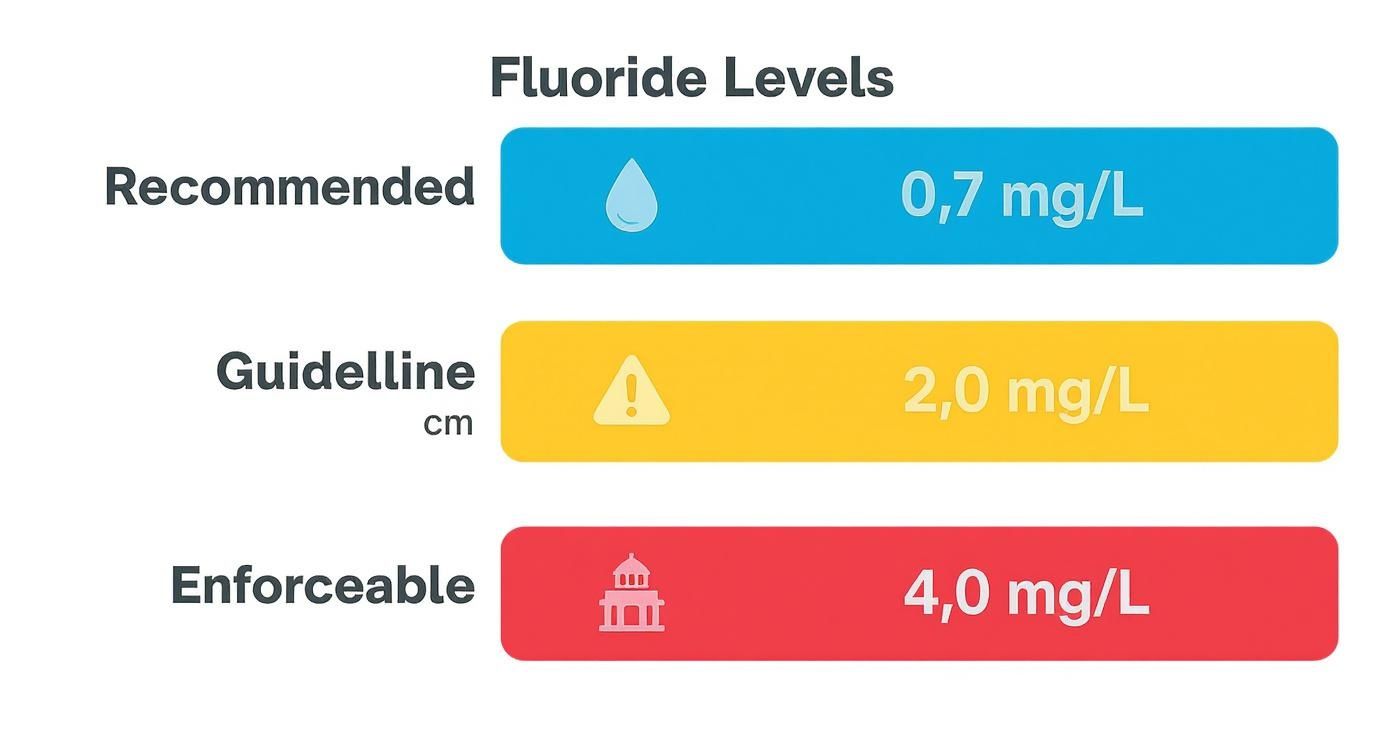
As you can see, there’s a big difference between the recommended level and the legally enforceable maximum. This gap is exactly why so many homeowners choose to install a filtration system to get their fluoride levels as close to zero as possible.
Comparing Fluoride Removal Technologies
When you lay all the options out, it becomes easier to see which technology truly fits the needs of a modern household. This table breaks down the key differences.
| Method | Fluoride Removal Rate | Best For | Maintenance Needs | Estimated Cost |
|---|---|---|---|---|
| Reverse Osmosis | 95-99% | Comprehensive, whole-home purification. Removes a wide range of contaminants beyond just fluoride. | Regular filter and membrane changes (typically annually). | Moderate to High Upfront |
| Activated Alumina | 80-90% | Targeting fluoride specifically in water with the correct pH balance. | Requires careful monitoring and media replacement. Performance degrades over time. | Low to Moderate Upfront |
| Bone Char | Up to 90% | Homeowners seeking a more "natural" fluoride-specific filter. | Similar to Activated Alumina; requires regular replacement and is sensitive to water conditions. | Low to Moderate Upfront |
| Distillation | 99%+ | Producing small amounts of very pure water for specific uses, not for whole-house supply. | Regular cleaning to remove mineral scale buildup. High energy consumption. | Low Upfront (Countertop) |
Why We Stand Behind Reverse Osmosis for Florida Homes
After years of experience with water quality issues in Southwest Florida, the practical advantages of Reverse Osmosis are undeniable.
The reality is that activated alumina and bone char are niche solutions that demand fussy, complicated maintenance. Distillation is just not practical for the amount of water an average family uses day in and day out.
Reverse Osmosis, however, consistently delivers top-tier results without the headache. It’s a robust, reliable system that solves the fluoride problem while also dramatically improving the overall quality and safety of your water. When a professional from Water Medic installs and maintains your RO system, you get peace of mind and an on-demand supply of purified water from every single tap in your home.
Choosing the Right Filtration System for Your Home
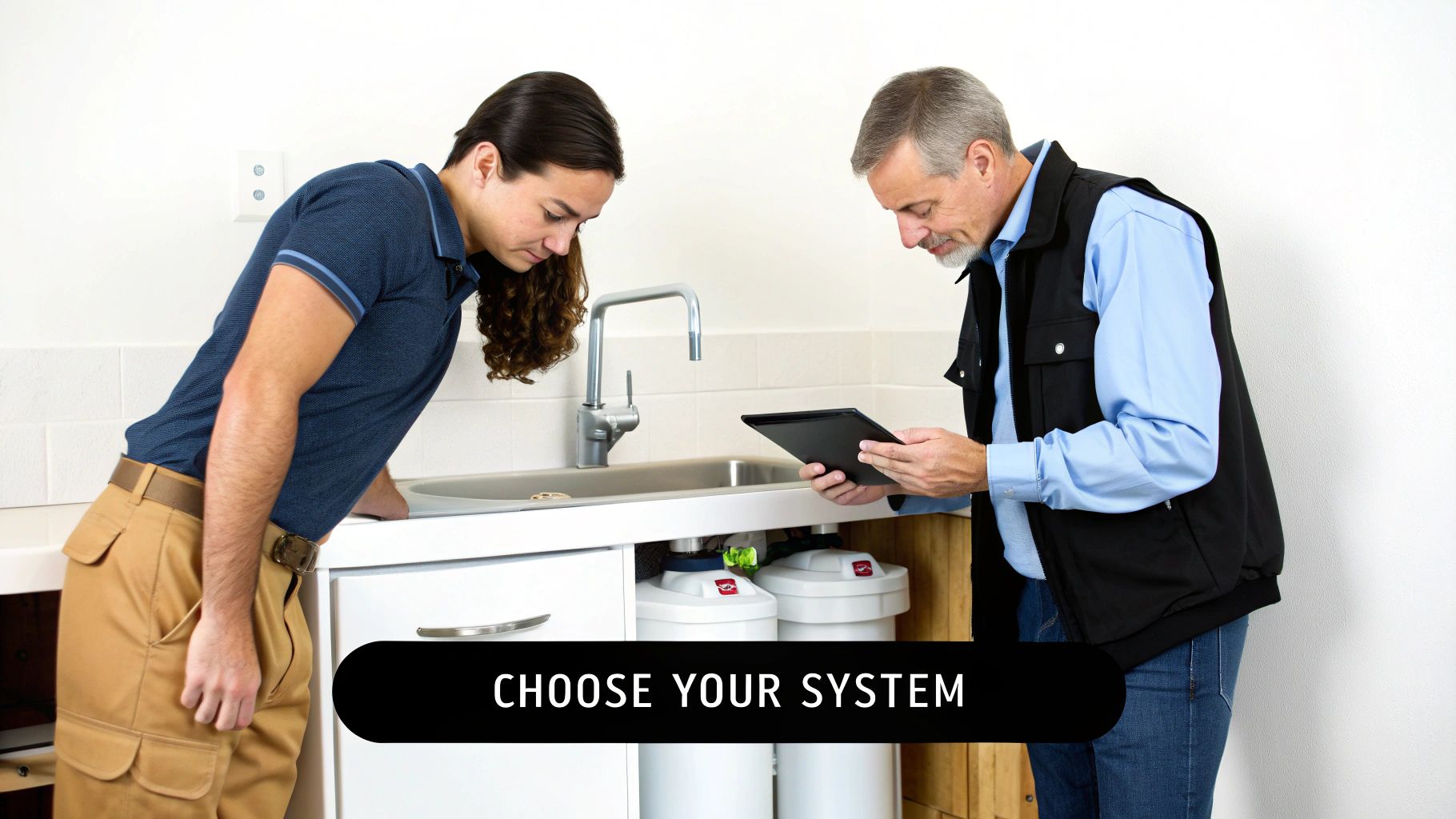
Alright, you know the technologies out there, but now for the big question: which one is actually right for your home? It's easy to get lost in the marketing noise, but picking the right system isn't about the highest price tag or the slickest ad. It’s about finding the perfect match for your family's needs, your water's specific issues, and your long-term goals.
This is where our experience at Water Medic really makes a difference. We’ve seen it all here in Southwest Florida, and we know that a one-size-fits-all approach just doesn't work. A proper recommendation hinges on three key things: your household's daily water usage, the actual contaminants in your water, and your budget. Let’s walk through how we break this down during a consultation.
Considering Your Household's Water Demand
First things first, we need to look at how much water your family actually uses. The system that’s perfect for a retired couple in a condo won't be the same one needed for a bustling family with kids and pets.
- Smaller households or condo owners: If you're working with less space and use less water, you might think a small, targeted solution is the way to go. But even in a smaller home, you want pure water for drinking, cooking, and washing vegetables. An efficient under-sink system can be a fantastic, space-saving fit.
- Larger families: A growing family can go through a surprising amount of water every single day. A countertop distiller or a small pitcher-style filter just isn't going to cut it. You need something more robust that provides a constant, reliable stream of purified water without making you wait.
This is one of the main reasons we so often recommend Reverse Osmosis systems. They're scalable and can be set up to meet the demands of any household, big or small, so you never have to worry about running out of clean, safe water.
What Does Your Water Test Reveal?
This is the most critical piece of the puzzle. Without a detailed water analysis, you’re flying blind. Your professional water test results are our roadmap—they tell us exactly what contaminants we need to tackle.
For instance, a family in Naples might get their water tested and find that, on top of fluoride, they have high levels of chlorine from the city and a bunch of dissolved solids that make the water taste "off." In that case, a simple activated alumina filter is an incomplete solution. Sure, it would reduce the fluoride, but it would leave all the other junk behind. You’d still be dealing with bad-tasting water.
A professional assessment connects the dots between your water test results and the right technology. It ensures you're not just solving one problem but addressing the total water quality of your home for complete peace of mind.
On the other hand, a homeowner in Fort Myers with a private well could have a completely different set of issues, like iron, sulfur, and naturally occurring fluoride. This situation calls for a more comprehensive treatment plan. A whole-house reverse osmosis system is often the most effective path forward here, knocking out every problem at once. The goal is to choose a system that addresses your entire water profile, not just one contaminant on the list.
Aligning the Solution with Your Budget
We get it. A water filtration system is a significant investment in your home and your family's health, and budget is always a practical consideration. While the upfront cost is what most people focus on, it's just as important to think about the long-term value and maintenance.
Those adsorption filters might look cheaper on the shelf, but they often need frequent and pricey media replacements. If you forget to change them on schedule, their performance tanks, and you're no longer getting the protection you paid for. Distillation units are cheap to buy but can add a surprising amount to your monthly electric bill.
This is where a professionally installed RO system really proves its worth. The initial investment might be higher, but its long-term value is hard to beat. The filter and membrane replacements are predictable, and the system delivers consistently pure water for years to come. It's a durable, reliable solution.
For a focused and highly effective option, many homeowners find that an under-sink reverse osmosis system provides the ideal balance of powerful performance and affordability right at the kitchen tap.
Ultimately, the best choice is the one that gives your family the protection they need within a budget you're comfortable with. When you schedule a free, no-obligation consultation with us, we can give you a personalized recommendation based on your specific situation, helping you make a confident, informed decision for your home.
What to Expect During a Professional Installation
https://www.youtube.com/embed/4AwKg9ufW3g
Choosing a top-notch water filtration system is a fantastic first step. But even the best system on the market is only as good as its installation. The quality of that install is what will ultimately determine its performance, how long it lasts, and your overall peace of mind.
While a DIY project might seem like a good way to save a few bucks, figuring out how to remove fluoride from drinking water correctly often requires a professional touch. A small mistake can lead to big problems down the road.
Going with a pro isn't just about convenience; it's about protecting your investment. A system installed the right way from day one will run at peak efficiency, won't spring a leak that could cause thousands in water damage, and keeps your manufacturer's warranty valid. When our certified Water Medic technicians come to your home, we have a clear, respectful process to make the whole experience seamless.
The Initial Site Assessment
Before a single tool comes out of the truck, the first thing we do is a thorough site assessment. This is much more than a quick peek under your sink. Our tech will carefully look at your home’s plumbing, check the water pressure, and confirm the best spot for your new system.
This initial check is crucial for a couple of reasons:
- Confirming the Right Fit: We make sure the chosen location has enough room and the right plumbing connections for a secure, accessible installation.
- Checking Water Pressure: Your home’s water pressure needs to be in the sweet spot for the filter to work properly. If it's too high, it can damage the system over time. Too low, and it won't filter effectively. We’ll test it and can suggest a pressure regulator if needed.
- Mapping Out the Job: We plan the entire installation from start to finish. This helps us work efficiently and keep any disruption to your day to an absolute minimum.
A Clean and Professional Installation Day
When installation day arrives, our team will show up with all the tools and parts needed to get the job done right. Most importantly, we show up with respect for your home. We always lay down protective coverings in our work area to keep your floors and cabinets spotless.
Our technicians are courteous, professional, and happy to answer any questions you have along the way.
The actual installation involves carefully connecting the system to your existing plumbing. This isn't just a matter of screwing on a few hoses; it requires skill to ensure a leak-proof, durable connection that will last. For a better sense of what this entails, you can look into local professional plumbing services. Our team uses only high-quality fittings and proven techniques to get it right.
At Water Medic, we treat your home like our own. Our goal is to leave the workspace cleaner than we found it, with a perfectly installed system that looks as good as it performs.
System Calibration and the Final Walkthrough
Once everything is physically in place, we’re still not finished. These last steps are what really guarantee you get the pure, clean water you’re paying for.
We meticulously calibrate the system to your home's unique conditions. This means:
- System Flush: We run water through the brand-new system to clear out any harmless carbon dust from the filters and prime the membranes for first use.
- Leak Check: Our tech does a multi-point inspection, checking every single connection and fitting under full pressure to make absolutely sure there are no drips or leaks.
- Performance Test: We'll test the filtered water straight from your new tap to confirm the system is doing its job and significantly reducing contaminants.
To wrap things up, we’ll do a complete walkthrough with you. We’ll point out the main parts of your new system, explain the simple maintenance tasks to keep in mind, and answer any lingering questions. We don’t consider the job done until you feel 100% confident and happy with your new water.
Keeping Your System Running: How to Guarantee Pure Water for the Long Haul
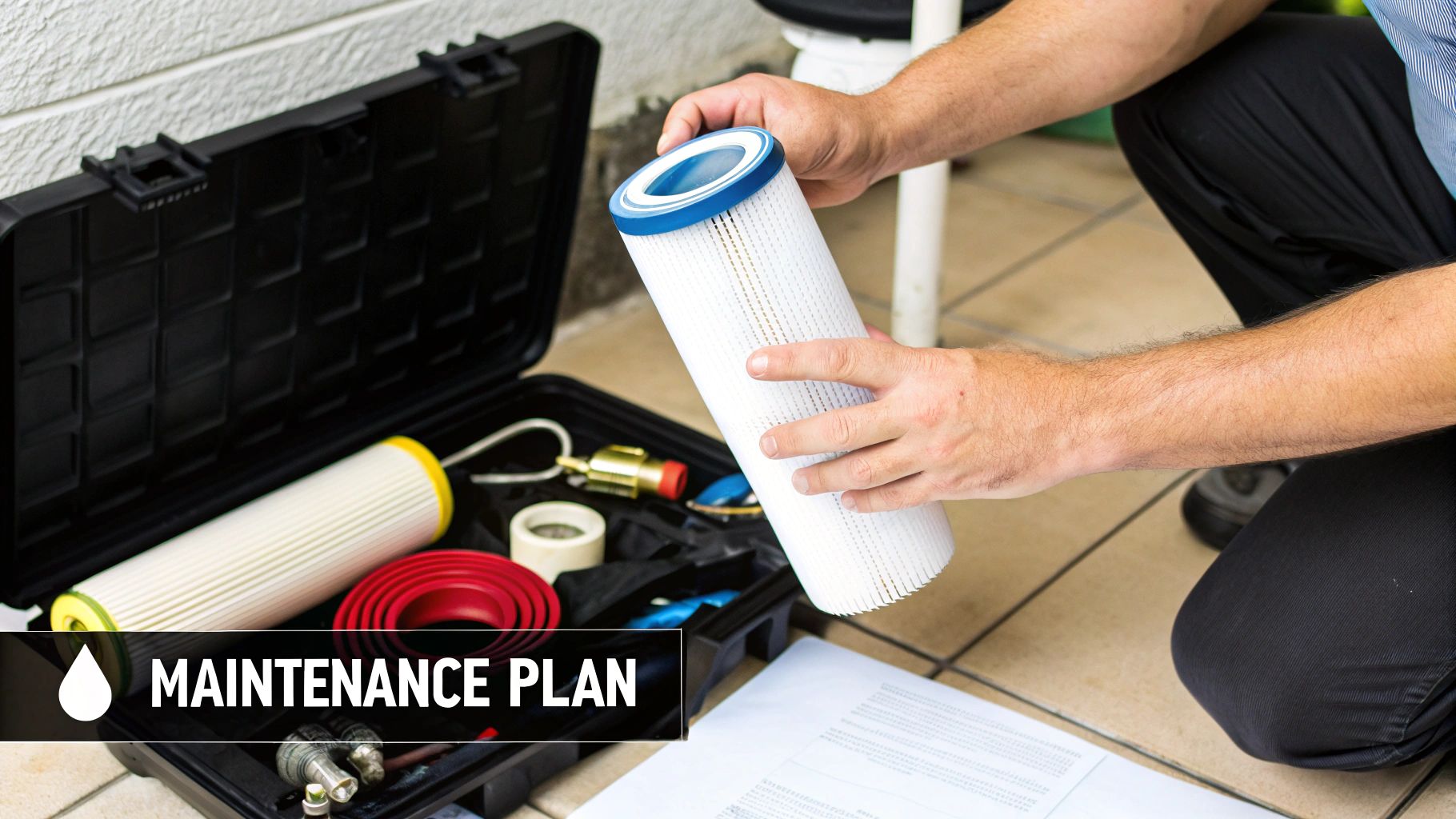
Putting in a quality water filtration system is a fantastic first step for your family's health. Now, let's talk about protecting that investment. Proper maintenance is what ensures your system keeps delivering pure, clean water year after year. Think of it like your car—it needs regular tune-ups to perform its best, and your water filter is no different.
For the reverse osmosis systems we typically install, the upkeep is pretty simple, but it's absolutely crucial. If you neglect it, filters get clogged, performance plummets, and you could end up right back where you started, with fluoride and other contaminants getting through. A simple schedule is all it takes to protect your system and your water quality.
Your Go-To RO Maintenance Schedule
A reverse osmosis system works with a series of filters and a high-tech membrane, and each part has a specific job. Over time, they get loaded up with all the gunk they've pulled out of your water.
Here’s a realistic timeline for most RO systems we see in Southwest Florida homes:
- Pre-Filters (Sediment & Carbon): These are the front-line soldiers. They need to be swapped out every 6 to 12 months. Their job is to catch the bigger stuff and chlorine, which protects the more sensitive RO membrane down the line.
- RO Membrane: This is the heart of the system. It usually has a lifespan of 2 to 3 years, though this can change based on how much water you use and its initial quality.
- Post-Filter (Polishing Filter): This is the final touch, making your water taste great. Plan on changing it every 12 months.
I always tell my clients to just pop a reminder in their phone's calendar. It’s a simple trick that ensures you never fall behind.
Telltale Signs Your System Needs a Check-Up
Your system is pretty good at telling you when it needs attention, even if your calendar reminder is still a few weeks away. Knowing what to look for is a key part of learning how to remove fluoride from drinking water effectively day in and day out.
The most obvious clue? A drop in water pressure from the RO faucet. If filling your water bottle suddenly feels like it's taking forever, that’s a dead giveaway. It means the filters are getting clogged and water is struggling to get through.
Another sign is a change in taste or smell. If that pure, crisp flavor you’ve gotten used to starts to taste a bit more like regular tap water, it’s a strong hint that the carbon filters are spent and can no longer trap compounds like chlorine.
The Easiest Path to Perfect Water: Our Hassle-Free Maintenance
Let's be honest, life is busy. Remembering filter schedules and watching for performance dips can easily fall to the bottom of a long to-do list. That’s exactly why we developed a "set-it-and-forget-it" approach for homeowners who just want pure water without the mental overhead.
Our hassle-free monthly maintenance plans take all the guesswork and legwork off your plate. You’ll never have to source the right filters, mark your calendar, or second-guess if the system is working properly. Our experienced technicians show up on schedule, handle all the service, and perform a full system check. It’s truly the simplest way to keep your system at peak performance and ensure your family always has the pristine water they deserve.
Answering Your Questions About Fluoride Removal
Diving into water filtration can feel overwhelming, and it's natural to have a lot of questions. We get calls about this stuff all the time. To help out, here are some straightforward answers to the most common questions we hear from homeowners right here in Southwest Florida.
Do Refrigerator or Pitcher Filters Actually Remove Fluoride?
This is probably the number one question we get, and it's a critical one. The simple answer is no.
Your typical pitcher or refrigerator filter uses a basic carbon filter. It does a decent job of making your water taste and smell better by pulling out chlorine, but that's about it. These filters just aren't designed to capture dissolved minerals like fluoride.
To really tackle fluoride, you need a system that uses a more sophisticated process, like reverse osmosis or activated alumina. If fluoride is your main concern, you absolutely need a specialized system built for the job, like one of our under-sink reverse osmosis systems.
Is Reverse Osmosis Water Bad for You Because It Removes Minerals?
It's true that reverse osmosis is incredibly thorough and removes nearly everything, including beneficial minerals. However, the vast majority of minerals our bodies need come from the food we eat, not the water we drink. The primary purpose of an RO system is to get rid of the bad stuff—the contaminants you don't want.
If you're concerned about getting enough minerals, the best path is always a nutrient-rich diet. That said, many modern RO systems now come with a remineralization filter that adds a healthy balance of calcium and magnesium back into the water after it's been purified. It's a great way to get pure water without compromise.
What's the Real Cost of a Whole-House Fluoride Removal System?
The investment for a whole-house system can really vary. It depends on several factors, like the technology you go with (RO vs. activated alumina), the size of your home, and the specific levels of contaminants we find in your water.
A point-of-use reverse osmosis unit under your kitchen sink is a very popular and budget-friendly option for drinking and cooking water. A whole-house reverse osmosis system is a more significant investment, but it delivers purified water to every single tap, shower, and appliance in your home.
The best way to figure this out is with a free consultation. We can test your water and walk you through the options, giving you a clear, no-pressure quote that fits your home and budget.
How Can I Find Out the Exact Fluoride Level in My Water?
You might be able to find a public water quality report from your local utility, but keep in mind that's just a snapshot taken at the treatment plant. It doesn't tell you what's happening to the water as it travels through miles of pipes to get to your front door.
The only way to know for sure what's coming out of your tap is to have your water professionally tested right at home. A comprehensive water analysis will give you the precise fluoride level and screen for any other contaminants, giving you the hard data you need to make an informed decision for your family.
Ready to stop guessing about your water quality? The team at Water Medic is ready to help with a complimentary water analysis and a personalized recommendation. Let's get you on the path to pure, safe, and fantastic-tasting water.