
Why Does My Water Smell Like Sulfur? Fix It Fast
If you've ever turned on the tap and been hit with that unmistakable rotten egg smell, you know exactly how unpleasant it can be. So, what's going on? The short answer to "why does my water smell like sulfur?" almost always points to one culprit: hydrogen sulfide gas (H₂S).
This gas can come from a few different places, like naturally occurring bacteria in your groundwater or even a specific issue hiding inside your home's plumbing. As your local water quality experts, we're here to help you not only understand the problem but find a permanent solution.
Decoding That Rotten Egg Smell in Your Water
That sulfur odor is more than just a nuisance; it’s a red flag about your water quality. While the smell is certainly alarming, it’s a common problem with clear causes and, thankfully, effective solutions. Our goal is to help you understand exactly what’s happening in your pipes so you can make an informed decision.
Hydrogen sulfide gas is often found naturally in groundwater, usually a byproduct of bacteria breaking down organic material deep underground. The sulfur bacteria that produce this gas are especially common in private wells. In fact, it's estimated that 10-30% of private wells in the United States have enough hydrogen sulfide to cause that rotten egg smell. This is just one of many global water challenges homeowners can face.
To help you get a quick handle on this, here's a simple table outlining the usual suspects.
Quick Guide to Sulfur Smell Sources
This table breaks down the most frequent causes behind the rotten egg smell in your water supply.
| Source | Common Location | What It Means |
|---|---|---|
| Sulfur Bacteria | Private wells, groundwater | Naturally occurring bacteria are converting sulfates into hydrogen sulfide gas in your water source. |
| Water Heater | Hot water taps only | Bacteria are thriving in your hot water tank, often reacting with the anode rod to create the smelly gas. |
| Plumbing Biofilm | A specific sink drain (e.g., kitchen or bathroom) | A buildup of gunk and bacteria in a single drain is producing the odor, not the water itself. |
| Municipal Supply | All taps, but may be intermittent | While less common, issues at the treatment plant or in the main water lines can sometimes cause the smell. |
Seeing it laid out like this makes it easier to start connecting the dots between what you're experiencing and what's actually causing it.
Pinpointing the Source
The first real step to solving the problem is figuring out exactly where the smell is coming from. Is it at every faucet, or just one? Hot water, cold water, or both?
Here are the most common culprits to investigate:
- Your Water Source: The problem often begins deep in the ground, especially if you have a private well. Sulfur-reducing bacteria (SRBs) love oxygen-poor environments and happily convert naturally occurring sulfates into stinky hydrogen sulfide gas.
- Your Water Heater: If you only notice the smell when you turn on the hot water, your water heater is almost certainly the issue. The warm tank is like a perfect incubator for these bacteria, and they can react with the unit's magnesium anode rod to produce even more of that foul odor.
While the odor itself is usually just an aesthetic issue, it's a strong indicator that you should investigate further. An accurate diagnosis is crucial for selecting the right long-term solution.
Ultimately, knowing the cause is everything. Ready to get a definitive answer? Our professional water testing services can pinpoint the source and help you get back to water that’s fresh, clean, and completely odor-free.
Pinpointing the Source of the Sulfur Smell
That nasty rotten egg smell can feel like it’s coming from everywhere, but you can usually trace it back to a single source. Before you can fix the problem, you need to play detective and figure out exactly where the odor is starting. Guessing wrong here can mean wasting money on a solution that won't even touch the real issue.
A simple checklist is all you need to start. We'll walk through a few questions to help you figure out if the problem lies with your well, the city's supply, or something inside your home's plumbing—like the water heater. Getting this right is crucial because treating sulfur-reducing bacteria in a well is a completely different ballgame than fixing a contaminated hot water tank.
The Hot vs. Cold Water Test
Here's the first and most important clue: does the smell show up with both hot and cold water, or just the hot? Go to a faucet, run the cold water for a minute, and give it a sniff. Then do the same for the hot water.
- Smell from Hot Water Only: If only the hot water stinks, your water heater is almost certainly the culprit. The warm, dark tank is the perfect breeding ground for sulfate-reducing bacteria. They love it in there, often reacting with the unit's magnesium anode rod to churn out that stinky hydrogen sulfide gas.
- Smell from Hot and Cold Water: If both taps give off the odor, the problem starts further up the line. It could be your main water supply, the plumbing system itself, or your well.
This one simple test immediately cuts the list of potential culprits in half, saving you a ton of time and frustration. If it's just the water heater, a plumber can often fix it by flushing the tank or swapping out the anode rod. But if the issue is in your main water supply, you're looking at a more comprehensive solution.
One Faucet or Every Faucet?
Next, let's see how widespread the problem is. Is the smell coming from every single faucet in the house, or is it just in one spot? Check the kitchen sink, the bathroom shower, and maybe an outdoor spigot.
If the smell is isolated to a single faucet, the problem might not even be your water. It could just be a funky buildup of bacteria and gunk in that specific drain. When water runs, it stirs up the smell, fooling you into thinking it's the water. But if every tap has that same rotten egg odor, you've confirmed the problem is systemic.
Pinpointing the source is the most cost-effective first step you can take. It ensures you invest in the correct treatment, whether that’s a simple plumbing fix or a whole-house filtration system.
For those of us with private wells, a smell coming from every faucet often points directly back to the well itself. Groundwater comes with its own unique set of challenges, which is why we offer specialized well water repair services to tackle these issues right at the source. If you want a definitive answer, our professional water testing can identify the exact cause and give you a clear path forward.
The Hidden Culprits Behind the Smell
If you've ever turned on your tap and been hit with that unmistakable rotten egg smell, you're not alone. To figure out what's going on, we need to look at the two main culprits that are almost always working in tandem: hydrogen sulfide gas and tiny organisms called sulfate-reducing bacteria (SRBs).
Think of it this way: the hydrogen sulfide gas is the obnoxious symptom—that awful smell. But the SRBs are the root cause, the microscopic factories churning out the gas from behind the scenes.
While hydrogen sulfide can sometimes be found naturally in groundwater, it's often these SRBs that kick the problem into high gear right inside your plumbing. The good news is they aren't harmful to your health. The bad news? They're a major nuisance for your nose. These bacteria flourish in places with little to no oxygen, which makes wells, water heaters, and the dark recesses of your pipes their ideal breeding grounds.
The Bacteria and Gas Connection
So how do these tiny troublemakers create such a powerful stink? It's all about their diet. Sulfate-reducing bacteria chow down on sulfates, which are naturally occurring minerals in many water sources. As they metabolize these sulfates, they release hydrogen sulfide gas as a byproduct. That gas then dissolves into your water, only to be released into the air when you turn on a faucet.
It doesn't take much to get this process started. Environmental studies show that when sulfate levels in water top 250 mg/L, conditions become perfect for SRBs to multiply and produce a noticeable amount of hydrogen sulfide. You can learn more about the broader issues influencing local water by exploring global water quality factors.
This simple decision tree can help you start sleuthing out the source of the smell in your own home.
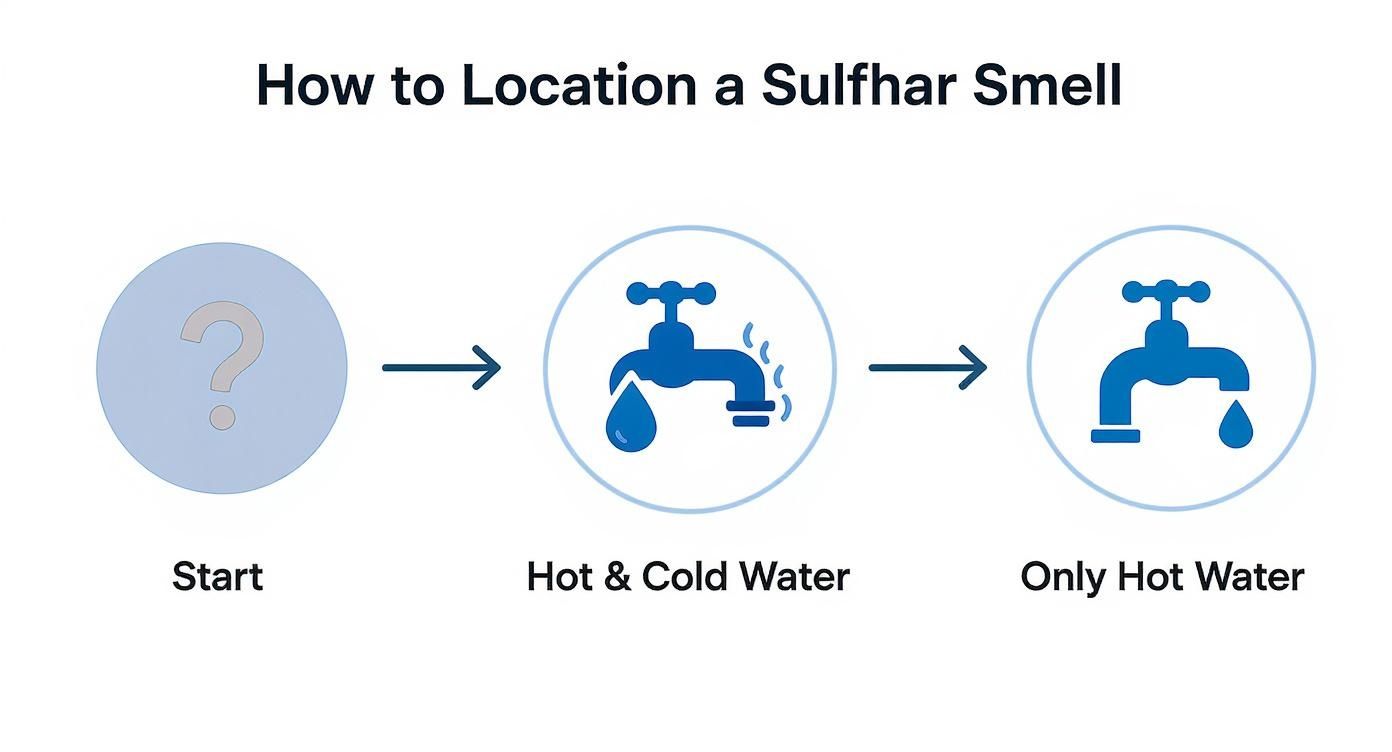
As the chart shows, the very first step is figuring out if the smell is coming from just your hot water or from the cold water, too. That one clue can tell you a lot.
Why This Distinction Matters
Getting a handle on this bacteria-gas relationship is absolutely crucial for finding a real, lasting fix. You can't just treat the smell; you have to go after the source. If all you do is try to mask the hydrogen sulfide odor, the SRBs will just keep on doing their thing, and the smell will inevitably come back.
The core of the issue is that SRBs create a self-sustaining problem. As long as they have sulfates to feed on in a low-oxygen environment, they will continue to produce the gas that makes your water smell like rotten eggs.
This is exactly why generic, one-size-fits-all solutions rarely get the job done. Our advanced filtration and purification systems are engineered to tackle this problem at its source by targeting the bacteria themselves. Instead of just putting a band-aid on the smell, we work to eliminate the microscopic troublemakers, restoring your water's freshness for good.
Why Professional Water Testing Is Essential
Guessing at the cause of that rotten egg smell in your water is a losing game. While you can certainly tell that it smells, a simple sniff test can't tell you the whole story of what's happening in your pipes or well.
The only way to know for sure what’s causing the odor—and what other contaminants might be hiding in plain sight—is to get your water professionally tested. Relying on your nose alone is a bit like a doctor trying to diagnose an illness without running a single lab test. You might treat a symptom, but you could easily miss the root cause.
Beyond the Odor: Getting a Complete Water Profile
A sulfur smell is a major red flag, but it’s often just one piece of a larger puzzle. Our comprehensive water analysis goes far beyond simply confirming the presence of hydrogen sulfide. We build a complete profile of your water's health by looking at all the interconnected factors.
This isn't just a pass/fail test. We dig into the details, checking for:
- Hydrogen Sulfide (H₂S): We pinpoint the exact concentration to understand just how severe the problem is.
- Iron and Manganese: These minerals are common accomplices in sulfur-related issues, causing stubborn stains and feeding the very bacteria creating the smell.
- Sulfates: High levels of sulfates are basically a buffet for sulfate-reducing bacteria, encouraging them to produce even more smelly gas.
- Bacterial Presence: We identify the specific bacteria that are turning your plumbing or well into a hydrogen sulfide factory.
This level of detail gives us a clear, scientific picture of what's really going on with your water.
An accurate diagnosis from our testing services is the crucial first step toward a real solution. It ensures you invest in the correct treatment system, saving you from costly and frustrating trial and error.
The Right Solution Starts with the Right Diagnosis
Without knowing the exact cause, you could end up buying an expensive filtration system that doesn't even target your specific problem. For instance, a basic activated carbon filter might mask a mild odor for a little while, but it will be completely overwhelmed if the real issue is a thriving colony of iron bacteria in your well.
Once we identify the true culprits, we can recommend a solution that actually works for your home. Whether that’s a modern aeration system, a powerful oxidation filter, or a targeted treatment for your water heater, our advice is always based on hard data. Let us help you cure the problem at its source so you can finally trust the water your family uses every single day.
Choosing the Right Sulfur Removal System
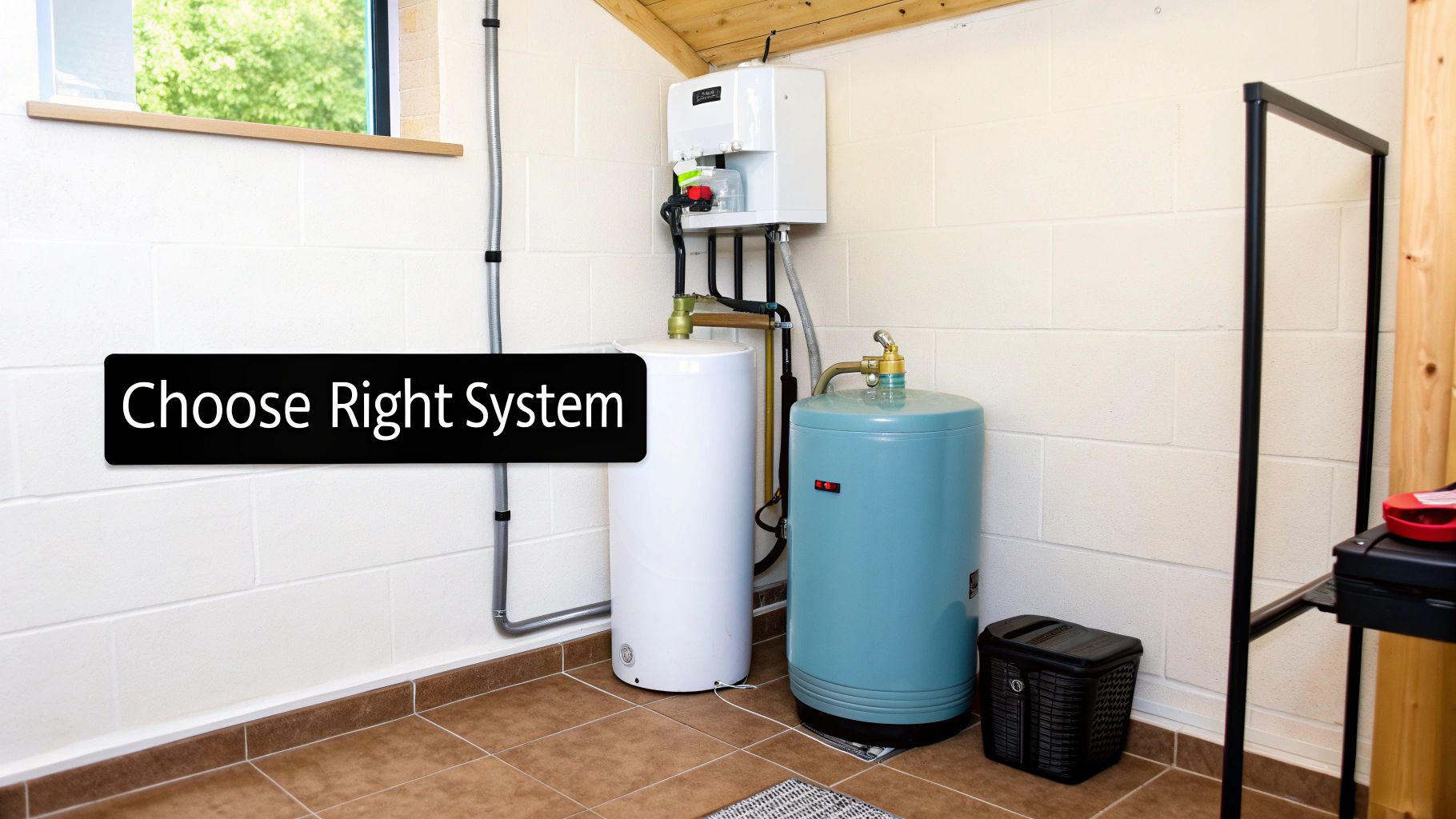
Once you've had your water professionally tested, you're finally ready to kick that rotten egg smell to the curb for good. But choosing the right water treatment system is crucial. What works wonders for your neighbor might barely make a dent in your problem, because everything hinges on the specific cause and concentration of sulfur in your water.
This is where having an expert in your corner really pays off. We can walk you through the most effective technologies out there, breaking down the pros and cons of each one so you can feel confident in your decision. Our job is to match your home’s unique water profile with the perfect system to deliver clean, fresh-smelling water.
Air Injection and Oxidation Systems
When you're dealing with moderate to high levels of hydrogen sulfide, an oxidation system is usually your best bet. These are the heavy hitters. They work by forcing oxygen into the water, which instantly transforms the smelly hydrogen sulfide gas into solid sulfur particles. Once it's a solid, it's easy to filter out.
Think of it like airing out a stuffy room—the fresh air forces out the bad. Our advanced air injection systems are a fantastic, chemical-free way to do just that. They create a pocket of air in the tank that oxidizes the sulfur, effectively stripping the smell from your water before it ever reaches a single faucet.
It's interesting to note how larger environmental factors can play a role. While global efforts have cut airborne sulfur pollution by over 90% since 1990, sulfur is incredibly persistent in the ground. This can directly impact the quality of local groundwater, creating the perfect conditions for hydrogen sulfide to form.
Other Treatment Methods
Not every sulfur issue requires a full-scale oxidation system.
If your tests show only low concentrations of hydrogen sulfide, a simple activated carbon filter can be a surprisingly effective and budget-friendly solution. The carbon acts like a sponge, with a massive surface area full of nooks and crannies that trap and absorb the odor-causing gas.
The catch? If your sulfur levels are too high, the carbon filter gets "full" very quickly, and you'll find yourself swapping out expensive cartridges far too often.
For the most severe cases, especially when a nasty colony of sulfur-reducing bacteria has taken hold, a chlorination system might be the only answer. This method injects a tiny, controlled dose of chlorine into the water supply to kill the bacteria and oxidize the hydrogen sulfide. A second filter then removes any trace of chlorine, leaving your water safe, clean, and completely odor-free.
Finding the right fix for that rotten egg smell isn't a one-size-fits-all situation. The best approach depends on several factors, including the level of sulfur, the presence of bacteria, and your home's water usage.
To help clarify the options, here’s a quick comparison of the most common treatment technologies.
Comparing Sulfur Removal Systems
| Treatment Method | Best For | How It Works | Maintenance Level |
|---|---|---|---|
| Air Injection/Oxidation | Moderate to high levels of hydrogen sulfide. | Injects air (oxygen) into the water, which converts sulfur gas into solid particles that can be filtered out. | Low to Moderate |
| Activated Carbon Filter | Low levels of hydrogen sulfide. | Porous carbon media adsorbs the sulfur gas, trapping the odor. Effective but has a limited capacity. | Moderate to High (requires frequent filter changes) |
| Chlorination | Severe cases with high sulfur and/or bacteria. | Injects chlorine to kill bacteria and oxidize sulfur. A secondary filter removes chlorine before use. | Moderate (requires refilling chlorine solution) |
| Manganese Greensand | Low to moderate sulfur and iron. | A special media coated with manganese dioxide oxidizes sulfur and iron, which are then filtered out. | Moderate (requires periodic regeneration) |
Ultimately, this all comes back to your water test results.
Choosing the right system is not just about eliminating an odor; it's about investing in a reliable, long-term solution that protects your plumbing, appliances, and peace of mind.
Let us help you navigate these choices. We’ll make sure the system you select is perfectly sized and configured to solve your sulfur problem for good, giving you the high-quality water your family deserves.
Got Questions About That Sulfur Smell? You're Not Alone.
When your water starts smelling like rotten eggs, you're bound to have questions. It's a strange and frankly unpleasant problem, but trust me, it's one we've seen and solved hundreds of times for homeowners. Let's walk through some of the most common questions we hear.
Our goal here is to give you the straight answers you need to figure out what's going on and what to do next, so you can get back to having clean, fresh-smelling water.
Is It Actually Safe to Drink Water That Smells Like Sulfur?
For the most part, yes. The levels of hydrogen sulfide gas that cause that smell in residential water are typically not a health hazard. It's what we call an aesthetic issue—it just tastes and smells bad.
However, the bigger concern is what that smell might be indicating. The conditions that let sulfur-reducing bacteria grow can sometimes go hand-in-hand with other, more serious contaminants. High levels of sulfates, which the bacteria feed on, can also have a laxative effect, especially for babies or people with sensitive systems.
Think of the sulfur smell as your water's check-engine light. The smell itself might not be the problem, but it’s a clear sign you need to look under the hood. A professional water test is the only way to know for sure what's going on.
Is There Any Chance This Smell Will Just Go Away on Its Own?
I wouldn't count on it. That rotten egg smell is a symptom of an underlying issue, whether it's bacteria living in your well or hydrogen sulfide gas trapped in your groundwater. It's a stubborn problem.
The smell might get stronger or weaker depending on the season or how much water you're using, but the root cause isn't going anywhere until it's treated. Putting it off can actually lead to bigger headaches later. Hydrogen sulfide is corrosive and can slowly eat away at your pipes, faucets, and appliances, setting you up for some expensive repairs. The best move is always to pinpoint the source and get the right treatment system in place.
Why Does the Smell Only Come from My Hot Water Taps?
If you only notice the smell when you turn on the hot water, we can almost guarantee the problem is your water heater. The tank is a perfect incubator for sulfur-reducing bacteria: it's dark, warm, and low in oxygen.
What often happens is these bacteria react with the anode rod inside the tank. This is a metal rod, usually made of magnesium or aluminum, that's designed to sacrifice itself to prevent the tank from rusting. Unfortunately, it can also fuel the chemical reaction that produces that rotten egg smell. Sometimes, the fix is as simple as having a plumber swap out the anode rod for a different type and give the tank a good flush.
What's This Going to Cost Me? How Much to Fix Sulfur Smell in Water?
This is the million-dollar question, and the honest answer is: it depends. The cost to get rid of a sulfur smell can range from a relatively small repair to a more significant investment in a whole-house system.
If the problem is just the anode rod in your water heater, that's a fairly inexpensive fix. But if the hydrogen sulfide is coming directly from your well, you'll need a bigger solution. For low levels of H2S, one of our high-quality activated carbon filters might be all you need. For more severe cases, a more powerful oxidation or air injection system is often the right call.
This is exactly why we insist on professional water testing first. It stops you from throwing money at a solution that won't solve your specific problem. When you diagnose first, you know your investment is going toward the right fix that will last for years.
You don't have to live with that rotten egg smell. The expert team at Water Medic of Cape Coral has been diagnosing and solving the toughest water quality challenges in Southwest Florida for over 25 years. We believe in permanent solutions, not quick fixes.
Ready for clean, fresh, and odor-free water? Contact us today for a free consultation and professional water analysis!