Reverse Osmosis Water Filter Cost Guide
If you're just starting to look into a reverse osmosis system, the price range can seem a bit wide. You might see a basic under-sink unit for as little as $150, while a full-blown whole-house system can easily top $2,500. The final number really comes down to the system's size, the brand you choose, and any extra features you want.
Think of it less as a simple purchase and more as a long-term upgrade for your home and your family's health. With our expert guidance, we'll help you navigate the options to find the perfect solution that fits both your needs and your budget.
What Is the True Cost of a Reverse Osmosis System
To really get a handle on the cost, you have to look beyond the number on the price tag. The real cost is a combination of the system itself, the professional installation, and the regular upkeep needed to keep it running smoothly. It’s a lot like buying a car—the sticker price is just where the conversation begins, and working with a trusted expert ensures you get the best value.
The initial investment gets you the core equipment that will start delivering that pure, clean water you're after. But several things can make that upfront cost swing one way or the other. A compact system that fits neatly under your kitchen sink is naturally going to be less of an investment than a powerful system designed to treat every drop of water that enters your house.
Key Factors Shaping the Initial Price
That price difference isn't random. It’s tied directly to the technology, the quality of the parts, and what the system is built to do. When we provide a quote, we'll walk you through exactly what goes into that final number so there are no surprises, ensuring you feel confident in your investment.
Here are the main things that influence the upfront cost:
- Filtration Stages: You’ll see systems with a basic 3-stage setup all the way up to complex 7-stage models. More stages equal more thorough filtration, but they also add to the price.
- Brand and Build Quality: Well-known brands often invest in better materials for critical parts like the RO membrane and storage tank. This means they last longer and perform more reliably.
- System Capacity: A whole-house system has to process a huge volume of water compared to an under-sink model, so it needs to be bigger, more powerful, and—you guessed it—more expensive.
- Extra Features: You can add some nice bells and whistles. Things like remineralization filters, which put healthy minerals back into the water, or permeate pumps that make the system more efficient, will bump up the total cost.
Let's break down these costs into a simple, at-a-glance table.
At-a-Glance Reverse Osmosis System Cost Breakdown
Here’s a quick summary of the typical costs you can expect when purchasing and owning a reverse osmosis system.
| Cost Component | Typical Price Range | What Influences the Cost |
|---|---|---|
| System Equipment | $150 – $2,500+ | Number of stages, brand reputation, system capacity (under-sink vs. whole-house). |
| Installation | $100 – $600 | System complexity, plumbing modifications needed, local labor rates. |
| Annual Maintenance | $50 – $200 | Frequency of filter changes, cost of replacement filters and membranes. |
This table gives you a clear picture of where your money goes, from the day you buy the system to the ongoing costs of keeping it in top shape.
An RO system is more than just another appliance; it’s a serious upgrade to your home's infrastructure and your family’s well-being. That's why professional installation is so important—it protects that investment, ensuring your system runs perfectly from day one and helps you avoid common DIY headaches like leaks or faulty connections.
When you have all the facts, making a confident decision becomes much easier. By understanding what drives the cost, you can find a system that fits your budget and meets your family’s needs. We specialize in helping Southwest Florida homeowners choose and install the right system, ensuring you get fantastic value and peace of mind.
Curious about a targeted solution? Learn more about our top-tier under-sink reverse osmosis systems that bring pristine water right to your kitchen tap.
Decoding the Upfront System and Equipment Costs
When you start pricing out a reverse osmosis system, you’ll quickly realize you’re not just buying a single gadget. You're investing in a sophisticated setup where several high-performance parts work in harmony to deliver that incredibly pure, clean water right to your tap. The initial sticker price really comes down to the type and quality of the system you choose, and our experts can guide you to the best option.
The biggest factor influencing that upfront cost is the system type. Are you looking for a compact unit that fits neatly under the kitchen sink, or do you need a more robust whole-house system that purifies every drop of water entering your home? As you'd expect, a whole-house unit is a bigger beast—it needs a larger membrane, a more substantial storage tank, and more intricate plumbing, all of which push the price up. A good way to get a feel for the landscape is to look at the range of available reverse osmosis systems on the market.
Breaking Down the Core Components
So, what are you actually paying for? The initial cost is mostly tied to a few key components. Knowing what they do makes it clear why paying for quality really matters.
- The RO Membrane: Think of this as the heart of the whole operation. A high-quality membrane is simply better at filtering out nasty contaminants and will last a lot longer, saving you from having to replace it too soon.
- Storage Tank: This is where your purified water hangs out until you need it. The tank's size and the material of its inner lining play a big part in the system's overall cost and performance.
- Dedicated Faucet: Most under-the-sink systems include a special, separate faucet just for your RO water. The style, finish, and build quality of this little piece can definitely influence the final price.
This breakdown helps visualize how the total cost is put together, from the base price of the system to installation and any extras you might choose.
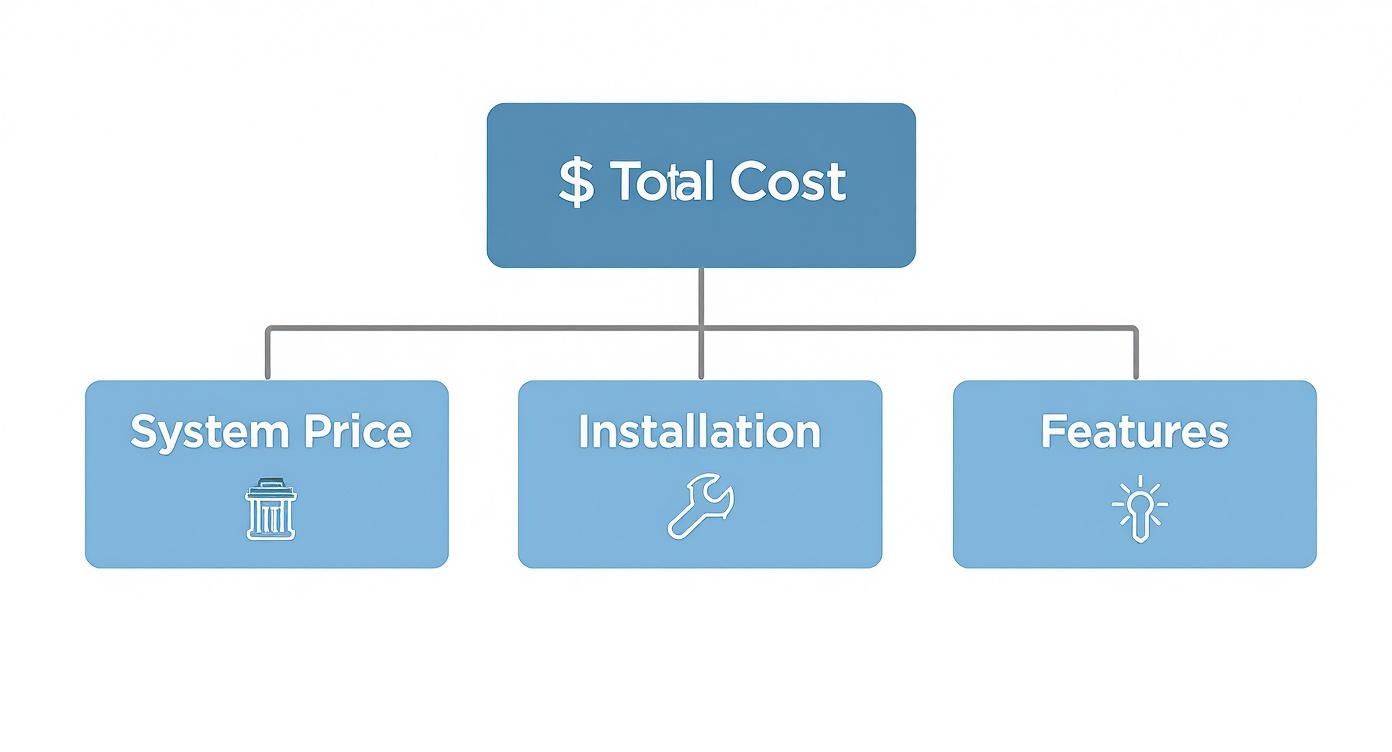
As you can see, the equipment itself is the lion's share of your initial investment. That’s exactly why it’s so important to pick a durable, high-performance system from a provider you trust—like us.
Why Quality Upfront Prevents Future Headaches
It might be tempting to go for a cheaper option, but in our experience, that’s almost always a mistake. Spending a bit more on a superior system from the get-go is one of the smartest moves you can make. Bargain-bin units are often built with flimsy parts that are prone to failing, leading to leaks, poor filtration, and a cycle of frustrating—and expensive—repairs.
Our philosophy is simple: we only install durable, top-tier systems designed to provide delicious, reliable water for years to come. It’s about protecting your investment and giving you total peace of mind. For a better look at the kind of reliable solutions we stand by, check out our guide on under-sink reverse osmosis systems.
This demand for quality isn't just something we see; it's a global trend. The market for RO water filters is expected to hit a staggering $15 billion by 2025, largely because more and more people are prioritizing safe drinking water. While the initial reverse osmosis water filter cost might seem higher than other filtration methods, its unmatched effectiveness and long-term value are what keep driving the market forward.
Professional Installation vs. DIY: What to Consider
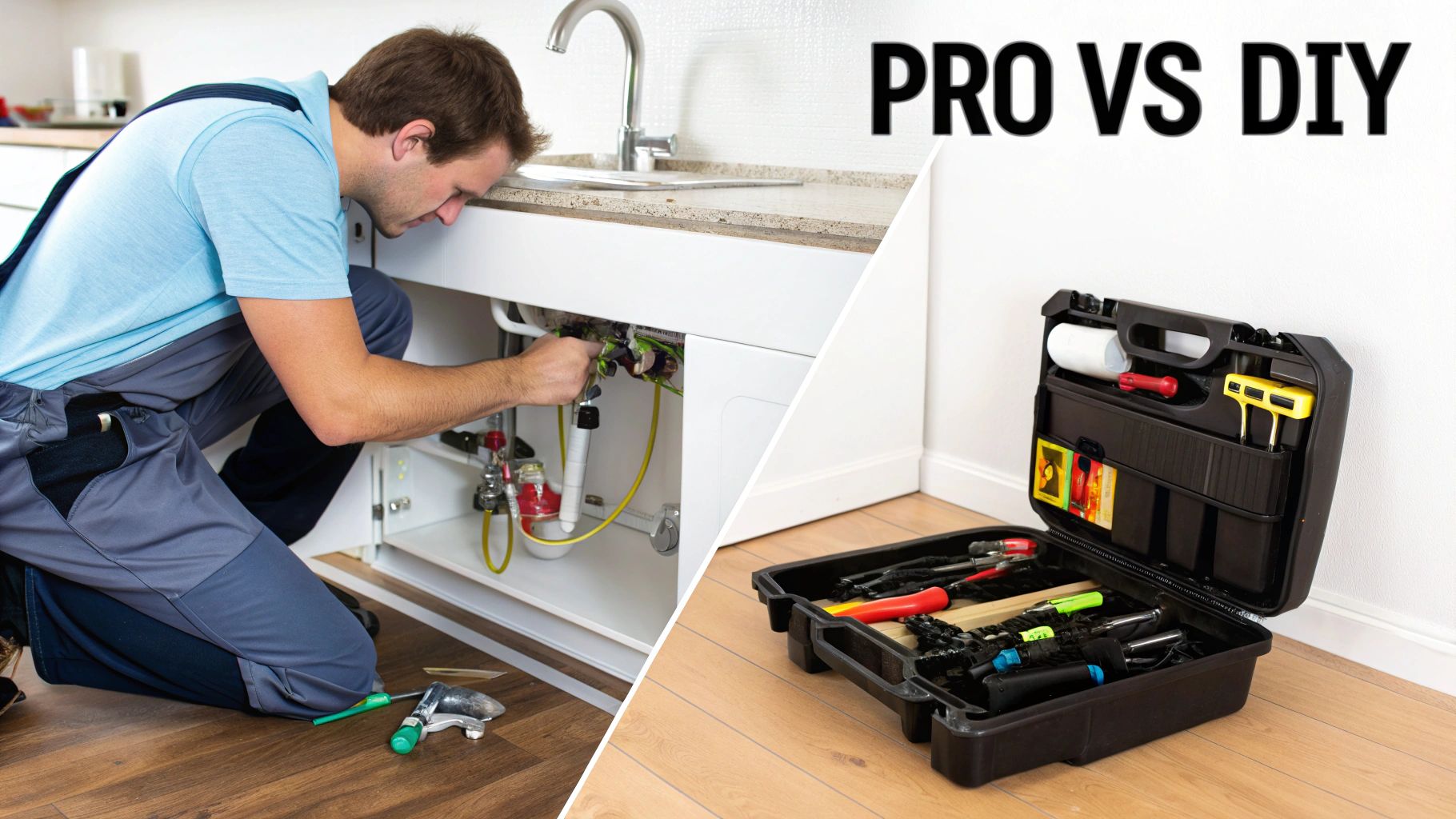
So, you’ve decided a reverse osmosis system is right for your home. That’s a fantastic first step. Now comes the big question: do you roll up your sleeves and install it yourself, or do you call in a pro? It's tempting to try and save some money with a DIY project, but it’s crucial to understand what you're really trading off.
Many RO kits are advertised as easy to install, but let's be honest—home plumbing rarely goes exactly as planned. A single mistake, like a fitting that isn't quite tight enough or a connection that's slightly off-kilter, can create a tiny, slow leak. You might not even notice it at first, but over weeks or months, that drip can lead to serious water damage to your cabinets, flooring, and walls. Suddenly, that DIY "savings" has turned into a massive repair bill.
The Hidden Risks of a DIY Setup
Beyond the nightmare of water damage, a DIY job can come with other frustrations. If the system isn't set up just right, it won't work as efficiently. That means you could end up with a lot more wastewater and a frustratingly slow trickle from your faucet.
Even worse, many manufacturers will void the warranty if the system isn't installed by a certified professional. If a part fails down the road, you could be left completely on your own, facing a costly replacement.
Choosing professional installation isn't just about paying for labor; it's about protecting your investment. Think of it as an insurance policy for your new system, ensuring it works perfectly from day one and safeguarding your home from any plumbing mishaps.
Our technicians have seen just about every quirky plumbing setup you can imagine, especially in the unique homes here in Southwest Florida. We know how to ensure every connection is rock-solid, calibrate the system for your home’s specific water pressure, and install everything exactly to the manufacturer's standards, guaranteeing your peace of mind.
The Value of Our Expert Installation
When you have us handle the installation, you're not just getting a person with a wrench. You're getting a dedicated water treatment specialist who lives and breathes this stuff. We take care of all the details for a seamless, worry-free setup.
Here’s what our professional service guarantees:
- Warranty Protection: We follow the manufacturer's guidelines to the letter, so your warranty stays valid and in full effect.
- Leak-Proof Connections: Using professional tools and years of experience, we create secure, watertight seals that prevent those costly hidden leaks.
- Performance Optimization: We don't just hook it up and leave. We test the water pressure and system output to make sure your RO unit is running at peak efficiency, which saves water and helps your filters last longer.
- Complete Peace of Mind: You can just relax. The job is done right, with no lingering worries about potential damage or performance problems.
At the end of the day, the professional reverse osmosis water filter cost for installation is a small price for the assurance that your system is safe, efficient, and fully protected. To learn more about getting it done right, check out our whole house reverse osmosis solutions.
Planning for Long-Term Maintenance and Filter Costs
Thinking the initial purchase is the only cost of a reverse osmosis system is a bit like buying a car and forgetting it needs gas and oil changes. The real secret to getting years of pure, great-tasting water is consistent, planned maintenance. This ongoing care is what truly protects your investment and makes sure your system keeps pulling out contaminants day after day.
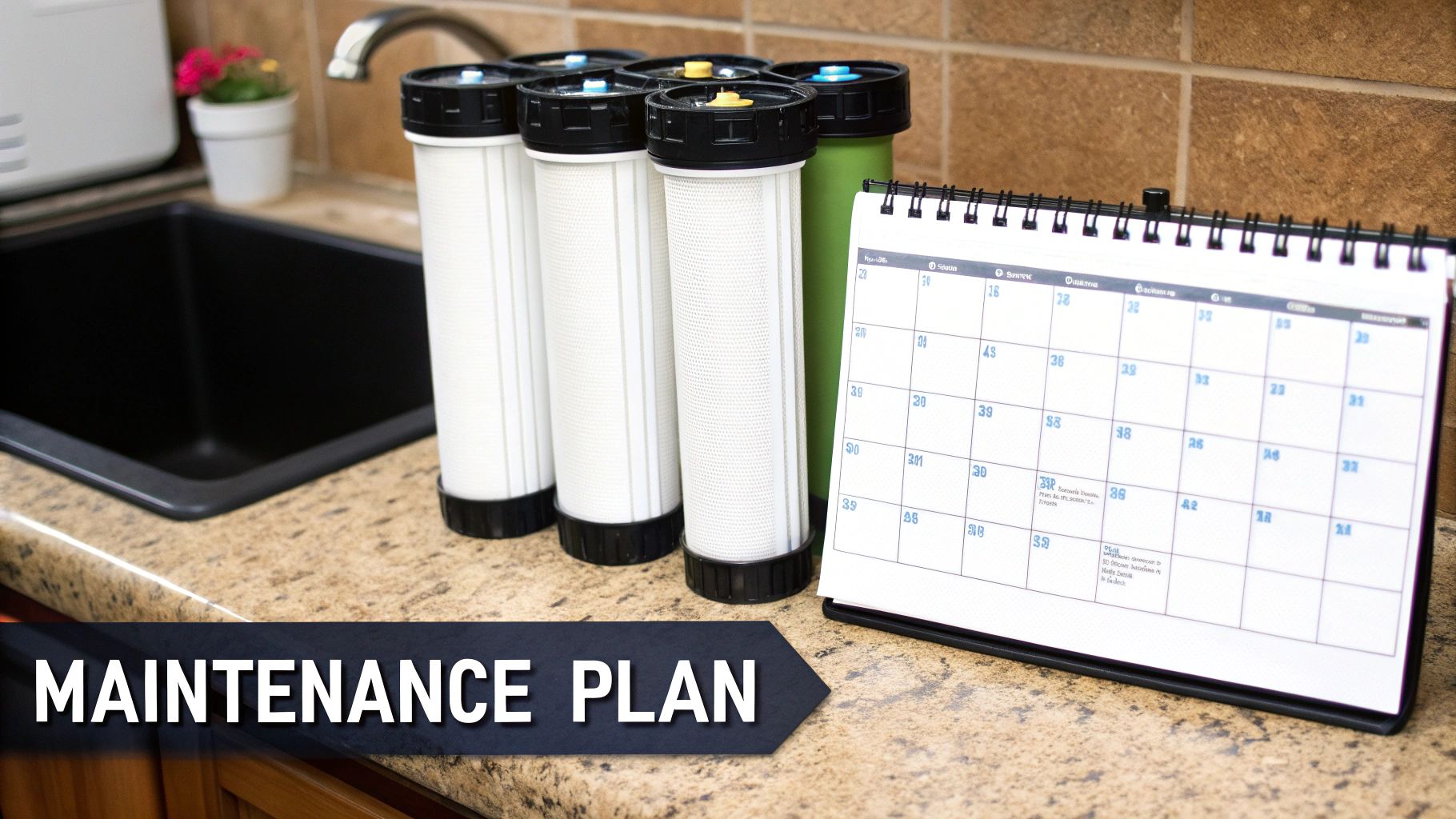
Think of the filters as the system's frontline workers. Over time, they get clogged with all the gunk they've captured from your water. If you don't swap them out on schedule, two things happen: your water quality drops, and the whole system has to work harder. This extra strain can cause more expensive parts, like the RO membrane, to fail much sooner than they should. Our maintenance plans make this worry-free.
Understanding the Filter Replacement Schedule
When you look at the long-term cost of owning an RO system, it really comes down to the filters. Each filter in a multi-stage system has a specific job, which means each one has a different lifespan. Sticking to a regular replacement schedule isn't just a suggestion—it's essential for getting the performance you paid for.
Here’s a typical timeline you can expect for a standard system:
- Pre-Filters (Sediment & Carbon): These are the workhorses. They catch the bigger stuff like sand, rust, and chlorine, and they typically need to be replaced every 6 to 12 months. Their main job is to protect the delicate RO membrane that comes next.
- RO Membrane: This is the heart of the whole operation, where the magic happens. It removes the tiniest, toughest contaminants. As long as you keep up with the pre-filters, the membrane itself can last a good 2 to 4 years.
- Post-Filter (Polishing Filter): This is the final touch. It gives your water a last "polish" to make sure it tastes crisp and clean, and it's usually replaced every 12 months.
Skipping these changes is a fast track to problems. You'll notice reduced water flow, and worse, the water won't be as pure. For example, if you forget to replace the carbon pre-filters, you let chlorine pass through, which can literally eat away at the RO membrane. That's a costly and completely avoidable mistake. You can learn more about the crucial role these filters play by understanding carbon filters.
"Consistent maintenance isn't an expense—it's an investment in performance. A well-maintained RO system will reliably deliver pure water and last significantly longer, providing far greater value over its lifetime."
The fact that these systems are getting more popular shows that people are paying more attention to what's in their water. The reverse osmosis filter market was valued at around $420 million in 2022 and is projected to hit nearly $780 million by 2030. This growth is being driven by homeowners who realize the long-term health benefits are well worth the upkeep. You can dive deeper into the market trends shaping the future of RO systems.
To make this whole process effortless for homeowners in Southwest Florida, we offer convenient maintenance plans and filter subscription services. We take care of the scheduling and all the technical work, so you never have to remember a filter change again. Let us be your long-term partner in making sure your system always runs perfectly and your family always has the purest water on tap.
Calculating The Real Value Of An RO System
https://www.youtube.com/embed/QtdOOYJ7DTs
When you first look at the cost of a reverse osmosis system, it's easy to focus on the upfront price. But that's not the whole story. The real conversation is about the long-term value and return you get on that investment. So, is an RO system really worth the money? Let's break it down with our experts.
The most obvious win is ditching bottled water for good. Think about it—if your family goes through just a few cases of water a week, those costs pile up shockingly fast over the course of a year. An RO system flips that script, turning a constant, recurring expense into a one-time upgrade that gives you incredible water for just pennies per gallon.
The Financial and Health Payoff
The savings are definitely a huge plus, but the biggest return isn't something you can track on a bank statement. It's an investment in your family's health. Your RO system acts as the final barrier between your tap and your glass, stripping out up to 99% of nasty contaminants that can easily slip through municipal treatment and even bottled water regulations.
We’re talking about common issues found right here in our local water, including:
- Lead that can leach from older pipes
- Chlorine and its byproducts from city treatment
- Pesticides and other agricultural runoff
- Dissolved salts and other total dissolved solids (TDS)
An RO system isn't just another home appliance; it's a wellness investment. Providing your family with pure, contaminant-free water is a priceless benefit that pays dividends in health and peace of mind for years to come.
There's a reason these systems are becoming so popular. While the initial investment might be more than a simple pitcher filter, the combination of rock-bottom long-term costs and top-tier water quality makes it a smart financial move. It's no wonder the global water filter market is projected to hit $84.2 billion by 2032.
Bottled Water vs RO System A 5-Year Cost Comparison
Still on the fence? Let's look at how the costs stack up over five years for a typical family of four. The numbers often speak for themselves.
| Expense | Bottled Water (5-Year Total) | RO System (5-Year Total) | Your Potential Savings |
|---|---|---|---|
| Initial Purchase | $0 | $2,000 (Average System) | |
| Weekly Cost | $15 (3 cases/week) | $0.20 (Filter/Water Use) | |
| Annual Cost | $780 | $160 (Incl. Filter Change) | |
| 5-Year Total Cost | $3,900 | $2,800 | $1,100 |
As you can see, even after factoring in the initial system cost and annual maintenance, the RO system quickly pays for itself and starts saving you significant money—all while delivering far superior water quality.
An Investment In Your Home and Future
It helps to think of an RO system as a permanent home upgrade, not just a purchase. You can evaluate its value in the same way you would other major projects. People often analyze the return on investment for home improvements like a kitchen or bathroom renovation, and clean water access is an equally powerful feature that adds real, tangible value to your property.
We know that this is a big decision for your home and your wallet. That's why we're committed to making it as accessible as possible. We offer flexible options to help you manage the initial investment without straining your budget. To see how easily you can fit this upgrade into your financial plans, take a look at our straightforward financing solutions for water systems.
Ready to see what the numbers look like for your home? Contact us today for a personalized quote and discover the true value of having pure, clean water on tap.
Got More Questions About RO System Costs?
It's completely normal to still have a few questions floating around, even after seeing a cost breakdown. You're thinking about a significant upgrade for your home, so let's clear up some of the most common things people ask. We want you to feel totally confident in your decision.
How Much Should I Budget for New RO Filters?
This is probably the most important long-term cost to consider. For a standard under-the-sink RO system, you can expect to spend between $60 and $150 each year for a full set of replacement pre-filters and the post-filter.
The star of the show, the RO membrane itself, is much more durable. It typically only needs to be replaced every two to four years, and that will run you about $50 to $100. To take the guesswork out of it, we offer handy maintenance service plans that not only save you money on filters but also make sure you never forget a filter change.
Will My Water Bill Spike After Installing an RO System?
It's a fair question. The reverse osmosis process does produce some wastewater—that's how it flushes all those impurities away. But don't picture your water meter spinning out of control.
Older systems were notorious for being water hogs, sometimes wasting three or four gallons for every gallon of pure water they made. Thankfully, technology has come a long way. Today's high-efficiency systems have cut that ratio down dramatically. For most families, the change on your monthly water bill is tiny, often just a couple of dollars. When you think about what you'll save by kicking that bottled water habit for good, it’s a no-brainer.
Are Pricier RO Systems Really Worth the Extra Money?
When you see a higher price on an RO system, you're usually paying for more than just a brand name. That extra cost often points to better engineering, better parts, and a better overall experience.
Think of it this way: a more expensive system is often a better long-term value. You're investing in higher-grade materials, smarter water efficiency, and features that genuinely improve both the system's performance and the water you drink.
So, what does that higher initial investment actually buy you?
- Better Efficiency: Premium systems waste far less water, which directly saves you money on your water bill over the life of the unit.
- Tougher Materials: You get higher-quality membranes, tanks, and faucets that are built to last and are less likely to cause headaches down the road.
- Smarter Features: Many include things like remineralization filters, which add beneficial minerals like calcium and magnesium back into your purified water for a healthier, more natural taste.
Can I Just Install It Myself and Save a Few Bucks?
I get the appeal of a DIY project, and it can feel like an easy way to trim the budget. But when it comes to plumbing and water filtration, we really recommend leaving it to the pros.
A professional installation is the best insurance for your investment. One tiny mistake—a leaky fitting or an improper connection—can lead to thousands in water damage, a system that doesn't filter properly, or even a voided warranty. Our technicians make sure every connection is rock-solid and that the system is perfectly tuned to your home's water pressure. That professional touch is what guarantees your system will work flawlessly for years to come, giving you total peace of mind.
Ready to bring pure, great-tasting water into your home? The team at Water Medic of Cape Coral has been helping Southwest Florida homeowners find and install the right reverse osmosis systems for over 25 years. Reach out today, and we'll get you a personalized quote.