How to Convert Chlorine Pool to Salt Pool: Expert Guide
Tired of that overpowering chlorine smell and dealing with harsh chemicals? You’re not alone. Many homeowners in Naples, Fort Myers, and Cape Coral are making a smart upgrade, and it’s easier than you might think. Converting your pool to a saltwater system is all about installing a salt chlorine generator, adding the right kind of pool salt, and dialing in the water chemistry to create a luxurious, low-maintenance swimming experience.
Why Southwest Florida Homeowners Are Switching to Salt
The move away from traditional chlorine isn’t just a fleeting trend—it’s a practical shift toward a more enjoyable backyard oasis. Here in Southwest Florida, our pools are open year-round. That constant exposure to heavy chemicals can really take a toll, leaving you with irritated skin, red eyes, and faded swimwear. A saltwater system is a fantastic alternative.
The magic happens inside an electrolytic chlorine generator. This device uses a tiny electrical charge to turn simple salt into fresh, pure chlorine right in your pool’s plumbing. This process produces far lower levels of chloramines, which are the real culprits behind that harsh “chlorine smell” and skin irritation. If you want to dive deeper into the science, Angi.com has a great technical breakdown on how this conversion works.
The Real Benefits of a Saltwater System
So, what will you actually notice after making the switch? The difference is immediate, right from your very first swim.
- Silky-Smooth Water: The water feels noticeably softer and less abrasive. It’s a much more spa-like experience.
- Gentle on Skin and Eyes: You can finally say goodbye to that post-swim ritual of red, itchy eyes and dry, tight skin.
- Reduced Chemical Handling: Forget lugging home and storing those bulky chlorine tabs or jugs of liquid shock.
A myth I hear all the time is that the pool will taste like the ocean. Not even close. The salinity is actually about one-tenth that of seawater—so low you can barely taste it.
Setting Honest Expectations
While the benefits are fantastic, a professional conversion is key to making sure everything runs smoothly from day one. Our team handles the entire process, from the initial water balancing to installing the generator and calibrating the system perfectly for your specific pool.
We make sure every component is installed correctly, which protects your investment and leaves you with a pool that’s ready for you to jump right in. Understanding what’s involved is the first step, and we’re here to walk you through it. If you’re ready to transform your pool, you can learn more about our expert pool conversion services and get a plan tailored for your backyard.
Choosing the Right Salt Chlorine Generator for Your Pool
The single most important decision you’ll make when converting your pool is selecting the salt chlorine generator (SCG). This piece of equipment is the heart of your new system, responsible for consistently producing pure chlorine to keep your water sparkling clean. Get this choice right, and you’re setting yourself up for years of low-maintenance enjoyment.
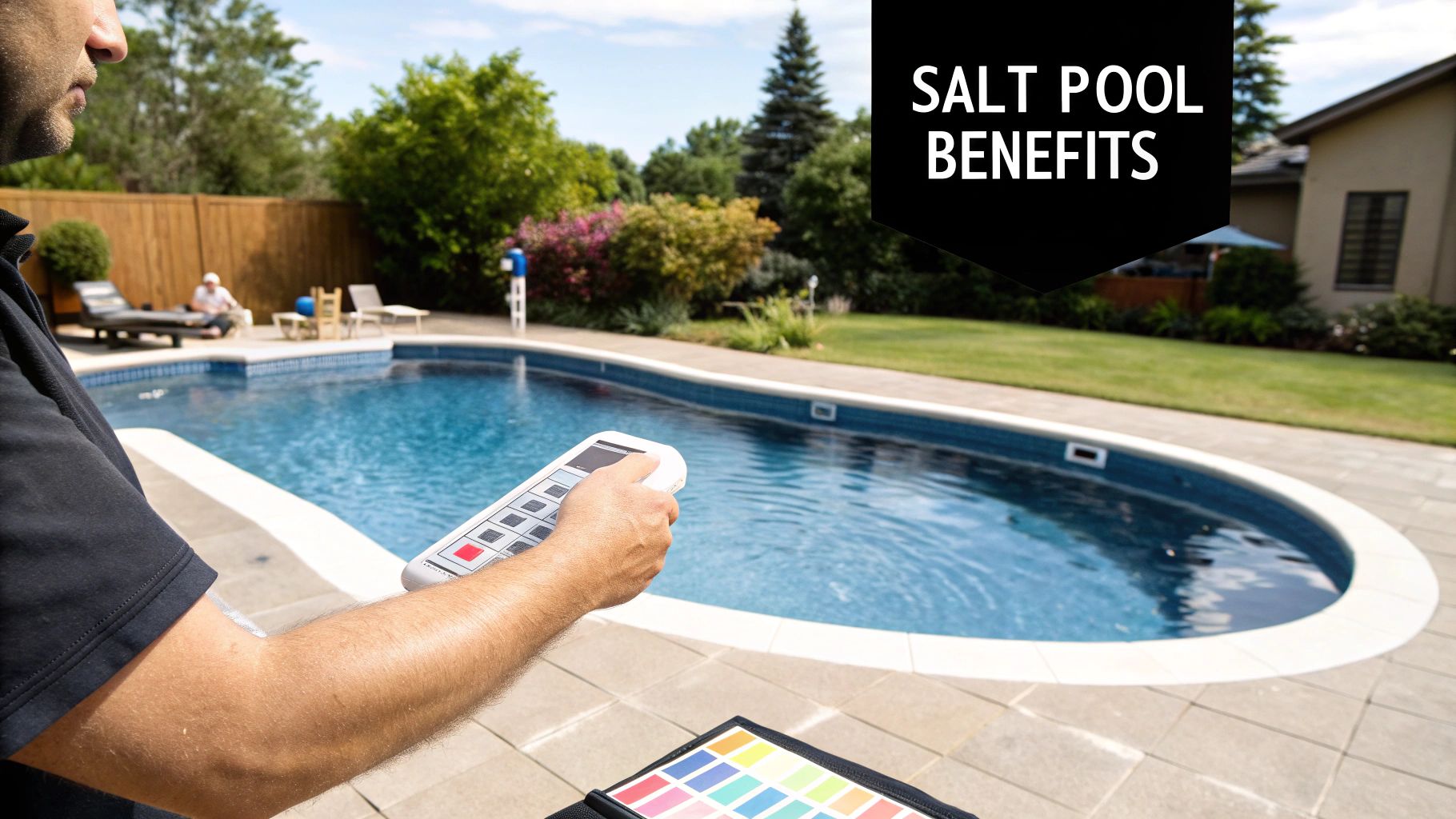
The first step is always sizing the unit to your pool’s volume. But here in Southwest Florida, simply matching the manufacturer’s gallon rating isn’t enough. Our unique climate demands a smarter approach.
Why You Should “Oversize” Your Generator
Living in Southwest Florida means your pool is up against a lot—intense year-round sun, heavy summer downpours, and a long swimming season all increase the chlorine demand. This is precisely why we almost always recommend installing a generator rated for a larger pool than you actually have.
Think of it this way: for a 20,000-gallon pool, we’d typically suggest a unit built for 40,000 gallons. It might seem like overkill, but the benefits are significant.
This strategy allows the system to work smarter, not harder. An oversized generator can run at a much lower output percentage (say, 50% instead of 90%) while producing the exact same amount of chlorine. This reduces stress on the most critical component—the salt cell—and gives you extra power on reserve for when you really need it, like after a big storm or a weekend pool party.
By running your generator at a lower setting, you can often extend the life of a salt cell from the typical 3-5 years to 5-7 years. It’s a small upfront adjustment that pays dividends over time.
Salt Chlorine Generator Sizing Guide
To help you visualize this, here’s a quick guide on how to approach sizing your system for the demands of our local climate.
| Pool Size (Gallons) | Recommended Generator Capacity | Key Feature to Consider | Why It Matters in Florida |
|---|---|---|---|
| Up to 15,000 | 25,000 – 30,000 Gallons | Self-Cleaning (Reverse Polarity) | Our hard water causes rapid calcium buildup; this feature is essential, not optional. |
| 15,000 – 25,000 | 40,000 Gallons | “Boost” or “Super Chlorinate” Mode | Quickly increases chlorine after heavy rain or a pool party, preventing algae blooms. |
| 25,000 – 40,000 | 50,000 – 60,000 Gallons | Digital Readouts & Diagnostics | Provides at-a-glance info on salt levels and cell life, crucial for proactive maintenance. |
This table illustrates the core principle: always choose a generator with plenty of power in reserve. It’s the key to a long-lasting, efficient system that can handle anything a Florida summer throws at it.
Comparing Top Brands and Must-Have Features
When you start looking at specific models, you’ll see a few trusted names pop up again and again. We have years of experience installing and servicing systems from leading manufacturers like Pentair, Hayward, and Jandy, so we can guide you to the perfect fit for your pool’s existing equipment and your budget.
Beyond the brand, there are a few features that are non-negotiable for a pool in our area:
- Self-Cleaning Functions: Modern cells use reverse polarity to automatically shed the calcium scale that builds up from our hard water. This is a must-have to prevent constant manual cleaning.
- Digital Displays: A clear, easy-to-read control panel makes it simple to check salt levels, water temperature, and chlorine output without any guesswork.
- Boost Mode: This one-touch feature cranks up chlorine production for 24 hours. It’s your best friend after hosting a big pool party or following a classic Florida downpour.
Navigating the options can feel overwhelming, but you don’t have to figure it out alone. Our experts can assess your pool and recommend the ideal system to get the job done right. Contact us for a personalized consultation and let’s get your conversion started today.
Our Professional Saltwater Conversion Process
Making the switch from chlorine to salt is a great decision, but doing it right is what really counts. I’ve seen plenty of homeowners try the DIY route, and while it’s tempting, a professional conversion avoids the common pitfalls that can cost you time, money, and even void your new equipment’s warranty. Our approach is built on years of experience here in Southwest Florida, ensuring your new system is dialed in perfectly from the start.
So, where do we begin? It’s not with the new equipment—it’s with the water already in your pool. Before we touch a single pipe, our technicians run a full diagnostic on your pool’s chemistry.
Pre-Conversion Water Balancing
We start by meticulously balancing your water to create the perfect environment for a salt system. This isn’t just a suggestion; it’s a non-negotiable first step. If we install a brand-new salt chlorine generator into an unbalanced pool, it’s going to work itself to death, drastically shortening its lifespan and running inefficiently from day one.
We focus on a few key levels:
- Cyanuric Acid (CYA): This is your chlorine’s bodyguard against the brutal Florida sun. We aim for a solid 60-80 ppm to keep the chlorine your new system makes from burning off too quickly.
- Total Alkalinity: Think of this as the anchor for your pH. Keeping it between 80 and 120 ppm stops those frustrating pH swings that can cloud up your water or cause scaling.
- Calcium Hardness: Here in Southwest Florida, our water is notoriously hard. We get this level just right to prevent scale from building up on your new salt cell—that’s the number one killer of these units.
This visual gives you a quick look at the kind of testing we do to get a baseline for your pool’s chemistry.
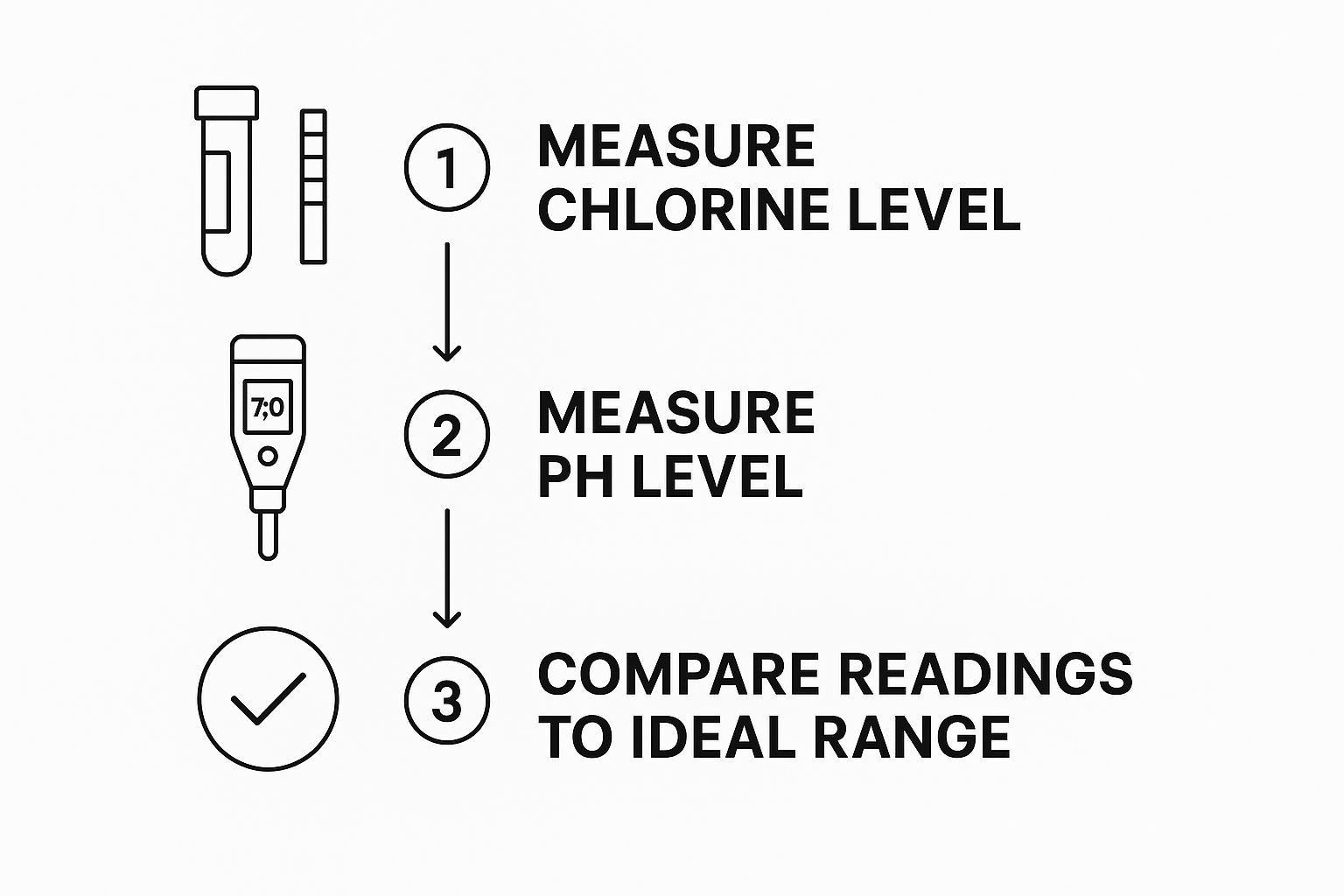
Once we have these readings, we know exactly what adjustments are needed before we can move on to the fun part.
Professional Installation and Calibration
With the water perfectly prepped, our certified technicians get to work on the installation. This is far more than just plugging something in. We handle the careful plumbing and electrical work needed to properly integrate the salt chlorine generator with your existing pool equipment.
The control panel gets mounted, and the salt cell is plumbed into the line after the filter and heater. This placement is critical for proper water flow and efficient chlorine distribution. Every connection is made to meet—and often exceed—industry safety standards.
I can’t tell you how many DIY jobs I’ve seen with faulty wiring or the cell plumbed in the wrong spot. These mistakes don’t just void your warranty; they can be a serious safety hazard. Trusting a pro takes that risk completely off the table.
After the physical install, we add the precise amount of high-purity, granular pool salt needed for your pool’s size. We only use 99.8% pure NaCl salt, which dissolves fast and won’t leave stains on your pool finish. We then run the pump to circulate the water, ensuring the salt is evenly distributed.
The final, and most important, step is calibration. We don’t just flip the switch and walk away. Our team powers up the generator, fine-tunes the chlorine output to match your pool’s specific demands, and then gives you a complete walkthrough. We’ll show you how to operate the system, what the different readings mean, how to use the “boost” mode after a party, and what the diagnostic alerts are telling you.
Of course, if you’d rather not worry about any of it, we offer comprehensive saltwater pool maintenance services to keep your system running in peak condition all year long. Our mission is to leave you feeling confident, informed, and ready to enjoy your transformed pool.
Calibrating and Maintaining Your New Saltwater System
Alright, your new salt chlorine generator is installed, but we’re not quite at the finish line yet. Getting that silky-smooth water you’ve been dreaming of comes down to proper calibration and a little bit of ongoing care. Think of it as the final step in dialing in your investment for years of easy enjoyment.
First things first, let’s get you comfortable with the control panel. This is now your mission control for making chlorine. You’ll learn how to tweak the output percentage to match what your Southwest Florida pool needs—cranking it up during the brutal summer heat or after a big swim party, and then dialing it back when things cool down.
This initial setup is absolutely critical. If you set the output too high, you’re just wasting electricity and putting unnecessary wear on your salt cell. But if you set it too low, you’re rolling out the welcome mat for algae. It’s a bit of a balancing act, which is why our technicians spend time getting it just right on every single installation.
A Simple New Routine
Let’s clear up a common myth: saltwater pools are not “maintenance-free.” They are absolutely lower maintenance, but they aren’t no maintenance. Your old routine of lugging and pouring chlorine is gone, but it’s replaced with a much simpler one focused on keeping the system itself happy.
The reason for this is that while your system is now making its own chlorine, the rest of your water chemistry still needs attention. Salt systems, for instance, have a tendency to make the pool’s pH creep up faster than traditional chlorine. This means you’ll need to keep an eye on it to prevent ugly scaling on your pool surfaces and to keep the water feeling great. If you want to get into the nitty-gritty of the science, the team at Poolwerx has a great article explaining saltwater pool care.
Your Practical Maintenance Checklist
To make it easy, here’s a straightforward checklist. Sticking to this will keep your water sparkling and your equipment humming along for years to come.
- Check Salt Levels Once a Month: Grab some test strips and make sure your salt is in the sweet spot, which is usually between 2,700 and 3,400 ppm. If the salt is too low, the generator just won’t work. Too high, and you risk damaging your equipment.
- Test pH & Alkalinity Weekly: Like we mentioned, the pH will want to rise. A quick weekly test and a little pH reducer (like muriatic acid) is all you need to keep it in the ideal 7.2 to 7.8 range.
- Inspect the Salt Cell Every 3 Months: Take a look inside your salt cell every quarter. You’re looking for white, flaky stuff—calcium buildup. With the hard water we have here in Florida, this is pretty common.
Cleaning the cell is a non-negotiable task. If it’s clogged with calcium, it can’t make chlorine effectively. This forces the entire system to overwork itself, which can drastically shorten its lifespan. We make sure every client knows how to do this, or we can just handle it for them.
Of course, if you’d rather spend your free time enjoying the pool instead of testing water, we get it. Our monthly pool maintenance plans are designed to take all of this off your plate. We handle the calibration, cleaning, and chemistry, so all you have to do is swim.
What Does a Saltwater Conversion Really Cost?
When people ask me about switching their chlorine pool to a saltwater system, the first thing they usually want to know is, “What’s this going to set me back?” It’s a fair question, but to get the real answer, you have to look past the initial invoice and think about the total cost of ownership.
Think of it this way: a saltwater conversion is an investment in your home and your lifestyle. You’re paying more upfront to enjoy significantly lower chemical costs and a much better swimming experience for years to come.
Your biggest initial expense, without a doubt, is the salt chlorine generator itself, plus the professional installation. That’s the core of the new system and where most of the initial budget goes. But once that’s done, your weekly pool store runs practically disappear. Instead of constantly buying chlorine tablets or jugs of liquid shock, your main ongoing purchase is just pool-grade salt—and it’s a whole lot cheaper.
Looking at the Long-Term Numbers
Let’s break down the economics here. Yes, the upfront cost for the generator is a real number. But the savings on the other side are just as real.
Salt doesn’t evaporate out of the water the way chlorine does. This means you’re not constantly replacing it. Most homeowners find they only need to top up the salt once or twice a year, which adds up to a huge savings over time.
Now, it’s true that saltwater is more corrosive than traditional pool water. This can mean more wear and tear on metal parts like heaters or ladder bolts. However, a professional installation accounts for this. This is where the balance of lower chemical costs versus slightly different maintenance really makes sense for most pool owners here in Southwest Florida.
If you’re ready to see how the numbers stack up for your own pool, you can find straightforward details on our pricing and free quote options.
One of the most critical parts of a professional conversion—and something that protects your entire investment—is installing a sacrificial anode. This simple device is plumbed directly into your system. Its job is to attract and absorb the corrosive electrical currents in the water, essentially sacrificing itself to protect your expensive heater, handrails, and ladders. It’s a non-negotiable part of our process and, frankly, it’s what separates a professional job from a DIY headache.
Don’t Forget About Replacement Costs
Nothing lasts forever, and that includes your pool equipment. The salt cell, which is the part of the generator that actually creates the chlorine, will eventually need to be replaced.
A good quality salt cell typically lasts anywhere from 3 to 7 years. How long yours lasts really depends on how much you use your pool, how well you maintain your water chemistry, and whether the system was correctly sized for your pool from day one.
Budgeting for this future replacement is just part of being a responsible pool owner. Even when you factor this in, most people find the consistent savings on chemicals and the superior feel of the water make the entire investment a no-brainer. We make sure you get the right-sized system from the very beginning, which is the best way to extend the life of your salt cell and get the most bang for your buck.
Common Questions About Converting to Saltwater
Even after you’ve walked through the steps, making a big change to your pool is a major decision. It’s only natural to have a few more questions pop up. Here in Southwest Florida, we’ve heard just about everything over the years, so let’s tackle some of the most common ones we get from homeowners.
Will My Pool Taste Like the Ocean?
This is probably the number one myth we bust, and the answer is a simple no. It’s not even close.
Ocean water has a massive salt concentration, somewhere around 35,000 parts per million (ppm). Your saltwater pool, by comparison, will operate in a much milder range of 2,700 to 3,400 ppm. That level is so low it’s actually below what most people can taste. Forget that salty sting; what you’ll really notice is how incredibly soft and silky the water feels on your skin.
Is a Salt System Safe for My Existing Pool and Equipment?
Yes, as long as it’s done right. People often worry that the salt might corrode metal parts like ladders, handrails, or even the inside of a heater. That’s a fair concern, but it’s one we plan for from the very beginning.
Our Pro Tip: We always install a sacrificial anode during a conversion. Think of this small device as a bodyguard for your expensive equipment. It gets plumbed right into the system and is designed to attract corrosive elements, essentially “sacrificing” itself so your heater, rails, and other components don’t have to. For us, it’s a non-negotiable part of any professional installation.
Beyond that, keeping your water chemistry balanced and the salt levels where they should be is key to protecting everything from your pool’s finish to the pump seals.
Can Any Pool Be Converted to Saltwater?
Pretty much. We convert all kinds of pools—inground, above-ground, and with just about any surface you can think of, including:
- Vinyl liners
- Plaster or marcite
- Pebble finishes
- Fiberglass
The real question isn’t the pool itself, but the equipment running it. Most modern pumps and filters are built to handle salt just fine, but older systems might need a closer look. That’s why we always start with a full equipment inspection. We need to be certain your existing setup can integrate seamlessly before we start the job. No surprises, just a perfect conversion.
Ready to feel the difference and ditch the chlorine jugs for good? The team at Water Medic of Cape Coral has the local expertise to make your switch to saltwater smooth and professional. Contact us today for a free, no-obligation quote and let’s transform your backyard!