
Why You Get Green Hair From Pool Water and How to Fix It
We've all been there—that sinking feeling when you step out of the pool, catch a glimpse in the mirror, and see an unmistakable green tint starting to creep into your hair. It’s a classic summer bummer. For years, everyone has pointed the finger at chlorine, but the truth is a little more complex. The real culprit is actually oxidized copper, and understanding how it works is the key to getting rid of that green and keeping it gone for good.
So, What's Really Turning Your Hair Green?
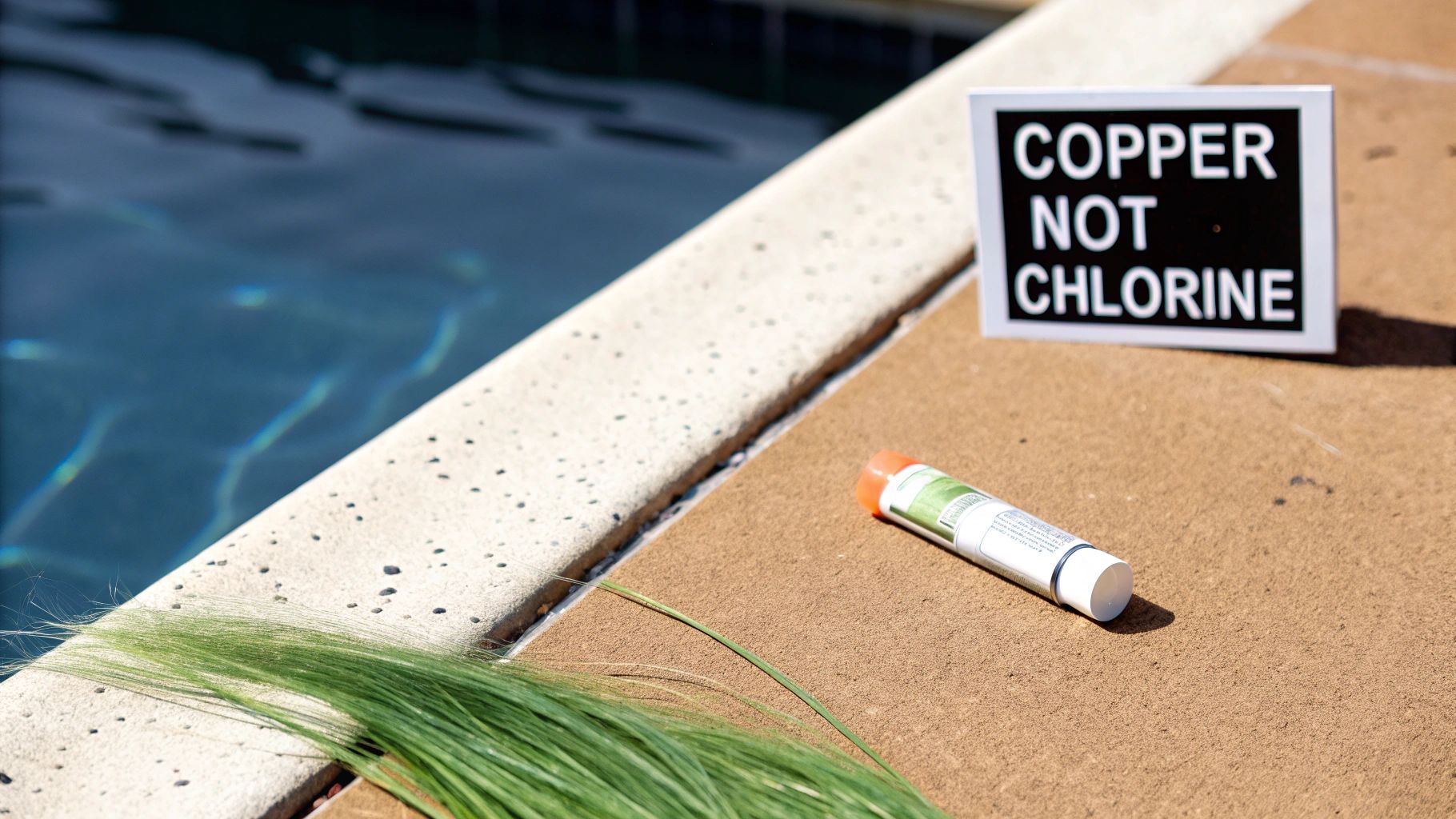
It’s an easy mistake to blame chlorine; it's the chemical we associate most with pools. But in this story, chlorine is more of an accomplice than the actual villain. The green shade you're seeing is the result of a chemical reaction, and copper is at the center of it.
The Problem Starts With Copper
So, where is this copper coming from? It can sneak into your pool water from a few different places.
- Copper-Based Algaecides: These are popular for keeping pools clear and algae-free, but overuse can leave behind a high concentration of copper.
- Corroding Pool Parts: Older pool equipment, especially heaters with copper components or copper pipes, can break down over time and leach metal ions directly into the water.
- Your Water Source: Believe it or not, the water filling your pool might be the issue. Some well water and even municipal water systems have naturally high levels of copper.
Once it's in the pool, this dissolved copper is completely invisible. It floats around until it finds something to cling to, and the porous proteins in your hair are the perfect target. The situation gets worse when you consider the real impact of chlorine damage to hair, which can strip away protective oils and make your hair even more absorbent.
Chlorine's Role in the Reaction
If copper is the problem, why does the green only show up after swimming in a chlorinated pool? This is where chlorine steps in. Its job as a sanitizer is to oxidize things in the water.
When chlorine interacts with the copper particles that have already bonded to your hair shafts, it triggers an oxidation process. This reaction is what turns the copper deposits green. It’s the exact same science behind the Statue of Liberty's famous green patina—her copper skin has oxidized over decades of exposure to the elements. In the pool, it just happens a lot faster.
Let's break down this common mix-up.
Myth vs Reality The Cause of Green Swimmers Hair
This table cuts through the confusion, showing what people think is happening versus what's actually going on in the water and on your hair.
| Component | Common Misconception (The Role) | Scientific Reality (The True Role) |
|---|---|---|
| Chlorine | The "dye" that directly stains hair green. | The oxidizer. It doesn't stain but triggers a chemical reaction with metals. |
| Copper | Rarely considered or blamed. | The source of the color. It's the mineral that bonds to hair and turns green when oxidized. |
| Hair | Simply a victim of harsh chemicals. | An absorbent surface. Porous hair provides the perfect place for copper to attach. |
Seeing it laid out like this makes it clear: managing the copper is just as important as managing the chlorine.
Key Takeaway: Green hair isn't a sign of too much chlorine. It's a dead giveaway that you have excess copper in your pool water that's being oxidized. This means the solution isn't just about treating your hair—it's about fixing your pool's water chemistry.
This isn’t just a new-age pool theory, either. Medical studies going back decades have confirmed the copper connection. Clinical research has shown that hair samples from swimmers with green hair contain significantly elevated levels of copper, proving it’s absorbed directly from the pool.
Ultimately, preventing that green tint from coming back requires a deep dive into your pool’s chemistry. Our team of experts knows exactly how to diagnose and correct these mineral imbalances. We offer comprehensive pool water treatment services to get your water perfectly balanced, ensuring it's safe for swimming and friendly to your hair.
Why Some Swimmers Are More Prone to Green Hair
Ever wondered why your blonde-haired kid emerges from the pool with a greenish tint, while your brunette spouse’s hair looks completely normal? It’s not just your imagination. The mystery behind who gets "swimmer's hair" and who doesn't really boils down to two things: hair color and, even more importantly, hair porosity.
Simply put, not all hair soaks up minerals from pool water in the same way. Hair that's more porous has a rough, damaged outer layer (the cuticle) that acts like an open gate, practically inviting those pesky copper ions to waltz right in and make themselves at home.
The Role of Hair Porosity and Color
Imagine a healthy strand of hair is like a tightly sealed pinecone—its outer scales are smooth and lie flat. Damaged or porous hair, on the other hand, is like an open pinecone. The scales are raised, creating gaps that easily trap whatever is floating around in the water.
So, what makes hair more porous in the first place? It's usually a combination of everyday things.
- Chemical Treatments: Bleaching, highlighting, or even just regular coloring all work by lifting the hair's cuticle. That process changes the hair's structure for good, leaving it way more porous than it was before.
- Sun Exposure: If you live in a sunny place, all those hours spent outdoors take a toll. UV rays act like a bleach on your hair, breaking down its protective layers and cranking up the porosity.
- Heat Styling: That daily routine with a flat iron, curling wand, or even just a hot blow dryer slowly chips away at the hair cuticle over time.
This is exactly why people with lighter hair—think natural blondes, or anyone with bleached or highlighted styles—tend to see the most dramatic green tinge. The pale canvas of their hair makes the greenish copper deposits stand out much more than they would on dark brown or black hair.
It's a compounding issue: the very chemical processes that create those beautiful light hair colors also make the hair a perfect sponge for the metals that turn it green.
This isn't a rare fluke; it's a super common problem for people who are in the pool all the time. One major survey found that up to 61% of frequent swimmers reported some kind of hair discoloration, while 0% of non-swimmers did. The same research points a finger directly at damaged hair as the biggest culprit for binding with copper. You can explore the data and see why swimmers hair damage is so common.
This explains why kids who practically live in the pool all summer are the classic candidates for green hair. Their hair is often lighter to begin with, and it's constantly exposed to the sun and pool chemicals—the perfect storm for copper to do its work.
While you can use at-home treatments for a quick fix, the fact that the green keeps coming back tells you there's a bigger issue at play.
The only way to stop it for good is to go straight to the source: the water itself. Unbalanced pool chemistry is the root cause of green hair from the pool. To really protect your family's hair, you need to get proactive with your water management. Our experts specialize in pinpointing and fixing these mineral imbalances, making sure your pool is a safe zone, free from any unwanted color-changing surprises.
Immediate Steps to Remove Green Tones at Home
You just got out of the pool, glanced in the mirror, and there it is: a definite greenish tint staring back at you. It’s a frustrating moment, but don't panic. This is a common and fixable problem, and you probably already have what you need to tackle it right in your own home.
Acting fast is key to lifting the discoloration before it really sets in. It's important to know, though, that these at-home methods are essentially first aid. They get rid of the green you see, but they don’t address the core issue—the copper imbalance in your pool. For a long-term fix, you'll need to sort out your pool's chemistry, which is where our professional pool water treatment services come in.
How susceptible your hair is to turning green really depends on its condition.
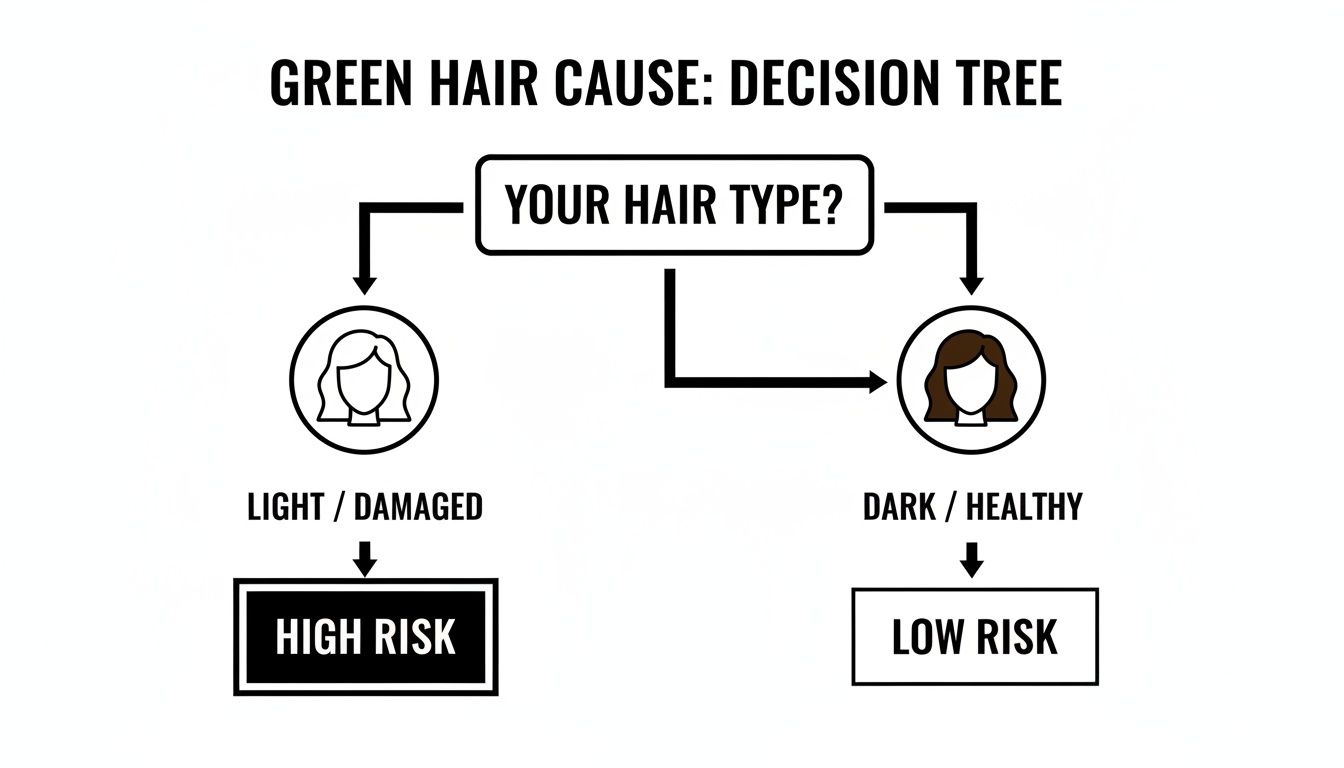
As you can see, anyone with lighter, color-treated, or porous hair is going to be far more likely to see that unwanted green hue after a swim.
Start with a Chelating or Clarifying Shampoo
Your best first move is to grab a shampoo specifically designed to handle mineral buildup. These aren't your everyday cleansers; they're formulated to get a grip on those stubborn copper particles and wash them right out.
- Clarifying Shampoos: Think of these as a deep detox for your hair. They're fantastic for cutting through all the gunk—product residue, chlorine, and minerals like copper. Just be sure to use them as a targeted treatment, not every day, because they can be drying.
- Chelating Shampoos: These are the real heavy hitters for mineral stains. They contain special agents that actively bind to metal ions (the copper causing the green) and pull them away from the hair shaft so they can be rinsed clean.
Once you've banished the green, your hair is going to need some serious replenishment. It's the perfect time to focus on ways to repair damaged hair naturally and restore its moisture balance.
Try These Effective DIY Home Remedies
If you don't have a specialty shampoo ready to go, a quick trip to your kitchen pantry might be all you need. Many common acidic items have the power to neutralize those oxidized copper stains and lift them from your hair.
My Personal Tip: No matter which DIY method you try, always follow it up with a deep conditioning treatment or a rich hair mask. These acidic solutions work wonders on the green, but they can leave your hair feeling parched and brittle if you don't rehydrate it immediately.
Here are a couple of my go-to, tried-and-true kitchen chemistry solutions.
At Home Green Hair Removal Methods
Before you start mixing, it helps to understand what each home remedy does and what its potential drawbacks are. This table breaks down the most common solutions I've seen people use over the years.
| Method | How It Works | Best For | Potential Downsides |
|---|---|---|---|
| Vitamin C Paste | The ascorbic acid breaks down and lifts oxidized mineral deposits from the hair shaft. | Stubborn or widespread green tints. It's highly effective. | Can be very drying and may slightly lighten hair color over time. |
| Tomato Juice/Ketchup | Mild acids neutralize the green color, while the red pigment helps to visually cancel it out. | Mild to moderate cases of green hair. | Messy application and can leave a lingering tomato smell. |
| Baking Soda Paste | Acts as a gentle abrasive and clarifying agent to scrub away mineral buildup. | Light green tinges and general chlorine removal. | Can be harsh on the hair cuticle, causing frizz and dryness. |
| Aspirin Paste | Contains salicylic acid, which helps dissolve the mineral particles clinging to the hair. | Targeted treatment for specific green spots. | Can be quite drying; not ideal for all-over application. |
As you can see, while effective, most of these at-home fixes can be drying. That's why conditioning afterward is non-negotiable.
Here’s how to put a couple of the most popular ones into action:
- The Vitamin C Method: Grab 8-10 vitamin C tablets, crush them into a fine powder, and mix with a bit of your regular shampoo until it forms a paste. Work it through your damp, green-tinted hair, pop on a shower cap, and let it sit for 15-20 minutes. Rinse it out completely, then follow with a deep conditioner.
- The Ketchup Method: This one sounds strange, but it works! The mild acids and red pigments in tomatoes really do counteract the green. Fully saturate the green areas with ketchup or tomato juice, cover with a shower cap for about 20-30 minutes, then wash and condition as you normally would.
Long-Term Prevention Starts With Your Pool Water
Once you've tackled the immediate green tint, the real work begins: stopping it from ever coming back. This isn't about what you do to your hair after a swim, but what you do for your pool water before you even dip a toe in.
Getting your pool's mineral levels just right can feel like a delicate balancing act, but it's the single most effective way to protect your hair. The goal is to keep copper, chlorine, and pH levels within a very specific, happy medium.
Think of it like this:
- Copper: You want between 0.2 and 0.5 ppm.
- Chlorine: Keep it steady at 1 to 3 ppm.
- pH: The sweet spot is 7.2 to 7.6.
Why These Pool Chemistry Numbers Matter
Sticking to these ranges is your best defense. When copper levels creep up, you're setting the stage for that dreaded green stain.
A lot of pool owners, especially in warmer areas, rely on copper sulfate algaecides to keep algae blooms at bay. While effective, these products can slowly but surely elevate the copper concentration in your water, particularly if you're not doing regular partial water changes.
The problem is that copper sulfate (CuSO₄) algaecides only need about 0.5 mg/L to do their job. But without careful management and regular dilution, it’s not uncommon to see those levels spike to 3 ppm—that’s a shocking 600% higher than the safe limit for hair. If you want to dive deeper into the science, this clinical study has some eye-opening findings on copper contamination.

Taking the Guesswork Out with Professional Maintenance
Pool chemistry isn't a "set it and forget it" deal; it can shift surprisingly fast. This is where handing the reins over to a pro can make all the difference.
Our weekly pool service is designed to keep your water consistently balanced, so you never have to worry. Certified technicians manage the intricate dance of copper, chlorine, and pH for you.
- Comprehensive Chemical Analysis: We catch imbalances with weekly readings before they ever have a chance to affect your hair.
- Equipment Inspection: A routine check of your filters, pumps, and heaters helps prevent metals from leaching into the water in the first place.
- Smarter Algaecide Use: We use the minimum effective dose of copper algaecides, keeping your pool clear without overloading it with metal.
- Proactive Water Swaps: Regular, partial water replacement is key to preventing contaminants from building up over time.
- Expert Equipment Repair: A small leak or malfunction can throw everything off. We handle prompt repairs to keep your system running perfectly. Learn more in our guide on pool equipment repair.
How Often Should You Test?
To stay ahead of the game, you need to test regularly. Ideally, this means weekly copper tests and daily checks of your chlorine and pH levels.
While home test kits are great for quick spot-checks, they don't always offer the precision needed to catch subtle changes. Our technicians use digital colorimeters that can detect copper with a resolution down to 0.01 ppm, giving you a much clearer picture of what's really going on in your water.
Why Professional Care Is a Game-Changer
Balancing pool chemicals is part science, part experience. It’s easy to overshoot the mark with DIY dosing, which can lead to either an algae problem or a hair-staining one.
Our certified experts know exactly how to calibrate equipment and fine-tune schedules to maintain that perfect, consistent balance. It's that level of precision that keeps copper under control and your hair its natural, beautiful color.
Just ask Megan, one of our clients. She was frustrated with green streaks showing up after every swim. After just two weekly service visits, we brought her copper level down from a high of 1.8 ppm to a safe 0.4 ppm. Her hair stayed vibrant all summer long.
Simple DIY Checks You Can Do
Even with a professional service, it's smart to keep an eye out for early warning signs yourself.
- Check Water Clarity: If your water starts looking cloudy, it’s often the first hint of a chemical imbalance.
- Glance at Your Hair Post-Swim: Notice even a slight green tint? It's time for an extra water test.
- Note pH Swings: A sudden drop or spike in pH can accelerate copper oxidation almost overnight.
Consistent water testing is the only way to guarantee your hair stays true to color.
Ultimately, preventing green hair starts with what’s in your pool, not what’s in your shower. For expert care and hair-safe water you can count on, trust the team at Water Medic of Cape Coral.
When to Suspect a Whole-Home Water Problem
So you’ve done everything right. You’ve painstakingly balanced your pool chemicals and even used chelating agents, but that dreaded green tint still shows up in your hair after every swim. It’s a frustrating cycle, and it often points to a culprit you might not expect: the problem isn’t in your pool, but flowing directly from your taps.
The water you use to fill and top off your pool comes from the same source as your home’s drinking water. If that supply is high in copper, you’re basically adding the main ingredient for green hair every time you grab the hose. This is a common headache in areas with older municipal plumbing or even just in homes with aging copper pipes.
Telltale Signs of High Copper in Tap Water
A whole-home water issue rarely stays quiet. High copper levels will leave clues all over your house, not just on your hair after a swim.
Keep an eye out for these telltale signs:
- Blue-Green Stains: Have you noticed faint blue or green rings forming around your sink drains, in the bathtub, or on your fixtures? That’s a classic calling card of copper corrosion and mineral deposits.
- Metallic Taste: If your drinking water has a sharp, metallic, or bitter taste, it’s a strong signal that dissolved metals like copper are present.
- Discolored Laundry: In some cases, high copper can even leave faint bluish-green stains on your light-colored clothing right out of the washing machine.
If any of this sounds familiar, you’re likely fighting a battle on two fronts—in the pool and throughout your home’s entire plumbing system. At that point, hair treatments and pool chemicals are just temporary band-aids on a much bigger, more persistent problem.
The Definitive Solution for Pure Water
When the copper is coming straight from your water supply, you need a solution that purifies every single drop of water entering your house. This is where you have to move beyond pool-side fixes to permanently solve the green hair issue and protect your home's pipes.
A recurring green hair problem, despite a well-maintained pool, is often the most visible symptom of a larger water quality issue affecting your entire home.
To truly fix the problem, you have to filter out the metals before they ever get a chance to reach your pool or your taps. The most reliable way to do this is with a robust, whole-home filtration system. To see how you can protect your entire home, learn more about our Whole House Reverse Osmosis systems, which are designed to strip out damaging minerals at the source for truly pure water.
Got More Questions About Green Swimmer's Hair?
Even after you know the basics, some specific questions always seem to pop up. Our technicians have heard just about everything over the years, so we’ve pulled together the most common ones to give you straight-up, expert answers. This is the kind of know-how that helps you protect your family’s hair and really understand what’s going on with your pool.
Do Saltwater Pools Still Turn Hair Green?
Yes, they definitely can. This is probably the biggest misconception we run into. People think that because they have a saltwater system, they’re safe from green hair, but the type of sanitizer isn't the real issue here.
Here's the deal: saltwater pools aren't chlorine-free. They generate their own chlorine from salt. The actual troublemaker, copper, can find its way into any kind of pool—whether it's from copper-based algaecides, old heater components, or even your source water. Once that copper is in the water and oxidizes, it’ll stick to hair and cause that dreaded green tint, no matter how the pool is sanitized.
Expert Insight: We've had many clients switch to a saltwater system hoping to fix the green hair problem for good. While those systems have their perks, they won't stop copper from doing its thing. You still have to test and balance your water properly, regardless of the pool type.
How Often Should I Test My Pool Water For Copper?
Regular, consistent testing is your best defense. If you've ever had a run-in with green hair before, checking for copper needs to be a non-negotiable part of your pool maintenance routine.
We recommend getting a professional copper test at least once a month, especially when you're using the pool a lot. There are a few good reasons for this:
- Catch it early. You can spot a slow creep in copper levels and fix it long before anyone’s hair starts to look like a science experiment.
- Get an accurate read. The equipment the pros use is far more sensitive than the test strips you buy at the store, so it can detect even tiny amounts of metal.
- Gain peace of mind. Having a certified technician check things out means you know all your levels are right, not just copper.
Those DIY test strips are fine for quick daily checks on chlorine and pH, but when it comes to metals, nothing beats a professional analysis. Our weekly pool service includes this kind of detailed testing, so you don't have to worry about it.
Is Green Hair a Sign My Pool Is Unsafe?
While the green tint itself isn't going to harm you, it's absolutely a red flag—or a green one, in this case. It’s a very visible sign that your pool's water chemistry is seriously off-kilter.
When there's enough oxidized copper in the water to stain hair, it points to a mineral imbalance that needs to be addressed right away by a professional. Often, high copper goes hand-in-hand with other problems like low pH, which makes the water acidic. Acidic water doesn't just irritate your skin and eyes; it actively damages your pool equipment over time.
So, think of green hair as your pool sending out an S.O.S. It’s telling you it’s time to call in an expert to figure out what's wrong and get the water back to being safe and balanced. If you ignore it, you could be looking at bigger, more expensive problems down the road.
Don't let water quality issues ruin your summer fun. For expert pool maintenance and comprehensive water treatment solutions, trust the experienced team at Water Medic of Cape Coral. Contact us today to schedule a consultation and ensure your pool is always perfect.