
Automatic Sprinkler Valve: SW Florida Guide 2026
A lot of Southwest Florida homeowners notice the same pattern. One part of the lawn starts fading while the rest still looks fine. The irrigation timer seems normal, but coverage is uneven, and the system never quite feels consistent.
In many of those cases, the issue traces back to the automatic sprinkler valve. It's the control point that decides when water moves, how each zone responds, and whether your irrigation system behaves the way you expect. When that valve struggles with debris, mineral buildup, or bad sizing, the lawn shows it first.
Out here, that problem rarely stands alone. The same water conditions that wear down irrigation components also affect the rest of the home. That's why a valve problem is often less about one part in the yard and more about a bigger water-quality strategy.
The Unseen Hero of Your Southwest Florida Lawn
A healthy lawn usually gets credit for good grass, a decent timer, and the right watering schedule. The part that almost nobody thinks about is the valve box buried out of sight. Yet that's where a lot of irrigation performance is won or lost.
An automatic sprinkler valve is the gatekeeper for each zone. If it opens fully, closes cleanly, and responds on schedule, the system feels invisible. If it hesitates, sticks, or lets flow continue when it shouldn't, you start seeing stressed turf, wet spots, or irrigation that seems unpredictable.
In Southwest Florida, homeowners often blame the heads first. That makes sense because the heads are visible. But the valve is usually where the primary control happens, and when water quality is challenging, that control point takes a beating over time.
Why this component matters more than people think
The modern concept behind automated sprinkler control has deep roots. The foundation for modern automatic sprinkler valves was laid in 1874, when Henry S. Parmalee patented the first automatic sprinkler head, an innovation that helped move fire protection from manual response to automated protection, as described in this history of the first sprinkler system.
That history matters because it shows what these systems were built to do. They're supposed to respond reliably without constant intervention. When they don't, something in the design, installation, or water conditions is getting in the way.
Practical rule: If one irrigation zone acts erratically while the controller appears normal, don't assume the timer is the problem. The valve often tells the real story.
What SW Florida adds to the equation
Southwest Florida water can be hard on outdoor equipment. Mineral content, sediment, and coastal exposure all change how long components last and how well they stay calibrated. A cheap valve can work for a while, then slowly lose performance in ways that look like random lawn problems.
That's why homeowners who want a dependable irrigation system need to think beyond quick part swaps. The valve matters, but the water feeding it matters just as much.
How an Automatic Sprinkler Valve Actually Works
Most homeowners don't need a technical manual. They need a mental picture that makes the system easier to diagnose. The simplest way to think about an automatic sprinkler valve is as a water gate controlled by a small electrical signal.
The irrigation controller decides when a zone should run. It sends power to the valve's solenoid, and that triggers a pressure change inside the valve body. Once that pressure shifts, the diaphragm lifts and lets water move into that zone.
The five-part sequence
The controller sends the signal
The timer tells one zone to turn on. That signal goes through the field wiring to the solenoid mounted on the valve.The solenoid reacts
The solenoid is the electrical trigger. It doesn't do the heavy lifting by itself. It starts the process that changes pressure inside the valve.Water leaves the upper chamber
In a balanced pressure diaphragm system, the solenoid releases water from the chamber above the diaphragm.Mainline pressure lifts the diaphragm
Once pressure above the diaphragm drops, the higher pressure below pushes the diaphragm upward. That opens the path for irrigation flow.The valve closes when power stops
When the solenoid deactivates, pressure builds again in the top chamber and forces the diaphragm back down, sealing the valve.
That operating sequence matches the explanation shown in this sprinkler valve diaphragm demonstration, which describes how the valve opens and closes through pressure balancing.
What usually works and what doesn't
A properly functioning valve depends on clean internal passages and a diaphragm that can move freely. If debris gets into the pilot ports or the diaphragm stiffens, the valve may chatter, fail to open completely, or refuse to close cleanly.
Homeowners often expect the solenoid to be the only moving part that matters. In practice, the diaphragm and the tiny pressure paths inside the valve are just as important. That's why a valve can have power and still not perform.
A valve doesn't need to be completely dead to cause bad irrigation. Partial opening causes just as many lawn complaints as total failure.
A simple way to think about diagnosis
If the controller is the brain, the solenoid is the switch, and the diaphragm is the gate. When one of those three stops doing its job, the zone won't behave normally.
That's useful because it keeps troubleshooting focused. Instead of guessing at the whole system, you start by asking three questions:
- Is the controller sending power
- Is the solenoid responding
- Is the diaphragm able to move and seal
When you answer those three questions in order, most valve problems become much easier to sort out.
Choosing the Right Valve for Southwest Florida Water
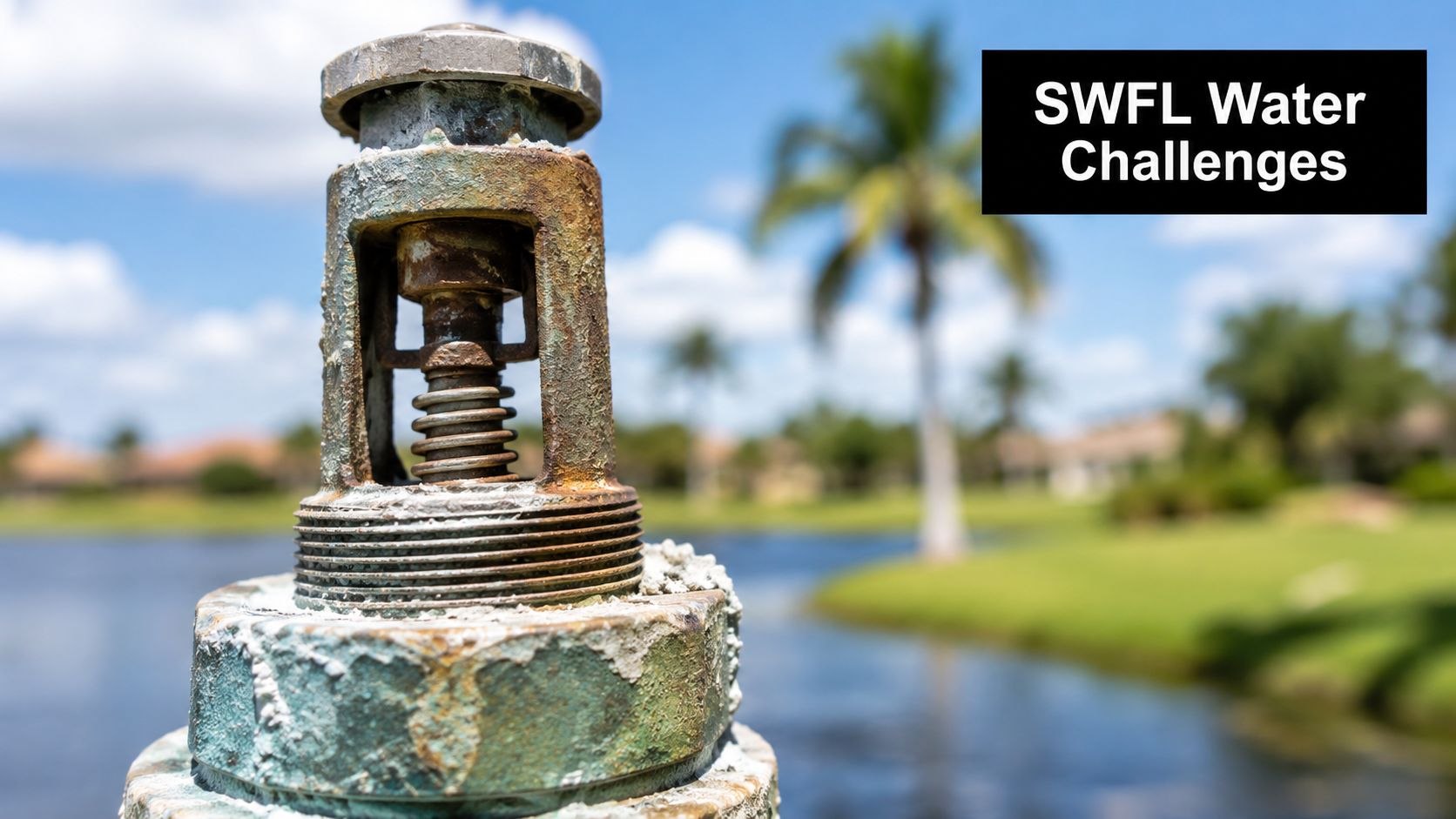
Buying an automatic sprinkler valve off the shelf and hoping for the best usually isn't the right move in Southwest Florida. Water conditions here punish shortcuts. A valve that looks fine in the package may not stay dependable once mineral-heavy water, grit, and pressure variation become part of daily use.
Material choice matters. Internal design matters. Sizing matters even more than many homeowners realize.
What often fails first in local conditions
The first weak point is usually not the body of the valve. It's the internal working parts. A marginal diaphragm, a poorly protected pilot pathway, or hardware that doesn't tolerate sediment can start sticking long before the exterior looks worn out.
That's why generic replacement shopping often leads to repeat service calls. If the new valve uses the same vulnerable design and the same water still feeds it, the problem just returns in a different form.
Common trouble points include:
- Mineral scaling: Deposits reduce smooth movement inside the valve.
- Grit sensitivity: Fine debris interferes with pilot flow and diaphragm seating.
- Poor material matching: Some lower-grade components don't hold up well in demanding outdoor service.
- Bad sizing: Even a quality valve performs poorly when it's mismatched to the line.
Sizing is not optional
Hydraulics decide whether a valve behaves gently or harshly. According to this irrigation valve sizing guide, pressure loss at the valve must not exceed 6 PSI, and total static pressure loss from the mainline should not exceed 10% of available static pressure. The same guidance notes that valve sizing should align with the pipe diameter to preserve system integrity.
That matters because a valve that's too restrictive doesn't just underperform. It can close too aggressively and create operating problems throughout the zone.
Practical selection criteria
When evaluating a valve for Southwest Florida use, these points usually separate durable choices from disposable ones:
| Selection point | What to look for | Why it matters |
|---|---|---|
| Body construction | Durable outdoor-rated valve body | Better long-term stability in heat and weather |
| Internal design | Balanced pressure diaphragm design | More consistent opening and closing |
| Serviceability | Parts availability and rebuild access | Easier maintenance when internals wear |
| Hydraulic fit | Correct sizing for the zone and mainline | Cleaner operation and less performance loss |
If your irrigation supply depends on a booster or well setup, the water-delivery side matters too. Homeowners dealing with uneven supply conditions should also look at pump solutions for water systems because valve performance always depends on what the valve is being asked to handle.
The right valve is not the one with the lowest shelf price. It's the one that matches the water, the pressure, and the zone demand.
Common Sprinkler Valve Problems and Solutions
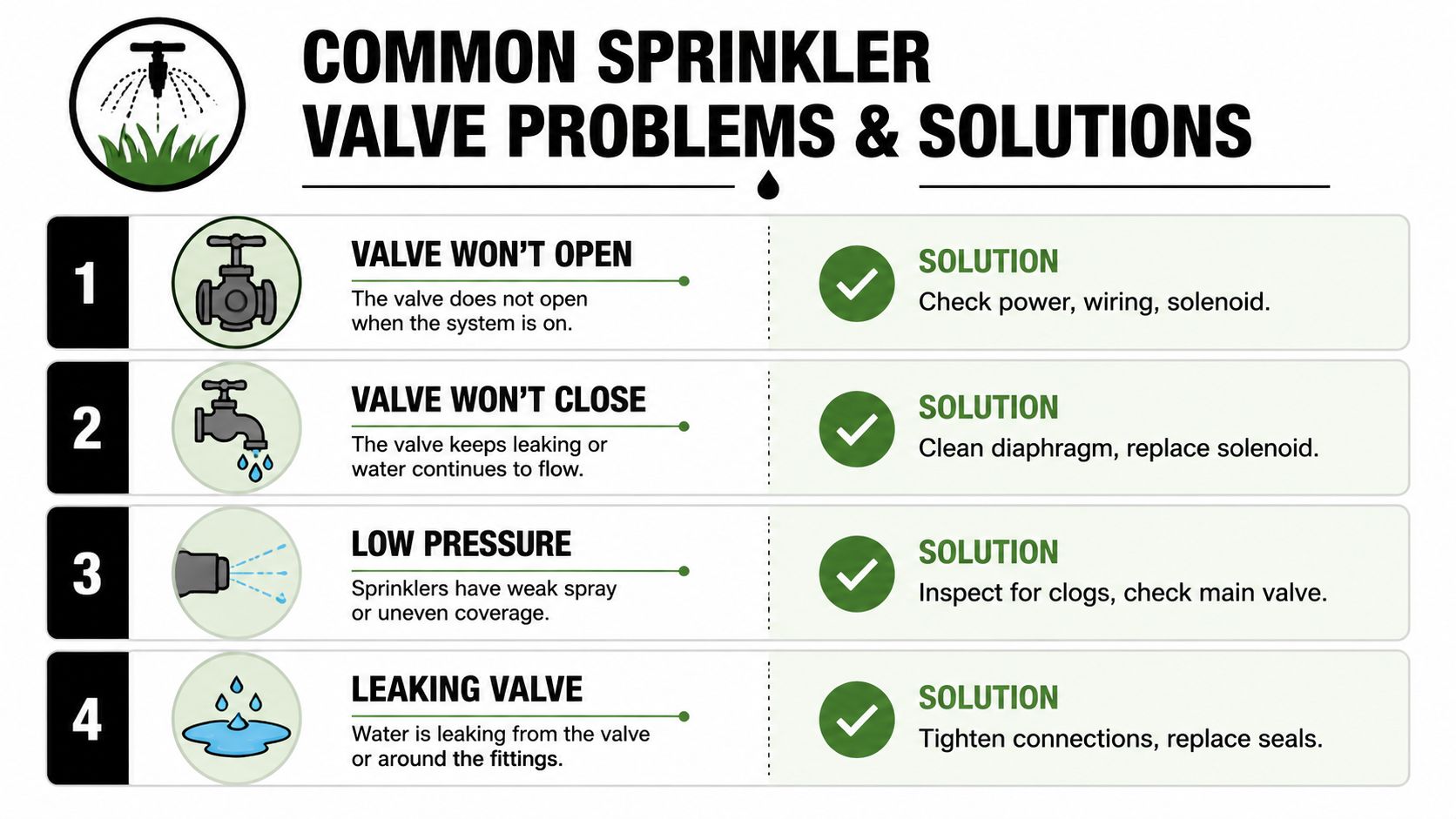
Troubleshooting works best when you start with the symptom, not with a random part swap. Most automatic sprinkler valve issues fall into a few recognizable patterns. Once you know those patterns, you can separate a quick fix from a problem that needs a full system check.
The valve won't turn on
Start simple. Check the controller schedule, confirm the zone is calling for water, and verify the wiring connection at the controller and at the valve.
If those basics look normal, focus on the valve itself:
- Possible electrical trigger issue: The solenoid may not be activating.
- Possible blockage: Debris in the pilot port can prevent pressure release.
- Possible internal wear: A stiff or damaged diaphragm may not lift cleanly.
A zone that hums, clicks, or partly comes on often points to a valve that's receiving a signal but not completing the pressure change it needs.
The valve won't shut off cleanly
This symptom is common in valves that have debris lodged inside or have worn sealing surfaces. If water continues to pass after the zone should be off, the diaphragm may not be seating properly.
Check for:
- Debris under the diaphragm
- A damaged diaphragm
- A solenoid that isn't returning to its normal position
- Manual bleed controls left partially open
A valve that stays partly open can mimic a timer problem, but the timer may be working exactly as it should.
Water around the valve box
Some moisture around a valve box is just surface water from irrigation. Persistent seepage is different. That usually means a seal, fitting, or internal valve component needs attention.
Safe homeowner checks include:
Observe timing
See whether water appears only when one zone runs or whether it stays wet between cycles.Clear the box
Remove mud and debris so you can identify where the moisture begins.Watch the valve during operation
A visible drip pattern can reveal whether the issue is at the bonnet, fitting, or downstream side.
For broader system investigation, property owners sometimes benefit from specialized water leak detection services when the source isn't obvious and surface clues are misleading.
Don't diagnose by lawn appearance alone. Two different valve problems can create the same brown patch.
Low pressure in one zone
Low pressure doesn't always mean a supply problem. It can also mean the valve is not opening fully. A partially obstructed valve, clogged inlet passage, or failing diaphragm can all reduce zone performance.
A quick symptom guide helps:
| Symptom | Likely direction to check |
|---|---|
| One zone weak, others normal | Zone valve or zone-specific obstruction |
| Zone starts strong, then fades | Internal restriction or unstable supply |
| Heads barely rise | Valve not opening fully or severe blockage |
When a valve problem keeps returning after cleaning, replacement is usually more productive than repeated tinkering.
Beyond the Lawn Protecting Your Entire Home Water System
The important takeaway for Southwest Florida homeowners is this. The water that challenges an irrigation valve outside is the same water moving through the rest of the property.
If minerals, sediment, or poor water quality are rough on outdoor control components, they're not being gentle anywhere else. That affects fixtures, water-using equipment, surface buildup, and overall day-to-day water experience inside the home. The sprinkler valve provides an early outdoor warning.
Why whole-house treatment changes the conversation
A lot of homeowners think of water treatment as something only for drinking water at the kitchen sink. That's too narrow for Southwest Florida. In this region, whole-house reverse osmosis systems make more sense because they address the water entering the entire property, not just one faucet.
That broader approach helps in several ways:
- Cleaner water throughout the home: Better water quality at showers, fixtures, laundry, and appliances.
- Less mineral stress on components: Water-using equipment doesn't have to fight the same level of scale and residue.
- More consistent water experience: Homeowners often notice the difference in feel, appearance, and maintenance demands.
- A smarter long-term strategy: Instead of reacting to one failing part at a time, you improve the water feeding everything.
The outdoor system is part of the same ecosystem
An irrigation system may be outside, but it's still part of your property's water picture. If the incoming water causes buildup and wear, the valve internals feel it. So do other components that depend on clean, stable water conditions.
This is why treating the automatic sprinkler valve as an isolated yard problem misses the larger opportunity. Replacing a worn valve can restore zone control, but it doesn't change what the water continues to do over time.
Homeowners often spend years fixing symptoms one component at a time when the real issue starts at the point where water enters the property.
Why reverse osmosis stands out
For Southwest Florida homes, a whole-house reverse osmosis system is one of the strongest answers because it goes beyond softening alone. It addresses the overall quality of the water moving through the home. That matters for families who want cleaner water, property owners who want to protect expensive equipment, and anyone tired of constant buildup and recurring maintenance.
A practical way to view it is this:
| Approach | What it addresses | Limitation |
|---|---|---|
| Single-part repair | One immediate failure point | Doesn't improve incoming water |
| Repeated component replacement | Symptom management | Same water keeps stressing new parts |
| Whole-house reverse osmosis | Water quality across the property | Requires a bigger upfront decision |
That's why whole-house treatment deserves most of the attention in any serious water conversation here. The irrigation valve may be what got your attention first. The effective solution usually starts much closer to the home's main water source.
Deciding Between Sprinkler Valve Repair and Replacement
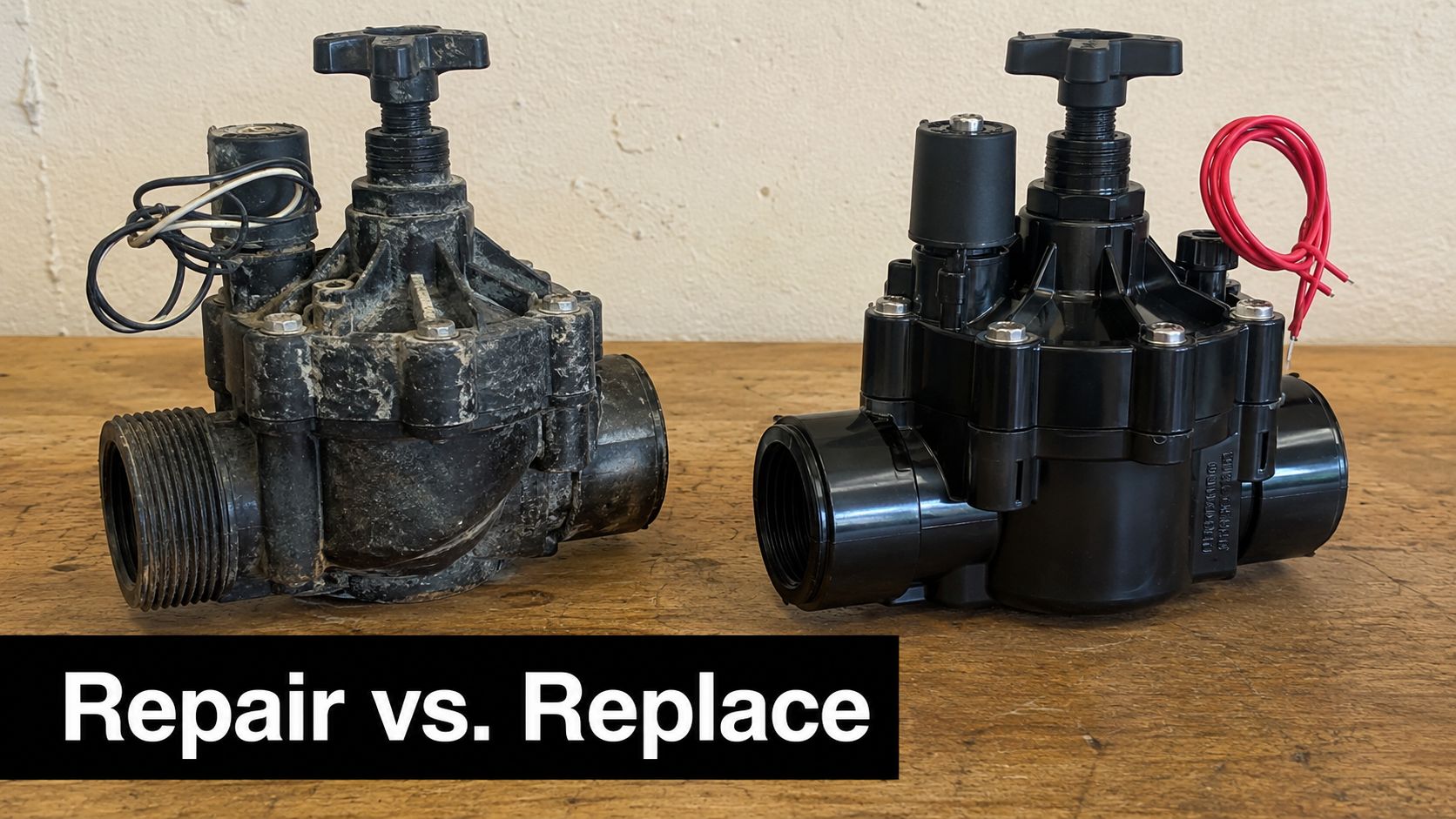
Repairing an automatic sprinkler valve makes sense when the problem is isolated and the valve body is still in good shape. Replacing it makes more sense when the issue keeps coming back, internal wear is obvious, or the valve was never a good fit for the zone in the first place.
Homeowners usually get stuck because repair feels cheaper in the moment. Sometimes it is. But repeated service on an aging valve in harsh water conditions often becomes wasted effort.
When repair is reasonable
Repair tends to be the right call when the issue is limited to a solenoid, debris under the diaphragm, or a serviceable internal part on a valve that otherwise matches the system well.
Good repair candidates usually look like this:
- Single-event problem: The valve has been dependable until one recent issue.
- Accessible internals: Parts can be cleaned or replaced without fighting damaged threads or distorted housing.
- No pattern of repeat failure: The same zone hasn't been generating calls over and over.
When replacement is the smarter move
Replacement usually wins when a valve has become unreliable enough that you no longer trust it. That matters because modern sprinkler systems are built around dependable automatic response. As noted in this Canadian Conservation Institute review of automatic sprinkler systems, one major study found a 99.5% reliability rate, and the chance of a single sprinkler opening accidentally due to a defect is less than 1 in 16 million per year.
Those numbers speak to the value of modern, properly maintained automatic systems. If an older irrigation valve is undermining reliability, replacement is often the better long-term decision.
A practical comparison:
| Situation | Better choice |
|---|---|
| Debris caused one recent malfunction | Repair |
| Repeated sticking or incomplete shutoff | Replacement |
| Wrong valve size for the zone | Replacement |
| Internals are worn and service history is frequent | Replacement |
For homeowners who want recurring oversight rather than surprise failures, monthly water system maintenance can help catch aging components before they start compromising performance.
A short visual example helps show what that decision can look like in the field.
The real decision point
The right question isn't “Can this valve be repaired?” Most can. The better question is “Will repair give me dependable service, or am I just buying time?”
If the answer is only more time, replacement is usually the more honest investment.
When to Call the Professionals at Water Medic
Some irrigation issues are worth a homeowner's time. Checking the controller, inspecting a valve box, or confirming whether one zone is the only trouble spot are all sensible first steps. But once the problem points to wiring faults, repeated valve failure, inconsistent water delivery, or bigger water-quality concerns, it's time for a specialist.
That matters in Southwest Florida because the irrigation system doesn't live in isolation. Yard performance, incoming water quality, filtration strategy, and whole-home treatment all intersect. If you only chase the visible symptom, you can spend a long time fixing parts without improving the actual water conditions behind the problem.
The strongest results usually come from a full-property mindset:
- Outdoor irrigation performance
- Incoming water quality
- Whole-house protection
- Long-term maintenance planning
A company that understands only sprinklers can replace a valve. A company that understands water systems can help you decide whether the valve is the beginning of the problem or just the first place you noticed it.
If your lawn is showing stress, your irrigation system is acting inconsistently, or you're seeing signs that Southwest Florida water is affecting more than just the yard, professional evaluation is the practical next step.
If you want a solution that goes beyond a single sprinkler part, talk with Water Medic of Cape Coral. Their team focuses on Southwest Florida water systems, including the bigger issue behind many irrigation complaints: water quality throughout the entire home. If you're ready to look at a whole-house reverse osmosis system, evaluate water conditions, or get expert guidance on protecting both your grounds and your home, they're the right place to start.