Difference Between Water Softener and Filter: Which Is Right for Your Home?
It’s easy to get "water softener" and "water filter" mixed up, but they solve two completely different problems. Think of it this way: a softener acts like a bodyguard for your home, while a filter is a bodyguard for your health.
One system targets the minerals that damage your pipes and appliances, and the other removes the nasty contaminants you don't want to be drinking. Let's break down exactly what that means for your home.
Understanding The Core Difference: Hard Water vs. Contaminants
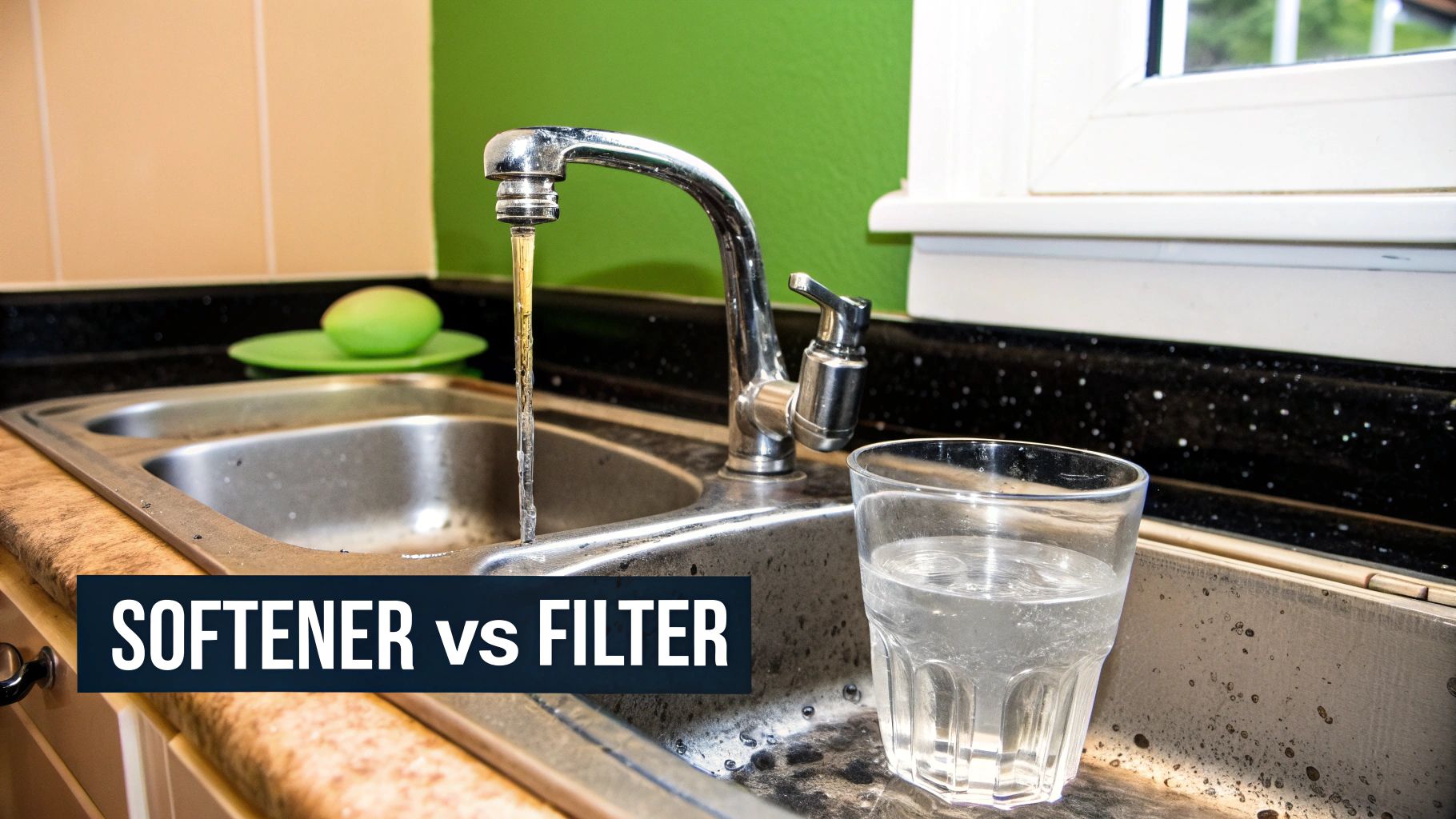
For many of us in Southwest Florida, the lines between these two systems can seem blurry. But getting a handle on their distinct jobs is the crucial first step. Making the wrong choice could mean you’re leaving your home’s plumbing—or your family’s health—vulnerable.
What Each System Actually Targets
A water softener has one mission: to fight hard water. Hard water is simply water that’s loaded with dissolved minerals, primarily calcium and magnesium. While these minerals are technically safe to drink, they are an absolute nightmare for your home's infrastructure, causing that chalky, white buildup on everything.
A water filter, on the other hand, is all about safeguarding the quality and safety of your water. It’s designed to capture a huge range of contaminants that a softener simply ignores. This includes things you can taste and smell, like chlorine, as well as invisible threats like lead, pesticides, bacteria, and industrial chemicals.
The scale of the hard water problem is massive. The global market for water softeners hit USD 3.3 billion and is expected to climb to USD 6.23 billion by 2033. Why? Because people are realizing that limescale buildup can cut a water heater's life by up to 50% while driving up energy costs. In North America, traditional salt-based systems make up a whopping 74.18% of the market for a simple reason: they are the most effective at completely removing these destructive minerals.
If you want a real-world picture of what hard water does, look no further than the common issue of a scaly kettle due to hard water. That annoying crust is exactly what’s happening inside your dishwasher, washing machine, and water heater.
Water Softener vs Water Filter at a Glance
For a quick overview, this table cuts straight to the chase, highlighting the fundamental differences between the two systems.
| Feature | Water Softener | Water Filter |
|---|---|---|
| Primary Goal | Protects appliances and plumbing | Improves drinking water safety and taste |
| What It Removes | Hardness minerals (calcium, magnesium) | Contaminants (chlorine, lead, bacteria, etc.) |
| Key Benefit | Prevents limescale, extends appliance life | Provides pure, safe, great-tasting water |
| Ideal For | Homes with spotty dishes, dry skin, buildup | Anyone concerned with water purity and health |
Ultimately, a water softener is an investment in your home's longevity, while a water filter is a direct investment in your well-being. Knowing which problem you need to solve is the key to making the right decision.
How Water Softeners Protect Your Home and Appliances
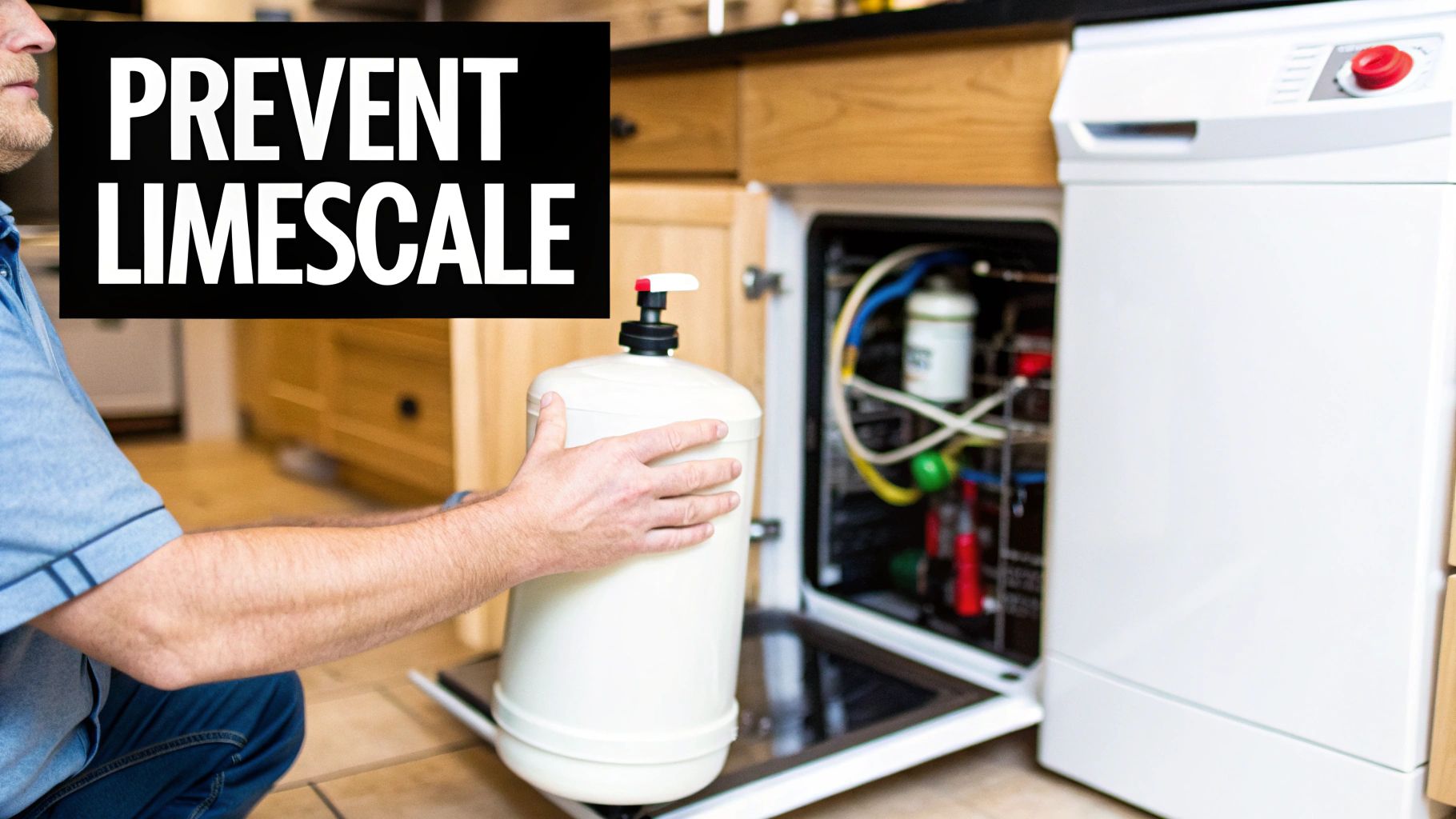
While a filter is all about purifying the water you drink, a water softener’s job is to protect the very bones of your house. Think of it as a bodyguard for your entire plumbing system and every appliance that uses water. It's built for one primary mission: to fight the damaging effects of hard water minerals, namely calcium and magnesium.
The most effective water softeners use a process called ion exchange. It sounds scientific, but the idea is actually quite simple. Inside the main tank, you'll find a bed of tiny resin beads that carry a negative electrical charge.
As your home's hard water passes over these beads, the positively charged calcium and magnesium ions—the minerals that create that crusty limescale—are pulled out of the water like a magnet. The resin beads snatch them up and, in return, release harmless sodium or potassium ions. This trade-off is what turns destructive hard water into clean, soft water.
The Real-World Impact of Soft Water
You'll start seeing and feeling the difference almost immediately. Getting rid of those hard minerals isn't just a matter of convenience; it’s about protecting some of the biggest investments in your home.
Limescale loves to build up on the heating elements in your water heater, dishwasher, and washing machine, forcing them to work harder and less efficiently. In fact, studies show that hard water can slash the lifespan of these appliances by a staggering 30-50%. A softener stops that scale before it ever has a chance to form, keeping your appliances running the way they were designed to.
By preventing scale buildup, a water softener can cut a water heater's annual energy consumption by nearly 30%. That translates directly to lower utility bills and helps you avoid the headache of a premature—and very expensive—appliance replacement.
From Your Laundry Room to Your Shower
The benefits don't stop with your major appliances. Soft water completely changes the way soap and detergents behave, helping them create a rich lather and clean far more effectively.
This leads to some fantastic perks around the house:
- Brighter, Softer Laundry: You can cut back on detergent use by up to 50%. Your clothes will come out cleaner, feel softer to the touch, and won't fade as quickly from harsh mineral deposits.
- Spot-Free Dishes: Forget about that cloudy film that ruins the look of your glassware. Soft water leaves dishes sparkling and clear right out of the dishwasher.
- Softer Skin and Hair: Hard water minerals are notorious for drying out your skin and leaving hair feeling brittle and dull. Soft water rinses clean, allowing your skin and hair to retain their natural moisture.
Ultimately, installing one of the professional-grade water softeners we offer at Water Medic is a smart, proactive investment in your home's health. It’s a solution that pays for itself over time through savings on energy, soap, and costly appliance repair bills.
How Water Filters Ensure Purity and Peace of Mind
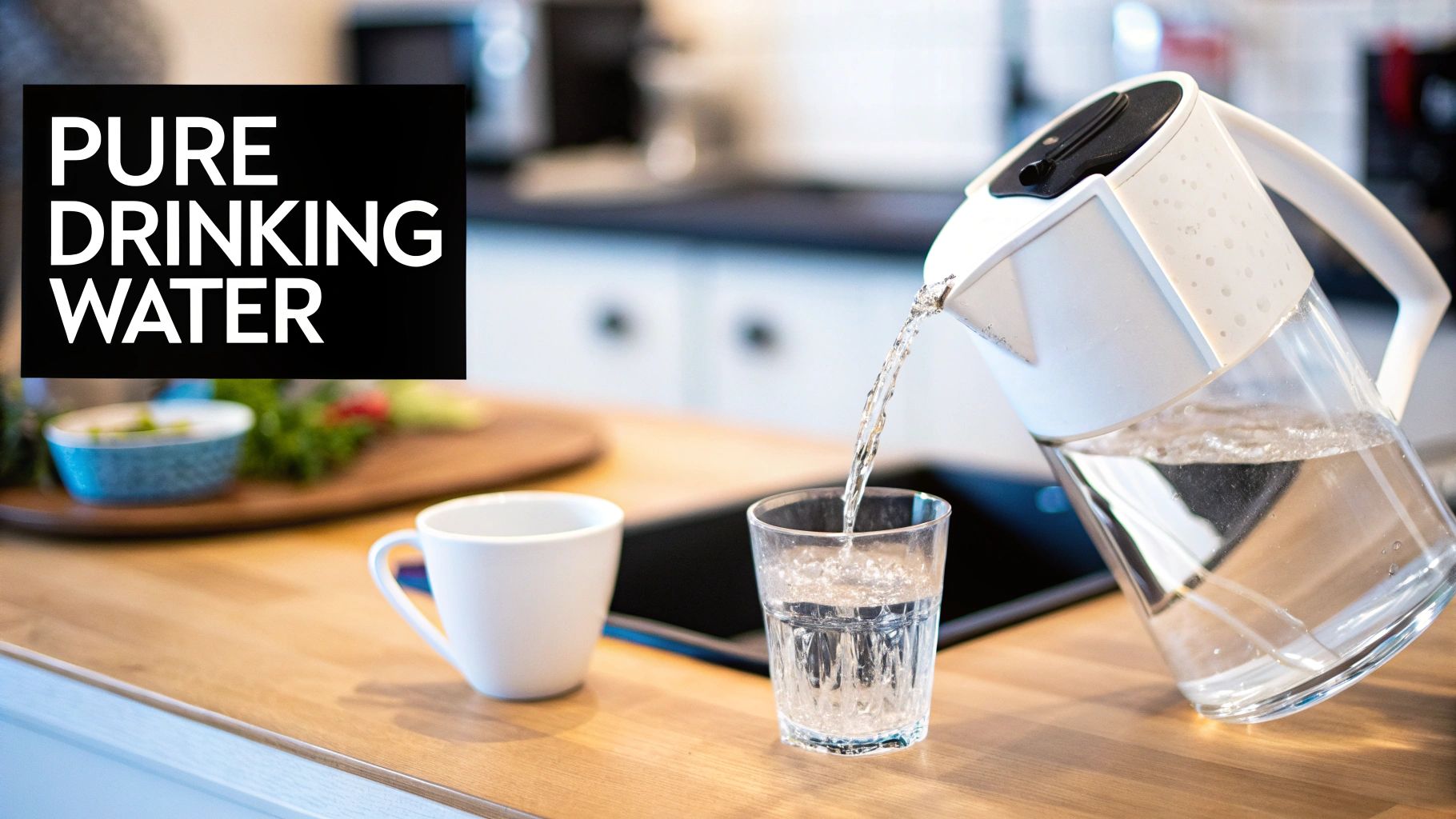
While a water softener armors your home against hard minerals, a water filter tackles a completely different—and frankly, more personal—job. Think of it as the final gatekeeper for your family's health, focused on removing the contaminants you can't see but definitely don't want in your body.
The best way to think about it is protection versus purification. Softeners protect your property; filters protect you. For homeowners here in Southwest Florida, getting this distinction right is the key to having truly clean, safe water.
Targeting Contaminants for Better Health and Taste
A water filter is designed to trap and eliminate a whole spectrum of impurities. Where a softener simply ignores things like chemicals and bacteria, a filter is specifically engineered to go after them. The result isn't just safer water, but water that tastes and smells noticeably cleaner.
The technology can vary quite a bit, with different types designed to handle specific threats. A few of the most effective methods we see every day include:
- Activated Carbon Filters: These are the workhorses for getting rid of bad tastes and odors. The carbon's porous surface acts like a powerful magnet, grabbing onto chlorine, pesticides, and other organic chemicals that make tap water unappealing. Exploring our advanced carbon filters will show you just how effective this first line of defense can be.
- Reverse Osmosis (RO) Systems: When it comes to purity, this is the gold standard. RO systems use a special membrane to force water through at a molecular level, leaving behind up to 99% of dissolved solids. That includes heavy metals like lead and arsenic, along with viruses, bacteria, and fluoride.
"We used to buy cases of bottled water every week, worried about what was coming out of our tap. After Water Medic installed our RO system, the peace of mind is incredible. The water tastes fantastic, and we know it’s safe for our kids."
That sense of security is what’s driving the huge demand for advanced filtration. The global water filter market is actually projected to more than double, from USD 16.16 billion to USD 33.96 billion by 2033. As our water sources face more stress, these systems are becoming less of a luxury and more of a necessity.
The Everyday Benefits of Pure Water
The impact of filtered water goes way beyond just a clean glass to drink. You start to notice small improvements in your daily routines, giving you a consistent quality you can count on, no matter what’s going on with the municipal supply.
Just think about these practical examples:
- Morning Coffee and Tea: Without chlorine getting in the way, the real flavor of your coffee beans or tea leaves comes through. It’s a richer, more authentic taste.
- Clearer Ice Cubes: Filtered water makes harder, clearer ice cubes that won't make your drink cloudy or leave a strange aftertaste.
- Confident Cooking: Whether you're boiling pasta or washing vegetables, using purified water means you’re not adding unwanted contaminants to your family's meals.
- Safety During Advisories: When the local news issues a "boil water" notice, having a robust system like a whole-house RO means you have an uninterrupted supply of safe water right from the tap.
Ultimately, putting a high-quality water filter in your home is a direct investment in your family's well-being. It’s about having the confidence that every drop of water you use for drinking, cooking, and cleaning is as pure as it can possibly be.
Comparing Systems for a Clearer Decision
When you're trying to figure out if you need a water softener or a water filter, it's easy to get bogged down in technical jargon. Let's cut through the noise. Making the right call isn't just about solving one problem; it's an investment in your home and your family's well-being.
This breakdown will help you see exactly what each system does—and doesn't do—so you can choose the right fit for your home here in Southwest Florida.
What Problem Are You Actually Trying to Solve?
This is the most important question, and the answer is surprisingly simple. A water softener is a specialist with one, and only one, job: it fights hard water. Its entire purpose is to grab the minerals—specifically calcium and magnesium—that create that destructive, crusty limescale buildup. Think of it as a bodyguard for your home’s plumbing, water heater, and dishwasher.
A water filter, on the other hand, is all about purification. Its mission is to take out a whole host of contaminants that a softener won't even touch. We’re talking about everything from the chlorine that makes your tap water taste and smell like a swimming pool to invisible threats like lead, pesticides, bacteria, and other chemicals. It's focused squarely on your health.
The real takeaway is this: a water softener protects your home from what's in the water, while a water filter protects your body. They are not interchangeable.
Home Protection vs. Health Benefits
Since each system has a different target, the perks you'll see are completely different, too. With a professionally installed water softener, the results are all about protecting your property and saving you money.
- Appliance Longevity: You’ll get more years out of your water heater, washing machine, and dishwasher by stopping the internal scale that causes them to work harder and fail early.
- Better Efficiency: Your appliances will run the way they were designed to, which can slash water heater energy costs by nearly 30%.
- Less Soap, More Lather: You’ll use up to 50% less soap, detergent, and shampoo because soft water actually lets them do their job.
- No More Spots and Scum: Finally, you can say goodbye to those chalky spots on your glasses and that gross soap scum on your shower doors.
In contrast, a water filter delivers benefits you can taste and feel, directly impacting your family's health.
- Truly Safe Drinking Water: A top-tier system like reverse osmosis can remove up to 99% of dissolved solids, including nasty stuff like lead, arsenic, and even viruses.
- Water That Tastes Like Water: By stripping out chlorine and other chemicals, filters give you clean, crisp water that's perfect for drinking, cooking, and making coffee or ice.
- A Shield for Your Health: It creates a reliable barrier against bacteria and other microorganisms—a critical feature for households with young children or anyone with a compromised immune system.
Here in Florida, we're fighting notoriously hard water. A good softener prevents limescale that clogs pipes and kills water heaters years before their time, saving homeowners thousands. On the flip side, the water filter market is projected to hit USD 26.42 billion by 2032, driven by growing health concerns. While a softener protects your investment in your home, a filter protects your investment in your health. To see how these solutions are evolving, you can explore the water softener market insights.
What to Expect with Maintenance and Costs
Your ongoing commitment to the system is another area where softeners and filters diverge. A traditional, salt-based water softener needs your help to keep working. You'll have to regularly add large bags of salt to its brine tank so the ion exchange process can recharge. It’s a recurring cost and a bit of physical work you'll need to stay on top of.
Water filters operate on a different cycle. Their maintenance involves swapping out filter cartridges. How often depends on the system and your water usage—it could be every few months for a basic carbon filter or once a year for a reverse osmosis membrane. This is also an ongoing expense, but it typically doesn't involve hauling 40-pound bags around. At Water Medic, we can map out the exact maintenance schedule for any system you're considering.
Detailed System Showdown: Softener vs. Filter
To make things even clearer, here’s a straightforward table breaking down the key differences. It’s a great way to see, at a glance, which system lines up with your priorities.
| Criterion | Water Softener (Ion Exchange) | Water Filter (e.g., Reverse Osmosis) |
|---|---|---|
| Target Problem | Hard water minerals (calcium & magnesium) | Contaminants (chlorine, lead, bacteria, viruses) |
| Primary Benefit | Protects appliances, plumbing, and fixtures | Provides safe, great-tasting drinking water |
| Effect on Taste | May add a slightly salty or "slick" taste | Dramatically improves taste and eliminates odors |
| Health Impact | Does not purify water or remove health threats | Directly safeguards health by removing impurities |
| Ongoing Maintenance | Requires regular salt refills (40-50 lbs monthly) | Requires periodic filter cartridge replacement |
| Ideal User | Homeowners with limescale, spotty dishes, and dry skin | Families concerned with water safety and purity |
This side-by-side view really highlights their unique roles. One is for asset protection, the other is for health protection. Now you can better decide which solution—or combination of both—is the right move for your home.
Do You Need a Softener, a Filter, or Both?
Okay, we've covered the technical side of water softeners versus filters. Now for the practical part: figuring out what your home actually needs. This isn’t just about the science—it's about solving the specific water problems you deal with every single day here in Southwest Florida.
The best way to start is by diagnosing your water. Are you fighting a never-ending war against crusty, white buildup on your fixtures? Or is your main concern the taste, smell, and safety of the water your family drinks? Your answer is the key to finding the right system.
Decoding Your Water Problems
Let's walk through a couple of real-world scenarios. See which one sounds more like your house. This little exercise usually makes it crystal clear whether you need a softener, a filter, or a more comprehensive setup.
Scenario 1: The Home with Spotty Dishes and Dry Skin
Your daily life is a battle against hard water. Your glasses come out of the dishwasher looking cloudy, there's white scale caked onto your faucets, and your skin feels tight and itchy after every shower. Sound familiar?
- Your Main Issue: High levels of dissolved calcium and magnesium.
- The Clear Solution: A water softener is your specialist. It's built for one primary job: to target and remove those hardness minerals, protecting your pipes and appliances while giving your hair and skin some much-needed relief.
Scenario 2: The Family Concerned with Water Taste and Safety
Maybe your dishes are spotless, but you’re buying pallets of bottled water because the tap water tastes like chlorine or has a funky, earthy smell. You might also be worried about contaminants you can't see, like pesticides, lead, or bacteria—a common concern for families with kids or anyone on well water.
- Your Main Issue: Unwanted chemicals, organic compounds, and potential pathogens.
- The Clear Solution: This is a job for a water filter. A quality system, like an activated carbon or reverse osmosis unit, is designed to purify your water, making it safe, clean, and great-tasting right from the tap.
This flowchart breaks down the decision process beautifully.
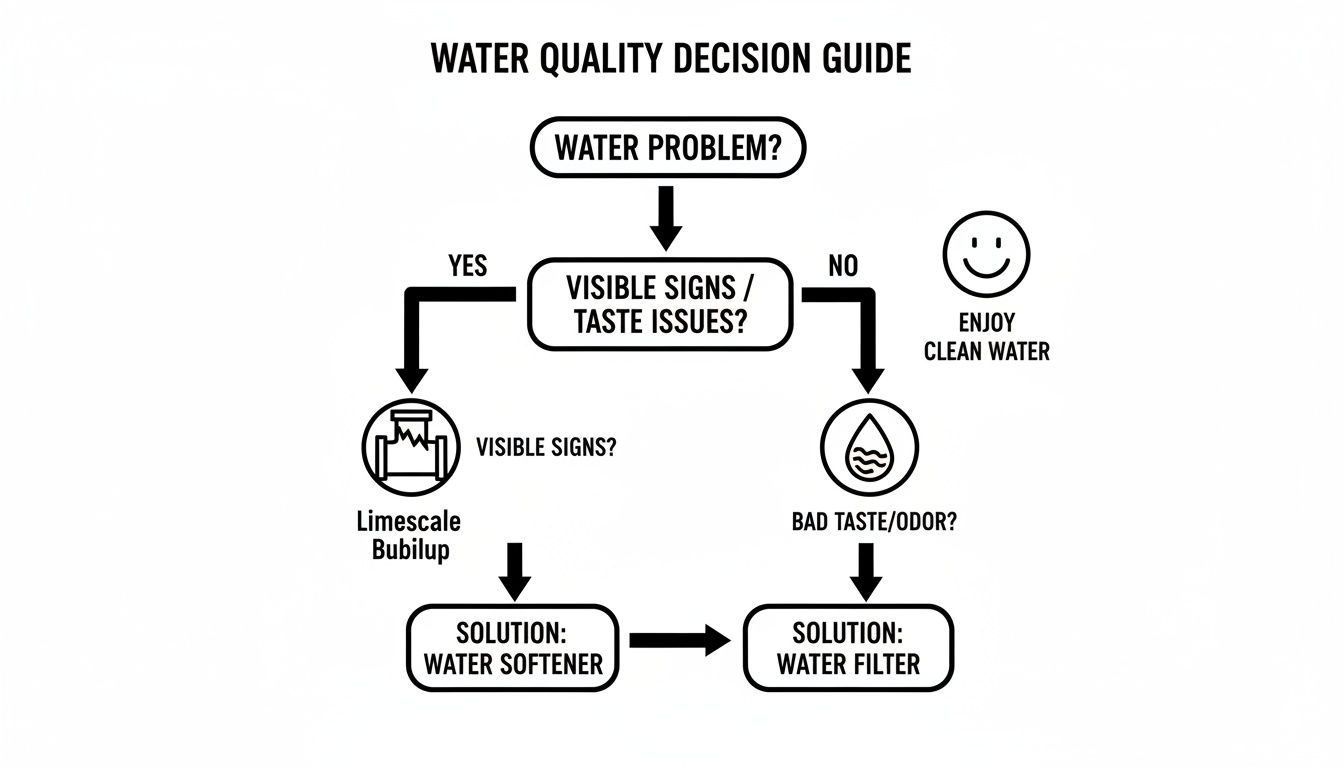
As you can see, visible signs like limescale point straight to a softener. If it’s about taste or odor, a filter is your answer.
When One System Isn't Enough
But what if you're nodding your head to both scenarios? That's actually incredibly common around here, especially for well water users or anyone living where the city water is both hard and heavily treated. In these cases, a single system just won't cut it.
For many homeowners, the best solution isn't an "either/or" choice but a "both/and" strategy. It’s entirely possible to have extremely hard water that’s also loaded with sulfur, iron, or other things that ruin the taste and raise safety concerns.
Think about it: installing only a softener would leave you with mineral-free water that still tastes or smells bad. On the flip side, a filter alone would give you pure-tasting water that continues to clog your pipes and destroy your appliances with scale buildup.
This is why a dual-system approach is often the smartest long-term investment. By pairing a water softener with a powerful filtration system, you're creating a comprehensive defense. The softener protects your home's entire plumbing infrastructure, and the filter provides that final polish for your family's health and enjoyment.
For homes with particularly tough water—well systems are the perfect example—a complete setup is non-negotiable. This usually means a softener to handle the hardness, followed by a multi-stage filter to tackle everything else. For ultimate peace of mind, many of our clients opt for one of the powerful whole house reverse osmosis systems we specialize in, ensuring every single tap delivers perfectly pristine water.
At Water Medic, we don't guess. Our process always starts with a professional water analysis to find out exactly what’s in your water. That data allows us to design a system that solves all of your problems, not just the most obvious one.
Finding the Right Partner for Your Home's Water
Figuring out the difference between a water softener and a filter is the first real step toward getting the water you want. As we've covered, one is all about protecting your home's pipes and appliances from scale buildup, while the other is focused on purifying what you drink to protect your family's health. For many of us here in Southwest Florida, the best answer isn't picking one over the other—it's combining their strengths for complete peace of mind.
At Water Medic of Cape Coral, we do more than just sell and install equipment; we design complete water quality solutions. With over 25 years of hands-on experience right here in the community, we've seen it all when it comes to local water challenges, from shockingly hard water to the specific contaminants found in wells. We know that every home’s water is unique, which is why a one-size-fits-all box from a big store just doesn't cut it.
Your Path to Perfect Water
Our goal is to find a solution that genuinely fits your home and your family, making sure your investment improves your daily life for years to come. We’re here to be your long-term partner in water quality, not just a one-and-done installer.
Don’t guess what your water needs—let us show you. We provide the clarity and expertise needed to make a confident decision, ensuring you get the most effective and efficient system for your home.
That’s why we invite you to take the single most important step: scheduling a free, no-obligation water analysis. One of our experts will come to your home, run tests on your water right there, and give you a straightforward, data-driven recommendation. This process takes all the guesswork out of the equation and puts you on a clear path forward with a system designed specifically for you.
Ready to stop worrying about what's in your water? Let Water Medic of Cape Coral be your trusted guide. Contact us today to schedule your complimentary water analysis and discover what truly clean, safe water can do for your home.
Frequently Asked Questions
When you start looking into water treatment, a few key questions always seem to pop up. We get it. It can be confusing. Here are some straightforward answers to the questions we hear most often from homeowners right here in Southwest Florida.
Will a Water Softener Make My Drinking Water Safe?
This is a big one, and the short answer is no. A water softener's job is very specific: it's built to tackle hardness minerals like calcium and magnesium. That's what stops limescale from ruining your pipes and appliances.
It isn't designed to touch bacteria, chlorine, viruses, or other contaminants that affect drinking water quality. For truly pure, safe water straight from the tap, you really need a dedicated filtration system, like Reverse Osmosis. Many of our customers find the ultimate solution is a dual setup, which is why we often recommend our whole house reverse osmosis systems for total peace of mind.
How Do I Know if I Have Hard Water?
You can usually see the evidence of hard water all over your house. The most common clues are:
- A white, chalky residue (limescale) crusting up your faucets and showerheads.
- Stubborn soap scum that seems impossible to clean in your tub and shower.
- Spots on your dishes, even when they’re fresh out of the dishwasher.
- Your skin might feel dry and itchy, or your hair looks dull and lifeless.
The only way to know for sure is to test it. At Water Medic, we offer a complimentary water analysis that tells you exactly what your hardness level is, taking all the guesswork out of finding the right fix for your home.
Can I Install a Water Treatment System Myself?
You'll see DIY kits on the shelves, but this is one of those jobs where professional installation really pays off. Getting it right involves more than just connecting a few pipes. Our technicians are trained to evaluate your home's unique plumbing, check water pressure, and find the perfect spot to ensure everything runs smoothly.
A proper setup prevents costly mistakes like leaks or incorrect calibration, which can damage the system or your home. Plus, professional installation protects your warranty and ensures the system is dialed in perfectly for our local water conditions—a small detail that makes a huge difference in how well it works for years to come.
Is a Whole-House Filter Better Than an Under-Sink Filter?
It really boils down to what you're trying to achieve. An under-sink filter, especially a good Reverse Osmosis unit, is a specialist. It provides incredibly pure water from a single tap, making it perfect for all your drinking and cooking needs.
A whole-house filter is a generalist—it treats every drop of water that enters your home. This is fantastic for getting things like chlorine out of your shower water and protecting your plumbing from sediment. For the best of both worlds, a lot of homeowners go with a whole-house carbon filter for general use and add an under-sink RO system for that crystal-clear drinking water.
Your home deserves the best water possible. For a solution designed specifically for your needs, trust the local experts at Water Medic of Cape Coral.
Schedule Your Free Water Analysis Today!