How to Remove Calcium Buildup in Pipes: A Homeowner’s Guide
That sputtering faucet or the shower that just doesn't have the oomph it used to? These aren't just minor quirks your house has developed—they're telltale signs that something is going on inside your pipes. The first step is learning to play detective and spot the evidence of calcium buildup. We're talking about subtle clues like reduced water flow, a chalky film on your fixtures, and maybe even some unusual noises coming from your water heater.
Catching these things early can save you a world of trouble and expense down the road. It’s not just about convenience; it's about protecting the long-term health of your home’s plumbing system.
How to Spot Calcium Buildup in Your Plumbing
Before you can fix the problem, you have to know what you're looking for. Limescale, the formal name for this chalky menace, doesn’t show up all at once. It’s a slow, sneaky invader, leaving a trail of clues that most homeowners in Cape Coral don't notice until it's already causing real issues. The culprit is hard water, and it's quietly choking the life out of your plumbing.
And this isn't some rare phenomenon. The reality is that hard water—water with a high mineral content—is incredibly common. A staggering 85% of U.S. homes are dealing with its effects. Think about this: mineral scale can shrink a pipe's diameter by 1-2 millimeters every single year. That gradual narrowing forces your entire system to work harder, potentially jacking up your water pumping energy costs by 15-25%. If you want to dive deeper, the USGS has extensive research on water hardness.
The Most Common Symptoms of Limescale
Keep your eyes peeled for these classic signs. Recognizing them early is your best line of defense.
- Weak Water Pressure: This is usually the first thing people notice. If your shower feels more like a drizzle or it takes forever to fill a pot at the sink, that’s a huge red flag. Mineral deposits are likely creating a bottleneck somewhere in the line.
- Chalky White Gunk: Take a close look at your showerheads, faucet aerators, and drains. That crusty, white residue is limescale in plain sight. If you can see it on the outside, you can bet it's caked on the inside of your pipes, too.
- Cloudy Glassware: Pulling spotty, foggy glasses from the dishwasher is a dead giveaway. Those mineral deposits are what’s left behind after the water evaporates. That same buildup is happening inside your dishwasher's pumps and spray arms.
- Appliances Losing Their Edge: Your water heater, dishwasher, and washing machine have to fight against limescale buildup. This forces them to run longer and hotter, which means higher utility bills and a shorter lifespan for some of your most expensive appliances.
Pro Tip: Your water heater is like a magnet for calcium. If you hear popping or rumbling sounds coming from it, that's often the sound of water being superheated as it gets trapped under a layer of mineral sediment at the bottom of the tank. It’s a clear sign of a serious buildup.
When to Seek a Professional Diagnosis
Seeing one of these signs might not be a catastrophe, but if you're ticking multiple boxes on this list—weak pressure in the bathroom, spotty dishes in the kitchen, a noisy water heater—you're looking at a house-wide problem. A little vinegar soak for your showerhead isn't going to cut it.
That’s the time to get a professional opinion. A skilled technician from Water Medic of Cape Coral can give you a true assessment of what's going on. We can determine the severity of the buildup and tell you whether a simple flush will do the trick or if you need a more comprehensive plan to rescue your plumbing system from the inside out. Our expertise is in diagnosing and providing effective plumbing services from Water Medic tailored to solve these exact problems.
Tackling Minor Limescale Yourself: Some Practical DIY Fixes
When you first spot the tell-tale white, chalky signs of limescale, it's easy to jump to conclusions and imagine a massive plumbing bill. But for smaller, localized buildups, you can often get things flowing smoothly again with a few things you probably already have at home. These tricks are perfect for cleaning up fixtures, getting clogged aerators spraying right, and keeping your appliances happy before the problem gets any deeper.
The moment you notice a sputtering faucet, see that crusty residue, or hear a strange gurgling sound from your pipes, it's time to roll up your sleeves.
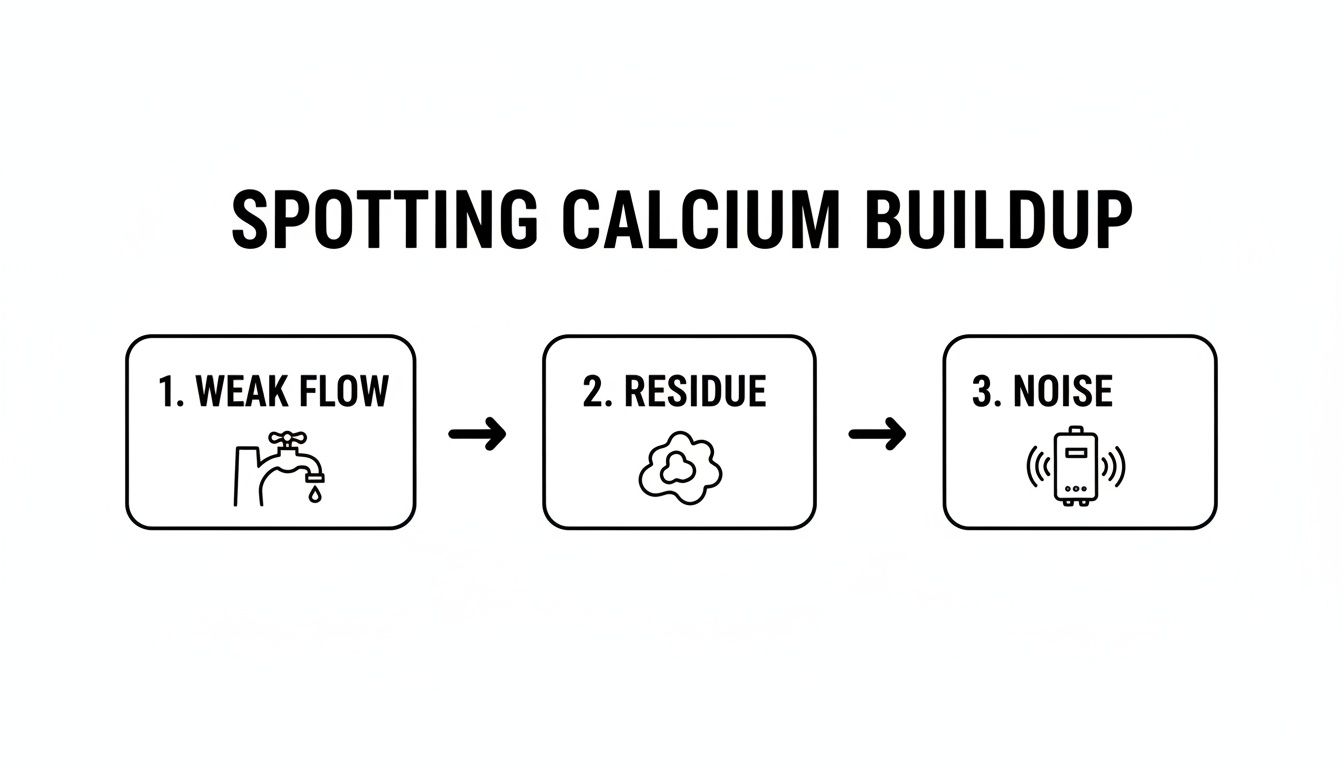
These early warning signs are your cue to try a simple, at-home solution.
Household Acids: The Go-To for Surface Buildup
Believe it or not, your pantry probably holds the answer. Good old white vinegar is fantastic for dissolving minor limescale because its acetic acid is a natural enemy of calcium carbonate—that's the stuff forming those crusty deposits. This is the first recommendation for showerheads and faucet tips every time.
You don't even have to break out the toolbox to clean a clogged showerhead. Just fill a plastic bag with white vinegar, wrap it around the showerhead so all the nozzles are fully submerged, and secure it with a rubber band. Let it soak for a few hours—or even overnight if it's really caked on. Afterwards, take the bag off, run hot water to flush everything out, and use an old toothbrush to scrub off any stubborn bits. Easy.
When to Grab a Commercial Descaler
Sometimes, vinegar just doesn't have enough muscle. This is when a commercial descaler can be your best friend, especially for appliances like coffee makers. But a word of caution: not all these products are the same, and grabbing the wrong one can do more harm than good.
You have to read the label. Make sure the product is safe for your specific pipes.
- Copper Pipes: Stay away from overly harsh acids. They can cause corrosion over time. Look for a descaler specifically labeled "safe for copper."
- PVC or PEX Pipes: These are tougher and can handle more, but it’s still critical to follow the manufacturer's dilution instructions to the letter.
- Older Galvanized Pipes: These pipes are already at risk for corrosion. Honestly, it's best to avoid strong chemical descalers entirely and give a professional a call.
A quick but important safety note: Anytime you're working with a commercial descaler, protect yourself. Wear rubber gloves and safety glasses, and make sure the room is well-ventilated. Open a window or turn on an exhaust fan, because those fumes can be powerful.
Going Chemical-Free With Mechanical Methods
If you'd rather avoid chemicals altogether, a little elbow grease can go a long way. For accessible drains, like in a bathroom sink, you can use a thin, flexible drain brush. Snake it down the pipe and physically scrub away the limescale that’s clinging to the inside walls.
This method won't solve problems deep in your plumbing system, of course. But it’s a fantastic way to keep your most-used drains clear and prevent small accumulations from turning into major clogs.
Now, it's important to remember that these DIY tricks are really just for surface-level problems. They clean the endpoints—your faucets and drains—but they don't address the root cause of hard water or the serious buildup that could be lurking in your main lines.
For a more advanced, whole-home solution, you might want to look into something like ScaleNet technology, which actually prevents scale from forming in the first place. It's a proactive approach that treats the water itself. But if you’ve tried these DIY tips and your water pressure still isn't back to normal, that's a clear signal the problem is more serious. That's when it's time to call us at Water Medic for a professional look.
When to Call a Professional for Pipe Descaling
Let's be honest, DIY fixes with vinegar or a small brush have their place. They're great for clearing up the scale you can see on a faucet or showerhead. But when the problem runs deeper, these are just band-aids. If you're noticing issues beyond a single fixture, you’re likely dealing with a system-wide buildup that home remedies simply can't touch.
That’s your cue to put down the household cleaners and pick up the phone. Widespread, stubborn scale requires professional tools and know-how to clear out without wrecking your plumbing in the process.
Signs That DIY Is No Longer an Option
Knowing when to switch from a DIY mindset to calling for backup is crucial. If you've tried the basics and are still seeing these symptoms, it's a dead giveaway that the buildup is serious and has a firm grip deep inside your pipes.
- Multiple Clogged Fixtures: One slow drain can happen. But when the kitchen sink, the shower, and the laundry drain are all struggling, the real clog is probably in a main line.
- Persistent Low Water Pressure: You’ve cleaned all your aerators and showerheads, but the pressure is still weak throughout the house. This means the bottleneck is happening much further down the line.
- Water Backups: This is a big one. If water from your dishwasher causes the sink to gurgle and back up, there's a significant blockage preventing proper flow.
- Visible Corrosion or Damage: See any weird discoloration or flaking on your pipes, especially older ones? Pouring chemicals down there without knowing what you're doing is asking for a leak.
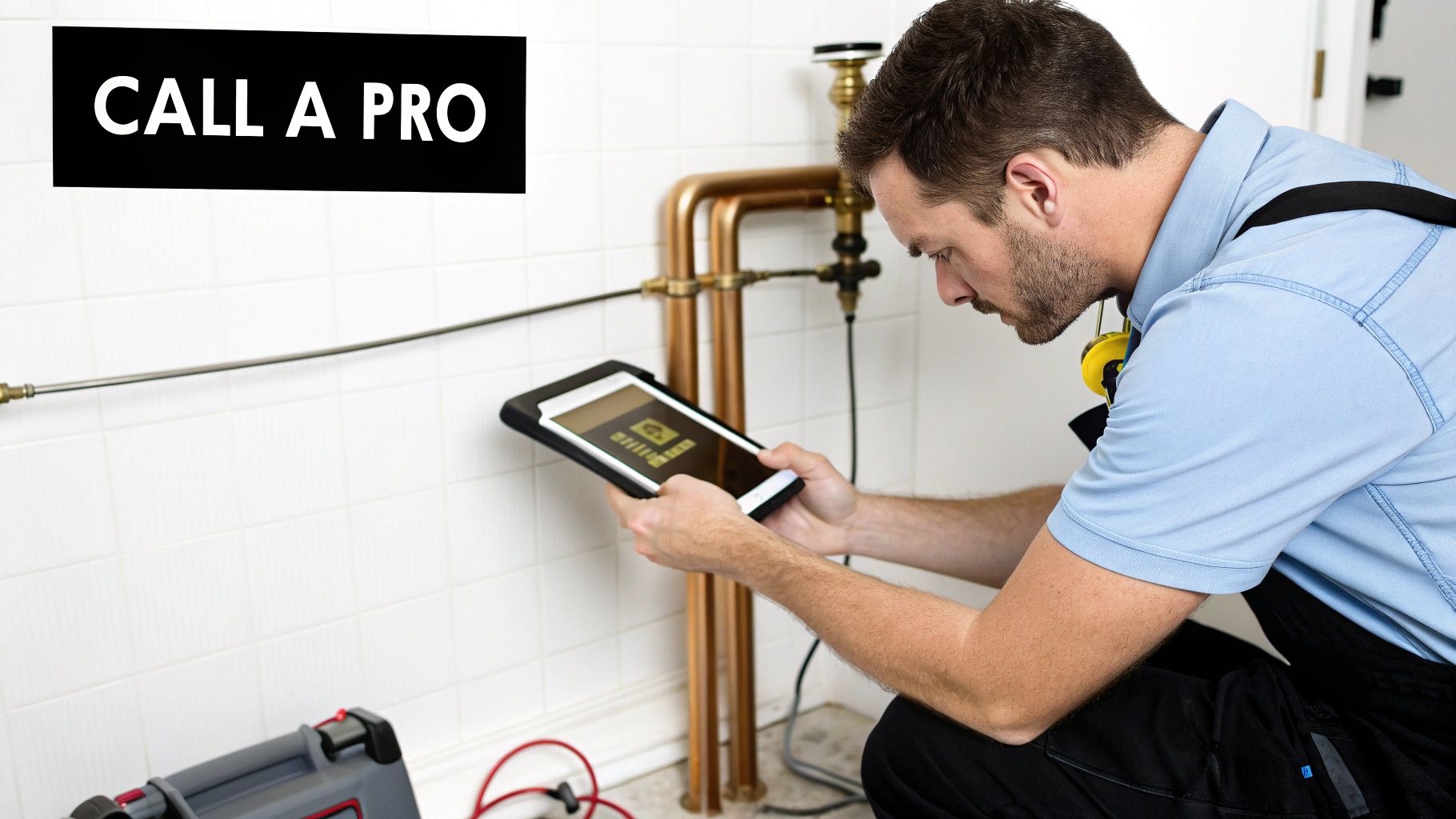
When the problem feels bigger than you can handle, calling a professional plumber is the smartest and safest move. An experienced technician can figure out exactly what’s going on without putting your plumbing at risk.
Our Professional Assessment Process
Here at Water Medic of Cape Coral, we don’t guess. We diagnose. Our first move is always to get a clear look at what's happening inside your pipes. Trying to fix a major clog without knowing the cause is a recipe for disaster.
We use advanced tools, like special video cameras, to conduct a full pipe inspection. This tech lets us see the exact location and severity of the calcium buildup—how thick it is and where the worst spots are. Think of it as an internal health scan for your plumbing, allowing us to pinpoint the problem without any demolition.
This detailed look is vital. It tells us which tools and techniques will work best and, more importantly, which ones are safe for your specific pipes, whether they're copper, PVC, or old-school galvanized steel.
Advanced Solutions for Severe Buildup
Once we have a solid diagnosis, we bring out the heavy-duty solutions that go far beyond anything you can buy at a hardware store. These methods are designed to completely restore your pipes’ flow capacity back to what it was when they were new.
At Water Medic, our goal isn't just to poke a hole through the clog. We aim to restore your pipes to their near-original condition, ensuring a long-lasting solution that improves your entire home's water flow and efficiency.
Here are the main techniques we rely on to obliterate severe calcium buildup:
- Hydro-Jetting: This is our most powerful mechanical tool for a reason. We guide a specialized hose into your pipes that blasts water at incredibly high pressures—we’re talking up to 4,000 PSI. This force is strong enough to scour away years of hardened scale and gunk, leaving the inside of the pipe spotless without any harsh chemicals.
- Professional-Grade Descaling Agents: Sometimes, a carefully controlled chemical approach is the better option depending on the pipe material. We use industrial-strength descaling agents formulated to dissolve calcium carbonate fast. Our trained technicians know exactly how to apply them safely to break down the scale without eating away at your pipes.
These are not weekend warrior projects. They demand specialized equipment and a real understanding of how plumbing systems work. To get a better idea of our capabilities, you can explore the various plumbing services from Water Medic and see how we can bring your home’s plumbing back to life.
The Best Long-Term Solution: Water Softeners and Prevention
Scrubbing away existing limescale and clearing clogged pipes feels like a victory, but it's really just winning a single battle. The war against hard water is relentless, especially here in Southwest Florida. Without a proper strategy, it's a fight your plumbing is destined to lose.
Reactive cleanups solve today’s problem, but what about the slow, silent damage happening tomorrow? The smartest approach isn’t just removing calcium buildup; it’s stopping it from ever forming in the first place. Instead of repeatedly treating the symptoms—low pressure, spotty dishes, appliance failures—you can eliminate the root cause. A proactive strategy is the single best investment for your home's long-term health.

Embrace Whole-Home Water Softening
The undeniable champion of limescale prevention is a whole-home water softener. This isn’t a small filter you screw onto a faucet; it’s a comprehensive system that treats every drop of water entering your house. Think of it as a gatekeeper, intercepting hard water before it ever gets a chance to wreak havoc on your pipes, water heater, and appliances.
The magic happens through a process called ion exchange. As water flows through a tank filled with resin beads, the hardness minerals—calcium and magnesium—are captured and swapped for harmless sodium ions. The result is pure, softened water flowing to every tap, shower, and washing machine.
This proactive approach means you’re no longer just managing a recurring problem. You’ve eliminated it. Your pipes stay clear, your water heater operates at peak efficiency, and your dishwasher can finally deliver on its promise of sparkling-clean glasses.
A professionally installed water softener isn’t just about convenience; it’s about asset protection. It safeguards thousands of dollars worth of plumbing and appliances from the constant assault of mineral scale, extending their lifespan and saving you from premature replacement costs.
Beyond Pipes: The Everyday Benefits of Soft Water
While the main goal is preventing calcium buildup in your pipes, the advantages of a water softening system spill over into your daily life in ways you can see and feel.
- Softer Skin and Hair: Hard water minerals leave a chalky film on your skin and hair, making them feel dry and brittle. Soft water rinses completely clean, leaving skin smoother and hair more manageable.
- Reduced Soap and Detergent Use: You’ll find yourself using up to 50% less soap, shampoo, and laundry detergent. Soft water creates a rich lather easily, meaning you get a better clean with less product—and save money over time.
- Brighter, Softer Laundry: Those same minerals that clog your pipes also get trapped in the fibers of your clothes, making them look dull and feel stiff. Soft water helps laundry stay brighter and feel softer, wash after wash.
Exploring the different types of systems is a great next step. You can discover more about how Water Medic's water softeners are specifically designed to handle the unique water challenges here in Cape Coral.
Choosing the right approach depends on your specific needs, budget, and how much effort you're willing to put in. The table below breaks down the most common strategies for dealing with limescale.
Comparing Limescale Removal and Prevention Strategies
| Method | Best For | Pros | Cons |
|---|---|---|---|
| DIY Acid Cleaning | Quick fixes for small areas like faucet heads and showerheads. | Inexpensive, uses common household items (vinegar). | Temporary solution, labor-intensive, not suitable for entire plumbing systems. |
| Commercial Descalers | More stubborn, localized buildup in appliances or pipes. | Stronger and faster-acting than household acids. | Can be harsh on older pipes, requires careful handling and flushing. |
| Mechanical Removal | Severe, physical blockages that can't be dissolved. | Highly effective for complete clogs, physically removes scale. | Requires specialized tools, high risk of pipe damage if done incorrectly. |
| Water Softener | Long-term, whole-home prevention of all future limescale. | Prevents buildup everywhere, protects appliances, saves money on soap. | Higher upfront investment, requires ongoing salt refills. |
Ultimately, while descaling methods offer a temporary fix, a water softener is the only true long-term solution that protects your entire home from the ground up.
Simple Maintenance for a Healthy Plumbing System
Even with a water softener, a little routine maintenance goes a long way. These simple habits help minimize any sediment that might slip through and keep your system running smoothly for years.
- Flush Your Water Heater Annually: Draining a few gallons from the bottom of your water heater tank once a year clears out any settled sediment. This simple act improves efficiency and prolongs the unit’s life.
- Clean Faucet Aerators Regularly: Every few months, just unscrew the tips of your faucets and rinse the small screens inside. This catches any minor debris before it can cause a noticeable blockage.
- Inspect Appliance Hoses: Take a quick look at the hoses on your washing machine and dishwasher for any signs of bulging or cracking. Hard water can make these components brittle over time.
By pairing a high-quality water softener with these basic maintenance habits, you shift from being a reactive fixer to a proactive homeowner. This approach doesn't just solve how to remove calcium buildup in pipes—it ensures you rarely have to ask the question again.
Why Cape Coral Trusts Water Medic for Plumbing Health
When you’re staring down the barrel of a stubborn plumbing issue caused by hard water, you don’t just need a plumber. You need a local specialist who lives and breathes Southwest Florida’s unique water challenges.
That’s exactly why homeowners across Cape Coral and the surrounding communities consistently turn to Water Medic. Our team isn't just based here; we have a deep, practical understanding of the local water chemistry and the silent war it wages on your home's pipes.
This local expertise is everything. We’ve seen firsthand how our mineral-rich water can choke pipes, reduce pressure to a trickle, and wear out expensive appliances years before their time. We don't believe in generic, one-size-fits-all fixes because, frankly, what works in other regions often falls short here.
Our Commitment to Advanced Technology
To really win the fight against severe calcium buildup, you need more than just elbow grease. You need serious technology. We invest heavily in state-of-the-art diagnostic and cleaning equipment to make sure we solve the problem correctly the first time.
This commitment means we can work faster, more accurately, and with less disruption to your home and daily life.
Here are a couple of the advanced methods we rely on:
- Advanced Camera Inspections: Before we touch a thing, we often send a high-resolution camera down into your pipes. This gives us—and you—a crystal-clear view of the exact location and severity of the limescale, completely eliminating the guesswork.
- Powerful Hydro-Jetting: For the toughest blockages, we bring in the big guns. Our hydro-jetting equipment uses highly pressurized water to safely and effectively scour the inside of your pipes. Think of it as a power washer for your plumbing, restoring flow to near-original condition without harsh chemicals.
This technology allows us to provide a definitive solution for how to remove calcium buildup in pipes, rather than just poking a temporary hole through a clog.
At Water Medic, our approach is built on transparency and honesty. You'll always get a clear explanation of the problem, a detailed plan of action, and straightforward pricing before any work begins. We want you to feel confident and empowered to make the best decision for your home.
Real-World Solutions for Your Neighbors
We've built our reputation on getting real results for families right here in Cape Coral. Take a recent case on a canal-front home. The owner had frustratingly low water pressure in the master bathroom, even after installing new fixtures. DIY methods had failed, and they were worried they’d have to repipe the whole line.
Our camera inspection pinpointed the culprit: a massive, rock-hard calcium deposit deep within a bend in the copper pipe. It was in a spot that was completely inaccessible without professional tools. We carefully used our hydro-jetting system to break apart and flush out the years of buildup.
In just a few hours, the home's water pressure was fully restored. More importantly, we saved the owner thousands in potential repiping costs.
A Partner in Your Home’s Long-Term Health
Ultimately, we see ourselves as more than just a repair service. We’re your partners in maintaining the long-term health and efficiency of your home’s most critical system. We don’t just offer a temporary fix; we provide permanent solutions designed to protect your investment.
When you contact us to schedule a consultation, you’re not just calling another plumber. You’re connecting with a dedicated team of local water quality experts who are committed to delivering professional service and lasting peace of mind. Let us show you why Water Medic is the trusted name for plumbing and water treatment in Cape Coral.
Common Questions About Calcium Buildup in Pipes
Even with a solid game plan, you probably still have a few questions about limescale. It’s a common problem, but the details can feel a bit murky. We get calls about this all the time at Water Medic, so we’ve put together answers to the most frequent questions we hear from homeowners around Cape Coral.
Think of this as your go-to FAQ for everything related to hard water and your plumbing's health.
Can I Just Ignore a Little Bit of Buildup?
It's easy to dismiss that first bit of white, chalky stuff on your faucet, but trust me on this one: it's a huge mistake. That visible residue is just the tip of the iceberg, signaling a much bigger problem is brewing inside your pipes where you can't see it.
Ignoring it is like letting a small crack in your windshield spread. That "little bit" of buildup will silently grow, layer by layer, until it becomes a major blockage. This chokes your water flow and puts a ton of strain on your entire plumbing system. The bill for a burst pipe or a major repiping job is always going to be way higher than tackling the issue early.
Will Calcium Buildup Permanently Damage My Pipes?
This really depends on two things: what your pipes are made of and how long you let the problem go. Limescale is naturally corrosive and can eat away at older galvanized steel pipes over time. With copper and PVC, the bigger danger is the intense pressure created by a serious clog.
A severe blockage can cause water pressure to spike dramatically. This can weaken joints, cause leaks, or even lead to a full-blown pipe burst—and the water damage that comes with it. This isn't just about water flow; it’s about keeping your plumbing system intact.
In most cases, a professional descaling can get your pipes back in great shape. But if the buildup is left for years, the damage can be too severe, leaving a full pipe replacement as the only option.
How Often Should I Descale My Pipes?
There’s no magic number here. If you don't have a water softener, how often you need to descale depends entirely on your local water hardness and how much water you use. Here in Southwest Florida, where the water is incredibly hard, you could see problems return in as little as a year or two after a cleaning.
But honestly, living in a cycle of repeated descaling isn't a real solution. The better question isn't "how often should I descale?" but "how do I stop having to descale at all?" The definitive answer is a whole-home water softener, which stops mineral buildup before it even starts.
Is Hard Water Bad for My Family's Health?
When it comes to your health, the minerals in hard water—calcium and magnesium—are generally safe to drink. They're the same minerals you get from food and supplements.
The real trouble with hard water is mechanical and financial, not medical. It's all about the damage it does to your home, the way it kills the efficiency of your appliances, and those daily frustrations like dry skin, scratchy laundry, and soap that just won't lather. If you want to learn more about keeping your home's water system in top shape, this comprehensive guide to plumbing tips and services is a great resource.
At the end of the day, managing hard water is about protecting your biggest investment and making daily life a little easier.
Don't let hard water win the war against your plumbing. If you're tired of dealing with low pressure, clogged fixtures, and inefficient appliances, the expert team at Water Medic of Cape Coral is ready to provide a lasting solution. Schedule your water quality consultation today and discover how we can restore your pipes and protect your home.