Top Weekly Pool Maintenance Checklist for a Sparkling Pool
Owning a swimming pool in sunny Southwest Florida is a dream come true, offering a perfect escape from the heat and a hub for family fun. However, that dream requires consistent effort to keep the water sparkling, safe, and inviting. The secret to a consistently beautiful and healthy swimming environment isn't a single, complicated task; it's a simple, repeatable routine. Neglecting regular care can lead to cloudy water, algae growth, and even costly equipment damage down the line.
This article provides the ultimate weekly pool maintenance checklist, breaking down the essential duties into seven clear, manageable steps. By following this guide, you will learn exactly what to test, clean, and inspect each week to ensure your pool remains in pristine condition. From balancing water chemistry to cleaning filters, this checklist is your roadmap to effortless upkeep. It empowers you with the knowledge to protect your investment and maximize your enjoyment.
While this DIY guide covers all the essentials for proactive homeowners, achieving perfect water quality without lifting a finger is the ultimate luxury. For those who prefer a completely hands-off approach, consider the benefits of our professional weekly pool service. Our expert technicians ensure your pool is always ready for a swim. Let's dive into the simple steps that will transform your pool care routine.
1. Water Testing and Chemical Balancing: The Foundation of Pool Health
Before you skim a single leaf or vacuum the floor, the first task on your weekly pool maintenance checklist must be testing the water. Proper chemical balance is the invisible force that guarantees your pool is safe for swimmers, prevents stubborn algae growth, and protects expensive equipment like heaters and pumps from corrosion and scaling. Think of it as the foundation of a healthy swimming environment; without it, all other maintenance efforts will be far less effective.
Why It's the First Step
Testing the water first tells you exactly what it needs. Adding chemicals to unbalanced water without knowing the current levels is like guessing the ingredients for a recipe. You might get it right, but you are more likely to create new problems. This weekly check involves measuring key parameters like pH, chlorine, and total alkalinity to maintain a safe, sanitized, and stable environment. For example, commercial facilities like resort pools often test their water every hour or two to comply with health codes and ensure guest safety, illustrating just how critical this step is.
Key Parameters to Test Weekly
To keep your water crystal clear, you need to monitor several chemical levels. While a comprehensive test covers more, your weekly focus should be on the core three for sanitation and stability.
Here is a quick reference guide to the most crucial weekly water testing parameters.
Keeping your pool water within these ideal ranges ensures chlorine is effective and prevents skin and eye irritation for swimmers.
Actionable Tips for Accurate Testing
Getting an accurate reading is essential for making the right adjustments. Follow these best practices to ensure your results are reliable:
- Test Consistently: Take your water sample at the same time of day, away from return jets and skimmers, to get a representative reading.
- Adjust in Order: Always test and adjust total alkalinity before you adjust the pH. Alkalinity acts as a buffer for pH, and balancing it first makes it much easier to lock in the correct pH level.
- Keep a Log: Maintain a detailed record of your test results and chemical additions. This log helps you identify patterns and anticipate future needs.
- Use Fresh Reagents: Test kit reagents expire. Replace them at the beginning of each pool season to guarantee accuracy.
While DIY testing is a vital skill, the precise science of chemical balancing can be complex and time-consuming. If you're struggling to maintain consistency or want guaranteed peace of mind, professional services offer a reliable solution. For a deeper dive into common water chemistry questions, you can find answers in our comprehensive pool FAQs.
2. Skimming Surface Debris: Your First Line of Defense
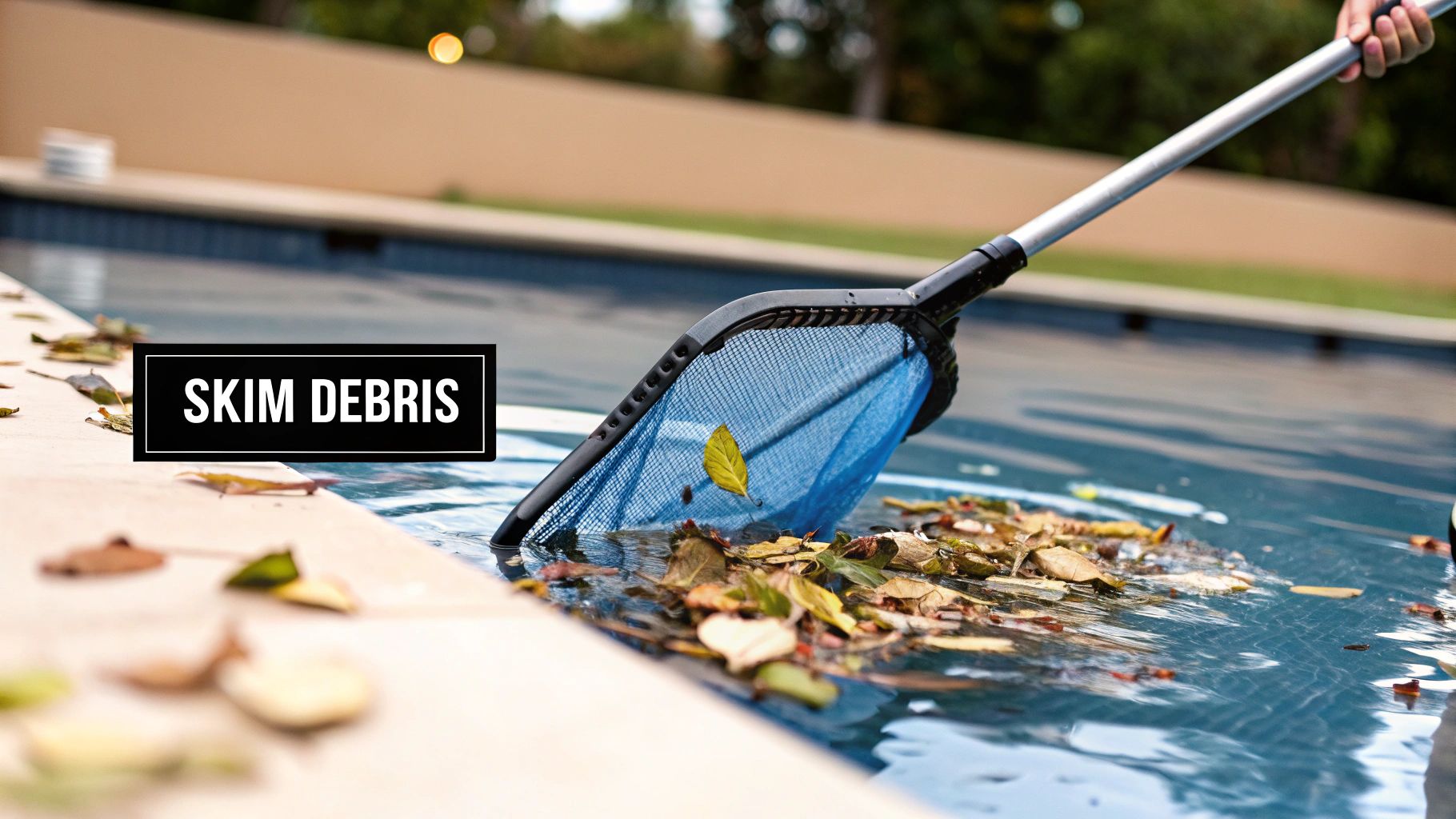
After testing the water, the next physical task on your weekly pool maintenance checklist is skimming the surface. This simple yet crucial step involves removing floating debris like leaves, pollen, insects, and grass clippings before they have a chance to sink, decompose, and strain your pool’s filtration system. Removing this organic matter promptly reduces the workload on your sanitizer and helps prevent the growth of algae and bacteria.
Why It's a Top Priority
Think of surface debris as fuel for algae. When organic matter sinks, it breaks down and consumes chlorine, creating the perfect conditions for a potential algae bloom. By skimming regularly, you are proactively protecting your water chemistry and keeping the pool visually inviting. For instance, luxury hotel pools are often skimmed every few hours to maintain a pristine appearance for guests, demonstrating the immediate impact this task has on the swimming experience.
Actionable Tips for Efficient Skimming
Effective skimming is more than just randomly dragging a net across the water. Use these professional techniques to clear your pool's surface quickly and thoroughly:
- Skim Before Brushing: Always skim the surface before you brush the walls or vacuum the floor. This prevents you from knocking settled debris back into the water, which would force you to skim again.
- Use the Wind: If it's a windy day, start on the upwind side of the pool and let the breeze push the debris toward you, making it easier to collect.
- Empty the Net: Don't let your skimmer net get too full. An overloaded net is less effective and can accidentally dump debris back into the pool.
- Consider Automation: For pools in areas with heavy foliage, like many homes in Southwest Florida, an automatic surface skimmer or a robotic cleaner can be a game-changer, providing continuous cleaning.
While daily skimming is a manageable DIY task, it can become tedious, especially during storm season or if your property has a lot of trees. If you find it difficult to keep up, our weekly pool service includes meticulous skimming and cleaning to ensure your pool is always ready for a swim.
3. Brushing Pool Walls and Tiles
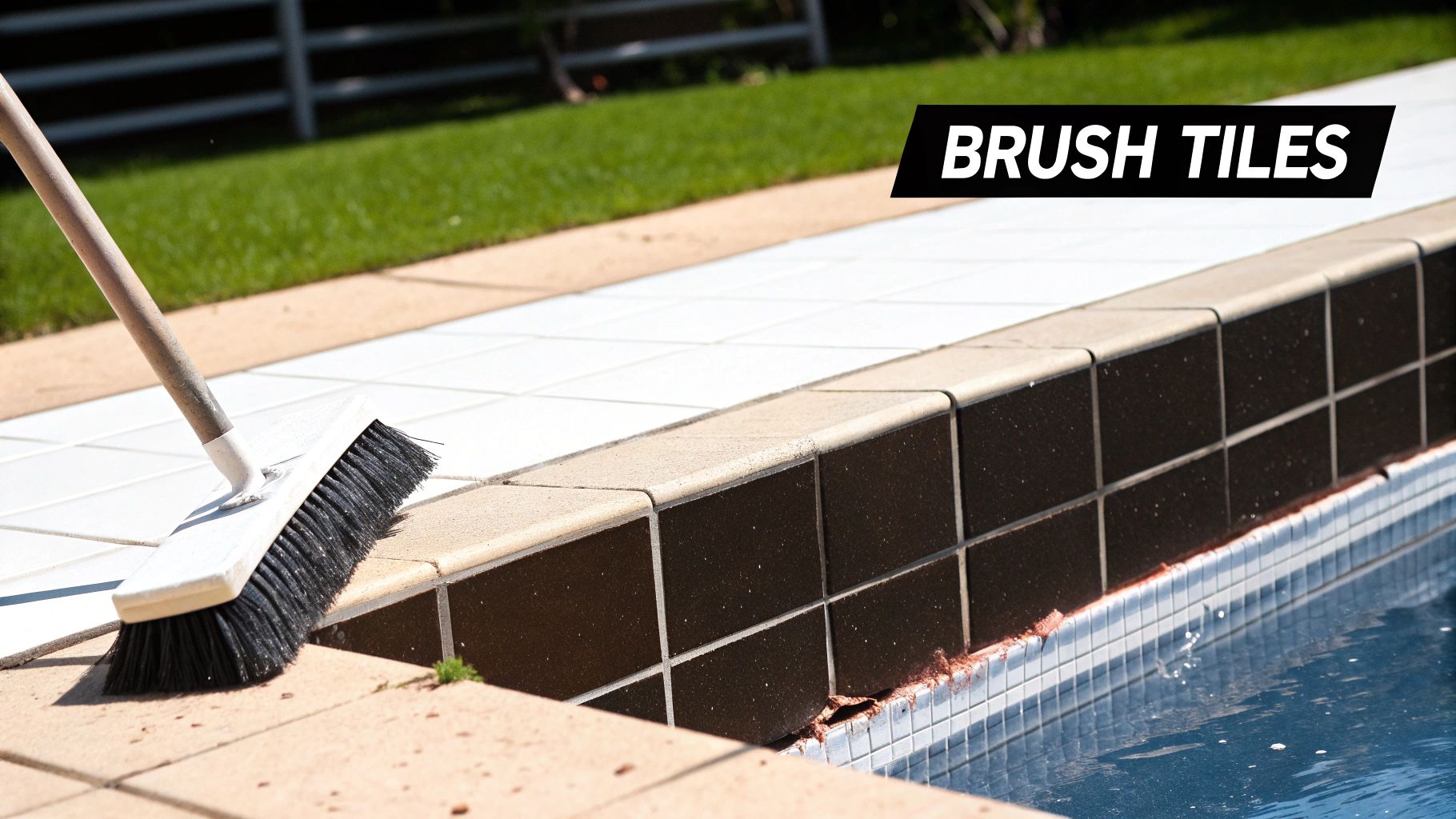
While skimming and vacuuming remove floating and settled debris, brushing the pool's interior surfaces is the essential step for eliminating stubborn, clinging contaminants. This systematic scrubbing of walls, steps, ladders, and tile lines dislodges algae spores, biofilm, and mineral deposits before they can take root and cause serious problems like algae blooms or surface staining. Neglecting this task allows invisible buildup to flourish, creating a slippery, unsanitary environment that even perfectly balanced chemicals can't always overcome.
Why It's a Non-Negotiable Step
Brushing is a proactive measure that complements your chemical treatments. By physically removing contaminants, you improve water circulation, prevent algae from establishing a foothold, and reduce the overall demand on your sanitizer. This makes your chlorine more effective and your water clearer. For instance, commercial pools often brush high-traffic areas like steps and benches daily to prevent slick biofilm buildup, a key part of their weekly pool maintenance checklist that homeowners should adopt.
Key Areas to Brush Weekly
A thorough brushing session should cover every underwater surface, but some areas require special attention. Pay close attention to spots with poor water circulation where algae are most likely to grow.
Here is a quick reference guide to the most crucial areas to brush weekly.
- The Waterline: This area is prone to a "bathtub ring" of oils, sunscreen, and calcium scale. Regular brushing prevents this line from becoming a permanent stain.
- Steps, Ladders, and Benches: These high-contact zones are prime spots for slippery biofilm to develop, posing a safety risk.
- Corners and Crevices: Algae loves to hide in tight spaces where water flow is minimal.
- Behind Fixtures: Don't forget to brush behind ladders and around lights and return jets.
Actionable Tips for Effective Brushing
The right technique and tools make all the difference. Follow these best practices to maximize your efforts:
- Choose the Right Brush: Use a stiff, nylon-bristle brush for plaster, concrete, or pebble surfaces. For vinyl, fiberglass, or painted pools, use a softer brush to avoid scratching the finish.
- Brush Toward the Main Drain: Start in the shallow end and work your way to the deep end, pushing debris toward the main drain for easier vacuuming.
- Use Overlapping Strokes: Ensure complete coverage by overlapping each brush stroke, leaving no surface untouched.
- Brush Before Shocking: Brushing before adding sanitizer or shock treatment suspends algae and other particles in the water, allowing the chemicals to work more effectively.
Brushing is physical work, and ensuring every inch is covered can be a tiring chore. If you want to ensure your pool surfaces are impeccably clean without the weekly effort, our residential pool services can handle the hard work for you.
4. Vacuuming the Pool Bottom: A Deep Clean for Lasting Clarity
After skimming the surface, the next logical step in your weekly pool maintenance checklist is to address the debris that has settled on the pool floor. Vacuuming removes dirt, sand, and other fine sediments that brushing alone can't handle. This task is crucial for preventing algae growth, maintaining water quality, and ensuring your pool looks sparkling and inviting from top to bottom.
Why It's a Non-Negotiable Step
Failing to vacuum allows organic debris to decompose on the pool floor, which consumes chlorine and creates a breeding ground for bacteria and algae. Regular vacuuming is a proactive measure that keeps your sanitizer working efficiently and reduces the need for costly chemical treatments down the line. For instance, high-end resort pools often run robotic cleaners nightly to ensure the floor is pristine for guests each morning, highlighting its importance for both aesthetics and hygiene.
Actionable Tips for Effective Vacuuming
Whether you use a manual vacuum, an automatic cleaner, or a robotic unit, the right technique makes all the difference. Follow these best practices for a thorough clean:
- Move Slowly and Deliberately: When vacuuming manually, use slow, overlapping strokes to avoid kicking up clouds of debris that will just resettle later.
- Work Systematically: Start in the shallow end and work your way toward the deep end. This methodical approach ensures you don't miss any spots.
- Clean Your Cleaner: Automatic and robotic cleaners have their own filters or bags. Clean them out after each use to maintain optimal suction and performance.
- Vacuum to Waste for Algae: If you're dealing with a significant algae bloom, set your filter to the "waste" or "drain" setting. This sends the vacuumed algae-filled water directly out of the pool system, preventing it from re-circulating.
While manual vacuuming offers precision, many homeowners in Southwest Florida prefer the convenience of automatic or robotic cleaners, such as those from Polaris or Maytronics' Dolphin line. However, even the best automated systems can miss corners or steps. For a consistently flawless finish without the hassle, our professional pool cleaning services guarantee a spotless pool floor every week, saving you time and effort.
5. Cleaning Skimmer Baskets and Pump Strainer
After balancing the water chemistry and skimming the surface, the next critical task in your weekly pool maintenance checklist is cleaning the skimmer and pump baskets. These components are your pool's first line of defense, capturing large debris like leaves, twigs, and insects before they can clog your plumbing or damage the pump. Think of them as the gatekeepers of your circulation system; keeping them clear is essential for maintaining strong water flow and protecting your equipment.
Why It’s a Critical Step
Neglecting your skimmer and pump baskets can quickly lead to serious problems. A clogged basket restricts water flow, forcing your pump to work harder, which increases energy consumption and can lead to premature burnout. This restricted flow also impairs the filter's ability to clean the water, undermining all your chemical balancing efforts. For instance, high-traffic commercial pools and water parks often clean their skimmer baskets every few hours to ensure uninterrupted operation and guest safety, highlighting the importance of this simple yet vital task.
Key Components to Clean Weekly
To maintain optimal circulation, you need to regularly check and clean two primary collection points. While they perform similar functions, they protect different parts of your pool system.
Here is a quick reference guide to the baskets that require your weekly attention.
Keeping these baskets free of debris ensures your pump operates efficiently and your pool stays sparkling clean.
Actionable Tips for Effective Cleaning
Properly cleaning these baskets is straightforward but requires a specific process to avoid causing air to enter the system or damaging the equipment.
- Safety First: Always turn off the pool pump at the breaker before opening the pump strainer lid. This prevents injury and ensures you can safely remove the lid.
- Check for Wear: Inspect the baskets for cracks or damage each time you clean them. A broken basket can allow large debris to pass through and clog the pump's impeller.
- Rinse Thoroughly: Use a garden hose to rinse out the baskets. Avoid banging them on the ground, as this can cause the plastic to crack over time.
- Inspect the Lid O-Ring: When cleaning the pump basket, check the rubber O-ring on the lid for cracks or dryness. A lubricated, intact O-ring is crucial for creating an airtight seal.
Maintaining your pool's circulation system can feel overwhelming, especially when issues arise with the pump itself. If you notice persistent low flow or unusual noises, it may be time for professional help. For more details on pump maintenance and troubleshooting, you can explore our comprehensive pump service guides.
6. Backwashing or Cleaning Pool Filter: Restoring Peak Performance
After skimming, brushing, and vacuuming debris, the next critical task on your weekly pool maintenance checklist is tending to the filter. Your pool filter is the unsung hero that traps fine particles, dirt, and contaminants, but it can only hold so much. Backwashing or cleaning the filter is the process of reversing water flow to flush out this trapped debris, restoring proper water circulation and filtration efficiency. Without this step, your water will become cloudy, and your pump will work harder, leading to higher energy bills and premature equipment failure.
Why It's a Critical Step
A clean filter is essential for maintaining the crystal-clear water you desire. When the filter becomes clogged, water flow is restricted, reducing the effectiveness of your entire circulation system. This strain not only impacts water clarity but puts immense pressure on the pump motor and seals. For example, heavily used commercial pools often backwash sand filters daily to handle the high bather load, demonstrating how vital clean filtration is for both water quality and system longevity.
Key Filter Maintenance Guidelines
The method for cleaning your filter depends on its type: sand, cartridge, or diatomaceous earth (D.E.). While the frequency varies based on usage and environmental factors, monitoring the pressure gauge is the most reliable indicator.
Here is a quick reference guide for when to clean your pool filter.
Keeping your filter clean ensures your chemicals work efficiently and protects your pump from unnecessary strain.
Actionable Tips for Effective Cleaning
Proper filter maintenance goes beyond just knowing when to clean it. Following best practices ensures you get the most out of your equipment and avoid common mistakes.
- Watch the Pressure: The golden rule is to backwash or clean your filter when the pressure gauge reads 8-10 PSI above its normal "clean" operating pressure.
- Keep a Log: Note the date and pressure reading every time you clean the filter. This log helps you spot trends and can be crucial for warranty claims.
- Replenish D.E. Properly: If you have a D.E. filter, always add the correct amount of new powder through the skimmer after backwashing to recoat the grids for optimal filtration.
- Rotate Cartridges: For cartridge filters, having a spare set allows one to dry completely after cleaning. This helps kill stubborn microorganisms and extends the cartridge's lifespan.
Filter maintenance can be messy and requires a good understanding of your specific system. If you notice persistent pressure issues or signs of wear, it might be time for professional help. You can learn more about our expert pool equipment repair services to keep your system running flawlessly.
7. Checking and Adjusting Water Level: Protecting Your Pool's Circulation System
Beyond chemicals and cleaning, the physical water level in your pool is a critical component of its circulatory and filtration health. Maintaining the proper level ensures your skimmers can effectively pull debris from the surface and protects your pump from running dry, a catastrophic failure that can lead to expensive repairs. This simple check, which should be part of every weekly pool maintenance checklist, acts as a crucial safeguard for your entire system.
Why Water Level Is So Important
The water level dictates how well your pool circulates. If the level is too low, the skimmers will start sucking in air instead of water, a process that can cause the pump to lose its prime and overheat. If the level is too high, the skimmer door won't create the necessary surface tension to draw in floating debris like leaves and pollen, rendering it useless. The ideal level is right at the midpoint of the skimmer opening, allowing for optimal flow and filtration. For instance, desert resort pools in arid climates can lose over two inches of water daily to evaporation, requiring constant monitoring to protect their high-end equipment.
Key Considerations for Water Level
Your pool loses water through normal use (splashing), backwashing, and evaporation. The rate of loss depends heavily on your climate, sun exposure, and whether you use a pool cover.
Here is a quick reference guide for managing your pool's water level.
Consistently keeping the water in this sweet spot ensures your equipment runs smoothly and your pool stays cleaner with less manual effort.
Actionable Tips for Level Management
Managing your water level doesn't have to be a daily chore. With a few best practices, you can maintain it efficiently and protect your investment.
- Check Frequently: In warm climates like Southwest Florida, check your water level at least twice a week. During hot, dry spells, you may need to check it more often.
- Add Water Slowly: When adding fresh water with a garden hose, let it run slowly. This prevents a sudden temperature drop that could shock the pool's surface or disrupt your chemical balance.
- Use a Pool Cover: A solar or safety cover can reduce water evaporation by up to 95%, saving you water, chemicals, and money on your utility bills.
- Consider Automation: For ultimate convenience, an automatic water leveler, like those from Jandy or Pentair, can be installed to monitor and fill the pool for you.
While topping off the water is straightforward, sudden or excessive water loss can indicate a leak. If you find yourself adding water more than twice a week, it may be time for a professional inspection. Our experts specialize in leak detection and repair to diagnose and fix the problem before it causes serious damage.
Weekly Pool Maintenance Task Comparison
| Maintenance Task | Implementation Complexity | Resource Requirements | Expected Outcomes | Ideal Use Cases | Key Advantages |
|---|---|---|---|---|---|
| Water Testing and Chemical Balancing | Moderate: daily testing, adjustments | Test kits, chemicals, monitoring tools | Safe, balanced water; prevents damage | Resorts, community, high-end pools | Ensures safety, prevents corrosion, maintains clarity |
| Skimming Surface Debris | Low to Moderate: manual or automated | Skimmer nets, robotic cleaners | Clean surface, less filter strain | Wooded areas, hotel, public pools | Quick appearance improvement, reduces chemical use |
| Brushing Pool Walls and Tiles | Moderate to High: manual, physical effort | Specialized brushes | Removes algae/biofilm, prevents staining | Concrete, gunite, residential pools | Prevents algae, extends surface life, improves aesthetics |
| Vacuuming Pool Bottom | Moderate: manual or automated | Vacuum systems, robotic cleaners | Removes settled debris, maintains water quality | Homes, resorts, Olympic pools | Clear water, prevents algae, filter protection |
| Cleaning Skimmer Baskets and Pump Strainer | Low: frequent but simple | Skimmer and pump baskets, garden hose | Maintains circulation, protects equipment | Residential, commercial, water parks | Protects pump, quick maintenance, improves efficiency |
| Backwashing or Cleaning Pool Filter | Moderate: special equipment needed | Filter system, water supply | Restores filter efficiency, water clarity | Municipal, high-load, residential | Extends filter life, immediate clarity improvement |
| Checking and Adjusting Water Level | Low: simple monitoring | Manual or automatic fill systems | Proper skimmer function, prevents pump damage | Residential, competition, resorts | Prevents equipment damage, maintains circulation |
Enjoy Your Pool, We'll Handle the Work
Mastering a consistent pool care routine is the cornerstone of a pristine, safe, and inviting swimming environment. By diligently following this seven-step weekly pool maintenance checklist, you transform a potentially overwhelming chore into a manageable and rewarding process. You've learned the importance of not just what to do, but why you do it, from the precise science of water chemistry to the practical mechanics of your filtration system.
This isn't just about avoiding a green, cloudy pool; it's about protecting your investment and ensuring the health and safety of your family and guests. Regular maintenance prevents costly repairs down the line, extends the life of your pool equipment, and creates a sparkling oasis you can be proud of. Consistency is the key that unlocks all these benefits. A missed week of brushing can lead to stubborn algae blooms, while neglecting the skimmer basket can strain your pump motor, leading to premature failure. Each small, consistent action builds upon the last, culminating in a flawlessly maintained swimming pool.
Key Takeaways for a Flawless Pool
Let's distill this comprehensive guide into its most critical takeaways:
- Proactive, Not Reactive: The entire philosophy behind a weekly pool maintenance checklist is to stay ahead of problems. Regular water testing and balancing prevent algae and bacteria from ever getting a foothold. Consistent cleaning prevents debris from staining surfaces or clogging your system.
- Balance is Everything: The most crucial element is maintaining proper water chemistry. This single factor influences water clarity, swimmer comfort, and the longevity of your pool surfaces and equipment. Our guide on common pool problems and solutions dives deeper into what can happen when things go awry.
- Your Equipment is the Heart of Your Pool: The pump and filter are the workhorses of your pool. Keeping them clean, from the pump strainer to the filter media, ensures they operate efficiently and effectively, saving you money on energy and potential repairs.
While the satisfaction of maintaining your own pool is undeniable, we recognize that the demands of modern life can make it a challenge. Juggling work, family, and other commitments in the beautiful but demanding Southwest Florida climate can leave little time for calibrating test strips and maneuvering a vacuum hose.
This is where professional expertise becomes invaluable. At Water Medic of Cape Coral, we don't just perform tasks; we provide peace of mind. Our seasoned technicians, with over 25 years of local experience, understand the unique challenges of our region, from intense summer sun that depletes chlorine to heavy seasonal rains that throw water balance into chaos. We take this entire comprehensive checklist off your plate, ensuring every step is executed with precision and care. You get to skip the work and jump straight to the enjoyment.
Ready to reclaim your weekends and enjoy a perfectly maintained pool without the hassle? Trust the experts at Water Medic of Cape Coral to implement this exact professional-grade checklist for you every week. Contact Water Medic of Cape Coral today for a complimentary consultation and discover how effortless pool ownership can be.