Saltwater Conversion for Inground Pools Guide
Thinking about converting your inground pool to a saltwater system? It's a game-changing upgrade that our expert team at Water Medic can handle for you seamlessly. Instead of manually dumping in chlorine, a professionally installed salt chlorine generator uses a small amount of salt in the water to create its own steady, gentle supply of chlorine automatically.
Don't worry, it’s nothing like swimming in the ocean. The experience is far more luxurious, and the maintenance is a whole lot simpler when you have a trusted partner managing the transition.
Why a Saltwater Pool Conversion Is Worth It
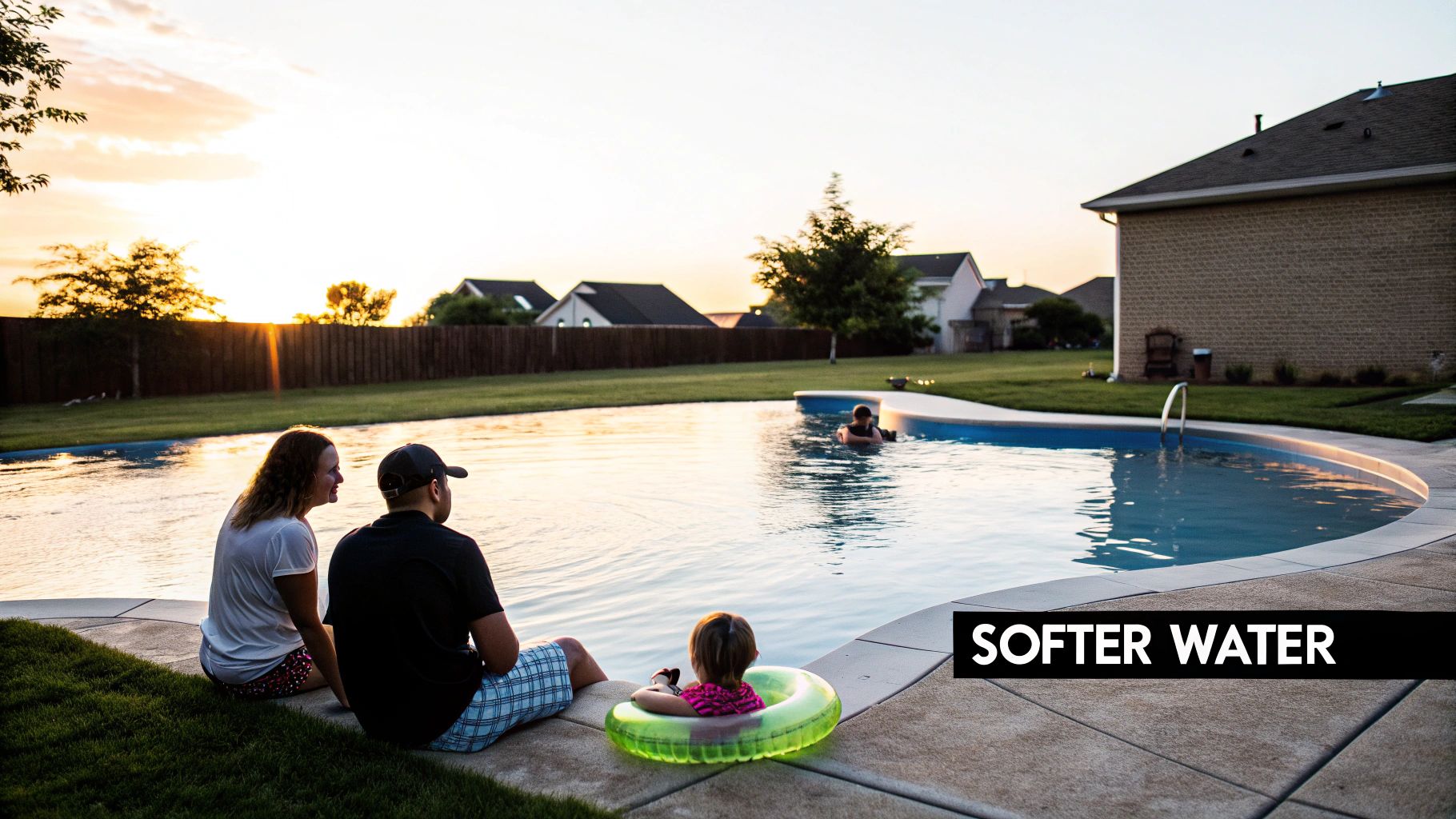
If you're over the weekly chore of buying, hauling, and handling buckets of harsh chlorine, a saltwater conversion is the lifestyle upgrade you've been waiting for. Just picture it: pool water that feels silky and soft, without that overpowering chemical smell or the irritation that gives you red eyes and dry skin. That's the reality for homeowners who make the switch with our expert help.
This change is about more than just comfort—it’s about consistency. A salt system keeps your sanitization levels steady and controlled, which leads to much more stable water chemistry. You’ll find yourself spending way less time fighting off algae blooms and cloudy water, and a lot more time actually enjoying your pool.
The Superior Swim Experience
For most people, the biggest draw is how much better the water feels. The mild saline solution, which is only about 1/10th the salinity of the ocean, creates a buoyant, almost spa-like sensation. This gentle water is also much kinder to your hair, skin, and even your swimsuits, preventing the fading and damage that traditional, high-concentration chlorine often causes.
A saltwater pool transforms your backyard into a true oasis. The water quality is consistently higher, the feel is noticeably softer, and the maintenance is far simpler. It's an investment in both your property and your daily enjoyment.
A Smarter, More Convenient System
Beyond the feel of the water, a saltwater system completely streamlines your pool maintenance routine. With automated chlorine production, you’re no longer a slave to a strict chemical-adding schedule. It's no wonder that saltwater systems have exploded in popularity; about 58% of new pool buyers now choose them to avoid skin irritation and reduce maintenance.
This move toward smarter pool technology simply makes ownership easier and more predictable. And once you start thinking about long-term savings, other eco-friendly options come into view. For instance, many owners also look into installing solar panels for swimming pool pumps to knock down their operational costs even further.
When you opt for a professional installation with us, we make sure the entire process is handled seamlessly. We turn a technical upgrade into a simple, rewarding enhancement for your home.
So, How Does a Saltwater Chlorinator Actually Work?
Thinking about a saltwater conversion for your inground pool? It’s a great move, and the science behind it is pretty slick. Forget what you might have heard – you’re not dumping ocean water into your backyard. It's a clever, self-sustaining system that frees you from the weekly grind of manually adding chlorine.
At its core, a saltwater system has two main parts that work together: the salt chlorine generator (often just called a "salt cell") and its control panel.
The Magic is in the Salt Cell
The real workhorse is the salt chlorine generator. This is a compact unit that a pool professional plumbs directly into your existing filtration system, right after the filter. As your pump keeps the water moving, a small stream of that lightly salted water flows through the generator's cell. Inside, you'll find a series of special metallic plates.
This is where the cool part happens. Your control panel sends a very safe, low-voltage electrical charge to those plates. This zap of electricity kicks off a process called electrolysis. Don't let the fancy word fool you; it simply means the electricity breaks down the salt (which is just sodium chloride, or NaCl) in the water.
The result? Pure, fresh chlorine (specifically, hypochlorous acid) is created on the spot. This newly made chlorine is then pushed back into your pool, where it goes to town, sanitizing your water by taking out bacteria, algae, and other unwanted stuff.
After the chlorine does its job, it doesn't just disappear. It naturally converts back into salt, ready to be used again.
This is the game-changer right here. You're not "using up" the salt. It's constantly being recycled in a closed loop. This creates a beautifully stable and consistent level of sanitizer, which means no more of those harsh chemical highs and lows you get with traditional chlorine pucks or shock.
Sizing and Control: Getting it Just Right
Picking the right size generator for your pool is absolutely critical. If you get one that's too small, it will constantly struggle to produce enough chlorine, especially during our hot Florida summers. You’ll end up with cloudy water and frustration. We always start by calculating your pool's exact volume to make sure the generator we install has plenty of power to handle the job. Our Professional Salt System Installation services take all the guesswork out of it, guaranteeing your system is a perfect match from day one.
The control panel is your new best friend. This is where you fine-tune everything. Modern panels let you dial in the exact chlorine production level you need. Most also have a "boost" or "super chlorinate" button—a lifesaver after a big pool party or a heavy downpour. It temporarily cranks up chlorine production to get your water back in shape, fast. No more hauling heavy buckets of shock.
It's no surprise these systems are taking off. North America currently makes up over 40% of the global market for salt chlorine generators. This market, already valued at USD 318 million in 2024, is only getting bigger as more people catch on. And this isn't just for resorts; the residential sector drives over 65% of total demand. It’s clear that homeowners are leading the charge toward smarter, easier pool care. You can even discover more about this market growth on intelmarketresearch.com.
Before we move on to the installation, let's break down the essential gear you'll need.
| Component | Primary Function | Key Feature to Look For | Average Lifespan |
|---|---|---|---|
| Salt Cell | Converts salt into chlorine via electrolysis. | Sizing appropriate for your pool's gallonage. | 3-7 years |
| Control Panel | Powers the salt cell and allows you to adjust chlorine output. | Digital display, "boost" function, and self-cleaning feature. | 5-10 years |
| Flow Switch | Ensures water is flowing through the cell before it activates. | Safety feature to prevent damage to the cell. | 3-5 years |
| Pool Salt | The raw material for chlorine generation. | Purity (99% or higher) and finely ground for quick dissolving. | N/A (recycles) |
Understanding these components helps you see just how elegantly a saltwater system works to keep your pool sparkling clean with minimal effort on your part.
What to Expect from a Professional Pool Conversion
Switching to a saltwater system for your inground pool is more than just dumping in a few bags of salt. It's a calculated process that, when done right, completely transforms your pool experience. When you bring in a professional, you're not just getting an installation; you're getting an expert-led upgrade designed for a flawless outcome.
The work starts before any new equipment is even unboxed. We begin with a deep dive into your pool's current water chemistry. Trying to convert a pool with out-of-whack pH, alkalinity, or stabilizer is a surefire way to end up with cloudy water and a system that can't keep up. We'll get your water perfectly balanced first, creating a clean slate for the new system.
Installing the Heart of the System
Once the water is prepped, we move on to the main event: installing the salt chlorine generator. This is where having a pro really pays off. The job requires careful plumbing and electrical work to correctly tie the new unit into your existing equipment pad.
A DIY installation can easily go wrong, especially with the wiring. Faulty electrical work isn't just a safety risk; it can also void your new equipment's warranty. Our licensed technicians make sure every connection is secure and up to code, ensuring the system runs safely and efficiently. We also configure the plumbing to get the best possible water flow through the salt cell, which is key for making chlorine effectively and helping the cell last longer. If we spot any worn-out components in your current setup, we can also provide expert pool equipment repair services to head off any future problems.
This handy graphic shows you exactly how the salt cell works its magic.
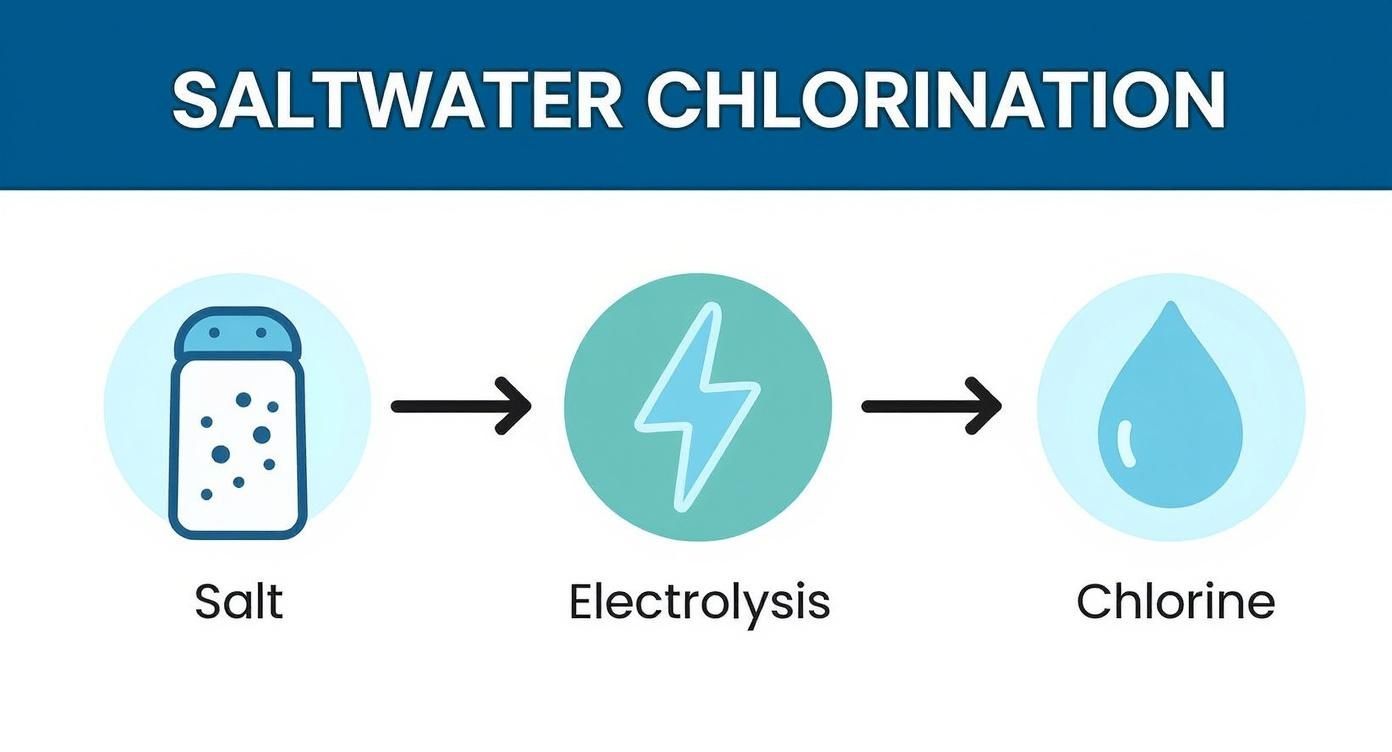
As you can see, it's a pretty brilliant, self-sustaining cycle. Salt turns into chlorine, cleans the water, and then turns right back into salt again.
Adding the Salt and Dialing It In
Now for the salt. This isn't a time for guesswork. We calculate the exact amount of high-purity, granulated pool salt your specific pool needs based on its volume. The goal is to hit that sweet spot of around 3,200 parts per million (ppm). Too little salt, and the generator won't produce any chlorine. Too much, and you'll get error codes and risk corrosion of your pool equipment.
We'll add the salt in a way that helps it dissolve quickly and evenly, brushing the pool surfaces to get everything circulating.
The final step is where the real expertise comes in: firing up the system and calibrating it. This isn't a flip-a-switch-and-walk-away job. We turn on the generator, watch how it performs, and carefully adjust the chlorine output to match your pool's unique needs.
This final fine-tuning is what makes all the difference. We account for things like sun exposure and how often you use the pool to ensure you get just the right amount of sanitization—enough to keep things sparkling clean without over-chlorinating. It's this attention to detail that gives you that silky-smooth water saltwater pools are known for, without any of the hassle.
Breaking Down the True Cost of Conversion
When you're thinking about switching your inground pool to saltwater, the first question that usually pops up is, "What's this going to cost me?" It's easy to get sticker shock, but you have to look at this as a long-term investment, not just another pool expense. The upfront cost is pretty straightforward and breaks down into three main parts.
First, you have the salt chlorine generator, which is the brains of the whole operation. Next, you'll need an initial load of high-purity pool salt to get the water chemistry right. And finally, the most important piece is the professional installation—this isn't a place to cut corners. A pro ensures everything is wired, plumbed, and calibrated correctly from day one.
Sure, that initial investment is more than a bucket of chlorine tabs, but it also means you can say goodbye to those weekly trips to the pool store.
The Real Return on Your Investment
The long-term financial picture is where a saltwater system really starts to make sense. Just think about what you're spending every year on chlorine tablets, shock treatments, and algaecides. It adds up fast, turning into a constant drain on your wallet all season long.
Once you convert to saltwater, those recurring chemical bills practically disappear. Your main ongoing cost will be a few bags of salt each year to top things off after a big rainstorm or after backwashing your filter. We're talking a tiny fraction of what you used to spend on traditional chlorine.
The payback period for a saltwater conversion is surprisingly quick. Most pool owners we work with find their system pays for itself within just 2 to 4 years from the savings on chemicals alone. After that, it’s pure savings, season after season.
Comparing the Numbers
To really see the difference, let’s lay out the numbers over a typical five-year period. The comparison tells a pretty compelling story about value and long-term savings.
Cost Comparison: Saltwater vs. Traditional Chlorine Pool (5-Year Outlook)
Here's a look at the estimated costs for maintaining a saltwater pool versus a traditional chlorine pool over five years. While the saltwater system has a higher upfront cost, the dramatic reduction in annual chemical expenses leads to significant savings over time.
| Cost Item | Saltwater Pool (Est.) | Traditional Chlorine Pool (Est.) |
|---|---|---|
| Initial Investment (Year 1) | $1,500 – $2,500 (Generator + Pro Install) | $0 (Assuming existing pool) |
| Annual Chemical Costs | $50 – $100 (Salt) | $400 – $800 (Chlorine, Shock, Algaecide) |
| 5-Year Chemical Total | $250 – $500 | $2,000 – $4,000 |
| Total 5-Year Cost | $1,750 – $3,000 | $2,000 – $4,000 |
As you can see, even with the initial outlay, the saltwater pool often becomes the more economical choice within just a few years.
This isn't just a local trend, either. The global pool salt market was valued at USD 1.45 billion in 2024 and is projected to hit USD 1.98 billion by 2030. This growth is fueled by homeowners just like you who see the clear financial and lifestyle advantages of making the switch. You can read more about these market trends on barchart.com. By choosing a professional installation, you're not just buying equipment; you're investing in a smarter, more affordable way to enjoy your pool for years to come.
Maintaining Your Saltwater Pool Long-Term
While your new saltwater system handles the heavy lifting of chlorine production, it’s not quite a "set it and forget it" deal. Think of it as trading one set of chores for another, simpler set. Consistent, easy care is what protects your investment and keeps your pool sparkling for years to come.
The biggest mental shift is what you're testing. You can stop obsessing over chlorine levels, and instead, focus on the supporting cast of water chemistry. You'll still need to keep a close eye on pH, alkalinity, and stabilizer (cyanuric acid) to ensure the water is balanced, comfortable, and safe.
Letting these levels drift can seriously hamper your system's efficiency and even shorten the lifespan of your expensive pool equipment.
The Heart of the System: Salt Cell Care
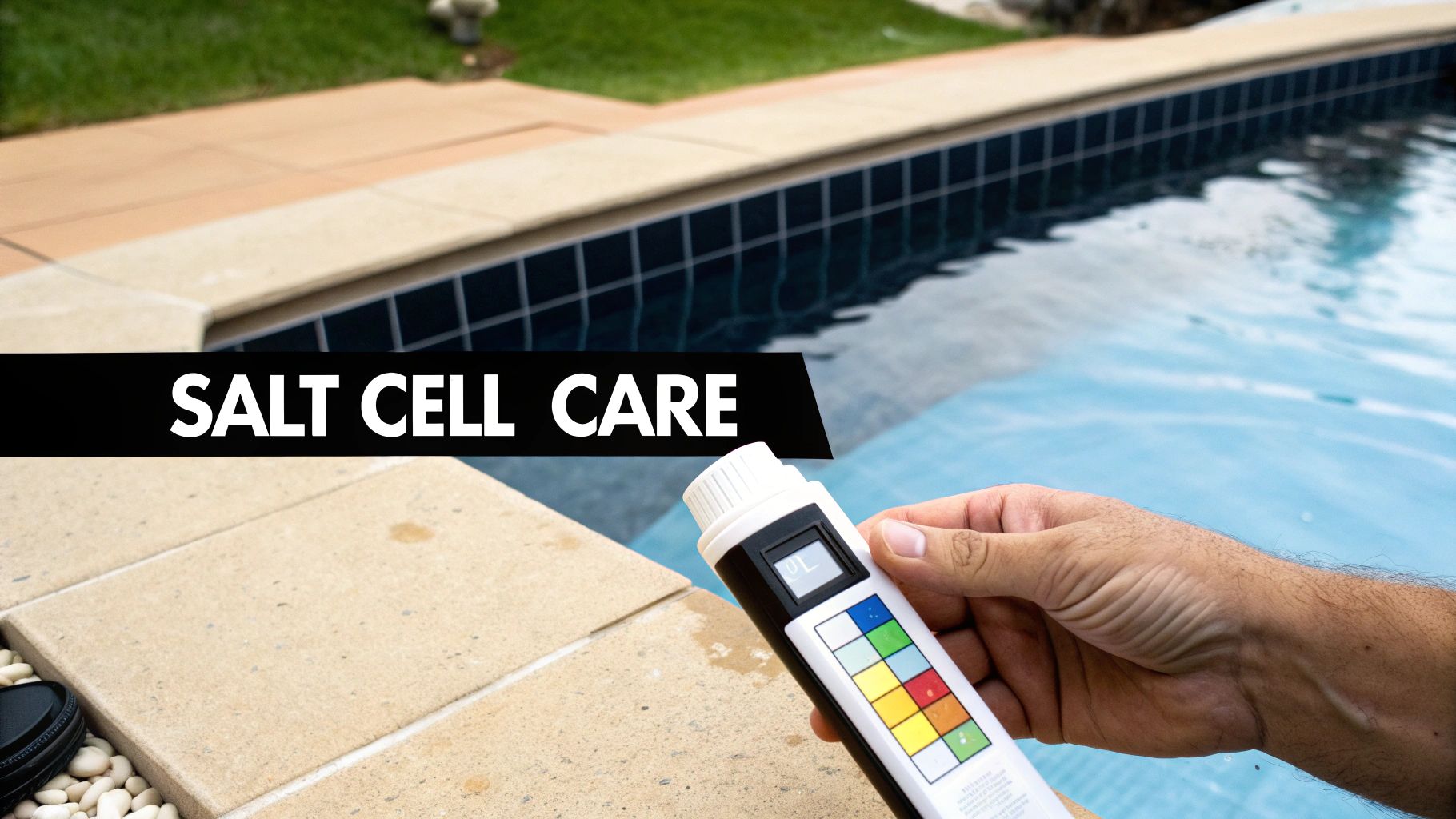
Your salt chlorine generator, often just called the salt cell, is the engine of your new system. Giving it a little attention is the single most important thing you can do. The main task here is a simple visual inspection of the metal plates inside the cell for any mineral buildup, which usually looks like white, flaky scale.
This is a particularly common issue in areas with hard water. If you let that scale build up, it acts like an insulator, blocking the electrical current and stopping the cell from making chlorine.
A clean salt cell is a happy salt cell. Regular inspection and cleaning, when necessary, can extend the life of your cell from 3-4 years to as long as 5-7 years, saving you hundreds in replacement costs.
Most modern salt systems have a self-cleaning feature, which is great, but getting in the habit of a quick manual check every few months is still a smart move. If you do spot significant buildup, cleaning it is straightforward—but you have to do it right to avoid damaging the delicate plates.
Keeping Your Salt Levels Just Right
Your system is designed to work within a specific salt range, typically between 3,000 and 3,500 ppm. Life happens, and certain events will dilute your pool water, dropping the concentration below that sweet spot and requiring you to add more salt.
You should definitely plan to test your salt levels:
- After heavy rainfall: A serious downpour can add a surprising amount of fresh water, throwing off your concentration.
- Following backwashing: When you backwash your filter, you're removing salty water and replacing it with fresh water.
- If you notice a drop in chlorine production: This is often the first red flag that your salt levels have dipped too low for the generator to do its job.
To protect the look and feel of your pool for the long haul, it also pays to learn about maintaining pool tile, as the salt can be tough on surfaces over time if not properly managed.
If all this sounds like one more thing on your to-do list, we can take it completely off your plate. Our expert team takes the guesswork out of balancing chemicals and servicing equipment. Check out our comprehensive Pool Maintenance Packages that keep your saltwater pool in perfect condition, so all you have to do is enjoy it.
Common Questions About Saltwater Conversions
Making the switch to a saltwater system for your inground pool is a big decision, and it's totally normal to have some questions. We get asked about this all the time, so let's tackle some of the most common concerns and myths we hear from homeowners. My goal here is to give you the straight-up facts so you can feel confident you're making the right move.
First up, the big one: "Will my pool taste like the ocean?" Not even close. Don't picture swimming in the Atlantic. A saltwater pool has a salt concentration of only about 3,200 parts per million (ppm). To put that in perspective, that's roughly 1/10th the salinity of seawater. It’s actually closer to the salt level in a human teardrop, which is why the water feels so silky and soft, and won't irritate your eyes.
Will Salt Damage My Pool Equipment?
This is probably the most persistent myth out there. People worry that the salt will eat away at their expensive pool equipment, patio pavers, or deck furniture. Honestly, this concern is mostly a holdover from outdated technology.
Today, any reputable manufacturer builds their pumps, filters, and heaters with corrosion-resistant materials specifically designed to handle saltwater. They know what they're doing.
Now, if you have certain types of porous natural stone like travertine or some metal fixtures around your pool deck, you'll want to take a simple precaution. A good quality sealant creates a protective barrier that keeps everything looking brand new. It's a quick and easy step we can walk you through during a consultation, where we'll look at your specific setup and recommend the best way to protect your entire pool area.
A lot of people hear "salt" and immediately think "rust and corrosion." The reality is that modern pool equipment is built for this. With a professional installation and just a little bit of basic care, you get all the benefits without the worry.
The Lifespan and Cost of a Salt Cell
Let's be transparent about the long-term side of things. The salt cell is the heart of the system—it’s what turns the salt into chlorine. Like any hard-working component, it's a wearable part and will eventually need to be replaced. You can expect a typical salt cell to last anywhere from 3 to 7 years.
What makes the difference in its lifespan? A few things:
- How often you run it: The more hours the system is on, the more wear on the cell.
- Your water chemistry: Keeping your water balanced puts less strain on the cell.
- Basic maintenance: Regular cleaning prevents mineral buildup, which is a cell's worst enemy.
When it does come time for a replacement, think of it like replacing the tires on your car. It's a predictable maintenance cost, not some random, expensive surprise. For more answers to common questions, you can dive into our detailed pool FAQs.
Ready to experience the silk-smooth water and low-maintenance lifestyle of a saltwater pool? The expert team at Water Medic of Cape Coral has over 25 years of experience ensuring flawless conversions. Contact us today for a professional consultation and quote at https://watermedic.com.