Is Well Water Safe to Drink? A Homeowner’s Guide
When homeowners ask, "Is well water safe to drink?" the answer is both simple and complicated: it absolutely can be, but you can't take its safety for granted. Unlike city water, which is constantly tested and treated before it reaches your tap, the quality and safety of your well water are entirely up to you. This guide will walk you through exactly how to manage that responsibility.
The Truth About Your Well Water's Safety
Having a private well is a great feeling. It gives you a sense of self-sufficiency and a direct line to your own natural water source. But that independence comes with a crucial job: making sure the water is actually clean and safe for your family to drink. The ground under our feet is a complex and ever-changing system, and your water quality can be affected by things you'd never even think about.
It helps to think of your well as a straw dipping into a massive underground lake that everyone shares. Anything from a neighbor's septic tank to agricultural runoff from farms miles away can seep into the groundwater and, eventually, into your home. This is precisely why assuming your water is safe just because it looks, smells, and tastes fine is a serious gamble.
Why Vigilance Is Your Best Defense
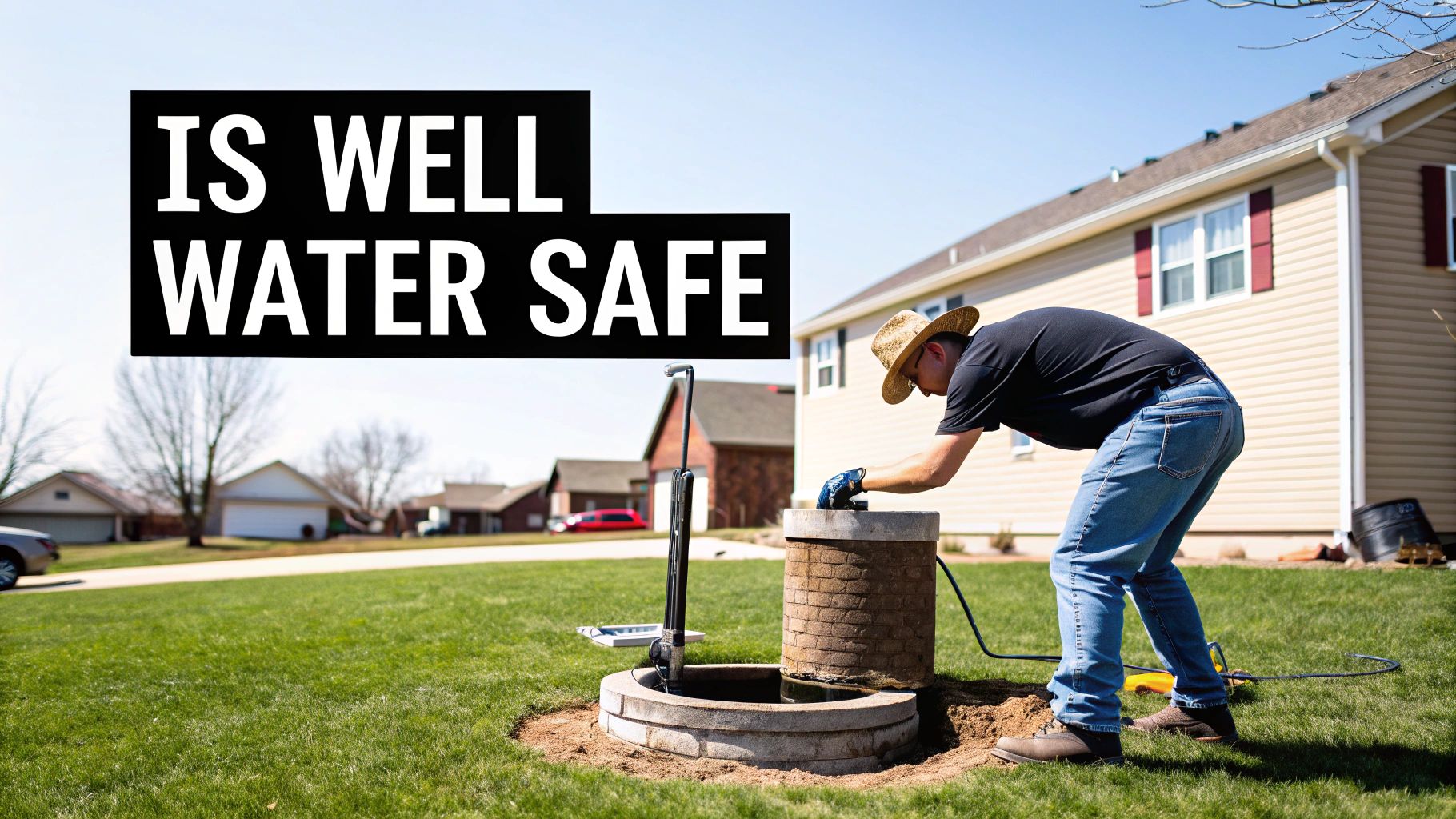
Since private wells aren't regulated by public health agencies, the homeowner is the one responsible for safety. A study that looked at nearly 19,000 private wells discovered that about 6% had nitrate levels high enough to be considered a potential health risk. This proves a critical point: many of the most dangerous contaminants have no taste, color, or smell.
Peace of mind doesn't come from guessing; it comes from testing. Understanding what's in your water is the first and most important step toward protecting your family's health and your home's infrastructure.
This is where getting some professional help can make all the difference. Instead of trying to figure out the complexities of water quality on your own, working with an expert means you get accurate test results and a clear plan to fix any issues. Regular testing and proactive maintenance aren't just items on a to-do list; they're essential habits for any responsible well owner.
At Water Medic, we believe every family deserves clean, safe water right from their own tap. We're here to help you go from worrying to feeling confident with professional water testing and treatment solutions. By understanding the potential risks and taking the right actions, you can ensure the water in your home is as pure and healthy as it ought to be.
Common Contaminants Lurking in Your Well Water
Your well taps directly into the earth’s groundwater, giving you a fresh, private water source. But that also means it’s vulnerable to whatever is happening in the ground nearby. Figuring out if your well water is safe to drink starts with understanding the hidden threats that can make their way into your glass.
Many of these contaminants are completely invisible, tasteless, and odorless. Professional testing is genuinely the only way to know for sure what’s flowing from your faucet.
Most of these unwanted guests fall into a few key categories, each posing different risks to your health and your home. Let's break them down.
Microbiological Threats: The Invisible Invaders
The most immediate health dangers in well water often come from microbiological contaminants. We're talking about living organisms—bacteria, viruses, and parasites—that can make you sick, sometimes very quickly.
Think of the groundwater your well draws from as a slow-moving underground river. Anything on the surface, from a failing septic system to animal waste, can eventually seep down and join that flow.
Common microbiological culprits include:
- Total Coliforms: This group of bacteria is like a smoke alarm for your water. While not always harmful themselves, their presence signals that surface contamination has found a path into your well, meaning more dangerous pathogens could be there too.
- E. coli: This is a specific type of coliform bacteria, and finding it in your water is a five-alarm fire. It's a clear sign of recent fecal contamination, which can cause severe stomach cramps, diarrhea, and vomiting.
- Viruses and Protozoa: Nasty organisms like Giardia and Cryptosporidium can also hitch a ride into your water, leading to similar miserable gastrointestinal illnesses.
Globally, the impact of contaminated water is staggering. Waterborne diseases are responsible for an estimated 800,000 deaths each year from illnesses like cholera and dysentery. While we're not facing those same conditions here in Southwest Florida, it's a stark reminder of why keeping your water free from these invisible threats is so critical.
Chemical Contaminants: The Silent Risks
Unlike bacteria that can hit you hard and fast, chemical contaminants are often the silent offenders, posing long-term health risks after months or years of exposure. These substances can leach into groundwater from industrial sites, agricultural runoff, or even the pipes inside your own home.
Key chemical risks to watch for:
- Nitrates and Nitrites: These are some of the most common chemical troublemakers in wells, especially in farming areas. They come from fertilizers, livestock manure, and septic systems. High nitrate levels are especially dangerous for infants and can cause a life-threatening condition called "blue baby syndrome."
- Pesticides and Herbicides: Runoff from farms, golf courses, and manicured lawns can carry these potent chemicals into the groundwater, contributing to various long-term health issues.
- Lead and Copper: These metals usually don't originate in the well itself. Instead, they leach from older pipes, solder, and brass fittings as corrosive water flows through them. Lead exposure is a major health concern, especially for the developmental health of children.
- Volatile Organic Compounds (VOCs): This is a broad class of chemicals from industrial solvents, gasoline spills, and even household cleaners. If they get into your water, they can increase the risk of serious health problems over time.
While your well faces its own unique challenges, getting a broader perspective by understanding tap water risks and contaminants helps paint a more complete picture of water safety as a whole.
Nuisance and Aesthetic Issues
Not every contaminant is a direct health threat, but that doesn't mean you want it in your water. Many issues are considered "nuisance" problems because they wreck the taste, smell, and appearance of your water and can do a number on your home's plumbing and appliances.
Many homeowners first call us not because of a health scare, but because they're tired of orange stains in their sinks or a rotten-egg smell every time they turn on the faucet. These are clear signs that your water needs professional attention.
Common nuisance problems we see all the time:
- Iron and Manganese: These are the minerals behind those ugly reddish-brown or black stains on your fixtures, laundry, and dishes. They also give water a metallic taste and can clog up your pipes.
- Hydrogen Sulfide: This gas is the source of that unmistakable "rotten egg" smell. While it's not typically harmful at low levels, it makes your water pretty much undrinkable.
- Hardness: Caused by high levels of calcium and magnesium, hard water is a real pain. Soap doesn't lather well, and it leaves behind a chalky, crusty buildup (limescale) on everything. This scale clogs showerheads and can destroy expensive appliances like water heaters and dishwashers by forcing them to work harder.
To help you keep track, here's a quick guide to some of the most common things we find in local well water.
Common Well Water Contaminants and Their Risks
This table is a handy reference for identifying what might be in your water, where it comes from, and why it's a problem.
| Contaminant | Potential Source | Primary Concern |
|---|---|---|
| Bacteria (E. coli) | Septic systems, animal waste | Immediate health risk (gastrointestinal illness) |
| Nitrates | Fertilizer, manure, septic systems | Serious health risk, especially for infants |
| Iron/Manganese | Naturally occurring in soil/rock | Staining, metallic taste, pipe buildup |
| Hydrogen Sulfide | Naturally occurring bacteria | "Rotten egg" smell, unpleasant taste |
| Hardness Minerals | Naturally occurring (calcium/magnesium) | Limescale buildup, appliance damage |
| Salt (Sodium Chloride) | Saltwater intrusion, water softeners | Salty taste, corrosion of pipes/appliances |
| Lead | Leaching from old plumbing/solder | Serious long-term health risk (neurotoxin) |
| VOCs | Industrial pollution, fuel spills | Long-term health risk (cancer, organ damage) |
Remember, this isn't an exhaustive list, but it covers the vast majority of issues we encounter in Southwest Florida wells. The only way to know your specific contaminant profile is through a professional water test.
A Local Concern: Saltwater Intrusion in Cape Coral
For those of us in coastal communities like Cape Coral, there's another major threat to consider: saltwater intrusion.
It’s a simple but serious problem. When we pump too much freshwater out of the ground near the coast, it lowers the natural pressure that holds the ocean back, allowing saltwater to seep into our freshwater aquifers.
This not only makes your water taste salty but also makes it incredibly corrosive. Salty water will eat away at your pipes, fixtures, and appliances from the inside out, causing thousands in damage. This is a complex issue that requires deep local knowledge to diagnose and treat properly.
With 25 years of experience right here in the region, we at Water Medic understand these unique local challenges. We don’t just read a water test—we see how it connects to the local geology and environment, allowing us to design a solution that actually solves the problem for good.
How to Properly Test Your Well Water
Knowing what could be in your well water is one thing, but you can't fix a problem you haven’t actually found. The only way to be certain your well water is safe to drink is through one simple, non-negotiable step: testing. Just because your water looks clear and tastes fine doesn't mean it’s free from invisible troublemakers that could impact your family's health.
Think of it this way: testing your water moves you from a place of uncertainty to having a clear, actionable plan. It's the only way to know for sure what's really coming out of your faucet.
DIY vs. Professional Lab Analysis
When it comes to testing, you've got two main options: do-it-yourself (DIY) test kits or sending a sample to a professional lab. While those DIY kits from the home improvement store can give you a quick read on things like water hardness or pH, they have some pretty serious limitations.
A DIY test strip is a bit like taking your own temperature when you feel sick. It can tell you if you have a fever, but it can't tell you why. These strips often aren't sensitive enough to detect low—but still dangerous—levels of contaminants, and they can't test for major threats like bacteria or VOCs at all.
For real, trustworthy results, nothing beats a professional water analysis. A certified lab gives you a detailed, scientific report on your water's makeup, pinpointing specific contaminants and their exact concentrations. That level of detail is essential for building an effective treatment plan and is the only path to genuine peace of mind.
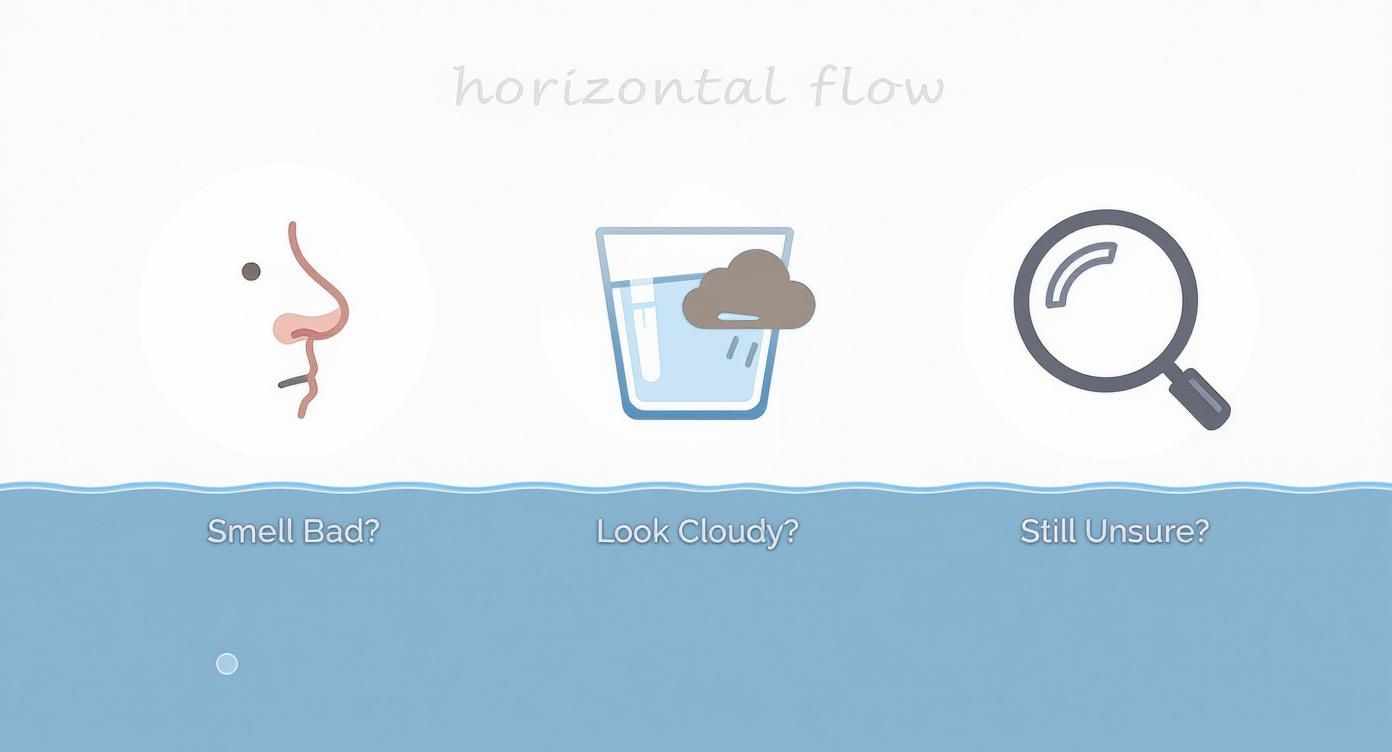
While your senses can give you initial clues, as the guide above suggests, professional testing is the final word on safety.
Establishing a Smart Testing Schedule
Your well isn't a sealed-off system. Its water quality can change with the seasons, after a heavy storm, or due to shifts in the local environment. That’s why setting up a regular testing schedule is one of the most important habits for any well owner.
Here’s a practical timeline we recommend:
- Annually: Test for total coliform bacteria and nitrates. These are two of the most common and immediate health risks, making an annual check-up non-negotiable.
- Every 3-5 Years: Time for a more comprehensive screening. This test should cover a wider range of potential issues, including pH, hardness, lead, arsenic, and other compounds common in Southwest Florida.
- As Needed: Don’t wait for your next scheduled test if you notice something is off. If you see, smell, or taste a change, get it tested right away.
The most reliable way to get definitive answers without any guesswork is to work with a professional. At Water Medic, our expert water testing is one of the core services we provide to ensure your family’s safety.
Red Flags That Demand Immediate Testing
Sometimes, your well gives you obvious signs that something is wrong. If you notice any of the following, it’s time to schedule a water test immediately, no matter when your last one was.
- Sudden Changes: Any abrupt shift in your water's taste, smell, or color is a major red flag. That new "rotten egg" smell or a weird metallic taste isn't something to ignore.
- Nearby Activities: Has there been recent construction, drilling, or new agricultural activity near your property? These kinds of land disturbances can impact the groundwater and introduce new contaminants.
- Unexplained Illness: If people in your house are dealing with recurring stomach problems, your well water should be one of the first things you investigate.
- Well System Work: After any repair or replacement of your well pump, pipes, or casing, you should test the water. This ensures no contaminants got into the system during the maintenance work.
Recognizing these risks is the first step. The next is learning how to test water for bacteria to confirm your water's safety. Staying proactive with testing is the bedrock of responsible well ownership—and the key to ensuring every glass you drink is clean and healthy.
Decoding Your Water Test Results
Getting a water test report back can feel a bit overwhelming. It's usually a dense document full of chemical names, acronyms, and numbers that, on their own, don't mean much. But that report is the key to knowing whether your well water is truly safe, and learning to read it turns confusing data into a clear plan.
Think of your water test results as a detailed health report for your well. It gives you a precise diagnosis of what's in your water and at what levels. Without that diagnosis, trying to "treat" your water is just a shot in the dark.
Key Terms You Need to Know
Your lab report will have a few important terms that pop up again and again. Getting a handle on these is the first step to making sense of the numbers.
-
Maximum Contaminant Level (MCL): This is a critical benchmark set by the EPA. It's the highest level of a contaminant that is legally allowed in public drinking water. While these rules don't technically apply to private wells, the MCL is the gold standard for safety you should be aiming for.
-
pH Level: This tells you how acidic or alkaline your water is on a scale from 0 to 14, where 7 is neutral. If your water is too acidic (below 6.5), it can become corrosive and start leaching harmful metals like lead and copper right out of your pipes.
-
Hardness: This is just a measure of dissolved minerals like calcium and magnesium. While it’s not a direct health threat, very hard water can wreak havoc on your appliances, clog pipes with limescale buildup, and leave those frustrating spots on all your dishes.
Interpreting these values helps you see the whole picture, from immediate health concerns to long-term issues that could damage your home.
Turning Numbers into Actionable Steps
The most important part of your report isn't just the numbers—it's what they tell you to do next. Some results demand immediate attention, while others point toward more gradual problems you’ll want to address.
A professional water consultation is like having an expert translator for your lab results. We take the complex science and turn it into simple, prioritized steps, ensuring you invest in the right solution instead of guessing what might work.
For instance, any detectable level of total coliform bacteria is a major red flag. While these bacteria aren't always harmful themselves, their presence is a clear sign that a pathway exists for surface contaminants to get into your well.
If E. coli is present, your water is unsafe to drink, period. That requires immediate action, like a professional well system disinfection.
These local benchmarks are crucial. Globally, the challenge of safe water is massive—projections show 1.8 billion people could face absolute water scarcity by 2025. Statistics like these highlight just how vital it is to protect our local groundwater, especially since only 56% of monitored water bodies in many regions have good ambient water quality. You can find more insights about global water quality on GreenMatch.co.uk.
When you work with Water Medic, we don't just hand you a report and walk away. We sit down with you and explain what each number means for your family's health and your home's plumbing, creating a clear roadmap to pure, safe water.
Choosing the Right Water Treatment System
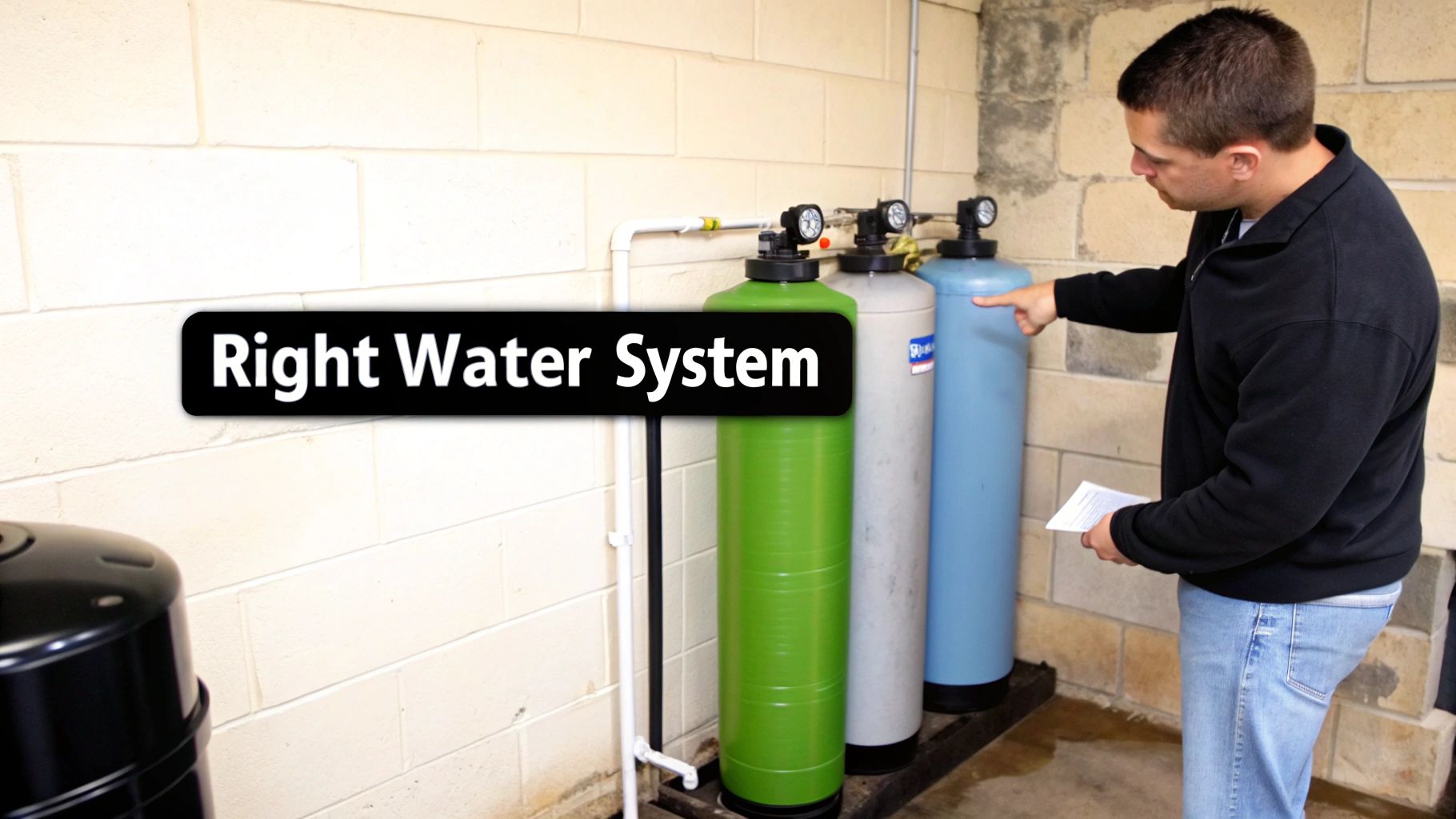
So, you’ve got your professional water test results in hand. That report is your roadmap, giving you a clear picture of exactly what’s in your well water. The next step is moving from diagnosis to treatment—finding the right tools to make your water safe and clean.
This part can feel overwhelming with all the options out there, but it's simpler than you think. It's all about matching the right technology to the specific problem you're facing. You wouldn't use a wrench to hammer a nail, and the same logic applies here. A system designed to remove iron won't touch bacteria, and a basic filter does nothing for hard water minerals.
Targeting Specific Well Water Problems
Let’s zero in on the most common issues we see in well water and the best way to fix them. The goal isn't to find a magic bullet product but to build a solution that directly addresses what your water report revealed.
-
For Microbiological Threats (Bacteria & Viruses): If your test came back positive for coliform bacteria or E. coli, disinfection is your number one priority. The most reliable and chemical-free method is an Ultraviolet (UV) Purification System. As water flows through the system, a powerful UV lamp zaps the DNA of any microorganisms, rendering them completely harmless before they ever reach your tap.
-
For Hardness (Calcium & Magnesium): Tired of the chalky limescale buildup on faucets, shower doors, and inside your pipes? That's hard water, and the solution is a Water Softener. These systems use a process called ion exchange to grab and remove those pesky hard minerals, which not only protects your plumbing but also helps your soaps and detergents work better.
-
For Nuisance Issues (Iron, Sulfur & Sediment): If you’re dealing with ugly orange rust stains from iron or that distinct "rotten egg" smell from hydrogen sulfide, you need a specialized Iron and Sulfur Filter. These systems typically use an oxidation process to convert these dissolved elements into particles that can be easily filtered out, getting rid of stains and odors for good.
Comparing Well Water Treatment Technologies
Choosing the right system means understanding what each one does best. This table breaks down the most common technologies to help you see how they stack up against different contaminants.
| Treatment System | Targets These Contaminants | Key Benefit |
|---|---|---|
| Water Softener | Calcium, Magnesium (Hardness Minerals) | Prevents limescale, protects appliances |
| UV Purifier | Bacteria, Viruses, Cysts | Chemical-free disinfection |
| Iron/Sulfur Filter | Iron, Manganese, Hydrogen Sulfide | Eliminates stains and odors |
| Reverse Osmosis | Dissolved Solids, Nitrates, VOCs, Salt | Ultimate purity for drinking water |
| Sediment Filter | Dirt, Sand, Silt, Rust Flakes | Improves clarity, protects other systems |
Think of this as your toolkit. Sometimes you only need one tool, but often a combination provides the most complete and lasting solution for your home's water.
The Ultimate Solution for Purity
While the systems above are fantastic for specific problems, what if you want to remove nearly everything? From nitrates and VOCs to dissolved salts from saltwater intrusion, some homeowners want the absolute highest level of purity.
For that kind of comprehensive filtration, nothing beats a Reverse Osmosis (RO) System.
An RO system uses pressure to force water through a special membrane with pores so tiny that almost nothing but pure water molecules can get through. It’s like having a microscopic gatekeeper that blocks virtually every contaminant.
A point-of-use RO system under the sink is great for providing pristine drinking and cooking water. For total peace of mind, though, a whole-house system treats every single drop of water coming into your home—from the kitchen tap to the shower.
The result is water of exceptional purity. For anyone dealing with a cocktail of contaminants or those of us in coastal areas like Cape Coral battling saltwater intrusion, RO is the most reliable and thorough solution available. You can find out more about how our whole-house reverse osmosis systems provide total protection.
Why a Custom Solution Is Best
As you can see, there is no single "best" water treatment system—there’s only the best system for your specific water. Trying to DIY a solution with off-the-shelf filters from a big-box store often leads to frustration and, worse, a false sense of security. You might fix one obvious problem while completely missing a more dangerous, invisible one.
This is where getting an expert involved makes all the difference. At Water Medic of Cape Coral, we don’t just sell boxes of equipment. We design and install complete water treatment solutions based on what really matters:
- Your Professional Water Test Results: We start with the hard data. No guesswork.
- Your Home's Demands: We look at your family's size, daily water usage, and plumbing.
- Your Budget: We find a powerful, efficient solution that makes financial sense.
By tailoring the system to your unique situation, we can ensure you get pure, safe water from every tap in your house. It's the only way to go from wondering about your water quality to having total confidence in it.
Your Partner for Safe and Healthy Well Water
Being a well owner means you're in charge of your family's water. It's not something you can set and forget; it's an ongoing responsibility that lands squarely on your shoulders. Regular testing isn't just a good idea—it's absolutely essential for your health and peace of mind.
The good news is, you don't have to figure it all out on your own. Turning that uncertainty into confidence starts with having the right partner. At Water Medic of Cape Coral, we’re here to guide you through every step with real-world expertise and a commitment to getting it right. We don't just sell equipment; we deliver a complete solution for pure, clean water from every faucet in your house.
Our Commitment to Your Water Safety
We manage the entire process from start to finish, giving you complete confidence in your water quality. Our approach is simple: be precise, be honest, and find the right solution for your specific water problems.
Here’s what you can expect when you work with us:
- Precise, Professional Testing: We start by getting a clear, scientific picture of what’s actually in your water. No guesswork, just accurate data.
- Honest Consultations: We’ll walk you through the lab results and translate the complex numbers into a straightforward action plan, explaining what it all means and what your options are.
- Expert Installation: Our skilled technicians will install the perfect water treatment system for your home, whether that's a straightforward water softener, a UV purifier, or a full whole-house reverse osmosis system.
- Reliable Maintenance: We stick around. Our team provides the ongoing support and maintenance needed to keep your system running perfectly, delivering safe water for years to come.
Your family's health is too important to leave to chance. We believe every homeowner deserves to know, without a doubt, that their well water is safe. Our goal is to give you the right information and the best technology to make that a reality.
It’s easy to take clean water for granted, but the global challenge is immense. Around 2.1 billion people worldwide still don't have access to safely managed drinking water. This is a sobering reminder of how precious this resource is. While our local challenges in Cape Coral are different, the fundamental need for clean water is universal. You can learn more about global access to safe drinking water from the WHO.
Don’t wait until you suspect there's a problem. Be proactive and take control of your water quality today. Contact Water Medic of Cape Coral for a consultation, and let us help you protect your family's health and well-being.
Frequently Asked Questions About Well Water
Owning a well means you're in charge of your water quality, and naturally, that comes with a lot of questions. We get calls about this stuff all the time. Let's walk through some of the most common concerns we hear from homeowners right here in Southwest Florida to clear things up.
How Often Should I Test My Well Water?
Think of it like an annual check-up for your water. At a minimum, you should get your well tested annually for the big two: bacteria and nitrates. These are the most common culprits behind immediate health issues.
Beyond that, it's a smart move to schedule a more comprehensive test every three to five years. This deeper dive checks for things like heavy metals and other sneaky contaminants that can creep into the groundwater over time.
Can a Pitcher Filter Make My Well Water Safe?
This is a big one. While a simple pitcher filter is great for making city water taste better by removing chlorine, it is not designed to remove serious well water contaminants.
Things like E. coli, nitrates, or viruses will pass right through it. Relying on a pitcher filter gives you a false sense of security when you really need a dedicated purification system to tackle real health threats from a well.
What Are Signs My Well Needs Professional Attention?
Your well has ways of telling you something's wrong. You just have to know what to look for. If you spot any of these warning signs, it's time to call in a professional right away:
- Any sudden change in how your water tastes, looks, or smells (especially that "rotten egg" odor).
- Water from your tap looks cloudy, sandy, or murky.
- Your water pressure suddenly takes a nosedive.
- You start seeing strange stains on sinks, toilets, and laundry (orange, brown, or even black).
These are classic symptoms of bigger problems. For a deeper dive, you can find more answers in our list of common well water questions.
Is Hard Water from a Well Dangerous to Drink?
Good news here: no, hard water isn't a health risk. The minerals that make water "hard"—mostly calcium and magnesium—are perfectly safe to drink.
The real problem with hard water is the damage it does to your home. It creates that crusty, destructive limescale buildup inside your pipes, water heater, dishwasher, and washing machine, which ruins them over time and makes them work less efficiently.
Don't leave your family's health to chance. With over 25 years of local experience, Water Medic of Cape Coral provides expert water testing and custom treatment solutions to ensure your water is pure and safe. Contact us today for a consultation.