
How to Drain Pool Water The Right Way
Draining your pool isn't something you do on a whim. It’s a serious undertaking, usually the last resort when you're facing major repairs or the water chemistry has gone so far off the rails that chemicals just won't cut it anymore. At Water Medic, we see this as a strategic move to protect your investment, not just a maintenance task.
Think of it as hitting the big red reset button. It's not part of your regular weekend upkeep; it's a strategic move for specific situations where the health of your pool—and your wallet—is on the line. Knowing what those situations are is the first step to understanding how to drain your pool safely and correctly, a process our professional team handles every day.
Why Draining Your Pool Becomes Necessary
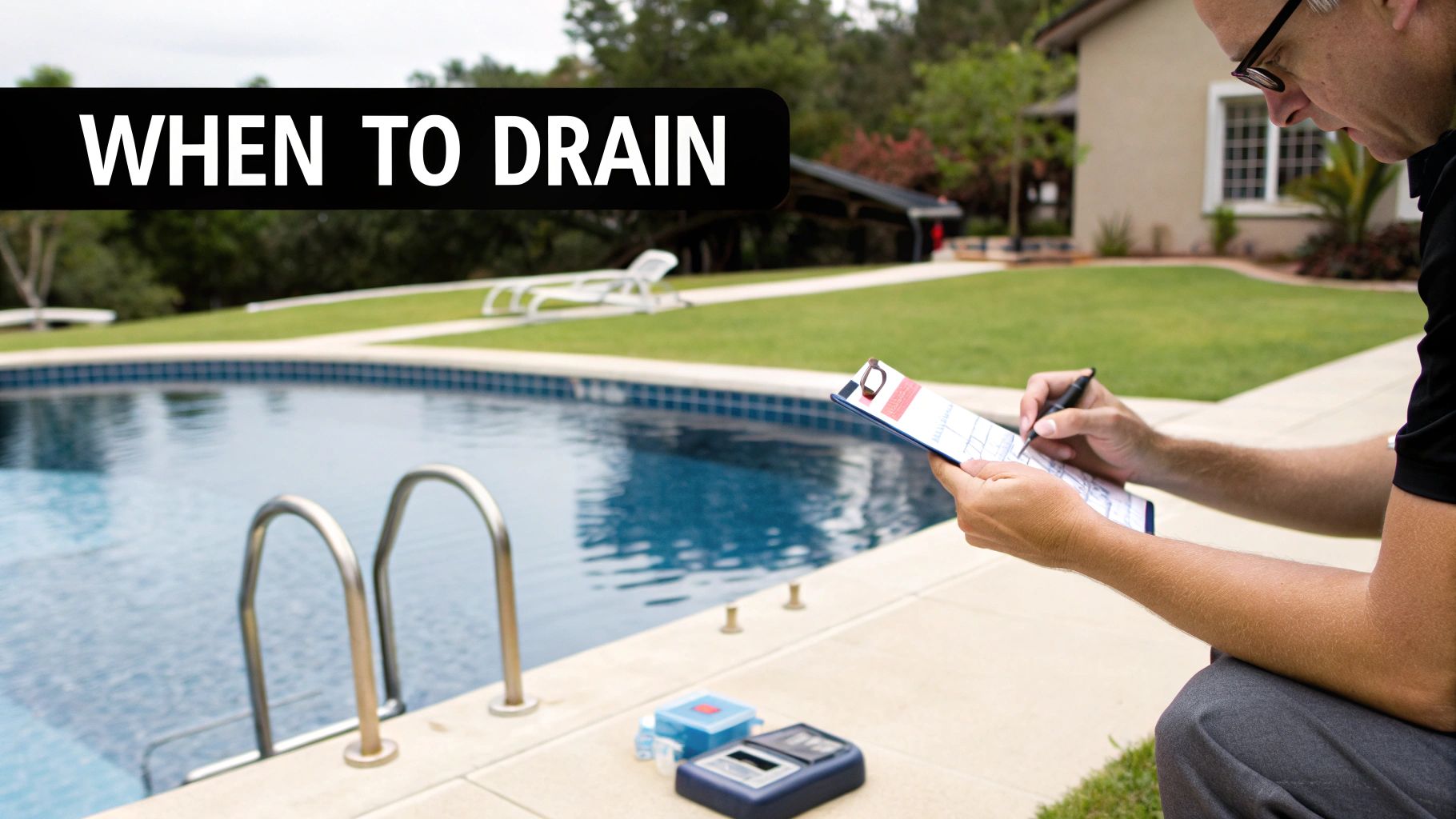
Most of the time, the best thing you can do for your pool is keep it full. That massive volume of water isn't just for swimming; its weight provides crucial structural support, holding the shell in place against pressure from the surrounding ground. But sometimes, especially here in Southwest Florida, draining is the only path forward.
Sky-High Total Dissolved Solids
One of the most frequent culprits forcing a drain is a high level of Total Dissolved Solids (TDS). Think about it: everything that goes into your pool—chlorine, shock, algaecide, sunscreen, dust, minerals from your fill water—dissolves. When the water evaporates, those solids stay behind.
Over months and years, they build up. Once your TDS levels creep over 2,500 parts per million (ppm), the water is essentially saturated. Your chlorine starts to feel sluggish and ineffective, no matter how much you add. The water gets hazy, algae seems to pop up out of nowhere, and you're constantly fighting to keep things balanced. At this point, the only real fix is to introduce fresh water, which means draining some or all of the old, tired water out.
Once TDS gets too high, your pool water is basically worn out. You can't treat it effectively anymore. Draining and refilling is the only way to get back to a clean slate where your chemicals can do their job properly. Our team can test your TDS levels and confirm if a drain is needed.
Major Repairs and Resurfacing
This one is more straightforward. You simply can't fix certain things with tens of thousands of gallons of water in your way. For big jobs, the pool has to be completely empty and dry. It's non-negotiable.
Here are a few common projects that absolutely require a full drain:
- Resurfacing the Pool: You can't apply a new plaster, pebble, or tile finish underwater. The surface has to be totally exposed.
- Acid Washing: This process removes tough stains and mineral buildup from the plaster, and it requires direct contact with the surface.
- Structural Crack Repair: To properly patch significant cracks in the gunite or plaster, you need full, dry access.
- Main Drain or Hydrostatic Valve Replacement: These critical components are at the very bottom of the pool, making work impossible unless it's empty.
Severe Chemical Imbalances
Every now and then, something catastrophic happens. Maybe a major storm dumps a ton of debris and contaminated water into your pool, or a chemical accident throws everything into chaos. If your pool looks more like a swamp and heavy-duty shock treatments and algaecides aren't making a dent, draining might be the cheapest and fastest way out.
Spending hundreds on chemicals to salvage unsalvageable water can be a waste of time and money. Sometimes, starting over is just the smarter move.
Before you pull the trigger, though, it's wise to get a professional opinion. Our team can run a full water analysis and inspect your pool to confirm if draining is really your best option. Give Water Medic a call for an expert pool service consultation, and we'll give you a straight, honest assessment.
Navigating Local Pool Drainage Regulations
https://www.youtube.com/embed/qrHdK0fmDNI
Before you even think about pulling the plug on your pool, you've got to get familiar with the local rules. Here in Southwest Florida, from Naples up to Fort Myers, draining a pool isn't as simple as running a hose to the curb. We're talking about thousands of gallons of treated water, and where it goes matters—a lot.
Our storm drains aren't a free-for-all. They flow directly into our canals, bays, and ultimately, the Gulf of Mexico, with zero filtration along the way. Letting chlorinated or salt water pour into that system is a direct threat to our local aquatic life. It’s not just bad practice; it’s against local law, and the fines for doing it wrong can turn a simple maintenance task into a huge expense.
Why Your Draining Method Matters
At the heart of the issue is the chemistry of your pool water. It’s treated with chemicals, and even after you’ve neutralized the chlorine, there are still dissolved solids and other things you don't want in our natural waterways.
Across the country, most cities and states have made it illegal to dump pool water into storm drains for this very reason. The water bypasses treatment plants and goes straight into the environment. Instead, regulations usually require you to drain the water onto a permeable surface like your lawn or, more commonly, into the sanitary sewer system where it can be properly treated.
This is where having a pro on your side really helps. Our team knows the specific ordinances for Cape Coral, Lee County, and Collier County inside and out. We make sure every drain job we do is fully compliant, protecting you from fines and helping preserve our beautiful local environment.
Approved Discharge Methods in Southwest Florida
So, how do you do it the right way? When you're dealing with a large volume of water from a full pool drain, local rules point to one primary method.
- Sanitary Sewer Cleanout: This is the go-to, accepted method in our area. The sanitary sewer is a closed system that sends wastewater to a treatment facility. Your job is to find the cleanout access on your property—it’s usually a capped PVC pipe near your house—and run your discharge hose into it.
The key is to drain the water at a controlled, slow rate. If you pump it out too fast, you risk overwhelming the sewer line and causing a nasty backup into your home. This is a perfect example of why professional-grade pumps and hands-on experience make such a difference.
Key Takeaway: Never, ever drain your pool into a street-side storm drain or a nearby canal. Always use your property's sanitary sewer cleanout. It’s the only way to stay compliant with environmental laws and avoid a hefty fine.
While these rules focus on water disposal, it's also helpful to understand the bigger picture of pool ownership, from installation to upkeep. For anyone curious about the initial stages, there is a complete guide to pool excavation and planning that dives into those topics.
Figuring all this out can feel like a headache, but it’s a critical step. If you're not sure about the rules in your specific area or just want the peace of mind that comes with a job done right, our Pool Maintenance Services are here to help. We handle the entire process, taking the guesswork out of draining your pool so it’s done safely, legally, and without any hassle.
What’s the Best Way to Get the Water Out?
Once you’ve navigated the maze of local regulations, you’re left with the big question: how are you actually going to get all that water out of the pool? If you're set on tackling this yourself, you really have two main paths. But be warned, each comes with its own set of risks and headaches. We're talking about moving thousands of gallons of water, so understanding the trade-offs here is non-negotiable.
Can I Just Use My Pool Pump?
Your first thought might be to use your own pool equipment. It makes sense, right? You can switch your multiport valve to the "waste" setting, which bypasses the filter and shoots the water out a backwash hose. It seems like a convenient, no-cost solution since you already own the gear.
Here's the problem: playing this game is like betting your entire system on a single roll of the dice. Your pool pump needs a constant flow of water to stay cool. The moment the water level dips below the skimmer and the pump starts sucking air, it can overheat and burn out in minutes. A new pump isn't cheap—that "free" draining job can quickly turn into a repair bill costing hundreds or even thousands.
Renting a Submersible Pump: A Safer, Slower Bet
The other DIY route is to get your hands on an external submersible pump. You drop it into the deep end, connect a long discharge hose, and run the hose to your home's sanitary sewer cleanout. This is definitely safer for your pool equipment since your main pump isn't involved at all.
But while it's safer, it's far from perfect.
- It’s a Snail’s Pace: The pumps you can rent from a local hardware store just don't move water very fast. Draining a typical 20,000-gallon pool can easily take 12 to 24 hours. That's a full day of your pool’s plaster or fiberglass surface baking in the harsh Florida sun, which is a recipe for damage.
- The Hassle Factor: You’re in for a lot of running around. You have to find a place to rent the pump, go pick it up, make sure you have the right hoses, and then babysit the thing all day before returning it.
- Questionable Reliability: Let's be honest, rental equipment gets a lot of use and abuse. The last thing you want is for the pump to fail halfway through, leaving you with a half-empty pool and a massive problem.
When you go the DIY route, you're stuck between two bad choices: risk frying your expensive pool pump or commit to a slow, frustrating, and labor-intensive process with a rental. Neither one is a great option when you need the job done safely and quickly.
Before you decide, it helps to see the options laid out. Here’s a quick comparison of the common methods people use to drain their pools.
Pool Draining Method Comparison
| Method | Average Speed | Equipment Cost | Key Risk | Best For |
|---|---|---|---|---|
| Using Your Pool Pump | Fast | $0 (existing equipment) | High risk of burning out the pump motor. | Not recommended for a full drain due to the high risk of costly damage. |
| DIY Rental Pump | Very Slow (12-24+ hours) | $50 – $150 (rental + hoses) | Surface damage from prolonged sun exposure. | Very small pools or spas where speed is not a factor. |
| Professional Service | Very Fast (2-4 hours) | Included in service fee | Minimal risk due to proper equipment & expertise. | Homeowners who want to protect their investment and avoid hassle. |
As you can see, the professional approach stands apart, primarily because of the equipment we use.
The Professional Difference: Speed, Safety, and Peace of Mind
This is where having the right tools for the job completely changes the game. At Water Medic, we don’t show up with a pump we picked up at a rental shop. We use high-capacity, commercial-grade pumps built for one thing: moving a massive amount of water in a very short time. This speed is critical—it dramatically reduces the time your pool's delicate surface is exposed and vulnerable to damage.
The demand for reliable pool care is on the rise. In fact, the swimming pool drain market is expected to grow at a Compound Annual Growth Rate of about 6% from 2025 to 2033, according to a swimming pool equipment market analysis. Homeowners are realizing that investing in proper maintenance pays off.
Ultimately, hiring a professional isn't just about getting better equipment; it's about offloading the risk. We have the right gear, the experience to handle unexpected issues, and the insurance to cover it all. To learn more about the high-quality systems we trust, take a look at our guide on pool pumps and equipment. When you call us, you aren't just draining a pool—you're protecting one of your home's most valuable assets.
Draining Your Pool with a Submersible Pump
So, you've decided to tackle draining your pool yourself. If you're going the DIY route, using a submersible pump is really the only way to go. It's definitely slower than using your pool's main circulation pump, but it sidesteps the massive risk of burning out that expensive piece of equipment.
But let's be clear: there's more to it than just tossing a pump into the deep end and walking away.
First things first, you need to get the water ready. Before you pump a single gallon, the pool chemicals have to be neutralized to meet local Southwest Florida regulations. This means letting the chlorine level drop all the way to zero. Just stop adding sanitizer, and it'll get there in a few days. You also need to check that the pH is balanced, aiming for a range between 7.2 and 7.8. This isn't just red tape; it's a critical step to protect our local environment and the municipal water systems.
Getting the Pump and Hose in Place
Once your water chemistry is in the clear, it's time to set up your gear. You'll want to place the submersible pump right at the deepest part of your pool, which is almost always near the main drain at the bottom. Make sure it's sitting flat and stable so it doesn't tip over as the water level drops.
Next up is the discharge hose. Attach it securely to the pump, and make sure it’s long enough to reach your home’s sanitary sewer cleanout. Run the hose carefully, avoiding any kinks or sharp bends that could choke off the water flow.
Now for a pro tip: when you put the other end of the hose into the cleanout pipe, make sure it's really secure. The force of the water can easily push it right back out, and the last thing you want is thousands of gallons of water flooding your yard. That’s a surefire way to turn a simple project into a huge, muddy mess.
The infographic below breaks down the difference between going it alone and calling in a professional.
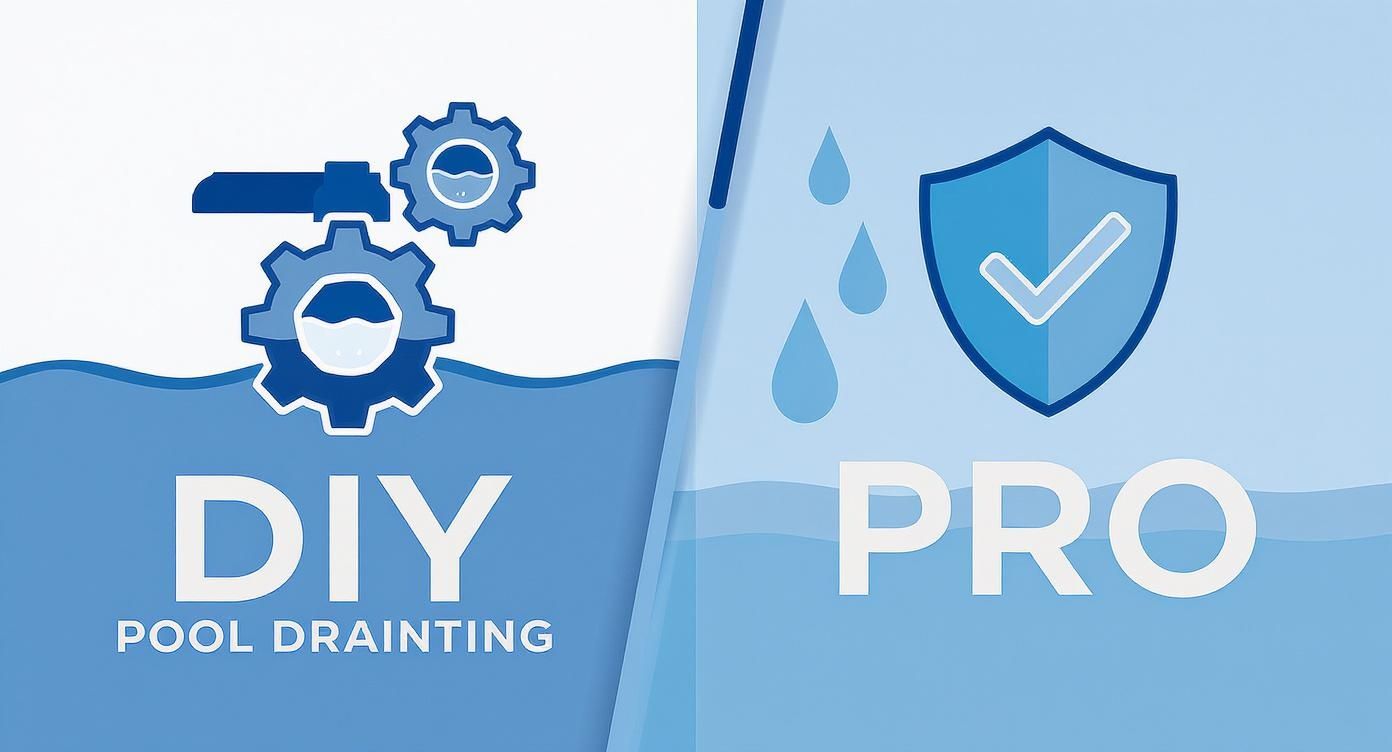
As you can see, the main trade-off is time and risk versus cost. A professional job is built around speed and safety, avoiding the serious headaches that can pop up with a DIY attempt.
Keeping an Eye on the Draining Process
With everything set up, you can plug in the pump and get the water moving. But this is absolutely not a "set it and forget it" job. You need to stick around and monitor the process, especially as the water gets low.
As the water level recedes, check on the pump to ensure it stays submerged. If it starts sucking air, it can quickly overheat and burn out. Once you're down to the last few inches of water, you'll need to shut off the pump and get the rest out the old-fashioned way—with a bucket or a small utility pump.
CRITICAL SAFETY WARNING: In Southwest Florida, we have a very high water table, which creates a serious risk of a "pool pop." When a pool is empty, the hydrostatic pressure from the groundwater pushing up can literally lift the entire pool shell out of the ground. This can cause catastrophic, wallet-crushing damage, especially to fiberglass and vinyl liner pools.
Frankly, this risk alone is the number one reason to think twice about a DIY drain. An experienced pool professional knows how to read the groundwater conditions and, more importantly, knows how and when to open the hydrostatic relief valve at the bottom of the pool to equalize that pressure. Getting this wrong can completely destroy your pool.
If you've started draining and something just doesn't feel right, or if the risks are starting to feel a little too real, please don't hesitate. Our technicians are always on standby for Emergency Pool Services. Trust me, making a phone call is infinitely better than facing a disaster that could cost you tens of thousands of dollars to fix.
The Hidden Risks of DIY Pool Draining
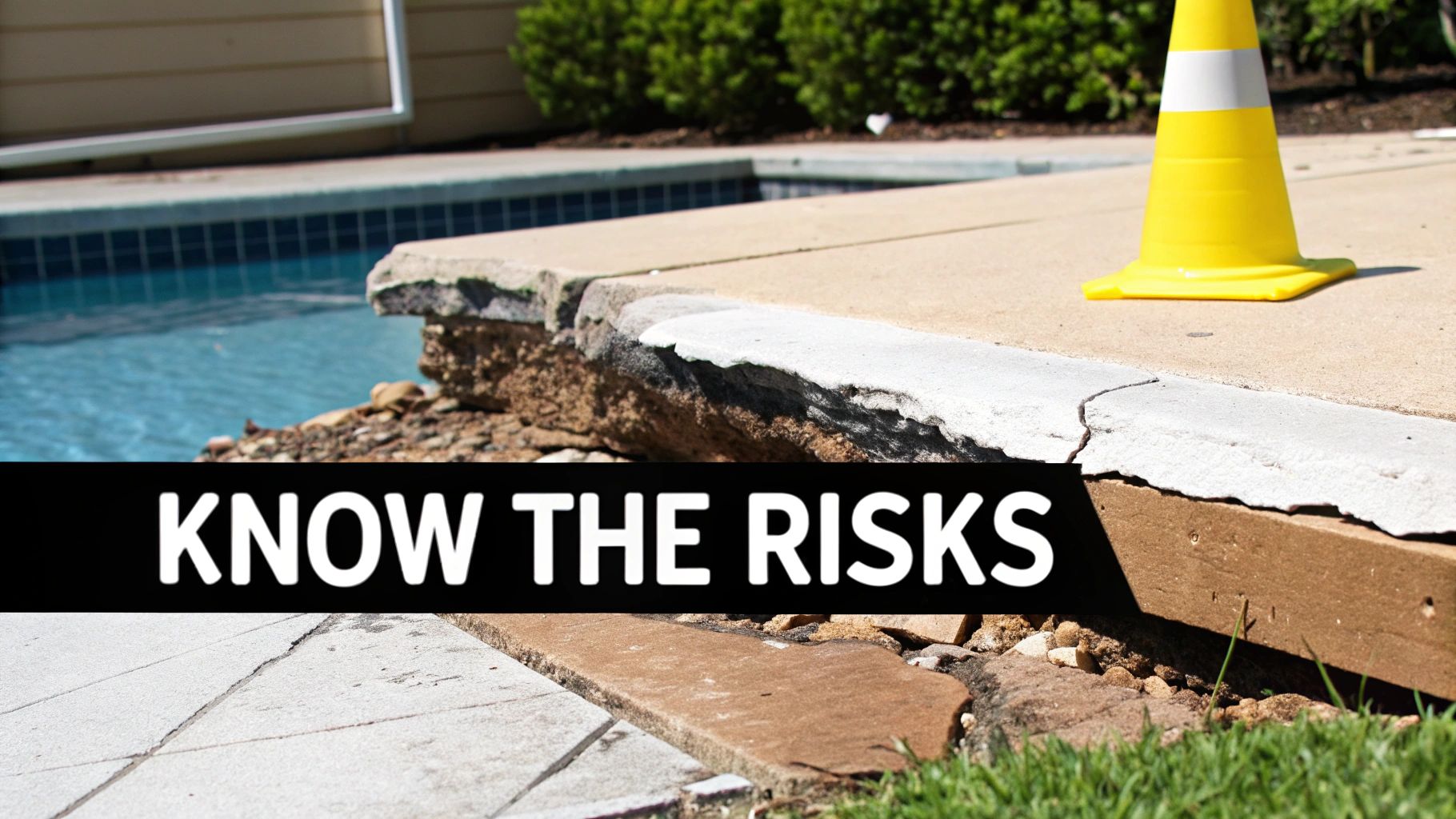
Figuring out how to drain your pool might seem simple enough on the surface. But trust me, taking the DIY route is loaded with expensive, frustrating pitfalls, especially here in Southwest Florida. We've seen it all. Beyond the nightmare scenario of "pool pop"—where hydrostatic pressure literally shoves your pool shell out of the ground—there are plenty of other costly mistakes waiting for a homeowner trying to save a few bucks.
One of the first things to go wrong is damage to the pool's surface. When you empty that pool, the plaster, pebble, or fiberglass finish gets hit with the full force of the Florida sun. Without water acting as a shield, the surface dries out incredibly fast. This leads to spiderweb cracks, flaking, and ugly discoloration. Suddenly, that money-saving project has turned into a multi-thousand-dollar resurfacing job.
The True Cost of Common Mistakes
Then you have the local rules and regulations to worry about. You can't just dump 20,000 gallons of chlorinated water wherever you want. Doing it wrong can land you some hefty fines from the county. Not to mention, you could kill your lawn, flood your landscaping, or create a swamp in your neighbor's yard, which is a great way to ruin a weekend.
The equipment itself is another big question mark. I've heard countless stories that go something like this:
- A cheap rental pump gives out halfway through the job, leaving the pool half-empty and exposed.
- Draining the pool reveals a leak nobody knew about, or makes a small one much worse. This is where you need an expert eye; you can learn more about finding these at our leak detection page.
- Removing all that water weight puts a new kind of stress on the shell, turning tiny hairline fractures into major structural cracks.
If you’re considering any kind of home plumbing project, it’s always wise to understand the do's and don'ts by checking a reliable general plumbing DIY guide.
Choosing to hire a professional isn't just about convenience; it's an investment in risk mitigation. You're trading a small, predictable service fee for the complete avoidance of potentially disastrous, multi-thousand-dollar repair bills.
Our team at Water Medic takes all that risk off your plate. We use commercial-grade, high-capacity pumps to get the water out fast, drastically reducing the time your pool's surface is exposed to the sun. We manage the water disposal according to all local codes, so you don't have to worry about fines or angry neighbors. Most importantly, we know exactly how to manage the hydrostatic pressure to ensure your pool stays firmly in the ground where it belongs.
Don't let a seemingly simple task turn into a financial headache. Contact Water Medic today for a consultation, and get the peace of mind that comes from a job done right, guaranteed.
Got Questions About Draining Your Pool? We've Got Answers.
When it comes to draining a pool, it's natural to have a few questions. Actually, it's a good thing! This isn't your average weekend project, and knowing what you're getting into is key. We hear the same handful of questions all the time, so let's tackle them head-on.
How Long Does It Take to Drain a Pool?
This is a big one. If you go rent a standard submersible pump from the local hardware store for your 20,000-gallon pool, you're looking at a long day. It could take anywhere from 10 to 24 hours to get the water out.
The real problem isn't the wait; it's what's happening to your pool's surface during that time. Every single hour that your plaster or fiberglass is baked by the Florida sun, the risk of it cracking and blistering goes way up. That's permanent damage.
We use professional, high-capacity pumps for a reason. We can get that same pool completely empty in just a few hours, dramatically cutting down that risky exposure time and keeping your pool surface safe.
Can I Just Drain My Saltwater Pool into the Yard?
Please don't do this. Draining a saltwater pool onto your lawn or into your garden is a surefire way to kill everything. The salt concentration is toxic to grass, shrubs, and flowers, leaving you with dead, brown patches and contaminated soil.
The truth is, it doesn't matter if your pool is salt or traditional chlorine—you have to follow local regulations for disposal. For us here in Southwest Florida, that almost always means neutralizing the water and draining it directly into a sanitary sewer cleanout. It’s the only way to do it safely and legally.
Whether your pool runs on salt or chlorine, that water has to be disposed of properly. Taking a shortcut can kill your landscaping, harm the environment, and even land you a hefty fine from the city.
What Does Professional Pool Draining Cost?
The cost really depends on the size of your pool and what else you might need done, like an acid wash or some small repairs while it's empty.
It’s tempting to think renting a pump is the budget-friendly route, but the potential "hidden" costs are what get people into trouble. A DIY job can go south fast. Think about the cost of replacing a burnt-out pool pump, repairing a huge crack in the plaster, or paying a fine for illegal dumping. Suddenly, that DIY project can cost thousands.
We provide clear, upfront quotes that cover the entire job, no surprises. Most importantly, our price includes the confidence of knowing insured experts are handling it correctly. For even more answers, head over to our detailed pool service FAQs.
Your pool is a huge investment, so don't risk it with a DIY draining project that could end in disaster. The team at Water Medic of Cape Coral has the right equipment and the local know-how to drain your pool the right way—safely, efficiently, and in full compliance with all Southwest Florida rules. Contact us today for a free estimate and let us take the worry off your hands.