
How to Detect Water Leaks in Your Home
Sometimes, the first hint of a water leak isn't a puddle on the floor. It's often something far more subtle—a water bill that suddenly jumps for no reason, the faint sound of running water when everything is turned off, or a new, musty smell you can't quite place. These are your early warnings, and learning to spot them is the key to preventing a small drip from becoming a disaster.
Decoding the Subtle Signs of a Hidden Water Leak
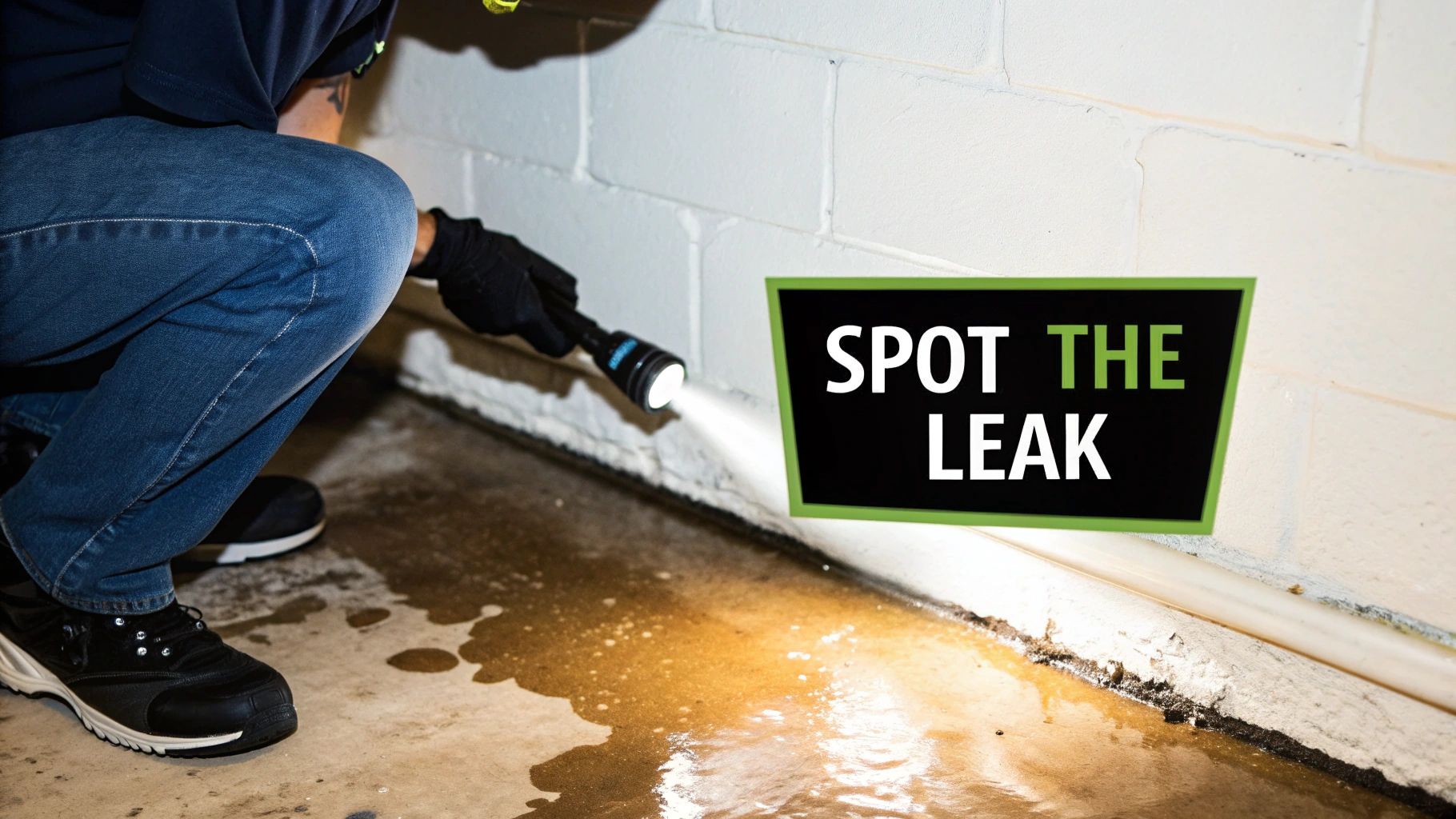
Before you can fix a leak, you have to know you have one. The earliest signs are often easy to ignore, but paying attention can save you a world of trouble. Think of it as being proactive rather than reactive—a little vigilance now prevents a lot of headaches later. It all starts with using your senses.
Here are a few of the most common red flags that homeowners tend to miss:
- A Sudden Spike in Your Water Bill: This is often the very first sign. If your habits haven't changed but your bill is 15-20% higher, water is going somewhere.
- The Sound of Running Water: When all faucets and water-using appliances are off, your house should be silent. A hissing or dripping sound from behind a wall is a dead giveaway.
- New Mold or Mildew: That musty smell in a cabinet, basement, or laundry room is a classic sign of a persistent moisture problem.
Where to Look for Early Warnings
Put on your detective hat and start investigating. That damp spot on the basement floor isn't just a bit of condensation; it could be a sign of a slab leak. The musty odor under the kitchen sink might be a slow, steady drip from a supply line you never noticed. And if you ever see signs of water leakage through your ceiling, it's time to act fast to find the source.
The smallest signs often point to the biggest problems. A single discolored ceiling tile or a slightly warped floorboard can be the only external evidence of a significant leak hidden within your home's structure.
Here's a quick reference to help you connect common symptoms with potential culprits.
Quick Leak Symptom Checklist
| Symptom | What It Could Mean | Where to Look First |
|---|---|---|
| Unexpectedly high water bill | A continuous, hidden leak in the main line or a fixture. | Check your water meter, then toilets and outdoor spigots. |
| Musty odors or visible mold | A slow leak inside a wall, cabinet, or poorly ventilated area. | Under sinks, behind appliances (dishwasher, washing machine), basement corners. |
| Discolored spots on ceilings/walls | A leak from a bathroom, pipe, or roof directly above the stain. | Check the room directly above the spot for any plumbing fixtures. |
| Sound of running water | A constantly running toilet or a leak in a main water line. | Listen closely at your toilets and where the main water line enters the house. |
| Warped flooring or baseboards | Water seeping from a hidden pipe, appliance, or foundation leak. | Around refrigerators, dishwashers, bathtubs, and showers. |
Keeping an eye out for these clues can make a huge difference. By spotting these signs early, you can take action before minor issues escalate into major repairs.
Catching these problems early saves you from the stress and expense of major repairs. Making these quick visual and auditory checks a part of your regular routine is a simple but powerful habit. Our comprehensive monthly maintenance plan can help you build a schedule to keep your home's systems in top shape.
While DIY checks are crucial, remember that professional services exist for a reason. If you suspect a leak but just can't find it, our expert technicians use specialized equipment to pinpoint it without tearing your walls apart. This is why the market for advanced leak detection is growing so quickly. In the commercial sector alone, adoption of AI-enabled detection technology jumped by 45% in 2024, all driven by the need for proactive water management.
So, you’ve noticed some signs that point to a leak. Now what? The next step is to get concrete proof, and your home's water meter is the best tool for the job. Think of it as the ultimate lie detector for your plumbing system.
Running a quick meter test is straightforward, costs nothing, and will tell you with certainty if you have a hidden water leak somewhere on your property.
How to Use Your Water Meter to Find a Leak
First things first, you need to find the meter. For most houses, it's located out front near the curb or sidewalk, tucked inside a concrete box with a metal or plastic lid. If you live in a condo or townhome, it might be in a basement or a shared utility closet.
Once you’ve got the lid off, you can start the test. The infographic below walks you through the process, showing exactly what to look for.
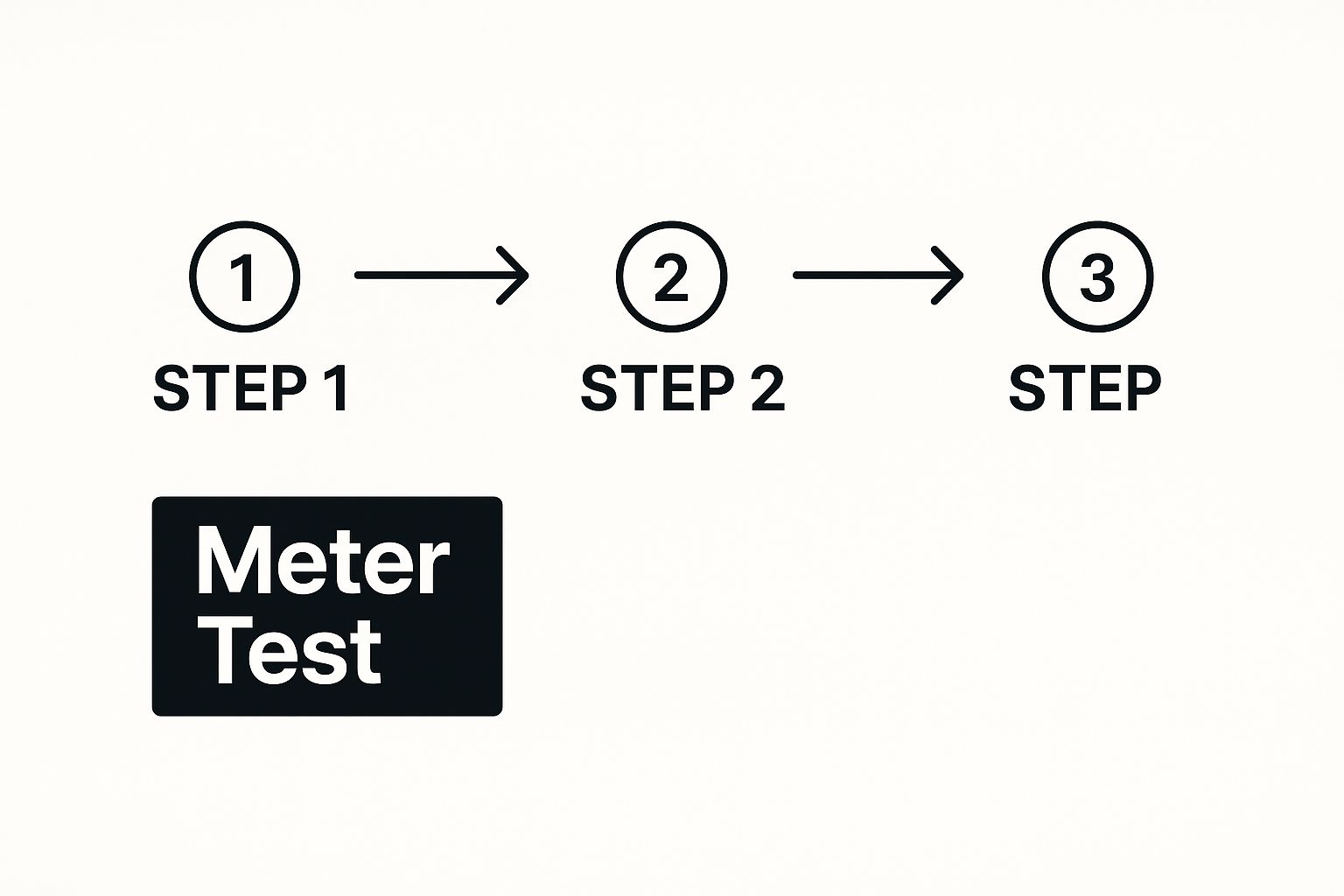
This visual is a great quick-reference guide for understanding how your meter can give you the proof you need.
Running the Test: A Step-by-Step Look
For the test to be accurate, you have to make absolutely sure no water is being used anywhere inside or outside your home. This part is critical.
- Shut off every faucet. Double-check them all.
- Confirm the washing machine and dishwasher are off.
- Listen to make sure your ice maker isn't filling up.
- Turn off any sprinkler or irrigation systems.
Once everything is off, head back to the water meter. Look for a small dial—it's usually a red triangle, a silver star, or a little black wheel. This is the leak indicator.
If that indicator is spinning, even just a tiny bit, you've got a leak. Some digital meters might show a flashing faucet icon or have numbers that keep ticking upward. Either way, movement means water is flowing.
Key Takeaway: A moving leak indicator is undeniable proof. It means water is getting past the meter and heading somewhere on your property, even when you think everything is turned off. This is the moment you know for sure you have an issue to track down.
What the Results Are Telling You
If you saw the indicator move, congratulations—you’ve confirmed a leak. The speed of the spin can even give you a clue about its size. A very slow turn might mean a small toilet flapper leak, while a fast-spinning dial points to something much more serious.
This confirmation is great, but it can also be a little nerve-wracking. Every homeowner should know how to perform an emergency water shut-off. Learning this simple procedure could be the difference between a small mess and a catastrophic flood while you figure out the next steps.
If your meter test proves you have a leak but you can't find its source, don't wait for the problem to get worse. Our technicians have the right tools and experience to pinpoint even the most well-hidden leaks and protect your home from any more damage.
Investigating Common Leak Culprits Inside Your Home
Alright, so the water meter test confirmed your suspicion: you’ve got a leak somewhere. The hunt is on, and the best place to start is right inside your house.
Most of the time, indoor leaks aren't buried deep within your walls. They’re hiding in plain sight, coming from the fixtures and appliances you use every day. By methodically checking the usual suspects, you can often find the problem yourself without any special gear. Think of it as detective work—you’re looking for clues.
The Notorious Toilet Leak
Let’s start with the biggest offender: the toilet. Toilets are infamous for silent leaks that can waste an incredible amount of water without making a sound. The problem is almost always a worn-out flapper that lets water seep from the tank into the bowl.
Luckily, there’s a super simple way to bust this culprit.
Grab some food coloring, put a few drops into the toilet tank (the back part), and then just walk away. Don't flush. Come back in about 15-20 minutes. If you see any of that color has bled down into the bowl, bingo. You've found the leak. That flapper isn't creating a tight seal and needs to be replaced.
A running toilet can waste more than 200 gallons of water per day—that’s over 6,000 gallons a month! Finding and fixing this single issue can have a huge impact on your water bill and conservation efforts.
Under the Sink Investigation
Next up are your kitchen and bathroom sinks. Slow drips under a sink can go unnoticed for ages, quietly causing water damage and mold inside your cabinets. The key is to check the P-trap, which is that U-shaped pipe right under the drain.
Turn on the faucet for a bit, then grab a dry paper towel and wipe down the entire P-trap and all the connections. Pay close attention to where the supply lines connect to the shut-off valves at the wall. Now, look at the paper towel. See any moisture? Even a tiny bit means a fitting is loose or a washer has failed. While you're under there, keep an eye out for any white or green crusty buildup around the fittings—that’s a dead giveaway of a long-term, slow leak.
Checking Water-Using Appliances
Don't forget the heavy hitters. Your big appliances are hooked up to water lines 24/7, making them prime candidates for developing leaks.
-
Water Heaters: Scan the floor around the base of your water heater for any puddles or damp spots. Check the pressure relief valve and the drain valve at the bottom for any signs of dripping. Also, take a close look at the pipe fittings on top. Any corrosion on the tank itself is a serious red flag that it might be nearing the end of its life.
-
Washing Machines: This one requires a little muscle. Carefully pull the machine away from the wall so you can get a good look at the hot and cold water supply hoses. Feel along the length of the hoses for any dampness and visually inspect them for cracks, blisters, or bulges. A burst washing machine hose can flood a room in a matter of minutes, so this is a critical check.
Catching these issues early can save you from a massive headache and an expensive repair bill down the road. It’s why we always stress the importance of preventative care in our Appliance Maintenance Services, which are all about keeping your home's systems in top shape.
If you’ve checked all these indoor spots and still come up empty, it's time to head outside.
Finding Outdoor Leaks in Irrigation Systems and Pools
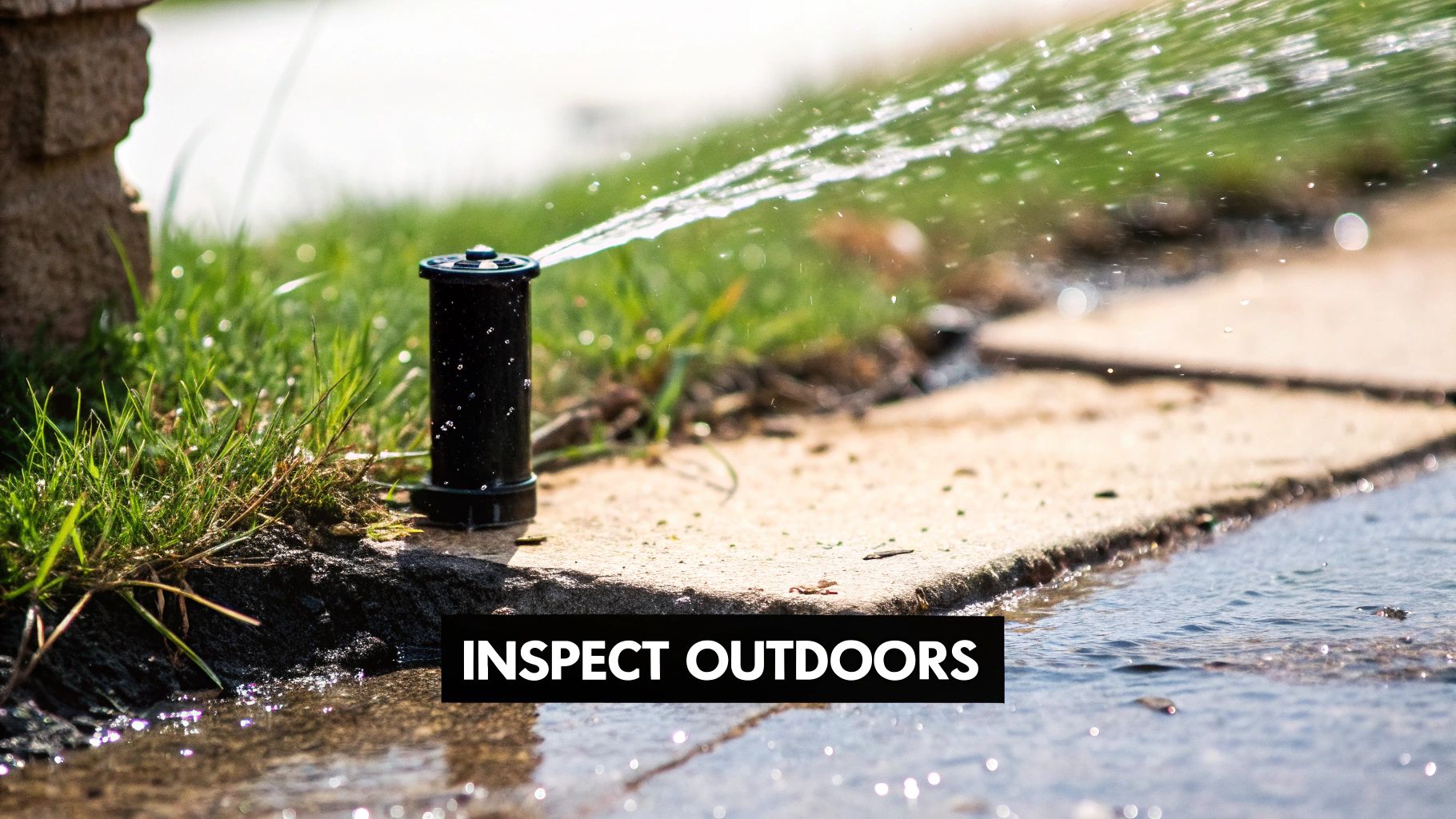
Leaks aren't just an indoor problem. They can silently drain your wallet right in your own backyard, often going completely unnoticed until you get a surprisingly high water bill.
Your outdoor water systems—like irrigation, pools, and even simple garden hoses—are common culprits. A dripping hose bib or a faulty sprinkler head might seem minor, but that water loss really adds up over time. Conducting a thorough water audit of your property means looking outside, too.
Pinpointing Irrigation System Leaks
I’ve found that a home's sprinkler system is often a prime suspect for hidden leaks. Since most of the lines are buried, the problems aren't always obvious. But if you know what to look for, your yard will give you some clear visual clues.
The best way to start is to run your irrigation system zone by zone and take a slow walk around the property. As you do, pay close attention to each sprinkler head.
- Dripping Heads: After a zone shuts off, do you see any sprinkler heads that are still dripping or leaking water? This is a dead giveaway that you likely have a worn-out valve seal that needs to be replaced.
- Soggy Patches: Be on the lookout for areas of your lawn that are unusually green, feel mushy underfoot, or have standing water long after the sprinklers have stopped. This is a classic sign of a broken underground pipe.
- Erosion or Sinkholes: Small depressions or spots where the soil has washed away can point to a more significant underground line break that's been happening for a while.
These visual checks can help you catch problems early, before they cause major damage to your landscaping or even your home's foundation. If you find an issue buried deep underground that's beyond a simple DIY fix, our professional outdoor plumbing and irrigation repair services can provide the expert help needed to get it sorted out correctly.
The Pool Owner's Secret Weapon: The Bucket Test
If you own a pool, you know it can be tough to tell if you're losing water to a leak or just normal evaporation on a hot day. Luckily, there's a simple, incredibly effective method to find out for sure: the bucket test.
Grab a standard 5-gallon bucket and place it on one of your pool steps. Fill it with pool water until the water level inside the bucket is the same as the water level outside of it. Now, mark both the inside and outside water levels with a piece of tape or a waterproof marker.
Turn off the pool pump and any auto-fill features, then wait 24 hours. Check your marks. If the water level outside the bucket has dropped more than the water level inside, you definitely have a leak. The water inside the bucket can only evaporate, while the pool water both evaporates and leaks out.
If the test confirms a leak, the next step is to investigate the most common trouble spots, like the skimmer, drains, and return lines. The filtration system itself can also be a source of problems. If you need a hand diagnosing the issue, our guide to professional pool equipment repair offers valuable insights and solutions to get your system running perfectly again.
When to Call a Professional for Advanced Leak Detection
So, you've done everything right. You checked the water meter, gave every appliance a once-over, and even walked the entire yard. But you’re still seeing the signs—that stubbornly high water bill or a mysterious damp spot that just won’t go away.
Some leaks are just masters of disguise. They hide deep within your home’s structure, tucked away behind concrete, under solid slab foundations, or buried far underground. When your own investigation hits a wall, that's the signal to bring in the specialists.
Trying to find these hidden leaks yourself can quickly turn into a costly and destructive guessing game. Nobody wants to tear up perfectly good flooring or start cutting into drywall only to find they were in the wrong spot. This is where expertise and specialized equipment make all the difference—professionals don't guess. They use advanced technology to pinpoint the exact source with surgical precision.
The Technology Behind Finding Hidden Leaks
When our team shows up, we come equipped with a toolkit designed specifically for non-invasive detection. Knowing a bit about these tools can give you confidence that we'll find the problem without resorting to destructive methods.
- Acoustic Listening Devices: Think of these as super-powered stethoscopes. These incredibly sensitive microphones can actually "hear" the distinct sound of dripping or running water through solid materials like concrete, drywall, and even soil.
- Thermal Imaging Cameras: An infrared camera lets us see what the naked eye can't by detecting tiny temperature differences on surfaces. A hidden water leak almost always creates a cold spot on a wall or floor, which shows up clearly on the camera’s screen.
- Tracer Gas Detectors: For the most stubborn, hard-to-find leaks, we can introduce a safe, non-toxic gas into your plumbing lines. This gas escapes at the leak point and rises to the surface, where a specialized "sniffer" tool detects its exact location.
These methods are efficient, precise, and save you from the massive headache of a demolition project just to find a tiny drip. While many common leaks are great DIY finds, the more complex or persistent issues really do need the help of professional leak detection and repair services.
Knowing When to Make the Call
Deciding to call for help isn't giving up; it's making a smart, strategic move to protect your biggest investment. It's no surprise that the global market for water leak detection systems is projected to hit $8,430.91 million by 2032. This is a clear sign that more and more people are relying on professional-grade tech to prevent damage and conserve water, especially with aging infrastructure.
Pro Tip: If your water bill is still sky-high after you've checked all the usual suspects, or if you see clear signs of damage like warped floors or stained ceilings but can't find the source, that's the perfect time to bring in an expert.
Don't let a hidden leak cause you ongoing stress while the damage to your home gets worse. When you've done everything you can, our team is ready to step in with the right tools and experience.
Explore our full range of professional water leak detection services and let our specialists take over. We'll find the problem and give you the peace of mind that comes with a definitive solution.
Have Questions About Finding Water Leaks? We've Got Answers
Even with the best instructions, you're bound to have questions when you're hunting for a leak. Every house is different, and some situations can be genuinely puzzling. Let's run through some of the most common questions we get from homeowners, so you can feel more confident tackling the problem.
Think of this as a quick troubleshooting guide for those tricky situations where the answer isn't immediately obvious.
How Can I Tell If a Leak Is an Emergency?
This is the big one. Knowing when to call for immediate help is crucial. A leak becomes a full-blown emergency when the amount of water is significant enough to cause rapid, widespread damage or create a safety hazard, like interacting with electrical wiring.
You've got an urgent problem on your hands if you see:
- Water stains on ceilings or walls that are visibly growing or dripping.
- Pooling water on the floor that you can't trace back to a simple spill.
- A sudden, dramatic drop in water pressure all over the house.
- The distinct sound of rushing water inside a wall, even when all your faucets are off.
If you spot any of these signs, your first and most important move is to shut off your home's main water supply. Once the water is off, it's time to call a professional plumber right away.
My Water Bill Spiked, but I Can't Find Any Leaks. Why?
It's one of the most maddening problems a homeowner can face. You've done your due diligence—checked the toilets, inspected under every sink, walked the property—but the meter keeps spinning and the bill is sky-high.
Nine times out of ten, the culprit is a leak you can't see. It's likely an underground issue, either in the main service line running from the meter to your house or, more commonly, a slab leak hidden beneath your home's foundation. These are completely invisible from the surface and require professional gear to pinpoint.
It’s hard to believe, but a single leak the size of a pinhole in a pipe under your foundation can waste thousands of gallons a month. It will send your water bill through the roof long before it ever creates a visible puddle. This is exactly why professionals rely on acoustic listening devices and thermal imaging to find them.
Are Smart Water Leak Detectors a Good Investment?
Yes, they're fantastic. Think of smart leak detectors as your first line of defense. These small, affordable sensors are perfect for placing in high-risk spots: under the kitchen sink, behind the washing machine, or next to the water heater.
The moment they sense moisture, they send an alert straight to your phone. That early warning gives you the chance to act before a small drip turns into a disaster.
The technology is getting better and more popular all the time, with the market for these devices projected to be worth $395 million globally by 2025. This boom is fueled by their integration with smart home systems that can even shut off your home's water main automatically. You can discover more about this expanding technology and see how it’s changing home protection.
Ultimately, even with the best DIY skills and smart gadgets, some leaks just need an expert's touch. Knowing how to look for a leak is a powerful first step, but having a trusted pro to call for the tough jobs is what really brings peace of mind.
When you’ve tried everything and still can't find the source of the problem, Water Medic of Cape Coral has the advanced tools and experience to locate and repair any leak, no matter how well it’s hidden. Protect your home and stop overpaying on your water bill by scheduling a professional leak detection service today at https://watermedic.com.