
Fixing Brown Well Water: Expert SWFL Solutions for 2026
You turn on the tap, fill a glass, and the water looks like weak tea or rust. That's not a small annoyance. It's your well telling you something is wrong.
In Southwest Florida, brown well water usually isn't a one-part problem with a one-part fix. It's often a mix of minerals, sediment, seasonal groundwater changes, and sometimes bacterial activity inside the well or plumbing. That's why cheap cartridge filters and one-off treatments so often disappoint homeowners here. They treat what you can see for a moment, not what's feeding the problem.
If you want clear water from one faucet, there are temporary options. If you want clean, consistent water throughout the house, while protecting plumbing, fixtures, appliances, and peace of mind, a whole house reverse osmosis system is the strongest long-term answer.
Identifying the Causes of Your Brown Well Water
Brown well water tells you the water chemistry at your property has shifted, or that the well is pulling unwanted material into the water line. The color matters, but the cause matters more.

The most common culprit is iron. Levels above the EPA's aesthetic limit of 0.3 mg/L can trigger visible brown discoloration, and that's especially relevant in Southwest Florida's mineral-rich aquifers, where iron can also support iron bacteria growth and leave slimy brown biofilms on water system surfaces, as explained in this overview of iron-related brown well water.
What the timing usually tells you
If the water turned brown suddenly, think about what just changed.
- After heavy rain: sediment may have been stirred up or contamination may have entered the well.
- Only at certain faucets: the issue may be in localized plumbing.
- Mostly in hot water: the water heater may be collecting material.
- All the time: the source water likely has an ongoing mineral or well integrity problem.
If the brown color comes and goes, don't dismiss it. Intermittent problems are common in this region because sandy soils, storm patterns, and aquifer movement can change what your pump draws.
The common causes I'd check first
Some causes are more likely than others in Southwest Florida:
- Iron in groundwater that oxidizes and turns rusty-looking.
- Sediment pulled from the well or disturbed after weather events.
- Manganese or rust particles that darken water and stain fixtures.
- Organic staining, including tannins in some settings.
- Iron bacteria, which create slime and recurring system fouling.
Practical rule: If your first instinct is to swap a filter cartridge and hope for the best, stop and test first. Brown water is a symptom, not a diagnosis.
If you want a basic homeowner checklist before calling a pro, this page of well water FAQs is a useful place to start. But the bigger point is simple. When brown well water shows up in Southwest Florida, you need to identify the source problem, not just the visible color.
The Hidden Dangers and Costs of Untreated Water
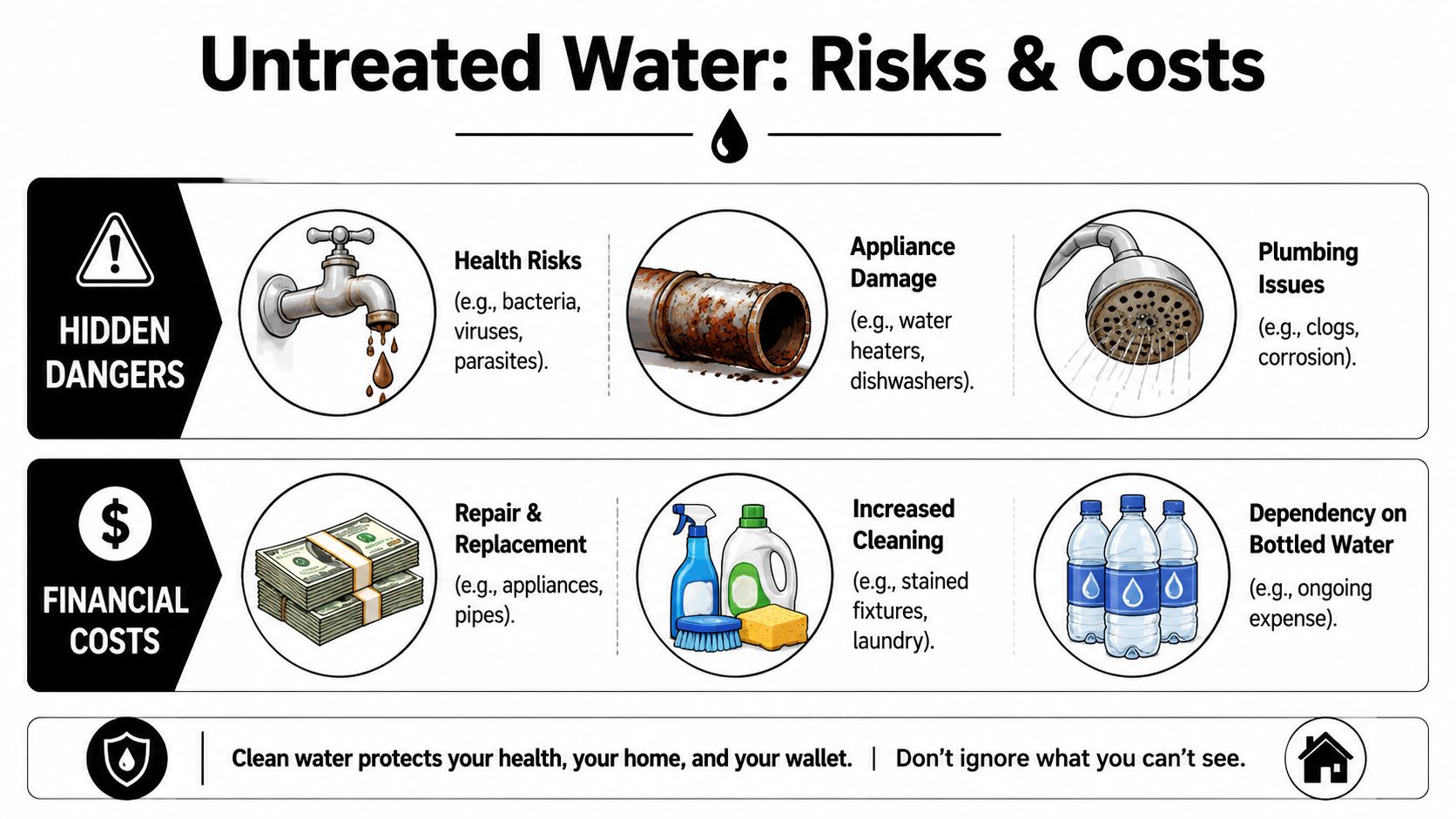
Brown well water wrecks more than appearances. Homeowners usually notice the stains first, but the expensive damage happens behind the walls, inside the water heater, and in appliances that weren't built to handle dirty, mineral-heavy water day after day.
What brown water can hide
The visual problem is obvious. The invisible problem is worse.
The EPA advises annual testing for private wells used by 15 million U.S. households, and discoloration matters because it can hide bacterial contamination. In Florida, well contamination reports surged 300% after Hurricane Ian in 2022, linking storm-driven sediment to bacterial incursions. If discoloration lasts beyond 24 to 48 hours, treat it as a warning sign, as noted in this article on brown well water and contamination risk.
That's the detail too many people overlook. Brown water can make a homeowner focus on cosmetics when the main issue is safety.
If the water changed color after storms or flooding, don't treat it like a laundry problem. Treat it like a water quality event.
The household damage adds up fast
You don't need dramatic contamination for the water to cost you money. Regular exposure to iron, rust, and sediment can lead to:
- Water heater buildup: sediment settles where heat is generated, lowering efficiency and stressing the unit.
- Fixture blockage: faucet aerators, showerheads, valves, and appliance screens collect debris first.
- Reduced pressure: buildup narrows flow paths in plumbing and treatment equipment.
- Constant staining: tubs, toilets, sinks, dishes, and laundry keep showing the same rust-colored marks.
Brown well water also changes behavior in the house. Families stop trusting the tap. They buy bottled water. They run fixtures longer, hoping the water clears. They replace cartridges more often. None of that solves the source issue.
Why waiting is a bad financial decision
The longer you leave untreated water in the system, the more surfaces it touches and the more cleanup it creates. Pipes don't need a major event to suffer. Repeated mineral loading and residue create long-term wear that doesn't show up on day one.
A homeowner who delays proper treatment usually pays in three ways at once:
| Problem | Short-term impact | Long-term result |
|---|---|---|
| Staining | More cleaning and ruined fabrics | Permanent fixture discoloration |
| Sediment and iron | Annoying water quality | Appliance and plumbing wear |
| Water distrust | Bottled water dependence | Ongoing household expense |
That's why I don't recommend a wait-and-see approach. Brown well water is a warning, and warnings get more expensive when ignored.
Why Basic Filters and Quick Fixes Fall Short
A lot of homeowners start with the hardware store solution. That makes sense emotionally. It feels cheaper, faster, and easier. In Southwest Florida, it usually turns into repeat spending with mediocre results.
What basic filters actually do
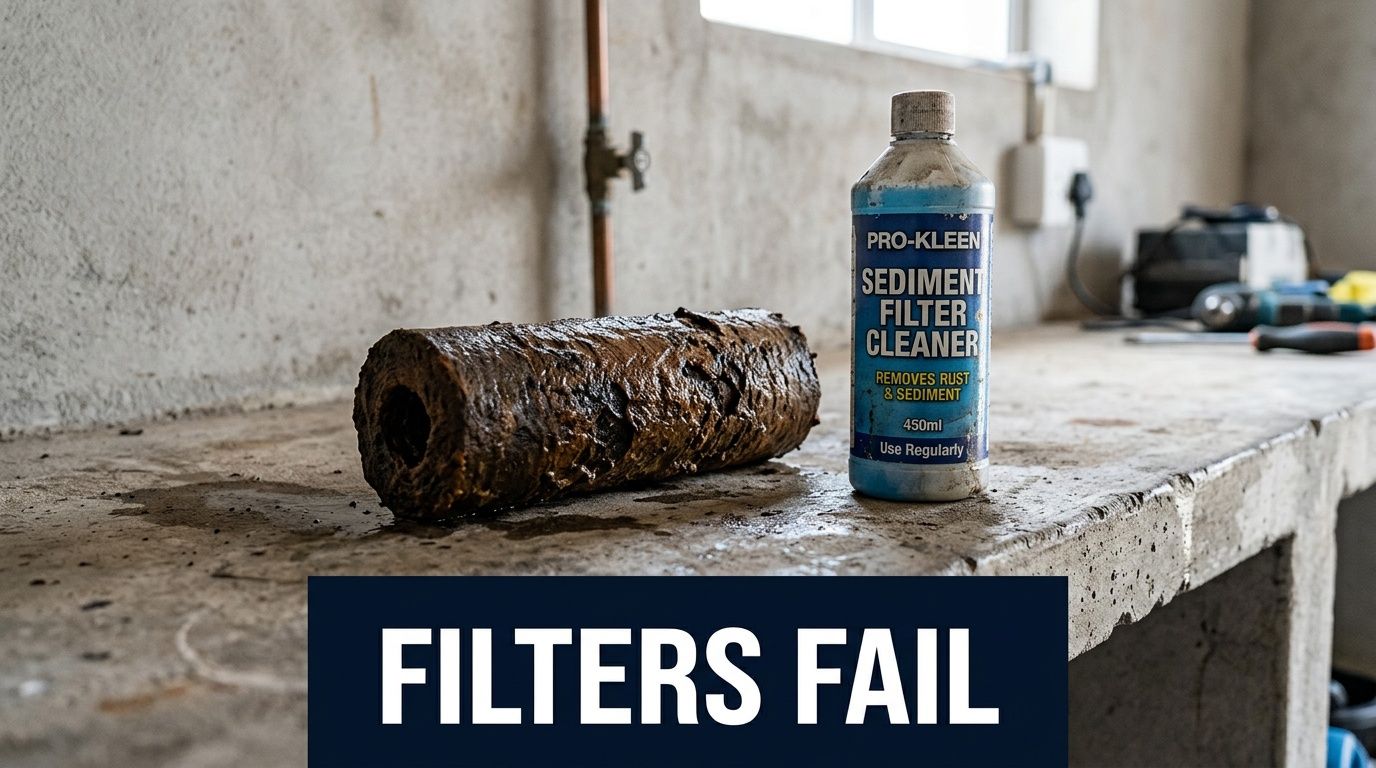
A sediment filter catches particles. That's useful, but limited. If your water has dissolved iron, organic color, bacteria, or multiple contaminants at once, a sediment cartridge only grabs one slice of the problem.
Carbon filters help with taste and odor in the right application. They are not a complete answer for brown well water driven by iron, manganese, well conditions, or biofilm. If you want a general overview of where carbon filters fit, they have value, but they aren't the final answer for a difficult well in this region.
Here's where people get stuck:
- The water looks better for a few days, then the color comes back.
- The cartridge loads up quickly, so pressure drops.
- The underlying source remains unchanged, so the cycle repeats.
The iron bacteria problem that homeowners underestimate
Florida's climate makes iron bacteria a serious issue. This isn't just loose debris in the water. It's a living slime layer that coats well components and plumbing surfaces. Simple filtration does not remove that biofilm.
If left untreated, the remediation cost for corrosion and pump damage can be 3 to 5 times higher than addressing the initial contamination, according to this discussion of iron bacteria and escalating repair costs. That's why I push back hard when someone calls brown water “just cosmetic.”
Expert advice: If a system keeps clogging filters, staining fixtures, and returning to the same brown tint, you don't have a filter problem. You have a treatment design problem.
Why piecemeal treatment usually loses
Brown well water in Southwest Florida often comes from layered causes. Sediment after storms. Iron from the aquifer. Biofilm in the well. Mineral load that affects every fixture. A single-purpose filter can't cover all of that.
A piecemeal setup often fails because each component is reacting to the previous one's weakness. You add a sediment filter, then a carbon unit, then another cartridge, then maybe a temporary disinfecting step. The system becomes a chain of compromises.
That approach has three weaknesses:
| Quick fix | Why people choose it | Why it falls short |
|---|---|---|
| Sediment cartridge | Cheap and easy | Clogs fast and misses dissolved contaminants |
| Carbon filter | Improves odor and taste | Doesn't solve broad mineral loading |
| One-time cleaning or disinfection | Feels decisive | Doesn't create lasting whole-house protection |
You can keep patching symptoms, or you can solve the water problem at the house level. For most brown well water situations here, the patchwork route costs more in frustration than it saves upfront.
The Definitive Answer Whole House Reverse Osmosis
If you want the strongest long-term answer for brown well water, stop thinking in terms of single filters. Start thinking in terms of whole-house treatment architecture. That's why I recommend a whole house reverse osmosis system so often in Southwest Florida.
A whole house RO system doesn't just make the water look better. It addresses the broader water quality load moving through the entire home. That includes the visible contaminants homeowners notice immediately and the dissolved contaminants that keep damaging fixtures, water-using appliances, and plumbing over time.
Why reverse osmosis works where basic filtration doesn't
Most quick fixes are selective. They remove one category of contamination and leave the rest behind. Whole house reverse osmosis is different because it's built to treat the home's water thoroughly.
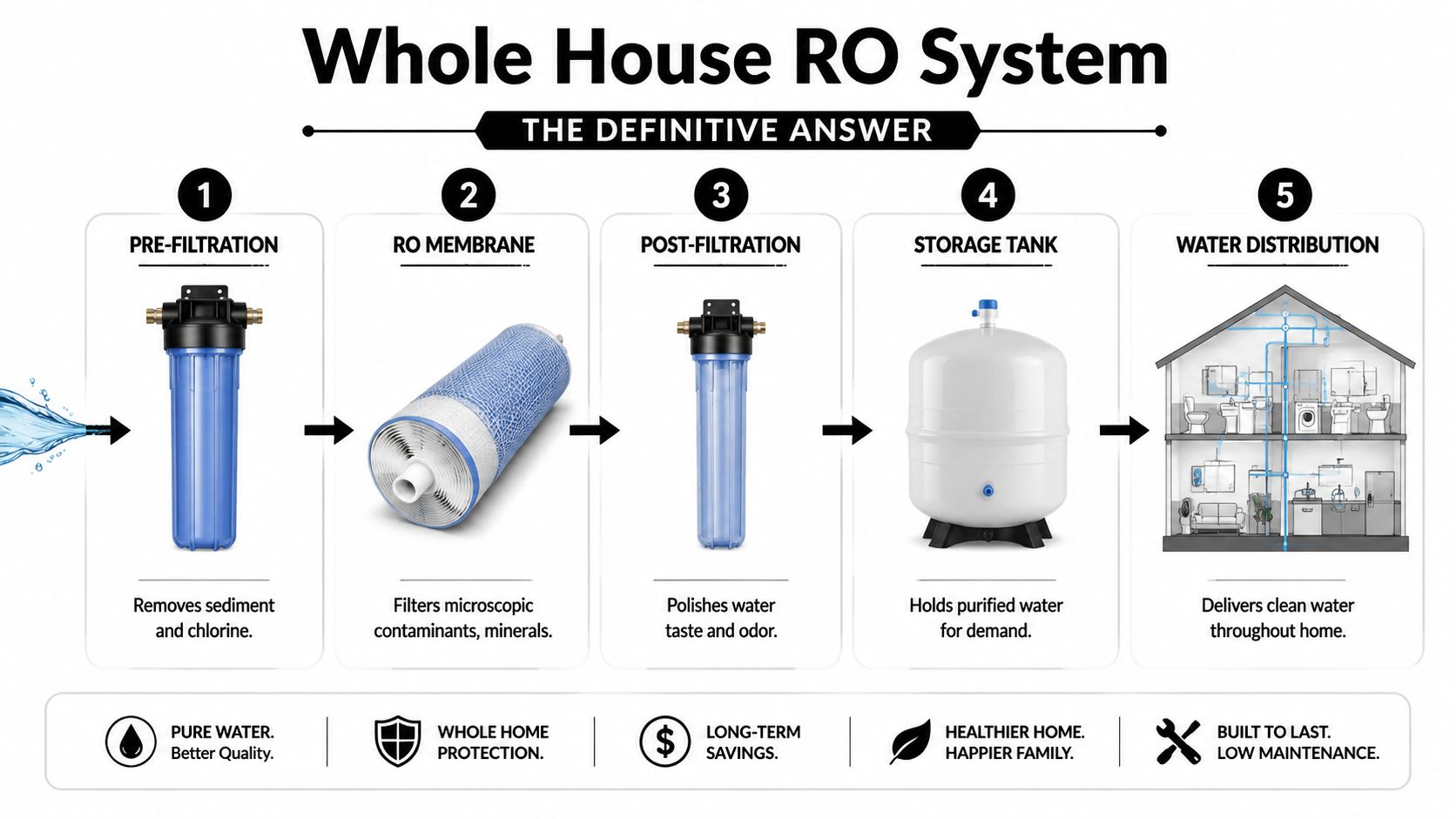
A properly designed system typically includes multiple treatment stages that work together:
- Pre-filtration to reduce sediment and protect downstream components
- Membrane separation to remove a broad range of dissolved contaminants
- Post-filtration to polish water quality
- Storage and delivery so purified water is available throughout the home
That multi-stage approach matters. Brown well water rarely comes from a single neat contaminant. In this area, the water challenge is usually mixed. Reverse osmosis is one of the few residential solutions that matches that reality.
Here's the process in motion:
What homeowners notice first
The first change is obvious. The water looks clean.
But the benefits go much further than appearance:
Every tap improves
You're not limited to a kitchen sink filter or one bathroom fixture. The whole house gets treated water.Fixtures stay cleaner
Brown staining doesn't keep returning to toilets, tubs, showers, and sinks at the same pace.Water-using appliances get protected
The treatment system reduces the mineral and contaminant load reaching expensive equipment.The home feels easier to maintain
Less scrubbing. Fewer rust marks. Less frustration every time you wash clothes or fill a glass.
Why it fits Southwest Florida so well
This region is hard on water systems. Mineral-rich groundwater, seasonal downpours, coastal conditions, and shifting source quality create exactly the kind of environment where simple treatment often struggles.
A whole house RO system fits Southwest Florida because it is designed for a bigger objective. It doesn't just target a temporary discoloration event. It creates a controlled water quality environment inside the home despite what the well is doing outside.
Better water at one faucet is a convenience. Better water at every faucet is protection.
That distinction matters for families, property managers, and real estate professionals. If you're responsible for a home, a rental property, or a closing timeline, uncertainty around brown well water creates headaches fast. Whole-house treatment removes that uncertainty more effectively than scattered add-ons.
What whole-house RO solves that piecemeal systems miss
A piecemeal setup may help you chase symptoms. A whole house reverse osmosis system changes the standard of water entering daily life.
Consider the difference:
| Approach | Main goal | Typical limitation |
|---|---|---|
| Cartridge-based fixes | Reduce one visible issue | Require frequent attention and leave gaps |
| Single-point treatment | Improve one tap | Doesn't protect plumbing or appliances house-wide |
| Whole house reverse osmosis | Deliver broad, consistent treatment everywhere | Requires proper design and installation |
That's why I call it the definitive answer. Not because it's trendy. Because it solves the problem at the right scale.
The peace of mind factor is real
Homeowners often start this search because they're tired of ugly water. They move forward with whole-house RO because they want confidence.
They want to know:
- the shower water won't stain surfaces,
- the washing machine isn't being fed dirty water,
- guests won't comment on the color in the sink,
- the family doesn't have to wonder whether the tap water is safe to use.
That's the emotional side of this decision, and it matters. Water runs through every room in the house. If the source water is unreliable, the whole home feels off. A whole house reverse osmosis system fixes that at the root.
If you want a long-term answer, choose the system built for the whole house
I don't recommend whole-house RO because it sounds premium. I recommend it because brown well water in Southwest Florida is usually bigger than one filter can handle.
If your goal is to stop reacting and start controlling the water quality in your home, this is the direction to take. A properly engineered Whole House Reverse Osmosis System gives you the clearest path to consistent, better-than-bottled quality water throughout the property.
That's the standard homeowners should aim for. Not “less brown.” Not “good enough for now.” Clean, dependable water everywhere.
Your Path to Pure Water The Water Medic Process
Homeowners often assume getting a whole house RO system is complicated. It doesn't have to be. The right process is straightforward when the company starts with the water itself and builds from there.
Start with testing, not guessing
The first step should always be a real water evaluation. Brown well water can come from more than one source, and treatment only works when the design matches the actual water conditions.
A solid process looks like this:
- Initial consultation: discuss when the discoloration happens, how long it lasts, and whether the issue affects the whole house or only certain fixtures.
- Water testing: identify the water quality issues that are driving the discoloration and system wear.
- System design: size and configure the treatment setup for the property's water demand and source conditions.
Installation should solve the problem, not create a maintenance headache
A whole-house RO system has to be installed cleanly and configured properly. That includes pretreatment, membrane protection, tank sizing, and delivery throughout the home. When those pieces are handled correctly, the result is stable water quality instead of a fragile system that needs constant babysitting.
A good installation doesn't just produce clear water on day one. It keeps producing it without turning your garage into a collection of stopgap equipment.
Ongoing support matters
The best water treatment companies don't disappear after installation. They support the system, maintain performance, and address changes in source water over time.
That matters in Southwest Florida, where seasonal conditions can affect wells unpredictably. Homeowners need a provider who understands local water behavior, not just a catalog of filter housings.
If you're serious about ending the cycle of brown water, start with a professional water analysis and move straight to a whole-house solution designed around your property. That's the cleanest path from uncertainty to reliability.
Understanding the Investment in a Whole House RO System
Some homeowners hesitate when they hear “whole house reverse osmosis.” They assume it's expensive, compare it to a few low-cost filters, and stop there. That's the wrong comparison.
A comparison exists between whole-house RO versus the full cost of living with bad water.
What you're actually paying for now
Brown well water creates hidden household spending in several categories:
- Replacement filters and temporary equipment that never fully solve the issue
- Cleaning products and extra labor for stained tubs, toilets, sinks, and laundry
- Appliance wear from untreated water moving through the house
- Bottled water purchases because nobody wants to trust the tap
- Reduced confidence in the property when guests, tenants, or buyers notice the water
Those costs are messy because they show up in different places. A whole-house system consolidates the solution.
Why financing changes the conversation
A proper RO system is a capital improvement. It protects plumbing, improves daily living, and supports property value. That makes it a smarter category of spending than endless replacement cartridges and cleanup supplies.
For homeowners who want the long-term fix without putting all of the cost into one upfront payment, water treatment financing options can make the decision much easier. The goal isn't to buy the cheapest water solution. The goal is to stop paying repeatedly for ineffective ones.
The better way to think about value
Ask one question. Do you want to keep managing brown well water, or do you want to eliminate it as a recurring household issue?
If you want the latter, whole-house reverse osmosis is an investment in the house itself. It improves how the home functions every day. That's more valuable than a temporary drop in discoloration from another small filter that needs replacing again.
Take Control of Your Water Quality Today
Brown well water is your warning sign. Don't normalize it, and don't let anyone tell you it's just a cosmetic nuisance. In Southwest Florida, water conditions can shift fast, and coastal patterns like intense summer thunderstorms and king tide events create unique well water risks that broad national advice often doesn't address, which is why proactive testing and treatment matter so much in places like Cape Coral, as noted in this article on regional brown well water risks.
You have two choices. Keep chasing the problem with cartridges, cleanup, and guesswork. Or install a treatment system that addresses the whole house and gives you confidence every time you use the water.
The second option is the right one.
If your water is brown today, schedule testing. If it turns brown after storms, schedule testing. If it has been “manageable” for years but still stains fixtures and leaves you second-guessing the tap, stop tolerating it. The long-term answer is a whole house reverse osmosis system designed for your specific well and your specific home.
Brown well water doesn't fix itself. Homeowners fix it when they stop treating symptoms and start treating the water system as a whole.
You don't need another temporary fix. You need a permanent standard for water quality in your home.
If you're ready for clear, dependable water throughout your home, contact Water Medic of Cape Coral for a professional water analysis and guidance on the right whole house reverse osmosis solution for your property.