
Bleeding Baseboard Heaters: A Complete Homeowner’s Guide
You're probably here because one baseboard heater is making a soft gurgle, one room stays annoyingly cool, and you're tired of hearing the same sound every heating season. Bleeding the heater usually solves the immediate noise, but a system that keeps collecting air is telling you something more important about the water moving through it. In homes with hydronic heat, that pattern is often the difference between a quick maintenance task and a deeper water-quality problem.
That Gurgling Sound and Why It Matters
A baseboard heater that hisses, gurgles, or leaves one corner of a room cold usually has trapped air in the line. The symptom is easy to recognize, but it's not harmless. Air in a hydronic loop reduces heat transfer and leaves the room warming unevenly, which is why bleeding baseboard heaters is such a common homeowner task.
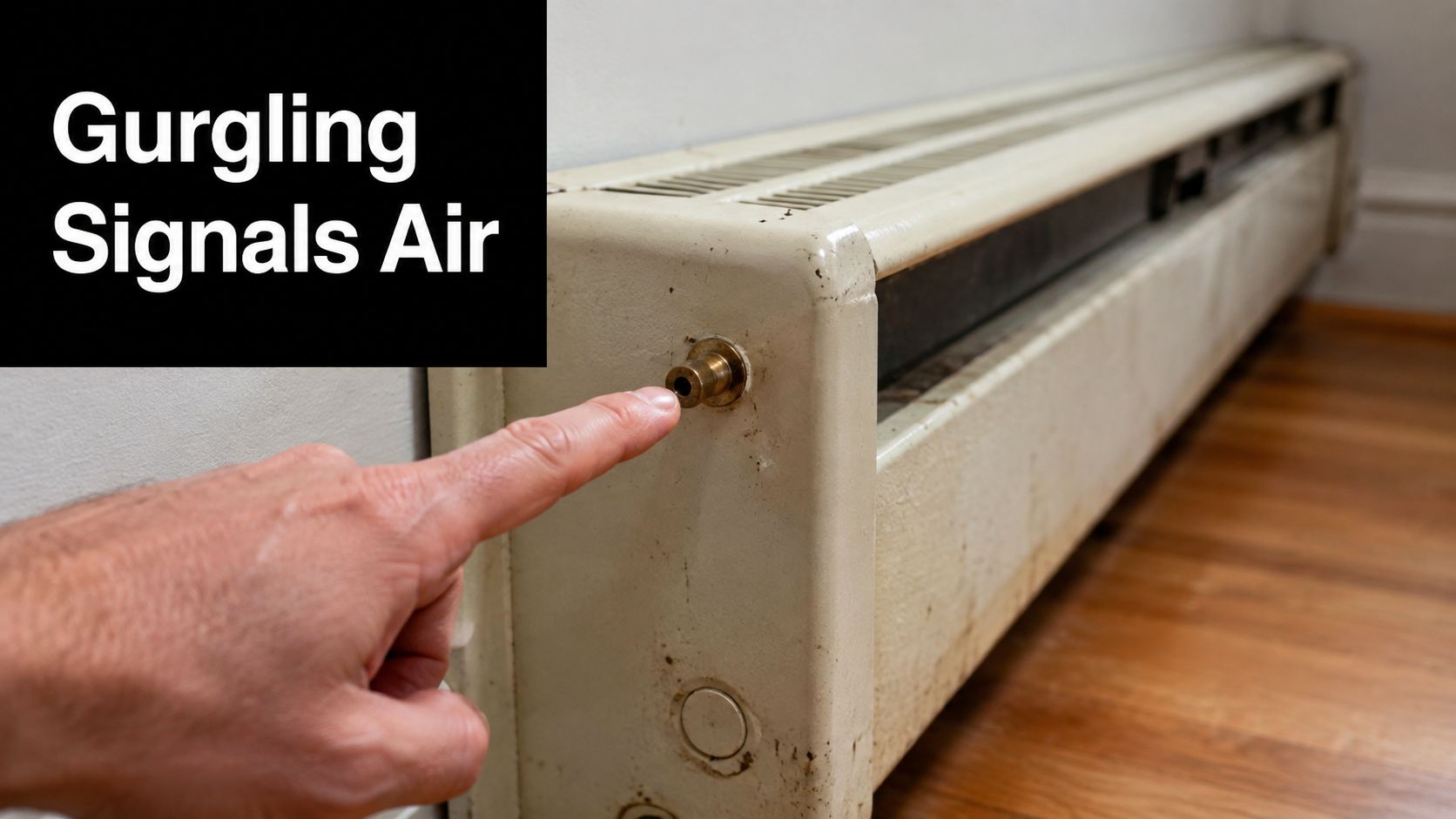
The problem is that recurring air doesn't behave like a one-time nuisance. In real systems, it often comes back because something upstream is still introducing air, gas, or corrosion byproducts into the loop. That's why a homeowner can bleed the heater, enjoy a warm room for a while, and then hear the same gurgle again a few weeks later.
Practical rule: if the sound returns quickly, stop treating the heater like the problem and start looking at the water and the system feeding it.
Heating equipment is also a real safety category, not just a comfort issue. U.S. fire departments responded to an estimated average of 44,210 home fires caused by heating equipment each year during 2016 to 2020, with about 480 civilian deaths, 1,370 injuries, and $1 billion in direct property damage annually, according to the NFPA heating equipment report. That's why simple maintenance, including bleeding baseboard heaters, matters.
Preparing for a Safe and Successful Bleed
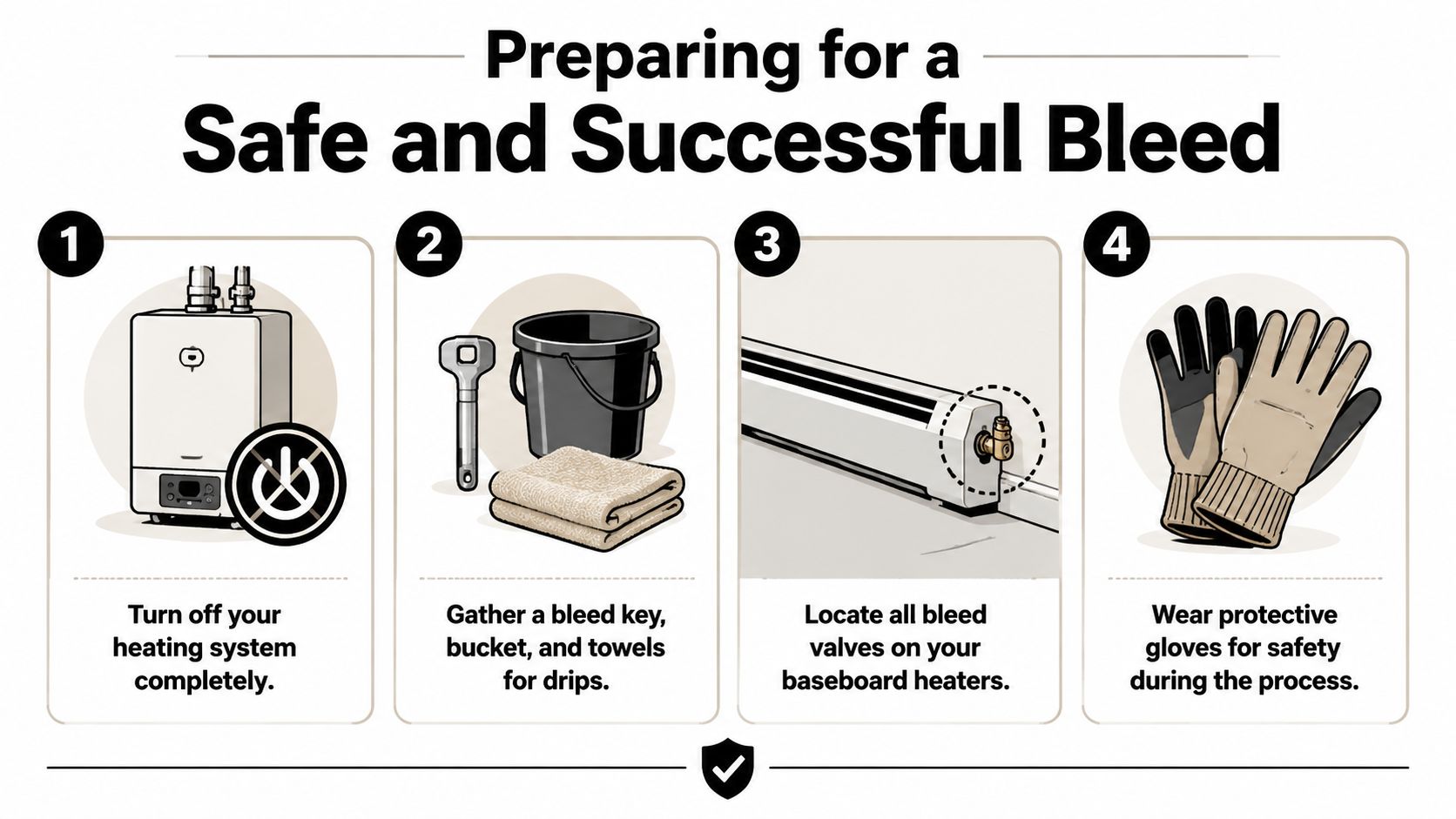
Before touching a valve, shut the heating system down and let it settle. The circulator shouldn't be moving water while you open a bleed point, and the baseboard needs time to cool enough that you can work safely around it. A hot-water system is forgiving when handled patiently, and unforgiving when rushed.
Gather the right tools first
You don't need much, but the small details matter. A radiator key or flathead screwdriver opens most manual bleeders, while a bucket and towels catch the water that comes out once the air is gone. Gloves are smart too, since even cooled baseboard components can still surprise you with warm metal or wet edges.
If you have a pressure gauge on the boiler, check it before you start. Some homeowner procedures advise keeping pressure above 25 PSI during bleeding and then restoring cold operating pressure around 20 PSI afterward, and other forum guidance recommends keeping pressure in a similar operating window during the purge so the system doesn't lose circulation. The exact number depends on the system, but the principle is the same, pressure has to be reset when the job is done.
Use the seasonal check as part of broader home care, not a one-off chore. A recurring maintenance routine like the one outlined on Water Medic's monthly maintenance page helps homeowners stay ahead of problems before the first cold spell exposes them.
Turn the system off first, then verify it's cool enough to handle. That single habit prevents most avoidable mistakes.
A Clear Guide to Your Hydronic System
Start where the air is most likely trapped
Air rises, so it often collects at the highest point or the end of a run. That's why many technicians start with the baseboard farthest from the boiler or on the highest floor first, then work back toward the heat source. A deliberate order keeps the process organized and avoids chasing the same pocket of air from one unit to the next.
Open the bleed valve only slightly. The goal is to release the trapped air without spraying water or dropping pressure too fast. You'll usually hear a distinct hiss at first, and then the sound will change as the air leaves the line.
Listen for the change that tells you it worked
The key indicator is simple. The hiss should fade into a steady trickle of water, and that's when the valve gets closed. Several homeowner guides describe the same sequence, turn the system off, open the bleed point, wait for the air to escape, then close it as soon as water flows steadily, which is the clearest sign that the pocket has been cleared. This practical walkthrough makes that sound change the main signal to watch for.
If the heater has multiple zones or the room still runs cold, move through the rest of the baseboards one at a time rather than guessing. Some systems need the process repeated after a few days if a small pocket keeps reforming, which tells you the air problem isn't fully resolved yet.
Reset pressure before restarting
Bleeding changes the system's internal balance. One practical procedure for multi-zone systems is to raise fill pressure to about 25 to 28 psi during the purge, then bring it back to about 18 to 20 psi afterward, so circulation stays stable once the boiler comes back on. A separate forum discussion advises ensuring at least 10 PSI on the gauge during the bleed so air doesn't get pulled back in, which shows how sensitive the process is to pressure management.
Water Medic's pump guidance is useful here because pressure and circulation work together. If the pressure isn't restored correctly, the heater can go right back to acting up.
The Real Reason Your Heaters Need Constant Bleeding
When a heater needs bleeding every season, the heater usually isn't the root cause. Recurring air is often a sign that the system keeps collecting something it shouldn't, whether that's air through a faulty component, pressure instability, or water chemistry that's slowly attacking the inside of the loop. In expert forum discussions, the question shifts from “how do I bleed it?” to “why does the system keep collecting air?” That's the right question to ask.
Water quality can drive the problem
In many homes, especially older systems or wells with challenging water, minerals and contaminants help create the conditions for corrosion and scale. Corrosion releases gas, gas rises, and that gas becomes the same pocket of air you keep bleeding out of the baseboard. That's why a heater can look like the problem while the underlying issue sits in the water feeding the entire system.
The symptom may stay the same, but the cause changes the fix. If the issue is a trapped pocket at one valve, bleeding works. If the water is introducing scale or corrosion across the loop, bleeding only buys time. In those cases, homeowners often discover that some baseboard loops don't even have accessible bleeders at the unit, so the quick fix people expect isn't the right fix for their existing system. This DIY discussion captures that gap well.
Recurring air points to a system fault
A key indicator is repetition. If the same zone gets cold again, or you find yourself repeating the process every few days or every season, that pattern points beyond routine maintenance. It can mean the boiler, expansion tank, zone valves, or internal water quality need attention, not just another round of bleeding.
A heater that keeps filling with air is usually reporting a system issue, not asking for the same chore again.
That's why the long-term answer has to include cleaner water. When the water entering the loop is stabilized, the system has less reason to form the air pockets and corrosion byproducts that make the baseboard noisy in the first place.
Protecting Your Home with a Whole House RO System
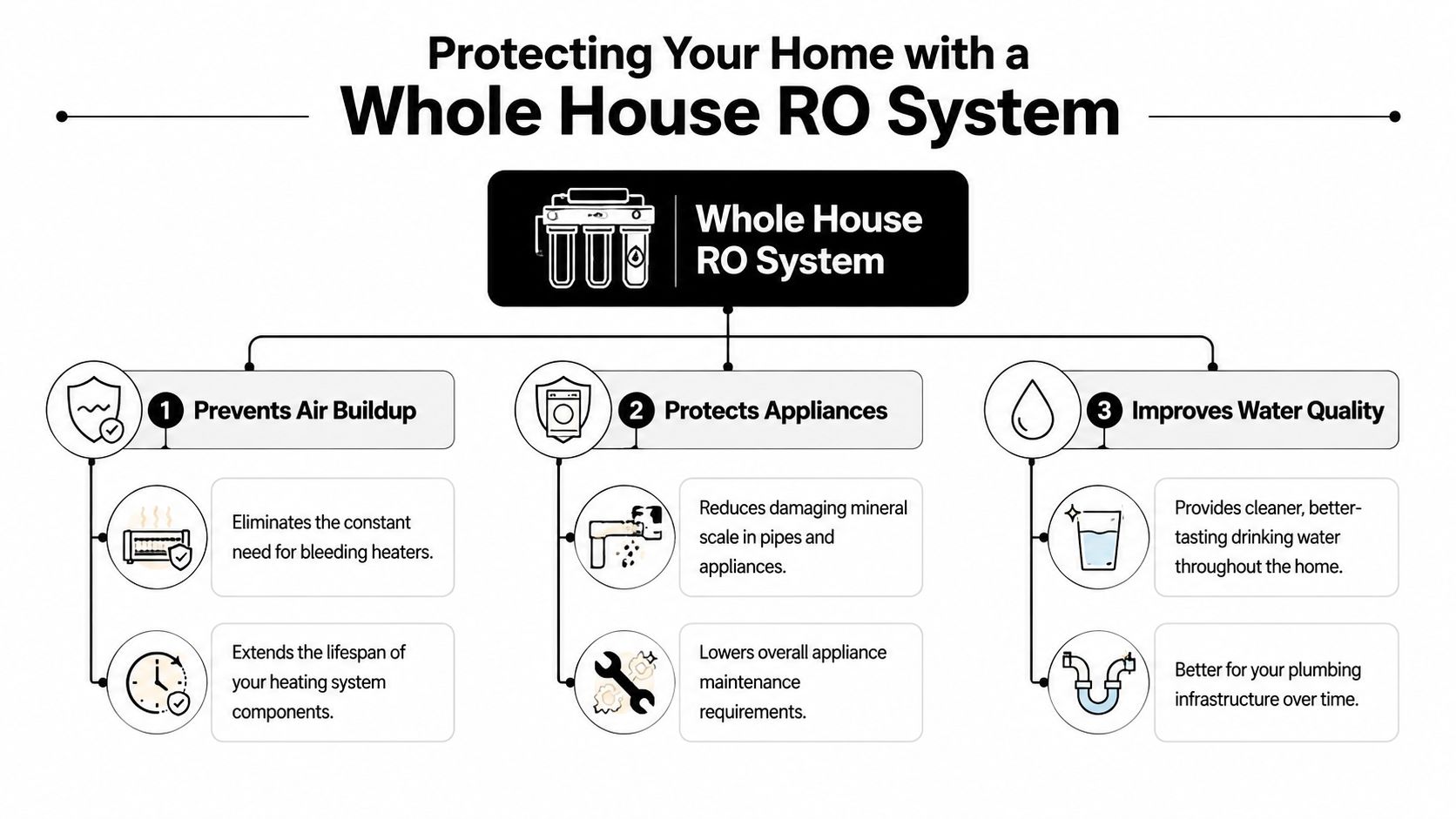
If the problem keeps returning, the most durable fix is to treat the water before it reaches the heating system. A whole house reverse osmosis system removes minerals and other dissolved contaminants at the source, which helps reduce the scale and corrosive conditions that contribute to recurring air in hydronic loops. It's a broader solution than another bleed because it protects the full path the water follows through the home.
Why source treatment outperforms spot fixes
Spot-treating a single heater assumes the problem stays local. In real homes, it usually doesn't. If mineral scale or corrosion is affecting the loop, the boiler, pumps, and connected components all see the same water, which means the same issue can keep showing up in new places.
That's why the most practical approach is to correct the water itself. Water Medic's whole house reverse osmosis service fits this logic because it targets the supply side instead of chasing symptoms after they've already formed. A cleaner water supply supports more stable operation and fewer nuisance calls over time.
What a better water supply changes
A whole house RO system does more than help the heating loop. It also reduces mineral load across the home, which matters for appliances and fixtures that all share the same source water. The result is a cleaner baseline for everything that depends on that water, not just the baseboard.
That matters when a system lacks an easy bleeder or keeps forming air in more than one zone. In those cases, the problem is often bigger than the heater itself, and improving water quality is the more complete answer. One baseboard service call can clear a pocket of air, but source treatment is what helps stop the pattern from repeating.
Knowing When to Call for Professional Help
Bleeding a baseboard heater is a reasonable DIY task when the problem is isolated and the valve behaves normally. If the sound disappears and the room heats evenly afterward, you've likely handled the immediate issue correctly. If the noise returns quickly, the zone stays cold, or the system needs repeated attention, that's a sign to stop guessing.
A heating technician can help with circulation and equipment checks, but recurring air that points to water quality needs a different kind of expertise. Look for help when the same heater keeps acting up, when multiple zones are affected, or when you suspect the water itself is driving corrosion or scale. In those cases, a water quality specialist is the right call because the long-term fix starts with the water, not another temporary bleed.
Water Medic of Cape Coral helps homeowners protect their systems with whole house reverse osmosis built to address the water quality issues behind recurring air, scale, and corrosion. If your baseboard heaters keep needing attention, visit Water Medic of Cape Coral to talk about cleaner source water and a more permanent solution for your home.