Finding the Best Sulfur Filter for Well Water
If that "rotten egg" smell has taken over your tap water, you're not alone. It’s a classic sign of a sulfur problem, and finding the best sulfur filter for well water means tackling the source head-on: hydrogen sulfide gas. This is one of the most common—and frustrating—challenges for homeowners with private wells, but it's a problem we solve every day.
Why Your Well Water Smells Like Rotten Eggs

When you turn on your faucet and get hit with that awful smell, you're experiencing hydrogen sulfide gas in action. This gas gets trapped in the groundwater and is released the moment you turn on the tap.
So, where does it come from? Usually, it's one of two things happening right under your property. It could be from the natural decay of organic material in the ground, or it could be caused by specific sulfur-reducing bacteria. These little microbes aren't harmful to drink, but they thrive in oxygen-poor environments like a well. They feed on sulfates in the water and produce that stinky hydrogen sulfide gas as a byproduct.
Figuring out the "why" is the first step. For a deeper dive into other common issues, check out our list of frequently asked questions about well water. Our team can help you pinpoint the exact cause with a professional water test.
The Hidden Damage Beyond the Smell
That rotten egg odor is impossible to ignore, but the real trouble with sulfur goes much deeper than your nose. If you let it go, you're setting yourself up for some expensive and annoying problems all over your house. Hydrogen sulfide is corrosive, and it will slowly eat away at your plumbing and appliances.
Here’s a look at the kind of damage it can do:
- Pipe Corrosion: It's especially tough on metal pipes like copper and iron, causing them to break down faster and eventually spring leaks.
- Staining Fixtures: It leaves behind stubborn yellow or black stains on your sinks, toilets, and showers that are a nightmare to scrub away.
- Tarnished Silverware: That gas will tarnish your silverware and even discolor copper and brass kitchenware, making everything look dull and old.
- Laundry Discoloration: You might notice your clothes looking dingy or even developing strange stains over time, which can ruin fabrics.
A high-quality sulfur filter is more than a convenience—it's an essential investment to protect your home's infrastructure. It removes hydrogen sulfide at the point of entry, neutralizing the gas before it can circulate and cause widespread damage.
High levels of hydrogen sulfide don't just stink up your house; they actively reduce the lifespan and efficiency of your entire water system. A professionally installed filter is designed to stop these gases right where they enter your home, which is the best way to protect your pipes and keep everything running smoothly. The only way to know for sure what you're dealing with is to get your water tested by our experts.
The Top Technologies for Getting Rid of Sulfur Smell
So, how do you actually get that rotten egg smell out of your well water? It all comes down to choosing the right tool for the job. There isn't a one-size-fits-all answer, because the best approach depends entirely on your water's unique chemistry, something we determine with a comprehensive water analysis.
The three heavy hitters in the world of sulfur filtration are air injection, chemical oxidation, and catalytic carbon. Each one tackles the problem differently, and our experts can help you understand those differences to make a smart investment for your home.
Let's break down how each type of system works.
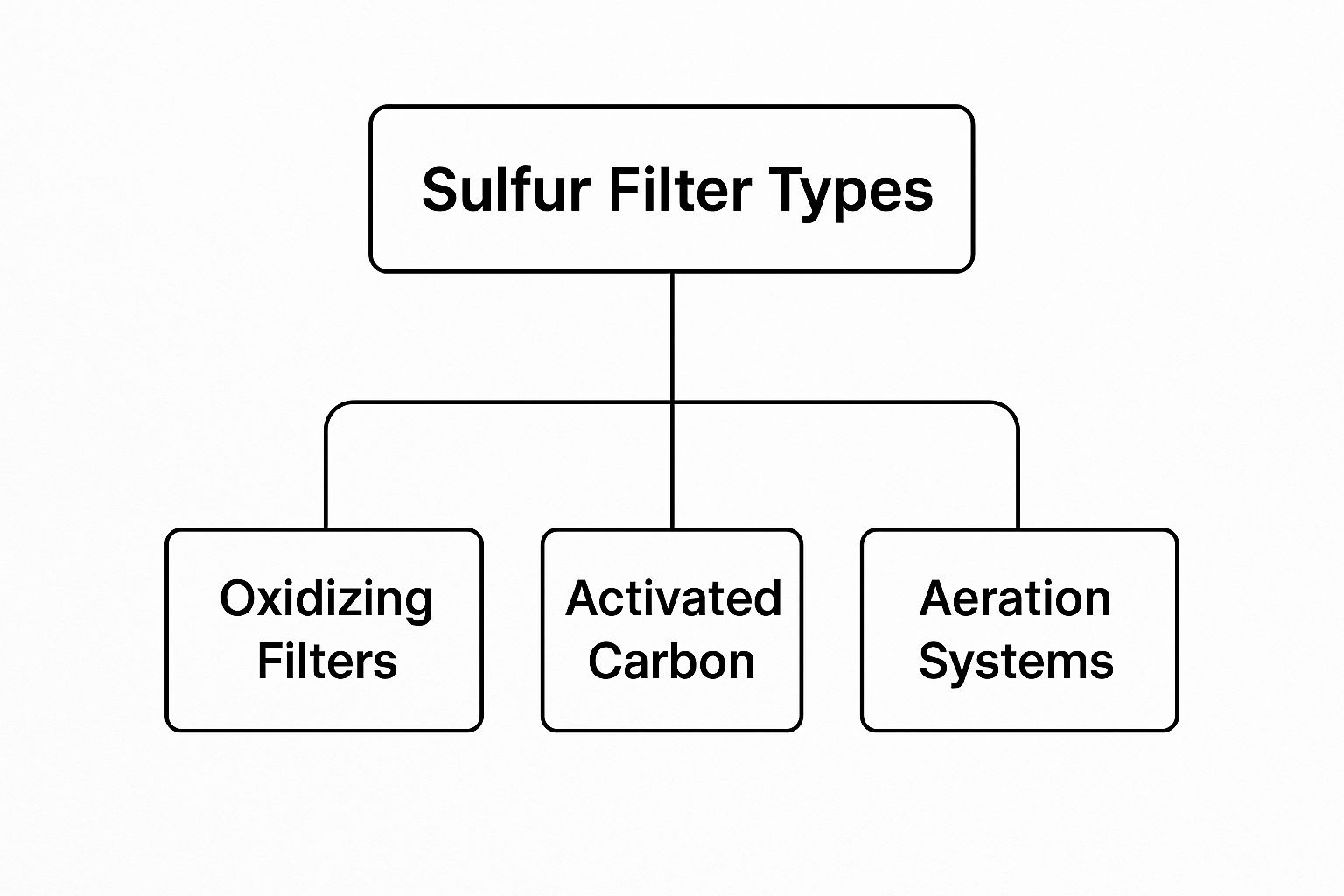
This chart gives you a quick visual of the main paths to eliminating sulfur, from aeration to various oxidizing filters.
Air Injection Oxidation (AIO) Systems
Think of an Air Injection Oxidation (AIO) system as a self-contained, chemical-free powerhouse. It works by creating a pocket of compressed air at the top of the filter tank. When your well water flows in, it's forced through this oxygen-rich bubble.
The oxygen instantly reacts with the dissolved hydrogen sulfide gas, changing it from a stinky gas into a solid, filterable particle. These tiny sulfur bits get trapped in the specialized filter media below. The system is smart, too—it automatically backwashes itself every few days to flush all the trapped particles down the drain and refresh the air pocket. It’s a clean, efficient, and low-maintenance solution that we frequently recommend and install for our clients.
Want a deeper dive? You can explore our detailed guide on air injection technology to see exactly how it works.
Chemical Oxidation Systems
When you're dealing with a serious sulfur problem, chemical oxidation systems are often the go-to solution. Instead of air, these systems use a chemical agent—usually chlorine or hydrogen peroxide—to do the heavy lifting. A small pump injects a precise amount of the chemical into your water line just before it hits a large holding tank.
This gives the chemical time to thoroughly mix and react with the hydrogen sulfide, converting it into harmless solids. A secondary filter, often filled with activated carbon, then grabs these particles before the water gets to your taps. This method is incredibly powerful and has the bonus of disinfecting your water by killing off any lingering sulfur or iron bacteria, providing a comprehensive treatment that our technicians can expertly calibrate for your home.
The main thing to remember with chemical oxidation is the upkeep. You'll need to keep the chemical feed tank filled, which adds a recurring cost and a bit of hands-on maintenance to your routine.
Catalytic Carbon Filters
Catalytic carbon filters are the simplest of the bunch. They look just like a standard water filter tank but are filled with a special type of activated carbon. This isn't your average carbon; it’s been treated to act as a catalyst, which means it dramatically speeds up the natural process of converting hydrogen sulfide into a form of sulfur that the carbon can easily trap.
These filters are great for lower levels of sulfur and are completely passive—no electricity or chemicals needed. However, the carbon media is like a sponge; it can only hold so much. Once it's full, which is typically every 3 to 5 years, the entire bed of carbon needs to be replaced. They’re a solid choice for minor odor issues, but a water test is essential to know if your sulfur levels are low enough for this to be effective.
To make things even clearer, let's compare these technologies side-by-side.
Sulfur Filter Technology Comparison
This table offers a quick glance at how the main filtration methods stack up against each other, helping you see the pros and cons of each approach in one place.
| Filtration Method | How It Works | Best For | Maintenance Level |
|---|---|---|---|
| Air Injection (AIO) | Uses an oxygen bubble to oxidize hydrogen sulfide into solid particles, which are then filtered out. | Moderate to high sulfur levels; homeowners seeking a chemical-free, low-maintenance solution. | Low (Automatic backwashing) |
| Chemical Oxidation | Injects chlorine or hydrogen peroxide to oxidize sulfur, which is then removed by a secondary filter. | Very high sulfur levels and situations with sulfur-related bacteria. | Medium (Requires regular refilling of the chemical solution tank) |
| Catalytic Carbon | Uses specialized carbon media to trap hydrogen sulfide through adsorption and catalytic conversion. | Low to moderate sulfur levels; simpler, non-electric applications. | Low to Medium (Requires media replacement every 3-5 years) |
Ultimately, the right system is the one that best matches the sulfur concentration in your water, your budget, and how much hands-on maintenance you're willing to do. Our professional consultation can help you make the perfect choice.
A Look at the Top-Rated Sulfur Filter Systems
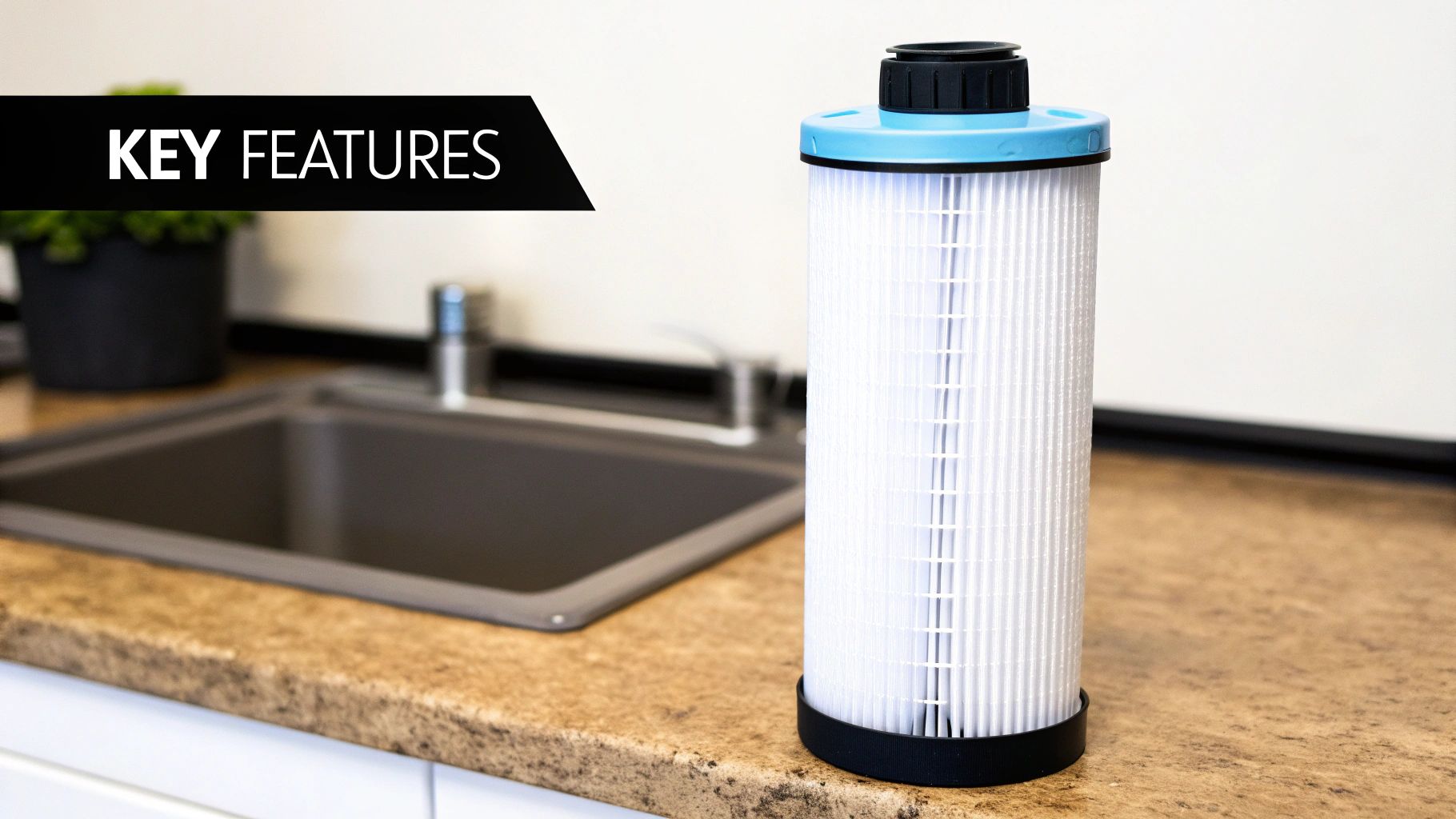
Now that we've covered how different filters work, let's get into the specifics of some leading systems that homeowners have come to rely on. Choosing the best sulfur filter for well water is a big deal—it's an investment in your home's plumbing and your family's daily comfort. Our goal here is to give you an honest look at a couple of popular models so you can see what makes a system truly effective.
Think of this as your personal buyer's guide. We're going to break down the features that really count, like flow rate, how much gunk they can actually remove, and what it costs to own them over the long haul. A great system gets rid of the sulfur smell without turning into a maintenance nightmare, and that’s exactly what we provide.
The Air Injection Powerhouse: SpringWell WS
The SpringWell WS series is a name you'll see pop up again and again on "best of" lists, and it's for a good reason. This is a robust air injection oxidation (AIO) system built from the ground up for the unique challenges of well water. It doesn't just go after hydrogen sulfide; it also targets iron and manganese, two other common culprits that can wreck your water quality.
What makes this system so popular is its "set it and forget it" design. Homeowners love it because it’s low-maintenance. The single-tank setup is efficient, and its automatic backwash cycle handles the cleaning for you, keeping the filter media working at peak performance without you ever lifting a finger.
The SpringWell WS is a standout choice because it uses an optimized air injection process paired with greensand media, giving it an edge in sulfur control. Even better, the media is incredibly durable, lasting 8 to 10 years. That’s a huge plus, as it saves you the money and hassle of frequent cartridge changes that plague other systems. We can help you determine if this model is the right fit for your home.
The Chemical Oxidation Contender: US Water Systems Matrixx Infusion
If your well has an extreme sulfur problem or you're also fighting off sulfur-reducing bacteria, a chemical oxidation system like the US Water Systems Matrixx Infusion is a true heavy-hitter. Instead of air, this unit injects a small, controlled amount of hydrogen peroxide to aggressively oxidize contaminants. It's exceptionally good at knocking out even the most severe "rotten egg" odors.
This approach delivers a powerful one-two punch. The hydrogen peroxide deals with the stubborn sulfur and iron, and then a second tank filled with catalytic carbon media polishes the water. That second stage is vital—it filters out any tiny oxidized particles and leftover peroxide, so the water flowing to your taps is pure, clean, and crystal clear.
A key thing to remember with any chemical injection system is the upkeep. You will need to refill the hydrogen peroxide solution from time to time. This adds a small, recurring operational cost and a little bit of hands-on responsibility.
While incredibly effective, these systems might require more frequent media changes. If you're curious about this stage of filtration, you can learn more about the role of carbon filters in water treatment right here on our site.
Comparing Key Features Side-By-Side
To make a confident choice, it helps to put these systems head-to-head on the metrics that matter most. We're not just talking about the sticker price; we're talking about the total cost of ownership and how the system performs day in and day out. Our team walks you through these details during our consultation.
Here’s what you should really be looking at:
- Flow Rate (GPM): This is all about water pressure. A high GPM (gallons per minute) ensures you can run the dishwasher while someone's in the shower without the water slowing to a trickle.
- Contaminant Capacity: Always choose a system rated to handle a little more than what your water test shows. For example, the SpringWell WS can handle up to 8 PPM of hydrogen sulfide and 7 PPM of iron, giving you a comfortable buffer.
- Media Lifespan: This is a big one for your wallet. Longer-lasting media means lower long-term costs. A filter with a 10-year media life is a much better investment than one that needs replacing every 3-5 years.
- Total Cost of Ownership: Factor everything in—the initial purchase, installation, and any ongoing expenses like chemicals or electricity. A chemical-free AIO system often comes out ahead with a lower total cost over its lifetime.
I know, wading through all these options can feel overwhelming. But you don't have to figure it out alone. The right decision always starts with a professional water test. Once we know exactly what we’re dealing with in your water, we can point you to the perfect solution for your home and your budget.
How to Choose the Right Filter for Your Home
Figuring out the best sulfur filter for your well water can feel like you're staring at a complicated puzzle. But if you take it one step at a time, you can confidently find a system that fits your home's needs and your budget perfectly. And the whole process starts with one step you absolutely cannot skip.
Before you even start browsing filters, you have to get your water tested. This isn’t a step where you can guess. You need to know the exact concentration of hydrogen sulfide, iron, and manganese in your water, measured in parts per million (PPM). That data is the bedrock for every other decision you'll make.
Without those numbers, you’re just flying blind. You could easily end up with a system that’s too weak to fix the problem or, just as bad, one that’s way more powerful—and expensive—than you actually need. At Water Medic, we make this simple. Our process always begins with a professional analysis so we can build a solution based on facts, not guesswork.
Matching the Filter to Your Home's Demands
Once your water test shows you what you're dealing with, the next piece of the puzzle is making sure the system can keep up with your family. This is where flow rate becomes critical. It's measured in gallons per minute (GPM), and if your system is undersized, you’re going to get frustrating drops in water pressure when you need it most.
Just think about a typical morning. Someone’s in the shower, the dishwasher is running, and you’ve just started a load of laundry. To avoid having the shower drop to a trickle, you need a filter that can handle all that water demand at once. We can help you figure out the ideal GPM for your home to ensure you always have strong, consistent pressure at every faucet.
You also have to think about the physical space the equipment needs. Do you have enough room in your basement, garage, or utility closet? Some systems, especially those with multiple tanks for different treatment stages, take up a surprising amount of floor space.
Your final decision should balance three key factors: the system's ability to handle your specific contaminant levels, a flow rate that meets your family's peak demand, and a realistic budget that accounts for both upfront costs and long-term maintenance.
Making a Smart Financial Decision
Finally, let’s talk money. A good sulfur filter is a real investment in your home, so it’s smart to look beyond the initial price tag. You need to consider the total cost of ownership, which includes not just the filter itself, but also installation, annual maintenance, and any recurring costs like chemicals or replacement filter media.
For example, a chemical-free Air Injection Oxidation (AIO) system might cost more to buy, but it often ends up being more affordable in the long run because its maintenance needs are so low. On the other hand, a chemical injection system might look cheaper at first, but you'll have the ongoing expense of buying the treatment solutions.
Weighing these factors is how you make a choice you’ll be happy with for years to come. This entire process is designed to lead you to the perfect solution, and we're here to guide you every step of the way. Take the first step by Scheduling a Water Test or Getting a Free Quote today.
Thinking About Installation and Long-Term Costs
When you're picking out a sulfur filter for your well water, the price tag on the box is only the beginning of the story. To make a truly smart investment for your home, you need to look at the complete picture—from the day it's installed to the routine upkeep it'll need down the road.
Getting the installation right from the get-go is non-negotiable. It might be tempting to save a few bucks and DIY it, but remember, this equipment connects directly to your home's main water line. A small mistake can lead to big problems like leaks, a serious drop in your water pressure, or even a damaged unit. More importantly, most manufacturers are pretty clear that professional installation is often required to keep the warranty valid. You don't want to void that protection on day one. Our professional installers ensure it's done right the first time.
Budgeting for Maintenance Over the Years
Once your system is up and running, the long-term costs really come down to the type of filter you chose. Each technology has its own rhythm of maintenance and related expenses, so it’s smart to know what you're signing up for.
- Air Injection Oxidation (AIO): These are the champs of "set it and forget it." For the most part, your only task is swapping out a sediment pre-filter every 6-9 months.
- Chemical Oxidation: These systems need a bit more hands-on attention. You'll have to periodically top off the chemical solution tank, which means factoring in the recurring cost of chlorine or hydrogen peroxide.
- Catalytic Carbon: This one sits somewhere in the middle. The carbon media does a fantastic job of grabbing sulfur, but it eventually fills up. You'll need to plan on a full media replacement every 3 to 5 years.
A great real-world example is the US Water Systems Matrixx Infusion system. This is a heavy-hitter, capable of tackling up to an impressive 30 parts per million (PPM) of hydrogen sulfide. It achieves this with a powerful hydrogen peroxide oxidation process, followed by coconut shell catalytic activated carbon to polish the water. That carbon media needs to be replaced every 3 to 5 years, which is a key long-term cost to consider. You can dig into the specifics of how high-capacity systems like this work on various water filter review sites.
It's easy to be drawn to a system with a lower upfront cost, but if its maintenance needs are high, it can easily become the more expensive option over its lifespan. Always think in terms of the total cost of ownership to find the real value.
The Value of Having an Expert on Your Side
When you crunch the numbers, annual operating costs for a well water filter can be less than $150 for a low-maintenance AIO system or climb to over $500 for some chemical-intensive units. Factoring these expenses into your household budget means you’ll always have fresh, clean water without any surprise costs.
For homeowners who’d rather not think about it at all, professional servicing is the way to go. Our experts can handle everything from swapping out filter media to recalibrating the system, making sure it runs just as well in year five as it did on day one. Take a look at our Water Filter Maintenance Services to see how we can keep your water flowing perfectly for years to come.
Got Questions About Sulfur Filters? We’ve Got Answers.
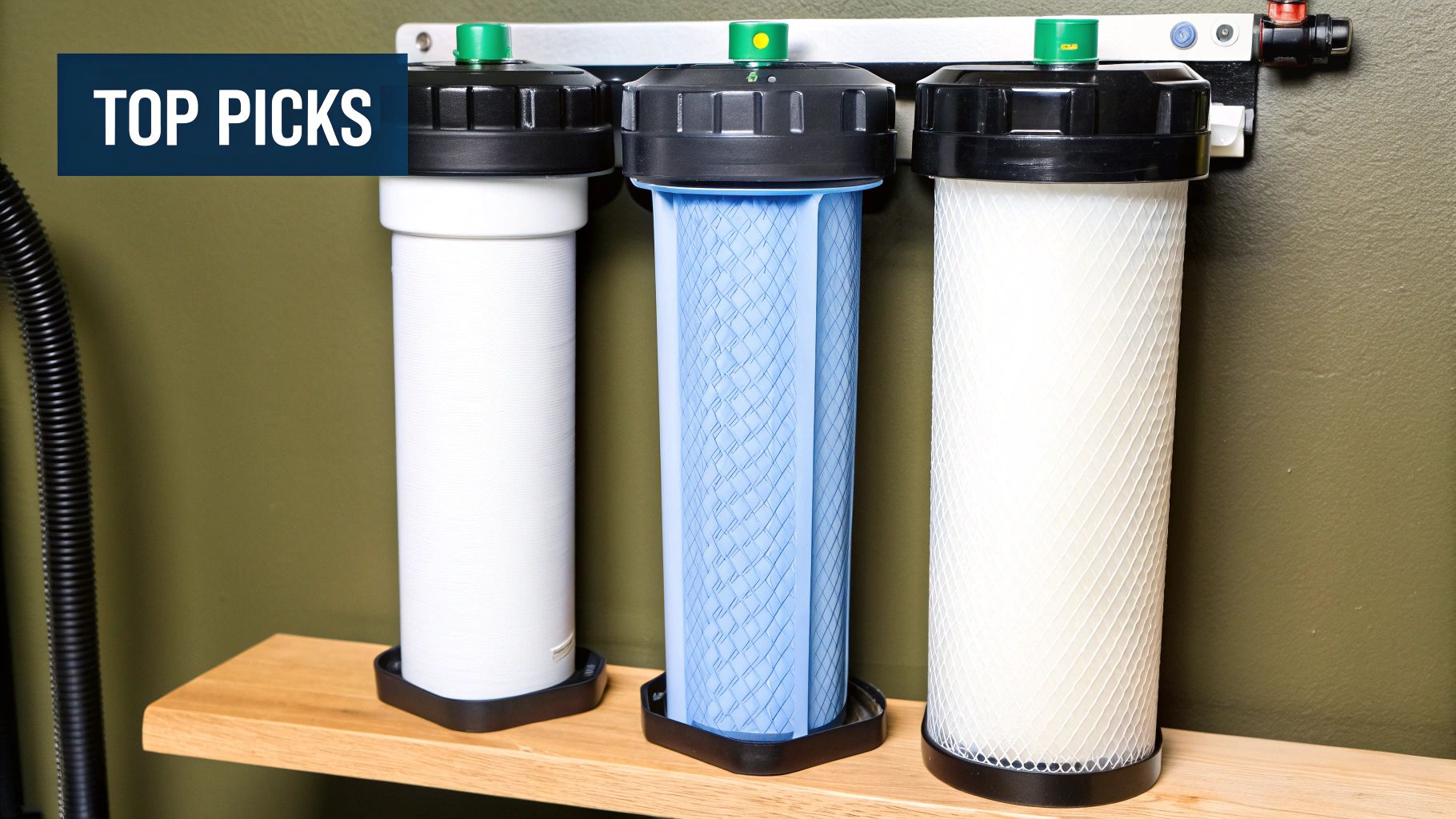
Even with all this information, you probably have a few practical questions rattling around. That's completely normal. Let's walk through some of the most common ones we hear from homeowners, so you can feel 100% confident in your decision.
Will a Sulfur Filter Get Rid of Iron, Too?
Absolutely. Many of the best sulfur filters are fantastic at pulling double-duty, tackling iron and manganese right along with that nasty hydrogen sulfide. This is a huge benefit of air injection and chemical oxidation systems, since the oxidation process that neutralizes sulfur also works wonders on those other common well water minerals.
The key, however, is to make sure the system is up to the task. You have to check its specs against your water test results. A filter that's great for low iron levels might get overwhelmed if your water is loaded with it, so matching the filter's capacity to your specific water chemistry is non-negotiable. This is a core part of our service.
How Do I Figure Out the Right Size Filter for My Home?
Getting the size right is crucial, and it boils down to two main things: your water flow rate and how much "gunk" is actually in your water.
- Flow Rate (GPM): This is all about water pressure. The right size ensures you can run the shower, dishwasher, and a faucet all at once without the water slowing to a trickle. It's measured in gallons per minute (GPM).
- Contaminant Levels (PPM): This tells you how hard the filter needs to work. Higher levels of sulfur or iron (measured in parts per million, or PPM) require a more robust system with the right amount of filter media to handle the load.
There's no guessing here—a professional water analysis is the only sure way to get these numbers. A properly sized unit will give you flawless performance for years. If you want to dive deeper into this, our guide to air injection systems breaks down the sizing process in more detail.
Is It a Hassle to Maintain a Sulfur Filter?
That really depends on the type of system you choose. Air injection filters are the champs of low maintenance; you pretty much just have to remember to change out a sediment pre-filter once a year. It’s a set-it-and-forget-it kind of deal.
On the other hand, chemical injection systems need a bit more attention. You'll have to keep an eye on the chemical solution tank and refill it periodically. Catalytic carbon filters land somewhere in between, needing a complete media replacement every 3-5 years. No matter which one you pick, we always recommend a professional annual check-up to keep it running smoothly.
A quick word on installation: while going the DIY route can seem tempting to save a few bucks, it can easily turn into a costly headache. Professional installation protects your warranty, prevents leaks, and guarantees your system is calibrated perfectly for your home’s needs right from the start.
Ready to finally turn on your tap and get clean, fresh-smelling water without having to think about it? The team at Water Medic of Cape Coral brings over 25 years of hands-on experience to the table, designing and installing custom water treatment solutions for homes all over Southwest Florida. Contact us today for a free water test and personalized quote!