Best Reverse Osmosis for Well Water: Top Systems & Solutions in 2026
If you're a homeowner in Southwest Florida with a private well, you know that your water comes with… character. But finding the best reverse osmosis for well water isn't just about improving the taste—it's a critical investment in protecting your family, your plumbing, and your appliances from the unique challenges our local groundwater presents.
A simple pitcher filter from the big box store just won't cut it here. A whole house reverse osmosis system, however, is the definitive solution to protect your entire home and lifestyle.
Why Your Well Water Needs a Whole Home Solution
Living on well water in places like Cape Coral, Fort Myers, or Naples means dealing with a specific set of issues straight from our aquifer. A standard carbon filter might pull out the chlorine taste from city water, but it's completely outmatched by the dissolved minerals and other unwelcome guests common in our groundwater.
This is where a whole house reverse osmosis (RO) system becomes a necessity, not a luxury. It's the only way to truly solve all well water issues at once, for every faucet and fixture in your home. RO technology doesn't just trap particles; it uses a sophisticated membrane to force water through at a microscopic level, stripping out the dissolved solids that other filters leave behind. The result is exceptionally pure water the moment it enters your house, protecting not just what you drink, but your entire plumbing infrastructure.
What's Really Lurking in Your Water?
At Water Medic, we've seen it all. When homeowners call us, it's usually because they're fed up with a few tell-tale problems that point to a bigger issue—problems a robust, whole home treatment system is designed to solve.
- Iron and Manganese: Are you tired of those stubborn, ugly reddish-brown or black stains in your sinks, toilets, and tubs? That's the work of iron and manganese. Even low levels make your water taste metallic and, over time, clog up your pipes and fixtures.
- Hydrogen Sulfide: That unmistakable "rotten egg" smell is caused by hydrogen sulfide gas. While it’s not usually a health hazard in the concentrations we see locally, it certainly makes for an unpleasant shower or glass of water.
- Hardness (Calcium & Magnesium): Hard water is the silent killer of appliances. These minerals create a crusty scale buildup inside your water heater, dishwasher, and washing machine, forcing them to work harder and eventually leading to premature failure. It's also the culprit behind soap scum on your shower doors and that dry, itchy feeling on your skin.
A whole house reverse osmosis system is the ultimate shield for your home. By purifying water the moment it enters, it stops corrosive, appliance-ruining elements before they ever have a chance to enter your plumbing. You get purified, softened water for drinking, cooking, showering, and laundry—a complete, top-to-bottom solution.
The Big Debate: Whole House vs. Under-the-Sink RO
When dealing with well water, the choice is clear: do you want pure water at one sink, or for your entire home? While a small, point-of-use RO system under the kitchen sink is great for cooking and drinking water, it does absolutely nothing to stop iron from staining your laundry or scale from destroying your water heater.
That's why we almost always recommend a whole house system for well owners. Think of it as a long-term investment in your property's value and your family's quality of life. This comprehensive approach is becoming the standard for discerning homeowners. The global market for RO technology is projected to hit an incredible $32.0 billion by 2029, and a big part of that growth is from homeowners realizing the value of comprehensive water treatment. If you want to dig deeper into common issues, you might find our guide covering frequent well water concerns helpful. Tackling your well water requires a complete fix, and for most homeowners here, that means a whole house system.
What a Professional Water Test Reveals About Your Well
I can't tell you how many times I've seen homeowners try to solve their well water problems with a DIY test strip from the local hardware store. While I appreciate the can-do spirit, for a major investment like a whole-house reverse osmosis system, it's a recipe for disaster. Those kits just don't give you the detailed, accurate data you absolutely need.
That's why a professional, comprehensive water analysis isn't just a recommendation—it's the only responsible first step. Think of it less as a simple "pass/fail" and more as a detailed blueprint of your water's unique chemistry. This blueprint is what allows a specialist to build the right system for your home, one that will run efficiently for years and give you truly pure, safe water from every single tap.
Decoding Your Well Water Chemistry
When we get a lab report back, we're looking for a few key culprits that are notorious in Southwest Florida wells. Each number tells a story and points us toward the right solution. It’s a lot like a doctor reading blood work to make a diagnosis.
Here’s what we’re screening for:
- Total Dissolved Solids (TDS): This is a measure of everything dissolved in your water. While not all solids are bad, the high TDS levels common in our local wells are a primary reason you’d consider reverse osmosis in the first place.
- Hardness: Measured in grains per gallon (GPG), this is the concentration of calcium and magnesium. Hard water is what leaves crusty white scale on everything, ruins appliances, and spots your dishes. If we see a number over 3 GPG, we know pre-treatment is a must.
- Iron & Manganese: If you have reddish-brown or black stains in your sinks and toilets, you have an iron or manganese problem. Even tiny amounts can foul the delicate membrane in an RO system, not to mention give your water a nasty metallic taste.
- Hydrogen Sulfide: This is the gas that causes that unmistakable "rotten egg" smell. While it's usually not a health hazard in the concentrations we see here, nobody wants to shower or cook with it.
- Bacteria & Pathogens: Private wells aren't treated like city water, making them vulnerable to contamination from things like coliform bacteria. A lab test is the only way to know for sure if you need a UV purification stage, which is a non-negotiable component if bacteria are present.
This chart can help you start connecting the dots between the problems you see and their likely cause.
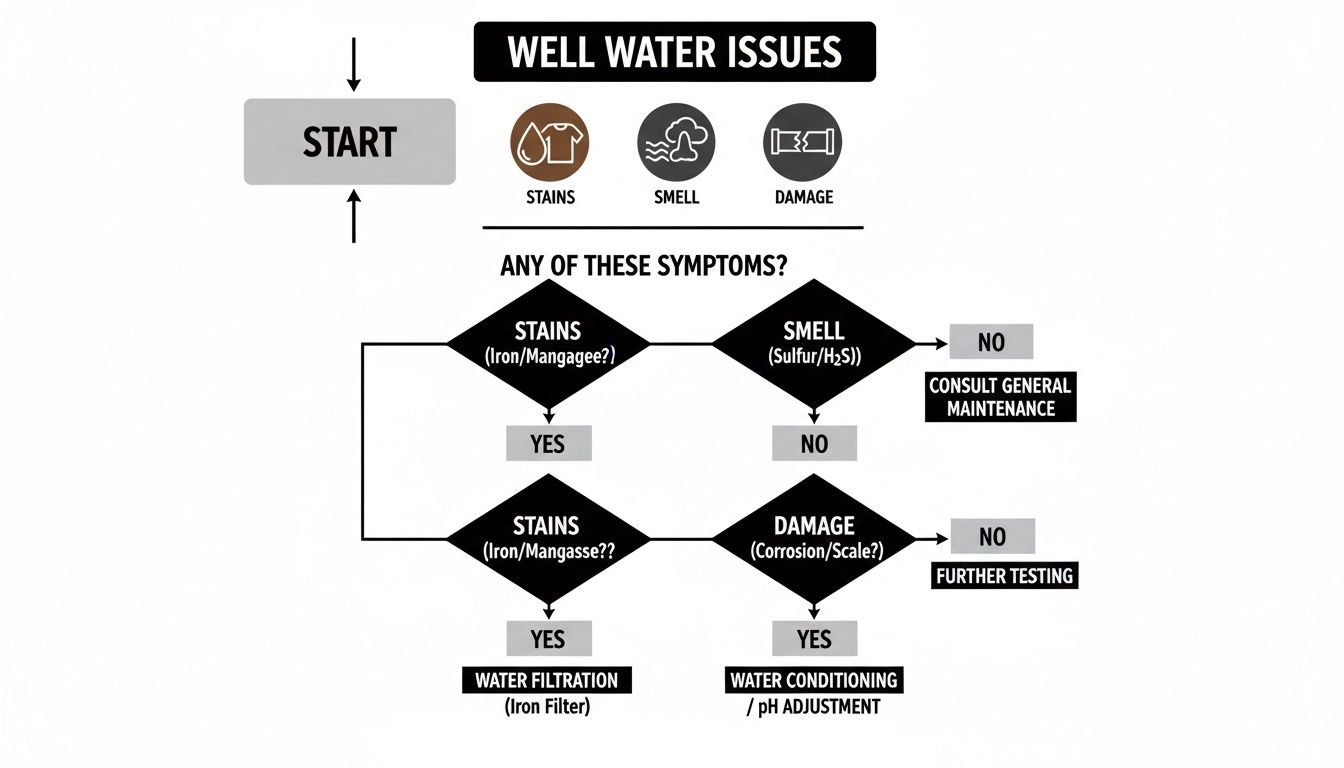
As you can see, visible issues like staining or weird smells are just symptoms. A water test gives us the hard data needed to treat the underlying cause.
A Real-World Example in Cape Coral
A few months back, a family in Cape Coral called us. They were at their wit's end—their laundry was getting stained, they were on their third dishwasher in five years, and the sulfur smell was unbearable. They knew they wanted a whole-house RO, but they had no idea where to start.
So, we started with a professional water analysis. The lab results told us everything we needed to know:
- TDS: 850 ppm (very high)
- Hardness: 15 GPG (extremely hard)
- Iron: 1.2 ppm (high enough for serious staining)
- Hydrogen Sulfide: Present
These numbers immediately confirmed that just installing an RO system by itself would have been a complete waste of money. The iron and hardness would have clogged and destroyed the expensive RO membrane in less than a year.
Based on that data, we didn't just quote a single product; we designed a complete water treatment train. The system we installed included a dedicated iron pre-filter and a water softener ahead of the main RO unit. This pre-treatment acts as a bodyguard for the reverse osmosis system, ensuring it can do its job effectively for years to come.
This is the difference between buying a box and investing in a solution. Getting the sequence right prevents expensive, premature failures and ensures your system actually delivers on its promise. Don’t guess what's in your water—find out for sure.
Whole House Reverse Osmosis vs Point-of-Use Systems
When you’re dealing with the unique challenges of well water, you're faced with a big decision. Do you want a targeted fix for your drinking water, or a complete solution for your entire home? This is the core of the debate between a point-of-use (POU) system and a whole house reverse osmosis system.
A point-of-use system, the kind that typically lives under the kitchen sink, is a popular entry point. It’s designed to do one thing: deliver pristine, filtered water to a single, dedicated faucet. It’s a great way to improve the water you cook with and drink.
But for a homeowner with a well here in Southwest Florida, that’s where the benefits end. A POU unit does absolutely nothing to protect the rest of your home from the hard water, iron, and other contaminants that are almost certainly flowing through your pipes.
The Real Limits of a Single-Faucet Fix
Think about what that really means. The water you shower in, the water that fills your washing machine, and the water feeding your expensive water heater—all of it remains completely untreated.
That hard water will keep building up as stubborn scale, slowly strangling your plumbing and forcing your appliances to work harder until they eventually give out. That rust-colored iron will continue to leave its signature stains in your toilets and tubs.
You might have pure water for your morning coffee, but you’ll still be fighting the exact same battles everywhere else in your house. It’s a small patch on a much larger problem. If you’re leaning this way, it's still worth understanding the specifics of under-sink reverse osmosis systems to see if that limited scope works for you.
Why Whole House RO is a Game-Changer
This is where a whole house reverse osmosis system completely changes the equation. As the name suggests, it purifies every single drop of water that enters your home from the well. It’s not just an upgrade; it's a fundamental shift in your home's entire water environment.
Imagine turning on any faucet—the bathroom sink, the shower, the laundry hookup—and getting water that is truly pure.
- Protect Your Major Investments: Your dishwasher, washing machine, and water heater are some of the most expensive appliances you own. Whole house RO acts like their personal bodyguard, feeding them soft, purified water that prevents scale and corrosion. This can often double their expected lifespan.
- Finally End the Staining: Say goodbye to endless scrubbing and harsh chemicals. When iron and other staining minerals are removed at the source, your sinks, tubs, and toilets stay sparkling white. Your white laundry will actually stay white.
- Experience Better Showers and Softer Skin: Hard, mineral-heavy water is notorious for leaving skin feeling dry and hair feeling brittle. A whole house system delivers a luxurious shower experience with water that lathers richly and rinses completely clean, leaving your skin and hair feeling naturally soft.
- Safeguard Your Home's Plumbing: Some of the most critical benefits are the ones you can’t even see. By stopping corrosive elements at the point of entry, you protect your home’s entire network of pipes from the inside out, helping to prevent clogs and leaks down the road.
A whole house system is a true investment in your home’s health and longevity. It moves beyond simply providing clean drinking water to delivering a comprehensive solution that protects your property and improves your quality of life.
This demand for comprehensive treatment isn't just local. The global reverse osmosis membrane market has grown significantly, reflecting a wider awareness of water quality issues. This trend means homeowners in Southwest Florida now have access to more advanced and efficient technology than ever before.
A Head-to-Head Comparison
Choosing between a targeted fix and a complete solution can be tough. To make the decision clearer, let's put the two systems side-by-side, specifically for the challenges we see with well water. This table breaks down what each system can—and can’t—do for your home.
Whole House RO vs. Point-of-Use (POU): A Comparison for Well Water Homes
| Feature | Whole House Reverse Osmosis | Point-of-Use (POU) Reverse Osmosis |
|---|---|---|
| Purification Scope | Treats 100% of the water entering your home, at every faucet and fixture. | Treats only the water at a single dedicated faucet, usually the kitchen sink. |
| Appliance Protection | Completely protects water heaters, dishwashers, washing machines, and ice makers from scale and corrosion. | Offers no protection for any appliances. Hard, corrosive water still flows to them. |
| Plumbing Protection | Protects your entire plumbing system from the inside out, preventing scale buildup and corrosion. | Offers no protection for plumbing. Pipes throughout the house are still exposed to damaging minerals. |
| Stain Prevention | Eliminates iron and manganese staining in all sinks, toilets, showers, and laundry. | Does not prevent stains in bathrooms, utility sinks, or laundry. |
| Bathing and Showering | Provides soft, purified water for a better showering experience, leading to softer skin and hair. | Shower and bath water remains hard and untreated, which can dry out skin and hair. |
| Initial Investment | A significant investment, typically thousands of dollars, as it's a major home upgrade. | A much lower initial cost, making it an accessible entry point for purified drinking water. |
| Installation Complexity | Requires professional installation by a certified technician, like the experts at Water Medic. | Can often be a DIY project for a handy homeowner, or a simple job for a plumber. |
| Long-Term Value | Adds significant value to your home by protecting major systems and infrastructure. | Provides personal convenience but does not add material value to the property itself. |
When you have a well, the choice becomes much clearer. While a POU system is a decent, budget-friendly start for better drinking water, it’s ultimately a band-aid on a much bigger issue. A true solution addresses the root cause of your water problems everywhere they appear. At Water Medic of Cape Coral, we specialize in designing and installing these comprehensive systems, ensuring your well water is perfect for every single use, not just one.
Designing a High-Performance RO System for Your Home
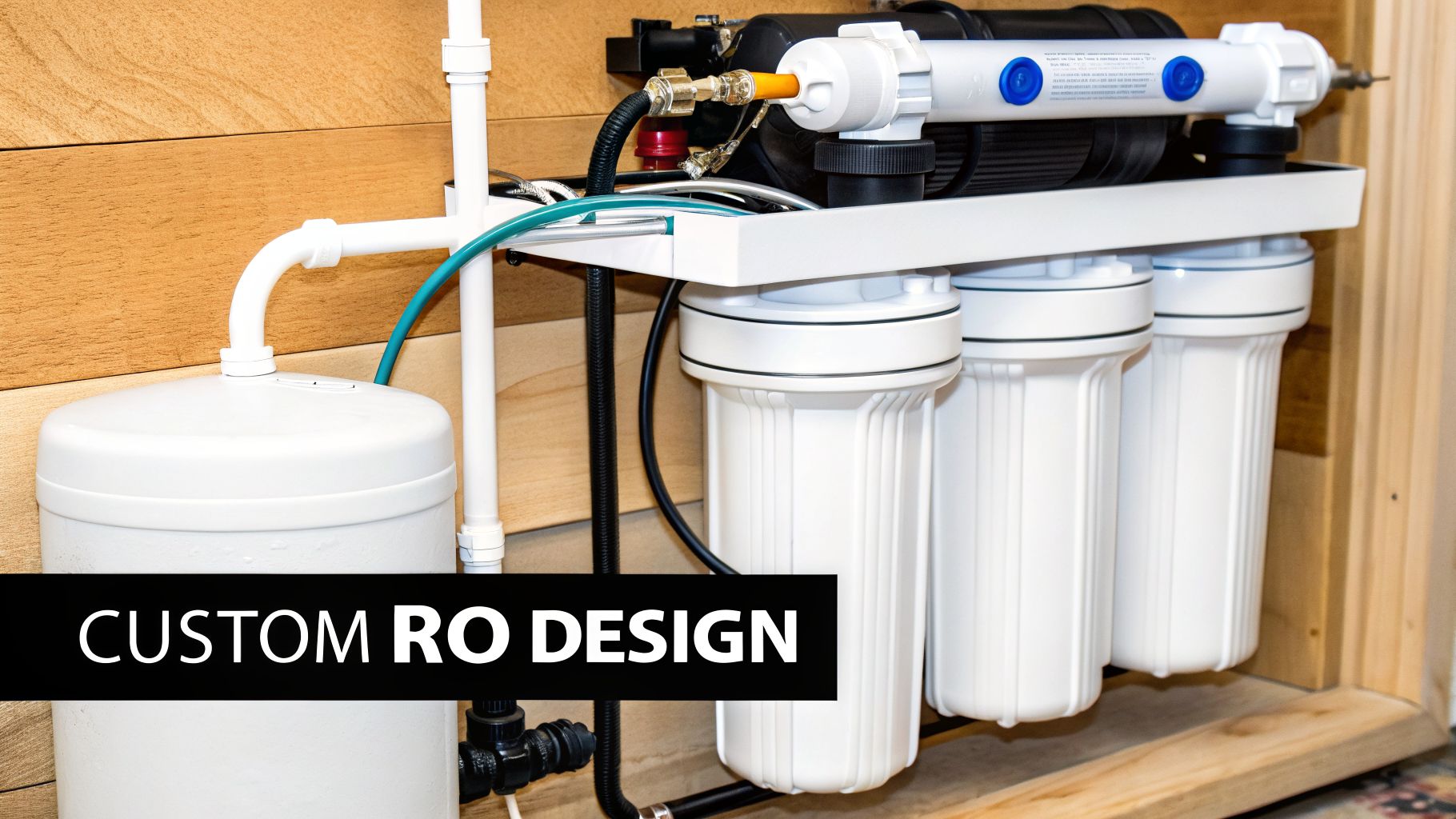
When it comes to reverse osmosis, especially for a whole house, you're not just buying a product off the shelf. You're investing in an engineered solution that has to be perfectly matched to your home's unique water chemistry and your family's lifestyle. We see it all the time at Water Medic—a properly designed system works wonders, while a poorly planned one is a constant headache.
The first thing we look at is 'right-sizing' the system. This starts with your household's daily water use, but more critically, we need to account for your peak demand. Think about those hectic mornings: someone's in the shower, the dishwasher is running, and you've just started a load of laundry. That's peak demand.
If a system is too small, you'll know it. You’ll experience frustrating drops in water pressure or, even worse, run out of purified water completely. We design around this by carefully matching the system's Gallons Per Day (GPD) rating to your needs and pairing it with the right storage tanks and booster pumps. The goal is simple: a strong, steady flow of pristine water from every tap, anytime you need it.
Why Pre-Treatment Is Non-Negotiable
Let me be direct: when we talk about pre-treatment stages like iron filters, water softeners, or specialized carbon filters, it's not an upsell. It is absolutely essential for protecting your investment. The reverse osmosis membrane is the heart of the system, but it's also incredibly delicate. Pushing raw well water directly through it is a surefire way to kill it fast.
Think of the pre-filters as bodyguards for your expensive RO membrane. Each has a specific job:
- Iron & Manganese Filters: These minerals are the arch-nemesis of an RO membrane. They'll coat it in a slimy gunk, completely blocking it and rendering it useless. A dedicated filter removes them before they ever reach the membrane.
- Water Softeners: The calcium and magnesium that create hardness will form a rock-hard scale on the membrane. This chokes off water flow and will permanently damage the membrane. For any well with hard water, a softener is a must.
- Sediment Filters: These are your first line of defense, catching the sand, silt, and other grit that can physically tear or clog the membrane's microscopic pores.
Without this pre-treatment, you could be replacing a very expensive membrane in a matter of months, not years. Proper pre-treatment is the secret to a long-lasting system and is what separates a decent setup from the best reverse osmosis for well water.
Tackling Wastewater and Maximizing Efficiency
A common question we get is about the wastewater—the "brine" or "concentrate"—that an RO system produces. This is the water that flushes all the rejected contaminants down the drain. While older systems were notoriously wasteful, modern high-efficiency units have changed the game.
We design our systems to be as efficient as possible. By properly sizing the system and using high-rejection, low-energy membranes, we can achieve impressive recovery rates, often getting close to a 1:1 ratio of purified water to wastewater.
We also incorporate modern components like permeate pumps or variable-speed booster pumps that help optimize pressure. This squeezes more pure water out of every gallon, significantly reducing the amount sent to the drain and lowering your long-term operating costs.
It's worth noting that the drive for better efficiency is a global effort. The reverse osmosis market has seen major innovations, leading to better performance and affordability for well water treatment right here in Southwest Florida. These advancements mean you get a state-of-the-art system without the waste.
Ultimately, designing a high-performance system is a balancing act between purification power, water pressure, and efficiency. It demands a deep understanding of water chemistry and system mechanics—exactly the expertise our Water Medic team brings to every project in the area.
The Water Medic Advantage: Professional Installation and Service

Picking out the right reverse osmosis system for your well water is a huge step, but the job’s not done yet. Honestly, the long-term health and performance of your system hinge on two things: a flawless installation and consistent, professional service. This is where a local expert like Water Medic of Cape Coral really proves their worth.
A whole-house reverse osmosis system isn't a simple appliance you can just plug in. It's a complex piece of machinery that has to be integrated perfectly into your home's plumbing. We've seen firsthand how an improper installation can create a domino effect of problems—leaks, frustratingly low water pressure, and even the premature death of the unit itself.
Our licensed technicians have decades of combined experience under their belts. They make sure every connection is rock-solid and every component is dialed in perfectly, so your system works exactly as it should from day one.
Our Approach to Installation
When we come to your home, we’re not just winging it. We’re installing a complete water purification solution, and that requires a plan built on precision and our deep understanding of Southwest Florida homes. We know how to work with the tight garage spaces and unique plumbing setups common in our area.
Here’s what you can expect:
- On-Site Assessment: We start by finding the perfect spot for the unit, keeping in mind future service access, the main water line, and electrical needs.
- System Layout: We map out the entire setup—pre-filters, the RO unit, the storage tank, and the delivery pump—to ensure everything is efficient and easy to maintain.
- Expert Plumbing: Our team handles all the plumbing work to meet or exceed local codes, using only high-quality materials to prevent leaks down the road.
- Final Calibration and Testing: Once it’s installed, we don't just flip a switch and leave. We carefully calibrate system pressure and test the water coming out to prove it meets our strict purity standards.
This thorough process is our guarantee that your system will run at its best, delivering pure, clean water to every tap in your house.
Investing in a professional installation isn't an extra cost; it's insurance for your primary investment. A system installed by Water Medic is a system built to last, giving you confidence and peace of mind.
Why Proactive Service is Non-Negotiable
Think of your whole-house RO system like a high-performance car. It works hard, and it needs regular tune-ups to stay effective. This is especially true for systems tackling the tough contaminants found in well water.
Neglecting maintenance, particularly on the pre-filters, is a fast track to expensive problems. Those sediment and iron filters are the bodyguards for the delicate RO membrane. If they get clogged, all that gunk can slam into the membrane and destroy it. Trust us, that's a repair you don't want to pay for.
Your Partner in Long-Term Water Quality
At Water Medic, we want to be your long-term partner in maintaining your home's water quality. We take all the guesswork out of system maintenance with our comprehensive service plans.
When you work with us, you can count on:
- Scheduled Filter Changes: We keep track of your schedule and give you a call when it's time to swap out the sediment and carbon pre-filters, usually every 6-12 months.
- System Check-Ups: During a service visit, we give the entire system a thorough inspection. We check for leaks, test pressure, and make sure every component is working as it should.
- Membrane Health Monitoring: We regularly test your water to keep an eye on the RO membrane's performance, which helps us maximize its 3-5 year lifespan.
Letting Water Medic manage your system means the water flowing from your faucets, showers, and appliances will stay just as pure as the day it was installed. This proactive approach is the key to protecting your investment and enjoying incredible water for years to come.
Your Well Water RO Questions, Answered
When you’re thinking about a reverse osmosis system for your well, you’re bound to have some questions. We get it. Our team has fielded just about every query imaginable from homeowners right here in Southwest Florida. Let's tackle some of the most common ones we hear.
How Much Does a Whole House Reverse Osmosis System Cost?
Let's address the big one first. The honest answer is: it depends. The cost of a whole house RO system is built around your specific water chemistry and your home's needs.
A system for a home with relatively clean well water might start in the low thousands. But if your water test shows high levels of iron, sulfur, or hardness, we’ll need to design a more robust pre-treatment setup, which will naturally affect the final price.
At Water Medic, we skip the guesswork. We start with a free, professional water analysis. From there, we give you a detailed, itemized quote with no surprises. Think of it less as a simple purchase and more as a long-term investment in your property and your family's well-being.
Will a Whole House RO System Kill My Water Pressure?
This is a huge—and completely valid—concern for many homeowners. The short answer is no, not when it’s done right. The myth of low pressure comes from poorly designed, one-size-fits-all systems that aren’t matched to the home.
Our approach is different. We meticulously size every component, from the storage tank to the booster pump. This ensures that when you turn on the shower or start the washing machine, you get a powerful, steady stream of purified water. You won't have to choose between clean water and good pressure.
A properly designed whole house RO system doesn't just purify your water—it delivers it with the pressure you're used to. We guarantee it.
Does Reverse Osmosis Water Taste Flat?
Because reverse osmosis is so incredibly thorough, it removes almost everything from the water—including the naturally occurring minerals that create its taste. Some people describe this ultra-pure water as tasting a bit "flat."
If you’re someone who enjoys the crisp taste of mineral water, we have a simple solution. We can add a remineralization filter to the end of the system. This filter puts back a controlled amount of healthy minerals like calcium and magnesium, giving you perfectly balanced, refreshing water straight from the tap.
What’s the Maintenance Schedule for a Whole House RO System?
Keeping your system running at peak performance is all about consistent, simple maintenance. The exact schedule will vary based on your initial water quality and how much water you use, but here’s a general timeline:
- Pre-filters (Sediment & Carbon): These are the frontline defenders. They typically need to be replaced every 6-12 months.
- RO Membrane: This is the heart of the whole system. With the right pre-treatment protecting it, the membrane can last 3-5 years or even longer.
We make this completely hands-off for our customers with optional annual service plans. Our technicians will handle all the filter changes, system checks, and sanitization, so you can just enjoy the water.
Ready to stop worrying about your well water? Get clear answers and a permanent solution from the team that knows Southwest Florida water best. Trust the experts at Water Medic of Cape Coral. Contact us today for your free water analysis and a custom quote.