
A Florida Homeowner’s Guide to No Water in Well
It’s a feeling every homeowner with a well dreads: you turn on the tap, and… nothing. Just a sputtering cough from the faucet. When your well gives you no water, it's easy to assume the worst, but before you start picturing a dried-up well and a massive bill, take a breath. The fix is often surprisingly simple, but identifying it correctly is key.
What to Do First When You Have No Water in Your Well
Losing your water supply throws your whole day off track, from flushing toilets to making coffee. For us here in Southwest Florida, a reliable well isn't just a convenience; it's essential. The good news is that a sudden stop in water flow rarely means the well itself has run dry. Most of the time, it’s a hiccup in the system that gets the water from the ground to your tap—a problem our expert technicians can quickly diagnose and solve.
So, before you panic, there are a few straightforward checks you can safely do yourself. Walking through these steps can often pinpoint the most common culprits, helping you provide clear information when you call for professional well water repair.
To make this easier, here's a quick checklist to guide you through the initial diagnostics.
Immediate Well Water Troubleshooting Checklist
This table runs through the first things to look at when your water suddenly stops. It's designed to help you quickly identify or rule out the most common and easily fixed problems.
| Check Point | What to Look For | Next Step If Problem Found |
|---|---|---|
| Circuit Breaker Panel | Find the breaker for your "well pump." Check if it's in the "off" or middle (tripped) position. | Firmly switch it to the full "off" position, then back to "on." |
| Well Pump Switch | Look for a separate on/off switch near your pressure tank or at the wellhead. | Ensure the switch is in the "on" position. Sometimes these get bumped accidentally. |
| Pressure Gauge | Locate the gauge on or near your pressure tank. | If the gauge reads 0 PSI, it confirms no pressure is in the system, likely due to a power or pump issue. |
| Pressure Switch | Look for a small gray or black box near the pressure tank with wires going into it. | Check for visible signs of damage, like burn marks or melted plastic. Do not open the box. |
If you run through these checks and still have no water, or if you find signs of electrical damage, it's time to stop and call a professional. Working with well systems involves high-voltage electricity and pressurized tanks, which is why our trained technicians are always the safest choice.
Start with the Simple Electrical Checks
Think of your well system like any other major appliance in your home—it runs on electricity. And just like your air conditioner or oven, the first place you should always look when it fails is the power source. A lightning storm passing through or another appliance overloading the circuit can easily trip the breaker for your well pump.
- Find your circuit breaker panel. Head to your main panel and scan the labels for anything that says “well,” “well pump,” or “sub pump.”
- Look at the breaker's position. Is it in the middle or flipped to "off"? That means it’s tripped. To reset it, you have to push it firmly all the way to the "off" position first, then flip it back to "on."
- Listen for a response. Once you reset it, you should hear the distinct sound of your pressure tank’s switch clicking or the pump itself kicking on within a minute or so.
If that breaker trips again right away, stop. Don't keep resetting it. This is a clear sign of a bigger electrical short or a failing pump, and trying to force it can cause more damage. This is a critical point where you should call for professional service.
This flowchart is a great way to visualize these first few diagnostic steps.
As you can see, checking the power is always square one. If the power is fine, the next logical place to look is the equipment that tells the pump when to turn on.
Inspect the Well Equipment Visibly
If the breaker wasn’t the problem, take a walk out to your well equipment. You're just looking for anything that seems obviously wrong. Your primary focus should be the pressure switch—it’s the small gray box, usually mounted on the piping right near your pressure tank, that acts as the brain of the operation.
Important Safety Note: This is just a visual check. Never attempt to open the pressure switch cover or touch any of the wiring yourself. The voltage running through there is extremely dangerous and can be lethal.
Look for scorch marks on the outside of the box or listen for a frantic, non-stop clicking sound. If you see anything that looks burned, melted, or damaged, that's your answer. A faulty pressure switch or a problem with the well pump motor itself is not a DIY job.
When these initial checks don't get the water flowing again, it's a sure sign you need an expert. Our team at Water Medic has the tools and experience to safely diagnose the issue and handle any necessary well water repair.
Diagnosing Common Well Pump and Electrical Problems
So, you’ve checked the breaker panel and everything looks fine, but the taps are still bone dry. This usually means the problem is somewhere within the well system itself. While it can be tempting to play detective, misdiagnosing the issue can lead to costly and ineffective repairs. Our professional technicians have the right diagnostic tools to pinpoint the exact cause quickly and accurately.
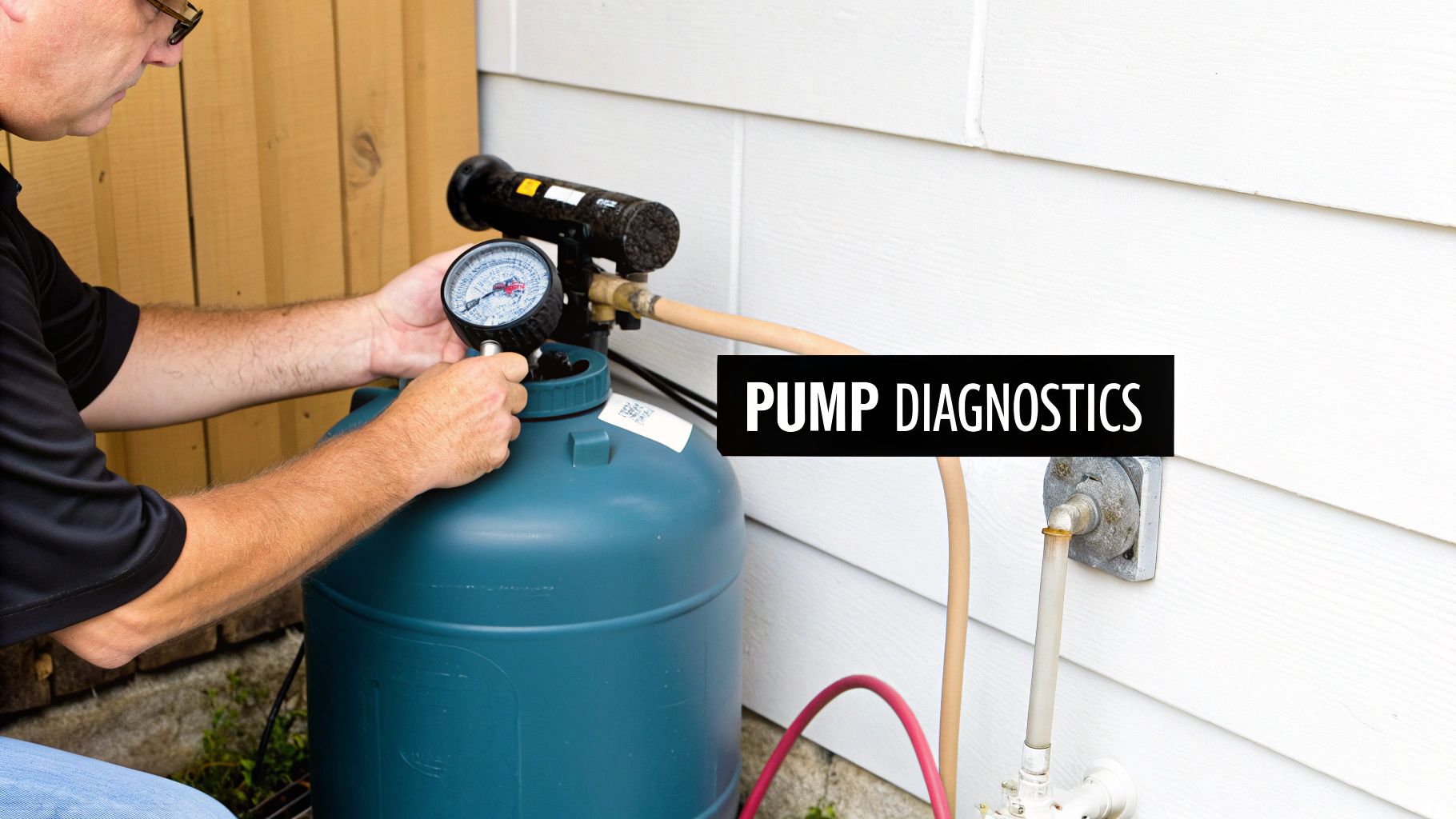
Before we get into the nitty-gritty, it's always worth double-checking your home's circuit breakers. A tripped breaker is the most common reason a well pump stops working, and it's the easiest fix. If they're all in the 'on' position, it’s time to call in the experts to dig a little deeper into the system's components.
Interpreting Your Well System's Symptoms
A healthy well system is pretty quiet, kicking on and off as needed without much fuss. When something’s wrong, it tends to get noisy. Paying attention to these sounds can give our technicians a huge head start on diagnosing the issue when they arrive.
Here are a few of the most common SOS signals from a well system in distress:
- Rapid Clicking: Hear a fast, repetitive clicking from the pressure switch? That’s a classic sign the pump has lost its prime, there's a serious leak, or the well itself is running dry.
- Constant Humming: If the pump motor is humming away but the pressure gauge isn't moving, you might have a seized motor or a jammed impeller. Here in Southwest Florida, sand and sediment are notorious for causing this exact problem.
- Zero Pressure: A gauge that’s flatlined at 0 PSI, even after you’ve reset the power, points to a major failure. It could be the pump, the pressure switch, or the control box.
It's important to distinguish these sounds from normal operation. A single, solid click when the pump engages is perfectly fine. It's the non-stop, frantic clicking that signals trouble and the need for a service call.
The Role of the Pressure Tank and Switch
Think of the pressure switch as the brain and the pressure tank as the lungs of your well system. The switch monitors the water pressure, telling the pump when to kick on to fill the tank and when to shut off once it's full. If this crucial partnership breaks down, your water supply grinds to a halt.
A common failure point is the pressure tank's internal bladder. When it ruptures, the tank can't hold pressure correctly, forcing the pump to cycle on and off constantly. If you notice your pump kicking on every single time you flush a toilet or run a faucet for a few seconds, that’s a massive red flag. This "short-cycling" puts incredible wear and tear on the pump motor and will eventually lead to a complete burnout. This is a clear sign you need to call our team to inspect your pressure tank.
We really don't think twice about having clean water at our fingertips, but it's a profound luxury. Globally, the reality is starkly different; women and children can spend an estimated 250 million hours every single day just carrying water. This perspective highlights why maintaining your well system isn't just about convenience—it's about ensuring a fundamental resource for your family's health and safety.
A well-maintained pump is the heart of a self-sufficient home. Getting familiar with its parts and what can go wrong will save you a world of trouble down the road. But if you suspect a major component has failed, your safest and most effective move is to call in a professional.
What if the Well Itself is the Problem? Drought and Aquifer Issues
So, you've checked the power, inspected the pressure tank, and everything seems fine with the pump. Now you're left with the most worrying possibility: what if the well itself is running out of water?
It’s a thought that crosses the mind of every well owner in Southwest Florida, especially when we hit one of our long, dry spells. Understanding whether you're dealing with a temporary water shortage or a deeper problem with the aquifer is a job for a professional well service company.
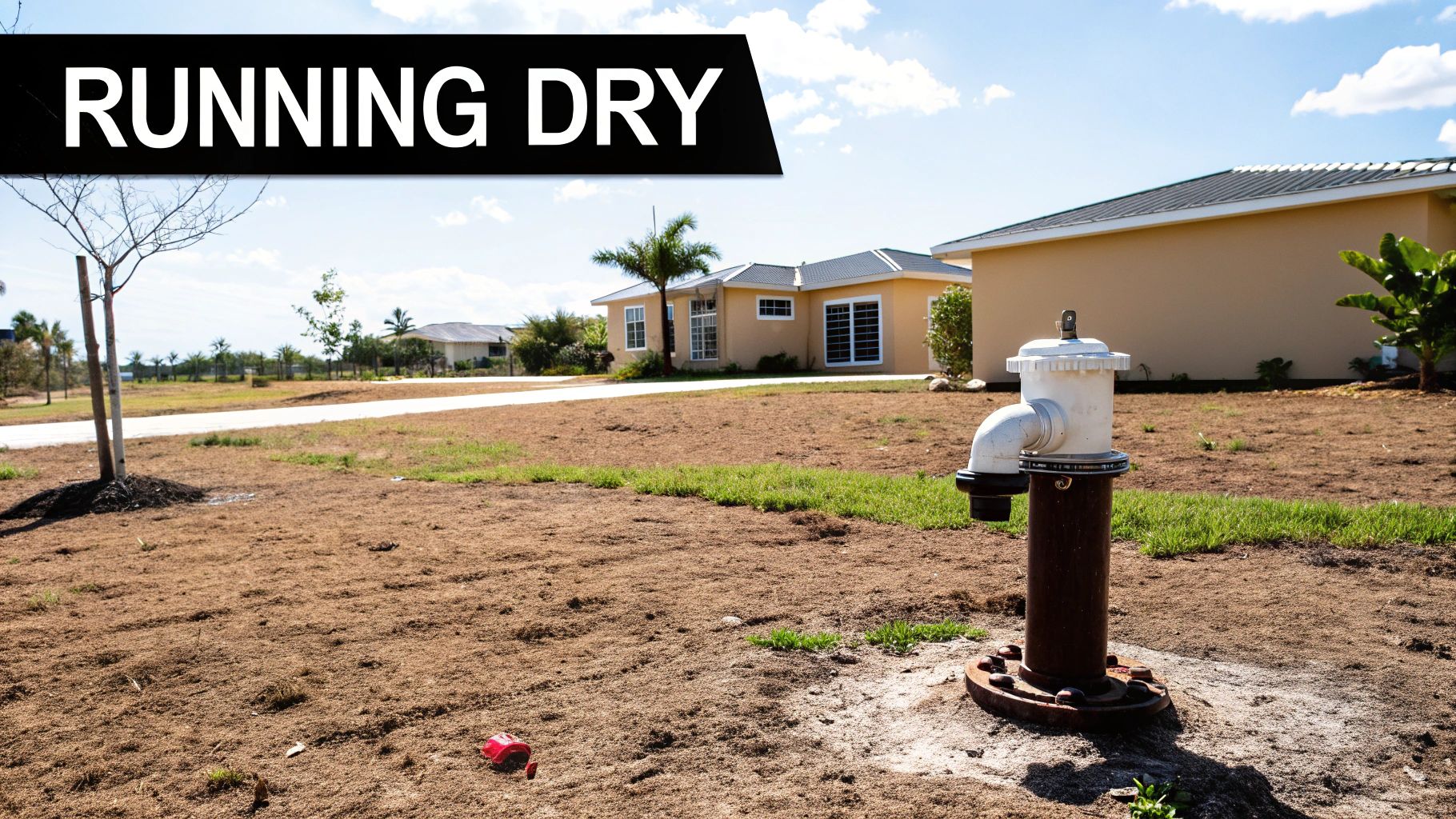
This isn't just a local concern. Globally, the numbers are staggering. As of 2025, an estimated 2.2 billion people lack access to safely managed drinking water. With water consumption increasing sixfold over the last century, our natural resources are under incredible stress. Seeing the big picture helps us appreciate why protecting our local water sources here in Florida is so vital. You can discover more insights about the global water situation and its implications for our future.
Telltale Signs of a Dropping Water Table
A healthy well rarely just stops working overnight. Usually, it gives you some warning signs that the water level is getting dangerously low. Catching these early can make all the difference, and a professional can confirm the diagnosis.
Keep an eye out for these classic symptoms:
- Sputtering Faucets: This is often the first thing people notice. You turn on the tap and get a blast of air before the water starts sputtering out. It’s a dead giveaway that your pump is sucking in air along with water.
- Murky or Gritty Water: If your water suddenly looks cloudy or has sediment in it, your well’s water level may have dropped so low that the pump is starting to pull up sand and silt from the bottom. This is bad for your water quality and can wreck your pump. Our water filtration services can help, but addressing the root cause is critical.
- A Pump That Never Rests: Does your well pump seem to be running constantly or kicking on more than it used to? That's a clear sign it's working overtime to pull less and less water, struggling to meet your home's needs.
Pressures on Florida's Aquifer
Here in Southwest Florida, we draw our water from the massive Floridan aquifer system—one of the most productive in the world. But it's not bottomless. Our aquifer is under serious pressure from both Mother Nature and human activity.
Long periods of drought can cause the water table to drop significantly, leaving shallower wells completely dry. At the same time, our region's explosive growth means more and more wells are tapping into the same shared resource, putting a major strain on the system.
When your well starts acting up, it’s more than just a plumbing issue—it’s an environmental signal. You need a professional to figure out if it's a temporary dip from a dry spell or a more permanent decline in your well's capacity.
A qualified well technician can conduct a "flow test" to measure your well's yield (how much water it produces) and determine the static water level. This gives you a clear, data-driven look at your well's health.
Armed with that information, you can make an informed decision. Sometimes the fix is as simple as lowering the pump deeper into the well. In more serious cases, you might be looking at drilling a new, deeper well. It all starts with a professional diagnosis, which is exactly where we at Water Medic come in.
When It's Time to Call in a Professional
I get it. The DIY spirit runs deep in Southwest Florida, and many homeowners are more than capable of tackling basic troubleshooting. But when it comes to well systems, knowing your limits is absolutely critical. Some problems go beyond a simple fix and enter territory that's not just complicated, but genuinely dangerous.
The first few checks when you find you have no water are straightforward. But if you’ve run through the basics and are still stumped, or you're seeing some more alarming signs, it’s time to step back. Calling a professional isn't admitting defeat; it's making a smart investment in your safety and preventing a small problem from turning into a costly catastrophe.
Clear Signs You Need an Expert
Certain issues are immediate red flags that scream "stop and call for help." Trying to fix these yourself can result in serious injury or completely destroy your expensive equipment. If you notice any of the following, your very next move should be to pick up the phone.
- Visible Electrical Damage: See any burned wires, scorch marks, or melted plastic around the pressure switch or control box? Stop immediately. These components are live with high voltage, and messing with them without proper training is a life-threatening risk.
- Constant Pump Cycling: If your pump is kicking on and off every few seconds, even when you aren't using any water, that's a classic case of short-cycling. This usually points to a bad pressure tank or a major leak somewhere. Left alone, this will burn out your pump motor in no time.
- The Pump Won't Shut Off: A pump that just keeps running and running without building any pressure is a huge warning sign. This could mean anything from a major pipe break underground to a seized-up pump deep in the well—all problems that require specialized diagnostic tools to even find, let alone fix.
Never underestimate the risks involved with well equipment. Submersible pumps are typically powered by 240-volt circuits. That’s more than enough to be lethal. A professional service call takes that danger completely off your hands.
Why a Professional Diagnosis Matters
Calling in an expert isn't just about playing it safe—it's about getting an accurate diagnosis. It takes years of experience to tell the difference between a faulty $50 pressure switch and a failing $2,000 pump. Making the wrong call can be an incredibly expensive mistake.
With over 25 years of hands-on experience right here in Southwest Florida, our team at Water Medic has seen just about every well problem imaginable. We have the right tools and the know-how to quickly and accurately pinpoint what's gone wrong, whether it's a quirky electrical issue, a mechanical failure, or a deeper problem with the well itself.
Don't let a "no water" emergency spiral into a bigger, more dangerous project. To see how we approach these issues, check out our professional well water repair services and let us get your water back on safely and efficiently.
Stay Ahead of Trouble: Proactive Well Maintenance is Key
The absolute best way to deal with a "no water" emergency is to make sure it never happens. Let's be honest, scrambling for a fix is always more stressful and expensive than staying on top of routine care. A consistent maintenance schedule is your number one defense against turning on the tap and getting nothing but air, especially here in Southwest Florida where our well systems are put to the test all year long.
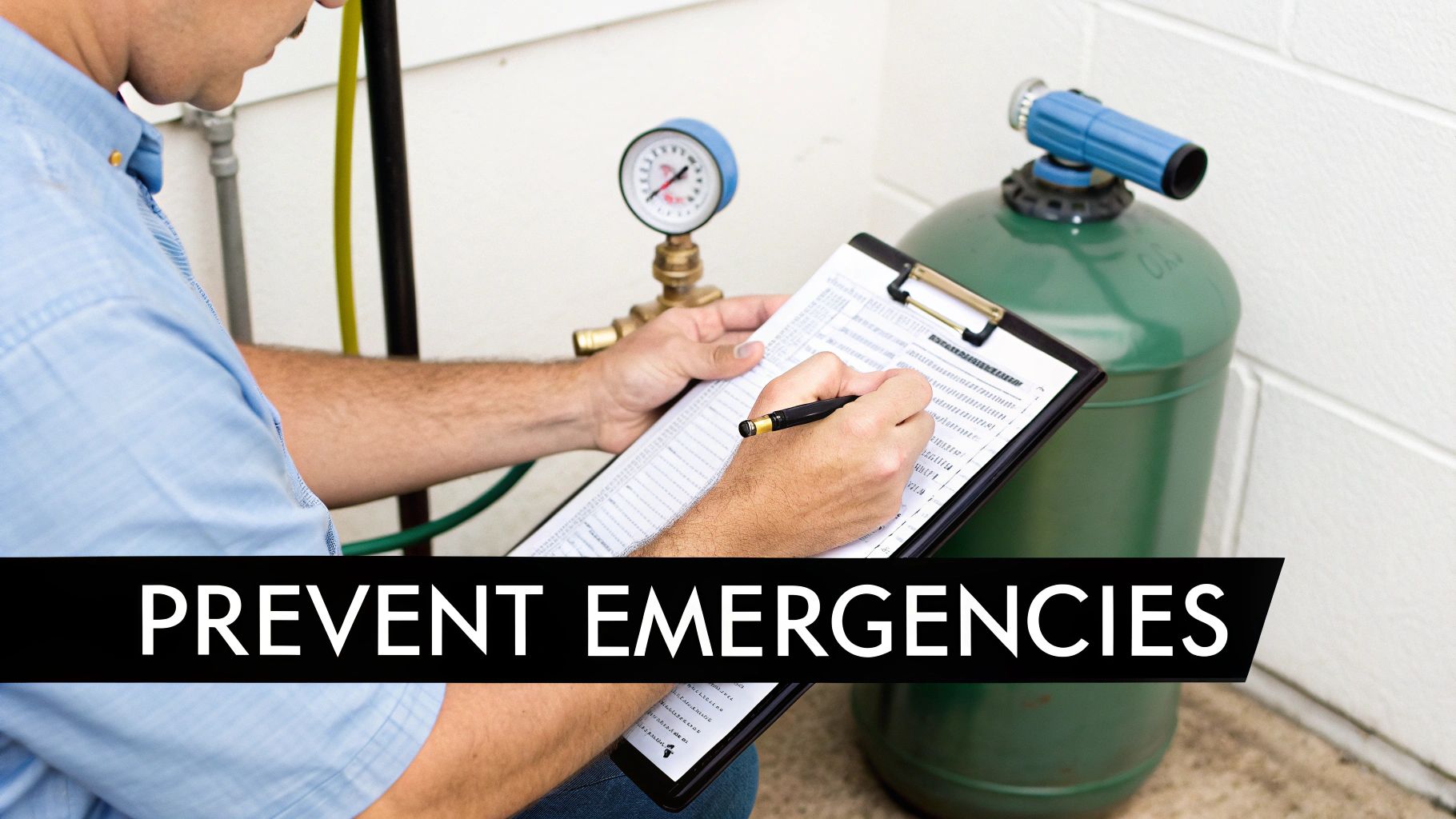
This isn't just about convenience; it's about being prepared. Globally, water scarcity is a growing concern, already impacting roughly 4 billion people. Experts predict that by 2030, demand could outpace supply by as much as 40%. These aren't just abstract numbers; they highlight why taking care of your private water source is more critical than ever. You can read the full report about the growing water crisis to understand just how vital diligent water management has become.
Your Essential Well Maintenance Checklist
Think of your well system like you think of your car—it needs regular tune-ups to run smoothly and reliably. When you ignore the small things, they have a nasty habit of snowballing into catastrophic failures. Folding a few simple tasks into your regular home upkeep can save you a world of trouble down the line.
Here’s a practical checklist to keep your system in prime condition:
- Schedule Annual Professional Inspections: This is the big one. A trained eye can catch things you’d never see, like a failing pressure tank bladder, the first signs of wear on your pump, or electrical parts that are nearing their end. It’s a non-negotiable for any well owner.
- Test Your Water Quality Regularly: Our water tables here can change with seasonal rains or nearby construction. An annual test for bacteria, nitrates, and other common contaminants is crucial to ensure the water your family drinks is always safe. We can perform a comprehensive water test as part of our service.
- Keep the Wellhead Clear: Make sure the area around your wellhead is free of overgrown plants, piled-up leaves, and any kind of chemical runoff. Fertilizers and pesticides can easily seep into the ground and compromise your water supply.
- Listen for Trouble: Get to know the sounds of your system. If the pump suddenly starts cycling more often or you hear a new grinding noise, it’s sending up a red flag. Catching these audio cues early is often the key to a simple fix.
A small investment in routine maintenance is one of the smartest financial decisions a well owner can make. It protects a multi-thousand-dollar asset—your well pump—and ensures your family has uninterrupted access to safe, clean water.
Go Beyond the Pump with Water Treatment
Proactive care shouldn't stop at the mechanical parts. The quality of the water itself has a massive impact on the lifespan of your entire plumbing system. Here in Southwest Florida, hard water is a fact of life, and its high mineral content creates scale buildup inside pipes, fixtures, and appliances, causing them to fail years before they should.
This is why a whole-house water treatment system isn't a luxury—it's a core part of your maintenance strategy. Our whole-house reverse osmosis systems do far more than just deliver pure, fantastic-tasting water. They act as a shield for your plumbing, preventing the scale that restricts water flow and puts extra strain on your well pump.
While learning how to make a water well is an amazing skill for total self-reliance, the most practical strategy for most homeowners is to protect the vital system they already own.
A well-maintained system, supported by high-quality water treatment, is a system you can count on. We can handle all the technical details for you. Take a look at the benefits of our professional well system monthly maintenance plans and gain the peace of mind that comes from knowing your water will be there when you need it.
Common Questions We Hear in the Field
When the water suddenly stops, a million questions race through your mind. After more than two decades of working on wells right here in Southwest Florida, we've heard them all. Here are the answers to the most common questions we get from homeowners when their well runs dry.
What’s This Going to Cost Me?
That's always the first question, and the honest answer is: it really depends. A simple fix, like swapping out a bad pressure switch, might only set you back a few hundred dollars. But if the problem is a failed submersible pump deep down in the well, you could be looking at a repair costing several thousand.
The most important thing is getting the diagnosis right from the start. Throwing parts at the problem is a great way to waste money and prolong the headache. A professional service call is designed to find the exact point of failure, so you only pay for the fix you actually need.
Why Is My Faucet Sputtering and Spitting?
Sputtering faucets are a huge red flag. Don't ignore it. That spitting and coughing is caused by air getting into your water lines, which usually points to one of a few culprits:
- The water level in your well is getting low, and the pump is starting to suck in air along with water.
- Your pressure tank isn't holding pressure correctly, leading to an inconsistent flow.
- There's a leak somewhere in the plumbing between the wellhead and your house.
You'll want to get this checked out quickly. If you let the pump keep running while it's drawing in air, it can easily overheat and burn itself out. That turns a relatively small problem into a much bigger, more expensive one.
Think of a sputtering faucet as your well's check-engine light. It’s a clear signal to get things looked at before a minor issue leads to a catastrophic breakdown. Acting on it early is the smartest way to avoid a bigger bill later.
Can a Power Outage Hurt My Well Pump?
It’s usually not the outage itself that causes the damage. The real threat is the power surge that often happens when the electricity kicks back on. Here in Southwest Florida, with our famous lightning storms, that sudden jolt of returning power can easily fry the delicate electronics in your pump's control box.
We strongly recommend installing a dedicated surge protector for your well equipment. It's a small investment that provides a critical layer of defense for your pump, which is a multi-thousand-dollar piece of machinery. We can install one for you during any service call.
How Often Do I Need a Well Inspection?
Our rule of thumb is to have a complete, professional well system inspection at least once a year. It’s just like an annual physical for your water supply. During that visit, a trained technician can catch developing issues—like a pressure tank that's starting to get waterlogged, signs of wear on the pump motor, or small changes in your water quality—before they leave you high and dry in the middle of the night.
Without a doubt, regular inspections are the single best way to keep your system reliable and save yourself the stress and cost of an emergency call. Our maintenance plans make this easy and affordable.
When your well acts up, you need answers and solutions, fast. For a professional diagnosis and a repair that lasts, trust Water Medic of Cape Coral to get your water running again. Schedule your service by visiting us online at https://watermedic.com.