Your Guide to Pool Cleaning & Maintenance in Southwest Florida
Keeping your pool clean and properly maintained is the secret to that sparkling, inviting oasis you love—especially here in the demanding Southwest Florida climate. It’s all about a consistent routine of skimming, balancing chemicals, and checking your equipment. Staying on top of these tasks is the only way to prevent costly headaches like algae blooms and equipment failure. For many homeowners, the time and expertise required make our professional pool cleaning & maintenance services the perfect solution.
For homeowners in Cape Coral, Fort Myers, and beyond, it's a constant battle against the intense sun and heavy rains that can turn a beautiful pool into a green swamp overnight.
Your Essential Southwest Florida Pool Maintenance Blueprint
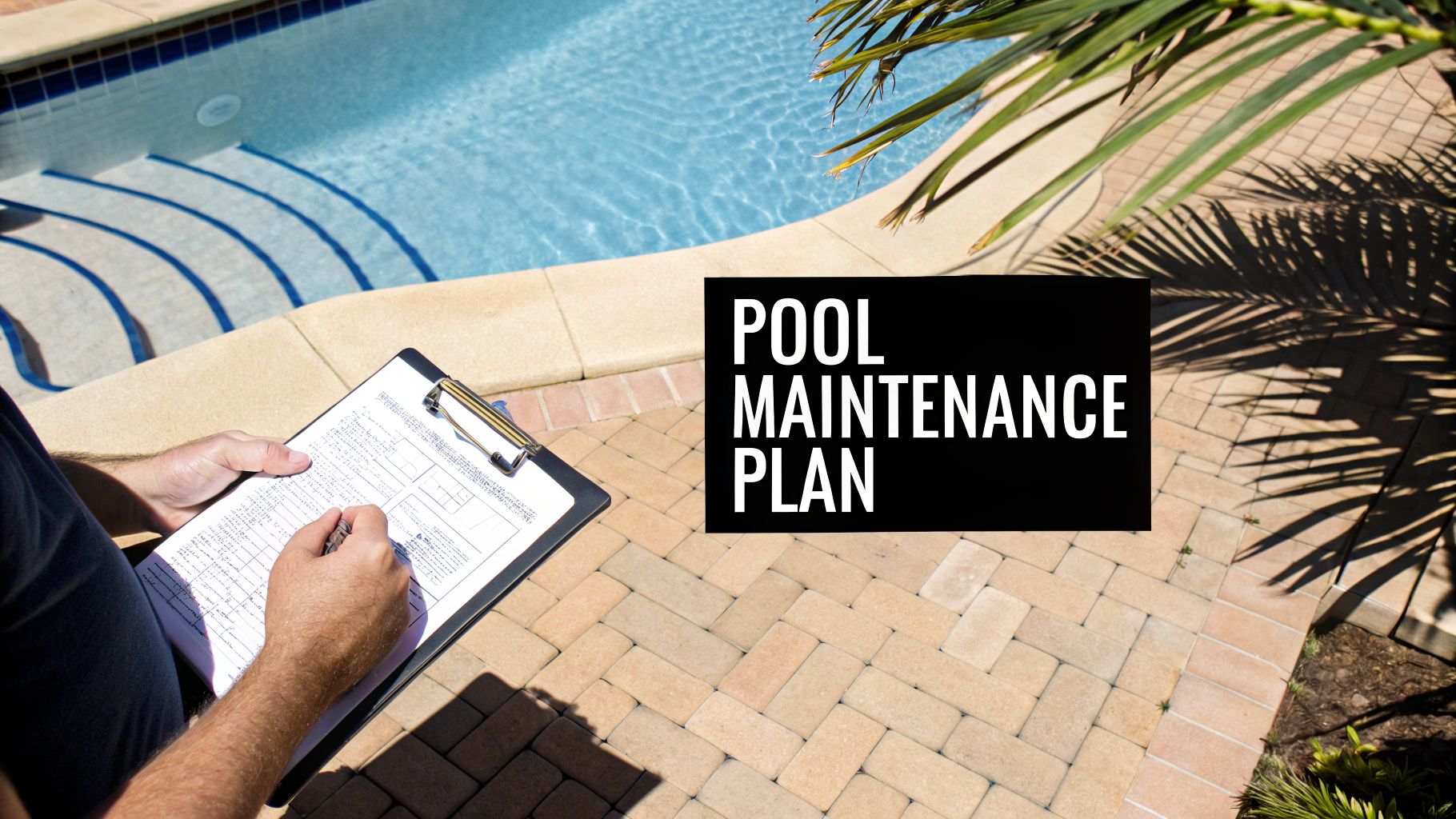
Having a pool in Southwest Florida is a year-round ticket to paradise, but our unique environment throws some serious curveballs. The trifecta of relentless sun, high humidity, and frequent downpours creates the perfect storm for algae and bacteria to thrive. This climate also burns through chlorine and can throw your water chemistry completely out of whack in a matter of hours, making vigilance a top priority.
Good pool care is so much more than just scooping out leaves. It’s a science that protects your investment and, more importantly, your family's health. A proactive approach is the only way to make sure your pool stays a source of joy, not a constant chore. Letting the small stuff slide can quickly snowball into expensive equipment repairs or the need for a costly "green to clean" chemical treatment, services that our expert team can handle for you.
Why a Local Approach Matters
A maintenance plan that works for a pool in Arizona or North Carolina just won't cut it here. Our local conditions demand a specialized strategy. For example, a classic Florida afternoon thunderstorm can dump enough fresh water to drastically alter your pool’s pH and alkalinity levels. At the same time, the intense UV rays we get year-round break down chlorine much faster than in other parts of the country, meaning you have to stay on top of it.
This is where knowing the local playbook for pool cleaning & maintenance is so critical. It’s about understanding how to react to these environmental pressures. This guide is built to give you that knowledge, breaking down everything from quick daily checks to long-term equipment care.
A well-maintained pool is the centerpiece of the Florida lifestyle. It’s not just about aesthetics; it’s about creating a safe and reliable space for relaxation and family fun, which is why consistent, expert care is non-negotiable.
Of course, trying to manage all this yourself can feel like taking on a part-time job. Between chemical tests, brushing, vacuuming, and checking equipment, it’s a lot to handle. That’s precisely why so many homeowners in the area turn to a professional.
For those times when you need an expert hand—or just want to hand over the work completely—Water Medic of Cape Coral is your local partner. We have a deep understanding of Southwest Florida's unique pool care needs and can give you the peace of mind that your pool is always swim-ready. Let our team handle the hard work, so you can just enjoy the water.
Nailing Your Pool Care Schedule
Let's be honest, a sparkling, swim-ready pool doesn't just happen on its own. It's the payoff for a consistent, easy-to-follow maintenance routine. Think of it like tending a garden—a little bit of regular attention keeps it thriving and beautiful. By breaking down the work into a simple schedule, what seems like a huge chore becomes a set of quick, manageable tasks. This is how you keep your Southwest Florida oasis ready for a dip at a moment's notice.
Your schedule is basically a wellness plan for your pool. A few minutes of prevention each day, a more thorough check-in each week, and a deeper clean once a month will head off nearly every common pool headache. Trust me, this proactive approach to pool cleaning & maintenance is a lot less stressful (and cheaper) than fighting an algae bloom that's already taken over.
Your Daily Pool Checklist
The daily check is all about a quick once-over. These little tasks only take a few minutes, but they make a huge difference, especially during our long, hot summers or after a windy afternoon.
- Skim the Surface: Grab your net and fish out any leaves, bugs, or other floaties. Getting them out now stops them from sinking, turning into sludge, and clogging up your filter system.
- Check Water Clarity: Just a quick glance can tell you a lot. Is the water crystal clear, or is it starting to look a little hazy? Catching cloudiness early lets you nip the problem in the bud.
- Observe Equipment Operation: Listen to your pool pump. Does it sound the same as always, or are there any new, weird noises? A quick look and listen ensures everything is humming along smoothly.
These simple checks are the bedrock of a healthy pool. They’re easy, fast, and crucial for stopping small issues from turning into big, expensive ones.
The Essential Weekly Pool Ritual
This is where you roll up your sleeves and get into the nitty-gritty of keeping your water balanced and clean. Set aside about an hour each week for these steps. It’s the best thing you can do to protect your swimmers and your pool's finish from damage.
- Brush the Walls, Steps, and Floor: Brushing loosens up all the gunk and invisible algae spores clinging to the surfaces. This pushes them into the water where your filter and sanitizer can zap them. Don't forget to hit the corners, steps, and any spots where the water doesn't circulate well.
- Vacuum the Pool: After you've brushed everything down, vacuum the pool floor to suck up all that settled debris. Whether you’re using a manual vac or an automatic cleaner, this is a non-negotiable step for a truly clean pool.
- Clean Skimmer and Pump Baskets: Think of these baskets as your pool’s frontline defenders—they catch all the big stuff. Emptying them every week keeps the water flowing strong so your pump and filter can do their jobs right. A clogged basket makes the pump work way too hard, which can lead to it burning out early.
- Test and Balance Water Chemistry: This is, without a doubt, the most important thing you'll do all week. You need to test your chlorine, pH, and alkalinity levels. Here in Southwest Florida, a pop-up thunderstorm can drop your pH, and that relentless sun just bakes the chlorine right out of the water. Consistent testing is the only way to keep your pool safe and sanitized.
Sticking to a consistent schedule is the single best way to keep your long-term pool costs down. An ounce of prevention with weekly care is truly worth a pound of cure when you're talking about expensive chemical treatments or equipment repairs.
The consistency of this weekly routine is what makes the difference between a pool that’s a joy and one that’s a constant problem. We get it, though—life gets busy. This is where a professional service really pays off, bringing the expertise and reliability to handle these critical tasks for you, every single week. Water Medic makes sure your pool gets this essential care, so all you have to do is enjoy it.
Monthly Maintenance Deep Dive
Once a month, it's time to tackle a few bigger tasks that support all your daily and weekly efforts. These jobs are all about the long-term health of your filtration system and the pool itself.
A major monthly task is cleaning your pool filter. Whether you have a cartridge, sand, or D.E. system, the process is a bit different, but the goal is always the same: get rid of all the gunk that's built up so your filter can work at peak performance. Proper monthly pool maintenance is fundamental to keeping your equipment running for the long haul.
While you're at it, take a minute to inspect the o-rings, seals, and gaskets on your pump and filter. Look for any cracks or signs of wear. A tiny, dried-out seal can cause an air leak, which torpedoes your system's efficiency. Our technicians are trained to spot these small issues during our routine service visits, preventing bigger problems before they start.
The need for reliable pool care has built a massive industry. The global pool cleaning and maintenance services market was valued at $24.96 billion in 2024 and is expected to climb to $26.76 billion in 2025. This growth is driven by the sheer number of pools out there—the U.S. alone has 10.7 million of them, with 10.4 million being residential—and every single one needs regular service.
The Science of Safe Water and Chemical Balancing
Diving into pool chemistry can feel a little like you're back in high school science class, but getting a handle on the basics is easily the most important part of successful pool cleaning & maintenance. This isn't just about keeping the water looking clear. It's about creating a swimming environment that's safe, feels good on your skin, and won't damage your pool's expensive plaster, tiles, and equipment.
Here in Southwest Florida, this becomes a daily challenge. The intense sun and our famous afternoon downpours are constantly throwing your pool's chemistry out of whack, making this balancing act a top priority.
Think of your pool water as a finely tuned machine. When every part is working in harmony, the system runs smoothly. But if one component is off, it can cause a chain reaction—suddenly you've got cloudy water, an algae bloom, or even corrosion starting to eat away at your pump and heater. This is precisely why getting the chemical balance right is so critical.
The Key Players in Pool Chemistry
To keep your water sparkling and safe, you need to keep an eye on a few key chemical levels. Each one has a specific job, but they all have to work together to create that perfect swimming experience.
- Chlorine (The Sanitizer): This is your pool's first line of defense. Chlorine's job is to hunt down and neutralize bacteria, algae, and other nasty contaminants. Without enough of it, your beautiful pool can quickly turn into a swamp.
- pH (The Comfort Level): The pH level tells you how acidic or alkaline your water is, measured on a scale from 0 to 14. For a swimming pool, you're aiming for a sweet spot that's just slightly alkaline: between 7.4 and 7.6. If the pH drops too low (acidic), it can sting your eyes and corrode metal parts. If it climbs too high (alkaline), your chlorine stops working effectively, and you'll start seeing cloudy water and scaly buildup.
- Total Alkalinity (The pH Stabilizer): Think of alkalinity as the anchor for your pH. It helps prevent wild swings, keeping your pH level steady and predictable. Without the right amount of alkalinity, a single rainstorm can send your pH into a nosedive, making it a nightmare to rebalance.
- Cyanuric Acid (The Chlorine Sunscreen): Cyanuric Acid, or CYA, is your chlorine's best friend, especially in Florida. The sun’s powerful UV rays can literally burn off an entire pool's worth of unprotected chlorine in a matter of hours. CYA acts as a stabilizer, shielding the chlorine so it can stick around and do its job.
The table below is a great cheat sheet for keeping these key levels in check. It shows you where you want your levels to be and what happens when they drift out of range.
Ideal Chemical Ranges for a Southwest Florida Pool
| Chemical | Ideal Range (ppm) | Problem If Too Low | Problem If Too High |
|---|---|---|---|
| Chlorine | 1.0 – 3.0 ppm | Algae and bacteria growth | Skin/eye irritation, damages liners/equipment |
| pH | 7.4 – 7.6 | Corrosive water, equipment damage | Ineffective chlorine, cloudy water, scaling |
| Total Alkalinity | 80 – 120 ppm | "pH bounce," unstable pH levels | Cloudy water, pH is hard to adjust |
| Cyanuric Acid | 30 – 50 ppm | Chlorine burns off too quickly | "Chlorine lock," sanitizer becomes ineffective |
Having a reference like this makes it much easier to diagnose a problem just by looking at your test results. Consistent testing is the only way to stay ahead of trouble.
Your Step-by-Step Guide to Water Testing
You can't fix what you don't measure. Regularly testing your water is the only way to truly know what's going on beneath the surface. For the DIY pool owner, a good quality liquid test kit or reliable test strips are must-have tools.
- Get a Good Sample: Plunge the collection vial elbow-deep into the water. Make sure you're away from the skimmers or return jets to get a reading that represents the whole pool.
- Run the Tests: Follow the kit's instructions to the letter. This means using the right number of drops or dipping a strip for the correct amount of time. Precision matters here.
- Read the Results: Compare the colors in your vial to the chart that came with your kit. Jot down the numbers for chlorine, pH, and alkalinity—this is your action plan.
This infographic is a fantastic visual for keeping all your pool tasks straight.
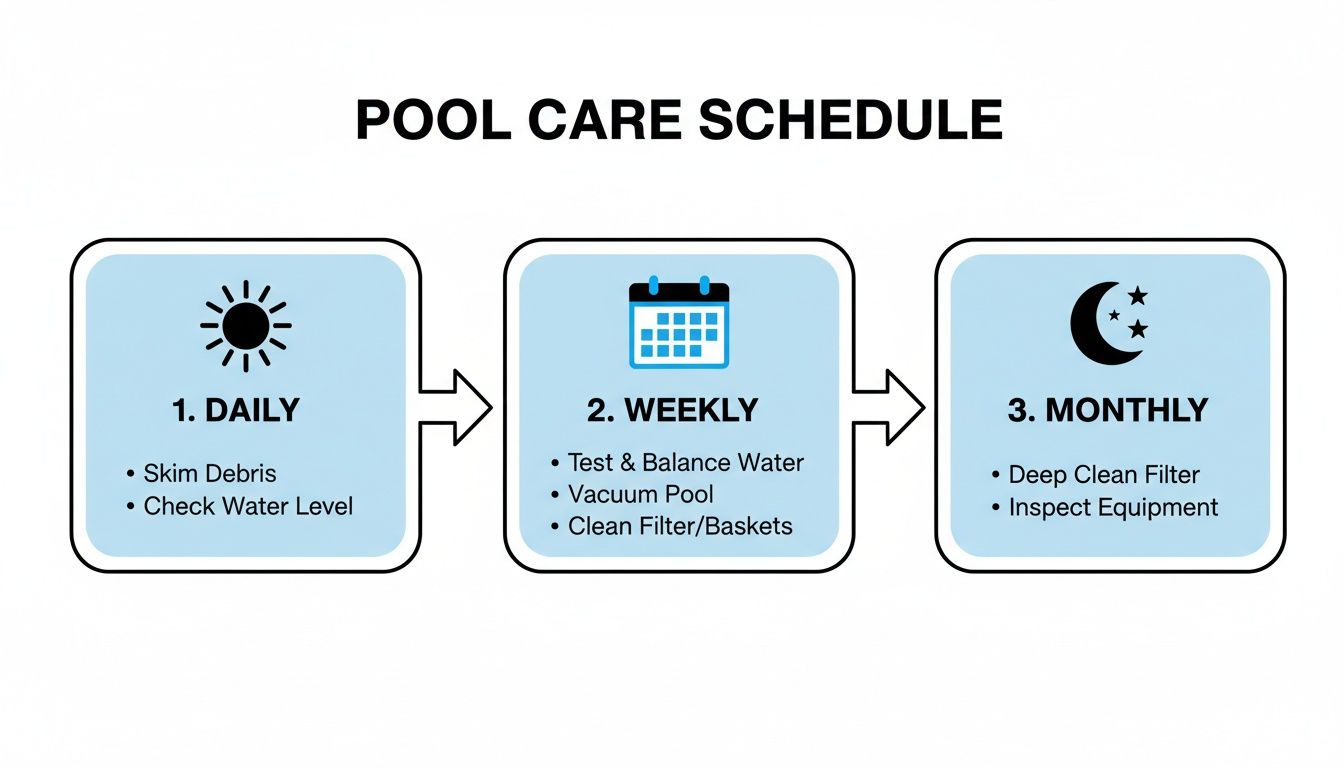
Sticking to a simple daily, weekly, and monthly schedule helps you stay on top of your pool's health and catch small issues before they become big, expensive problems.
The real secret to a perfect pool isn't dumping in tons of chemicals. It's about making small, consistent adjustments based on what your tests tell you. A steady hand is always better than a reactive, "shock and awe" approach.
Adding Chemicals The Right Way
Knowing what to add is only half the job. Knowing how and in what order you add chemicals is just as important. Getting it wrong can make the chemicals less effective or even create a safety hazard.
Always read the instructions on the package, and as a cardinal rule, never mix different chemicals together outside of the pool. When handling these products, it’s also important to think about the whole family; you can learn more about prioritizing pet safety in chemical applications during any kind of home maintenance.
A good rule of thumb is to adjust your levels in this order: alkalinity first, then pH, and finally your sanitizer (chlorine). This sequence works because each adjustment prepares the water for the next, making sure every chemical can do its job properly.
While you can certainly do this yourself, it takes time, precision, and a solid understanding of how these chemicals interact. For guaranteed perfect water, the expert technicians at Water Medic of Cape Coral use professional-grade testing gear and years of hands-on experience to keep your pool flawlessly balanced, giving you total peace of mind.
Keeping Your Pool's Heart Healthy with Equipment Maintenance
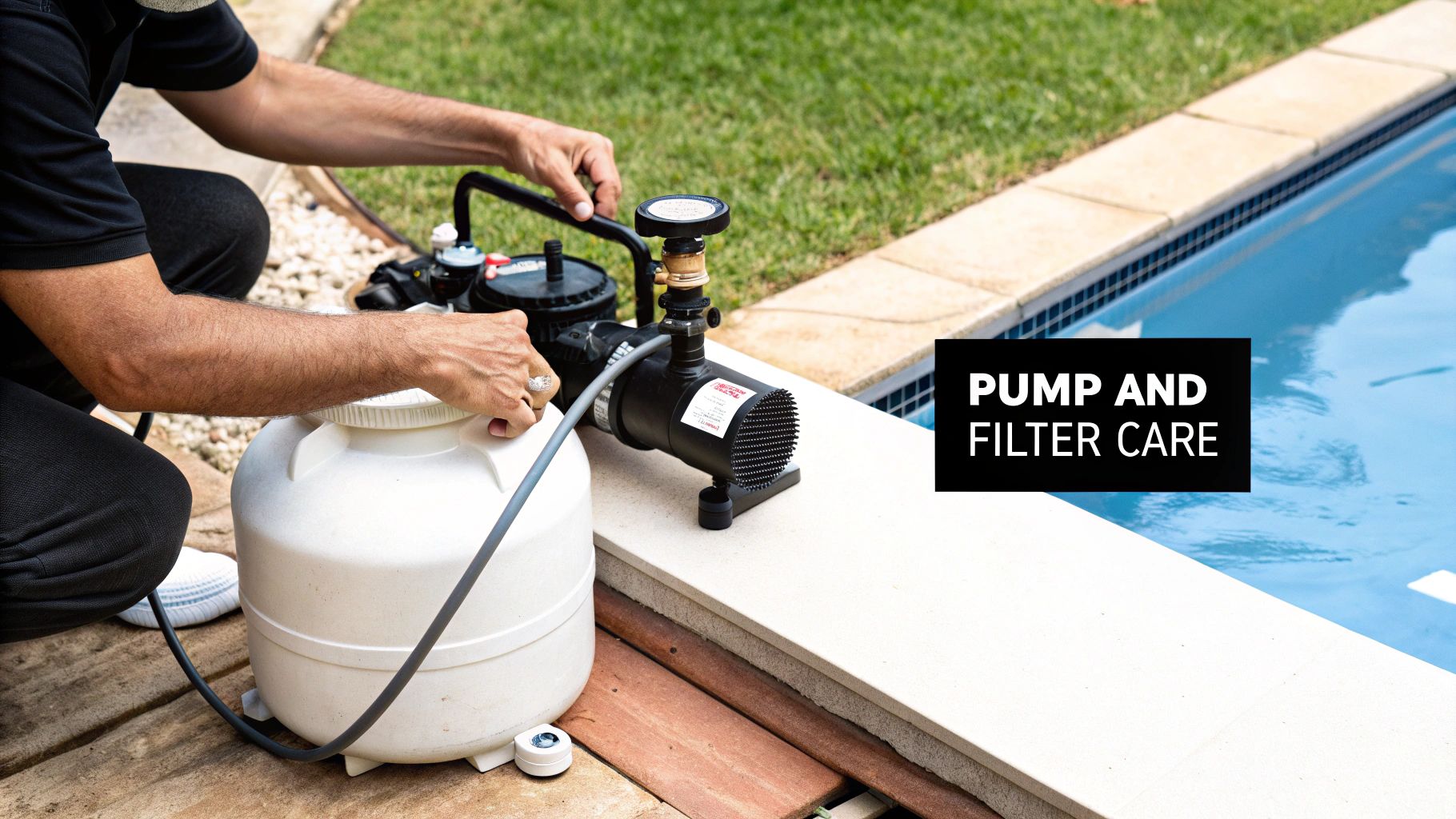
Think of your pool water as the circulatory system. If that's the case, then your equipment—the pump, filter, and skimmers—is its beating heart. This hardware is what keeps everything moving and clean, ensuring your water stays sparkling and safe. Getting a handle on how to care for this system is a huge part of effective pool cleaning & maintenance, especially here in the demanding Southwest Florida climate.
The pump is the powerhouse, pulling water from the pool and shoving it through the filter. That filter then grabs all the dirt, gunk, and other contaminants before sending clean water back. Your skimmers are the first line of defense, catching bigger stuff like leaves and bugs before they can cause a blockage. When all these parts work in harmony, your pool looks fantastic.
But if one piece starts to struggle, the whole system feels it. Regular equipment checks aren't just about keeping things clean; they're about preventing expensive breakdowns before they happen.
Maintaining Your Pool Pump and Skimmers
The baskets in your pump and skimmers are the unsung heroes of your pool, working around the clock to collect debris. Keeping them clear is probably the easiest and most important maintenance task you can do. When a basket gets clogged, it forces the pump to work overtime, which strains the motor and can seriously shorten its life.
You should be emptying these baskets at least once a week. After a big storm or during heavy shedding seasons, you'll need to do it even more often. It's simple: just turn off the pump, pop the lids, and dump out the contents. A quick rinse with a hose before putting them back will keep the water flowing freely and protect your pump.
Understanding Your Pool Filter
The filter is where the real magic happens. It's responsible for trapping all the tiny particles that make water cloudy and uninviting. There are three main types of pool filters, and each one needs a specific cleaning routine to perform at its best.
- Sand Filters: These are cleaned by "backwashing," a process that reverses the water flow to flush out all the trapped debris. You'll know it's time when the pressure gauge reads 8-10 PSI higher than its normal, clean reading.
- Cartridge Filters: With these, you don't backwash. Instead, you'll pull the pleated fabric cartridge out and give it a thorough cleaning with a hose. Plan on doing this every few months, but it really depends on how much you use your pool.
- Diatomaceous Earth (D.E.) Filters: D.E. filters also use backwashing to get clean, but there’s an extra step. You have to add new D.E. powder afterward to recoat the filter grids, which restores their powerful, microscopic filtering ability.
Paying close attention to your filter's pressure gauge is like checking the oil in your car. It's the simplest way to know when your pool's engine needs attention before a small issue becomes a major breakdown.
When to Call in the Professionals
While cleaning baskets and hosing down a filter are things many homeowners can handle, pool equipment can get complicated. Are you hearing strange noises like grinding or whining? Seeing leaks? Or is the pump just refusing to turn on? These are all red flags pointing to a deeper problem. Here in the harsh Florida climate, seals and motors can wear out fast, so catching these things early is critical.
Ignoring those warning signs is a recipe for a catastrophic failure—and a much, much larger repair bill. When you suspect something’s not right, it’s time to call for professional help. The expert technicians at Water Medic specialize in tracking down and fixing these exact issues. Our team provides trusted pool equipment repair services to diagnose and fix problems before they get out of hand, giving you complete peace of mind.
Technology is also changing the game. The global market for swimming pool cleaners is expected to hit $5.7 billion by 2032, driven by smart tech that can reduce labor by up to 40%. This tech uses IoT for predictive maintenance, which helps lower energy use and makes the annual maintenance costs—which can run from $3,000-$6,000 per pool in the U.S.—a much smarter investment.
Troubleshooting Common Florida Pool Problems
Even when you follow your maintenance schedule to the letter, Southwest Florida’s unique climate can throw you a curveball. Waking up to a cloudy pool or seeing the first hints of an algae bloom is frustrating, but don’t panic. Most common pool problems are entirely fixable if you know what to look for and act fast.
Think of it like being a detective. We’ll walk you through how to diagnose and solve the most frequent issues that pop up. By figuring out the root cause, you can not only fix the problem at hand but also keep it from coming back. We'll also cover when a DIY approach makes sense and when it’s smarter to call in the pros.
Solving the Mystery of Cloudy Water
Cloudy, milky water is probably the number one complaint we hear from Florida pool owners. It’s more than just an eyesore—it’s a big, hazy sign that something in your pool's ecosystem is off balance. That cloudiness is just millions of tiny particles floating around that are too small for your filter to grab on its own.
So, what’s causing it? It usually boils down to a few key culprits:
- Imbalanced Chemicals: More often than not, high pH is the offender. When your pH creeps above 7.8, it hobbles your chlorine, making it far less effective at killing contaminants.
- Poor Filtration: Your filter could be dirty and clogged, or maybe the pump just isn't running long enough. In our Florida heat, you really need that pump running for a solid 8-10 hours every single day.
- Environmental Factors: A heavy downpour, a big pool party with lots of swimmers, or a sudden influx of leaves and debris can easily overwhelm your sanitizer and turn the water murky.
The Tipping Point: If you’ve balanced the chemicals, cleaned the filter, and run the pump, but the water is still cloudy after 48 hours, it’s time for a professional diagnosis. Stubborn cloudiness can point to a deeper equipment problem, like a broken internal part in your filter that requires an expert eye. Let our team take a look.
Battling Algae Blooms
In our sunny, humid corner of the world, algae is the archenemy of every pool owner. It can appear out of nowhere and take over your pool in what feels like a blink of an eye.
There are a few different types you're likely to encounter.
Green Algae
This is the classic, most common type. You’ll see it floating in the water, giving it a greenish tint, or clinging to the walls. It’s a dead giveaway that your chlorine level has dropped too low.
- DIY Solution: Start by brushing all the pool surfaces—walls, steps, floor—to knock the algae into the water. Then, "shock" the pool by hitting it with a heavy dose of chlorine to raise the level to 10 ppm or higher. Keep the pump running 24/7 and backwash or clean your filter frequently until it’s clear.
Yellow or Mustard Algae
This stubborn stuff looks like a yellowish-brown powder or dust, and it loves to hang out in shaded spots. It’s notoriously resistant to normal chlorine levels.
- DIY Solution: The game plan is similar to fighting green algae, but you have to be more aggressive. Brush it thoroughly, shock the pool with a triple dose of chlorine, and keep brushing for several days in a row to make sure you get it all.
Black Algae
Black algae is the final boss of pool problems. It shows up as dark, stubborn spots with a tough, protective slime layer. The real issue is its roots, which can dig deep into your pool’s plaster, making it incredibly difficult to get rid of for good.
The Tipping Point: If you see black algae, that’s your signal to call for backup. DIY methods almost never kill the roots completely, which means it will just keep coming back. For a problem this bad, a professional treatment is the only truly effective solution. When you spot black algae, it's time to get emergency pool services to make sure it's gone for good.
DIY vs. Professional: Who Should Handle Your Pool?
So, should you handle your pool care yourself or hire a pro? This is a question every pool owner in Southwest Florida eventually asks. Going the DIY route has its appeal—you save some money upfront and get the satisfaction of managing your own little oasis.
But it's crucial to go into it with your eyes wide open. We're not just talking about skimming leaves. You're signing up for weekly chemical tests, lugging around heavy containers of chemicals, and scrubbing and vacuuming in that glorious Florida heat. Miss a week, or make one small miscalculation with the chlorine, and you could be facing a nasty algae bloom or, worse, actual damage to your pool's surface and expensive equipment. What started as a cost-saving measure can suddenly get very pricey.
The Peace of Mind a Pro Provides
This is where bringing in an expert service like Water Medic of Cape Coral really changes the game. It’s not just about reclaiming your weekends; it’s about entrusting your pool to someone who lives and breathes this stuff. Our techs have seen it all, and that experience means your water chemistry will be dialed in perfectly, every single time. It’s about making your pool safe and ready for your family to jump into at a moment's notice.
Honestly, the biggest thing you get with professional pool service is peace of mind. You never have to wonder if the water is safe or if a weird noise from the pump is a big deal. You just get to enjoy your pool.
Thinking about the benefits of hiring professional cleaning services for other parts of your home, like windows or landscaping, can help put it in perspective. The value is the same: you're paying for expertise, consistent results, and your own time back. Plus, a trained eye can spot a small filter leak or a struggling pump motor before it turns into a major headache and an even bigger bill.
When you look at the numbers, it's clear which way most people lean. Across the U.S., a staggering 85% of the 10.7 million residential pools are maintained by professionals from one of the 78,817 pool service businesses out there. With typical annual costs falling between $3,000 and $6,000, homeowners recognize it's a worthwhile investment to protect their property and keep their families safe. The trend is clear: people would rather be swimming in their pool than working on it.
Your Pool Maintenance Questions Answered
Even with the best guide in hand, you're bound to have a few questions about keeping your pool in top shape. It's only natural. Southwest Florida's climate brings its own unique set of challenges, and we hear a lot of the same concerns from homeowners.
Let's clear up some of the most common questions we get.
How Often Should a Florida Pool Be Serviced?
Here in Southwest Florida, we deal with year-round heat, intense sun, and near-constant use. Because of this, weekly professional service is really the best practice.
A weekly visit keeps your chemical levels from swinging wildly, stops algae before it even thinks about blooming, and ensures your expensive equipment is running just right. Some folks try bi-weekly service, but a single Florida thunderstorm can throw your water chemistry completely out of whack, leading to bigger, more expensive problems down the road.
What Does Standard Professional Cleaning Include?
When a pro from Water Medic of Cape Coral shows up, they’re not just throwing in a few chemicals. A thorough service visit is a comprehensive health check-up for your pool.
It typically includes:
- Testing and precisely balancing the water chemistry.
- Skimming all the leaves and floating debris off the surface.
- Brushing the pool walls, tile line, and steps to prevent buildup.
- Vacuuming the entire pool floor.
- Emptying the skimmer and pump baskets so water can flow freely.
- Giving all your equipment a once-over to spot any potential issues.
Filter cleanings are usually handled monthly or on an as-needed basis, depending on your specific setup and how much action your pool sees.
Is It Safe to Swim After Adding Chemicals?
This is a big one, and the answer is: it depends on what was just added. For routine adjustments to chlorine or pH, you should wait at least 30 to 60 minutes with the pump running. This gives the chemicals enough time to circulate and dissolve properly.
However, if your pool has been "shocked" (superchlorinated), you absolutely need to wait longer. It’s not safe to swim until the chlorine level has dropped back down below 5 ppm (parts per million). This can take anywhere from 12 to 24 hours. A good pool technician will always give you clear instructions to keep your family safe.
If you have more questions, we’ve got more answers. Check out our pool service frequently asked questions for a deeper dive.
Your pool is meant to be a backyard oasis, not a source of constant work and worry. If you're ready to reclaim your weekend and just enjoy a crystal-clear pool, it's time to call in the experts at Water Medic of Cape Coral.