
why does a pool turn green: easy fixes and prevention tips
It’s a sight no pool owner wants to see: that clear, sparkling blue water you had yesterday has morphed into a murky, uninviting green. This startling change is almost always due to an algae bloom. These tiny, microscopic plants are always present, but they only take over when your pool’s defenses are down, turning your backyard oasis into a swampy mess.
At its core, a green pool is a clear sign that your sanitation and filtration systems aren't doing their job.
What Really Turns Your Pool Green
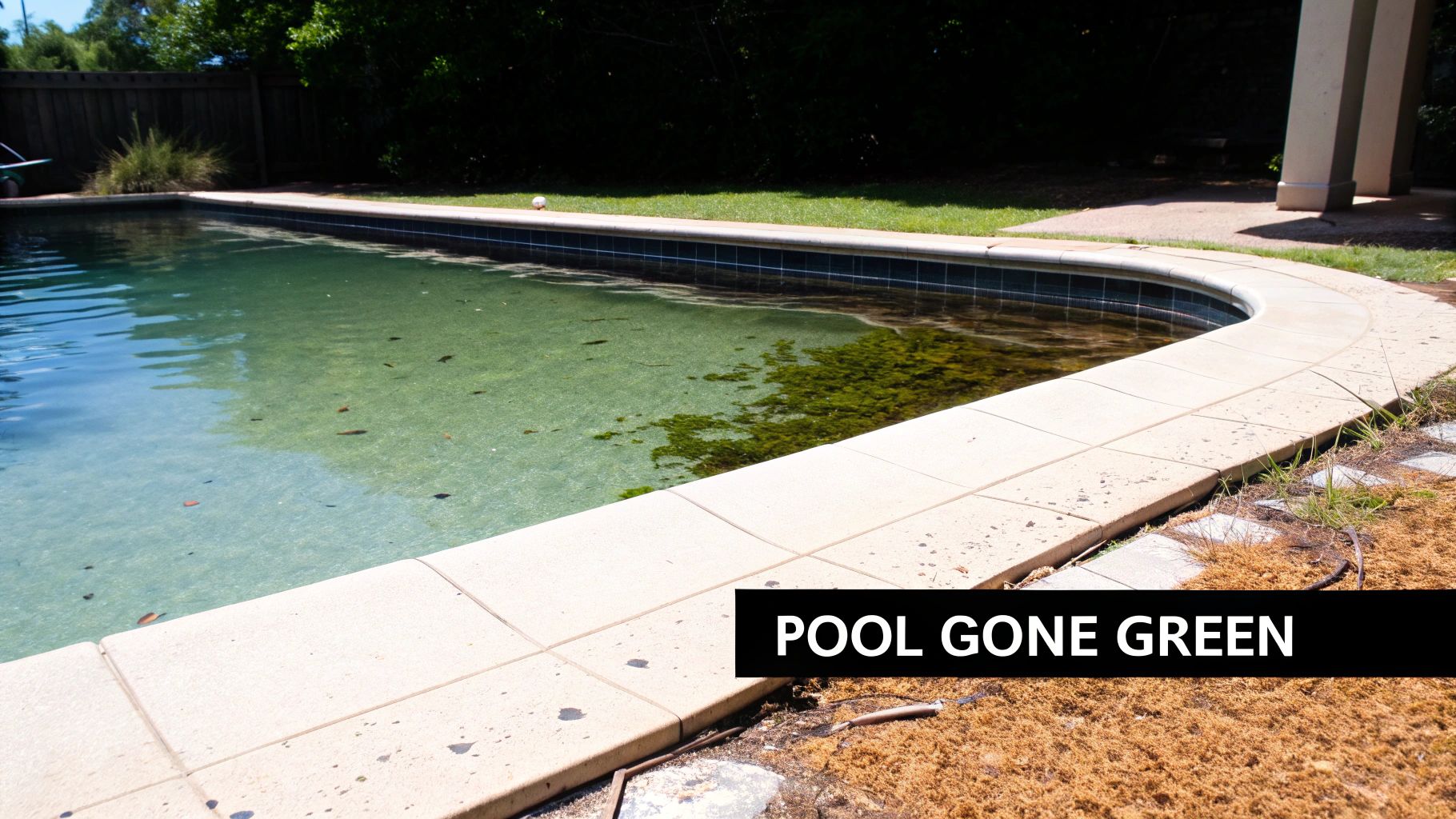
Waking up to a green pool is a special kind of frustration, especially here in Southwest Florida where our pools are practically a year-round commitment. While it might look like it happened overnight, the truth is that the conditions for an algae takeover have likely been building for a while.
A green pool is more than just an eyesore; it's a warning. It means the sanitizer that's supposed to keep your water clean and safe has been completely overwhelmed. This creates a free-for-all for algae and other potentially harmful bacteria to thrive. Tackling the problem head-on isn't just about aesthetics—it's about making your pool a healthy place for your family to swim again.
To help you quickly identify the root of the problem, here’s a simple breakdown of the most common causes.
Quick Guide to Green Pool Causes
| Primary Cause | What It Means | Early Warning Sign |
|---|---|---|
| Low Chlorine | The primary defense against algae is gone, allowing it to multiply freely. | Water looks hazy or cloudy; a "slippery" feeling on pool walls. |
| Poor Circulation | Water isn't moving enough, creating stagnant spots where algae can settle and grow. | Debris gathers in corners; pressure gauge on the filter is too high or low. |
| Chemical Imbalance | pH or other levels are off, making your chlorine ineffective even if it's present. | Chlorine smell is strong, but water isn't clear; skin or eye irritation. |
Understanding these basics is the first step, but let's dive a little deeper into the main offender.
The Number One Culprit: Low Chlorine
If you’re asking, “Why is my pool green?” the most straightforward answer is a lack of effective sanitizer—specifically, chlorine. Think of chlorine as the bodyguard for your pool water. Its job is to neutralize contaminants, including algae spores.
For a pool to stay clear, the free chlorine level needs to be maintained between 2 to 4 parts per million (ppm). When those levels drop to zero, even a single algae spore can multiply into millions in just a few hours, creating the visible green bloom you see.
Here in Florida, we're fighting an uphill battle. The relentless sun burns off chlorine, and our heavy summer rains dilute the water, throwing all the chemical levels out of whack. It’s a perfect recipe for an algae invasion.
For many homeowners, the constant battle with water chemistry can be overwhelming. A professional service ensures your pool remains a pristine oasis, not a frustrating science experiment.
Other Key Factors in an Algae Takeover
While low chlorine is the main trigger, a few other issues often work behind the scenes to help algae gain a foothold. If you find yourself constantly fighting off a green tint, it’s a good bet one or more of these areas needs a closer look.
The biggest contributing factors include:
- Poor Water Circulation: Your pump and filter are the heart and lungs of your pool. If the pump isn't running long enough or the filter is dirty and clogged, you'll get dead spots in the water where algae can settle and grow undisturbed.
- Chemical Imbalances: This is a big one. If your pool's pH is too high, it essentially handcuffs your chlorine, rendering it ineffective. You could have plenty of chlorine in the water, but if the pH is off, it can’t do its job.
- Phosphates in the Water: Think of phosphates as fertilizer for algae. They get into your pool from things like leaves, lawn fertilizer, and even some pool chemicals. High phosphate levels can fuel an explosive algae bloom that even high chlorine levels struggle to control.
Keeping these elements in check is absolutely essential for a healthy, clear pool. For homeowners in our area, mastering the basics of proper swimming pool care is the best way to prevent frustrating and expensive algae problems from ever starting. At Water Medic of Cape Coral, our team specializes in diagnosing these exact issues and putting effective, long-term solutions in place.
What's Really Making Your Pool Green?
It’s easy to blame a green pool on a lack of chlorine, and you wouldn't be wrong. But that's only scratching the surface. Think of low chlorine as leaving your front door unlocked. It's an invitation for trouble, but it doesn't explain why the door was unlocked or what other problems are letting algae sneak in through the back window.
Here in Cape Coral and across Southwest Florida, our environment is practically an incubator for algae. The blazing sun, daily downpours in the summer, and bathtub-warm water create a perfect storm. Just tossing in more chlorine is often a temporary fix, not a real solution. To win this fight, you have to understand the root causes that give algae the upper hand.
Is Your Pool's Heart and Lungs Working? (Circulation & Filtration)
Your pump and filter are the heart and lungs of your pool. They work together to circulate water, filter out gunk and algae spores, and spread chemicals evenly. When this system is sluggish or clogged, the health of your pool goes downhill—fast.
It's the difference between a flowing river and a stagnant pond. The river stays clear, while the pond becomes a murky breeding ground for all sorts of nasty stuff. Your pool is exactly the same. If your pump isn't running long enough (we recommend 8-12 hours a day in the Florida heat) or if your filter is packed with dirt, you'll get "dead zones." These are spots where the water barely moves, making them perfect little nurseries for algae to take hold and multiply.
An inefficient filter is like trying to clean your house with a vacuum bag that's already stuffed full. You can push it around all day, but you're not actually picking anything up. A clean filter and a properly scheduled pump are the foundation of a clear pool.
If you see dirt settling in the corners or the water just looks "dull" even after you've added chemicals, that’s a huge red flag. Your circulation is likely struggling. This is one of the most common issues we find on service calls, and sometimes the fix is as simple as a deep filter cleaning or a pump timer adjustment. But ignore it, and you'll be battling that green monster over and over again.
The Chemical Cocktail That Invites Algae
Chlorine doesn't work alone. Its effectiveness is completely dependent on other chemical levels in your pool, especially pH.
Think of pH as the gatekeeper for chlorine's power. For chlorine to do its job, the pH needs to be in that sweet spot between 7.4 and 7.6.
When your pH creeps too high, it basically puts handcuffs on your chlorine. You can have plenty of chlorine in the water, but it's rendered almost useless against algae. This is a classic head-scratcher for pool owners: the test strip says chlorine is fine, but the pool is still turning green.
Here are the key chemical culprits that help algae throw a party in your pool:
- High pH: This is chlorine's number one enemy. Once the pH gets above 8.0, you can lose more than 70% of your chlorine's sanitizing strength.
- Low Stabilizer (Cyanuric Acid): Stabilizer is like sunscreen for your chlorine. Without it, the intense Florida sun will burn off your chlorine in just a couple of hours, leaving your pool completely unprotected.
- High Phosphates: This is the secret ingredient for an epic algae bloom. Phosphates are algae superfood, and they get into your pool from fertilizer runoff, leaves, and even the tap water. High phosphate levels can fuel an explosion of algae that even a strong shock treatment can't handle alone.
Trying to manage chlorine without keeping an eye on these other levels is a recipe for frustration. You need a complete picture of your water chemistry. That's where a professional can save you a ton of time and money. At Water Medic of Cape Coral, we don't just treat the green; we diagnose and fix the underlying chemical imbalances to bring your pool back to life for good. Our pool maintenance plans are designed to keep this delicate balance in check, so you don't have to.
How to Pinpoint Your Pool's Problem
Walking out to a green pool is a sight no homeowner wants to see. It’s frustrating, but the key to fixing it is to put on your detective hat before reaching for the chemicals. Just throwing stuff in the water without knowing the real problem is a surefire way to waste time, money, and a lot of effort.
A little systematic troubleshooting goes a long way. We'll start with the obvious clues your eyes can pick up, then dive into the numbers with a water test, and finish by checking the hardware that keeps your pool running. Each step will give you a piece of the puzzle.
Start with a Visual Inspection
Before you even think about a test kit, just look at the water. The color, clarity, and where the gunk is accumulating can tell you a surprising amount about what’s gone wrong. A light, almost minty green haze is an early warning sign, but if your pool looks more like a swamp, you’ve got a serious algae party on your hands.
Take a minute and ask yourself a few questions:
- Is the water just a little cloudy, or is it totally opaque? If you can’t see the steps in the shallow end, you're dealing with a significant bloom.
- Is the green stuff floating around or stuck to the walls? Free-floating algae often points to a recent chemical drop-off. But if it’s clinging to the walls and floor, you’re likely looking at a longer-term issue with circulation or sanitation.
- Are there specific green spots? If you see algae gathering in corners, on steps, or in little nooks, that’s a classic sign of "dead zones" where your pump isn't moving water effectively.
This flowchart is a great mental map for how to approach the diagnosis.
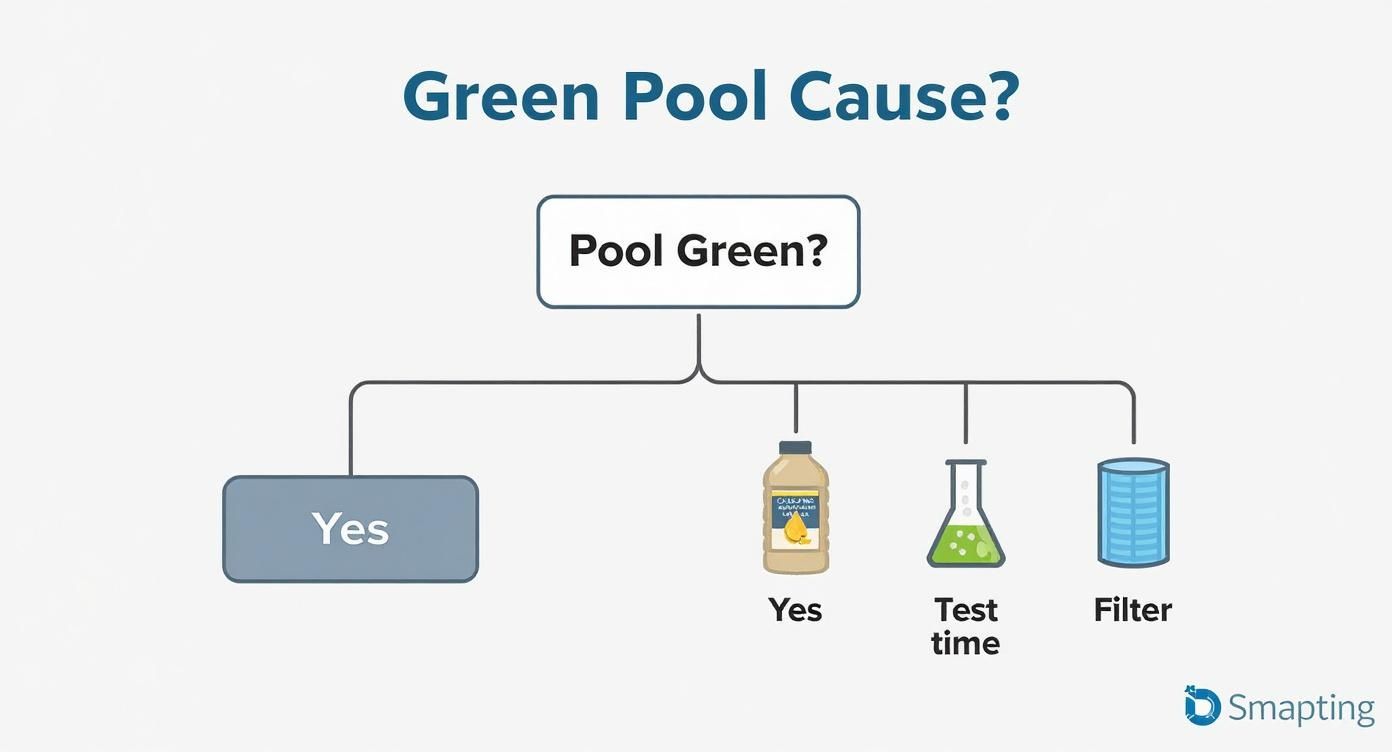
As the chart shows, low chlorine, high pH, and a dirty filter are the usual suspects. They’re the first things you should be checking.
Conduct a Comprehensive Water Test
A visual check gets you in the ballpark, but a good water test gives you the hard data you can’t argue with. You simply can't fix what you can't measure. You need to test for a full range of chemical levels to get the complete picture.
The results tell a story. Seeing zero free chlorine is an obvious smoking gun for an algae bloom. But sometimes it’s more subtle. You might have plenty of chlorine, but a high pH (anything over 7.8) is handcuffing it, making it useless. Down here in Southwest Florida, low cyanuric acid (your pool's sunscreen) is another common culprit, as the intense sun will burn off unprotected chlorine in just a few hours. Don't skip this—it’s the most critical step in your investigation.
The Overlooked Clue: Phosphates
Ever feel like you’re stuck in a loop? You shock the pool, it clears up, and a week later, it’s green again. If that sounds familiar, you probably have a phosphate problem. Phosphates are basically junk food for algae, and they sneak into your pool from things like fertilizer, lawn clippings, and even the municipal water supply.
When phosphate levels climb above 500 ppb (parts per billion), they create an all-you-can-eat buffet that fuels explosive algae growth. You can learn more about how these nutrients feed algae from a report by MarketsandMarkets.com.
Think of it this way: shocking your pool is like weeding a garden. But if the soil is loaded with fertilizer (phosphates), the weeds will be back with a vengeance in no time. You have to remove the food source to break the cycle.
Don't Forget Your Equipment
Finally, give your pool’s circulation and filtration system a quick once-over. Your pump and filter are the heart and lungs of your pool; if they aren't working right, your water quality will nosedive no matter how many chemicals you add.
Check these two key players:
- Your Filter: Take a look at the pressure gauge. Is the reading 8-10 PSI higher than its normal "clean" pressure? If so, the filter is clogged with gunk and needs a good backwashing or cleaning. A dirty filter can’t pull dead algae and other contaminants out of the water.
- Your Pump: Just listen to it. Does it sound strained? Any loud humming or grinding noises could mean the motor is on its way out. Also, pop open the lid and check the pump basket for leaves and debris that could be choking off the water flow.
Figuring all this out can feel overwhelming, especially when you just want to swim. If you’ve gone through these steps and are still stumped, or if the problem feels bigger than a DIY fix, that's what we're here for. The team at Water Medic of Cape Coral can run expert diagnostics to get to the root of the problem and get your pool back to crystal clear in no time.
Your Step-by-Step Green Pool Rescue Plan
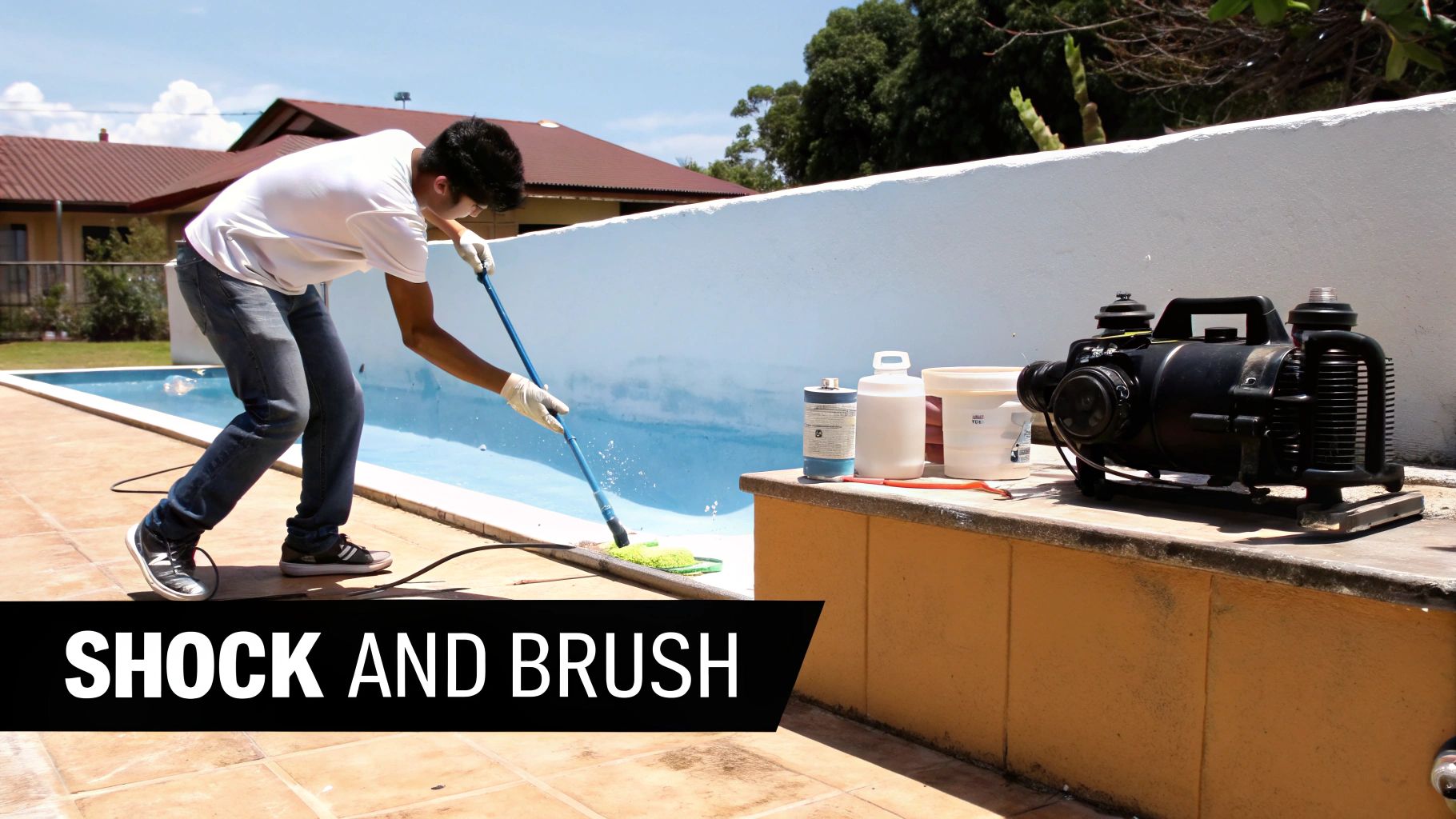
Alright, you've figured out why your pool looks more like a swamp. Now it's time to roll up your sleeves and take it back. Think of this as your battle plan for turning that murky green water back into the sparkling blue oasis you love.
The secret here is patience and following the steps in the right order. Each action paves the way for the next, so resist the urge to jump ahead. Trust me, being methodical now will save you a ton of time, money, and frustration down the road.
Step 1: Start With Physical Removal
Before you even think about adding chemicals, grab your pool brush and get to work. The first move is a good old-fashioned physical assault on the algae.
You need to brush everything—walls, floor, steps, ladders, and any little nooks and crannies. This isn't just for looks. Brushing physically breaks up the algae's slimy protective layer, known as a biofilm. Tearing down this shield is what allows your chemicals to actually get in and do their job.
Step 2: Balance Your Water Chemistry First
This is where so many people go wrong, but it’s absolutely critical: do not add shock yet. I can't stress this enough. Shocking a pool with wonky chemistry is like trying to put out a fire with a leaky hose—you’ll use a lot of effort for very little effect.
Your chlorine shock will be seriously handicapped if the pH and alkalinity are out of whack. So, test your water first and get these levels dialed in:
- pH: Aim for 7.4 to 7.6
- Alkalinity: Should be between 80 and 120 ppm
Getting these right first unlocks the full potential of your chlorine, giving you the best shot at knocking out the algae in one go.
Think of pH as the key that turns on your chlorine's power. If the pH is wrong, the chlorine is just floating around, unable to sanitize effectively. This is a huge reason pools turn green even when owners swear they've added enough chlorine.
Step 3: Shock The Pool Hard
With your water chemistry perfectly balanced, it's time for the main event. "Shocking" simply means giving your pool a massive, overwhelming dose of chlorine to kill off the algae and anything else living in there. This is also called super-chlorination.
Now is not the time to be shy. For a green pool, you’ll likely need a double, or even triple, dose of what the package recommends, depending on how bad the situation is. Always add shock in the evening after the sun has gone down. The sun’s UV rays are brutal and can burn off up to 90% of unstabilized chlorine in just a couple of hours. Shocking at night gives it a full, uninterrupted window to work its magic.
Step 4: Run The Pump And Filter Continuously
You’ve added the shock, but your job isn't done. Your pump and filter are the cleanup crew, and you need to put them to work circulating the super-chlorinated water and pulling out all the dead algae.
Let your pump and filter run continuously—24 hours a day—until the water is no longer green. This constant circulation is non-negotiable. It keeps the dead algae from settling back on the bottom and ensures every last drop of water gets filtered and sanitized. Be prepared to clean or backwash your filter multiple times during this process; it’s going to be working overtime.
Step 5: Final Touches For A Crystal Clear Finish
After a day or two, you should see a big improvement. The water will likely look cloudy blue or grayish instead of green. That’s a great sign! It means the algae is dead.
To get that final sparkle, a little pool clarifier can work wonders. It acts like a magnet, clumping the tiny dead algae particles together so your filter can easily grab them. Add the clarifier, keep that filter running, and soon you'll have crystal-clear water again. For a deeper look at the cleanup process, this guide on how to effectively clean swimming pools is a solid resource.
Here’s a simple checklist to keep you on track as you work through these steps.
Green Pool Treatment Checklist
Following a checklist can help ensure you don't miss a beat when battling an algae bloom. Here’s a quick-reference guide to the process.
| Step | Action Required | Key Tip |
|---|---|---|
| 1 | Brush Pool Surfaces | Brush vigorously to break up the algae's protective biofilm before adding any chemicals. |
| 2 | Test & Balance Water | Adjust pH to 7.4-7.6 and Alkalinity to 80-120 ppm before shocking for maximum effectiveness. |
| 3 | Shock the Pool | Use a double or triple dose of shock at night to avoid chlorine burn-off from the sun. |
| 4 | Run Filtration System | Run the pump and filter continuously for at least 24-48 hours to remove dead algae. |
| 5 | Clean the Filter | Expect to backwash or clean your filter frequently as it collects the dead algae particles. |
| 6 | Add Clarifier (Optional) | Use a clarifier to help clump fine particles together, making them easier for the filter to catch. |
| 7 | Final Test & Balance | Once the water is clear, re-test all chemical levels and make final adjustments. |
This process definitely requires some elbow grease and the right chemistry. If you're looking at a particularly stubborn green monster or just don't have the time to tackle it, calling a pro is the fastest way to get your swim time back. Our expert green pool cleanup service handles all the heavy lifting and gets you reliable, guaranteed results.
Keeping Your Florida Pool Consistently Clear
It's one thing to win the battle against a green pool, but it’s another to win the war. The real victory lies in proactive, consistent maintenance. This is especially true here in Southwest Florida, where the intense sun and heavy rains are constantly trying to throw your pool's chemistry out of whack. The secret is shifting from a reactive "fix-it" mindset to a proactive one.
Think of it less as a chore and more as a small, regular investment in your backyard oasis. A little bit of attention each week saves you from the massive headache and expense of wrestling with a full-blown algae invasion down the road.
Building Your Proactive Maintenance Routine
A sustainable routine is the foundation of a permanently clear pool. Instead of waiting for trouble to show up, you stay one step ahead by keeping your pool’s defenses strong. This consistency is what prevents algae from ever getting a foothold in the first place.
Your weekly checklist should have a few non-negotiables:
- Frequent Water Testing: In our climate, you really need to test your water two to three times per week. This frequency lets you catch minor shifts in chlorine and pH before they spiral into a major, algae-friendly problem.
- Consistent Filter Operation: Circulation is your pool's lifeblood. During our long, hot summers, you absolutely must run your filter for 8-12 hours every single day. This ensures every drop of water gets properly sanitized and filtered.
- Regular Filter Cleaning: A clogged filter can't do its job, plain and simple. Whether you have a cartridge, sand, or D.E. filter, stick to a regular cleaning schedule. A clean filter is crucial for trapping and removing algae spores before they can multiply.
Taming the Florida Environment
Living in Southwest Florida means we face unique environmental challenges that directly mess with our pools. The relentless sun and sudden downpours are the main culprits behind a pool turning green. Knowing how to handle them is key. For homeowners here, understanding Florida's climate impacts on exterior features can shed light on just how tough our environment is on everything, including pools.
For example, always test your water right after a heavy rainstorm. Rain is acidic and chlorine-free, so it dilutes your carefully balanced chemicals and washes in contaminants that algae love to eat.
"Preventative maintenance is the most cost-effective solution for any pool owner. An hour of care spread across a week can prevent days of frustrating and expensive recovery from a green pool."
Another secret weapon in the fight against algae is phosphate management. Phosphates are basically algae superfoods, and they get into your pool from leaves, lawn fertilizers, and even your tap water. Adding a quality phosphate remover to your routine is a powerful move that essentially starves algae of its primary food source, making blooms far less likely.
Of course, not everyone has the time or the desire to be a part-time pool chemist. Juggling test kits, chemicals, and cleaning schedules can easily feel like a second job. That’s exactly why so many homeowners in Cape Coral and the surrounding areas decide to hand it over to a professional.
For those who just want to enjoy a pristine pool without the constant work, our professional services are the ultimate preventative measure. Exploring a monthly pool maintenance plan with Water Medic of Cape Coral takes all the guesswork and labor off your plate. We handle the chemistry, the cleaning, and all the preventative steps so you can just relax, confident that your pool is always swim-ready.
When to Call in a Pool Pro
Look, sometimes a green pool is more than a weekend project. It’s a sign that you’re out of your depth and it’s time to call in the experts. While you can often handle a light green haze with some elbow grease and the right chemicals, there are definitely situations where a professional touch is needed to keep you from throwing good money after bad.
If you can't see your feet in the shallow end, or if the water has gone from green to a dark, swampy black, it's time to put down the test strips and pick up the phone. This isn't just a minor algae bloom; it's a full-blown infestation that will laugh at standard shock treatments. Trying to tackle this yourself often turns into a frustrating, expensive cycle of buying more and more chemicals with zero results.
Signs It's Time for an Expert Diagnosis
Knowing when to wave the white flag can save you a ton of stress and cash. It’s not always about the color—sometimes the real problem is something you can't see, and that’s where a trained eye makes all the difference.
Here are the tell-tale signs that you need professional help:
- It Keeps Coming Back: You’ve shocked the pool, followed all the steps, and for a glorious day or two, it looks better. Then, the green creeps back in.
- Your Equipment is Acting Up: Are you hearing weird grinding or whining noises from your pump? Is the filter pressure gauge reading way too high or strangely low? Persistent algae can be a symptom of a bigger mechanical problem, and our crew has seen it all when it comes to pool equipment repair.
- You're Out of Time: Let's be honest, clearing a seriously green pool is an intensive, multi-day job. If you don't have the time to babysit the process, it's best to hand it off.
Here's the inside scoop: Professionals use commercial-grade chemicals and specialized tools that are way more potent than what you'll find at the pool store. We can quickly get to the root of the problem—whether it’s chemical, biological, or mechanical—and get your pool back to sparkling blue, fast.
The battle against algae is so widespread that it has created a huge industry. The swimming pool algaecides market was valued at an eye-watering $880 million in 2021 and is still growing, as detailed in this Cognitive Market Research report. That number alone shows just how common and stubborn this problem really is for pool owners everywhere.
If you're in Southwest Florida and staring at a pool you wouldn't dare dip a toe in, give Water Medic of Cape Coral a call. We’ll get it right the first time.
Your Green Pool Questions, Answered
When your pool turns a frustrating shade of green, a lot of questions pop up. Let's tackle some of the most common ones I hear from homeowners right here in Southwest Florida.
Is it Safe to Swim in a Green Pool?
The short answer is a hard no. I can't stress this enough—it's a bad idea. That green color is a massive algae bloom, which means the chlorine that's supposed to be sanitizing your water is completely gone.
Without chlorine, your pool becomes a breeding ground for nasty bacteria like E. coli. This can lead to skin rashes, ear infections, and stomach bugs. On top of that, the murky water is a serious safety hazard; you can't see the bottom, making it dangerous for swimmers of all ages.
How Long Until My Pool is Blue Again?
That really depends on just how green we're talking. If you've just noticed a light green haze, you can often turn it around in 2-4 days with the right chemical shock and running your filter 24/7.
But if you're looking at a dark green, swamp-like mess, be prepared for a longer fight. A pool that far gone can take a week or more to fully recover. It often requires a multi-step approach and professional-strength treatments to get it back to sparkling clear.
How Did My Pool Turn Green Overnight?
It’s shocking how fast it can happen, isn't it? A pool can go from clear to green in what feels like the blink of an eye when a "perfect storm" of conditions hits.
This usually happens when your free chlorine level suddenly drops to zero. A heavy Florida downpour can dilute the chemicals, or a weekend pool party can use up all the sanitizer. Combine that with our warm, sunny weather, and dormant algae spores explode into a full-blown bloom in a matter of hours.
Tired of battling the green monster on your own? The team at Water Medic of Cape Coral can handle it. We specialize in fast, effective green pool cleanups and can set you up with a maintenance plan to keep it from happening again. Get your free estimate today!