Explore will reverse osmosis remove chloramine: your guide to safe water
Let's get right to it: a reverse osmosis (RO) membrane by itself is not effective at removing chloramine. That's the short answer. But a complete RO system? That’s a whole different story—and it’s one of the best ways to get rid of it for good. The confusion comes from misunderstanding how all the parts work together.
The Truth About Reverse Osmosis and Chloramine

Many people think of "reverse osmosis" as a single filter, but it’s actually a multi-stage process working in concert. The RO membrane is the star of the show, a semi-permeable layer with microscopic pores that rejects just about every contaminant you can think of.
But this powerful membrane has an Achilles' heel: chloramine.
Think of your RO membrane like a high-security vault door. It’s built to stop almost anything from getting through. Chloramine, however, isn’t trying to sneak past—it’s more like a slow-acting acid that eats away at the door itself, causing permanent damage. For homeowners here in Southwest Florida, where our municipal water is treated with this exact chemical, that's a detail you can't afford to ignore.
Why Pre-Filtration Isn't Just a Suggestion
This is where the other stages of a complete RO system come into play. To protect the delicate RO membrane, you absolutely need a specialized pre-filter designed to tackle chloramine. This isn't an optional upgrade; it's a critical component for the system's longevity and performance.
This pre-filter acts like a bodyguard, intercepting and neutralizing the chloramine long before it has a chance to reach the main membrane.
When it comes to chloramine—a more stable disinfectant used by over 1 in 5 U.S. public water systems—RO alone falls short. Without pretreatment, RO membranes exposed to 2-3 ppm chloramine can suffer irreversible permeability losses of up to 50% within just 48 hours. Discover more about these critical findings on membrane technology.
To get the full picture, it helps to see how a complete RO setup compares to the various water filtration systems on the market. That context really drives home why an integrated, multi-stage solution is far better than a single, standalone filter.
At Water-Medic, we build our systems specifically for the unique water conditions here in Southwest Florida. We make sure your investment is protected and your family gets the pure, clean water you deserve.
Chloramine vs RO System Components At a Glance
To make it even clearer, here’s a quick breakdown of how each part of a properly designed RO system handles chloramine. This table shows why the complete system works when the membrane alone can't do the job.
| System Component | Effectiveness Against Chloramine | Purpose in the System |
|---|---|---|
| Sediment Pre-Filter | None | Removes dirt, sand, and rust to protect other filters. |
| Carbon Pre-Filter | Poor to Fair (Standard) / Excellent (Catalytic) | Catalytic carbon is crucial for neutralizing chloramine before it reaches the membrane. |
| RO Membrane | None (and is damaged by it) | Rejects dissolved solids like salts, lead, and fluoride. |
| Carbon Post-Filter | None (Chloramine should be gone) | Polishes the taste of the water before it reaches the faucet. |
As you can see, the pre-filter does the heavy lifting for chloramine removal, allowing the RO membrane to focus on what it does best. It truly is a team effort.
Why Is Chloramine in Your Water, Anyway?
You know that faint chemical smell or taste in your tap water? That’s almost always chloramine. Water treatment plants, particularly here in Southwest Florida, add this disinfectant to the public water supply to keep it free from harmful bacteria and viruses. They specifically choose it over the more traditional chlorine for one big reason: it lasts a lot longer.
Unlike free chlorine, which can break down and evaporate fairly quickly, chloramine is a much more stable compound. It’s created by mixing chlorine with a small amount of ammonia, which forms a tougher chemical bond. This added resilience is crucial for ensuring the water stays disinfected as it travels through miles and miles of pipes to reach your tap.
The Problem With Being Too Stable
But the very thing that makes chloramine great for the city—its stability—becomes a real headache once it gets to your house. Because it's designed not to break down easily, it's also much harder to filter out than regular chlorine.
Think of it like this: free chlorine is like a message written in chalk on a sidewalk. A little rain (or a basic filter) can wash it away pretty easily. Chloramine, on the other hand, is like permanent marker. It was designed to stick around, and it takes a lot more effort to remove.
This means that many standard water filters you might grab at the hardware store simply can't handle it. The chloramine molecules can pass right through, leaving you with water that still tastes and smells off.
For homeowners, this means the chemical intended to protect the water supply on its journey can become a persistent problem inside your home. It can degrade rubber gaskets, corrode metal fittings in your appliances and fixtures, and even affect your health over time.
Why a Standard Filter Just Won't Cut It
Because chloramine is so stubborn, removing it requires more than just a generic filter pitcher or a simple faucet attachment. It’s the single biggest reason why a targeted water purification strategy is so important for homes in our area. The systems we install at Water Medic are specifically engineered to break apart that tough chloramine bond before the water ever enters your home’s plumbing.
Understanding this key difference between simple chlorine and persistent chloramine is the first step. It clarifies why a professionally designed system isn't just an upgrade—it's essential for getting truly clean, safe, and great-tasting water in Southwest Florida. If you’re serious about fixing your water issues, looking into a whole house reverse osmosis system is the most effective path forward.
The Hidden Damage Chloramine Does to RO Membranes
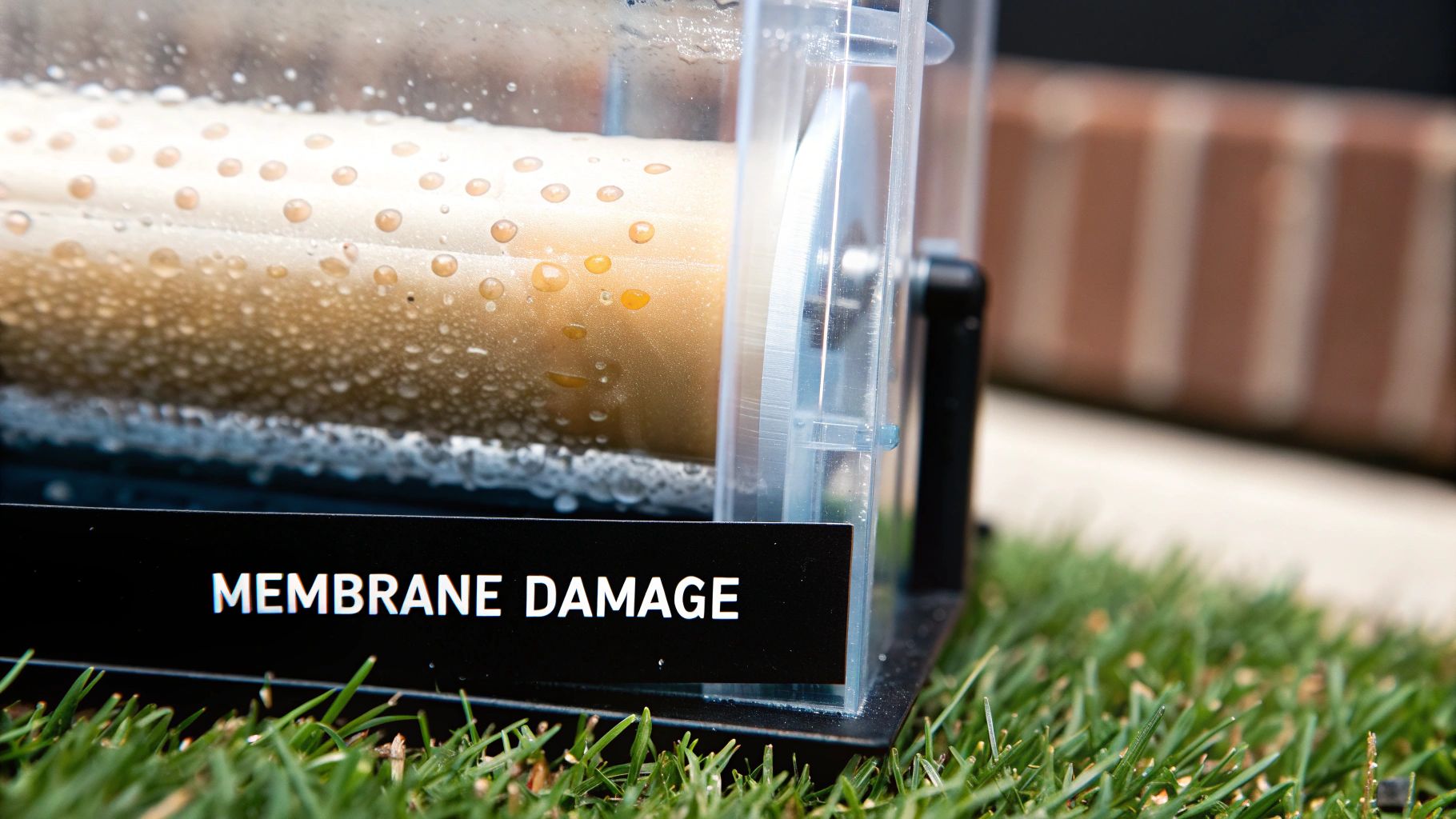
To really get what's happening here, think of your reverse osmosis membrane as a high-tech filter with pores so tiny they let almost nothing but pure water molecules slip through. This is the heart and soul of your RO system.
Now, imagine chloramine isn't just another particle trying to squeeze through that filter. It’s more like a slow-acting chemical solvent. While free chlorine is aggressive, punching big, obvious holes in the membrane almost instantly, chloramine’s attack is much sneakier. It works by slowly breaking down the membrane material itself, weakening its structure and clogging up those all-important pores over time.
This gradual decay is the silent killer of water purification systems. It’s a slow-burn destruction that you probably won’t even notice until the damage is done.
The Slow Fade of Your System’s Performance
The first signs of chloramine damage are easy to mistake for normal wear and tear. You might see a slight dip in water pressure at the RO faucet. Maybe you'll notice the system seems to be running longer and longer just to fill its tank. That's because the membrane is getting clogged and damaged, forcing it to work harder and less efficiently.
This drop in efficiency sets off a chain reaction of problems:
- Less Pure Water: Your system just can't produce the same volume of clean water it used to.
- More Wastewater: A struggling membrane pushes more tap water down the drain as waste, which can quietly increase your water bill.
- Lower Quality Water: This is the big one. A compromised membrane can't properly block contaminants, which completely defeats the purpose of having an RO system in the first place.
This isn't just theory—it's a well-documented issue. A 2023 study showed that RO membranes exposed to chloramine experienced permeability losses of 20-50%, even after experts tried to clean them. This really highlights the danger of letting chloramine get anywhere near your membrane. You can read more about the study's findings on membrane performance to see the data for yourself.
Protecting Your Investment
In the end, this silent damage turns a fantastic home investment into a frustrating and expensive headache. You're left facing premature membrane replacements or even a complete system failure.
That's why protecting the membrane with the right pre-filtration isn't just a good idea—it's essential for ensuring your RO system delivers the pure, safe water you expect for years to come. It’s also why our approach at Water Medic always starts with building a robust defense against chloramine, specifically designed for the water we see here in Southwest Florida.
How Catalytic Carbon Pre-Filtration Solves the Problem
Now that we know how destructive chloramine can be, the solution becomes much clearer. The real secret to making a reverse osmosis system last isn’t about finding a tougher membrane; it's about installing a smarter pre-filter to protect it.
This is exactly where catalytic carbon comes in. Think of it as the essential bodyguard for your entire RO system.
Unlike standard activated carbon, which basically just traps contaminants like free chlorine on its surface, catalytic carbon works on a whole different level. It acts as a catalyst—meaning it actively forces a chemical reaction to happen much faster without getting used up in the process.
It’s this unique ability that makes it a game-changer for tackling chloramine.
The Chemical Breakdown Process
When water treated with chloramine passes over catalytic carbon media, it triggers a reaction that snaps the stubborn chemical bond holding the chlorine and ammonia together. This isn't just trapping the contaminant; it's completely dismantling it.
The chloramine is broken down into harmless chloride, nitrogen gas, and water. This all happens before the water ever gets near your expensive RO membrane, neutralizing the threat entirely. It's the critical first step that protects your investment and keeps your system running at peak performance for years.
At Water Medic, we consider high-grade catalytic carbon a non-negotiable part of any RO system we install in Southwest Florida. It’s the only way to guarantee a system is truly built to handle our region's specific water challenges and will perform flawlessly over the long haul.
If you're curious about the nitty-gritty, learning more about the differences between standard and advanced carbon filters really highlights why this specific technology is so vital for our local water.
Comparing Water Filter Media for Chloramine Removal
To really see why catalytic carbon is the only serious choice for homes dealing with chloraminated water, it helps to put it side-by-side with the standard alternative. This table spells out the key differences.
| Filter Type | Mechanism | Effectiveness on Chloramine | Recommended Use Case |
|---|---|---|---|
| Standard Activated Carbon | Adsorption (traps contaminants on its surface) | Very Low to Poor. It quickly becomes saturated and is ineffective against the stable chloramine bond. | Best for removing free chlorine, tastes, and odors in water supplies not treated with chloramine. |
| Catalytic Carbon | Catalysis (promotes a chemical reaction) | Excellent. It actively breaks down the chloramine molecule into harmless components. | Essential for pre-filtering water in any RO system installed in areas with chloraminated municipal water. |
At the end of the day, choosing catalytic carbon isn't just about getting slightly better filtration. It’s about providing the specific protection that makes the whole RO process viable in the first place. You wouldn't use a screwdriver to hammer a nail, and you shouldn't use a standard carbon filter for a job that demands a catalytic one.
Designing Your Ideal Whole House RO System
You can't just walk into a big-box store and grab a reverse osmosis system off the shelf for a home in Southwest Florida. It simply won't work. Our local water chemistry is unique, and it demands a solution engineered specifically for it—not some one-size-fits-all box.
A generic system will almost certainly fail prematurely when it comes up against the high levels of chloramine common in our municipal water. It's just not built for the job.
That’s precisely why our process at Water Medic always starts with a detailed, professional water analysis right at your tap. We need to know exactly what we're dealing with, from the specific concentration of chloramine to other troublemakers like sediment or hardness minerals. This data becomes the blueprint for building your system.
Tailoring a System for Your Home's Needs
Once we have a clear picture of your water chemistry, we look at your household's daily water usage. A standard under-the-sink RO unit might produce 10-35 gallons of treated water per day, but that’s usually just for drinking and cooking. A whole-house solution has to handle every tap, every shower, and every appliance.
Our goal is to design a multi-stage system that's perfectly sized and calibrated for your home. This ensures every component works in harmony—from the all-important catalytic carbon pre-filter to the high-rejection RO membrane itself. We don't just sell water filters; we engineer complete, long-term water quality solutions. To get a better feel for how all the pieces fit together, take a look at what goes into a whole house reverse osmosis system.
The blanket statement that "RO doesn't remove chloramine" is technically true for the membrane alone, but it's incredibly misleading. A professionally designed system with the right catalytic carbon pre-filters will eliminate 95-99% of chloramine, protecting the RO membrane and ensuring pure water throughout your home.
This diagram shows how simple but effective the process is when you have the right setup.
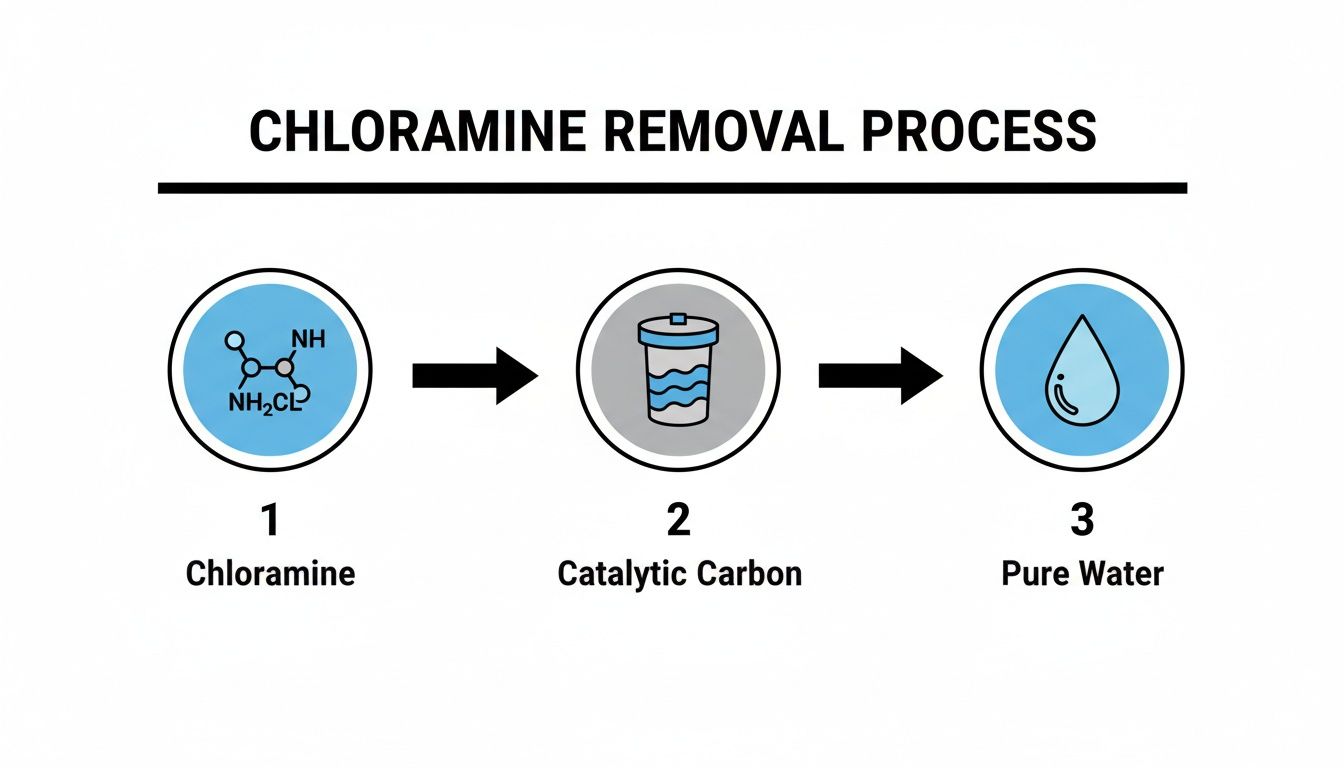
The key takeaway is that the catalytic carbon stage acts as the system's bodyguard. It neutralizes the chloramine threat before it can do any damage, allowing the RO membrane to focus on what it does best: producing pure water.
From Design to Flawless Operation
Assembling a robust, multi-stage water treatment system is a complex job. Every part has to integrate perfectly with the others to work efficiently. For those curious about the technical side, understanding the role of a system integrator offers some great perspective on how these different technologies are brought together to function as a single unit.
Think of Water Medic as your personal system integrator. We handle the entire process, from the initial testing and custom design to the professional installation and ongoing maintenance. This approach ensures your system isn't just installed—it's optimized to deliver safe, great-tasting, and chloramine-free water from every faucet in your home for years to come.
Protecting Your Investment with Proper Maintenance

A whole-house reverse osmosis system is a serious investment in your home’s value and your family's health. Keeping it running at peak performance is surprisingly straightforward, but it hinges on one critical thing: consistent, scheduled maintenance to shield its delicate parts from the harsh effects of chloramine.
The real hero in this fight is your catalytic carbon pre-filter. This is your system’s first line of defense, and it needs to be replaced on a regular schedule. If you forget, chloramine will eventually "break through" the exhausted filter and begin to silently destroy the expensive RO membrane.
Why Regular Filter Changes Are Non-Negotiable
The RO membrane is the heart of your system and is designed to last for years—but only if it’s protected from disinfectants. Think of the pre-filter as a bodyguard for a VIP. As long as the bodyguard is strong, the VIP is safe. The moment the bodyguard is taken out, the VIP is completely exposed.
Sticking to a maintenance schedule isn't just about replacing parts; it’s about guaranteeing your system does its job day in and day out. Here’s what a professional service plan really delivers:
- Peak Efficiency: With fresh filters, your system produces the purest water possible without wasting extra water or energy.
- Maximum Protection: It's the only way to be certain the RO membrane is never exposed to destructive chloramine.
- Consistent Water Quality: You’ll never have to second-guess the purity, taste, or safety of your tap water.
- Longevity: Proper care dramatically extends the life of your entire system, safeguarding your initial investment.
Here at Water Medic, we take the guesswork out of maintaining your system. We believe you should be focused on enjoying your clean water, not trying to remember when a filter needs changing.
That's exactly why we developed our comprehensive monthly maintenance plans, specifically tailored for the tough water conditions here in Southwest Florida. Our service covers scheduled filter replacements, system pressure checks, and a complete performance inspection.
Let our expert technicians worry about the details. You just turn on the tap and enjoy the peace of mind that comes with pure, safe water, hassle-free. We’ll make sure your system is always running like new, giving your family the high-quality water they deserve.
Got Questions About Chloramine and Your RO System? We've Got Answers.
When it comes to your home's water, it's natural to have questions. We talk to homeowners every day who are trying to sort through the noise and figure out the best way to get clean, safe water. Here are some of the most common questions we hear, answered straight from our experts.
How Can I Tell If My Water Has Chloramine?
The first place to look is your annual water quality report. Your local Southwest Florida utility usually posts this right on their website, and it'll tell you if they use chloramine as a disinfectant.
But here’s the thing: that report gives you a system-wide average, not the specific concentration flowing out of your kitchen tap. For a truly accurate picture, you need a professional water test. That's why we offer a free water analysis—to show you exactly what's in your water so we can build a system that actually fixes the problem.
Is It Really That Bad to Drink Chloramine?
Technically, water treated with chloramine meets the EPA’s minimum safety standards. But "safe" and "ideal" are two very different things. We regularly hear from people who experience skin and respiratory irritation from it, and for fish or other aquatic pets, it's flat-out toxic.
Beyond the health concerns, chloramine leaves a distinct chemical taste and smell in your water and can slowly eat away at rubber gaskets and plumbing fixtures. A properly designed reverse osmosis system doesn't just reduce it—it gets rid of it completely, giving you truly pure water and total peace of mind.
Just because your water meets the city's standards doesn't mean it meets your family's standards. Removing chloramine means better-tasting water, a healthier home, and one less potential irritant for sensitive family members.
Can't I Just Slap a Carbon Filter on My Current System?
This is a big one, and the answer is crucial: no, not just any carbon filter will do. Your standard activated carbon filter—the kind you find in a pitcher or a basic under-sink system—is completely ineffective against chloramine. The chemical bond is just too strong for it to break.
To tackle chloramine, you need a special type of filter called a catalytic carbon filter. And it’s not just about the material; it has to be correctly sized for your home's flow rate and the specific chloramine levels in your water. Getting this right is what we do. We'll make sure your system is configured to not only remove 100% of the chloramine but also to protect your expensive RO membrane, keeping it running perfectly for years.
Ready to get rid of that chemical taste for good? Trust the experts at Water Medic of Cape Coral to design and install the perfect whole-house RO system for your home. Schedule your free water analysis today!