
Why Does Well Water Smell Like Sulfur? Causes & Solutions
If your well water has that distinct sulfur smell, the culprit is almost always hydrogen sulfide gas (H₂S). It's a natural byproduct of certain bacteria that can live in your groundwater, the well itself, or even your plumbing. The result is that unmistakable rotten egg odor.
While it can be alarming, it's a very common issue for homeowners with private wells—and thankfully, it's one that can be solved with the right professional help.
That "Rotten Egg" Smell in Your Well Water: What's Going On?

It’s definitely unsettling to turn on a faucet and be hit with a foul smell. Your mind probably races with questions: Is my water safe to drink? What on earth is causing this? And how do I make it stop? The good news is, you're not alone, and our team at Water Medic has proven, effective ways to get your water back to being fresh and clean.
The rotten egg smell comes from a specific kind of bacteria known as sulfur-reducing bacteria. These little organisms thrive in low-oxygen environments, like the conditions found deep inside a well. As they go about their business, they produce hydrogen sulfide gas, which then dissolves into your water.
Our noses are incredibly sensitive to this gas. We can often detect its strong odor at concentrations as low as 0.5 mg/L, which is typically well below the level that would pose a health risk. You can find more details on the causes of sulfur in private well water.
Pinpointing the Source to Find the Solution
Before you can fix the problem, you have to figure out where it’s coming from. The sulfur smell can originate from a few different places, and pinpointing the source is the crucial first step to choosing the right treatment. Our team at Water Medic has seen it all, and we can help you diagnose the exact cause to ensure you get a solution that works for good.
The key takeaway is that a sulfur smell is more than just a nuisance; it's a clear signal that your well water chemistry is out of balance. Addressing it not only eliminates the odor but also protects your plumbing and appliances from potential long-term damage.
To help you get a better handle on what might be happening, here's a quick breakdown of the common culprits. The table below outlines the primary causes, the signs you'll notice, and a preview of the solutions we often recommend to get your water back to normal.
Quick Guide to Sulfur Smell in Well Water
| Primary Cause | Key Signs & Symptoms | Potential Solutions |
|---|---|---|
| Sulfur-Reducing Bacteria | The rotten egg smell is present in both your hot and cold water. | Shock Chlorination, Aeration Systems, Oxidation Filters |
| Water Heater Reaction | The smell is only present—or much stronger—in the hot water. | Water Heater Maintenance, Anode Rod Replacement |
| High Sulfate Levels | Along with a smell, you might notice an unpleasant taste or even experience laxative effects. | Reverse Osmosis Systems, Distillation |
Understanding these distinctions is the first step toward reclaiming your water. Once you know whether the issue lies with bacteria in the well, a reaction in your water heater, or something else entirely, you can move forward with a targeted and effective solution.
Uncovering the Source of Hydrogen Sulfide
To get rid of that rotten egg smell for good, you have to play detective. The first and most critical step is figuring out exactly where the hydrogen sulfide gas is coming from. While the smell is unmistakable, the source can differ, and knowing the culprit is key to finding a real solution. It almost always boils down to one of two places: your well itself or your water heater.
The usual suspect is a group of naturally occurring microbes called sulfur-reducing bacteria (SRB). Picture these organisms as tiny, invisible factories living deep in your groundwater. They love oxygen-poor environments, which is a perfect description of the conditions inside a well and the aquifer it draws from.
These bacteria are harmless to your health, but they have a peculiar appetite. They feed on naturally occurring sulfates in the soil and rock, and through their metabolism, they convert those sulfates into hydrogen sulfide gas. That gas dissolves into your water, just waiting to escape the moment you turn on a tap.
The Biological Factory in Your Well
If sulfur-reducing bacteria are the problem, you'll probably notice the smell in both your hot and cold water. The odor might seem much stronger after the water has been sitting stagnant in the pipes overnight, like when you first use the sink in the morning. This happens because the gas has had more time to build up.
Dealing with SRB is about more than just getting rid of a bad smell. Their presence means a biological process is happening in your water supply that needs to be handled correctly. Guessing at a solution can be a costly mistake that leaves you right back where you started.
Pinpointing the true source—whether it's widespread bacteria in the well or a specific reaction in your home's plumbing—is the difference between a temporary fix and a permanent solution. This is where professional diagnosis becomes invaluable.
When Your Water Heater Is the Problem
Sometimes, the issue isn't coming from deep underground but from right inside your home. If you only notice that sulfur smell when you turn on the hot water, the problem is almost certainly your water heater. This is a very common scenario and points to a specific chemical reaction.
Most water heaters have a component called an anode rod. This rod, typically made of magnesium, is a sacrificial part designed to corrode away to protect the steel tank from rust. The problem is, when this magnesium rod sits in hot water with a high sulfate content, it can react with the sulfates to produce hydrogen sulfide gas.
The heat inside the tank acts like an incubator, speeding up this reaction and creating a perfect environment for that rotten egg smell. The gas is then delivered exclusively through your hot water taps. You might also notice the odor is strongest at faucets closest to the water heater.
Correctly identifying this as the source often leads to a much simpler fix. For more complex issues tied to your well system's plumbing and equipment, exploring professional well water repair services is the best way to ensure every part of your system is working as it should.
What Hydrogen Sulfide Does to Your Health and Home
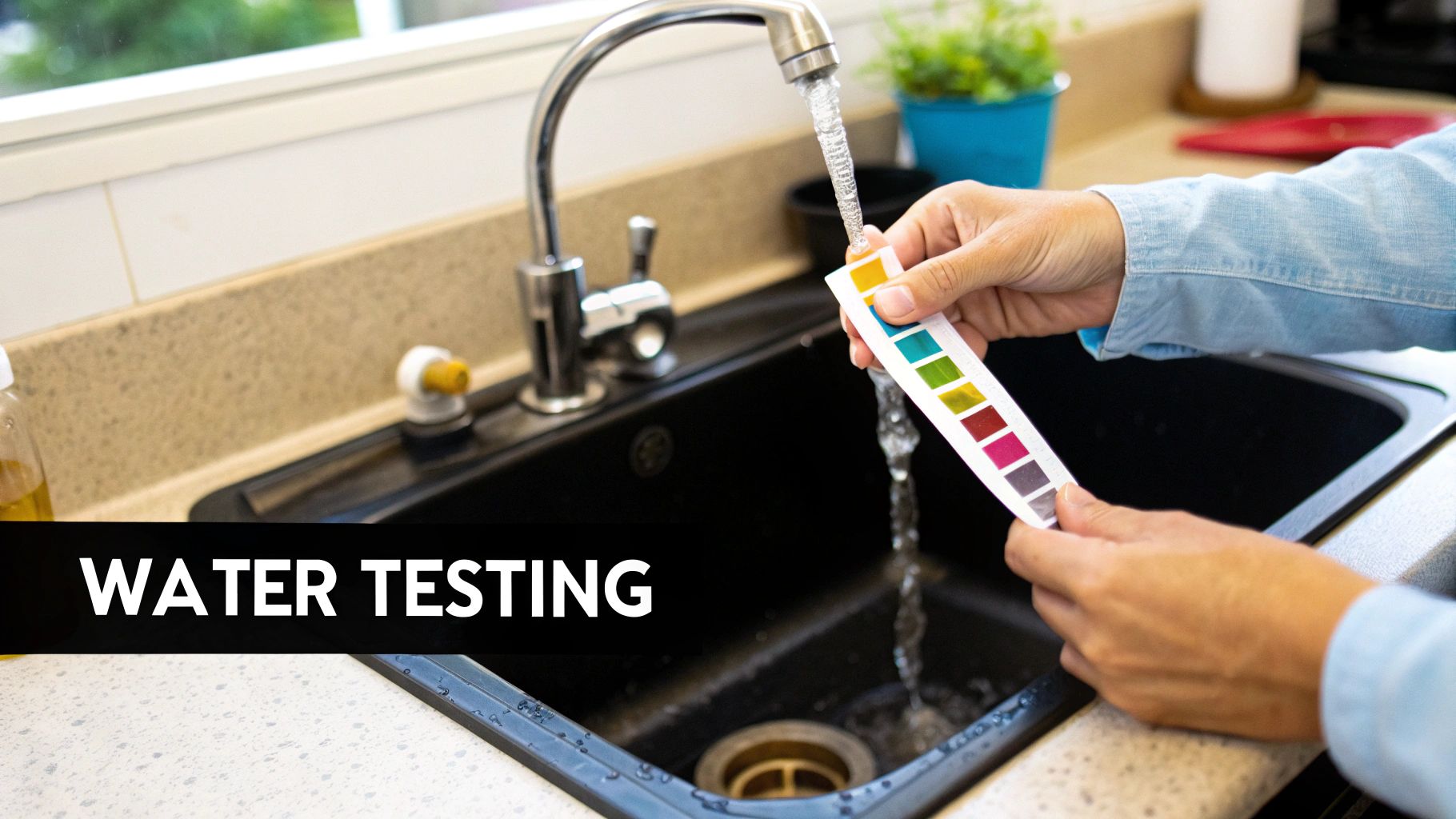
When that rotten egg smell hits you, your first thought is probably, "Is this safe to drink?" Let’s get that out of the way first. The good news is that in most home wells, the concentration of hydrogen sulfide gas is low enough that it isn't a direct health hazard when you drink it.
But don't breathe a sigh of relief just yet. Just because it's not immediately dangerous to your health doesn't mean it's harmless. The real threat is often a quiet, slow-moving one—waging a war against your home's infrastructure and your daily quality of life.
The gas behind the smell, hydrogen sulfide (H₂S), is incredibly corrosive. So, when you ask, "Why does my well water smell like sulfur?" you're not just noticing an odor. You're getting a warning sign of a potentially destructive problem brewing in your pipes.
The Hidden Damage to Your Plumbing
Hydrogen sulfide turns your water slightly acidic, and that’s terrible news for metal pipes. It goes to work on just about everything—copper, iron, even steel—aggressively eating away at them from the inside out. This isn't just a surface-level problem; it can lead to some seriously expensive headaches down the road.
Over time, this constant exposure can thin your pipe walls, eventually leading to those dreaded pinhole leaks. These tiny leaks are the worst because they often hide inside walls or under floors, slowly causing water damage and mold growth. By the time you notice them, you're looking at repairs that go way beyond a simple plumbing fix. Learning the early signs of plumbing corrosion is your best defense against a minor issue spiraling into a major expense.
The cost of ignoring a sulfur smell almost always ends up being far greater than the cost of a proper water treatment system. Think of it as an investment—not just for your comfort, but for protecting the long-term value and integrity of your home.
It's More Than Just a Bad Smell
Beyond the very real risk to your plumbing, hydrogen sulfide just makes daily life unpleasant. The problems go far beyond the smell itself and can worm their way into everything from your laundry routine to your morning cup of coffee.
You'll start to notice other frustrating side effects, like:
- Tarnished Silverware: That gas will quickly tarnish silver and other metal utensils, making them look dirty and old.
- Ruined Beverages: It gives water a foul, bitter taste that completely ruins the flavor of coffee, tea, and anything else you make with it.
- Ugly Stains: Hydrogen sulfide is famous for leaving stubborn black or yellow stains on sinks, toilets, and bathtubs.
- Discolored Laundry: It can also cause dingy yellow or gray stains on your clothes, making them look worn out no matter how much you wash them.
While these might seem like small annoyances at first, they add up. They become a constant source of frustration. Getting to the root of the problem with a professional water treatment solution from Water Medic doesn't just get rid of the odor—it puts an end to all these daily battles, restoring your water and your peace of mind.
Why Professional Water Testing Is Essential
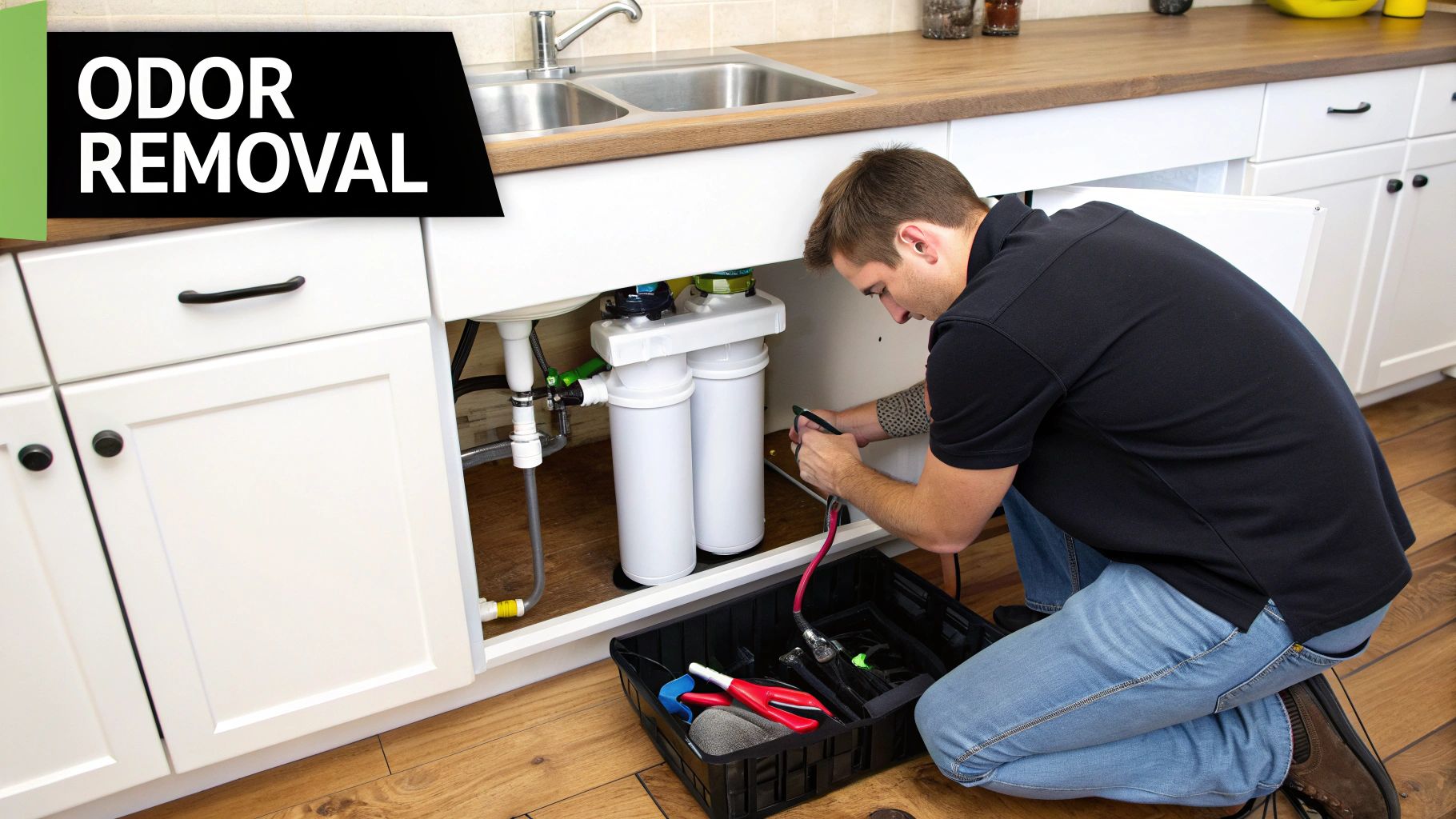
While your nose is great at telling you something's wrong, a simple "sniff test" can't diagnose the root of the problem. Guessing at the cause is a surefire way to waste time and money on the wrong equipment. That’s why getting your water professionally tested isn't just a good idea—it's the only way to get a real solution.
Think of a comprehensive water analysis as a diagnostic report for your well. It doesn't just confirm the obvious (that you have hydrogen sulfide); it reveals the exact concentration of the gas and a whole host of other factors that will make or break a treatment system.
Without this data, you’re flying blind. You could end up with a system that’s too weak to handle the contamination or one that clogs up in a month because it’s a bad match for your water’s unique chemistry.
What a Professional Test Uncovers
A professional test gives us the complete picture. Our technicians don't just look for one culprit; they analyze all the key players that contribute to water quality and help us pinpoint a permanent fix.
We measure several key factors, including:
- Hydrogen Sulfide Concentration: Knowing the exact parts per million (PPM) of H₂S is critical. It tells us how powerful your treatment system needs to be.
- Iron and Iron Bacteria: These are common accomplices in sulfur-related issues. If you have them, they can foul up certain types of filters in no time.
- pH Levels: The acidity of your water has a huge impact on how well certain treatment methods, like oxidation or aeration, will work.
- Total Dissolved Solids (TDS): High mineral content can interfere with filtration and might mean you need a more robust solution.
Investing in a professional water test is the smartest move you can make to protect your home. It ensures you get the right equipment the first time, preventing frustrating follow-up calls and expensive system replacements.
Getting accurate information is the only way to choose the right path forward. A professional test is our roadmap, taking the guesswork out of the equation and putting you on the fast track to clean, fresh-smelling water. It's the foundational step that ensures any system we recommend will actually work for years to come.
Don't let that rotten egg smell disrupt your life any longer. Schedule Your Professional Water Test with Water Medic today and get a definitive solution tailored to your well.
Choosing The Right Well Water Treatment System
Once you have your professional water test results in hand, you can finally shift from diagnosing the problem to taking action. This is the most critical step—choosing the right treatment system to banish that rotten egg smell for good and protect your home's plumbing.
The secret is to match the technology to your well's specific water chemistry. What works wonders for your neighbor might not be the right fit for you. This is exactly why professional guidance is so important. Instead of taking a shot in the dark, you get a solution built on real data, ensuring your investment pays off.
Comparing Your Treatment Options
There are a few really effective ways to tackle hydrogen sulfide, but the three most common are aeration systems, oxidation filters, and activated carbon filters. Each one works a bit differently to get the gas out of your water, and each has situations where it shines.
An aeration system, for instance, is a fantastic solution for moderate to high levels of hydrogen sulfide. Think of it like letting your water breathe. The system injects a stream of air into the water, forcing the dissolved sulfur gas to come out of the solution before it ever reaches your taps. To see how this powerful, chemical-free method works, you can explore our advanced air injection oxidation systems. It’s a highly effective approach that doesn’t add a single chemical to your water.
Oxidation filters, on the other hand, use a special media that acts like a catalyst. It changes the hydrogen sulfide gas into tiny, solid particles of sulfur that can be easily filtered out. Meanwhile, activated carbon filters work like a high-tech sponge, absorbing the gas to get rid of the odor and improve the taste. They're best for really low levels of sulfur.
The most effective treatment is always the one tailored to your specific situation. A system designed based on precise measurements of hydrogen sulfide, iron, and pH levels will deliver reliable, long-lasting results without compromise.
To make things clearer, let's break down how these common treatment methods stack up against each other.
Comparing Hydrogen Sulfide Treatment Systems
Here’s a detailed look at the most common ways to treat sulfur in well water, outlining how they work, what they're best for, and what kind of upkeep they require.
| Treatment Method | How It Works | Best For | Maintenance Level |
|---|---|---|---|
| Aeration Systems | Injects air into the water, causing dissolved hydrogen sulfide gas to escape before it enters your plumbing. | Moderate to high levels of H₂S; also effective for removing iron. | Low to Moderate |
| Oxidation Filters | Uses a catalytic media (like manganese greensand) to convert H₂S into solid sulfur particles, which are then filtered out. | Low to moderate H₂S levels; can be combined with other treatments. | Moderate |
| Activated Carbon | Adsorbs small amounts of hydrogen sulfide gas, trapping it in the porous carbon media to remove odor and taste. | Very low levels of H₂S; often used as a final polishing filter. | High (media needs frequent replacement) |
Choosing the right system is a huge step, but remember that a little ongoing care will ensure it keeps working perfectly for years.
Why Maintenance Matters
Picking the right system is only half the battle. Regular, consistent maintenance is what guarantees it will keep performing at its best day in and day out. If you neglect your system, you’ll eventually notice that familiar sulfur smell creeping back in, and you could even risk damaging the equipment itself.
This image really highlights the difference between proactive care and just letting things go.
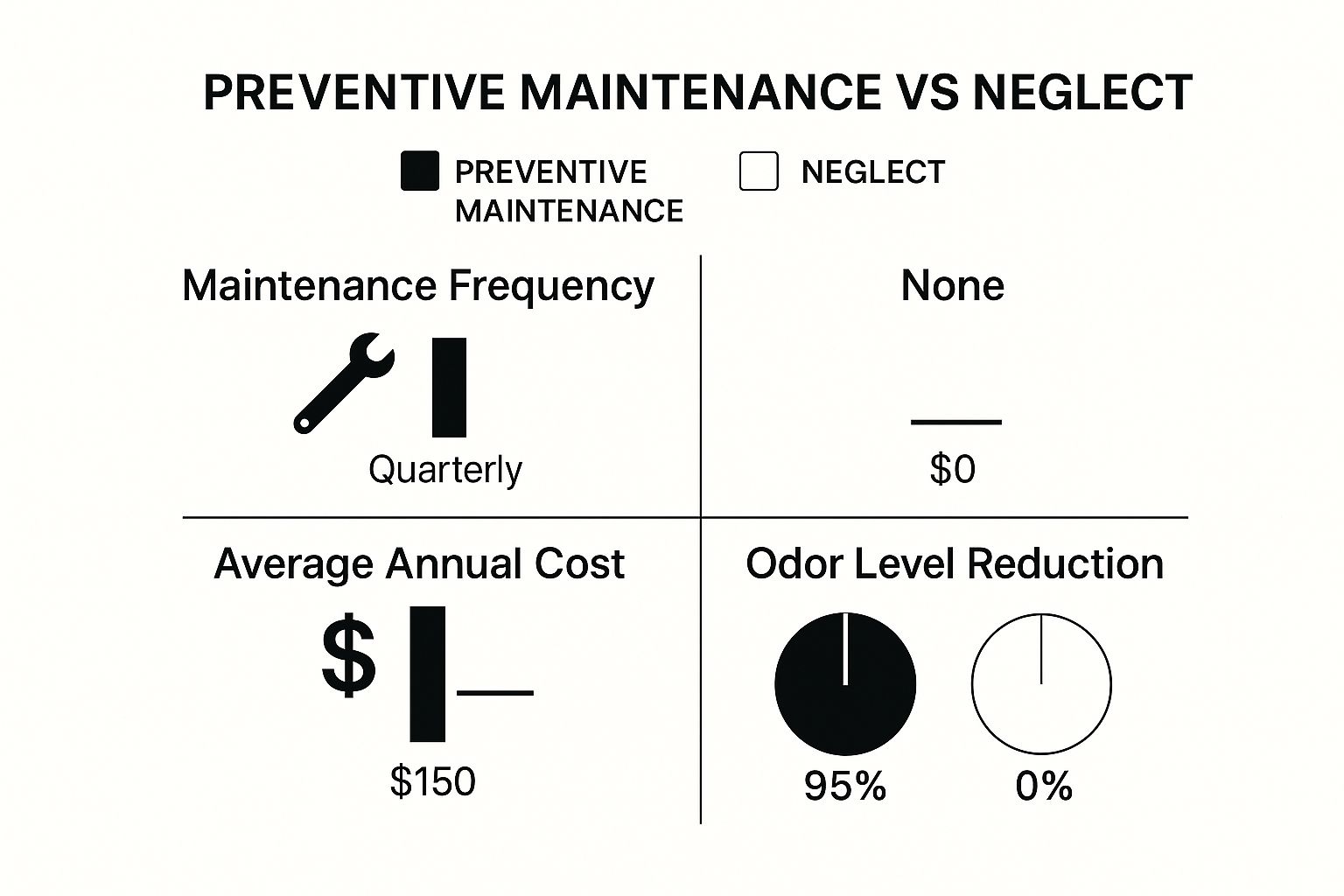
The data is clear: a small, consistent investment in maintenance brings a 95% reduction in odor. Neglect, on the other hand, costs you nothing upfront but leaves you with zero improvement. At Water Medic, we don’t just install the perfect system for your home; we also provide the ongoing service you need to keep your water fresh and clean for the long haul.
Got Questions About That Sulfur Smell? We've Got Answers.
When you're dealing with that rotten egg smell in your well water, a lot of questions pop up. Let's walk through a few of the most common ones we hear from homeowners just like you.
Why Does Only My Hot Water Smell Like Sulfur?
If you only notice the smell when you turn on the hot tap, the culprit is almost always your water heater.
Inside most water heaters, there's a component called an anode rod, usually made of magnesium. Its job is to prevent the tank from rusting out. The catch is, this rod can react with naturally occurring sulfates in your water, creating a little hydrogen sulfide gas factory right inside your tank. Often, simply swapping out that anode rod for a different type can fix the problem for good.
Why Does the Sulfur Smell Seem to Come and Go?
This is a classic sign that your well is being affected by what's happening outside.
Heavy rainfall, snowmelt, or big seasonal shifts can change the groundwater levels, washing new organic material or different types of bacteria into your well. When this happens, those sulfur-reducing bacteria can kick into high gear, producing that smell for a while until things settle down again.
Is It Safe to Shower in Water That Smells Like Sulfur?
Yes, from a health perspective, it's generally safe to shower. The low concentrations of hydrogen sulfide gas in most residential well water won't harm your skin.
The real issue isn't safety—it's the damage it's doing to your home. That sulfur smell is a red flag for corrosive conditions that can eat away at your pipes and fixtures, not to mention leave behind those ugly black or yellow stains on your sinks and tubs. Even for a milder odor, a good first step can be looking into activated carbon filters, which are great for improving your water's overall quality and protecting your plumbing.
Don't let questions or stubborn odors get the best of you. The team at Water Medic of Cape Coral has seen it all and has the right tools to pinpoint the problem and deliver a permanent solution for your well. Visit us at https://watermedic.com to get a professional water analysis on the calendar today.