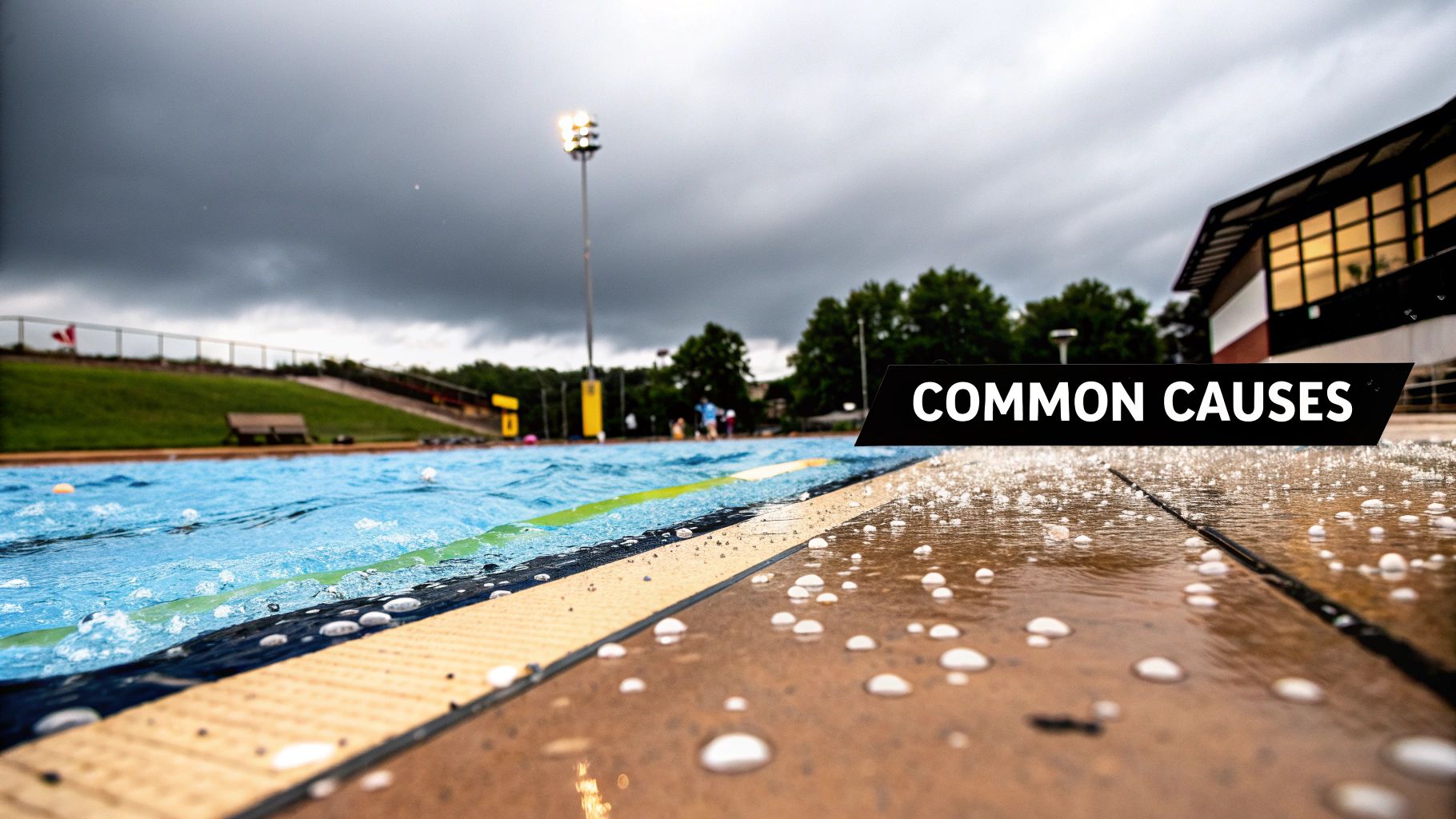
What Causes Cloudy Pool Water and How to Fix It
Staring into a murky, uninviting pool is one of the most common frustrations for any pool owner. But what causes cloudy pool water? The answer is usually simpler than you think. That haze is just millions of tiny particles suspended in the water, so small that they slip right through your filter.
More often than not, the root cause is a problem with one of three things: poor filtration, a chemical imbalance, or the very beginning of an algae bloom. Our expert team at Water Medic can quickly diagnose the issue and restore your pool's sparkle.
Your Guide to Diagnosing Cloudy Pool Water
Think of a cloudy pool as a symptom, not the disease itself. It's your pool's way of sending up a flare, signaling that something is off in its delicate ecosystem. The murkiness you see is caused by those fine suspended particles scattering light, which destroys that crystal-clear look we all want. These particles can come from just about anywhere, which is why a little detective work is the first step.
The good news? Fixing it is almost always a process of elimination. The three pillars of a sparkling clean pool—filtration, chemistry, and routine cleaning—are where the problem is hiding. When one of these pillars gets wobbly, it puts stress on the others, and cloudy water is often the first visible sign of trouble.
The Three Main Culprits
Getting to the bottom of what causes cloudy pool water means looking at the usual suspects first. These issues often team up, turning a perfectly clear pool into a milky mess in just a day or two.
Here are the most common problems we see:
- Filtration System Issues: Is your filter just plain dirty? It might be clogged, or maybe you're not running it long enough each day to keep up. A filter can't do its job if it's not given the chance. Our pool equipment repair services can ensure your system is running optimally.
- Imbalanced Water Chemistry: This is a big one. If your chlorine, pH, or alkalinity levels are out of whack, your sanitizer becomes sluggish and ineffective. This gives microscopic debris the green light to multiply.
- Environmental Factors: Mother Nature can undo your hard work in a hurry. A heavy downpour, a sudden pollen storm, leaves from a nearby tree, or even just a big pool party with lots of swimmers can overwhelm your pool's defenses.
When you can't see the bottom of your pool, it's more than just an eyesore—it's a serious safety hazard. Murky water can hide a swimmer in distress, which is why clearing it up quickly is so important.
Here’s a quick-glance table to help you start your diagnosis.
Common Causes of Cloudy Pool Water at a Glance
| Primary Cause | What to Check First | Ideal Reading or State |
|---|---|---|
| Poor Filtration | The pressure gauge on your filter. | 8-10 PSI above the "clean" reading indicates it's time to clean or backwash. |
| Low Free Chlorine | Your free chlorine (FC) test results. | Between 1.0 and 3.0 ppm. Anything lower won't sanitize effectively. |
| High pH / Alkalinity | Your pH and Total Alkalinity (TA) levels. | pH should be 7.4-7.6. TA should be 80-120 ppm. |
| Early-Stage Algae | The feel of the pool walls. | They should be smooth, not slimy or slippery. |
| High Contaminant Load | Recent weather or pool usage. | Heavy rain, pollen, or a lot of swimmers can overwhelm the system. |
This table points you in the right direction, but sometimes the problem is a combination of factors.
If you’ve run through the checklist and are still stumped, our professional pool diagnostic services can give you a fast and accurate answer. We'll take the guesswork out of the equation and get you on the fastest path back to a crystal-clear pool you can actually enjoy.
Is Your Pool Filter Working Hard Enough?
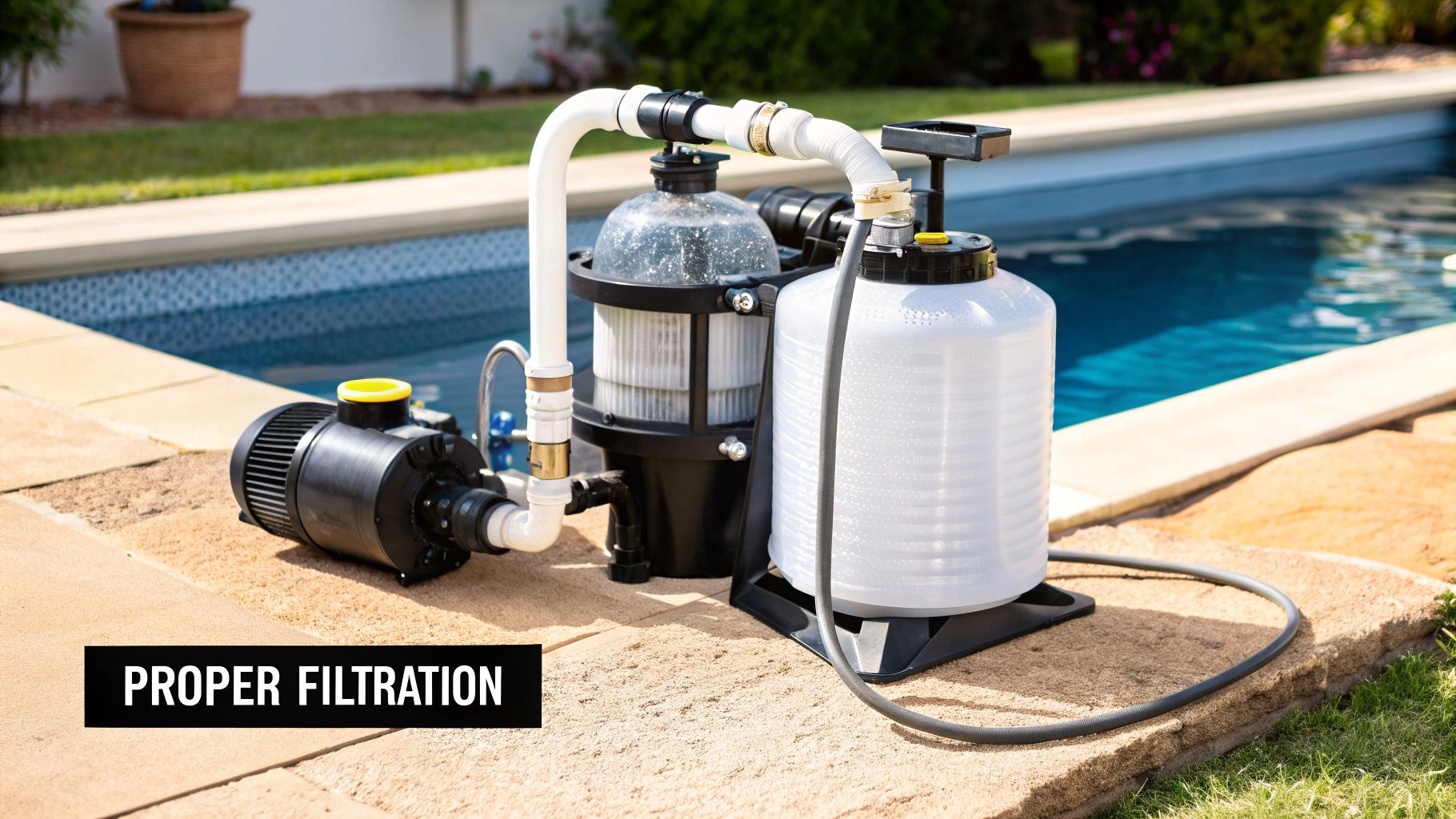
Think of your pool filter as the unsung hero of your backyard oasis. It works around the clock, like your own set of kidneys, constantly pulling impurities out of the water to keep it clean and safe. So, when your pool suddenly goes from crystal clear to frustratingly hazy, a struggling filter is one of the very first places to look.
If this critical piece of equipment isn’t performing at its best, it simply can’t trap the microscopic particles that make water look dull and milky. This doesn't always signal a major breakdown; often, it's just a sign that your system needs a little attention or a tweak in its daily routine.
The Importance of Circulation Time
One of the most common—and thankfully, easiest to fix—filtration problems is simply not running the pump long enough. For your filter to do its job, it needs enough time to pull the entire volume of your pool's water through its system.
Here in Southwest Florida, most pools need the pump running for at least 8-10 hours every day, especially during the peak of swim season. Trying to save a few bucks on the electric bill by cutting this short is a classic case of being penny-wise and pound-foolish. You'll almost certainly end up spending more on chemicals and extra cleaning to fix the cloudy mess that follows.
When the pump isn't running long enough, huge sections of your pool water sit stagnant. This gives contaminants a golden opportunity to build up much faster than your filter can ever hope to remove them, creating the perfect recipe for cloudy water.
Telltale Signs Your Filter Needs Help
Beyond just run time, the filter itself can become the problem. Day after day, it collects dirt, oils, and all sorts of gunk. Eventually, it gets clogged, and its ability to clean your water plummets.
Keep an eye out for these clear warning signs that your filter needs to be backwashed, deep-cleaned, or inspected by a pro:
- High-Pressure Gauge Reading: Your filter's pressure gauge is its speedometer. If the reading is 8-10 PSI higher than its normal "clean" pressure, it's a sure sign the filter is clogged and struggling to push water through.
- Weak Water Return: Feel the water coming out of the return jets in your pool. Is the flow weak or sluggish? That's a huge clue that there’s a blockage somewhere in the system, and the filter is often the culprit.
- Stubborn Cloudiness: If you’ve tested your water and the chemistry is spot-on but the cloudiness just won’t go away, your filter is the number one suspect. It's likely failing to catch the tiniest particles that are causing the haze.
A clean filter doesn't just give you clear water; it protects your entire pool system. A clogged filter makes your pump work much harder, driving up your energy bill and leading to premature equipment failure.
If you notice any leaks, hear strange noises, or see physical damage, it's time to stop guessing and call in an expert. Our team provides professional pool equipment repair to diagnose and resolve these issues before they turn into costly disasters, ensuring your filter is always ready to keep your pool sparkling.
Decoding Your Pool's Chemical Balance
If you've checked your filter and it's running like a champ, but the water still looks like a glass of milk, the next culprit is almost always your water chemistry. Getting this balance right is the secret to that crystal-clear, inviting water we all dream of. It doesn't take much to throw things off, and once they're off, a hazy mess isn't far behind.
When it comes to your pool's chemistry, think of free chlorine and pH as the two star players. If they aren't in sync, your pool's defenses crumble, leaving it wide open to the contaminants that cause cloudiness. It’s a delicate dance, and if one stumbles, the whole performance falls apart.
The Critical Role of Free Chlorine
Think of free chlorine as the army of active sanitizers in your pool. This is the good stuff—the chlorine that's available and ready to neutralize bacteria, algae spores, and other gunk. When you dip that test strip, the "free chlorine" reading tells you exactly how much germ-fighting power you have on hand.
If your free chlorine level dips too low (below 1.0 ppm), these microscopic invaders can multiply faster than your chlorine can take them out. This sudden bloom of tiny particles is one of the quickest ways to get cloudy water. On the flip side, you can have high chlorine levels, but if it’s all tied up as chloramines (combined chlorine), your sanitizer is essentially "locked up" and ineffective, leading to the same cloudy outcome.
Why pH Is Chlorine's Best Friend
This is where a lot of pool owners get tripped up. You can dump a ton of chlorine into your pool, but if the pH is out of whack, that chlorine might as well be water. The pH level dictates how effective your chlorine can be. It's the gatekeeper that decides whether your sanitizing army gets to do its job or stays locked behind the barracks door.
For chlorine to really work its magic, the pH needs to be in that sweet spot between 7.2 and 7.8. Once the pH climbs above that range, chlorine's sanitizing power drops off a cliff. This allows all sorts of biological baddies to thrive, quickly turning your water murky.
A high pH level is like putting handcuffs on your chlorine. Even with a high chlorine reading on your test kit, your pool is left defenseless against the very things that make it cloudy, dirty, and unsafe for swimming.
The Supporting Cast: Alkalinity and Calcium
While chlorine and pH steal the spotlight, two other factors play crucial supporting roles in keeping your water clear.
- Total Alkalinity (TA): This is the buffer for your pH. Think of it as a shock absorber that prevents wild pH swings. Keeping your alkalinity between 80-120 ppm helps lock in your pH, which in turn keeps your chlorine working efficiently.
- Calcium Hardness (CH): This is just a measure of the dissolved calcium in your water. If it’s too low, the water gets aggressive and can start corroding your equipment. But if it gets too high (above 400 ppm), the excess calcium can literally fall out of the water, creating a distinct milky haze.
Juggling all these levels can feel like a never-ending science experiment. For pool owners who'd rather enjoy their pool than play chemist, our expertise in salt system service and maintenance can keep your chlorine generator producing the perfect amount of sanitizer automatically. And if you want to skip the chemistry homework entirely, our weekly chemical balancing services deliver the precision and peace of mind needed for a perfectly clear pool, all season long.
Fighting Off Early Stage Algae Blooms
So, you've checked the filter, and your water chemistry test seems to be on point, but the water still has that stubborn, hazy, slightly greenish tint. If this sounds familiar, you're almost certainly looking at the very beginning of an algae bloom.
Algae spores are microscopic hitchhikers. They're in the air, in the rain, and they even catch a ride on swimsuits. They are constantly being introduced into your pool, just waiting for the right conditions to throw a party. That big opportunity usually arrives when your chlorine level dips. Even a few hours of low sanitizer on a hot, sunny afternoon is an open invitation for these tiny plants to start multiplying.
Once they get going, they release millions of particles, turning your once-clear water into a murky mess. If you don't act fast, that slight haze can become a full-blown green swamp before you know it.
The Power of Shocking Your Pool
To shut down an algae bloom before it takes over, you need to hit it hard and fast. This is where "shocking" the pool comes in. Think of it as a chemical counter-attack. Shocking, or super-chlorination, means adding a potent, concentrated dose of chlorine to rapidly spike the sanitizer level.
This sudden jolt of chlorine accomplishes two critical tasks:
- It wipes out the existing algae cells.
- It burns off the organic waste and chloramines that algae feed on.
The idea is to raise your free chlorine level so high that the budding bloom is completely obliterated. After you shock the pool, you'll want to run your filter system continuously for at least 24 hours. This gives it time to pull all the dead algae out of the water. Just be sure to keep an eye on your filter pressure and backwash whenever it gets too high.
How to Stop Algae Before It Starts
Winning a skirmish with algae feels good, but preventing the war in the first place is the real goal. Consistent, proactive maintenance is your best defense. One of the most overlooked—and most effective—habits is simply brushing your pool's walls and floor regularly.
Brushing physically dislodges any stubborn algae spores that have latched onto the surfaces. Once they're knocked loose and floating, your sanitizer and filter can take care of them easily.
Algae is a notorious culprit behind cloudy, green water, almost always pointing back to lapses in sanitation or maintenance. In fact, industry research shows that algae outbreaks are responsible for nearly 20-25% of all water clarity issues in both residential and commercial pools, particularly in warmer climates. You can read the full industry report to learn more about common pool maintenance challenges.
For an extra layer of protection, especially in a sunny climate like we have here in Southwest Florida, consider adding a quality preventative algaecide to your routine. An algaecide works in tandem with your chlorine, creating an environment where algae simply can't get a foothold.
If you feel like you're fighting a losing battle against recurring algae, don't let it spoil your pool season. Our professional algae treatment and prevention services are designed to knock out even the most stubborn blooms and set up a long-term strategy to keep them from coming back. We'll handle the green so you can go back to enjoying the blue.
How the Environment and Swimmers Turn Your Water Cloudy
Your swimming pool is essentially a giant, open bowl, constantly collecting whatever nature—and your guests—decide to throw in it. The wind, rain, and even the people enjoying the water all play a huge role in its clarity.
Think about it: a heavy downpour doesn't just add water. It dilutes your carefully balanced chlorine and can wash in contaminants like phosphates, which are basically a buffet for algae.
What Mother Nature Is Adding to Your Pool
It’s not just the big stuff like leaves and twigs. The real culprits behind that hazy, milky water are often microscopic.
Airborne pollen from nearby trees can settle on the surface, creating a fine, yellowish haze that’s tough to see until it builds up. Dust from a nearby construction site or just a windy day can do the same, adding tiny particles that are too small for your filter to easily catch.
Here’s a quick rundown of what you’re up against:
- Pollen from trees and grasses, especially in the spring.
- Dust and dirt from landscaping, construction, or just a dry, breezy day.
- Runoff from your yard after a storm, which often carries fertilizers high in phosphates.
- Organic debris like decaying leaves and grass clippings that break down and cloud the water.
This is why your pool might look perfect one day and mysteriously cloudy the next, especially after a storm or on a windy afternoon. It’s always a good idea to test your pH and sanitizer levels after a big rainstorm, as the water chemistry will almost certainly have changed.
“Even trace amounts of phosphate can reduce chlorine effectiveness by over 30%,” warns a water care expert.
How Swimmers Impact Water Quality
A pool party is great fun, but it’s also a workout for your pool’s sanitizer. Every person who jumps in brings something with them.
Sunscreen, body lotions, hair products, and natural body oils all wash off in the water, creating what we call an "organic load." This load consumes a massive amount of your chlorine, leaving less of it available to fight off actual germs and algae. In fact, a single swimmer can introduce up to 0.14 grams of body oils every time they get in.
To keep your water from looking like a murky mess after a get-together, try these simple tips:
- Ask everyone to rinse off first. A quick pre-swim shower can remove the majority of lotions and oils.
- Keep the filter running. If you're having a big party, run the filter for a few short cycles during peak swim times.
- Use a clarifier. If you have a lot of guests, adding a dose of clarifier can help your filter grab all those extra particles.
Taking these small steps can prevent that dreaded "party cloud" from greeting you the next morning. Of course, consistent skimming and brushing are your cheapest and most effective tools for managing everyday debris. If you’d rather not handle the cleanup, our routine maintenance plans are designed to tackle these very challenges.
Getting Proactive for Consistently Clear Water
The best way to fight cloudy water is to stop it before it starts. A simple, consistent routine can make all the difference.
- Check your skimmer baskets daily. This removes leaves and debris before they have a chance to sink and decompose.
- Run your filter longer after bad weather. After heavy wind or rain, run the filter for at least 8 hours to clear out all the new contaminants.
- Use a phosphate remover. Adding a small amount weekly starves algae of its primary food source.
- Schedule professional checkups. We can spot subtle issues before they become big, cloudy problems, saving you time and frustration.
These simple habits create a strong defense against the unpredictable Florida weather.
“Preventative care cuts pool maintenance time by up to 40% annually.”
Partnering with Water Medic means you never have to face a cloudy pool surprise by yourself. Our team handles the testing, balancing, and cleaning so you can simply enjoy clear, inviting water.
Explore how our services can protect your pool from the common causes of cloudy water all year long. Ready for a perfectly clear pool? Schedule a consultation today.
Your Step-by-Step Plan for a Clear Pool
Ready to get that murky water crystal clear? Let’s walk through the exact game plan the pros use to bring back that sparkle. There’s a definite order to this, and getting it right is the secret to success.
Think of it this way: you wouldn't mop a floor before sweeping it. The same logic applies here. You have to test and balance your water chemistry before you do anything else, or you’ll just be making a bigger mess and wasting expensive chemicals.
Start With an Accurate Water Test
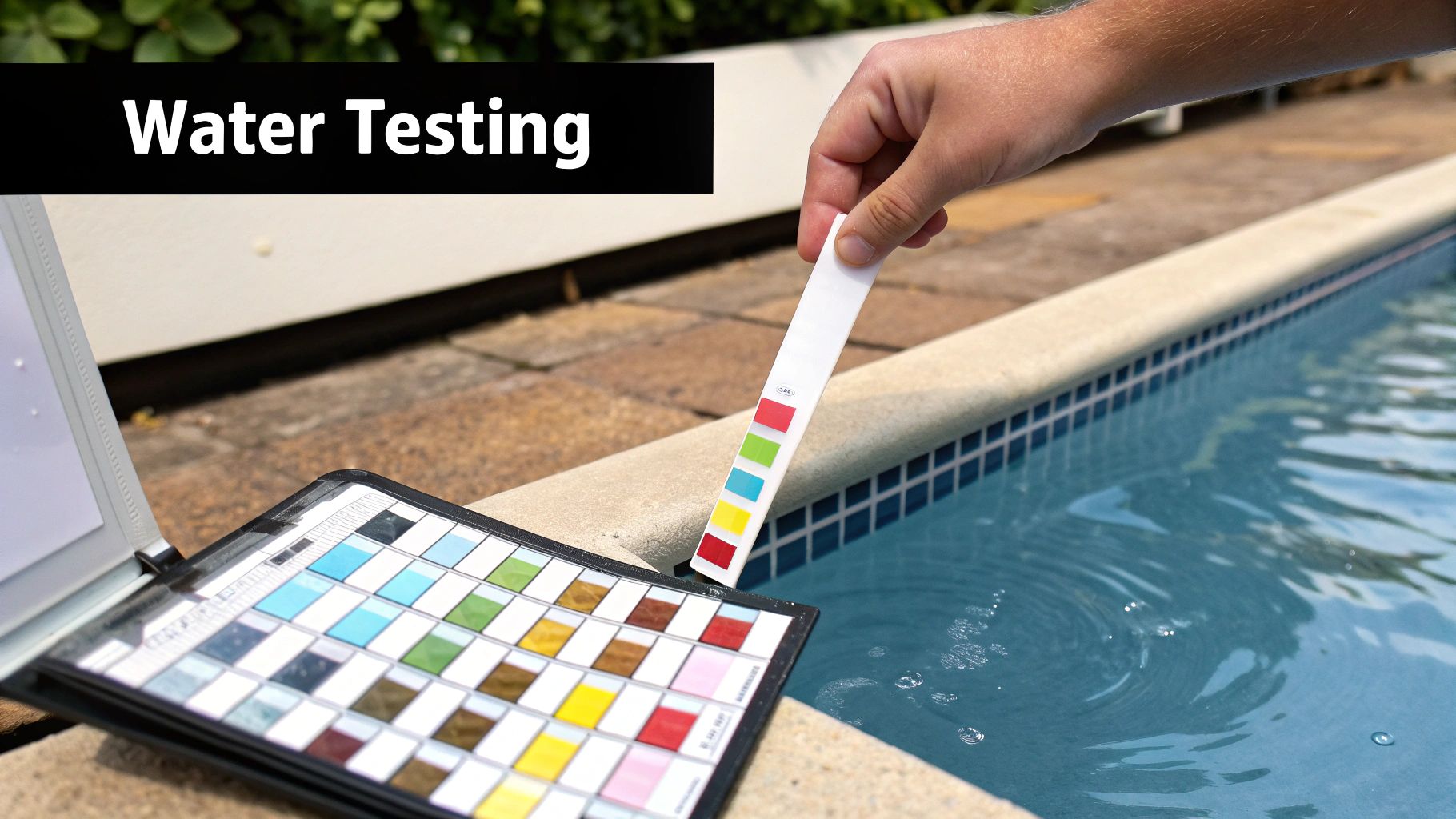
First things first, grab your water testing kit. You need a baseline reading of your pool’s current state, specifically the free chlorine and pH levels. These numbers will tell you exactly what you need to do next.
Once you’ve balanced the chemistry based on those readings, it’s time to shock the pool. A powerful dose of shock is like hitting the reset button—it zaps contaminants, kills off any algae that might be starting to bloom, and gets right to work on the particles making your water cloudy.
This simple process is the foundation for clearing your water.
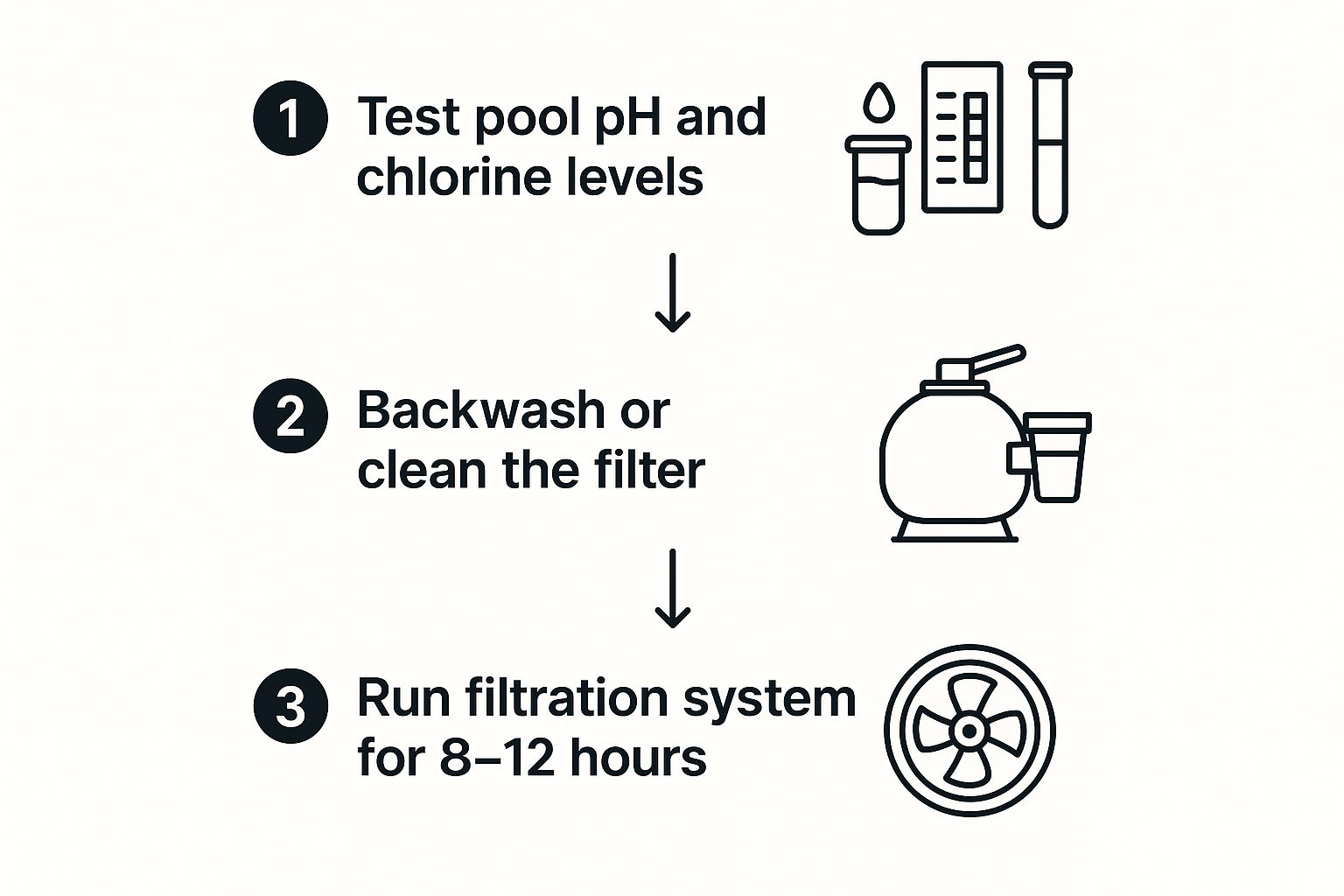
As you can see, after testing and cleaning, the final crucial step is just letting your filter system do the heavy lifting.
Filtration and Finishing Touches
With the water balanced and shocked, it's time for your filter to shine. Run your pump and filter continuously for at least 24 hours. This gives it enough time to circulate all the water and trap the dead algae, suspended debris, and other junk you just neutralized. Keep a close eye on your filter’s pressure gauge; if it spikes, it's time to backwash.
If you’re dealing with a really stubborn haze, you might need an extra boost from a pool clarifier or flocculant. A clarifier acts like a magnet, clumping tiny particles into bigger clusters your filter can easily grab. A flocculant is the heavy-duty option; it binds to everything and sinks it to the pool floor, where you can then vacuum it all out to waste.
Following these steps is the key to success. But if diagnosing and treating cloudy water feels like a bit much, there's a much simpler way to get the job done.
Let our expert technicians take the entire process off your plate. We can get your water sparkling again in no time. For total peace of mind, you might also want to explore our regular monthly pool maintenance plans to make sure cloudy water never comes back.
Got Questions? We've Got Answers
We've walked through the usual suspects behind a cloudy pool, from finicky filters to out-of-whack chemistry. But often, that just leads to more specific questions. Let's tackle some of the most common ones we hear from pool owners.
How Long Until My Cloudy Pool Is Clear Again?
Honestly, it all comes down to the root cause. If you just needed a chemical tweak, you could be looking at crystal clear water in as little as 24 hours. But if you're battling a stubborn algae bloom or a serious filter clog, you're probably looking at a 3 to 5-day project of diligent work.
Of course, using professional-grade treatments can speed things up. Our pool clearing services use equipment and solutions that can often cut that timeline down significantly.
Is It Okay to Swim in a Cloudy Pool?
We get this one a lot, and the answer is always a firm no. There are two huge reasons for this.
First, cloudy water is a billboard advertisement that your sanitizer is overwhelmed and can't keep up. That means bacteria and other nasty contaminants could be having a party in your pool. Second, it's a massive safety hazard. If you can't see the bottom, you can't see if a child or even an adult is in trouble.
Here's our hard and fast rule: If you can't clearly see the main drain from the edge of the pool deck, no one gets in. Period.
My Chemicals Are Perfect, So Why Is the Water Still Murky?
Ah, the classic head-scratcher. When your test kit gives you the all-clear but your eyes tell you a different story, the problem is almost always the filter.
Your water chemistry might be perfect for killing contaminants, but it's the filter's job to physically remove the microscopic debris that creates that milky haze. If it's not doing its job, the water stays cloudy. This could mean you need to backwash or deep clean your filter, replace old sand or a worn-out cartridge, or simply run your pump for a few more hours each day. Our filter diagnostic service can help you nail down exactly where the system is failing.
Don't let cloudy water keep you out of the pool this season. The team at Water Medic of Cape Coral has seen it all and has the right tools and expertise to get your water back to being brilliantly clear. Schedule your pool service today!