A Guide to Iron Water Filters for Wells
If you're tired of seeing rusty stains in your sinks, dealing with foul-tasting water, or worrying about what your well is doing to your pipes, you're in the right place. An iron water filter is the go-to solution for transforming problem well water into a clean, clear, and reliable source for your whole house.
But here's the key: the best system for you depends entirely on what kind of iron—and how much of it—you're dealing with. Our team of experts at Water Medic specializes in diagnosing your specific water issues and installing the perfect iron water filters for wells to protect your home.
Your Solution For Iron-Free Well Water
For most well owners, iron isn't a question of "if," but "when" and "how bad." It’s a naturally occurring mineral, and while it's usually not a health risk, it creates a whole list of frustrating and expensive problems. The tell-tale signs are hard to miss, and they can seriously disrupt your daily life and damage your home.
This guide is your roadmap to finally solving your well's iron problem. We’ll break down the main filter technologies, explain how they work, and help you protect your home. It all starts with understanding what you're really up against.
The True Cost of High-Iron Water
Ignoring the iron in your well water is about more than just ugly stains. The real costs, both financial and practical, add up fast. A quality filtration system isn't a luxury; for many well owners, it's a necessity we specialize in providing.
Here's what you're facing without one:
- Appliance Damage: Iron scale builds up inside your water heater, washing machine, and dishwasher. This forces them to work harder, slashes their efficiency, and ultimately shortens their lifespan.
- Plumbing Clogs: That same iron sediment lines your pipes, slowly restricting water flow. You'll notice a drop in pressure, and eventually, you could be looking at a major clog and a hefty plumbing bill.
- Persistent Stains: Those reddish-brown streaks on sinks, toilets, tubs, and even your laundry are a constant battle. Over time, they can permanently discolor and ruin surfaces.
- Poor Taste and Odor: A sharp metallic taste can ruin a glass of water or a pot of coffee. Worse, iron can feed certain types of bacteria that produce a gross, swampy smell.
Investing in one of the right iron water filters for wells isn't just about getting clearer water. It's about protecting the value and function of your entire home from the inside out. Our systems stop the damage before it starts.
Homeowners are catching on. The global market for iron and manganese removal filters is already valued at around USD 1.2 billion and is expected to nearly double by 2033. This isn't just a niche issue; it's a growing awareness that treating well water contamination is essential.
Before you can choose the right filter, you need to know what you’re fighting. The type of iron in your well determines which filtration method will actually work.
Quick Guide to Iron Types and Filter Solutions
This table is a great starting point. It breaks down the common forms of iron you might find in your well and points you toward the most effective technology for each.
| Iron Type | Appearance in Water | Common Problem | Best Filter Solution |
|---|---|---|---|
| Ferrous Iron | Clear at first, turns reddish-brown after standing | Stains appear "out of nowhere" on fixtures and laundry | Air Injection Oxidizing (AIO) Filter, Water Softener (low levels) |
| Ferric Iron | Reddish-brown or yellow tint right from the tap | Clogs pipes, leaves visible sediment, stains everything | Sediment Filter, Backwashing Media Filter |
| Bacterial Iron | Oily, rainbow sheen on water surface; slimy reddish buildup in toilet tank | Foul odors, slime clogs plumbing and fixtures | Shock Chlorination followed by a specialized iron filter (AIO) |
| Colloidal Iron | Water has a consistent red or yellow tint that won't settle out | Extremely fine particles that are very difficult to filter | Oxidizing filter followed by a very fine sediment filter (sub-micron) |
Seeing your specific problem in the chart is the first step toward finding a real, lasting solution. Each type of iron requires a different approach to remove it effectively.
Ultimately, installing a professional-grade iron filter is a proactive move. And to ensure you have clean water even when the lights go out, consider pairing your system with a whole home battery backup system. Our team can diagnose your specific water issues and recommend the perfect system to restore your water quality and give you total peace of mind.
Identifying the Type of Iron in Your Well
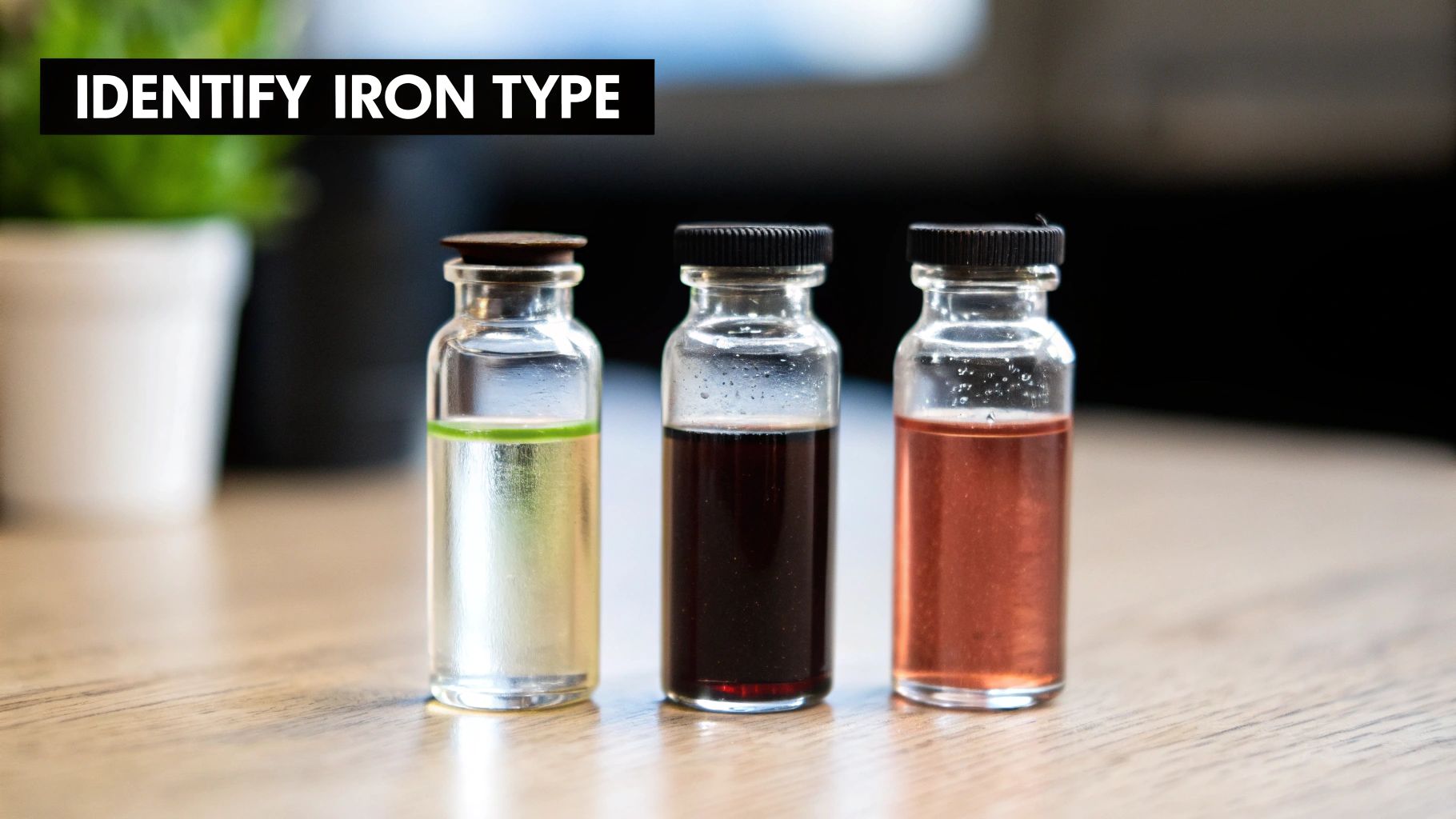
Before you can pick the right filter, you have to know exactly what you're up against. Iron in well water isn't a single, simple problem. It comes in a few different forms, and each one needs a unique battle plan to get rid of it for good.
If you install a powerful filter that’s built for the wrong kind of iron, you're just spinning your wheels. It’s like bringing a wrench to a job that needs a hammer—it just won’t work, and you'll be stuck with the same metallic taste and frustrating orange stains. Pinpointing the enemy is the first, and most important, step toward clear, clean water.
Let’s break down the three main culprits you'll find lurking in your well.
Ferrous Iron: The "Clear Water" Culprit
This is the sneakiest type of iron you'll encounter. When you first pull water from the tap, it looks perfectly clear. You might think everything is fine, but give that glass a few minutes. You'll watch it slowly turn yellow or reddish-brown as the iron inside reacts with the air.
That’s ferrous iron in action. It's completely dissolved in the water, making it invisible at first. Think of it like sugar stirred into a glass of tea—you can't see the individual crystals, but you know they're there. This is why those stubborn rust stains seem to appear out of nowhere in your sinks, toilets, and on freshly laundered clothes.
Ferric Iron: The "Red Water" Problem
Unlike its invisible cousin, ferric iron doesn't hide. If your water runs yellow, orange, or reddish-brown right out of the faucet, you're dealing with ferric iron. This means the iron has already oxidized before it gets to you, and it's floating around as tiny, suspended rust particles.
Because these particles are solid and undissolved, you can see them. Ferric iron is what causes that visible sediment that can clog pipes, slash your water pressure, and do a number on your appliances over time. Since it's already a solid particle, it needs a totally different filtration method than the dissolved ferrous kind.
The difference between ferrous (dissolved) and ferric (solid) iron is absolutely critical. A filter designed to catch solid particles will let dissolved iron slip right through. This is why a professional diagnosis isn't just a good idea—it's essential for finding a solution that actually works.
Iron Bacteria: The Slimy Menace
The third common headache isn't just a mineral—it's a living organism. Iron bacteria are tiny microbes that literally feed on the iron in your well to survive. While they aren't usually a direct threat to your health, they create a disgusting, slimy, reddish-brown gunk that can clog everything from your well screen to your plumbing fixtures.
You can often spot an iron bacteria problem with a few tell-tale signs:
- Slimy Buildup: The easiest place to check is inside your toilet tank. If you see a thick, gelatinous reddish slime coating the surfaces, you likely have iron bacteria.
- Foul Odors: These organisms can produce nasty swampy, musty, or even sewage-like smells in your water.
- Oily Sheen: Sometimes, you might notice an oily or rainbow-colored film floating on the water's surface.
Getting rid of iron bacteria is more involved than just filtration. It usually starts with disinfecting your entire well and plumbing system before you even think about installing a filter. Otherwise, you're just treating a symptom, not the source of the slime.
The only way to know for sure what’s in your water is to get it tested. Our expert water testing services are designed to give you a clear, accurate diagnosis of your specific iron issue. That way, you can invest confidently in the right iron water filter for your well.
Comparing the Best Iron Filter Technologies
Choosing the right iron water filter for your well is about more than just grabbing a system off the shelf. You need to understand the different technologies out there, because each one is built to tackle iron in a very specific way. Making the right choice here is the difference between a real, long-term solution and a frustrating, short-term headache.
As well water specialists, we see it as our job to cut through the jargon and guide you to the system that perfectly matches your water’s unique chemistry. We’ve learned that there’s no such thing as a one-size-fits-all solution—every well is different.
Let's break down the leading technologies we install to see how they work and which iron problem each one is designed to solve.
Air-Injection Oxidation Filters
Imagine trying to catch a fish you can’t see. That’s the problem with dissolved ferrous iron—it’s completely invisible in your water until it hits the air in your sink or tub and leaves behind those ugly orange stains. Air-injection oxidation (AIO) filters brilliantly solve this by forcing that reaction to happen inside the filter tank instead.
These systems work by creating a pocket of compressed air at the top of the tank. As your well water flows through this air pocket, the oxygen instantly oxidizes the dissolved iron, turning it into solid rust particles. These particles are then easily trapped in a special filter media bed, allowing clean, iron-free water to flow into your home. The system then automatically backwashes every few days, flushing all the trapped iron safely down the drain.
- Best For: Moderate to high levels of ferrous ("clear water") iron and getting rid of that rotten egg smell caused by hydrogen sulfide gas.
- Maintenance: AIO systems are incredibly low-maintenance. Since they're chemical-free, they usually just need an annual check-up to make sure the air injector is clean and working as it should.
This technology is a fantastic, chemical-free powerhouse for many well owners. You can dive deeper into how our air-injection systems provide reliable iron removal.
Water Softeners With Iron Removal
A standard water softener's main job is to remove "hard" minerals like calcium and magnesium. It does this through a process called ion exchange, where it swaps those hardness minerals for sodium ions. It can do the same thing for small amounts of dissolved ferrous iron.
But here’s the catch: using a softener as your primary iron defense is a delicate balancing act. It's really only a good fit for very low iron levels, typically less than 2 parts per million (PPM). If your iron is any higher, it will quickly overwhelm and foul the softener’s resin bed, leading to clogs and expensive damage.
Think of it this way: a water softener is a specialist in fighting hardness, but it only moonlights as an iron filter. Asking it to handle a serious iron problem is like asking a plumber to rewire your house—it’s just not the right tool for the job.
Chemical Oxidation Systems
When you're dealing with extremely high iron levels or the added headache of iron bacteria, you sometimes need to bring in the heavy hitters. Chemical oxidation systems use a powerful oxidizing agent, like chlorine or hydrogen peroxide, to rapidly force dissolved iron into a solid, filterable form.
Here’s how it works: a small pump injects a precise dose of the chemical solution into your water line before it reaches a holding tank. This gives the chemical enough contact time to fully react with the iron. After that, the water flows through a media filter to trap the solid rust particles, and finally through a carbon filter to remove any leftover chemical taste or smell.
- Pros: Incredibly effective against very high iron concentrations (10 PPM or more) and has the added benefit of killing iron bacteria.
- Cons: This is not a "set-it-and-forget-it" system. It requires you to keep chemicals on hand and involves more complex maintenance to keep the injection pump properly calibrated.
Manganese Greensand Filters
Manganese greensand is a true classic in the world of water treatment—a reliable filter media that has proven its worth for decades. The media is coated with manganese dioxide, which acts as a catalyst, causing dissolved iron, manganese, and hydrogen sulfide to oxidize into solids the moment they touch it.
Once oxidized, these particles get trapped in the greensand bed. Just like other systems, it cleans itself with a periodic backwash cycle. To keep working, however, the manganese dioxide coating needs to be "regenerated" with an oxidizing agent, most often potassium permanganate, which is what gives the filter its distinctive purple-pink color during the regeneration cycle.
Comparing Iron Filter Technologies for Your Well
Choosing the right technology can feel overwhelming, but it gets a lot easier when you see them side-by-side. This table breaks down the key differences to help you see which approach might be the best fit for your well.
| Filter Type | Best For | Maintenance Level | Pros | Cons |
|---|---|---|---|---|
| Air-Injection Oxidation | Ferrous (clear-water) iron & rotten egg smell | Low | Chemical-free, low ongoing costs, very effective | Higher upfront cost, not for iron bacteria |
| Water Softener | Very low levels of ferrous iron (<2 PPM) | Moderate | Softens water at the same time | Not a true iron filter, fouls easily with high iron |
| Chemical Oxidation | Extremely high iron levels (>10 PPM) & iron bacteria | High | Most powerful option, kills bacteria | Requires handling chemicals, high maintenance |
| Manganese Greensand | Ferrous iron, manganese & hydrogen sulfide | Moderate to High | Proven and reliable technology | Requires chemical (potassium permanganate) regeneration |
Ultimately, the best filter is the one designed to solve your specific water problem. A proper water test is the first step to making an informed decision.
The technology behind iron water filters for wells has come a long way, now serving everyone from homeowners to major industries. Today’s filters are built from robust materials like carbon steel, stainless steel, and fiberglass-reinforced plastic to meet different needs. This isn't just a residential concern; industries like food production and papermaking across North America, Europe, and beyond depend on this same technology.
Choosing the right filter is the single most important step you can take toward getting clean, iron-free water. With over 25 years of experience installing and servicing all of these systems, our team can perform a detailed water analysis to pinpoint your exact needs and recommend a system that will give you lasting results.
How to Select the Right Iron Filter
Picking the right iron filter for your well isn't a shot in the dark. It's about matching the right technology to your unique water chemistry. If you get it wrong, you’re stuck with a costly system that doesn't solve the problem, leaving you right back where you started with stained sinks and foul-tasting water. A methodical approach is the only way to ensure you invest in a solution that actually works for the long haul.
The entire process hinges on one non-negotiable step: a comprehensive water analysis. This isn't just about finding out if you have iron; it's about understanding the battlefield. A professional water test is the only way to get the hard data needed to make the right choice.
Start With a Professional Water Test
Before you even think about looking at filters, you need answers to a few key questions. And honestly, only a detailed water analysis can provide them. Seeing rust stains is a good clue, but it's not nearly enough information to go on.
Our professional water testing services pinpoint the exact metrics that matter:
- Iron Concentration (PPM): We measure the total iron in parts per million. A system built to handle 3 PPM will be completely overwhelmed if your well is pumping out 10 PPM.
- Iron Type: Are you dealing with ferrous (dissolved), ferric (solid), or even iron bacteria? Each type demands a completely different filtration strategy.
- pH Level: The acidity or alkalinity of your water drastically impacts how well certain filters—especially oxidizing ones—can do their job. An unbalanced pH can make a great filter practically useless.
- Other Contaminants: We also check for manganese, hydrogen sulfide (that "rotten egg" smell), and water hardness. These often travel with iron and will definitely influence your final decision.
Trying to buy an iron filter without this data is like a doctor writing a prescription without a diagnosis. You’ll probably treat the wrong problem, waste your money, and see zero improvement.
This decision tree infographic gives you a great visual of how a water test guides you toward the right filter.
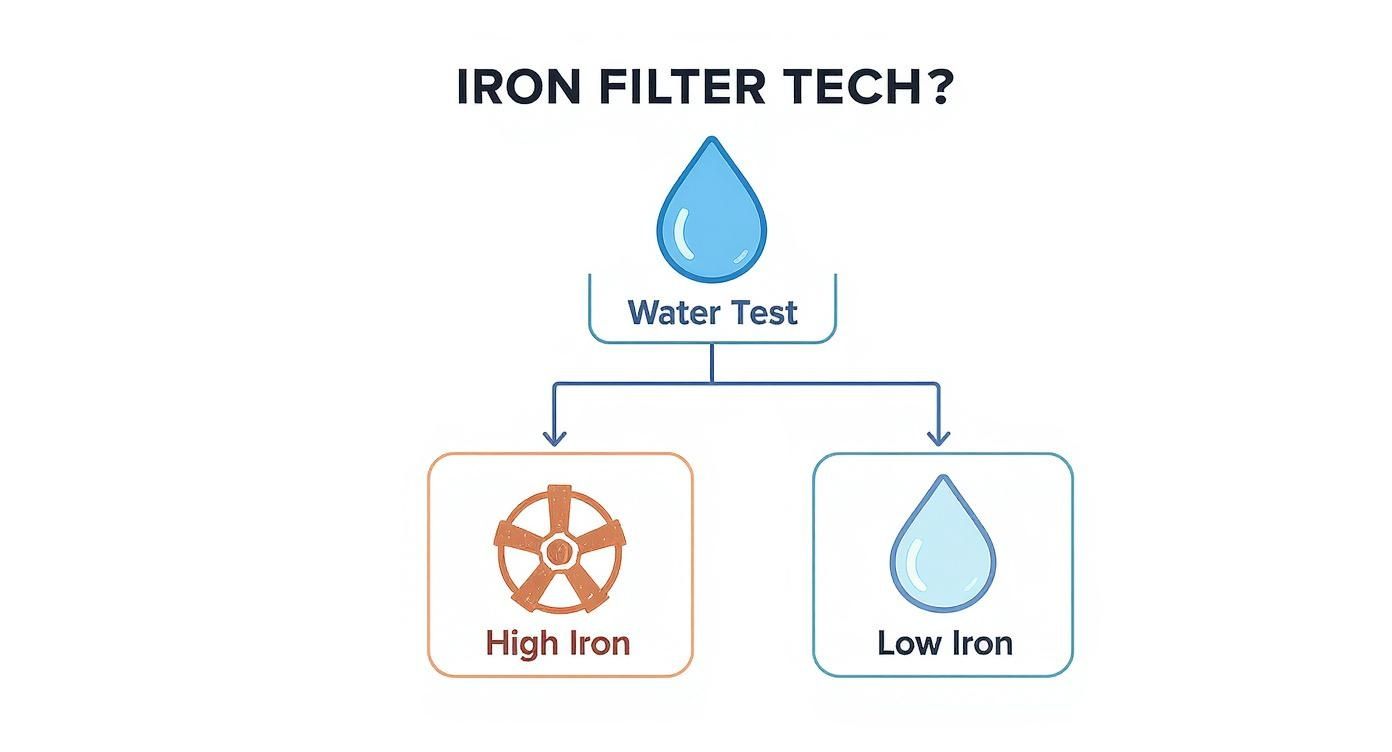
As you can see, the path to the right solution starts with accurate testing and then branches out based on the specific levels and types of iron found in your water.
Calculate Your Home's Water Demand
Once you know exactly what’s in your water, the next puzzle piece is figuring out how much water your household needs during peak times. We measure this in gallons per minute (GPM), and it's critical for sizing your system correctly. If your filter is too small, you'll notice a frustrating drop in water pressure whenever more than one tap is running.
Just picture a busy morning in your house: someone’s in the shower, the dishwasher is on, and the washing machine is filling up. Your iron filter needs to handle all that simultaneous demand without your water flow slowing to a trickle. We help you calculate your home’s peak flow rate to make sure your system is sized perfectly, delivering clean water without ever sacrificing pressure.
Factor in Budget and Long-Term Maintenance
Finally, you need to look at both the upfront cost of the system and what it will take to maintain it over the years. A chemical-free air-injection system, for instance, might cost more initially but has very low ongoing expenses. On the other hand, a chemical oxidation system could be cheaper to buy but requires you to keep purchasing supplies like chlorine.
We believe in being upfront about the total cost of ownership. This way, you can make a choice that fits your budget not just today, but for years to come. For homes with very low iron levels, some homeowners find that specific water softeners designed for iron removal can serve as a great two-in-one solution for both hardness and minimal iron issues.
As you plan your ideal living space, remember that water quality is one of the many essential things to consider when building a house, right alongside the foundation and the floor plan.
The path to clean, iron-free well water is clear. It starts with professional diagnostics and leads to a solution tailored for your home. Schedule a consultation with our experts, and we’ll guide you every step of the way to find the perfect iron water filter for your well.
Why Professional Installation and Maintenance Matter
https://www.youtube.com/embed/EjUg36pYE8o
Investing in one of the best iron water filters for wells is a huge step toward protecting your home. But the system itself is only half the story. A powerful filter is only as good as its installation, and its long-term performance comes down to proper, consistent maintenance.
It can be tempting to try a DIY installation to save a few bucks, but that path often leads to costly mistakes that completely undermine the filter's effectiveness. Professional installation isn't just a service—it's your guarantee that the investment you just made will actually work as intended from day one, giving you the clean, clear water you paid for.
The Critical Role of Expert Installation
Installing a whole-house iron filter is a different beast altogether compared to hooking up a simple under-sink unit. It involves serious plumbing, precise calibration, and a real understanding of how water flows to avoid the common headaches that plague a DIY job.
Our technicians are trained to navigate these complexities, making sure your system is woven flawlessly into your home’s existing plumbing. We don't just connect pipes; we optimize the entire setup for peak performance.
This means we handle:
- Proper Plumbing Integration: We make sure the filter is installed correctly in your plumbing lines to prevent problems like "water hammer"—that loud banging in your pipes—and keep the flow smooth.
- Leak-Proof Connections: Even a tiny, slow leak can cause catastrophic water damage over time. Our team uses professional-grade techniques to secure every single connection, so you don't have to worry.
- Pressure Optimization: An incorrectly installed filter can create a bottleneck, leading to a frustrating drop in water pressure. We size and install your system to maintain strong, steady pressure all over your house.
Most importantly, we handle the system calibration based on your unique water test results. This is where we program the filter’s backwash frequency and duration to perfectly match the iron levels in your well. This ensures it cleans itself effectively without needlessly wasting water.
Protecting Your Investment With Routine Maintenance
Once your iron filter is up and running, a solid maintenance plan is what will keep it reliable for years to come. Over time, filter media gets used up, injectors can get clogged, and seals wear out. If you ignore these routine tasks, you'll watch your filter's performance slowly decline until it eventually fails, putting you right back at square one.
A professional partnership eliminates the guesswork and risks of a DIY approach. It ensures your system is not just installed correctly but is also maintained for a lifetime of reliable, iron-free water.
Our service plans are built to handle every piece of the upkeep puzzle, keeping your system running like it’s brand new. Regular maintenance stops small issues from snowballing into expensive emergencies and is the single best way to protect your investment. To see exactly what’s covered, you can learn more about our comprehensive monthly maintenance programs.
With over 25 years of experience, we provide both expert installation and ongoing service plans that take all the worry off your shoulders. We make sure your iron water filter operates at peak efficiency, safeguarding your home's plumbing, appliances, and your family's water quality for years to come.
The Financial Benefits of a Quality Iron Filter
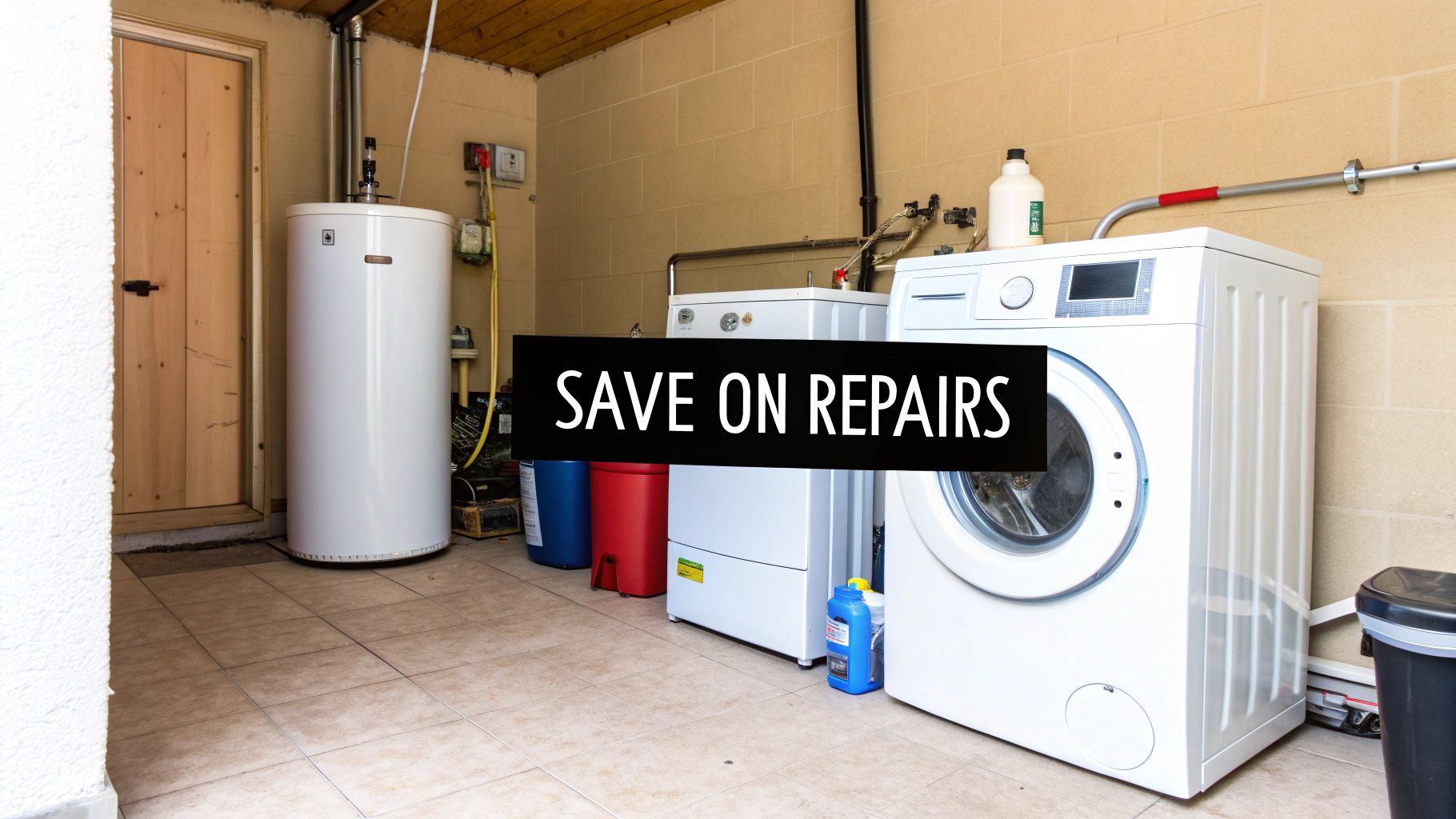
It’s easy to look at a high-quality iron filter as just another household expense, but that view misses the bigger picture. This isn't just a purchase; it's a smart investment that actively saves you money down the road. Think of it as preventative medicine for your home's entire plumbing system.
The return on your investment comes from stopping a whole chain of costly problems that iron-heavy water always creates. Untreated iron is a silent wrecker. That reddish mineral buildup slowly constricts your pipes, killing your water pressure and setting the stage for clogs that mean expensive calls to a plumber.
Protect Your Most Expensive Appliances
Your water heater, dishwasher, and washing machine are some of the most critical appliances you own, and they are ground zero for iron damage. Iron sediment settles inside these machines, coating heating elements, clogging up tiny valves, and putting extra strain on pumps.
This constant assault leads to a few predictable outcomes:
- Reduced Efficiency: When an appliance is caked with mineral scale, it has to work much harder and use more energy just to function. You’ll see the difference on your utility bills.
- Premature Failure: The lifespan of these machines gets cut short, forcing you to shell out for replacements years earlier than you should have to.
- Costly Repairs: Service calls for a fried water heater element or a blocked dishwasher spray arm can add up incredibly fast.
A properly installed iron water filter acts like a bodyguard for your home’s plumbing and appliances. By stopping corrosive iron right where it enters your home, it prevents thousands of dollars in future repair and replacement costs. It’s easily one of the smartest upgrades a well owner can make.
Eliminate Recurring Costs and Hassles
Beyond protecting your big-ticket items, an iron filter cuts out all those little, annoying expenses that nickel and dime you every month. You can finally stop buying harsh, specialized rust-stain removers to scrub toilets and sinks. You also won't have to rewash a load of laundry because it came out with mysterious orange streaks.
Many families with that "off," metallic-tasting well water end up buying bottled water for drinking and cooking. A good filtration system makes your tap water taste great again, which means you can ditch that weekly expense and cut down on plastic waste. It's an investment in your home's value and your family's daily life.
Ready to protect your home and enjoy clean, clear water from every tap? Contact us for a professional water analysis and get a personalized quote for the right iron water filter for your well today.
Your Top Questions About Iron Filters Answered
If you're dealing with well water, you've probably got questions about iron filters. With over 25 years in the business, we've pretty much heard them all. Here are some clear, no-nonsense answers to the questions we get asked most often, so you can feel confident about your water.
We want to cut through the jargon and give you the practical info you need to choose the right solution for your home, from figuring out if you have a problem to what it's like to live with a system long-term.
How Do I Know if I Need an Iron Filter?
The telltale signs are usually pretty obvious. Think reddish-brown stains in your sinks and toilets, a metallic taste to your water, or even a smell like rust. If your white laundry comes out with strange orange streaks, that’s a classic sign that iron is the problem.
But while these clues point to iron, they don't give you the full picture. The only way to know for sure what you're up against is to get a professional water test. This will tell you exactly which kind of iron you have and how much of it is in your water—details that are crucial for picking a filter that will actually work. We offer thorough water testing services to get to the bottom of it.
Will an Iron Filter Lower My Water Pressure?
A properly sized and professionally installed iron filter shouldn't affect your water pressure at all. When people experience a drop in pressure, it's almost always for one of two reasons: the system is too small for the home's water demand, or the filter is clogged from a lack of maintenance.
We take the time to calculate your home's peak water usage to make sure any system we recommend can keep up, delivering strong, steady pressure everywhere from the shower to the kitchen sink. This is where a custom-fit solution really shines over a generic big-box filter.
The right iron filter, installed by a professional, should be invisible in its daily operation. You get all the benefits of clean, iron-free water without sacrificing the strong water pressure you're used to.
Are Chemical-Based Iron Filters Safe?
Absolutely. When a system that uses a chemical oxidant is installed and maintained by a pro, it's completely safe. The whole treatment process is self-contained inside the filter tank.
After the iron is oxidized and filtered out, the system runs a deep backwash and rinse cycle. This flushes all the trapped iron particles and any leftover treatment solution safely down the drain, long before it has any chance of reaching your faucets. Of course, if you'd rather avoid chemicals altogether, we also specialize in highly effective and popular chemical-free air-injection filters.
How Often Does an Iron Filter Need Maintenance?
That really depends on the type of filter you have and the amount of iron in your water. A modern air-injection filter, for example, might just need a simple annual checkup. A chemical oxidation system, on the other hand, will need its solution topped off every few months.
Systems that use a specific filter media, like manganese greensand, may need that media replaced every 3 to 7 years. When we install a system, we'll give you a clear maintenance schedule. We also offer convenient service plans to take all the guesswork and hassle out of it for you, ensuring your system runs smoothly for years to come.
At Water Medic of Cape Coral, we have the expertise to solve your well water iron problems for good. From accurate testing to professional installation and ongoing maintenance, we're your partner in getting clean, clear, great-tasting water. Contact us today to get started!