Your Guide to an In Ground Saltwater Pool in Southwest Florida
Picture this: you step out into your Southwest Florida backyard, and the pool water that greets you is silky-smooth. It doesn't sting your eyes or leave your skin feeling tight and dry. This isn't a far-off dream; it's the daily reality for owners of an in-ground saltwater pool.
But let's clear up a common myth right away. These pools aren't like taking a dip in the Gulf. The salt level is incredibly mild—about one-tenth the salinity of the ocean—just enough to create a wonderfully gentle and luxurious swimming experience.
The Dream of a Florida Saltwater Pool
An in-ground saltwater pool is more than just a body of water; it’s a genuine lifestyle upgrade. The biggest draw is the incredible water quality. It feels noticeably softer and far less harsh than water treated with traditional chlorine tablets. For families, especially those with kids or anyone with sensitive skin, this gentle approach to sanitation is a total game-changer.
The magic happens through a simple but brilliant piece of technology: a salt chlorine generator. This system produces its own fresh, pure chlorine at a steady, low level, day in and day out. That means no more buying, lugging, and storing bulky, harsh chemical buckets. Your pool essentially takes care of its own sanitation, so you can spend less time playing chemist and more time floating.
Why Homeowners Are Making the Switch
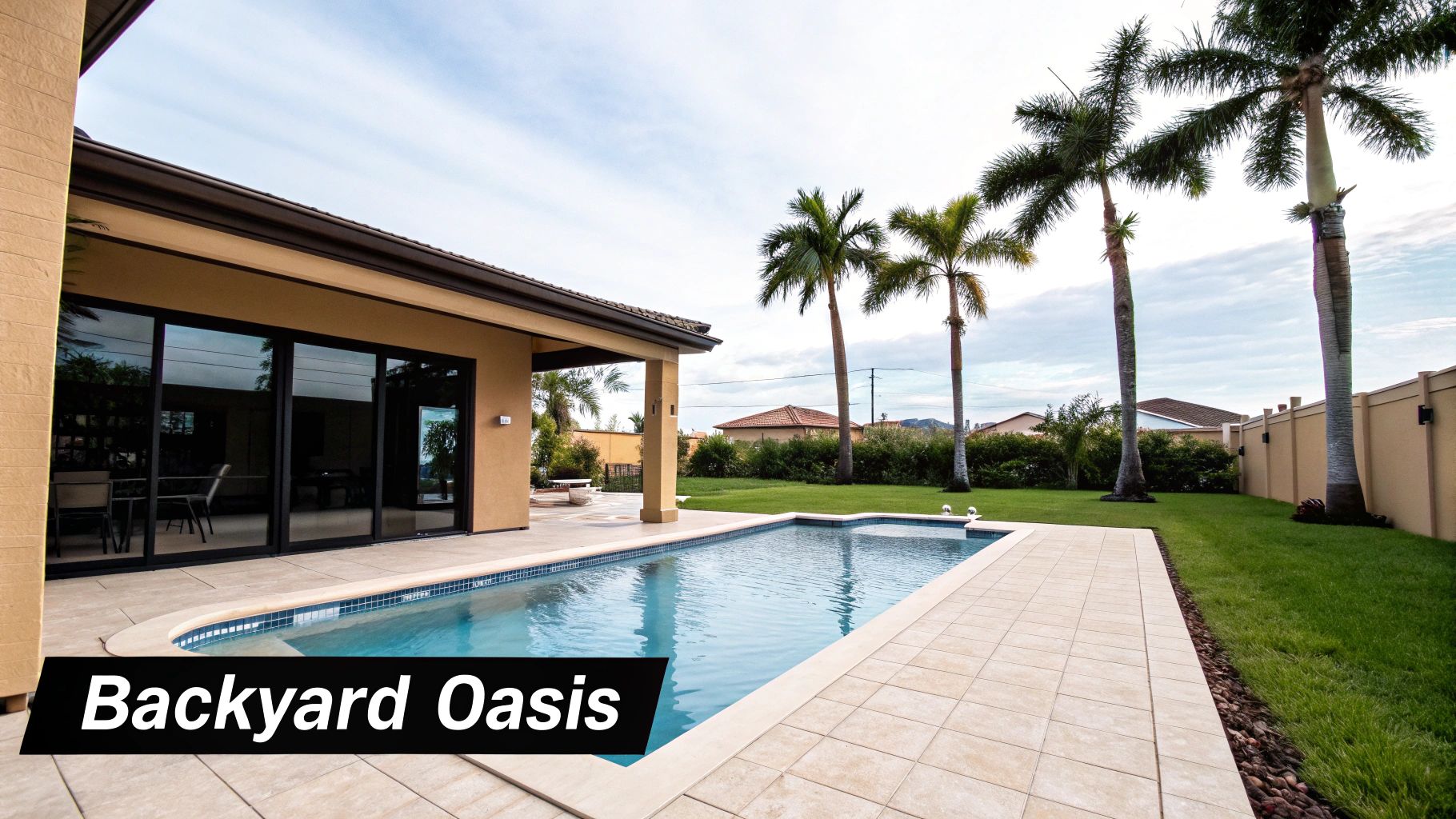
It's no surprise that so many homeowners are moving to saltwater systems. While there's an upfront cost for the equipment, the long-term savings on chemicals can be significant. But it's about more than just the money; it’s about creating a better, healthier, and more enjoyable place to swim.
- Softer on the Body: The water feels silky and is much kinder to your skin, hair, and even your swimsuits. Say goodbye to that post-swim dryness and irritation.
- Less Chemical Hassle: You can cross "buy chlorine" off your shopping list for good. This makes your pool routine safer, simpler, and way more convenient.
- More Stable Water: The generator keeps the chlorine level perfectly consistent, which prevents the frustrating cycle of chemical spikes and drops that often lead to algae blooms or that overpowering chlorine smell.
A key thing to understand is that saltwater pools are not chlorine-free. They are actually chlorine pools. The difference is how the chlorine is produced—naturally from salt—giving you all the sanitation power without the harsh drawbacks of tablet-based chlorine.
Ultimately, choosing a saltwater pool is an investment in a superior swimming experience. Here at Water Medic of Cape Coral, our hands-on expertise in pool services ensures your system is installed and maintained perfectly. This guide will break down exactly how the technology works and what to expect, helping you figure out if this backyard dream is the right choice for your home.
How a Saltwater Pool Actually Works
It’s easy to think there’s some complicated science behind a saltwater pool, but the concept is actually beautifully simple. The best way to think about it is like having a tiny chlorine factory working 24/7, right in your pool’s plumbing. It’s a smart, closed-loop system that keeps your water sanitized without you ever having to lug around heavy buckets of harsh chemicals.
The real hero of the system is a device called a Salt Chlorine Generator (SCG), often just called a "salt cell." Our technicians at Water Medic of Cape Coral install this component right into your pool's return line, after the filter and heater. It's the engine that powers the whole operation.
The Magic of Electrolysis
So, how does salt become chlorine? The process is called electrolysis, and it's a clever bit of chemistry that keeps your pool sparkling. Here’s how it works, step-by-step:
- Add Salt: First, we dissolve a specific amount of pure, non-iodized pool salt directly into your pool. This creates a very mild saline solution—about one-tenth as salty as the ocean—that feels incredibly soft on your skin.
- Pass Through the Cell: As your pump runs, the slightly salty water flows through the salt chlorine generator.
- Generate Chlorine: Inside the cell, a set of metallic plates gets a safe, low-voltage electrical current. This zap of electricity triggers electrolysis, which splits the salt molecules (sodium chloride, or NaCl) into pure, fresh chlorine (hypochlorous acid).
- Sanitize and Revert: This new chlorine gets pumped back into your pool, where it goes to work neutralizing bacteria, algae, and anything else you don't want in there. Once it’s done its job, the chlorine naturally turns back into salt, and the whole cycle starts over again.
This continuous, self-sustaining cycle is what makes saltwater pools so great. You avoid the harsh chemical spikes and dips you get with traditional chlorine, leading to water that's more stable, comfortable, and consistently clean.
Why Everyone in Southwest Florida is Talking About Saltwater
This automated, gentler approach is exactly why saltwater systems have become so popular. In sunny places like Southwest Florida, where a pool is practically a necessity, homeowners have embraced this technology. In fact, the global market for pool salt chlorinators hit USD 1.45 billion and is expected to climb to USD 1.98 billion by 2030. That’s a powerful sign that people are tired of the old routine and want a better swimming experience. You can discover more about this market trend and what it means for the pool industry.
At Water Medic of Cape Coral, we see this shift firsthand. This isn't just a passing fad; it’s a smarter way to own a pool. We specialize in the precise installation and ongoing salt cell maintenance that these systems need to run perfectly. Our local expertise means you get all the benefits—silky water, less work, and a fantastic swim—without any of the headaches. We’re here to help you get that perfect, healthy pool you've always wanted.
Saltwater vs Chlorine Pools A Head-to-Head Comparison
Choosing how to keep your pool clean is a huge decision. When it comes to an in ground saltwater pool versus a traditional chlorine setup, the right answer really boils down to your budget, how you want the water to feel, and how much time you want to spend on maintenance. Let's cut through the jargon and get straight to what matters.
On the surface, both systems do the same job: they keep your pool sanitized and safe. But how they get there and what it feels like to swim in the water are completely different. With a traditional pool, you're constantly adding chlorine tablets or liquid. This manual process can lead to sharp chemical spikes, that unmistakable "chlorine" smell, and often, irritated skin and eyes.
A saltwater system, on the other hand, automates the whole process, creating a much more stable and, frankly, more luxurious swimming experience.
Swimmer Comfort The Feel of the Water
One of the first things people notice is the water itself. Swimmers almost universally describe the water in a saltwater pool as feeling silky, soft, and incredibly smooth. Why? The mild saline solution—which has roughly the same salt concentration as a human teardrop—is far less harsh than water treated with concentrated chlorine.
This gentler approach brings some real perks:
- Less Irritation: You can pretty much say goodbye to red, burning eyes and that tight, itchy skin you often get after a swim in a classic chlorine pool.
- Kinder to Hair and Swimwear: Harsh chlorine is notorious for stripping natural oils from your hair, making it dry and brittle. Saltwater is much gentler and won't bleach or break down your swimsuits nearly as fast.
This diagram illustrates the simple, continuous cycle that makes saltwater so comfortable and effective.
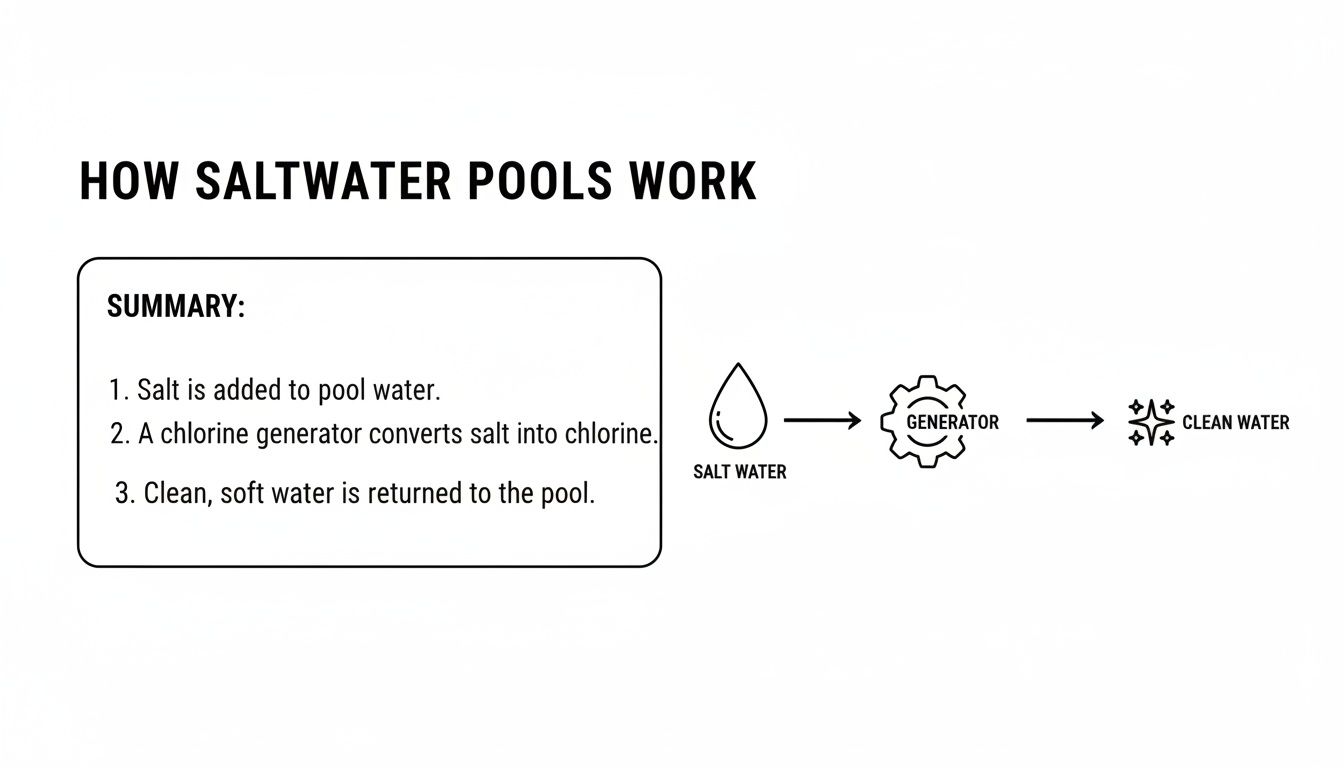
As you can see, the salt chlorine generator does all the work, turning basic salt into fresh sanitizer in a self-sustaining loop.
Cost and Maintenance A Look at the Long Game
When you're comparing costs, you have to look beyond day one. Yes, a traditional chlorine setup is cheaper to install right out of the gate. But an in ground saltwater pool often ends up being easier on your wallet over the long haul.
The main upfront cost for going saltwater is the salt chlorine generator, which can run anywhere from $1,400 to $2,000 plus the cost of installation. It's a significant initial investment, but the savings start rolling in right away. You’ll stop buying those big, expensive buckets of chlorine tablets, which can cost $60 to $70 a pop.
Instead, your main recurring cost becomes pool-grade salt, which is incredibly cheap—think $10 to $25 for a 40-pound bag. Over just a few years, those savings really add up and can easily offset the cost of the generator.
A common misconception is that saltwater pools are "no maintenance." It's more accurate to call them "lower maintenance." You still need to keep an eye on your water's pH and alkalinity. The salt cell itself also needs to be cleaned periodically and will eventually need to be replaced, typically every 3 to 7 years. Water Medic of Cape Coral offers expert salt cell cleaning and replacement services to keep your system in top shape.
To make things easier, here’s a quick table breaking down the key differences.
Saltwater vs Chlorine Pools Key Differences at a Glance
This table simplifies the comparison, helping you see the pros and cons of each system side-by-side across the most important categories for homeowners.
| Feature | In Ground Saltwater Pool | Traditional Chlorine Pool |
|---|---|---|
| Swimmer Comfort | Silky, soft water; less eye and skin irritation. | Can cause dry skin, red eyes, and a strong chemical smell. |
| Upfront Cost | Higher due to the salt chlorine generator. | Lower initial installation cost. |
| Annual Cost | Lower; main expense is inexpensive salt. | Higher due to recurring purchases of chlorine tablets/liquid. |
| Maintenance | Consistent, automated sanitation; requires cell cleaning. | Requires frequent manual chemical testing and addition. |
| Environmental Impact | Reduces handling and storage of harsh chemicals. | Involves regular use of manufactured chemical products. |
Ultimately, the choice comes down to what you value most. A traditional chlorine pool has a lower barrier to entry, but a saltwater pool delivers a far superior swimming experience with long-term savings. Our team at Water Medic of Cape Coral can walk you through the specifics for your home and budget. We’re here to be your partner in creating the backyard oasis you’ve always wanted here in Southwest Florida.
The Real Cost of a Saltwater Pool Installation or Conversion
As you imagine yourself floating in that silky-smooth water, the first practical question that usually pops up is, “So, what’s this actually going to cost me?” Getting a handle on the financials of an **in-ground saltwater pool** is a key step, whether you’re building a brand new oasis in Southwest Florida or upgrading the pool you already have.
Let's break down the numbers. The path you take—building new versus converting—changes the initial investment, but both roads lead to that same incredible swimming experience.
New In-Ground Saltwater Pool Installation
If you're starting with a patch of lawn and a dream, the saltwater system is just one piece of a much larger puzzle. The lion's share of your budget will naturally go toward the big-ticket items: excavation, the pool shell itself (whether it's concrete, fiberglass, or vinyl), decking, plumbing, and all the necessary electrical work.
Choosing to go with saltwater from the get-go is a surprisingly small addition to the overall project cost.
The main piece of equipment you'll add is the Salt Chlorine Generator (SCG). For a typical residential pool, a high-quality unit will generally run between $1,400 and $2,000, plus the cost of professional installation. When you consider that a total pool project can easily range from $30,000 to $60,000 or more, it’s a relatively minor expense for a major upgrade in water quality.
Taking that first step is often the hardest, but exploring professional swimming pool services can give you a clear roadmap for your entire project.
Converting Your Existing Chlorine Pool
Already have a pool you love? Perfect. Converting it to saltwater is one of the most popular and straightforward upgrades a homeowner can make. It’s a minimally invasive process that our experienced technicians at Water Medic of Cape Coral can typically complete in just a few hours.
Your investment in a conversion really comes down to two things:
- The Salt Chlorine Generator: This is the heart of the system and your primary expense. The cost is similar to a new build and depends on the size of your pool and any extra features you might want, like self-cleaning functions or fancy digital readouts.
- The Initial Salt: You'll need to add a one-time dose of pure, pool-grade salt to bring the water up to the target salinity (around 3,000 ppm). The good news? Salt is incredibly inexpensive, usually costing just $10 to $25 for a 40-pound bag.
This isn't just a local trend. All around the world, people are making the switch. Take Australia, for example—a country with the highest density of pools per person. Over 50% of their pools are in-ground, and the vast majority are now saltwater. Why? Because it can trim long-term operational costs by 25-40%, a huge win in a year-round swimming climate like ours in Southwest Florida.
Investing in a saltwater conversion is more than a chemical change; it's a lifestyle upgrade. You're swapping the weekly ritual of buying and handling harsh chlorine for an automated system that delivers gentle sanitation and a noticeably better feel in the water.
While there's an upfront cost, the long-term savings on chemicals and the immediate improvement in your swimming experience make it an investment that pays for itself in enjoyment. Ready to find out what it would take to transform your pool? The team at Water Medic is here to give you a clear, no-pressure quote to help you make the switch.
Keeping Your Florida Saltwater Pool in Top Shape
One of the biggest selling points for a saltwater pool is the promise of less work. And while it’s true that you'll spend less time fussing with chemicals compared to a traditional chlorine pool, the idea that they're "maintenance-free" is a bit of a myth. The real secret to a sparkling, safe, and swim-ready pool is a simple, consistent care routine.
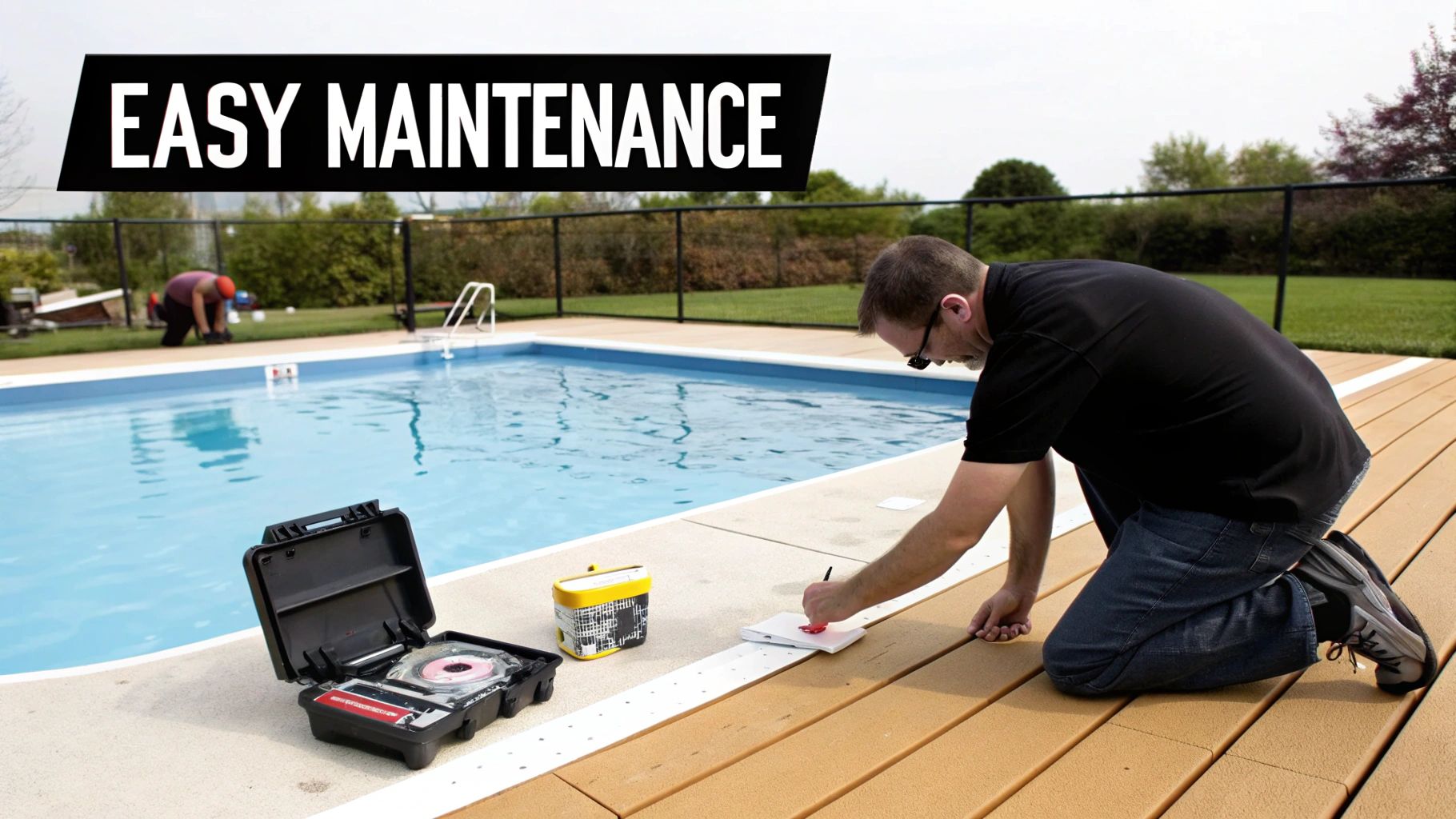
Think of it like owning a nice car. You don't have to be a mechanic, but you do need to keep an eye on the oil, tires, and fluids to keep it running smoothly. Your saltwater pool is the same—a little proactive care goes a very long way in protecting your investment.
Your Weekly Saltwater Pool Checklist
When it comes to pool care, consistency is your best friend. Sticking to a quick weekly schedule can stop small issues from snowballing into big, expensive headaches. The great news is that once you get into the swing of things, these tasks are pretty straightforward.
Here are the essential things every Southwest Florida saltwater pool owner should be doing each week:
- Test and Balance Your Water: This is non-negotiable. At least once a week, you need to check your pool’s free chlorine and pH levels. Keeping the pH in the sweet spot (ideally 7.4 to 7.6) is incredibly important because it dictates how effectively the chlorine from your salt cell can actually sanitize the water.
- Skim Debris and Empty Baskets: Get those leaves, bugs, and other floaties off the surface. And don't forget to empty the skimmer and pump baskets. This keeps water circulating properly, which is vital for both filtering and spreading that freshly made chlorine.
- Give Your Equipment a Once-Over: Just take a quick walk around your pump, filter, and salt chlorine generator. You’re simply looking for anything out of the ordinary—obvious leaks, strange noises, or any error codes flashing on the generator's display.
Monthly and Seasonal Upkeep
Beyond the weekly check-in, a few other tasks need your attention to ensure the long-term health of your equipment and water, especially with Florida’s unique climate.
Once a Month: It's time to test for alkalinity, calcium hardness, and cyanuric acid (CYA), also known as stabilizer. That intense Florida sun is notorious for burning off chlorine, so maintaining a proper stabilizer level (30-50 ppm) is key to protecting the chlorine your salt cell works so hard to produce.
Every 3 Months: Take a close look at your salt chlorine generator cell. You’re checking for any scaly mineral buildup. Our region often has hard water, which can cause calcium to form on the cell's plates and choke its chlorine production. A clean cell is an efficient cell.
A big challenge for us here in Southwest Florida is the summer deluge. A heavy downpour can seriously dilute your pool’s salt and stabilizer levels, throwing your entire water chemistry out of whack. It’s always smart to test your water after a major storm and adjust as needed.
Let the Experts Handle the Details
Does that all sound a bit much? You're not alone. Juggling water chemistry and keeping an eye on specialized equipment isn't for everyone. That’s exactly why we offer professional services to take all the guesswork and grunt work off your plate.
Our Water Medic weekly pool service takes care of every last detail, from precise chemical balancing to routine equipment checks and preventative maintenance. We’ll make sure your salt cell is clean, your stabilizer levels are dialed in, and your water is always pristine. Let our experienced technicians do the work so you can focus on one thing: enjoying the beautiful in ground saltwater pool you invested in.
For a deeper dive into how we protect this crucial piece of equipment, you can learn more about our dedicated salt system services.
Why Choose Water Medic for Your Southwest Florida Pool?
Choosing the right company to install or maintain your in-ground saltwater pool is just as critical as picking the system itself. Here in Southwest Florida, local expertise isn't a bonus—it's a necessity. With over 25 years of hands-on experience serving Cape Coral and the surrounding communities, we at Water Medic know exactly what your pool is up against.
Our climate is unique, and it brings a specific set of challenges. The intense Florida sun burns through chlorine faster, and our hard well water can be incredibly tough on pool equipment. This isn't something a generic approach can handle. We’re not just installers; we consider ourselves your partners in total water quality, making sure your pool is beautiful, balanced, and healthy from day one.
Your Trusted Local Partner
We’ve spent decades building our reputation on trust, quality work, and giving homeowners genuine peace of mind. Our method is simple: we listen to what you want, give you clear, honest advice, and deliver results that last. After all, a happy customer is the best advertising we could ask for.
Choosing a local expert means choosing a partner who is invested in the community and understands the nuances of maintaining a pool in this region. We're not just a faceless company; we're your neighbors, dedicated to keeping your backyard oasis in pristine condition.
Our services cover every aspect of owning a pool, so you’re never on your own. We offer:
- Expert Saltwater System Installations: We’ll guide you to the perfect salt chlorine generator for your pool's size and your family's needs, then handle the professional installation.
- Seamless Chlorine-to-Salt Conversions: Ready to make the switch? We make the conversion process fast and totally painless, turning your current pool into a saltwater retreat.
- Advanced Water Treatment Solutions: We directly address our area's tough water issues, protecting your investment from the inside out.
And for homeowners who'd rather spend their time swimming than testing water, our reliable monthly maintenance programs are the perfect fit. This guide has shown you the possibilities—now, let us help you make it a reality. Contact our team today for a personalized consultation.
A Few Final Questions About Saltwater Pools
When you're thinking about putting in an in ground saltwater pool, a few common questions always seem to pop up. We get it. It's a big decision, and you want to be sure you're making the right one. Here are the honest answers to the things we're asked most often by homeowners here in Southwest Florida.
Will My Pool Feel Like I'm Swimming in the Ocean?
This is probably the number one question we hear, and the short answer is not at all. The salt level in a saltwater pool is only around 3,000 parts per million (ppm). That might sound like a lot, but the ocean is more than ten times saltier, clocking in at 35,000 ppm.
In fact, the salinity in your pool is so low it’s much closer to what you’d find in human tears. You won't get that salty sting in your eyes. Instead, most people just notice that the water feels incredibly soft and silky on their skin. Any "taste" is so faint that you'd have to really try to notice it.
Are Saltwater Pools More Expensive to Take Care Of?
There's a bit of a give-and-take here between the upfront cost and what you'll spend down the road. Yes, the initial setup for a saltwater system costs more because you have to buy the salt chlorine generator. But after that, your yearly chemical bills drop dramatically.
Think about it: no more lugging home heavy, expensive buckets of chlorine tabs or jugs of liquid shock. Your main running costs will be the occasional bag of cheap pool salt, your usual water balancing chemicals, and eventually, replacing the salt cell every 3 to 7 years. For most homeowners, the long-term savings on chemicals really add up.
People often think saltwater pools are "zero maintenance," but a better term is "lower maintenance." They take the daily task of adding chlorine off your plate, but you still need to keep an eye on your water chemistry and do all the other regular pool chores.
Could the Salt Damage My Pool Deck or Equipment?
It’s true, salt can be corrosive, so this is a smart question to ask. The key is using the right materials from the start. Some porous stones, like certain types of flagstone or unsealed travertine, can be vulnerable to salt crystals forming and causing flaking over time.
This is also why it's absolutely vital to use equipment specifically designed for saltwater pools. For instance, your pool heater needs a cupro-nickel or titanium heat exchanger that can stand up to the salt. As long as your pool is built with salt-friendly materials and you follow a basic maintenance routine, you can easily prevent any issues and keep your backyard oasis looking pristine for years.
Still have a few things on your mind? We’ve probably heard it before! Head over to our detailed pool service FAQs for more answers to your questions about owning a pool in Southwest Florida. We’re firm believers that a well-informed homeowner is always the happiest pool owner.