
How to Clean Pool Pump Basket: A Pro Guide
Knowing how to clean your pool pump basket is a simple, five-minute task, but it’s easily one of the most critical parts of regular pool maintenance. That small plastic component is the last line of defense for your entire circulation system, stopping debris before it can jam the pump's impeller and lead to some seriously expensive damage.
Why a Clean Pump Basket Is Your Pool's Best Friend
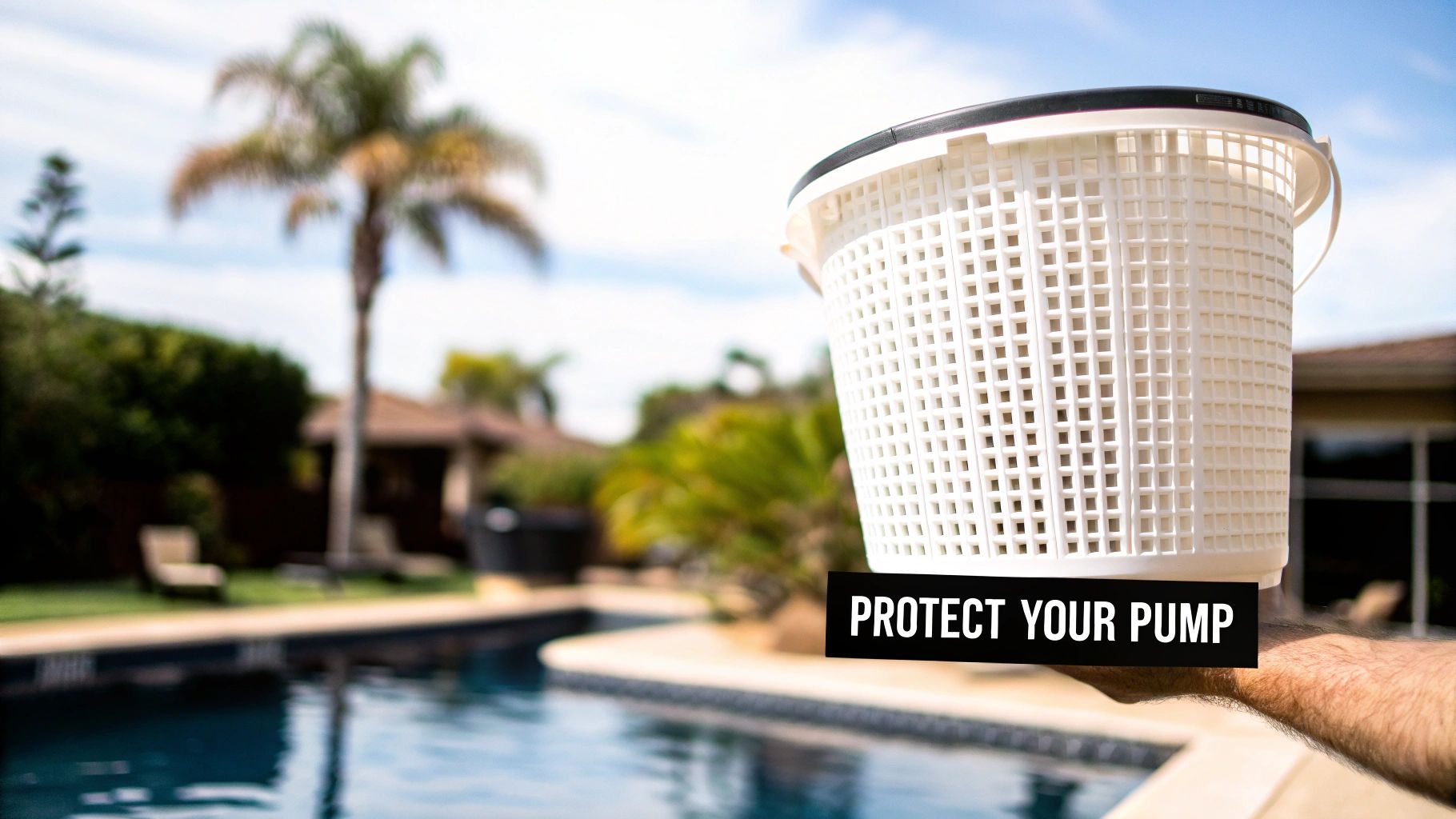
Think of your pump basket as a bodyguard for your pool’s heart—the pump motor. Its one and only job is to catch the bigger stuff like leaves, twigs, acorns, and flower petals that sneak past the main skimmer baskets.
When this basket gets clogged, the whole system chokes. It’s like forcing your pump to breathe through a clogged straw. It has to work exponentially harder just to pull water through, and that constant strain is far more than a minor inconvenience. It kicks off a chain reaction of problems that can turn a beautiful backyard oasis into a costly, green headache.
This is especially true here in Southwest Florida, where nature seems determined to fill our pools with something new every day.
The Real-World Cost of a Dirty Basket
Ignoring this simple chore has real consequences. A full basket immediately reduces water circulation, creating dead spots where algae starts to bloom almost overnight. Worse, it puts immense pressure on the pump motor, causing it to run hot and eventually burn out.
For those of us with pools in Cape Coral, Fort Myers, and the surrounding areas, the challenge is amplified. We get a unique mix of debris that can clog a pump basket in just a day or two.
- Palm Fronds and Seeds: These are notorious for shedding and can weave a dense mat inside the basket that’s almost waterproof.
- Seasonal Pollen: In the spring, thick blankets of yellow pollen can turn into a paste-like sludge, completely blocking water flow.
- Storm Debris: After a classic Florida downpour, a staggering amount of leaves and small branches inevitably finds its way into the pool.
The impact of this neglect isn't trivial. We've seen pumps where a full basket increased the workload by 30-50%, effectively shortening the motor's lifespan by years. As pool pros often say, the pump strainer basket catches everything the skimmer misses. In areas like ours that still see heavy debris from events like Hurricane Ian, checking it weekly is the absolute bare minimum. You can find more info on how routine checks prevent pump clogs at lesliespool.com.
Pro Tip: If your pump lid is ever too cloudy or dirty to see through, that’s your sign. The basket is long overdue for a cleaning. Don't wait for your water flow to slow to a trickle—be proactive.
The table below breaks down exactly what's at stake when this small task is overlooked.
At-a-Glance Impact of a Clogged Pump Basket
| Problem Area | Consequence of a Clogged Basket | Benefit of Regular Cleaning |
|---|---|---|
| Equipment Health | Pump motor overheats, leading to premature failure and costly replacement. | Extends the lifespan of your pump and other equipment significantly. |
| Water Quality | Poor circulation creates stagnant water, encouraging algae and bacteria growth. | Maintains crystal-clear, healthy, and properly sanitized water. |
| Energy Costs | The pump works harder and runs longer, driving up your electricity bill. | Ensures the pump operates efficiently, keeping energy consumption low. |
| Repair Bills | A starved pump can cause seals to fail or the impeller to break. | Prevents a cascade of expensive, avoidable repair issues down the line. |
Ultimately, keeping this basket clean is less about tidiness and more about protecting your entire pool investment. It’s a tiny bit of effort that pays off by preventing high energy bills, extending the life of your equipment, and keeping your water sparkling.
For those who’d rather not worry about it, the weekly pool service from Water Medic handles this and all other critical maintenance, ensuring your pool is always swim-ready.
Getting Set Up for a Quick and Easy Clean
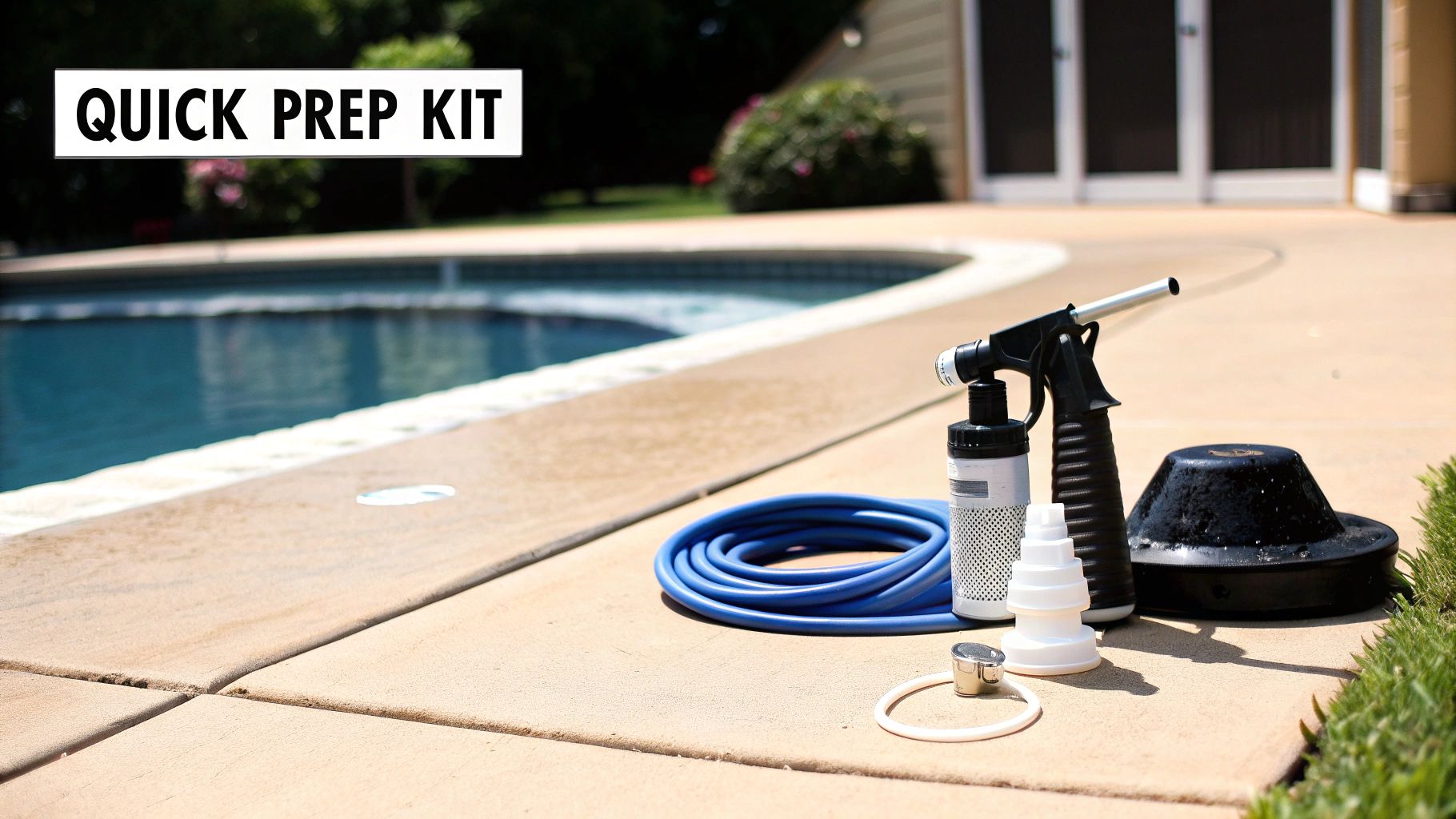
Honestly, cleaning your pool pump basket doesn't require a whole toolbox. The secret to making this a simple, two-minute job—instead of a frustrating ordeal—is getting a few things ready beforehand.
When you have everything you need right there with you, the whole process is just smoother. You'll spend less time running back and forth to the garage and more time getting the job done right.
Your Essential Cleaning Toolkit
Before you even touch the power switch, grab these items. You probably have them all already.
- Garden Hose with a Spray Nozzle: You’ll want a nozzle that can create a strong, direct stream of water. It makes blasting all the gunk out of the basket's mesh a breeze.
- Silicone-Based Lubricant: This is a must-have, not a nice-to-have. A little bit goes a long way in keeping the pump lid's O-ring supple, which is the key to getting a perfect, airtight seal later.
- A Bucket or Trash Can: You need somewhere to dump all the soggy leaves and whatever else you find in there.
That's the basic setup. But after years in the field, our team at Water Medic of Cape Coral knows there's one more thing every pool owner should have on hand. It's a small detail that can save you a world of trouble.
Pro Tip from the Field: Always keep a spare pump lid O-ring nearby. Seriously. This little rubber ring is the number one cause of frustrating air leaks that can starve your pump for water and even burn out the motor. They get old, they crack, and they can stretch out when you least expect it.
A spare O-ring is cheap insurance. When the one on your pump finally gives up, you can swap it in seconds instead of shutting your whole system down for an emergency run to the pool store. This is a fundamental part of the professional pool equipment care we perform, and it’s a habit every pool owner should adopt.
Your Step-by-Step Guide to Cleaning the Pump Basket
Having a solid routine for cleaning your pool pump basket does more than just make the job go faster. It's a quick, vital health check for your pool’s entire circulation system, and doing it right helps you spot little problems before they become big, expensive ones.
Let's walk through the exact process we use out in the field, covering the real-world hiccups you might run into, like a lid that won't budge or a cracked basket you didn't know you had.
First, Power Down the System for Safety
Before you even think about touching the pump, you have to kill the power. This isn't optional—it's the most important safety step.
Head over to your home's main circuit breaker panel and find the breaker labeled for your pool equipment. Flip it decisively to the "OFF" position. Don't just trust the pump's timer or your automation system to keep it off. A schedule could kick in at the worst possible moment, and that’s a risk you never want to take.
With the power off, the next step is to release the pressure in the lines. Find the small air relief valve on top of your pool filter. It’s usually a little knob you can turn. Slowly twist it counter-clockwise, and you'll hear a hissing sound as trapped air escapes. Just wait for that hissing to stop completely and for the pressure gauge on the filter to read zero.
Getting the Lid and Basket Out
Okay, now it’s safe to work on the pump itself. The pump lid is that clear top, usually held down with a large locking ring or a couple of screw-down knobs. A simple counter-clockwise turn should loosen it.
But sometimes, they're just plain stuck. This happens a lot if it’s been a while since the last cleaning or if the O-ring seal is old and dry.
A word of caution here: If that lid is giving you a fight, never grab a wrench or a hammer to force it. You'll almost certainly crack the lid, or worse, the pump housing itself. A better trick is to pour some warm (not boiling) water over the lid, which can help the plastic expand just enough to break the seal. If it’s still locked on tight, that’s a big red flag that the O-ring is shot, and it’s probably best to call in a pro.
Once you get the lid off, the basket should lift straight out. Be ready for it—it’ll be full of water and a lovely mix of soggy leaves and gunk. Have a bucket handy to catch the slop.
The Clean and Inspect Phase
Carry the basket away from your pool equipment. Dump the big stuff into your bucket, then grab a garden hose with a good spray nozzle. You want to give it a thorough cleaning, inside and out, blasting all the little bits of debris out of the mesh.
Now for the most critical part: the inspection.
Once the basket is clean, hold it up to the sunlight. Look it over carefully for any cracks, splits, or holes. Even a tiny hairline fracture is a major problem. That small opening is all it takes for debris to bypass the basket and get sucked directly into the pump's impeller, which can shred it in an instant.
If you find any damage at all, that basket needs to be replaced immediately. No exceptions.
Putting It All Back Together and Priming the Pump
With a clean and inspected basket, you’re ready to reassemble. Doing this part right is key to preventing air leaks.
- Check the O-ring. Find the large rubber O-ring—it’s either in a groove on the pump housing or on the lid itself. Pop it out, wipe it clean with a rag, and look for any flat spots, nicks, or cracks. A good O-ring is soft and perfectly round.
- Lube it up. Squeeze a small dab of a silicone-based O-ring lubricant onto your finger and run a thin, even coat over the entire O-ring. This is a pro tip that ensures a perfect seal and makes the lid much easier to get off next time.
- Reseat everything. Pop the clean basket back into the pump housing, making sure it sits flat. Then, put the lubricated O-ring back in its groove. Screw the lid back on, but only tighten it hand-tight. Overtightening will wreck the O-ring and can crack the lid.
- Power up and prime. Go back to the filter and close that air relief valve you opened earlier. Now, head to the breaker and flip the power back on. The pump should fire up and begin "priming"—sucking in water and pushing out all the air. You'll see the clear pump housing start to fill with water.
If you find a cracked basket during your inspection, or if the pump just won't prime after you put it all back together, it could be a sign of a bigger problem. For reliable diagnostics and expert help with any pump repairs and service, our skilled team at Water Medic of Cape Coral is ready to step in.
Beyond the regular cleaning of your pool pump basket, understanding general pump care is vital for longevity and efficiency. For broader insights, explore these essential pump maintenance tips, which cover principles applicable to many types of water pumps.
Adapting Your Routine for the Southwest Florida Climate
If you're taking care of a pool here in Southwest Florida, you know it's a completely different ballgame. Our intense sun, the mountain of pollen every spring, and the afternoon storms mean you can't just set a schedule and walk away. A cleaning routine that works for someone up north would have a Cape Coral pool looking like a swamp in a matter of days.
This is especially true for your pump basket. After one of our classic thunderstorms, that basket can be choked with leaves and debris. Letting it stay that way puts a massive strain on your pump motor as it struggles to pull water through. Honestly, a quick daily check during certain times of the year isn't overkill—it's just smart prevention.
How Local Conditions Affect Your Pool Pump
Living in paradise has its trade-offs, and for pool owners, that means dealing with some unique maintenance headaches that directly impact your pump and its parts. Knowing what you're up against is the first step in making your equipment last.
- Relentless UV Exposure: That beautiful Florida sun does a number on plastic. Your pump lid and the basket itself are constantly being baked, which makes them brittle and eventually leads to cracks.
- Saltwater Corrosion: Saltwater pools are fantastic, but the salt adds another layer to maintenance. It can leave a crusty residue on the pump lid's O-ring, which will break the seal. That lets air in, and an air leak is a fast way to burn out your pump motor.
- Heavy Debris Loads: We have a ton of beautiful, lush plant life, from oaks and their endless pollen to mangroves dropping leaves. One good windy day can completely stuff a pump basket, bringing your pool's circulation to a grinding halt.
This simple diagram breaks down the core cleaning process—a routine you'll get very familiar with in our climate.
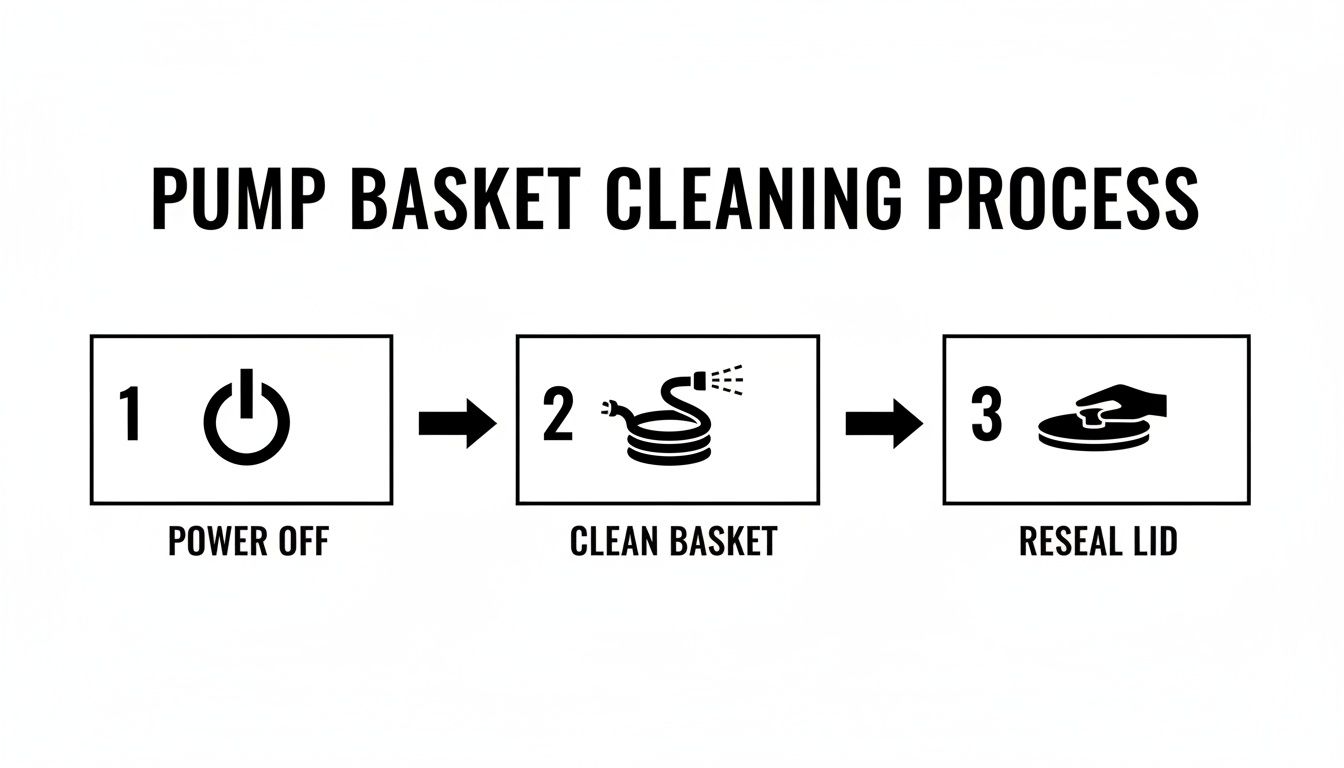
It really is that straightforward. Powering down, cleaning the basket, and getting a good seal on the lid are the three non-negotiable steps to protecting your pump, no matter how often you have to do it.
Fine-Tuning Your Cleaning Schedule
Here's a sobering fact: a single clogged basket can slash your pool's circulation efficiency by 40%. That’s a huge problem because poor circulation is exactly what algae loves. It’s how a clear pool can start turning green in as little as 48 hours, a nightmare that over 60% of Florida pool owners face in the summer.
While checking weekly is a decent rule of thumb elsewhere, it’s often not enough here. With our windy days and lush vegetation, it’s not uncommon for 5-10 pounds of debris to land in a pool over a single week. This means you have to be more vigilant.
Staying on top of these challenges is exactly where professional service makes a difference. We don't stick to a rigid schedule; we adapt our service to the season, the weather, and what your specific pool needs to stay healthy and protected.
Juggling all these climate-specific factors is a constant chore. If you'd rather be swimming in your pool than skimming it, our monthly maintenance programs are designed to take that burden off your shoulders. We handle the unique demands of Southwest Florida pools so you can just enjoy the water.
Signs It’s Time to Call a Professional
Knowing how to clean your pool pump basket is a fantastic skill for any pool owner. But just as important is knowing when a clean basket isn't the real solution. Sometimes, the trouble you're seeing is just a symptom of a much deeper problem with the pump or its motor.
When you run into those bigger issues, trying to DIY a fix can quickly snowball. What might have been a straightforward repair can easily turn into a full-blown equipment replacement. Learning to spot these red flags will tell you when it’s time to step back and call in an expert to protect your investment.
The Pump Just Won't Prime
Alright, so you’ve cleaned the basket, put a little lube on the O-ring, and tightened the lid down. When you fire it back up, the pump should catch its prime—meaning it pushes all the air out and starts pulling a solid stream of water—in a minute or two. If it’s struggling for several minutes, or never quite fills up with water, you've got an issue.
Sure, a bad lid O-ring is often the culprit here. But if the problem persists, it's a strong sign there’s an air leak somewhere else. It could be a cracked underground pipe or a failing seal on a valve, neither of which are simple fixes.
You Hear Loud or Strange Noises
Your pump should make a steady, low hum and not much else. If you turn it on after cleaning and it starts making a racket, listen closely. Those sounds are your equipment trying to tell you something is seriously wrong.
- A Loud Hum or Buzz: This often points to an electrical problem, maybe a bad capacitor. Letting a pump run like this is a good way to burn out the motor entirely.
- Grinding or Screeching: Hear that high-pitched, metal-on-metal sound? That’s the classic sign of failing motor bearings. This is a critical problem that needs immediate attention before the whole thing seizes up.
- Sounds Like Rocks Rattling: If it sounds like there’s gravel tumbling around inside the pump, your basket probably failed at some point, and debris got sucked straight into the impeller. This can chew the impeller to pieces and requires a full pump disassembly to clear out.
Here's something most people don't realize: simply cleaning the basket on a regular schedule has historically prevented over 70% of these impeller clogs and damages. It's a huge reason modern pumps now last an average of 12 years, a big leap from the 7-year lifespan we saw back in the 1990s pool boom. When it's neglected, pressure spikes, seals get strained, and you're left with a hefty repair bill.
You See Obvious Cracks or Leaks
Last but not least, give the pump housing a good look. If you see water actively dripping or, worse, spraying from the body of the pump (and not just from a loose lid), that's a dead giveaway. You're looking at a failed seal or a crack in the housing itself. Slapping some epoxy on it is a temporary fix at best and a dangerous one at worst—that system is under a lot of pressure.
If you run into any of these serious symptoms, the smartest and most cost-effective move is to get an expert on the phone. For our neighbors in Southwest Florida, the team at Water Medic of Cape Coral offers honest diagnostics and professional pool equipment repair to get your system back up and running the right way.
Got Questions? We've Got Answers
Even the clearest instructions can leave you with a few questions. After 25 years of servicing pools all over Southwest Florida, we've pretty much heard it all. Here are the answers to the questions our technicians get asked most often, so you can feel confident you're doing the right thing for your pool.
How Often Should I Really Clean My Pool Pump Basket in Florida?
Down here in Southwest Florida, checking the pump basket at least once a week is your bare minimum. Honestly, though, our environment usually asks for more.
Think about it: during the heavy spring pollen season, after one of our famous afternoon thunderstorms, or if your yard is full of oak and palm trees, you really should be checking it every couple of days. A basket clogged with debris not only puts a huge strain on your pump motor but also gives algae a perfect chance to take hold in our warm water. If that sounds like a chore you'd rather skip, our weekly pool service takes care of it so you never have to give it a second thought.
What Happens If I Run the Pump Without the Basket?
Let me be blunt: never run your pump without the basket. It’s like yanking the air filter out of your car’s engine and hoping for the best.
That little basket is the last line of defense for your pump's impeller, which is a finely-tuned, fast-spinning part that’s surprisingly easy to damage. Without the basket, everything—leaves, small pebbles, palm fronds, you name it—gets sucked straight into the impeller. Best case scenario, it gets clogged. Worst case, it shatters. This is one of the most expensive and easily avoidable repairs a pool owner can face. If your basket is missing or broken, just leave the pump off until you get a new one.
My Pump Basket Has a Crack. Should I Replace It?
Yes. Immediately. Even a tiny, hairline fracture means the basket isn't doing its job anymore.
A small crack is a wide-open door for the kind of debris that will jam or completely wreck the impeller. A brand new pump basket is cheap—we're talking less than the cost of a decent pizza. Compare that to the hundreds of dollars you could spend on a new impeller or a full pump replacement. If you aren't sure which basket is the right one for your model, the team at Water Medic of Cape Coral can point you in the right direction.
An airtight system is a healthy system. Any component that is cracked, from the basket to the pump lid, introduces a risk of equipment failure. Replacing small, worn-out parts proactively is the smartest way to prevent major repair bills.
Why Is My Pump Making Noise After I Cleaned the Basket?
If your pump is suddenly humming, whining, or just plain loud after you put it back together, it's almost certainly sucking in air. An air leak starves the pump of water, causing it to run loud and hot—a combination that will burn out the motor in no time.
The usual suspect is a bad seal at the pump lid. Turn the pump off and take another look at the lid's O-ring. Is it clean and sitting perfectly in its groove? Is it properly lubricated? Or is it old, brittle, and flattened out? If fiddling with the O-ring doesn't quiet things down, you might have a more serious air leak somewhere else. That’s a great time to call in a pro to find it before it causes any real damage.
When routine maintenance uncovers a bigger issue or you simply want the peace of mind that comes with expert care, Water Medic of Cape Coral is here to help. Contact us today for reliable diagnostics and professional pool equipment services.