How Is Well Water Treated A Complete Homeowner Guide
Treating well water isn't a one-size-fits-all job. It’s a carefully staged process that begins with understanding exactly what’s in your water. From there, we move through filtration, disinfection, and softening to tackle everything from sediment and bacteria to hard minerals, building a system that’s perfectly matched to your home's water profile.
Start with Certainty: Professional Well Water Testing
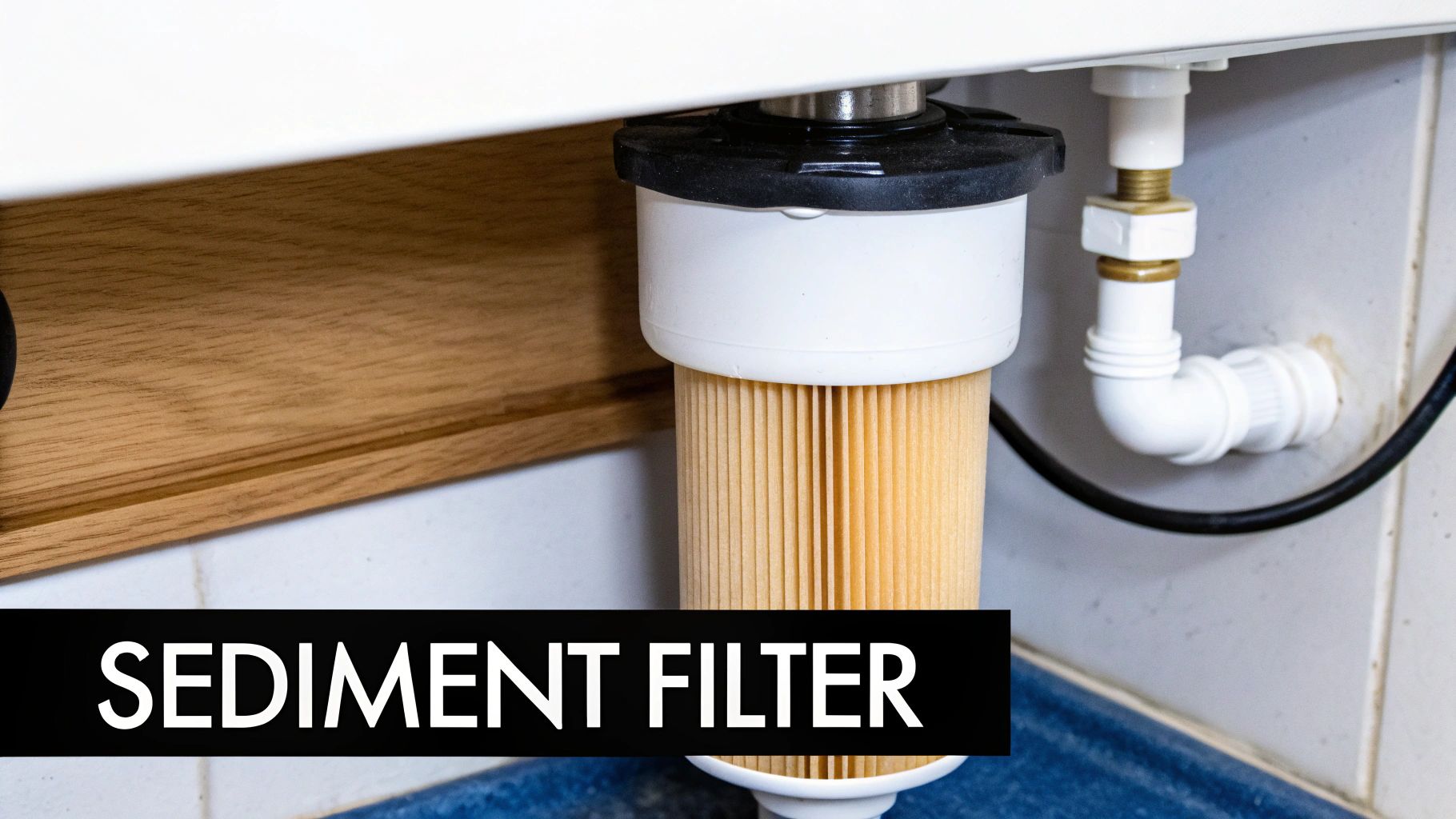
Before you can even think about treating your well water, you have to know what you're up against. Guessing is a surefire way to waste money on the wrong equipment. That’s why professional water testing is the absolute first step—it gives us the detailed roadmap we need for treatment, going way beyond what a basic DIY kit can tell you.
This is about more than just checking for murky water or a funky smell. A comprehensive lab analysis uncovers the real issues, including serious health risks that are often completely invisible, odorless, and tasteless. Think of it as a full diagnostic for your water supply.
What a Professional Test Reveals
When you get an analysis from a certified lab, you get hard data on a whole host of potential contaminants. This information is what allows us to choose the right gear for the job, rather than just installing a generic system that might not even touch your biggest problems.
Here’s a look at what a professional test will pinpoint:
- Bacteria and Viruses: We’re looking for things like total coliform and E. coli. These are major red flags for pathogen contamination that can make your family seriously ill.
- Nitrates and Nitrites: High nitrate levels, often from agricultural runoff, are especially dangerous for infants and pregnant women.
- Heavy Metals: Contaminants like arsenic, lead, and mercury can seep into groundwater from natural deposits or pollution, and they pose significant long-term health risks.
- Hardness Minerals: The report will tell us the exact levels of calcium and magnesium—the culprits behind scale buildup, soap scum, and shortened appliance lifespans.
- Iron and Manganese: These are the minerals that leave those stubborn orange and black stains on your sinks, toilets, and laundry. Knowing just how much is in your water is critical for selecting the right kind of filter.
A detailed water quality report is the foundation of any successful well water treatment system. It transforms the question from "How is well water treated?" to "How is my well water treated?"—a crucial distinction that ensures your investment directly targets your home's unique needs.
From Data to a Clear Action Plan
When the lab results come back, the numbers and technical jargon can look pretty overwhelming. That’s where our experience comes in. We’ll walk you through the findings, explaining what each contaminant means for your family’s health and your home's plumbing. For example, a water test showing 5 parts per million (ppm) of iron demands a completely different approach than one showing only 0.5 ppm.
This deep understanding lets us design a treatment system that methodically addresses every single issue flagged in your report. It becomes our action plan.
If you have more questions, our guide on frequently asked questions about well water systems is a great resource. Armed with solid data, you can move forward with confidence, knowing you’re making a smart investment to protect your family and your home.
Your First Line of Defense Against Sediment
Every solid well water treatment system has to start by stopping the big stuff first. Before you can even think about tackling invisible contaminants or hard water minerals, you've got to deal with the physical particles. I'm talking about sand, silt, dirt, and rust—the stuff that doesn't just make your water look cloudy and unappealing, but actually wreaks havoc on your entire plumbing system.
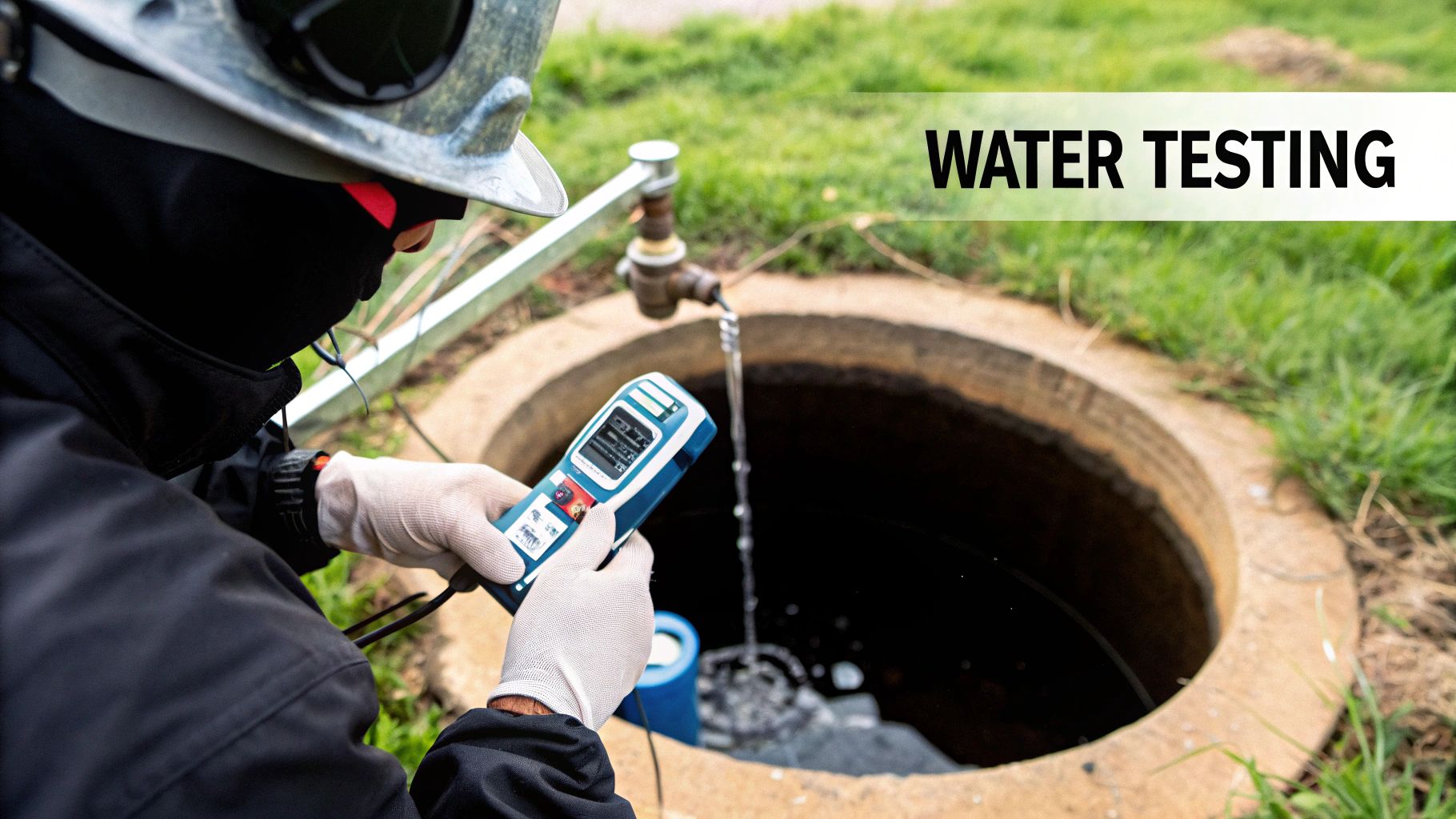
These gritty particles are like liquid sandpaper grinding away inside your pipes, fixtures, and appliances, causing them to wear out way too soon. Even more importantly, they can quickly clog and ruin the more complex and expensive filtration stages downstream, like your water softener or UV disinfection lamp.
Think of pre-filtration as the essential bodyguard for the rest of your water treatment investment.
Choosing the Right Sediment Filter
Not all sediment is created equal, which is why there isn't a one-size-fits-all filter. The two most common and effective options you'll encounter are spin-down filters and replaceable cartridge filters. Each one shines in different situations, and sometimes, the best solution for treating well water is actually a combination of both.
- Spin-Down Sediment Filters: These are fantastic for wells with a lot of heavy sediment, especially sand. As water enters the filter, it creates a vortex. This spinning action uses centrifugal force to throw the heavier particles to the outside wall, where they settle at the bottom. A quick, periodic flush of the valve purges all that gunk, making maintenance a breeze without ever needing to buy a replacement cartridge.
- Replaceable Cartridge Filters: These rely on a pleated or wound filter material to physically trap much finer particles. They are brilliant at capturing the smaller bits of silt and rust that a spin-down might miss, giving your water a more polished, crystal-clear result.
Understanding Micron Ratings
The secret to truly effective sediment filtration is picking the right micron rating. A micron is just a unit of measurement—it's one-millionth of a meter. For a little real-world context, a single human hair is about 50 to 70 microns thick. The lower the micron rating on a filter, the smaller the particles it can capture.
For instance, a common setup might use a 100-micron spin-down filter as the first stage to knock out the sand, followed by a 5-micron cartridge filter to grab the fine silt. Getting this rating right is a bit of a balancing act. If you go too fine right away, the filter can clog up fast and tank your water pressure. Go too coarse, and you're letting damaging particles slip through to the rest of your system. A proper water analysis is the only way to know for sure what your well needs to ensure maximum protection for your home.
Investing in a high-quality pre-filtration system is one of the smartest, most cost-effective decisions you can make. It’s a small upfront cost that prevents expensive repairs and dramatically extends the lifespan of your entire water treatment setup.
Neutralizing Invisible Threats in Your Water
Once you’ve tackled the silt and sediment, it's time to deal with the threats you can't see. This is where we get serious about safety. Bacteria, viruses, and other nasty microorganisms are hands-down the biggest risk in a private well, and they can lead to some pretty significant health problems. A solid disinfection system isn't just a nice-to-have; it's an absolute must for your family's well-being.
It's clear people are paying more attention to what's in their water. The global water treatment systems market was valued at about USD 38.56 billion in 2023 and is projected to hit nearly USD 66.98 billion by 2030. That's a huge jump, and it shows a growing demand for reliable solutions. You can learn more about the future of water treatment technologies and market trends to see where things are headed.
When we talk about making water biologically safe, it really boils down to two go-to technologies: ultraviolet (UV) purification and chemical chlorination. Each has its strengths, and the best one for you depends entirely on what your water test reveals and your specific needs.
UV Purification: The Chemical-Free Guardian
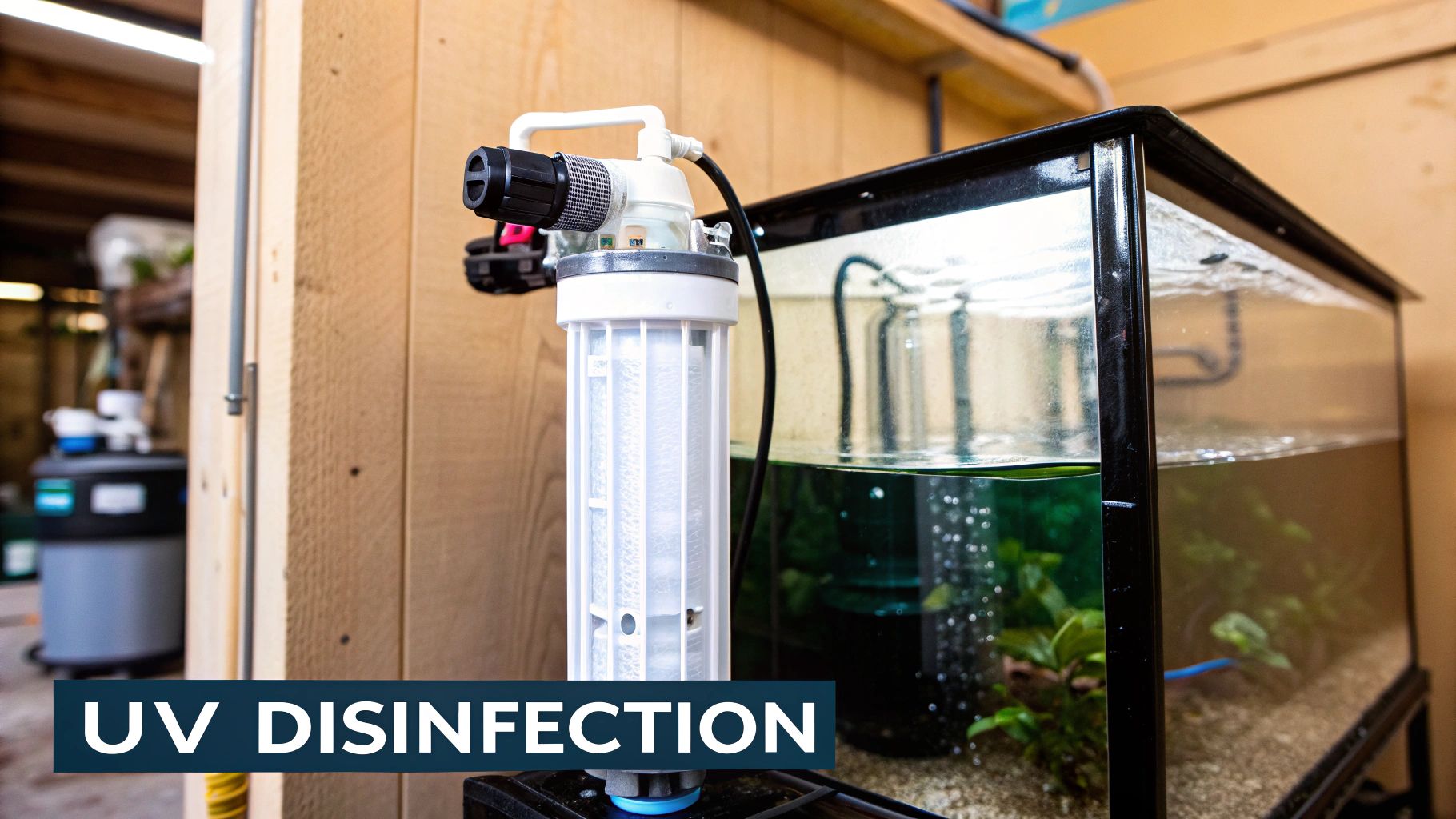
For the vast majority of homes with a well, an ultraviolet purification system is the way to go. It's a remarkably effective, chemical-free approach. As water flows through a steel chamber, it's zapped with intense UV-C light. This light essentially fries the DNA of nasty bugs like E. coli, Giardia, and other pathogens, making it impossible for them to reproduce and cause harm.
The beauty of a UV system is its simplicity. You're not adding any chemicals, so there are no weird tastes or smells. Plus, maintenance is a breeze—just swap out the lamp once a year. It’s pretty much a "set it and forget it" solution that gives you peace of mind 24/7.
But there are a couple of things to keep in mind:
- Water Clarity is Key: UV light can't work if it can't get to the microbes. That's why having that sediment filter in place beforehand is non-negotiable. Cloudy water can shield bacteria from the light.
- It Needs Power: The system runs on electricity. If the power goes out, your water isn't being treated unless you have a generator or battery backup.
Our advanced UV purification systems are built for robust, hassle-free protection, which is why we recommend them for most homeowners who just want clean, safe drinking water without the fuss.
When Chlorination is the Right Call
While UV is our top pick for most situations, sometimes you need to bring in the heavy artillery. That's where a traditional chlorination system comes in. It's a more aggressive approach for wells dealing with serious contamination. The system injects a precise, controlled amount of chlorine into your water to kill bacteria and viruses on contact.
A nice side benefit is that chlorine also oxidizes things like iron and sulfur, which can help clear up other common well water issues.
We typically spec a chlorine injection system for the really tough cases. Think wells with stubbornly high bacteria counts, persistent slime-forming bacteria, or other complex problems where you need the residual disinfecting power of chlorine to protect your entire plumbing system.
Chlorination is definitely more hands-on, though. It means buying chemicals, performing regular maintenance on the injection pump, and usually installing a follow-up carbon filter to get rid of that chlorine taste and smell before it reaches your tap. We generally reserve this method for situations where a UV system just won't be enough to guarantee the water is completely safe.
Solving Hard Water and Mineral Stains
Are you tired of fighting a losing battle against soap scum on your shower doors? Do you see chalky white scale building up inside your coffee maker and kettle? If your clothes come out of the wash feeling stiff and scratchy, you've got the classic signs of hard water.
These headaches are all caused by high levels of dissolved minerals, mostly calcium and magnesium. It’s more than just a cleaning nuisance, though. Left unchecked, that hardness is actively damaging your home’s plumbing and expensive appliances.
Think of that scale buildup as a layer of rock coating the inside of your pipes and, most importantly, your water heater. This forces the heating element to work overtime just to get your water hot, driving up your energy bills and drastically shortening the appliance's life. In fact, some manufacturers report that up to 72% of warranty claims are denied because of damage caused by untreated hard water.
Taming Hardness with Ion Exchange
The gold standard for fixing hard water is a water softener. These systems use a clever process called ion exchange to remove the problematic minerals.
Here’s a quick rundown of how it works:
- Your well water enters the softener tank and flows through a bed of resin beads. These beads are "charged" with simple sodium ions.
- The calcium and magnesium minerals (the culprits behind hardness) have a stronger positive charge and are more attracted to the resin than the sodium is.
- This attraction causes a swap—the hardness minerals latch onto the resin, releasing a tiny, harmless amount of sodium into the water in their place.
The result is "soft" water. You'll notice the difference right away. Soaps and detergents will lather up like never before, meaning you can use far less of them. Your glassware will come out of the dishwasher sparkling clean, and your skin and hair will feel softer and healthier. To see how these systems protect your home, you can check out our high-efficiency water softeners.
Eliminating Ugly Iron and Manganese Stains
Hardness isn't the only mineral issue we see in well water. Iron and manganese are two other common offenders, leaving behind those stubborn orange, brown, or even black stains in your sinks, toilets, and laundry. It doesn't take much, either—an iron level as low as 0.3 parts per million (ppm) is enough to cause noticeable staining.
To get rid of these metals, we install specialized iron and manganese filters. These typically work by using an oxidation process, which converts the dissolved (and invisible) iron into a solid particle. Once it's in a solid state, it's easy to filter out of your water for good.
This image shows a real-world example of an iron filter at work, dropping the iron level from a very high 5 ppm down to well below the staining threshold.
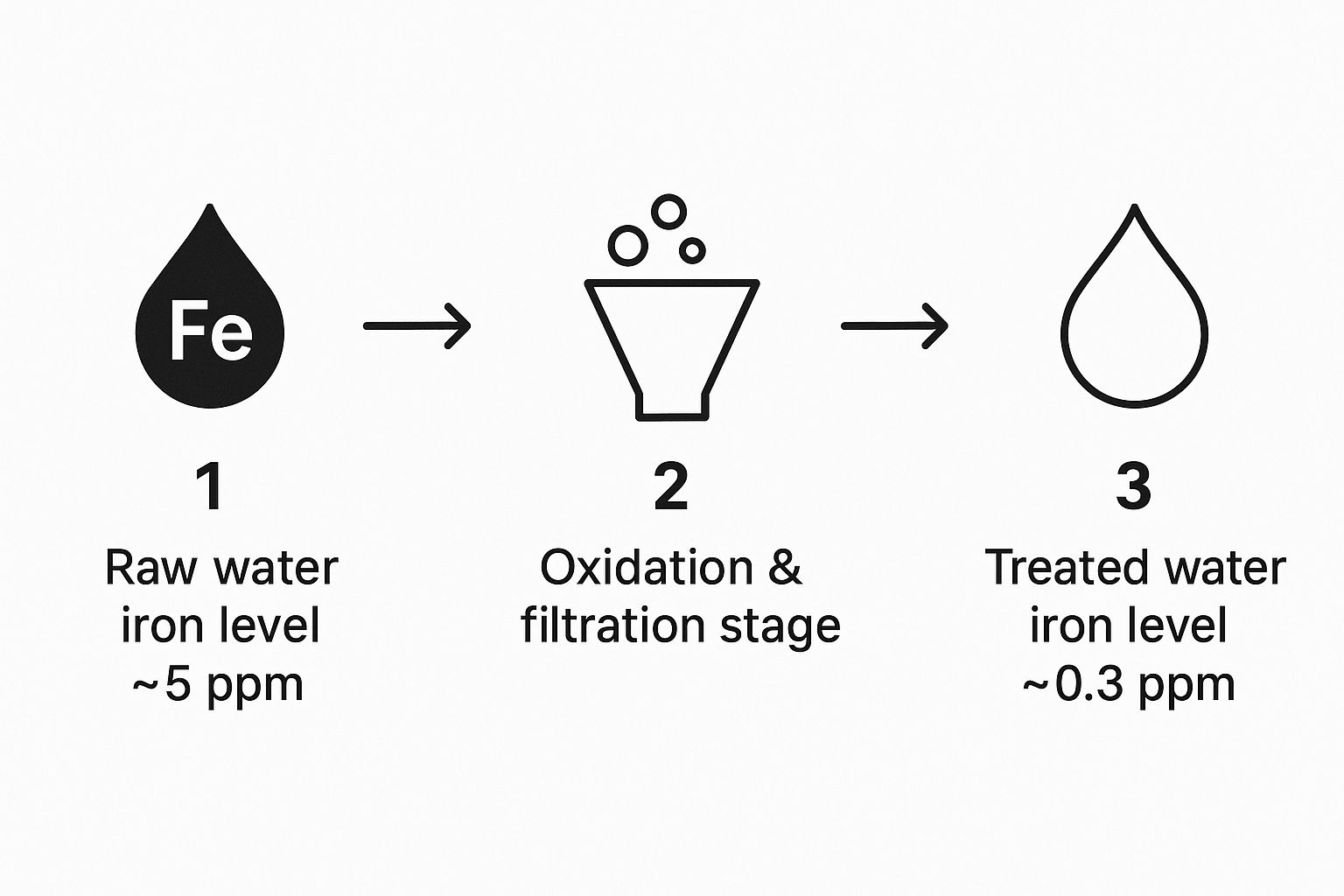
As you can see, the right technology makes a dramatic difference, protecting your home's fixtures and appliances from discoloration.
Key Takeaway: Putting the right water softener and iron filter in place is more than just a convenience. It's a direct investment in the longevity of your home's plumbing and appliances, saving you real money on everything from soap and energy bills to avoiding costly repairs and replacements.
Matching Well Water Problems to Treatment Solutions
Feeling overwhelmed by the options? Don't be. Use this quick reference table to match the most common well water issues we see with the most effective treatment technologies available.
| Contaminant/Issue | Sign of Problem | Recommended Treatment Solution |
|---|---|---|
| Hardness (Calcium & Magnesium) | White, chalky scale buildup on fixtures; soap scum; stiff laundry. | Water Softener (Ion Exchange) |
| Iron | Red, orange, or brown stains in sinks, toilets, and on laundry. | Iron Filter (Oxidation/Filtration) |
| Manganese | Black or dark brown staining, often seen with iron. | Manganese Greensand Filter or specialized media |
| Low pH (Acidic Water) | Blue-green stains on copper pipes and fixtures; metallic taste. | Acid Neutralizer (Calcite or Calcite/Corosex mix) |
This table should help you pinpoint the likely cause of your water woes and point you toward the right solution. Of course, the best first step is always a professional water test to know exactly what you're dealing with.
Achieving Pure Taste with Advanced Filtration
You’ve done the heavy lifting. Your water is now safe from bacteria, clear of sediment, and softened to protect your pipes and appliances. But what about the taste? Sometimes, even perfectly safe and treated well water can have a lingering earthy flavor or that distinct "rotten egg" smell from sulfur.
This is where the final polishing stage comes in. It’s the last step in the treatment process, turning good, safe water into truly great-tasting, pristine water you’ll actually enjoy drinking.
Carbon Filters: The Workhorse for Better Taste
When it comes to tackling off-tastes and odors, your best friend is an activated carbon filter. The magic is in the carbon itself—it's incredibly porous, creating a massive surface area that acts like a sponge, adsorbing the organic compounds, chlorine, and hydrogen sulfide gas that cause those unpleasant smells and flavors.
When I talk to homeowners, the choice usually comes down to one of two setups, depending on how widespread the problem is.
- Whole-House Carbon Filters: If you're noticing odors at every faucet—in the shower, from the washing machine, or at the kitchen sink—this is the way to go. A large tank installed where your water main enters the house treats every drop, ensuring fresh, clean-tasting water everywhere.
- Point-of-Use Carbon Filters: For minor taste issues that are really only a concern for drinking and cooking, a simpler filter installed right under the kitchen sink might be all you need.
For Ultimate Purity: Reverse Osmosis
For homeowners who want the absolute gold standard in water purity, nothing beats a Reverse Osmosis (RO) system. This technology is the final frontier, going way beyond taste and odor to remove up to 99% of total dissolved solids (TDS). An RO system forces water through a special semipermeable membrane, filtering out contaminants at a near-molecular level.
It’s designed to catch things other filters often miss:
- Nitrates
- Arsenic
- Fluoride
- Heavy metals
- Sodium
An RO system essentially gives you bottled-water quality straight from a dedicated tap at your sink. If your lab results showed high levels of specific dissolved contaminants, or you simply want the purest possible drinking water, our guide to under-sink reverse osmosis systems will walk you through finding the right solution.
Reverse osmosis is the definitive answer for removing the widest spectrum of contaminants, providing an unparalleled level of confidence in the water your family drinks every day.
This push for higher purity isn't just happening in individual homes. The global water and wastewater treatment market was valued at about USD 279.77 million in 2021 and is on a sharp upward trend. That growth is fueled by major investments in technologies like reverse osmosis to tackle both microbial and chemical pollutants on a larger scale.
By adding these final filtration steps to your existing treatment train, you create a comprehensive system that delivers pure, safe, and genuinely delicious water to every faucet in your home.
Answering Your Questions About Well Water Systems
Once we've got your custom well water treatment system installed and running smoothly, keeping it in top shape is pretty straightforward. A little routine care goes a long way. To make things even easier, here are some practical answers to the questions we hear most often from homeowners just like you.
How Often Should I Be Changing My Filters?
This is a great question, but there's no single answer. How long your filters last really comes down to the quality of your specific well water and how much water your family uses. That said, we can give you some reliable guidelines to work with.
-
Sediment Filters: These are your first line of defense. Most of the time, these pleated or spun cartridges need to be swapped out every 3-6 months. The tell-tale sign it's time? You'll start to notice a drop in water pressure around the house.
-
Carbon Filters: For a whole-house carbon filter, you can typically expect it to last 1-3 years. If you have a smaller under-sink unit for drinking water, you’re looking at a change every 6-12 months. The easiest way to know is if you notice those old tastes or smells starting to creep back in.
-
UV Lamps: This one is non-negotiable. The bulb in your UV purifier has to be replaced once a year, every single year. It might still light up after 12 months, but its germ-killing UV-C output will have weakened too much to guarantee your water is safe.
Do I Really Need to Pay for Professional Maintenance?
While you can definitely handle simple things like changing out a sediment filter, we always recommend an annual professional check-up. Honestly, it's a smart investment. Think of it like getting the oil changed in your car—it’s proactive care that helps you avoid a major, expensive breakdown later.
During a service visit, our techs can do things you might not, like recalibrating your water softener, deep-cleaning your UV system components, and running a quick water test to confirm everything is working perfectly. This preventive maintenance keeps your system running at peak efficiency and helps your equipment last for years to come.
"If you suddenly notice a change in your water's taste, smell, or color, that's your system's way of telling you something's up. The first thing to do is a quick visual check of your equipment for anything obvious. Then, give a professional a call. Don't put it off—catching things early keeps small problems from becoming big ones."
What Are the Real Long-Term Costs?
Knowing the ongoing costs of your system helps you budget without any surprises. Your main expenses will be for replacement media and a little bit of electricity.
You'll want to plan for the cost of salt for your water softener, any replacement filters, and that yearly UV lamp. These are predictable expenses, and when you think about it, they're a small price to pay for having consistently clean, safe water on tap.
The demand for reliable water treatment isn't going away. Globally, some markets are projected to grow at a CAGR of 11.6% between 2025 and 2035, while mature markets like the US are focusing on more advanced technologies. This just underscores how valuable a well-maintained system is. You can actually read more about these global water treatment trends to see why it's such a sound investment. Of course, our team is always here to give you specific cost estimates for your system's upkeep.
Your family’s health and the integrity of your home’s plumbing all ride on the quality of your water. With over 25 years of hands-on experience in Southwest Florida, Water Medic of Cape Coral delivers expert well water repair and custom treatment solutions to make sure your water is clean, safe, and pure.
Don’t leave your water quality to chance. Contact us for a professional consultation today at https://watermedic.com.