Chlorine Removal from Water Guide for Homes
That sharp, "swimming pool" scent coming from your tap is more than just a nuisance. It’s the unmistakable sign of chlorine, the chemical workhorse used to disinfect our public water supplies. While it's crucial for killing off harmful bacteria while water travels through the pipes, its job is pretty much done by the time it gets to your faucet.
That’s why so many homeowners are looking for ways to get that chlorine out of their water. It’s not just about improving the taste; it’s about protecting your skin and hair and just having better quality water throughout your home. Our professional Water Filtration Services are designed to solve this exact problem, giving you pure, clean water from every tap.
That Chlorine Taste and Smell Is a Real Problem
When you go to get a glass of water, you’re expecting something clean and refreshing. What you often get instead is a chemical odor that throws off the taste of your morning coffee and makes a simple glass of water taste… well, wrong. This isn't just about personal preference. It's a daily reminder of the residual chlorine and other treatment chemicals you and your family are drinking and bathing in.
The issue goes way beyond an off-putting taste. Chlorine is a powerful chemical designed to kill living things, and it doesn't just clock out once the water leaves the treatment plant. Here in Southwest Florida, we hear from homeowners all the time who feel its effects in their daily lives.
From Your Kitchen to Your Shower
You'll notice chlorine’s presence all over the house. In the kitchen, it can subtly change the flavor of everything you cook, from boiling pasta to brewing iced tea. But it's in the bathroom where the effects can be even more obvious.
Ever step out of the shower with that tight, itchy feeling on your skin? Or maybe you've been fighting with dry, brittle hair that seems to fade your color-treated hair faster than it should? Chlorine is a very likely culprit. It's known for stripping the natural, protective oils from your skin and hair with every wash.
Getting rid of chlorine isn't just about chasing better-tasting water. It's about bringing comfort back to your daily routines and cutting down on your exposure to a chemical that can cause real, nagging irritation to your skin and hair.
The Hidden Concern: Disinfection Byproducts
Beyond what you can taste and feel, there's another concern that's harder to spot. When chlorine mixes with the natural organic stuff in the water—things like tiny bits of leaves and soil—it can create a whole new set of compounds called disinfection byproducts (DBPs).
While your city’s water is treated to meet federal safety regulations, many families decide they'd rather not have long-term exposure to these byproducts. It's one of the biggest reasons people choose to install a home water filtration system.
This growing awareness is changing how we think about tap water. It's no surprise that the market for filters that remove chlorine is booming, on track to hit around $1.83 billion by 2025. This isn't just a trend; it's driven by people who want to take control over their water quality for their health and peace of mind. You can learn more about the water filtration market's growth here.
Taking that next step to remove chlorine from your water is a smart move for your family's comfort and well-being. The first step is always understanding what's really in your water. A professional consultation can clear up the confusion and point you to the right solution, ensuring every faucet in your house delivers the clean, safe, and genuinely great-tasting water you deserve.
A Look at Your Chlorine Removal Options
Trying to figure out how to get chlorine out of your water can feel a bit overwhelming, but it really comes down to a few key, time-tested methods. You’ve got everything from simple fixes for a single tap to powerful systems that treat every drop of water coming into your house. The best choice for you really just depends on what you’re trying to achieve.
The main players in this space are activated carbon filters, reverse osmosis (RO) systems, and even some niche solutions like Vitamin C filters for showers. Each one comes with its own pros, cons, costs, and upkeep. Let's walk through them so you can get a clear idea of what our professional solutions can offer.
To give you a better sense of what these systems look like, here's an example of a modern filtration unit and its key parts.
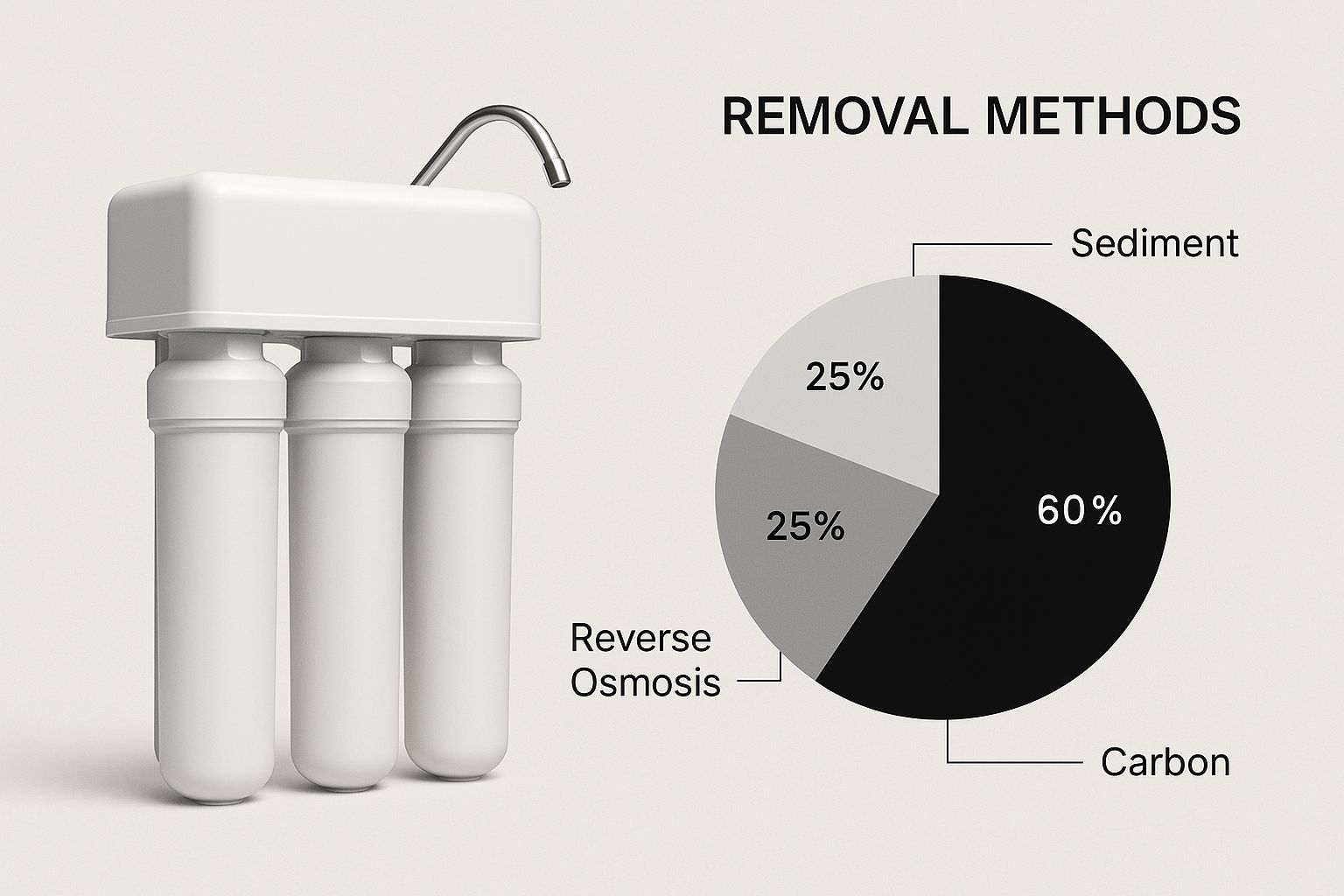
As you can see, modern systems are often sleek and compact. They manage to pack several stages of filtration into one unit, allowing them to knock out not just chlorine but a whole host of other common water contaminants.
Activated Carbon: The Reliable Workhorse
When it comes to chlorine removal, activated carbon is the undisputed champion. It's the most common technology out there, and for very good reason. It works through a fascinating process called adsorption, where chlorine molecules are chemically attracted to the carbon's incredibly porous surface and get trapped.
You'll find activated carbon in all sorts of devices:
- Pitcher Filters: Great for getting started. They're cheap and simple, but they're also slow, only filter small amounts at a time, and you'll be changing those cartridges constantly.
- Faucet-Mounted Filters: A nice step up. These hook right onto your kitchen tap, giving you filtered water whenever you need it without the wait.
- Whole-House Carbon Systems: This is the ultimate solution. A large, robust carbon filter is installed right where the main water line enters your home. The result? Every single tap—kitchen, bathroom, shower, you name it—delivers clean, chlorine-free water. It's a professional-grade approach that offers incredible convenience.
While a pitcher is a decent starting point for drinking water, a whole-house system tackles the problem at the source. It protects your skin and hair from drying out in the shower and can even help your appliances last longer. Our whole-house carbon filters provide this comprehensive solution.
Reverse Osmosis: For Maximum Purity
If your goal is more than just getting rid of chlorine—if you want the absolute purest water possible—then Reverse Osmosis (RO) is the gold standard. An RO system forces water through a super-fine membrane that filters out an incredible range of contaminants, far beyond what carbon alone can do.
Think of an RO system as a bouncer at the molecular level. It lets pure water molecules pass through but flat-out rejects chlorine, heavy metals, salts, and tons of other dissolved solids. What you get is exceptionally pure drinking water from its own dedicated faucet.
Many modern RO systems even include remineralization filters. These add beneficial minerals like calcium and magnesium back into the water after the purification process, which many people feel improves the taste. This is the perfect option for anyone who wants total confidence in the quality of their family's drinking water. A deep dive into professional Water Filtration Services can help you figure out if RO is the right move for your home.
Specialized Solutions for Specific Problems
Beyond the big two, you'll find other targeted solutions. For example, Vitamin C shower filters are designed specifically to neutralize chlorine and its cousin, chloramine, right at the showerhead. They do a fantastic job of protecting your skin and hair but won't do anything for the water you drink.
Ultimately, picking the right method is a balancing act between effectiveness, convenience, and cost. A cheap pitcher filter might seem like a quick win, but the constant refills and limited impact often lead people to look for a more permanent and comprehensive solution. Professionally installed systems, whether whole-house carbon or RO, deliver a level of performance that genuinely changes your home’s water for the better.
Chlorine Removal Methods at a Glance
To make things even clearer, here’s a quick comparison of the most popular methods. This table should help you see, at a glance, which option might be the best fit for your home and budget.
| Method | Effectiveness | Best For | Initial Cost | Ongoing Maintenance |
|---|---|---|---|---|
| Activated Carbon | Excellent for chlorine | Whole-house dechlorination, improving taste & odor | Low to High | Filter/media changes every 1-5 years |
| Reverse Osmosis | Exceptional for purity | Drinking water purification (removes 99% of contaminants) | Medium to High | Filter changes (6-12 mos), membrane change (2-3 yrs) |
| Boiling | Good (for small batches) | Removing chlorine from water for cooking or drinking | Very Low | None (just energy cost) |
| Chemical Neutralization | Excellent | Pools, industrial use, or specific home systems | Varies | Regular addition of chemicals |
Each of these methods has its place. Your choice will depend on whether you want a targeted fix for your drinking water or a comprehensive solution that improves the water quality throughout your entire home.
How Activated Carbon Filters Work
When it comes to getting chlorine out of your water, activated carbon is the undisputed champion. It’s the powerhouse technology you'll find in nearly every reliable water filter, from the simple pitcher on your counter to the most robust whole-house systems.
So, how does it do it? The magic is in a process called adsorption. Think of it less like a strainer and more like a chemical magnet.
Imagine a charcoal sponge, but one with an impossibly huge network of microscopic tunnels and pores. That's a good picture of activated carbon. This massive internal surface area gives chlorine molecules countless places to get stuck. As water flows through, the carbon grabs onto the chlorine and holds it tight, effectively pulling it out of your water supply.
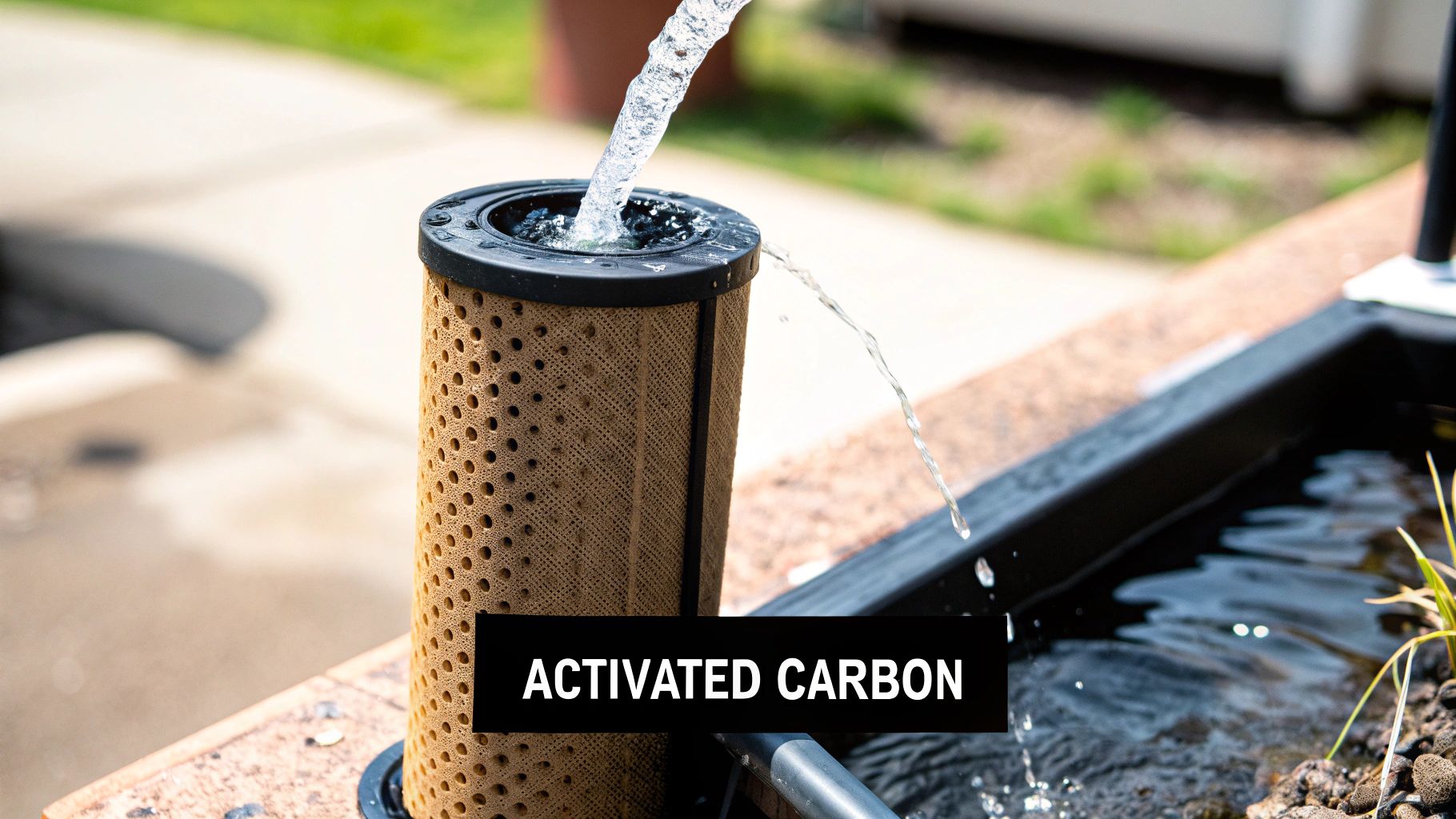
It’s this simple but powerful principle that makes activated carbon the go-to solution for better-tasting, safer water at home. While cities use chlorine to keep our water safe on its journey to us, many of us prefer to remove it at the tap. The best carbon filters can pull out nearly 100% of the chlorine, which immediately gets rid of the bad taste, the swimming pool smell, and potential health worries.
GAC vs. Carbon Block Filters
Now, not all carbon filters are built the same. You'll generally run into two types, and knowing the difference will help you pick a system that actually works well.
- Granular Activated Carbon (GAC): These filters are filled with loose bits of carbon, almost like coarse sand. They do work, but because the granules are loose, water can sometimes carve a little path through them—a shortcut. This is called "channeling," and it means some water sneaks by without ever touching the carbon.
- Solid Carbon Block: This is the far better choice. Here, powdered activated carbon is squeezed under immense pressure to form a solid, dense block. This design forces every single drop of water to work its way through the intricate pore structure. There’s no shortcut, which means maximum contact time and far more effective removal of chlorine and other nasty stuff.
You'll often find GAC in cheaper, smaller filters. For professionally installed systems, we exclusively use high-quality solid carbon blocks. It’s all about consistent, reliable performance.
The real advantage of a solid carbon block is its uniformity. It eliminates the risk of channeling, guaranteeing that contaminants like chlorine are captured effectively before the water ever reaches your tap.
Beyond the Pitcher: A Whole-House Solution
Think about it: ice cubes that don't have that faint chemical taste, or a hot shower without that harsh chlorine smell filling the air and drying out your skin. That's the kind of upgrade a professionally installed whole-house carbon filter delivers.
Unlike a pitcher that only treats a few glasses of water at a time, our whole-house carbon filters are installed right where your main water line enters your home. This means every single tap—your kitchen sink, bathroom faucets, washing machine, and shower—gets purified, dechlorinated water.
It's a completely different level of convenience and protection that a small countertop filter just can't touch.
When a Reverse Osmosis System Makes Sense
While activated carbon filters are fantastic for getting rid of that chlorine taste and smell, some people are looking for more. If your goal is the highest level of water purity you can get in your home, it’s time to look at a Reverse Osmosis (RO) system.
Think of RO as a water purification process, not just a filter. It uses a special membrane with microscopic pores—so fine that only water molecules can pass through. This process is incredibly effective, capable of removing up to 99% of total dissolved solids (TDS) and giving you exceptionally clean water.
An RO system goes far beyond just chlorine, tackling a whole host of other contaminants that simpler carbon filters just can't catch.
More Than Just a Chlorine Filter
A professionally installed RO system is your home's best defense against a wide range of unwanted substances. It's the right move for families who want to be sure their water is as clean as possible.
Here's a look at what else an RO system can remove:
- Heavy Metals: Lead, arsenic, mercury, and others.
- Fluoride: Often added during municipal water treatment.
- Dissolved Salts: The minerals and salts that contribute to high TDS levels.
- Nitrates & Sulfates: Contaminants that can seep into groundwater supplies.
For anyone who wants total confidence in their drinking and cooking water, RO is the gold standard. It provides a dedicated faucet in your kitchen that delivers purified water on demand.
Answering Common Questions About RO
Two things I often hear about are water waste and mineral removal. The good news is that modern systems have come a long way. Today's high-efficiency RO units are designed to minimize wastewater, making them much more environmentally friendly than their predecessors.
The real benefit of an RO system is the certainty it provides. You know the water you're giving your family is free from chlorine and a long list of other potential contaminants. It delivers unparalleled purity right from your kitchen sink.
What about the good minerals? We know those are important. That's why many of our systems can be equipped with a remineralization filter. This adds healthy minerals like calcium and magnesium back into the water after it’s been purified. You get the best of both worlds: pure water that tastes great and has a balanced pH.
You can see how these systems fit seamlessly into a modern kitchen by exploring some of the under-sink reverse osmosis options available.
If your priority is unmatched purity, a conversation with one of our specialists can help you decide if an RO system is the right fit for your home.
Keeping Your Water Filter in Top Condition
Putting in a quality water filter is a great start, but that's just step one. To keep getting fresh, clean water, you absolutely have to stay on top of maintenance. Think of it like changing the oil in your car—it’s not optional if you want things to run smoothly. If you neglect it, your filter can quickly go from a solution to a problem.
A filter's entire job is to catch things like chlorine. Over time, it gets completely full, and once it's saturated, it can't grab any more contaminants. Worse, a clogged and forgotten filter can become a breeding ground for bacteria, potentially making your water quality even poorer than when you started.
Staying on Top of Replacement Schedules
Every filter is different. How long one lasts really depends on the system you have and how much water your family uses. The best thing you can do is follow the manufacturer's guidelines to a T. That’s the only way to ensure consistent chlorine removal from water.
Here’s a rough idea of what to expect for different systems:
- Reverse Osmosis (RO) Pre-filters: You'll likely need to swap these out every 6 to 12 months. Their main job is to shield the sensitive RO membrane from chlorine and sediment.
- RO Post-filters & Membrane: The carbon post-filter typically gets changed once a year. The RO membrane itself, however, is much more durable and can last 2 to 3 years.
- Whole-House Carbon Filters: These are the big ones. The filter media inside can go for 3 to 5 years, but this can change based on how much water you use and the initial quality of your local water supply.
When you miss these deadlines, chlorine and other junk start making their way back into your water. You'll know it's happening when that "public pool" smell returns to your shower or your drinking water starts tasting faintly of chemicals again.
The biggest risk of an expired filter isn't just that it stops working well—it's that bacteria can start growing on the saturated media. Regular maintenance is the only way to be sure your system is providing clean, safe water, not adding new problems.
A Hassle-Free Approach to Maintenance
Let's be honest, trying to remember all these different schedules, finding the right replacement parts, and then actually doing the swap can be a huge pain. Life is busy, and it's easy for filter changes to get pushed to the bottom of the list. This is where getting some professional help can make a world of difference.
Instead of juggling calendar alerts and spending your Saturday wrestling with a filter housing, you can have an expert team manage everything. Our professional Filter Replacement & Maintenance Services take all the guesswork and hassle off your plate. We keep track of your system's schedule, bring the correct filters, and make sure the installation is done right every time. It’s the easiest way to guarantee your family always has the pure, chlorine-free water you invested in.
Common Questions About Removing Chlorine From Water
If you're starting to think about getting the chlorine out of your water, you're bound to have some questions. It's totally normal. Over the years, we've helped countless homeowners in Southwest Florida, and we've heard just about everything.
Let's cut through the noise and tackle the questions we get asked most often. Getting straight answers is the first step to finding a solution that actually works for your home.
Can I Just Boil My Water to Remove Chlorine?
This is a big one. People often think boiling water is an easy fix for chlorine, and they're partially right. If you bring a pot of water to a rolling boil for around 15 minutes, most of the free chlorine will turn into gas and evaporate.
But here’s the catch: it's not a practical solution for your whole house. More importantly, many water treatment plants, including some right here in Florida, now use chloramine. Chloramine is a stubborn compound made of chlorine and ammonia, and simply boiling your water won't touch it. You’d be wasting time and energy without getting rid of the real problem.
What Is the Difference Between Chlorine and Chloramine?
Think of chloramine as chlorine’s tougher, more persistent cousin. It's designed to keep water disinfected for longer as it travels through the city pipes to your home. That’s good for public health, but it makes it much harder to filter out once it gets to your tap.
A standard activated carbon filter, which does a great job on chlorine, barely makes a dent in chloramine. To break the strong chemical bond in chloramine, you need a specialized filter media called catalytic carbon.
Don't guess which disinfectant your city uses. A filter designed for chlorine is a wasted investment if your water contains chloramine. A quick professional water analysis tells you exactly what you're dealing with so you can get a system that works.
How Do I Pick the Right Water Filter?
There’s no magic "best" filter for everyone. The right system for your home depends completely on your specific situation.
We need to look at a few things:
- Your local water chemistry.
- How much water your family uses.
- Your end goal—are you just after better-tasting drinking water, or do you want to protect your skin, hair, and appliances, too?
The only way to know for sure is to start with data. Our experts can schedule a free water analysis for your home. This test gives us a clear snapshot of your water quality, so we can recommend a solution that delivers results you can actually see and taste.
Ready to enjoy pure, great-tasting water from every tap? The team at Water Medic of Cape Coral has over 25 years of experience helping homeowners in Southwest Florida get the high-quality water they deserve. Contact us today to schedule your free, no-obligation water analysis!
Article created using Outrank