How to Remove Lead from Water in Your Home
The only way you can actually remove lead from water is with a certified water filtration system. People often ask if boiling works, but that’s a dangerous misconception. Boiling water can kill germs, but it won't touch heavy metals. In fact, as the water evaporates, it actually increases the concentration of lead.
The Unseen Threat of Lead in Your Water
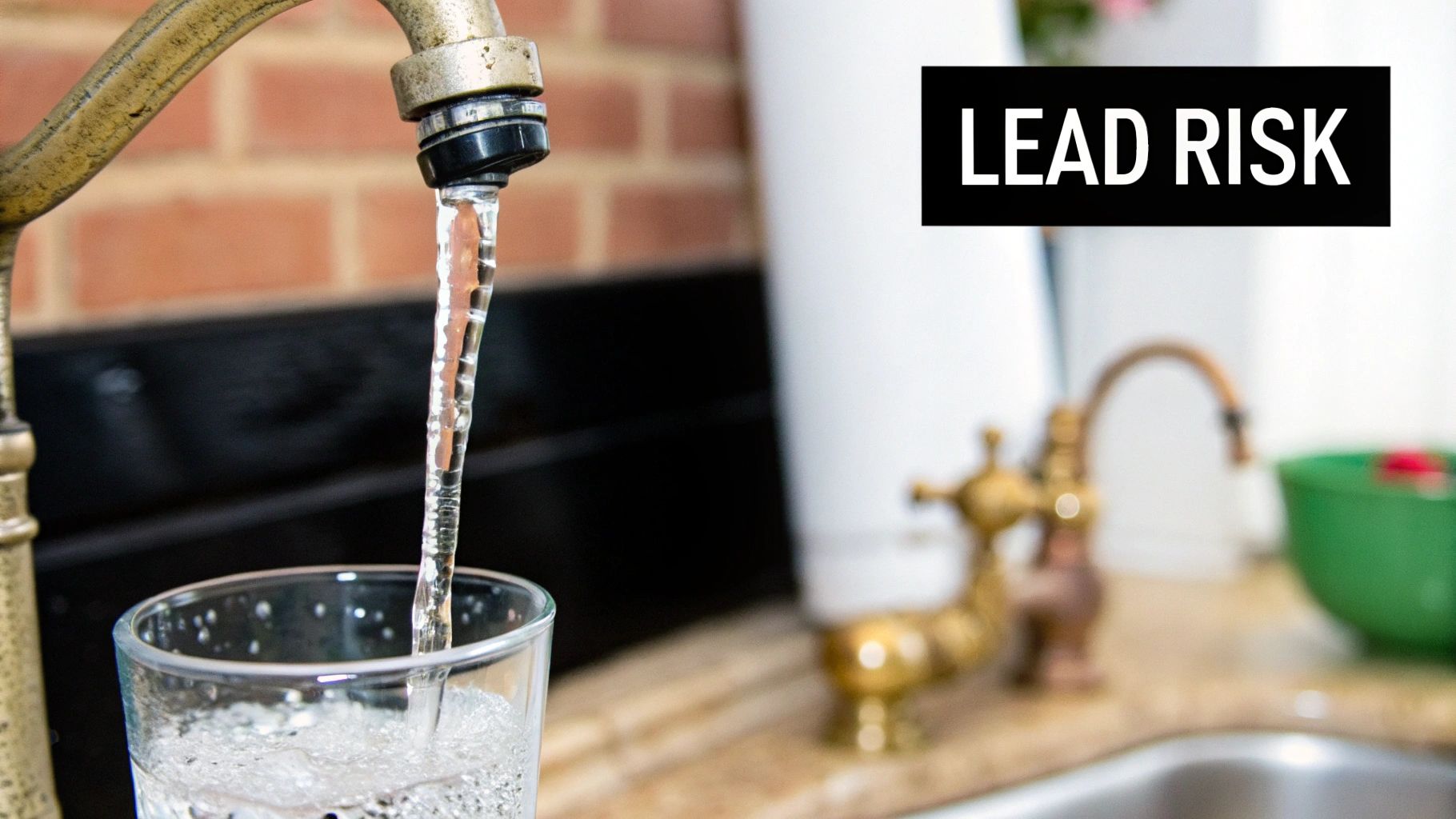
When you turn on your kitchen tap, you expect the water to be refreshing and safe. For many of us, especially in homes with older plumbing or those on well systems, an invisible threat could be lurking. Lead contamination is a silent problem, and it's impossible to detect without a proper test.
The issue often comes down to old infrastructure. If your home was built before the late 1980s, there’s a good chance it has lead service lines, copper pipes joined with lead-based solder, or even brass fixtures that contain lead.
Over the years, certain water conditions can cause this toxic metal to leach out of the pipes and right into your drinking water. This is a real concern here in Southwest Florida, where our unique water chemistry and the high number of private wells can speed up that corrosion process.
Why You Can't Ignore Lead Contamination
Lead is a potent neurotoxin that accumulates in the body, meaning it builds up with every exposure. The most critical thing to understand is that there is no safe level of lead exposure. This is especially true for children and pregnant women, where even tiny amounts can cause permanent health damage.
This isn't just a hypothetical problem; it's a global health crisis. According to the World Health Organization, an astonishing 800 million children worldwide—that's one in three—have elevated blood lead levels. In 2019, lead exposure was linked to nearly half of the two million-plus deaths from known chemical exposures. You can explore more data on this widespread issue and its global impact.
The greatest risks often come from the very pipes that deliver water into our homes. Identifying the source is the first step, but implementing a reliable filtration solution from a trusted provider is the only way to guarantee safety at the tap.
Taking Control of Your Water Quality
Just because you have older pipes doesn't guarantee your water is contaminated, but it definitely raises the stakes. Things like your water's acidity (pH), temperature, and mineral content all play a role in how much lead dissolves.
Since you can't see, taste, or smell lead, the only way to be certain is to get your water professionally tested.
Thankfully, modern water treatment gives us a clear path forward. By understanding the risks and looking into the right filtration systems, you can move from worrying to taking action. Reliable solutions are readily available, giving you the peace of mind that every glass of water in your home is safe. For those on private systems, learning the answers to common questions about well water is a great place to start.
The First Step: Test, Don't Guess
You can't see, smell, or taste lead in your water, so guessing isn't a viable strategy. Before you can even think about how to fix a potential lead problem, you have to know for sure if you have one.
This might feel a little overwhelming, but getting your water tested is the single most important step you can take to protect your family. It's a common mistake to assume your water is fine just because your neighbors haven't had issues. Lead contamination is hyper-local; levels can be drastically different from one house to the next, all depending on the specific service line and plumbing inside your home.
The Gold Standard: Professional Water Testing
The only way to get a definitive answer is to have a sample analyzed by a state-certified laboratory. You’ll see DIY kits at the hardware store, but frankly, they often aren't sensitive enough to detect low—but still dangerous—levels of lead. A professional test gives you hard data you can trust.
We make this part easy. Our team provides the right collection kits and walks you through the instructions to ensure the sample is valid. The key is capturing the "first draw"—the water that comes out of your tap first thing in the morning after it's been sitting in the pipes all night. This is where lead concentration is usually highest. We then get the sample to a certified lab and, once the results are in, sit down with you to explain exactly what they mean.
Peace of mind comes from certainty. Professional lab analysis removes all doubt, giving you a clear picture of your water’s composition and a solid foundation for choosing the right solution.
Identifying Potential Risk Factors in Your Home
While you're waiting on lab results, you can play detective. There are a few red flags that significantly increase the odds of having lead in your plumbing.
- Age of Your Home: If your house was built before 1986, there's a very high probability it contains lead pipes, fixtures, or solder. The Safe Drinking Water Act amendments started phasing it out that year.
- A Closer Look at Your Pipes: Head down to the basement or check under the sink. Lead pipes are a distinctive dull gray and are soft enough that you can easily scratch them with a key, revealing a shiny silver metal underneath.
- Check the Solder: Even homes with copper pipes can be a problem if they were joined with lead-based solder. You're looking for bulging, silver-colored joints where the pipes connect.
- Galvanized Steel Pipes: Some older homes used galvanized steel pipes. Over time, as these pipes corrode, they can trap lead particles from an old service line, releasing them into your water intermittently.
If your water comes from a private source, understanding the specifics of well water testing is a critical first step. You can also get answers to common questions about private wells right here: https://watermedic.com/well-faqs/.
Immediate Safety Measures for Suspected Lead
If you have a strong suspicion of lead or are simply waiting for your test results to come back, don't just wait and worry. You can take these simple, temporary precautions right now to reduce your family's exposure.
While these steps are effective stopgaps, they are not a substitute for a long-term solution.
| Precaution | Reasoning | When to Use |
|---|---|---|
| Flush Your Taps | Running cold water for a few minutes clears out the water that's been sitting in the pipes, which typically has the highest lead concentration. | Every morning, or any time a faucet hasn't been used for several hours. |
| Use Only Cold Water | Hot water is much more effective at dissolving lead from pipes. Never use hot tap water for cooking, drinking, or making baby formula. | Always for consumption. If you need hot water, draw cold water and heat it on the stove or in a kettle. |
| Clean Faucet Aerators | The small screens on the tips of your faucets are notorious for trapping sediment and lead particles over time. | Unscrew and rinse them thoroughly at least once every few months. |
| Consider Bottled Water | For drinking and cooking, certified bottled water is the most reliable way to avoid lead exposure while you figure out a permanent fix. | Especially for pregnant women, infants, and young children, who are most vulnerable. |
Think of these as your immediate action plan. They provide a crucial layer of safety, giving you the breathing room to get definitive test results and implement a permanent, reliable filtration system.
Choosing the Right Filtration System to Remove Lead
So, you’ve done the test, and the results show lead in your water. Those short-term fixes are a good start, but they're just a band-aid. Now it's time to find a permanent solution that gives you lasting peace of mind.
Walking into the world of water filtration can feel overwhelming, I get it. But finding the right system is all about making sure every glass of water from your tap is safe for your family.
The most important thing to remember is this: you need a system that is certified to remove lead. Not all filters are up to the task. Many of the simple pitcher filters or basic faucet attachments you see in stores just don't have the power to tackle a serious contaminant like lead. You're looking for technology that has been independently tested and proven to meet strict public health standards.
Specifically, keep an eye out for systems certified by NSF/ANSI. The two certifications that matter most for lead are:
- NSF/ANSI 53: This certifies that a filter reduces specific health-related contaminants, including lead.
- NSF/ANSI 58: This one is specifically for reverse osmosis systems, which are powerhouses for purification.
This decision tree gives you a clear visual on how to approach this, from testing an older home to picking a filter once you have your results.
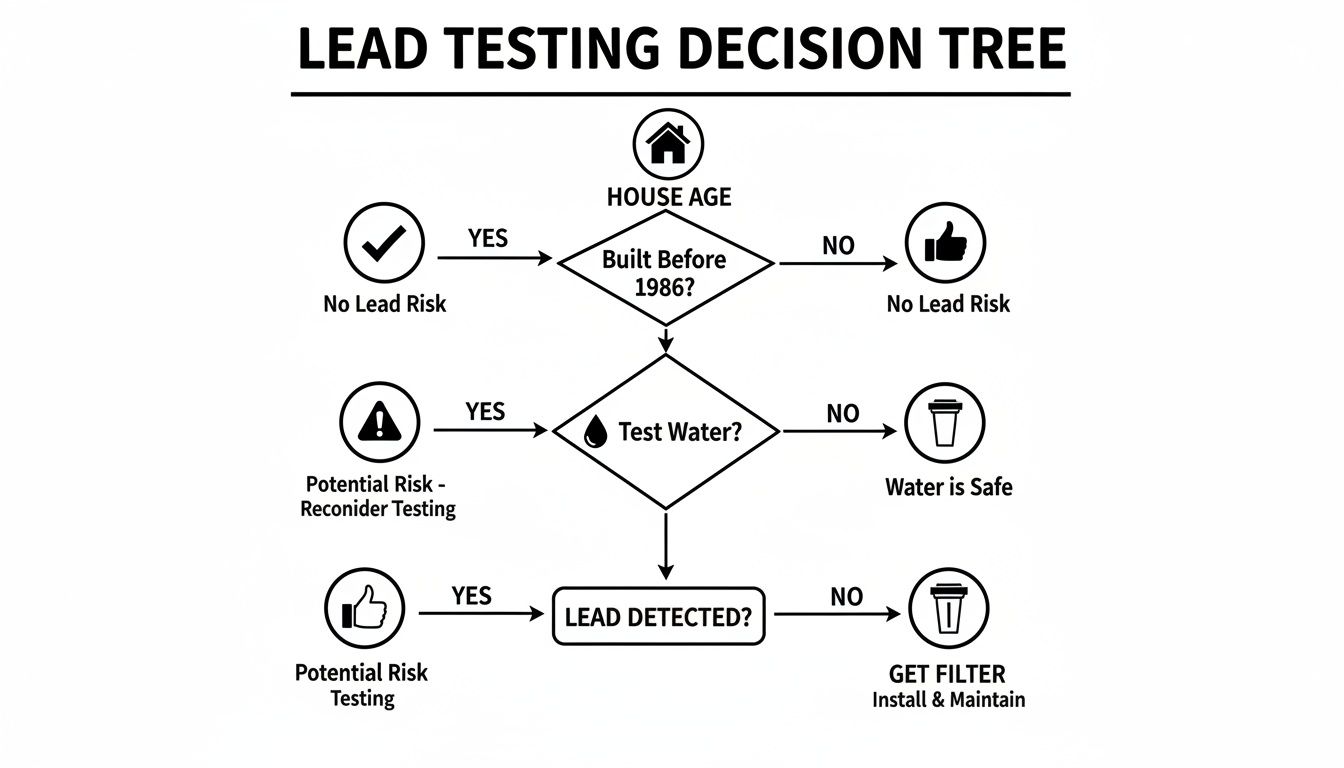
As you can see, the path is straightforward: if you have an older home, test your water. If the test comes back positive for lead, the next step is always installing a certified filter.
Targeted Protection with Point-of-Use Filters
A great place to start for many families is with a Point-of-Use (POU) system. These systems treat the water right where you use it most—typically at your kitchen sink. It’s an effective and very popular way to get high-quality water for all your drinking and cooking needs.
We typically install a couple of different types of POU systems:
- Under-Sink Filters: Just like the name says, these are installed discreetly under your kitchen cabinet. They connect to your cold water line and provide filtered water through a separate, dedicated faucet.
- Reverse Osmosis (RO) Systems: Also usually installed under the sink, RO is widely considered the gold standard for removing lead. An RO system uses a special membrane to filter out nearly everything, including up to 99% of lead and other nasty contaminants.
Here's a perfect example: We worked with a young family in a Cape Coral home built back in the 70s. Their water test showed moderate lead levels, and they were understandably worried, especially about the water used for their toddler's formula. An under-sink RO system was the ideal solution. It gave them incredibly pure water right at the kitchen sink without the cost of treating the whole house.
Remember, lead is a sneaky problem. It usually comes from the plumbing inside or leading to your home, not the water source itself. Here in Southwest Florida, this can be a particular concern for well water users, as our naturally corrosive coastal water can cause lead to leach from older pipes and fixtures more quickly. This is a global issue, too—over 800 million children are affected by lead pollution worldwide, costing economies trillions. The EPA has more on the global efforts to combat lead pollution if you want to understand the bigger picture.
Comprehensive Safety with Whole-House Systems
For homeowners who want the ultimate protection, a Point-of-Entry (POE) system is the definitive answer. Also known as a whole-house system, it’s installed right where your main water line enters your home. This means every single drop of water is purified—from your kitchen tap and ice maker to your showers and laundry.
A whole-house system is the right call for homes with very high lead levels or for families dealing with severe health sensitivities. It completely eliminates the risk of lead exposure from any faucet in the house. It's also often the most practical choice if you're on a private well, as it can tackle lead along with any other contaminants that might be present. While some systems use carbon, it's not the main defense against lead; you can learn more about how https://watermedic.com/carbon-filters/ work on our blog.
If total, worry-free protection is your goal, it's worth digging into guides on finding the best water filtration system for a whole house to see what options are out there.
Making the Right Choice for Your Home
So, which one is right for you? Deciding between a point-of-use system and a whole-house system really boils down to your specific water test results, your home's plumbing, and your budget.
This table breaks it down nicely:
| Feature | Point-of-Use (POU) System | Point-of-Entry (POE) System |
|---|---|---|
| Treatment Scope | Treats water at a single tap (e.g., kitchen sink). | Treats all water entering the entire house. |
| Best For | Targeting drinking and cooking water in homes with low to moderate lead levels. | Complete protection at every tap; ideal for high lead levels or well water. |
| Installation | Typically installed under a sink with a dedicated faucet. | Installed at the main water line, requiring professional plumbing. |
| Cost | Lower initial investment and maintenance costs. | Higher initial investment and ongoing maintenance. |
| Peace of Mind | Excellent for ensuring safe consumption. | Absolute, knowing all water sources in the home are purified. |
Ultimately, picking the right system is the final, crucial step to remove lead from water for good. Whether you need a targeted under-sink RO unit for your kitchen or a comprehensive whole-house solution, our team has been helping Southwest Florida families solve these problems for over 25 years. We can look at your water test results, assess your home’s unique situation, and recommend a system that will keep your family safe for years to come.
The Ultimate Solution: A Whole-House Reverse Osmosis System
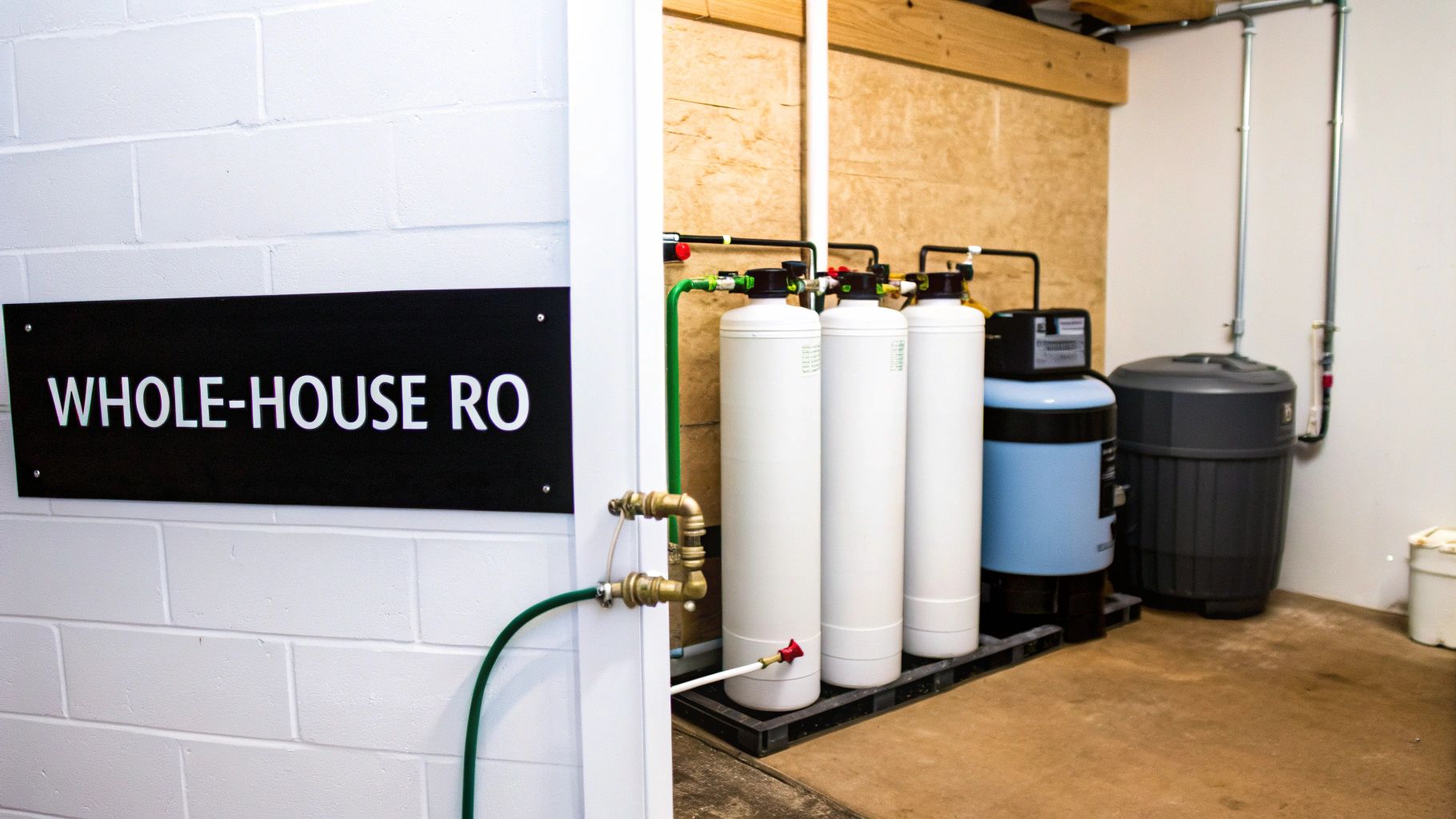
For homeowners who simply won't compromise on their family’s safety, there's a definitive answer. While point-of-use filters offer excellent protection at the tap, a whole-house Reverse Osmosis (RO) system provides a level of security that is truly in a class of its own. This isn't just another filter; it's a comprehensive purification shield for your entire home.
Imagine every single drop of water—from the glass you drink to the water you bathe in—being purified to an exceptionally clean state. That's the peace of mind a Point-of-Entry (POE) system delivers. We install it right where the main water line enters your house, creating a powerful barrier against lead and a whole host of other contaminants before they ever get a chance to reach your faucets.
This approach is about more than just what you drink. It addresses the fact that lead exposure can happen in other ways. While the risk is lower, lead can be inhaled from the steam of a hot shower or even absorbed through the skin, making whole-house protection a critical consideration, especially for families with young children.
Why Whole-House RO Is the Gold Standard
Reverse Osmosis is, without a doubt, the most powerful residential water purification technology available today. It works by using pressure to force water through a semipermeable membrane lined with microscopic pores. These pores are so incredibly small that they block lead, arsenic, chlorine, fluoride, and countless other dissolved solids, allowing only pure water molecules to pass through.
A whole-house RO system is more than a utility; it's a direct investment in your family's long-term health and your property's value. It ensures that the water you rely on for everything from cooking to hygiene is consistently pure and safe.
This is especially vital for those of us in Southwest Florida relying on private well water. Wells can be susceptible to a wide range of contaminants, not just lead. A whole-house RO system is a one-stop solution, providing a robust defense against agricultural runoff, bacteria, and other heavy metals all at once.
Our Professional Installation Process: A Local Example
The system itself is only half the equation; proper installation is what makes it work. An improperly installed unit can lead to leaks, pressure problems, and, worst of all, ineffective filtration. This isn't a DIY weekend project—it demands the precision and experience of licensed professionals.
Take a recent project we completed for a family in Fort Myers. Their home, built in the early 1980s, tested positive for lead that was leaching from old solder joints in their copper plumbing. With two young children, they needed a solution that left absolutely no room for doubt. Our team designed and installed a custom whole-house RO system tailored specifically to their home's plumbing and water usage.
Our process always includes:
- A Thorough Site Assessment: We start by evaluating your main water line, plumbing configuration, and available space to plan a seamless installation.
- System Sizing: We calculate your household's daily water usage to select a system that provides strong, consistent flow and pressure.
- Professional Integration: Our certified technicians handle all plumbing connections, ensuring every joint is secure and the system operates at peak efficiency from the moment it's turned on.
- Post-Installation Testing: We don’t just install and leave. We follow up with water testing to verify that the system is performing exactly as promised and lead levels have been eliminated.
This family now has the security of knowing that every faucet in their home delivers purified water. The parents can fill their children's glasses from the bathroom sink with the same confidence as the kitchen tap. This is the tangible peace of mind a professional installation provides. You can learn more about whole home reverse osmosis systems and how they provide this complete protection.
Beyond Lead: A Healthier Home Environment
While the main reason for installing one might be to remove lead from water, the benefits of a whole-house RO system extend much further. You'll immediately notice a huge improvement in the taste and smell of your water. Coffee and tea become more flavorful, and food just tastes better.
On top of that, purified water is much gentler on your skin and hair, free from the harsh, drying effects of chlorine. It also protects your expensive appliances—like your water heater, dishwasher, and washing machine—from the damaging scale and sediment buildup caused by hard water, which can extend their lifespan and improve their efficiency. It’s a single investment that elevates the quality of life throughout your entire home.
Keeping Your System Working: Why Maintenance is Everything
Putting in a quality water filtration system is a huge win for your family’s health. But that’s just the first step. The real secret to long-term safety is consistent, proper maintenance. A filter is only as good as its last replacement, and if you let it slide, you're essentially undoing all that hard work and opening the door for lead to get back into your water.
I like to compare it to the oil filter in your car. You wouldn't dream of driving 50,000 miles without an oil change, right? The same logic applies here. Over time, filter cartridges get clogged with all the gunk they've pulled out of your water. If they aren’t changed on schedule, their ability to remove lead from water plummets, and they can even become a source of contamination themselves.
Get on a Regular Maintenance Schedule
Every filtration system has parts that wear out at different rates. Sticking to the manufacturer's replacement schedule isn't just a suggestion—it's the only way to guarantee your water stays clean and your system runs efficiently.
For a typical Reverse Osmosis system, here’s a general timeline to keep in mind:
- Pre-Filters (Sediment & Carbon): These are the workhorses, catching sand, rust, and chlorine. You'll want to swap these out every 6 to 12 months.
- Reverse Osmosis (RO) Membrane: This is the heart of the system, doing the heavy lifting of removing lead and other microscopic contaminants. It's a tough component, but plan on replacing it every 2 to 3 years.
- Post-Filter (Polishing Filter): This is the final touch, making sure your water tastes crisp and clean after it leaves the storage tank. It usually needs a fresh one every 12 months.
It's easy enough to jot these dates down on a calendar or set a phone reminder, but we all know how life gets in the way. It’s one of those tasks that’s incredibly easy to forget.
Peace of mind isn’t just about having the right equipment; it’s about knowing that equipment is always working perfectly. Professional maintenance removes the guesswork and ensures your family is protected day in and day out.
The Case for Professional Maintenance
This is exactly where having a pro handle things makes a world of difference. Instead of you having to remember which filter to buy, track replacement dates, and wrestle with the installation, our team takes care of it all. We manage the schedule, use the right manufacturer-certified parts, and give your whole system a thorough check-up while we're there.
Our technicians do a lot more than just swap out a filter cartridge. They’ll run through a complete system inspection, including:
- Checking the water pressure to make sure it's running at peak performance.
- Sanitizing the entire system to prevent any sneaky bacterial growth.
- Testing your water right then and there to confirm it's free of lead and other impurities.
It’s a completely hands-off way to get total confidence that your system is protecting your family 24/7. You can explore our full range of water treatment services to see how we can become your long-term partner in water quality.
Don't Skip the Follow-Up Test
One last thing that people often forget: periodic re-testing. After we install a system, we strongly recommend testing your water again about once a year. It's not because we don't trust the equipment; it’s all about verification. Water conditions can change—especially with well water here in Southwest Florida—and regular testing confirms your system is still dialed in perfectly. Seeing those consistent, clean results is the ultimate proof that your family’s water is, and will remain, safe.
Common Questions About Removing Lead from Water
When you're trying to figure out how to handle lead in your water, a lot of questions pop up. It's totally normal. Let's walk through some of the things we hear most often from homeowners, so you can get clear, practical answers.
Will a Standard Water Pitcher Filter Actually Remove Lead?
This is a big one. While you might find a pitcher filter that says it's certified for lead reduction, the reality is they just aren't a reliable, long-term fix. Their capacity is tiny, and they only treat a small amount of water at a time.
If you have elevated lead levels, a pitcher simply can't keep up with a household's needs for cooking, drinking, and washing produce. For real protection that you don't have to second-guess, a professionally installed system—like an under-sink reverse osmosis unit or a whole-house filter—is a much more effective and dependable choice.
What’s the Real Cost to Install a Whole-House Water Filter?
The price tag for a whole-house system can vary quite a bit. It really depends on the type of filter you choose, the size of your home, and what the installation involves for your specific plumbing setup.
Yes, the initial investment for something like a whole-house RO system is more than a simple faucet filter, but it delivers a level of protection that’s unmatched and adds tangible value to your property. Think of it as a permanent upgrade for your family's health. We can give you a detailed quote that lays out all the options, helping you find a solution that works for your budget while getting the job done right.
The EPA estimates there are still four million lead service lines buried across the United States. A permanent filtration solution is really the only way to shield your home from this ongoing infrastructure problem.
My House Is New—Should I Still Worry About Lead?
It’s a common misconception that new homes are automatically safe from lead. Even with the 1986 ban on lead pipes, some modern brass fittings, faucets, and valves can legally contain small amounts of lead that can leach into your water over time.
And here in Southwest Florida, if you're on a private well, the water source itself could be a factor. The only way to know for sure what's coming out of your tap is to test it. We always recommend testing, no matter how old your home is. It’s the only path to certainty.
Can I Just Install a Water Filtration System Myself?
You can definitely handle a simple screw-on faucet filter or a pitcher on your own—they're designed for it. But when you get into more robust systems like under-sink or whole-house units, it's a different ballgame.
An improper installation can cause more headaches than it solves, from leaks and plumbing damage to a filter that isn't even removing lead correctly. Our certified technicians have been doing this for over two decades in the area; they make sure every system is installed perfectly for peak performance and safety. A professional install guarantees your system works exactly as it's supposed to, right from the start.
For a no-obligation consultation to discuss the best way to remove lead from water in your Southwest Florida home, contact the experts at Water Medic of Cape Coral. We provide certified solutions and professional installation to ensure your water is pure and safe. Get your free estimate today.