How Often to Clean Pool Filter: Tips for Sparkling Water
Knowing when to clean your pool filter isn't just about sticking to a rigid calendar. The real answer lies in paying attention to your pool's equipment. As a solid rule of thumb, it's time for a cleaning when the pressure gauge reads 8-10 PSI (pounds per square inch) higher than its normal "clean" operating pressure. For most pools, this works out to a cleaning every 1-2 months.
However, that's just a starting point. Your specific timing will depend on your filter type, how often you use the pool, and the unique challenges of our Southwest Florida environment.
Why Consistent Filter Cleaning Is So Important
Think of your pool filter as the kidneys of your swimming pool. It's the workhorse that keeps your water clear, safe, and inviting. Here in Southwest Florida, our filters are constantly battling heavy pollen, debris from afternoon storms, and the demands of year-round swimming. This means they're working overtime, every single day.
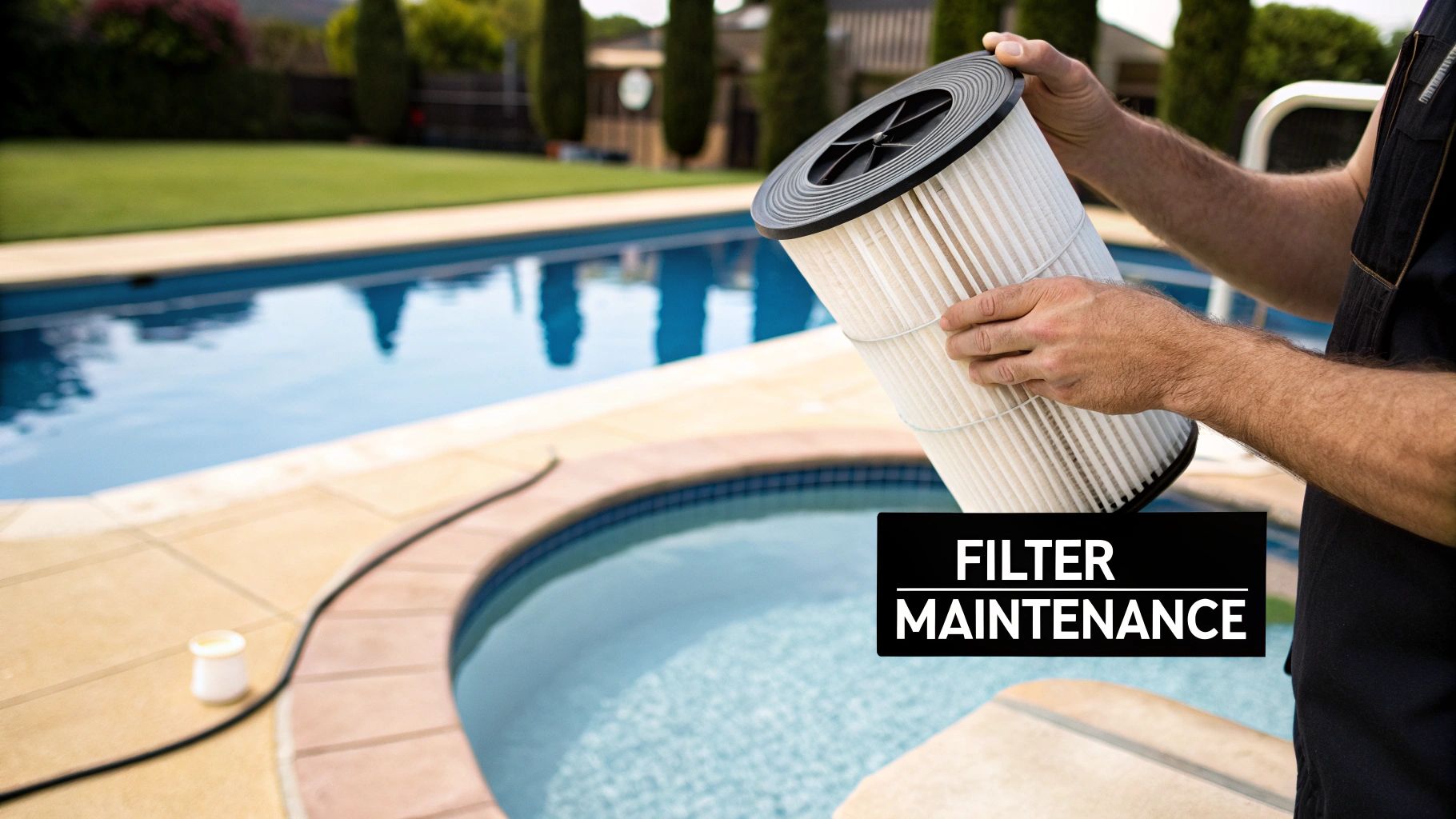
When this crucial piece of equipment gets neglected, a chain reaction of problems begins. A dirty, clogged filter forces your pump to struggle, which can lead to a surprising jump in your energy bill and even cause expensive equipment to fail prematurely.
The True Cost of a Dirty Filter
Beyond the strain on your equipment and wallet, a dirty filter takes a direct toll on your water quality. Once it's clogged, it can no longer effectively trap tiny particles like bacteria, algae spores, and body oils. This is when pool owners start noticing frustrating issues:
- Stubbornly Cloudy Water: That crystal-clear sparkle vanishes, replaced by a murky, uninviting appearance.
- Algae Blooms: A filter that can't keep up gives algae the green light to bloom and take over your pool.
- Increased Chemical Use: You'll find yourself constantly adding more chlorine and other chemicals just to keep the water balanced, fighting a losing battle against a system that can't keep itself clean.
This is where proactive cleaning makes all the difference. For example, our expert technicians know that cartridge filters need a deep, chemical clean 1-2 times per year to break down oils and stubborn gunk. The key is to first establish what your "clean" pressure reading is right after a cleaning, so you have a baseline to measure against.
A clean filter doesn't just mean a clean pool—it means a more efficient, cost-effective, and reliable system. It's the foundation of a hassle-free swimming experience.
For a quick overview, here's a general guideline for the three main filter types.
Quick Guide to Pool Filter Cleaning Frequency
Use this table for a general idea of cleaning schedules. Your specific frequency will depend on usage and local SW Florida conditions.
| Filter Type | Standard Cleaning (Backwash/Rinse) | Deep Cleaning (Chemical/Soak) |
|---|---|---|
| Sand | Every 1-2 months or when PSI is 8-10 over clean | Annually |
| Cartridge | Every 2-6 weeks (hose rinse) | 1-2 times per year |
| D.E. | Every 1-2 months or when PSI is 8-10 over clean | At least annually |
Remember, this is a starting point. A heavy bather load or a big storm can mean you'll need to clean it sooner.
Ultimately, keeping your entire property pristine requires a consistent approach. If you want a sparkling home to match your sparkling pool, you can find great tips in this ultimate vacation rental cleaning checklist.
When it comes to your pool, staying on top of filter maintenance saves you money and ensures it’s always ready for a refreshing swim. If you'd rather leave it to the experts, let our technicians take the guesswork out of it. We provide top-tier pool cleaning service to keep your system in perfect condition.
Reading the Warning Signs from Your Pool Filter
Your pool filter is constantly talking to you. You just need to learn its language. The clearest signal it sends is through the pressure gauge, which acts like a blood pressure cuff for your entire pool system.
When your filter is nice and clean, the gauge will settle at a specific "clean" pressure, measured in pounds per square inch (PSI). The first thing you should do after a cleaning is note that number—seriously, grab a permanent marker and write it right on the filter tank. When you see the pressure climb 8-10 PSI above that clean baseline, it's a direct message: "I'm clogged and struggling."
Beyond the Pressure Gauge
The pressure gauge is your go-to, but it’s not the only way your pool tells you something’s wrong. Sometimes, you'll see the symptoms in the water itself before the gauge even moves that much. Catching these clues early can save you a lot of headaches.
Keep an eye out for these classic signs of a filter that’s ready for a cleaning:
- Cloudy Water That Won't Clear: If your water stays hazy no matter how much you balance the chemicals, it’s a good bet the filter is too gunked up to trap the tiny particles that cause cloudiness.
- Weak Water Flow: Stick your hand in front of one of the return jets. Does the flow feel weak or lazy? A clogged filter restricts water from moving freely, so your pump has to work overtime for a fraction of the result.
- Sudden Algae Blooms: If algae starts showing up out of nowhere, it could be that your filter isn't capturing the microscopic spores, giving them a chance to take hold and multiply.
Think of these signs as your pool’s early warning system. Ignoring them doesn't just mean a dirty pool; it puts a huge strain on your pump motor, which can lead to costly burnout and repairs.
The Professional Eye
It takes a bit of experience to spot these subtle changes. That's why on every weekly service visit, our Water Medic technicians don't just glance at the pool. They’re trained to check the pressure, feel the water flow, and assess the clarity with a practiced eye.
This professional oversight catches filter problems before they become obvious, keeping your system humming along efficiently. This is particularly vital for cartridge filters, which can get clogged up fairly quickly, often needing a cleaning every 2 to 6 weeks in the thick of swim season. If you want to dive deeper, you can discover more about filter maintenance guidelines and see just how much usage impacts the cleaning schedule.
Alright, you know why you need to clean your filter, but what about the how? Getting your hands dirty is the next step, and the method changes depending on what kind of filter you have.
Each of the big three—cartridge, sand, and Diatomaceous Earth (DE)—has its own cleaning playbook. Some are pretty simple, but others are more involved and need a careful touch to avoid messing up your expensive equipment.
This little diagram maps out the warning signs. It all starts with your baseline pressure, then climbs to high PSI, and if you ignore it, you’ll eventually end up with cloudy water.
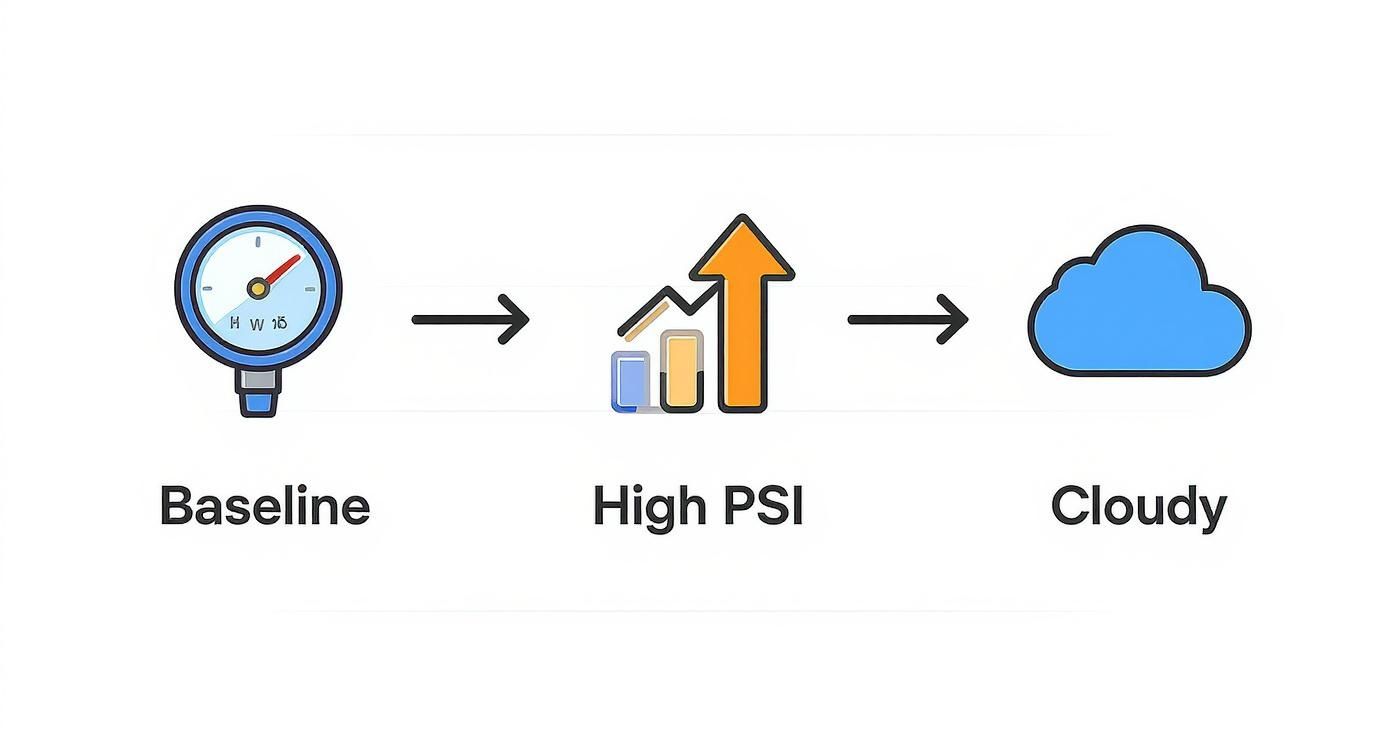
Think of that rising pressure gauge as your pool's primary cry for help. The cloudy water is what happens when that cry goes unanswered.
Cleaning Cartridge Filters
Cartridge filters are fantastic at catching tiny particles, but they demand the most hands-on attention. Cleaning them means shutting off the pump, bleeding the air pressure from the system, opening the tank, and pulling the cartridge out.
For a routine clean, all you need is a garden hose. Just spray down the pleated fabric from top to bottom, washing away all the gunk. A word of caution: don't use a pressure washer or a high-pressure nozzle. That's a surefire way to tear the filter material. You'll want to do this every 2-6 weeks, depending on how much action your pool sees.
A simple hosing gets rid of the loose stuff, but it won't touch the greasy, caked-on grime. For a real deep clean, you need to soak the cartridge in a chemical filter cleaner. This is usually an annual job, or whenever oils and sunscreens cause the pressure to stay stubbornly high.
This chemical soak is where things can get tricky. It's a messy job, you're dealing with chemicals, and doing it wrong can drastically shorten the life of your filter cartridge.
Backwashing Sand and DE Filters
If you have a sand or DE filter, you get to use a much slicker process for routine cleaning called backwashing. It’s a brilliant feature that reverses the water flow, forcing all the trapped dirt and debris out through a waste port. The rule of thumb is to backwash whenever the pressure gauge reads 8-10 PSI higher than its clean, baseline pressure.
The steps are pretty universal:
- Kill the power to the pool pump.
- Move the multiport valve handle to the "BACKWASH" setting.
- Turn the pump on and let it run for 2-3 minutes. You'll have a sight glass on the side—watch it until the water running through it looks clear.
- Turn the pump off again. Now, switch the valve to "RINSE" and run it for about 30 seconds. This resets the sand or DE bed and prevents debris from blowing back into your pool.
- Shut the pump off one last time, return the valve to "FILTER," and fire it all back up.
Heads up for DE filter owners: After you backwash, you must add new DE powder into the system through the skimmer. This recoats the internal grids. If you forget this crucial step, your filter won't work, and you risk seriously damaging it.
The Importance of a Professional Deep Clean
Backwashing is great for the day-to-day gunk, but it's not a magic bullet. Over a season, oils and minerals can cause the sand in a filter to clump together and "channel," letting water bypass the filtration process entirely. On DE filters, greasy buildup can cake onto the grids, choking off water flow.
That's why both sand and DE filters need a deep, chemical cleaning at least once a year. This involves using a specialized solution to break down and dissolve all that stubborn, deep-set grime that backwashing leaves behind. It's a much more involved job than it sounds and, if done incorrectly, can do more harm than good.
Feeling a bit overwhelmed? Let's be honest, cleaning filters is a wet, dirty job. Why not let our technicians handle your filter cleaning with our comprehensive maintenance plans? The team at Water Medic has this down to a science, ensuring it’s done right every time. You get to skip the hassle and know your pool's most important protector is in good hands.
How SW Florida Weather Impacts Your Cleaning Schedule
A generic cleaning schedule just won't cut it here in Southwest Florida. Our unique environment puts a tremendous amount of stress on a pool filter year-round, which means the standard advice on cleaning frequency almost always falls short. What might work in a cooler, drier state is simply no match for the challenges we face daily.
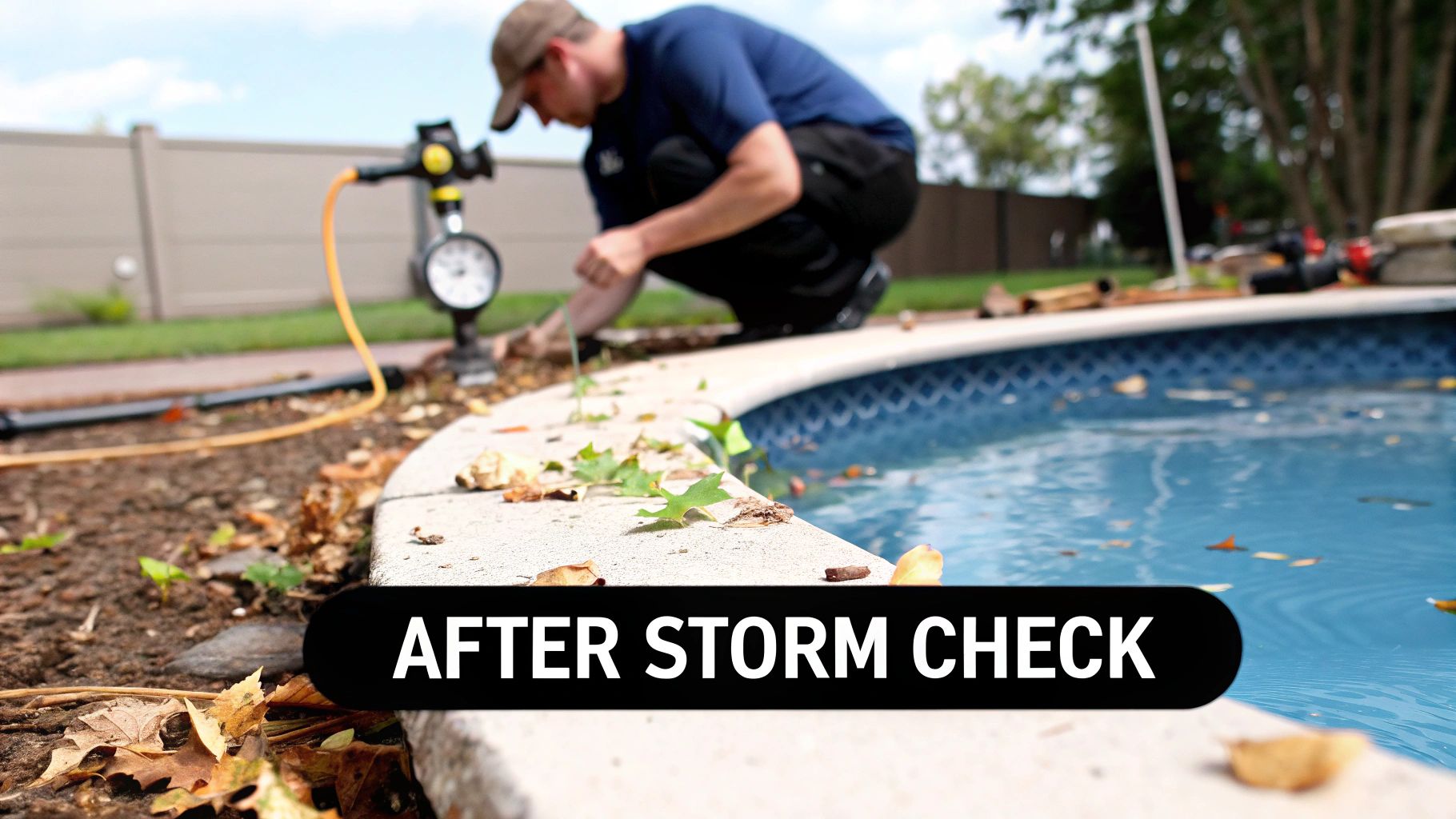
Here, the seasons demand a much more hands-on, dynamic cleaning routine. If you stick to a one-size-fits-all approach, you're leaving your pool vulnerable to some serious water quality problems.
Our Year-Round Environmental Challenges
The calendar pages might turn, but the workload for your filter rarely gets a break. Each season in SW Florida brings its own specific threat that can clog your filter much faster than you’d ever expect.
-
Spring Pollen: Every spring, a thick yellow blanket of pollen covers absolutely everything—including the surface of your pool. This fine, powdery dust gets sucked right into your filter, where it can form a dense mat that chokes off water flow in just a few days.
-
Summer Storms and Sun: Our summer is a real double-edged sword. The intense sun acts as a perfect incubator for algae, forcing your filter to work overtime capturing spores. Then, the daily thunderstorms wash leaves, dirt, mulch, and other debris straight into your pool, often demanding an immediate filter cleaning.
-
Mild Winters and High Use: While pools up north are closed for the season, ours are still seeing plenty of action. This consistent use means a steady stream of lotions, body oils, and organic matter, so your filter gets no real "off-season."
These local factors are a huge deal when it comes to cleaning frequency. For example, pools with lots of nearby trees or those in high-pollen areas might need a filter cleaning every 4-6 weeks instead of on a looser schedule.
The Proactive Approach to Florida Pool Care
This is where having local expertise makes all the difference. After a big summer storm rolls through, your filter likely needs immediate attention, no matter when it was last cleaned. If you wait for the pressure gauge to tell you there's a problem, you could be giving algae the head start it needs to take over.
A proactive, weather-aware maintenance plan is the key to keeping a Southwest Florida pool crystal clear. It's about responding to what the environment throws at your pool today, not just following a generic schedule.
At Water Medic of Cape Coral, we don't just follow a checklist. We live here, so we understand the regional challenges and adjust our service based on the weather, the pollen count, and recent storm activity. Our techs know that a sudden downpour or a high pollen alert means your filter needs a closer look, right now.
This adaptive strategy is at the heart of our professional monthly maintenance service. It’s designed to keep your pool pristine no matter what the Florida forecast brings. We take all the guesswork out of it, so you can just enjoy your pool.
Knowing When to Replace Instead of Clean
Regular cleaning is a huge part of keeping your pool sparkling, but no filter lasts forever. There comes a point where cleaning just doesn't cut it anymore, and replacement becomes the only smart move. Trying to keep a dead filter going is like using a coffee filter with a giant hole in it—you're just going through the motions and making a bigger mess.
Every filter type has its own set of "I'm done" signals. If you know what to look for, you can save yourself the headache of trying to clean a filter that's long past its prime. It's the key difference between routine maintenance and knowing when to invest in new gear.
Telltale Signs of a Failed Filter
The pressure gauge tells you when it’s time to clean, but your own two eyes will tell you when it’s time to replace. You have to physically inspect the filter media every time you do a deep clean.
Here’s what to look out for on each type:
-
Cartridge Filters: Check the plastic end caps for any cracks. Look closely at the fabric pleats for rips or tears. If the pleats are so matted down that you can't get them clean anymore, it’s time for a new one.
-
DE Filters: The grids inside are covered with a delicate fabric. Over time, that fabric can rip, which lets DE powder and all the gunk it’s supposed to catch shoot right back into your pool.
-
Sand Filters: The sand can eventually calcify, basically turning into a solid rock. Another common problem is "channeling," where the water just carves a few little tunnels through the sand instead of filtering through all of it.
Using a worn-out filter isn't just about cloudy water—it's actively costing you money. Your pump has to work overtime, jacking up your power bill, and you'll dump more and more chemicals into the pool trying to make up for the bad filtration.
As a general rule, a cartridge filter will last you 1-2 years. On the other hand, filter sand typically needs to be replaced every 3-5 years. Stretching them past their limits means you're getting less and less in return for your effort and might even be putting stress on your other expensive pool equipment. Believe it or not, studies show that around 70% of pool owners don't get their filter maintenance schedule right.
This is where having a professional take a look can really pay off. If your water just won't clear up and you think the filter is the problem, our team can figure it out for sure. We provide expert pool equipment repair and replacement services to get your system running efficiently again, saving you from all the guesswork.
Ready to Hand Over the Hard Work?
We've walked through everything you need to know about keeping your pool filter clean. And while you can absolutely tackle this job yourself, let's be honest—it’s a messy, time-consuming task.
Why give up a perfect Southwest Florida weekend wrestling with a grimy filter when you could be kicking back with your family, enjoying the very pool you're working so hard to maintain?
That's where Water Medic of Cape Coral comes in. We offer a simple, stress-free path to a pristine pool. Our technicians show up with all the right gear, the best professional cleaners, and the hands-on experience that comes from dealing with our unique local climate every single day.
We do more than just clean your filter. We provide reliable, consistent service that keeps your pool sparkling and swim-ready, week after week. Our team also has a knack for spotting small equipment problems before they snowball into costly, headache-inducing repairs.
Experience what it feels like to just enjoy your pool, without any of the work. Let us handle the dirty jobs so you can focus on making memories.
When you're ready for a perfectly clear pool without lifting a finger, check out our professional monthly maintenance service. We'd love to bring our expertise to your backyard.
Your Top Pool Filter Cleaning Questions Answered
Even with the best intentions, questions about keeping your pool filter clean are bound to come up. Most pool owners run into the same handful of curiosities, so let’s tackle some of the most common ones right here.
Common Pool Filter Questions
We get a lot of questions about the finer points of filter maintenance. Here’s a quick-reference table with straightforward answers to help you out.
| Question | Answer |
|---|---|
| Can you over-clean a filter? | Absolutely. A tiny bit of dirt actually helps sand and DE filters catch finer particles. Over-backwashing wastes water and chemicals, while aggressively cleaning cartridge filters wears them out faster. |
| What's the best cleaner to use? | Stick with a dedicated pool filter cleaner. They’re made to break down oils and minerals without damaging your filter media. Household cleaners can cause foaming or degrade the filter material. |
| How much does pool usage matter? | A ton. A busy party pool or a vacation rental might need cleaning every week, while a rarely-used private pool could go a month or more. Your cleaning schedule has to match your lifestyle. |
| Does a robotic cleaner help? | Yes, it's a great assistant. Robots catch leaves and big debris before they hit your filter, reducing its workload. But you still need to clean your main filter to catch the microscopic stuff the robot misses. |
Hopefully, that clears a few things up! Understanding these nuances is key to keeping your filter running efficiently for years to come.
Can You Over-Clean a Pool Filter?
It sounds strange, but you can definitely be too clean when it comes to your pool filter. This is especially true for sand and DE filters. A brand new, squeaky-clean filter is actually a little less effective than one that has a very thin layer of debris already trapped in it—that layer helps it grab even smaller particles from the water.
When you backwash too often, you’re just wasting water and expensive chemicals. For cartridge filters, scrubbing them too hard or using harsh chemicals can break down the delicate fabric pleats way too soon. The golden rule? Let the pressure gauge, not the calendar, tell you when it’s time to clean.
What Is the Best Cleaner to Use?
When it's time for that deep clean, always reach for a cleaner made specifically for pool filters. These formulas are designed to dissolve all the gunk—suntan lotion, body oils, and mineral scale—without being harsh on the filter media itself.
It might be tempting to grab some dish soap or another household degreaser, but that’s a bad idea. They can leave behind residues that will foam up your pool or, worse, eat away at the filter material. A proper filter cleaner is a small price to pay to protect your much more expensive equipment.
Does Pool Usage Affect Cleaning Frequency?
How often you and your family are in the pool makes a huge difference in how hard your filter has to work. If you're running a vacation rental or throwing pool parties every weekend, that filter is going to need attention far more often.
A high-traffic pool might need its filter cleaned or backwashed weekly. On the other hand, a quiet backyard pool that only sees occasional use might happily go a month or more between cleanings. You really have to adjust your maintenance to match the demand.
Does a Robotic Cleaner Help?
Think of a robotic pool cleaner as the perfect sidekick for your main filter system. By gobbling up leaves, twigs, and other large debris before they even make it to your skimmer, it takes a massive load off your filter. This can absolutely buy you more time between cleanings.
But it’s not a replacement. Your main filter is still doing the heavy lifting of catching the microscopic particles that make water cloudy, stuff the robot can’t see. So while a robot is a fantastic tool, you still need to keep a close eye on that pressure gauge. For more answers to your questions, you can always check out our comprehensive pool FAQs to find the information you need.
If you'd rather leave the questions and the cleaning to the experts, Water Medic of Cape Coral is ready to help. Contact us today for a free quote and discover how easy pool ownership can be.