
Solving Well Water Smells Your Complete Guide
When your well water has a smell, that's your system telling you something is off. Most of the time, that classic rotten egg odor is due to hydrogen sulfide gas. But other things, like minerals or even organic matter, can be the source of strange smells, too. The good news is that once our experts identify the cause, we can put you on the path to fixing it for good.
Understanding What Your Well Water Is Telling You
If you live in Southwest Florida and have a private well, you've probably experienced it: you turn on the tap, and a funky smell hits you. It’s more than just annoying—it’s a signal from your water system that something needs a closer look. While many of these smells are harmless, some can point to bigger issues or even cause damage to your plumbing down the road.
Think of the specific scent as a clue. A rotten egg smell screams sulfur. A metallic tang points to excess iron. And if it’s earthy or musty, you're likely dealing with harmless organic compounds. Each smell has a unique cause and, more importantly, a unique professional solution. Letting it go can lead to corroded pipes, stained sinks and tubs, and water you just don't want to drink or use. Let's decode what your well is trying to tell you so we can prescribe the right treatment.
Common Causes of Well Water Odors
Before we get into the nitty-gritty of treatment, let's get familiar with the usual suspects. This is where a quick smell test can give you a pretty good idea of what you're up against, but only a professional test can confirm the diagnosis.
To help you get started, here's a simple table to match common smells with their likely causes. Use this as a starting point to diagnose the odor before we explore the solutions our team can provide.
Quick Guide to Common Well Water Odors
| Smell Description | Most Common Cause | What It Means for Your Water |
|---|---|---|
| Rotten Eggs or Sulfur | Hydrogen sulfide gas or sulfur-reducing bacteria | Not typically harmful, but can corrode pipes and stain fixtures. |
| Earthy or Musty | Decaying organic matter, iron bacteria | Generally harmless but makes water taste and smell unpleasant. |
| Metallic | High concentrations of iron, manganese, or copper | Can cause staining, a bitter taste, and clog pipes over time. |
| Fishy | Barium or cadmium (naturally occurring metals) | Can indicate the presence of contaminants that may need removal. |
| Bleach or Chemical | Chlorine from municipal water mixing or recent well shocking | Often temporary, but high levels can be irritating. |
| Sewage or Manure | Septic tank leakage, bacteria, nitrates | Serious. This requires immediate testing and professional attention. |
This table is a great first step, but remember that smells can be deceiving, and sometimes multiple issues are at play, requiring a multi-stage solution.
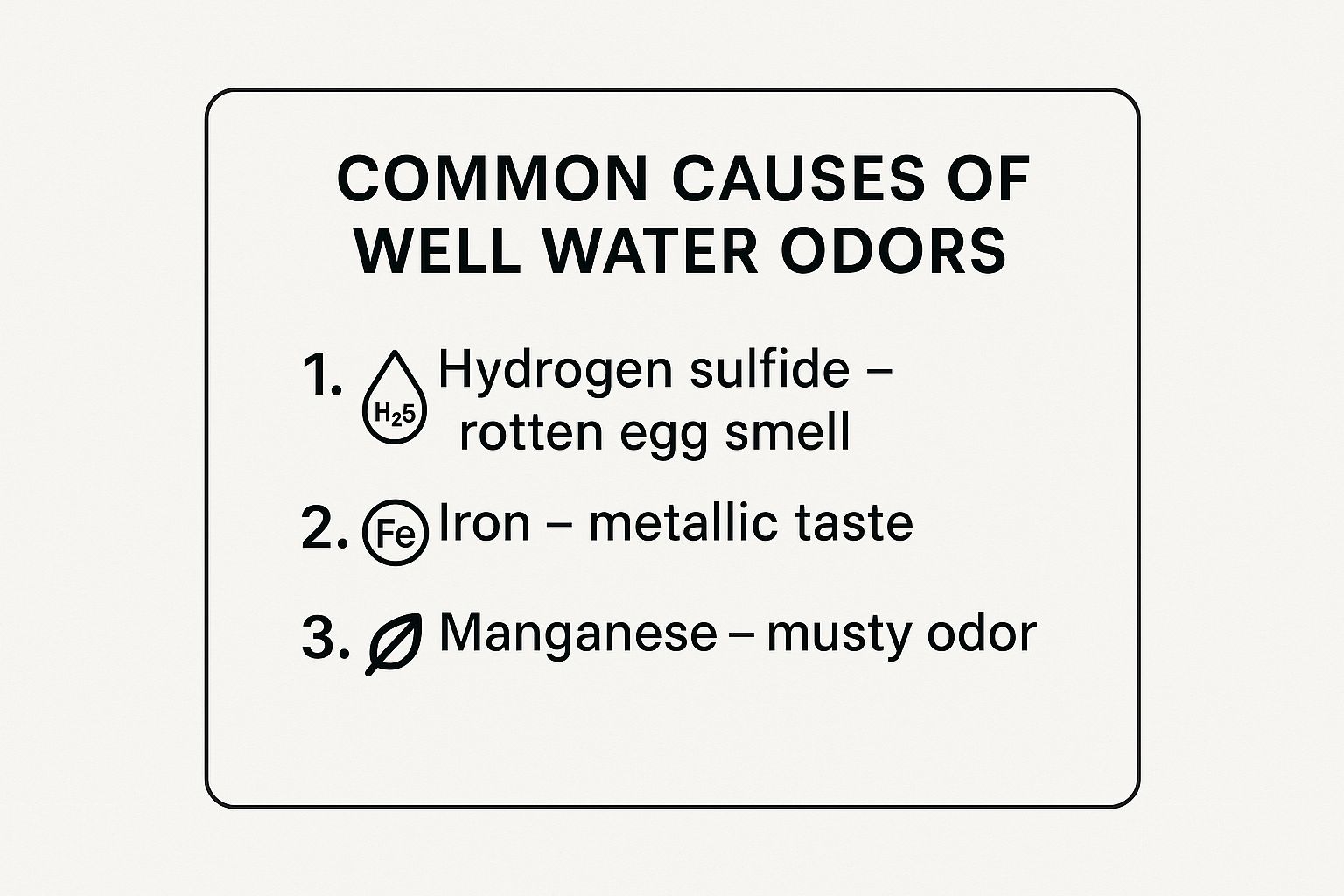
As you can see, different elements create very different smells, which helps narrow down the source of your water quality problem. Getting the diagnosis right is the most important part of finding a lasting solution.
The only way to be certain about what's causing odors and ensure your family's safety is with a professional water analysis. Guesswork can lead to ineffective treatments and wasted money.
Figuring out the exact cause is everything. You wouldn't want to install an expensive system to remove iron when the real issue is sulfur bacteria. That's why a comprehensive water test is always the right place to start. It gives you a complete picture of your water's chemistry, allowing our experts to pinpoint the problem and recommend a solution that actually works for your home.
That Awful Rotten Egg Smell: What's Really Going On in Your Water?
If you're a well owner, you've probably heard horror stories about it. Or maybe you're living one right now. It's that unmistakable, pungent "rotten egg" smell that can make a simple glass of water feel like a dare. When you smell this, you're smelling hydrogen sulfide gas (H2S), and it's a dead giveaway that something is off in your well or plumbing.
This potent smell is the work of tiny, naturally occurring organisms called sulfur bacteria. These little microbes set up shop in oxygen-poor environments, like your well, plumbing, or even your hot water heater. They essentially "breathe" sulfates from the groundwater and, in the process, release that foul-smelling hydrogen sulfide gas.
And it’s more than just an assault on your nose. Hydrogen sulfide is corrosive. Over time, it can quietly eat away at metal pipes, fixtures, and appliances. You might even spot its calling card: ugly black or grey stains on your silverware, sinks, and toilets.
Tracing the Sulfur Smell to Its Source
Figuring out where the smell is coming from is your first step. Sometimes, the problem is contained. If you only notice the odor when you run hot water, the culprit is likely your water heater. A reaction between the anode rod (a part designed to prevent rust) and the sulfates in the water can create H2S gas right inside the tank.
But if the smell is coming from both your hot and cold taps, the source is bigger. It’s almost certainly originating in your well itself or throughout your plumbing system. According to the Florida Department of Health, these sulfur bacteria are a common feature of our local groundwater, causing not just odors but also discoloration and pipe buildup. A quick fix at a single faucet just won't cut it.
A common mistake we see is homeowners trying to cover up the smell with air fresheners. This does nothing to solve the underlying bacteria problem and just gives the corrosive gas more time to damage your plumbing.
To get rid of the odor for good, you have to attack the source. This is where a professional diagnosis makes all the difference. A proper water test will confirm the presence of sulfur bacteria and tell us exactly how much hydrogen sulfide we're dealing with, which points us directly to the right solution.
Getting Rid of Rotten Egg Odors for Good
Once we’ve confirmed that sulfur bacteria are to blame, the best strategy is a one-two punch: eliminate the current colony and then install a system to prevent them from ever coming back.
Initial Treatment
- Well Shock Chlorination: Think of this as a deep clean for your entire water system. We introduce a carefully measured concentration of chlorine into your well, which then circulates through your pipes. This disinfects everything and kills the bacteria causing the odor. It's a delicate process that needs a professional touch to be done safely and effectively.
Long-Term Prevention
- Advanced Filtration Systems: After the shock treatment clears out the existing problem, a permanent filtration system is your best defense against a repeat performance. These systems are designed to strip the hydrogen sulfide gas out of the water before it gets to your taps.
One of the most reliable and effective solutions is an air injection system. You can learn more about how our powerful air injection filtration systems work, but the concept is simple. The system forces oxygen into the water, which oxidizes the H2S gas and turns it into solid particles that are easily filtered out.
As a bonus, this process also helps remove other common Southwest Florida water issues like iron and manganese. By pairing a professional disinfection with the right filtration system, you can finally put an end to that rotten egg smell and get back to enjoying fresh, clean water throughout your home.
What That Earthy or Musty Smell Reveals About Your Well
If your water smells less like rotten eggs and more like a damp basement or freshly tilled garden, you're dealing with a completely different kind of problem. This earthy, musty odor isn't from sulfur; it's a sign that organic compounds are getting into your water, which can make it pretty unappealing to drink or use.
While these compounds are generally harmless—unlike corrosive hydrogen sulfide—their presence is a red flag. It tells us that surface-level stuff is finding its way into your groundwater. Ignoring it means putting up with water you'll probably end up avoiding.
The Source of the Musty Smell
The main culprit behind this distinct odor is a compound called geosmin. You can think of it as the scent of nature showing up uninvited in your plumbing. Geosmin is produced by common, harmless bacteria that live in soil, especially in places rich with organic matter like we have all over Southwest Florida.
These little microbes release geosmin as part of their normal life cycle. So, when we get a heavy downpour or the water table shifts with the seasons, these compounds can get washed from the soil straight into the aquifer that feeds your well. This is exactly why you might notice the smell pops up right after a big storm or seems to come and go with the seasons.
Geosmin is a naturally occurring organic compound that gives water that earthy or musty smell, and humans can detect it at incredibly low levels—as little as 0.006 to 0.01 micrograms per liter. The compound comes from microbes in the soil and water, like cyanobacteria and actinomycetes, and it's a major source of taste and odor complaints in drinking water around the world. You can find more great insights about taste and odor compounds in drinking water on lgsonic.com.
While geosmin itself isn't a health risk, its presence can be a warning sign that your well is vulnerable to surface water contamination, which could let other, more harmful things in down the road.
This makes it critical to not just get rid of the smell, but to figure out why it's happening in the first place. A professional well inspection can tell you if your well casing is secure and if your whole system is properly sealed off from surface runoff.
The Solution Is All About Absorption
Because these earthy odors come from dissolved organic compounds, just disinfecting the water isn’t going to cut it. The goal isn't to kill bacteria but to physically pull the smelly compounds they produce out of the water. This is where the magic of absorption comes in, specifically with activated carbon filtration.
Think of activated carbon as a super-powered sponge. Its surface is riddled with millions of microscopic pores and crevices that are the perfect size to trap and hold onto organic molecules like geosmin. As your water flows through the filter, these odor-causing compounds get snagged, letting fresh, clean-smelling water pass through to your faucets.
It's a fantastic solution, but its success hinges entirely on getting the right system for your home and having it installed correctly by our expert technicians.
Choosing the Right Carbon Filter System
Not all carbon filters are the same, and picking the wrong one is a quick way to waste money and end up with the same smelly water. For a system to work effectively, it has to be tailored to your home's specific needs, which requires a professional look.
Factors Influencing Filter Choice:
- Water Flow Rate: The system has to be big enough to keep up with your family’s water usage during peak times without killing your water pressure.
- Contaminant Levels: How much geosmin and other organics are in your water will dictate the type and amount of carbon media required.
- Contact Time: For the carbon to do its job, water needs to spend enough time touching it. This directly impacts how big the filter tank needs to be.
Trying to DIY this or just grabbing a filter off the shelf without a real water analysis is a shot in the dark. At Water Medic, our team specializes in diagnosing your home's unique water profile. We start with a thorough water quality test to measure the exact compounds causing that musty smell. Armed with that data, we can recommend and install a perfectly sized activated carbon filtration system that will put an end to earthy odors for good, giving you back your confidence in every drop.
Troubleshooting Metallic, Chemical, And Other Strange Odors
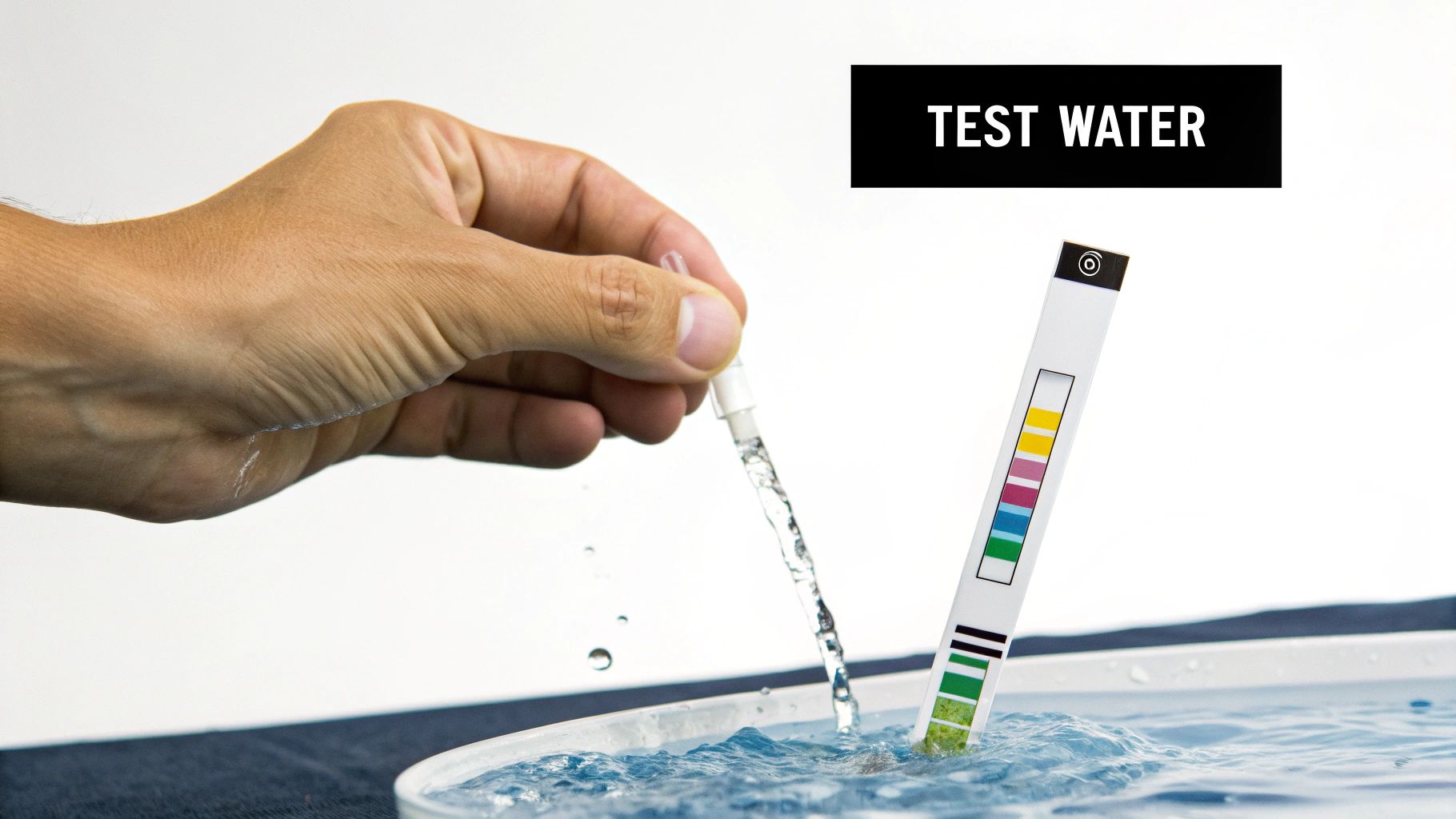
While the "rotten egg" smell gets most of the attention, it's far from the only strange scent your well can produce. Sometimes you'll notice something else entirely—a metallic tang, a chemical odor, or even an oily film. These are important clues your water is sending you.
Don't ignore these less common, but often more concerning, smells. They can point to everything from nuisance minerals to serious contamination that could impact your plumbing and your family's health. Think of this as the first step in your diagnosis, but remember: only a professional water analysis can give you the definitive answer.
What a Metallic Smell Means for Your Water
If your water smells or tastes like old pennies, you're almost certainly dealing with high concentrations of dissolved metals. Here in Southwest Florida, that usually means iron and manganese, which are naturally present in our groundwater and can easily leach into your well.
While these minerals generally don't pose a health risk, they're a massive headache for homeowners. Iron is the culprit behind those stubborn reddish-brown rust stains on sinks, toilets, and laundry. Manganese leaves behind ugly black or dark brown stains. Over time, this mineral buildup can clog pipes, drop your water pressure, and wreck your appliances.
You might also be dealing with iron bacteria. These are tiny organisms that literally feed on the iron in your water, creating a gross, rust-colored slime in your toilet tank. This can add a swampy or oily smell to the mix, signaling a biological problem that requires a different approach than just filtering out minerals.
When an Odor Signals a Serious Problem
Most well water odors are annoyances, not emergencies. But some smells are immediate red flags that demand you stop and take action right away. A scent of chemicals, gasoline, or fuel is one of them. That is never normal.
If your well water smells like chemicals, fuel, or sewage, treat it as an emergency. Stop drinking the water immediately and call a professional for testing. Your family's safety comes first.
These dangerous odors often come from external sources that have found their way into your groundwater.
- Agricultural Runoff: Pesticides and fertilizers from nearby farms or even residential lawn care can seep into the aquifer.
- Leaking Fuel Tanks: An underground fuel tank—even one that's not on your property—can fail and contaminate the water supply over a wide area.
- Failing Septic Systems: A poorly maintained or failing septic system nearby can leach raw waste into your well, sometimes causing a sewage-like odor.
The scary part is that these contaminants are often invisible and can pose serious health risks. A DIY fix isn't just a bad idea; it's dangerous. You need to know exactly what you're up against, and that's only possible with a comprehensive lab analysis.
The Critical Role of Professional Water Testing
When your well water smells like metal or chemicals, you can't afford to guess. Every problem has a specific, targeted solution. An iron filter does nothing for pesticides, and shock chlorination won't fix a gasoline leak. Trying the wrong fix wastes time and money while leaving your family exposed.
This is exactly why a professional water test is the most important first step you can take. A detailed analysis gives us a complete profile of your water, identifying the exact contaminants and how much of them are present. It removes all the guesswork and gives you a clear roadmap to clean, safe water.
At Water Medic, we don’t just identify the problem; we engineer the right solution. Whether you need a specialized system to pull out iron and manganese or a multi-stage filtration setup for more complex issues, we have the expertise to restore your water quality. Don’t let a strange smell turn into a major crisis—schedule your free water analysis today and get the peace of mind you deserve.
Your Action Plan for Fresh-Smelling Well Water
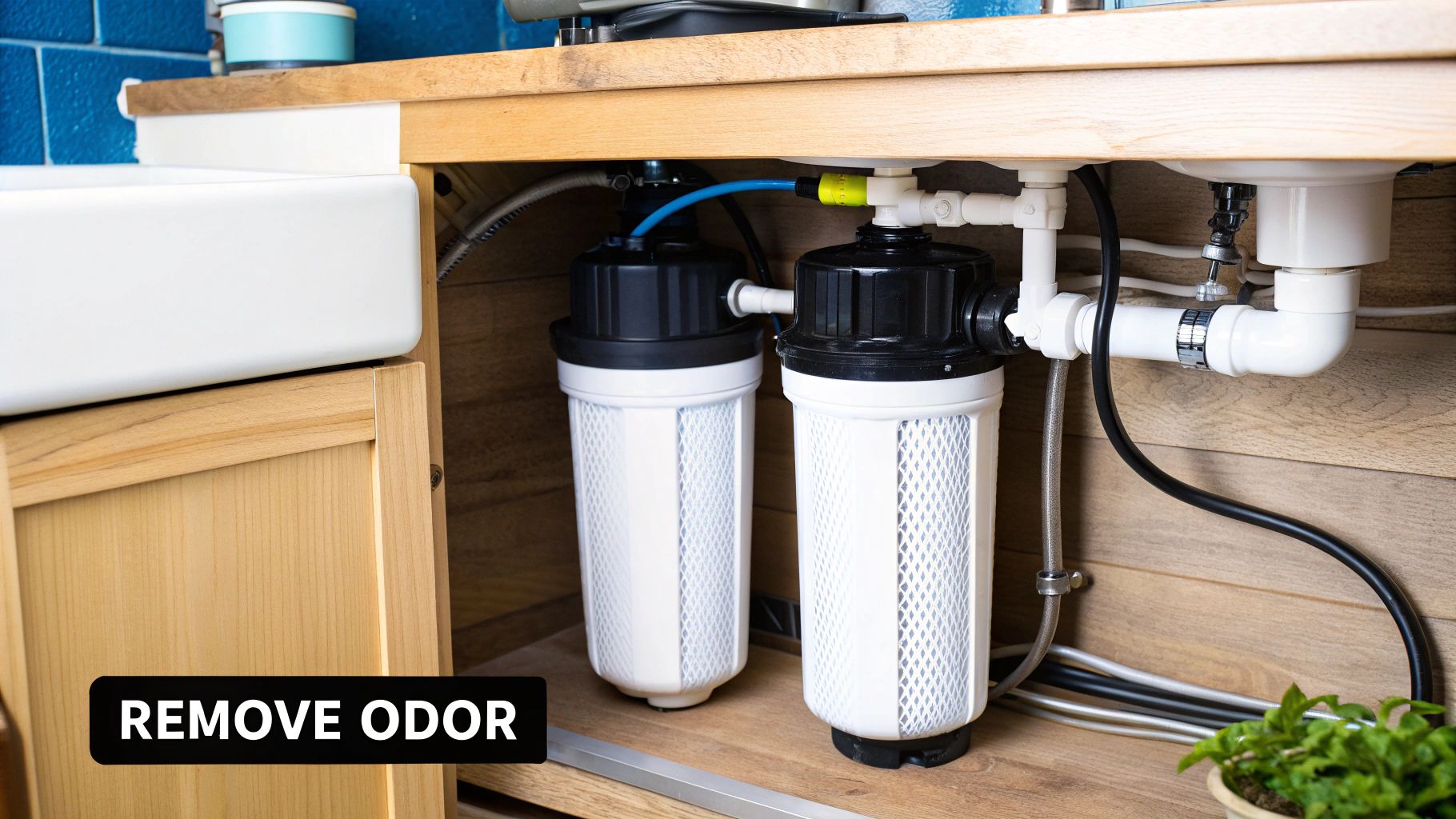
Alright, you've figured out why your water smells off. That's the first major hurdle. Now, it's time to shift from diagnosis to action and get your water back to being clean, fresh, and trustworthy for your family.
The bedrock of any lasting solution is knowing exactly what you're up against. While you can get clues from home test strips or the sniff test, they don't give you the full picture. Guessing at the problem often leads to buying the wrong equipment, which is a frustrating and expensive mistake to make.
A professional laboratory water test is the only way to get a clear, definitive answer. It gives you a complete chemical breakdown, pinpointing the specific contaminants and their exact concentrations. This isn't guesswork; it's data. And that data points us directly to the right fix for your specific situation.
The Power of Professional Water Testing
Think of a lab test as a check-up for your well's health. It goes beyond just the smell to uncover hidden issues you might never see, taste, or notice on your own.
- Pinpoint Accuracy: Lab reports measure contaminants in parts per million (PPM) or even parts per billion (PPB). This level of detail is crucial for sizing a filtration system correctly so it actually works.
- Comprehensive Insights: A professional test can screen for a whole host of problems beyond odors, like nitrates, harmful bacteria, and heavy metals that could impact your family’s well-being.
- Cost-Effective Solutions: When you know the exact problem, you can get a targeted solution. No more wasting money on equipment that doesn’t address the root cause.
Don’t just put a band-aid on the symptom—solve the problem at its source. A professional water analysis is the smartest investment you can make for the long-term quality and safety of your water.
Once we have that detailed report in hand, we can map out a specific action plan. The right treatment is completely dependent on what's causing that odor in the first place.
Targeted Treatments for Common Odors
Different smells demand different solutions. A system built to remove iron won’t do a thing for sulfur bacteria. That's why we always customize our approach based on your water test results.
1. For Rotten Egg Smells (Hydrogen Sulfide)
The unmistakable smell of rotten eggs comes from hydrogen sulfide (H2S) gas. It’s a common issue in wells, and you can start smelling it at concentrations as low as 0.05 mg/L. While it's not usually a health risk at these levels, it makes your water unpleasant and can corrode your plumbing over time. You can learn more about hydrogen sulfide's impact on public health on health.wa.gov.au.
Our go-to solutions for H2S are:
- Shock Chlorination: This is often the first step. We professionally disinfect your entire well and plumbing system to wipe out the sulfur-reducing bacteria that are producing the gas.
- Aeration or Air Injection Systems: For a permanent, chemical-free fix, these systems force oxygen into the water. This process oxidizes the H2S gas, turning it into tiny solid particles that can be easily filtered out.
2. For Earthy or Musty Smells (Organics)
That damp, earthy scent is usually caused by organic compounds like geosmin. The best way to tackle this is with a system that physically traps and removes these odor-causing molecules.
- Activated Carbon Filters: Think of these filters as a high-tech sponge for your water. The carbon inside has a massive surface area that grabs onto and holds organic compounds, letting only crisp, clean water pass through. To see how these can get rid of that musty smell for good, learn more about our professional-grade whole-home carbon filters.
3. For Metallic Smells (Iron & Manganese)
If your water smells metallic and leaves behind ugly rust-colored or black stains, you're dealing with high levels of iron and manganese.
- Iron Filters & Water Softeners: We use specialized iron filters that use an oxidation process to pull dissolved iron right out of your water. For homes with low to moderate iron levels, a high-quality water softener can sometimes handle the job, giving you the double benefit of soft water and no more metallic taste.
No matter which solution is right for you, professional installation is non-negotiable. A properly installed and calibrated system will run smoothly for years, while a bad installation can cause leaks, water pressure problems, and an incomplete fix. Our experienced technicians make sure your system is set up perfectly, giving you lasting peace of mind and finally putting an end to your well water smells.
Common Questions About Well Water Smells
https://www.youtube.com/embed/GAQkuNEHCZA
Even after you know the usual suspects behind well water odors, you're bound to have more specific questions. It's only natural. When your well water smells, the situation can feel confusing and a little overwhelming. This section tackles the most frequent questions we hear from homeowners right here in Southwest Florida.
Our goal is simple: to give you the clarity you need to take the next step with confidence. These aren't just textbook answers; they come from over two decades of hands-on experience solving water quality issues in homes just like yours.
Why Does My Hot Water Smell but Not My Cold Water?
This is a classic, and it's one of the most common calls we get. The good news is, it almost always points to a single source: your hot water heater. This isn't a problem with your well itself, but a chemical reaction brewing inside the tank.
Most water heaters have a part called an anode rod, usually made of magnesium. Its job is to sacrifice itself—it corrodes to protect the steel tank from rusting out. The problem starts when your water has sulfates. The magnesium rod reacts with the sulfates and creates hydrogen sulfide gas, the source of that rotten egg smell. The heat in the tank just acts as an incubator, speeding the whole process up.
Replacing the magnesium rod with an aluminum-zinc one or disinfecting the tank can be a quick fix. But think of it as a warning light on your dashboard. It confirms you have sulfates in your water, which can cause other problems down the line. We can help you test the water to be sure and figure out if a whole-home solution is needed to protect all your plumbing.
Is It Safe to Drink Well Water That Smells Bad?
This is a tricky one. While the things that cause earthy or rotten egg smells usually aren't a direct health threat in small amounts, they certainly ruin your quality of life. The bigger issue is that you should never just assume smelly water is safe. A bad smell can easily cover up other dangerous contaminants like bacteria or nitrates, which you can't see, smell, or taste.
An odor is your well’s way of telling you that something is out of balance. The only way to be certain about your family's safety is with a comprehensive, professional water test.
We always tell our clients to test their water anytime they notice a change in smell, taste, or color. It provides peace of mind and ensures you're not accidentally ignoring a more serious, hidden problem.
How Often Should I Test My Well Water?
Unlike city water, private wells aren't regulated by public health authorities. That means the responsibility for water safety lands squarely on you, the homeowner. As a rule of thumb, experts recommend testing your well at least once per year for common troublemakers like coliform bacteria and nitrates.
Think of this annual check-up as establishing a baseline for your water's health. That said, you should get a test done immediately if:
- You notice any new or worsening smells.
- The water changes color or looks cloudy.
- A major flood has occurred near your well.
- A new baby or someone with a compromised immune system is living in the home.
Staying on top of testing makes it so much easier to catch and fix problems before they get out of hand. For a deeper dive, check out more answers in our comprehensive well water FAQs.
Can I Get Rid of Well Water Smells Myself?
Some DIY fixes, like flushing a hot water heater, might give you temporary relief. But they rarely get to the root of the problem, which often starts back in the well or the aquifer itself. Shock chlorinating a well is another common DIY tactic, but it can be dangerous or just plain ineffective if you don't use the right concentrations or do it correctly.
Lasting solutions demand an accurate diagnosis. You need to know exactly what the contaminant is and how much of it is in your water. Going with a professional eliminates the guesswork. We can make sure the right treatment system is installed correctly the first time, saving you a ton of time, money, and frustration. It's about engineering a permanent solution that’s matched to your water's unique profile.
When you're ready to put an end to smelly water for good, trust the local experts who have seen it all. Water Medic of Cape Coral provides professional water testing and customized filtration solutions to restore your water's quality and your peace of mind. Schedule your free water analysis today at https://watermedic.com.