
Water smells like rotten eggs? Quick fixes to eliminate odor
If your tap water suddenly smells like rotten eggs, you've got a classic case of hydrogen sulfide gas. It's a common, and thankfully often fixable, problem caused by tiny, naturally occurring sulfur bacteria. These little microbes find a home in oxygen-poor areas of your plumbing and get to work, creating a nasty smell that ruins the taste and quality of your water. Our expert team specializes in diagnosing and providing permanent solutions to restore your water's freshness.
Identifying the Source of the Rotten Egg Smell
When that unmistakable odor hits you, it's natural to worry about safety. The good news? At the low levels typically found in homes, the smell is more of an annoyance than a health hazard. The real mission is to play detective and figure out exactly where it's coming from, which is the first step our professionals take.
The culprit, hydrogen sulfide (H2S), is a colorless gas that our noses can pick up at incredibly low concentrations. It’s produced by sulfur-reducing bacteria that munch on sulfates naturally present in water. These microscopic organisms aren't picky and thrive in several parts of a typical home water system, especially where oxygen is scarce.
Where Do Sulfur Bacteria Hide?
To get rid of the smell for good, you first have to understand where these bacteria like to set up shop. Think of them as unwanted tenants who move in wherever the conditions are just right.
This quick table can help you narrow down the possibilities.
Common Sources of Rotten Egg Smell in Water
A quick guide to pinpointing where the sulfur smell might be originating in your home's water system.
| Source | Common Cause | First Step to Check |
|---|---|---|
| Hot Water Heater | The warm, low-oxygen tank is a perfect breeding ground. A magnesium anode rod, designed to prevent rust, can react with sulfates and accelerate H2S production. | Does the smell only come from your hot water taps? If yes, this is your prime suspect. |
| Private Well | Hydrogen sulfide can be present in the groundwater itself, or bacteria can grow within the well due to organic material and stagnant water. | Is the smell present in both hot and cold water at all faucets? The well is a likely source. |
| Plumbing System | Biofilm and bacteria can build up in your pipes over time, especially in sections that aren't used often, leading to a persistent odor throughout the house. | If the smell is consistent everywhere, but you're on city water, the pipes could be the issue. |
Each of these sources points to a different solution, so taking a moment to identify the pattern is a crucial first step.
Hydrogen sulfide is incredibly potent. Most people can detect it at concentrations as low as 0.5 parts per million (ppm). To put that in perspective, some studies show nearly half the population can smell it at just 8 parts per billion—that’s like detecting a few drops of ink in an entire swimming pool.
Pinpointing whether the smell is in your hot water, cold water, or both is your most important clue. For example, if the rotten egg smell only appears when you run the hot water, the problem is almost certainly inside your water heater. This is a very common issue that often requires professional water heater services to flush the tank, check the anode rod, and get things back to normal. A pro can make sure you’re truly eliminating the source, not just temporarily masking the smell.
What's Causing That Rotten Egg Smell?
To get rid of that awful rotten egg smell in your water for good, you first have to understand what’s happening on a microscopic level. The culprit is almost always sulfur-reducing bacteria (SRB), which are essentially tiny, natural factories living in your water system.
Like any living thing, these bacteria need a food source to thrive. They feed on sulfates—naturally occurring minerals common in groundwater, especially in places like Southwest Florida. As they digest these sulfates, they produce a smelly byproduct: hydrogen sulfide (H2S) gas. It’s the very same gas that gives rotten eggs their signature stench.
The Hot Water Heater Connection
So, where are these bacteria setting up shop? One of their favorite spots is your hot water heater. The tank provides the perfect environment: it's warm, dark, and low in oxygen. This is particularly true if your tank has a standard magnesium anode rod.
An anode rod is a metal rod that hangs inside your tank, designed to sacrifice itself to prevent the tank from rusting out. The problem is, the magnesium in a standard rod is like a gourmet meal for sulfur-reducing bacteria, supercharging their growth and ramping up hydrogen sulfide production.
This is exactly why the smell is often way worse when you run the hot water. Heat makes the hydrogen sulfide gas less soluble, so it escapes from the water and into the air much more easily. The second that hot water hits your faucet, the gas is released, and you get a nose full of that nasty smell.
Why You Need a Professional Fix
Now that you know the science, you can see why a real solution is so important. Flushing your tank or pouring in some store-bought chemicals might clear the air for a little while, but it's just a temporary fix. You haven't dealt with the root cause, so the bacteria will just grow back and the smell will return.
This is where calling in a professional makes all the difference. An expert can pinpoint the exact source of the problem—whether it's the anode rod, bacteria in your well, or a mix of issues. From there, they can recommend a permanent solution, like swapping the magnesium rod for a zinc-aluminum one or installing a whole-house water filtration system to remove the bacteria's food source altogether. Without a proper diagnosis, you could end up wasting time and money on band-aid solutions while the core problem keeps stinking up your home.
Is Sulfur Water Safe to Drink?
When your water starts smelling like rotten eggs, the first question that pops into your head is probably, "Is this safe to drink?" The short answer is, usually, yes.
The low concentrations of hydrogen sulfide gas typically found in home water systems aren't considered a direct health threat by major health organizations. That foul odor is alarming, but the gas itself is more of a nuisance than a danger at these levels.
But don't just write it off. Even though the smell itself isn't harmful, you shouldn't ignore it. Think of that rotten-egg smell as a warning light on your car's dashboard. The light isn't the problem, but it’s definitely telling you something is wrong under the hood.
The Hidden Dangers of That Sulfur Smell
The real issue isn't the smell—it's what that odor tells you about the conditions inside your water system. The presence of hydrogen sulfide often signals an environment that can cause some serious, long-term damage to your home. This is where a simple nuisance can quietly turn into a major threat to your home's plumbing and value.
Two primary concerns should be on your radar:
-
Plumbing Corrosion: Hydrogen sulfide is corrosive, especially to metals. It can slowly eat away at your pipes, whether they're made of iron, steel, or even copper. Over time, this leads to thinning pipes, pinhole leaks, and eventually, major pipe failures that can cause a world of water damage.
-
A Breeding Ground for Bacteria: The same low-oxygen conditions that let sulfur-reducing bacteria thrive can be a five-star resort for other, potentially more harmful microorganisms. If your water system is a welcoming place for one type of bacteria, it could easily be a haven for others, too.
This reframes the problem entirely. When your water smells like rotten eggs, you're not just dealing with an unpleasant odor. You're dealing with an active agent of corrosion that is silently degrading your plumbing system from the inside out.
Why Professional Testing is a Smart Move
This is exactly why getting a professional water analysis is such a smart, proactive step. A simple sniff test at home can't tell you the exact concentration of the gas or confirm if other nasty bacteria are lurking in your water. Our expert testing gives you the full picture of your water's chemistry, making sure you fix the root cause instead of just masking the symptom. Protecting your pipes and ensuring your water is genuinely clean is a direct investment in your home’s health and your family's well-being.
For homeowners looking for a targeted solution right at the tap, it's also worth learning about how an under-sink reverse osmosis system can provide an exceptional final barrier. These systems are fantastic at removing a huge range of contaminants, delivering pure, great-tasting water right where you use it most for drinking and cooking. By tackling the problem at both the source and the point of use, you can get total peace of mind.
How to Pinpoint the Source in Your Home
Before you can fix water that smells like rotten eggs, you need to play detective. Figuring out exactly where the odor is coming from is the critical first step. It's the only way to find a permanent solution and avoid wasting time and money on fixes that don't actually hit the target.
Thankfully, you can do some simple sleuthing on your own. This process doesn't require any fancy tools—just a good nose and a methodical approach. By checking different faucets and water temperatures, you can gather the clues needed to understand what's really happening inside your plumbing.
A Simple DIY Diagnostic Test
Ready to get to the bottom of it? Follow these steps to start tracking down that rotten egg smell.
-
Check a Cold Water Tap: Start with a faucet you don't use often, like in a guest bathroom. Turn on only the cold water and let it run for a minute or two. Fill a glass, walk away from the sink, and then give the water a sniff. If you can smell it in the glass, the problem is likely coming from your well or the main water supply itself.
-
Test the Hot Water Next: Now, go back to that same faucet and run only the hot water. Fill another glass and, again, smell it away from the drain. If the smell only shows up with hot water—or is way stronger—the prime suspect is your hot water heater.
-
Compare Multiple Faucets: Repeat these tests at a few different spots in your house, like the kitchen sink and a shower. If the smell is at every single faucet, with both hot and cold water, it's a strong sign of a whole-house problem, which often points back to the well. But if it’s isolated to just one tap, the issue could be localized in that specific pipe or even the drain.
The infographic below walks you through this decision-making process, showing how that sulfur smell can affect your home's systems even if it’s considered a low health risk.
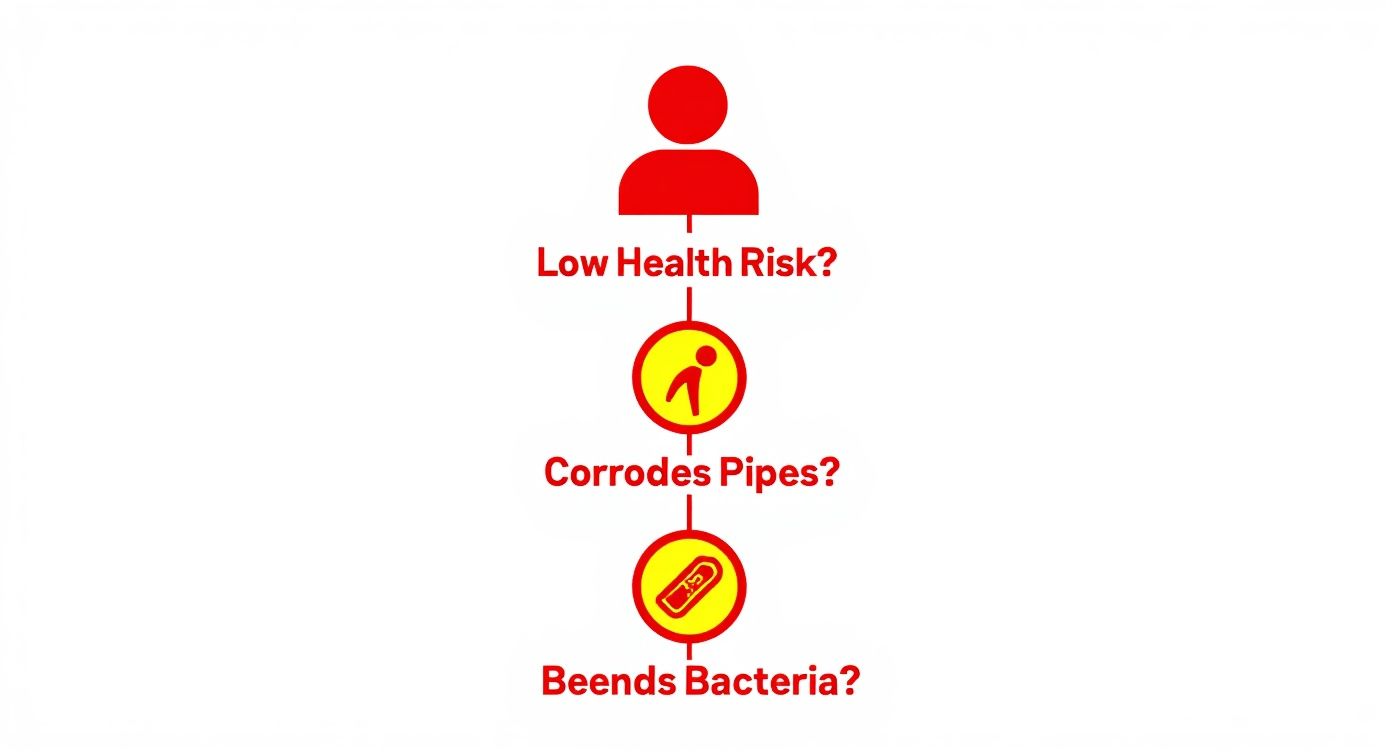
As you can see, while the smell itself may not be a direct threat to your health, it signals underlying conditions that can corrode pipes and create a breeding ground for bacteria, which absolutely poses a threat to your home's plumbing.
When to Call in the Experts
These at-home checks are a fantastic starting point for narrowing things down. But they're just that—a start. For anyone with a private well, getting a definitive diagnosis is especially important. If you suspect your well is the source, our comprehensive guide to well water FAQs is a great resource for more in-depth information.
A professional water analysis is the only way to know for certain what you're dealing with. Our tests measure the exact concentration of hydrogen sulfide and check for other sneaky contaminants, ensuring you invest in the right solution from day one.
Don't leave your water quality up to guesswork. Contact our experts to schedule a comprehensive test and get a clear, actionable plan to get rid of that rotten egg smell for good.
Choosing the Right Water Treatment Solution
Once you’ve figured out why your water smells like rotten eggs, the next logical step is finding a permanent fix. This isn't just about getting rid of a bad smell; it's about investing in a long-term solution that protects your home's plumbing and ensures your water is genuinely clean. The best approach always depends on the source of the problem.
If the smell is only coming from your hot water, the fix can be surprisingly simple. The issue is almost always the standard magnesium anode rod inside your water heater, which acts like a buffet for sulfur-reducing bacteria. Swapping it out for a zinc-aluminum anode rod often starves those bacteria, stopping the hydrogen sulfide gas from ever being produced.
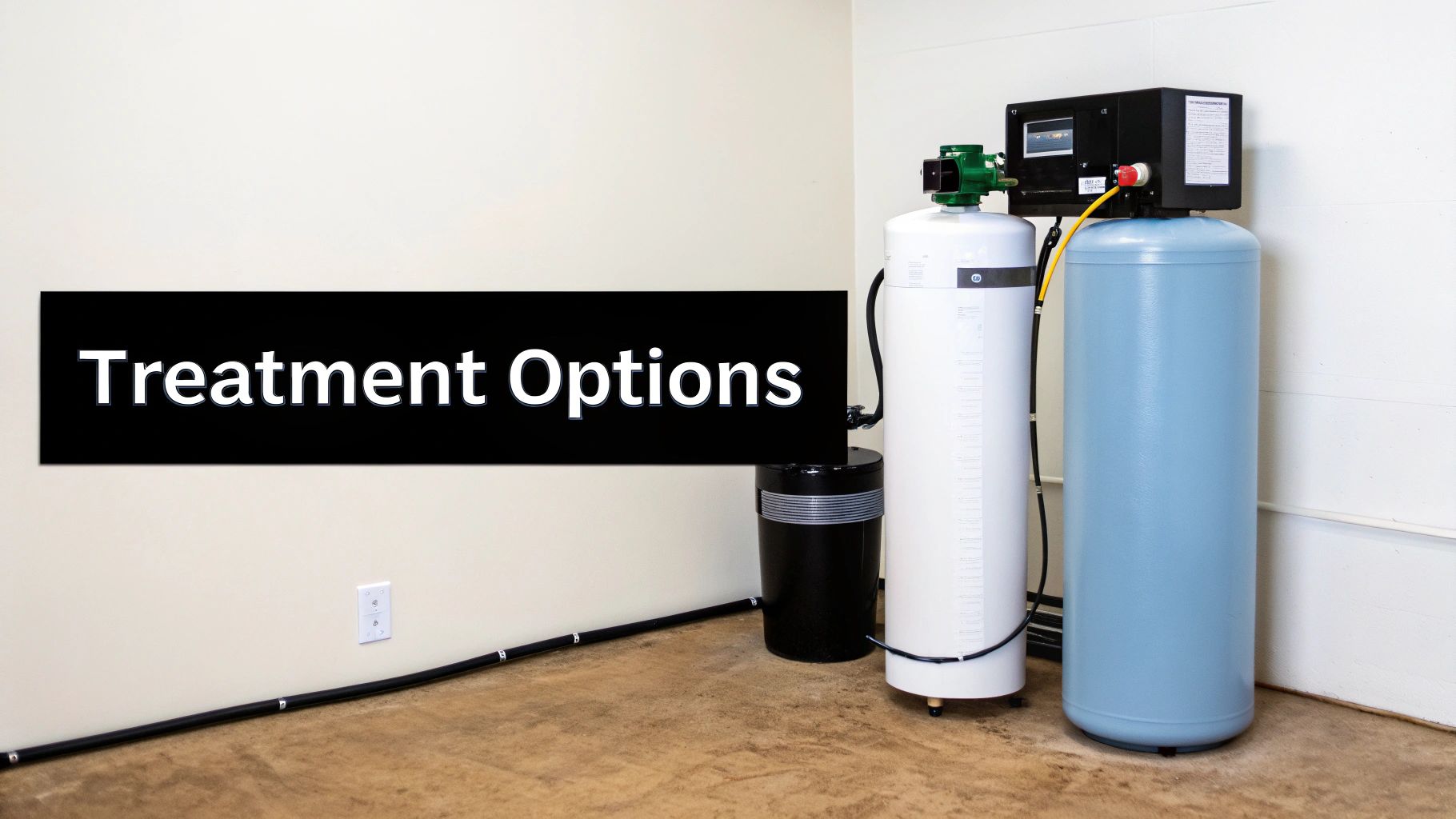
But what if the smell is in both your hot and cold water? This points to a much broader issue, especially common for homes on well water. Now you're looking at a whole-house problem that demands a more comprehensive, professional-grade water treatment system.
Exploring Whole-Home Treatment Systems
When hydrogen sulfide has contaminated your entire water supply, you need a system that treats the water right where it enters your home. Luckily, there are several highly effective technologies designed for exactly this purpose.
-
Aeration Systems: Think of this as simply giving your water a chance to breathe. These systems mix oxygen into the water, which transforms the dissolved hydrogen sulfide gas into a solid particle. From there, it’s easily filtered out. It’s a fantastic, chemical-free method that works great for moderate H2S levels.
-
Activated Carbon Filters: These work kind of like a high-tech sponge. Water flows through a bed of porous carbon material that traps and absorbs the hydrogen sulfide gas. They’re effective for lower concentrations, but just like a real sponge, they eventually get "full" and the filter media needs to be replaced.
-
Chemical Injection Systems: For more stubborn or severe sulfur problems, a chemical injection system is the heavy-hitter. It adds a small, controlled dose of an oxidizing agent (like chlorine) to completely wipe out the gas and the bacteria behind it. A secondary filter then removes any leftover particles.
The presence of sulfur is a worldwide water issue, and the concentrations can vary dramatically depending on the local geology. A 1970 survey by the US Public Health Service found that sulfate levels in sampled water supplies ranged from less than 1 mg/L to a staggering 770 mg/L. This is a great reminder that there’s no single "best" solution—the right system has to be tailored to your specific water chemistry.
Comparing Professional Water Treatment Systems for H2S Removal
To help you understand the options, here’s a quick overview of the most common professional solutions for eliminating hydrogen sulfide, highlighting their effectiveness and what to expect for maintenance.
| Treatment Method | Best For | Pros | Cons / Maintenance |
|---|---|---|---|
| Air Injection / Aeration | Moderate H2S levels (up to 10 ppm) | Chemical-free, low operating cost, effective at oxidizing H2S | Requires periodic injector cleaning; not ideal for extremely high H2S concentrations |
| Activated Carbon Filters | Low H2S levels (under 1 ppm) | Simple installation, also improves taste and odor | Carbon media needs regular replacement (can be costly), becomes ineffective when saturated |
| Chemical Injection (Chlorine) | High to very high H2S levels (10+ ppm) | Highly effective, sanitizes water by killing bacteria, powerful oxidation | Requires storing chemicals, more complex maintenance (refilling, pump calibration), may need a post-filter to remove chlorine taste |
Ultimately, the goal is to choose a system that solves your problem efficiently without creating a new maintenance headache. Each technology has its place. For example, our guide to air injection systems goes into more detail on how that specific technology provides a popular, chemical-free solution for many homes.
The most crucial step is a professional water analysis. A detailed test provides the exact data needed to recommend a system that will not only eliminate the rotten egg smell but also operate efficiently for years to come.
Without knowing exactly what’s in your water, you’re just guessing. Our experts can analyze your water and design a solution that’s perfectly matched to your home’s needs, giving you peace of mind and fresh, clean water from every tap.
Common Questions About Sulfur Water
Even after you’ve pinpointed the source of that rotten egg smell, a few questions usually pop up. We get it. Understanding the "why" and "how" is the first step toward finding a real, long-term solution you can trust. Let’s tackle some of the most common things we hear from homeowners facing this smelly situation.
A lot of people are surprised by how suddenly the smell can appear. One day your water is fine, the next it’s awful. This often happens when something changes in your water source, especially if you have a private well. A drop in the water table, heavy rains, or even new construction nearby can stir up sediment and wake up those dormant sulfur-reducing bacteria.
Another classic trigger is your water heater. If you go on vacation and turn it off, the warm, stagnant water left inside becomes a perfect incubator. The bacteria multiply like crazy, and you're greeted with a blast of smelly water the moment you get home and turn on a hot tap.
Will a Simple Filter Fix the Smell?
It’s tempting to grab a simple pitcher filter or a faucet attachment as a quick fix, but for a hydrogen sulfide problem, they just don't cut it. A basic carbon filter might mask the odor at one faucet for a little while, but it isn’t built to remove a gas like H₂S. The filter gets overwhelmed fast and does absolutely nothing to solve the root problem.
Using a pitcher filter for sulfur water is like using an air freshener for a plumbing leak. It might cover the symptom for a minute, but it completely ignores the underlying issue causing damage to your system.
To get rid of the smell for good, you need a solution that attacks the cause, whether that’s bacteria in your water heater or hydrogen sulfide coming directly from your well.
What Is the Cost for a Whole-Home Solution?
The investment for a whole-home water treatment system really depends on a few key things: the type of technology needed, how severe your sulfur problem is, and your family's daily water usage.
Replacing an anode rod in a water heater is a relatively low-cost fix. On the other hand, a powerful, multi-stage system designed to handle high levels of hydrogen sulfide will naturally be a more significant investment.
It's important to think of this as protecting your home's value. The upfront cost of a professional solution is almost always less than the long-term expense of replacing corroded pipes, ruined appliances, and fixing water damage. The best way to get a clear number is with a professional water analysis, which will give you an accurate quote for a system designed specifically for your home's water.
Don't let smelly water ruin your plumbing and your family's comfort. The experts at Water Medic of Cape Coral have over 25 years of experience solving the toughest water quality problems in Southwest Florida. We believe in permanent solutions, not temporary patches. Contact us today for a comprehensive water analysis and a personalized plan to get rid of that rotten egg smell for good.