Reverse Osmosis Water System Cost: What to Expect and Save
When you start looking into a reverse osmosis water system, the cost can range anywhere from $150 for a simple countertop unit to over $4,800 for a full whole-house system. The final price tag really depends on the system's capacity, its features, and whether you bring in a professional for the installation—something we always suggest for getting the best performance.
Your Guide to Reverse Osmosis System Costs
Deciding to install a reverse osmosis (RO) system is a smart move for your family's health and even the longevity of your plumbing and appliances. Think of it less as a purchase and more as a long-term upgrade to your home, giving you pure, great-tasting water from the tap. But before you get there, the first step is understanding the initial investment.
While prices can vary, the residential RO market has found a bit of a sweet spot. As of 2025, the average installation cost across North America is holding steady at around $2,200. Of course, that’s just an average. The actual price you'll pay swings from as low as $150 for a small portable unit to $4,800 or more for a comprehensive system that serves your entire home.
A Quick Look at Upfront Costs
To help you get a clearer idea of where your budget might land, here's a quick overview of the initial costs for different types of residential RO systems. This table breaks down what you can expect to pay for the unit itself and the cost with professional installation, which is key to making sure everything works perfectly from day one.
Typical Upfront Costs for RO Systems
| System Type | Average Unit Cost | Average Installed Cost |
|---|---|---|
| Countertop | $150 – $500 | $150 – $500 (DIY) |
| Under-Sink | $250 – $1,000 | $450 – $1,500 |
| Whole-House | $1,500 – $4,000+ | $2,500 – $4,800+ |
This breakdown should give you a solid starting point for planning your investment in cleaner water.
If your home is on a private well, there's an important first step before you even pick a system. You'll need to understand well water testing costs to figure out exactly what contaminants you're dealing with. This test tells us what we need to target.
Our team is here to help you navigate these options and choose the system that makes the most sense for your home and budget, ensuring you get the best possible return on your investment.
What Drives the Price of an RO System?
Ever looked at two reverse osmosis (RO) systems and wondered why one is a steal and the other costs a small fortune? The price difference isn't arbitrary. The reverse osmosis water system cost is tied directly to features that dictate how well the system performs, how efficient it is, and how convenient it is to use. Getting a handle on these factors is the key to picking the right system for your home without breaking the bank.
Think of it like buying a car. The base model will get you where you need to go, but if you want a bigger engine, high-tech safety features, or a luxury interior, the price goes up. RO systems work the same way; they're built with different capabilities to match different needs.
Let's pull back the curtain on what you're actually paying for. By breaking down what each feature does, you can find that sweet spot between performance and price. Our goal is to make sure you only invest in the features that will actually make a difference for your home's water.
System Capacity and Production Rate
One of the biggest factors influencing the price is the system's capacity, which is measured in gallons per day (GPD). A small, under-sink unit for a kitchen faucet might produce 50 GPD—more than enough for all your drinking and cooking needs. On the other hand, a whole-house system that has to supply water to every faucet, shower, and appliance needs a much bigger engine, often 100 GPD or more.
It makes sense, right? Higher-capacity systems need larger membranes, stronger pumps, and more heavy-duty components to keep up with the demand. All of that adds to the cost. When we do a consultation, we look at your family's daily water habits to match you with a system that has just the right amount of horsepower, so you're never left waiting for water but aren't paying for a system that's overkill.
The Number of Filtration Stages
The number of filtration stages is another huge piece of the puzzle. A basic 3-stage system is like a good, solid car wash—it gets the job done and removes the most common gunk from your water. But more advanced systems can have five, six, or even seven stages, giving your water a much deeper, more specialized clean.
Think of it this way: a 3-stage filter is a great entry point for cleaner water, but a 7-stage system is the full detailing package. Each extra stage is designed to zero in on specific contaminants, like chlorine, heavy metals, pesticides, or volatile organic compounds (VOCs).
We help you figure out what "level of service" your water actually needs. By looking at your local water quality report, we can pinpoint which filtration stages will give you the most bang for your buck, ensuring you get pristine water without paying for stages you don't need.
Tank vs. Tankless System Design
Finally, the design of the system itself plays a major role in the price, specifically whether it's a classic tank-based model or a sleek, modern tankless one.
- Traditional Tank Systems: This is the old-school RO setup. Purified water is stored in a small pressurized tank under your sink, so it's ready the instant you turn on the faucet. They're usually more affordable upfront but do take up a fair bit of cabinet space.
- Tankless Systems: These are the new kids on the block. They purify water on-demand as you use it, giving you a continuous flow of fresh water in a much more compact package. The technology is more advanced, so they come with a higher initial price tag, but they're incredibly efficient and save a ton of space.
Choosing between the two really comes down to your space, your budget, and how you use water. We can help you weigh the pros and cons to find the perfect fit. To get some personalized advice, you can always schedule a free consultation with our experts.
Choosing Your System: Point Of Use vs. Whole House
When you’re looking into a reverse osmosis system, one of the first big decisions you'll make is where you want that purified water. This choice directly impacts the initial reverse osmosis water system cost and how you'll use that cleaner water every day. You essentially have two main options: a point-of-use (POU) system that treats water at a single tap, or a whole-house system that purifies every drop entering your home.
Think of it like this: a POU system is a specialist, a dedicated expert providing top-tier water right at your kitchen sink for drinking and cooking. A whole-house system, on the other hand, is the guardian of your entire home, protecting every faucet, showerhead, and appliance from contaminants and hard minerals. They solve very different problems.
Point-Of-Use Systems: The Targeted Solution
Point-of-use systems are by far the most common and budget-friendly way to get into reverse osmosis. They're usually installed neatly under a sink and hooked up to their own dedicated faucet, making sure the water you and your family drink is as pure as it gets.
This targeted approach is what keeps the initial investment and ongoing maintenance costs down. Since they only need to produce a few gallons a day, the parts are smaller and the design is simpler. It's the perfect solution if your main goal is to upgrade your drinking water without the commitment of a larger, more involved installation.
Whole-House Systems: The Ultimate Home Protection
A whole house reverse osmosis system is a much bigger investment, but it delivers a level of protection a POU system just can't touch. It acts as a shield for your entire plumbing infrastructure. By filtering water right where it enters your house, it prevents scale buildup in pipes and can seriously extend the life of your dishwasher, washing machine, and water heater.
This is more than just a water filter; it's a comprehensive home wellness system. You'll notice the difference everywhere—from softer skin and hair after a shower to brighter, cleaner laundry and spotless dishes. It’s an investment that pays dividends in both health and home maintenance savings.
This infographic breaks down the primary factors that determine the price of any RO system, whether it’s for a single faucet or your entire home.
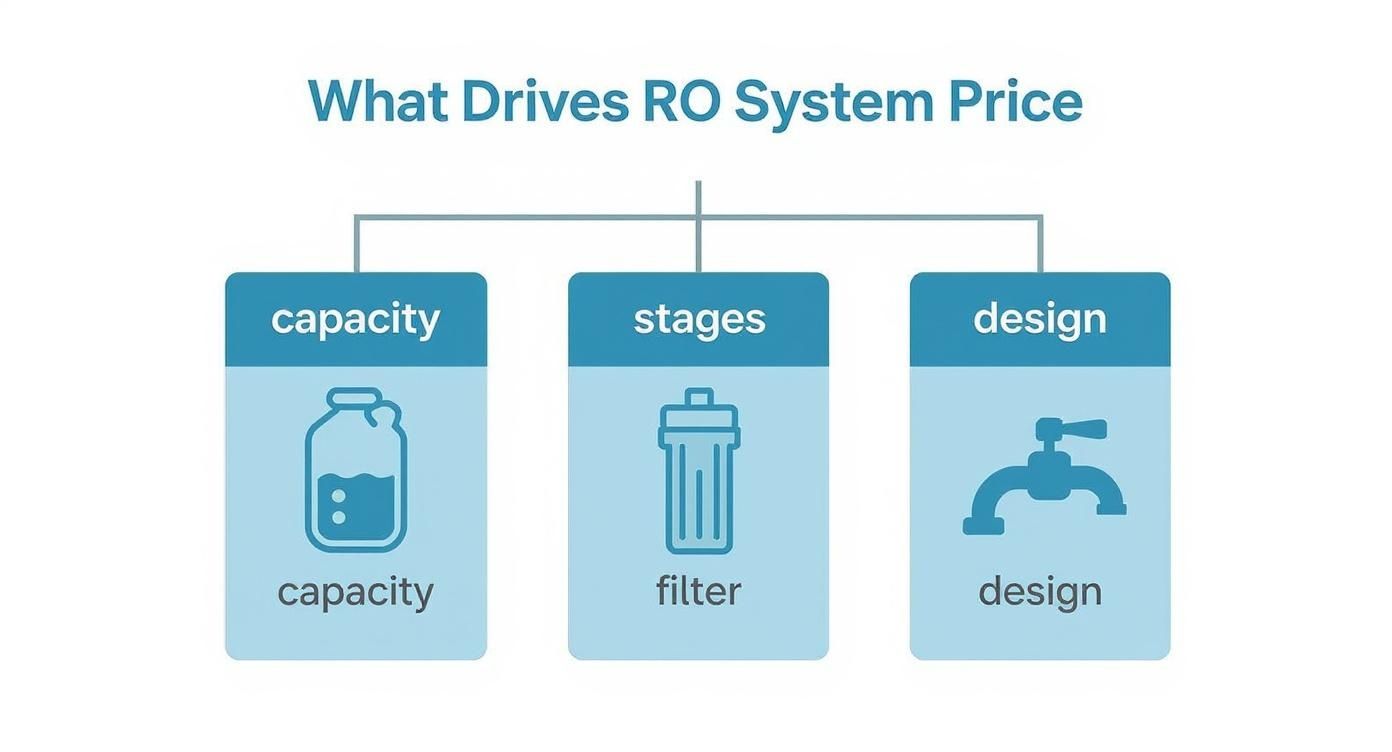
As you can see, the system's capacity, the number of filtration stages, and its overall design are the biggest drivers of cost.
To help you visualize the differences, here's a side-by-side look at the two main categories of RO systems. This should help you decide which is the right fit for your home and budget.
RO System Comparison: Point Of Use vs. Whole House
| Feature | Point of Use (Under Sink/Countertop) | Whole House (Point of Entry) |
|---|---|---|
| Installation Location | Kitchen sink, countertop, or refrigerator line | Main water line, typically in a garage or basement |
| Water Treated | A single faucet or appliance | All water entering the home |
| Primary Benefit | Purified water for drinking and cooking | Protects plumbing, appliances, and provides clean water everywhere |
| Upfront Cost | Lower ($200 – $800) | Higher ($1,000 – $4,800) |
| Maintenance | Simpler; annual filter changes are common | More complex; may require professional servicing |
| Installation | Often a DIY project for those who are handy | Almost always requires professional installation |
Ultimately, choosing the right path comes down to what you're trying to achieve. Are you aiming to perfect your drinking water, or do you want to elevate the water quality throughout your entire house? Either way, understanding these key differences is the first step toward making a confident decision for your home.
The Real Cost of Professional Installation
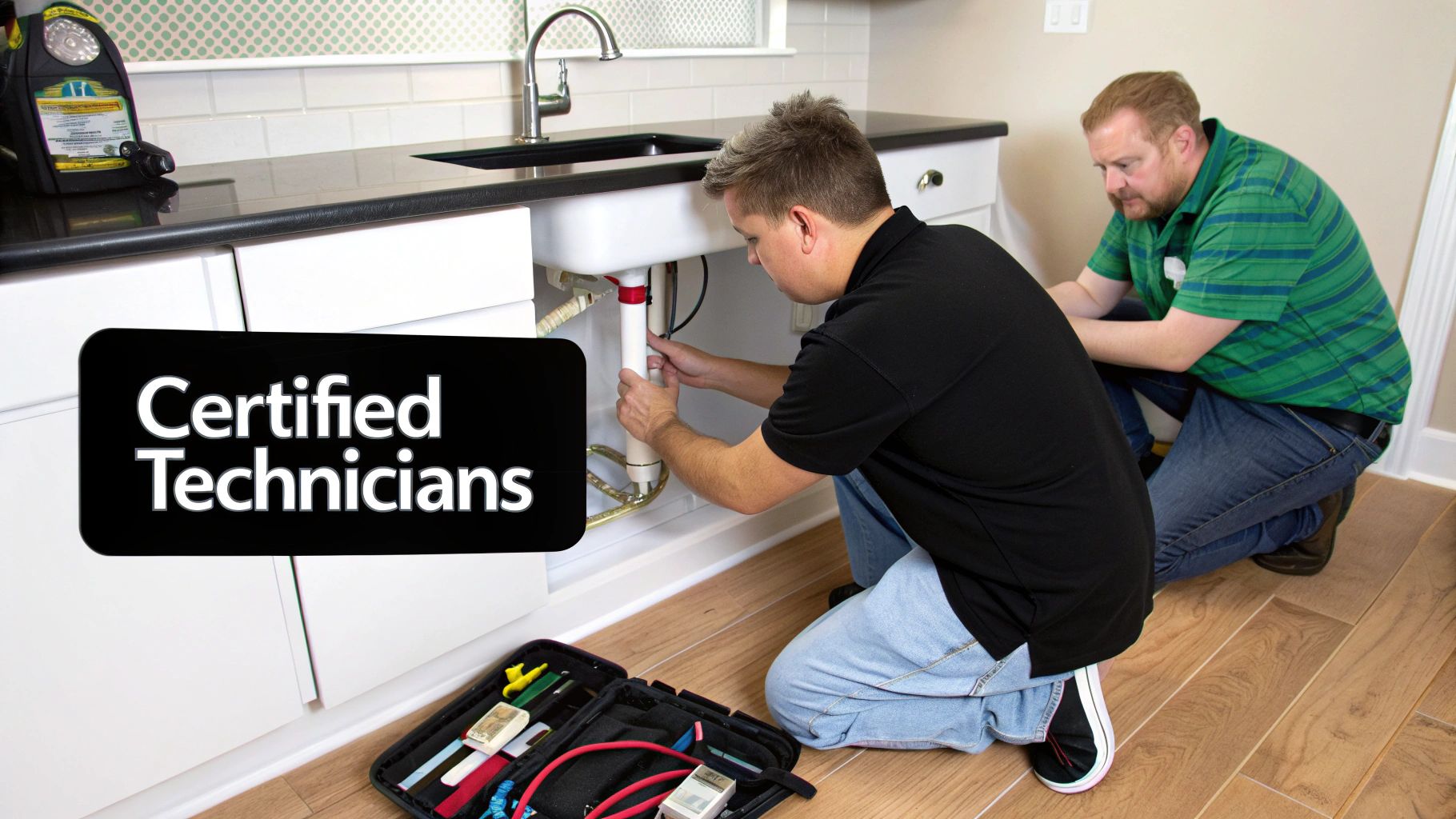
Thinking about installing your new reverse osmosis system yourself? It’s tempting to try and shave a little off the total reverse osmosis water system cost by turning it into a weekend project. But let's be honest—what seems like a straightforward task can quickly spiral into a costly nightmare if things don't go exactly right.
Hiring a professional isn't just an extra line item on the bill; it's an investment in getting the job done correctly and protecting your home. A tiny mistake, like a fitting that isn't perfectly tightened or a water line that gets pinched, can cause a slow, silent leak. You might not even notice it for weeks, but by then, you could be looking at serious water damage to your cabinets, subfloor, and more.
What Our Professional Installation Covers
Our installation service is thorough. We're not just there to connect a few hoses; we handle every single detail to ensure your system runs efficiently and without leaks from the moment we're finished.
Here’s what you can expect when our team is on the job:
- Expert Labor and Plumbing Work: We handle all the connections to your existing water lines, making sure every seal is tight, secure, and meets professional standards.
- Dedicated Faucet Installation: Need a spot for the new RO faucet? We can drill a clean, precise hole in most countertops for a seamless, factory-installed look.
- Refrigerator and Ice Maker Hookup: We’ll run a line to your fridge so you can enjoy purified water and crystal-clear ice cubes, all connected professionally.
- System Testing and Optimization: We don't pack up until we've tested everything. We check the water pressure, flow rate, and water quality to make sure your system is performing at its best.
A professional installation is your best defense against unexpected disasters. We once had a client who, after our installation, discovered a pre-existing slow leak from their old plumbing. Our thorough post-install check caught it, preventing what could have easily become thousands of dollars in water damage.
The Value of Getting It Right the First Time
Bringing in our experienced technicians means the job is done right, right from the start. This protects your home from water damage, keeps your manufacturer's warranty intact, and ensures you get the most out of your new water system. You can simply enjoy clean, pure water without the stress and risk of a DIY installation gone wrong.
When you’re ready for a perfect setup and the confidence that comes with it, schedule an installation with our experienced team. It’s the smartest way to protect your investment.
Budgeting for Long-Term Maintenance and Filters
The sticker price for a reverse osmosis system is just one piece of the puzzle. To make sure you get pristine, clean water for years to come, you also need to think about the long-term care. It’s a lot like owning a car—you don't just buy it and drive forever. You plan for oil changes and new tires to keep it running right. For an RO system, that means changing the filters on schedule.
Putting off this maintenance doesn't just mean your water quality drops. It can actually stress the whole system, potentially leading to bigger, more expensive problems down the road. Sticking to a simple replacement schedule is the best way to protect your investment and ensure your family always has great-tasting, pure water on tap.
The Filter Replacement Schedule
Every filter inside your RO system has a specific job and, naturally, a different lifespan. Getting a handle on this schedule is the key to budgeting accurately and keeping your system performing at its best.
- Sediment and Carbon Pre-Filters: Think of these as the bodyguards. They catch the big stuff like dirt, rust, and chlorine before they can damage the more sensitive parts of the system. You’ll generally need to replace these every 6 to 12 months.
- The RO Membrane: This is the heart of the whole operation, the part that removes the most microscopic contaminants. If you take good care of the pre-filters, this membrane can last a solid 2 to 3 years.
- Carbon Post-Filter: This is the finishing touch. It gives your water one last polish to make sure it tastes crisp and clean. A fresh one is needed about every 12 months.
These costs are predictable and totally manageable, but let's be honest—they're also easy to forget about. That's why a little proactive planning makes all the difference.
Forgetting to change filters is like never changing the oil in your car—eventually, performance suffers, and you risk damaging the engine. Regular maintenance ensures your RO system operates at peak efficiency, delivering the pure water you paid for.
Making Maintenance Simple and Affordable
Juggling different filter timelines can be a real headache. To take the guesswork out of it and help you save a little money, we’ve put together service plans that essentially put your system’s health on autopilot. Our filter subscriptions make sure the right filters show up at your door exactly when you need them. No more calendar reminders or frantic trips to the hardware store.
This approach doesn't just keep your system running perfectly; it makes the ongoing reverse osmosis water system cost much easier to budget for. It’s also a smart move to learn about preventing costly plumbing repairs through regular maintenance, as good habits here will protect your entire home's plumbing, not just the RO unit.
Ready to make upkeep effortless? You can explore our monthly maintenance plans and see how simple it is to protect your investment and enjoy perfect water, day in and day out.
What's the Real Payback on a Reverse Osmosis System?
https://www.youtube.com/embed/QtdOOYJ7DTs
When you start looking into the cost of a reverse osmosis system, it’s easy to get stuck on the initial price tag. But that's only half the story. The real conversation is about the return on that investment—and it goes way beyond just dollars and cents. You’re not just buying an appliance; you're investing in your home, your health, and your peace of mind.
Let's break down what that payback actually looks like.
The easiest win to spot is the money you'll save by kicking the bottled water habit for good. Think about it: if your family goes through just $30 a month in bottled water, you're looking at $360 a year. Over five years, that’s a whopping $1,800—often more than enough to cover the cost of a quality under-sink system and its professional installation. Plus, you get amazing water right from the tap without creating all that plastic waste.
The Financial Perks You Don't See
But the savings don't stop there. An RO system is also working behind the scenes to protect your other water-using appliances. All those hard water minerals and other gunk in tap water create scale buildup, which is a killer for coffee makers, ice machines, and dishwashers. That buildup makes them work harder, less efficiently, and eventually fail.
By giving them purified, mineral-free water, you're drastically extending their lifespan. That means fewer repair calls and less money spent on replacements down the road.
An RO system installed by our team is more than a home upgrade; it’s a proactive investment in your property's infrastructure and your family’s well-being. It pays you back every single day.
The Best Return of All: Your Family's Health
Honestly, though, the most important payback isn't something you can track on a spreadsheet. It's the priceless benefit of knowing your family is drinking consistently clean, safe, and great-tasting water. Having that confidence—knowing your water is free from lead, chlorine, pesticides, and other junk—is a kind of security you just can't put a price on.
This is a direct investment in your family's health and well-being. We feel so strongly that everyone deserves access to great water that we've put flexible options in place to make it happen. You can check out our water system financing options to see how manageable it can be to get started.
Ready to invest in better water and a healthier home? Give our team a call for a personalized quote and discover the true value a professionally installed reverse osmosis system can bring to your life.
Got Questions About RO System Costs? We've Got Answers.
When you're thinking about a reverse osmosis system, the bottom line is always a big question. It's a significant upgrade for your home, and you want to be sure you're making a smart choice. Let's break down some of the most common questions we hear about the reverse osmosis water system cost so you can feel confident moving forward.
What's the Yearly Upkeep Cost?
On average, you can expect annual maintenance to run you somewhere between $50 and $400. The exact amount really depends on the type of system you have.
For a standard under-sink unit, you're looking at the lower end of that range, typically $50 to $200 a year. This covers the cost of replacement filters to keep your water pure. Whole-house systems, on the other hand, use bigger, more heavy-duty filters, so their annual costs are a bit higher, usually in the $200 to $400 ballpark.
Can I Just Install It Myself to Save Some Cash?
It's tempting to think about a DIY installation to cut down on upfront costs, but for under-sink and especially whole-house systems, we really recommend against it. It's one of those jobs where a small mistake can have big consequences.
A single fitting that isn't perfectly sealed or a line that's not connected just right can lead to major leaks and costly water damage. Any money you thought you were saving can disappear in an instant.
Professional installation by a certified technician isn't just about convenience; it's about peace of mind. You know it's done right, it's leak-free, and it meets all the local codes. It ensures your system works perfectly from the start, protecting both your home and your new investment.
Is a Reverse Osmosis System Actually Worth It?
Without a doubt. The value you get from an RO system goes way beyond just saving money on bottled water (though that's a great perk!).
Think about your appliances. By feeding them purified water, you prevent the scale buildup that shortens their lifespan, saving you on repair and replacement costs down the road. But the most important return is something you can't put a price on: knowing your family has access to pure, healthy, and fantastic-tasting water every single day.
Ready to invest in your family's health and home? Contact Water Medic of Cape Coral for a personalized quote and discover the right water solution for you at https://watermedic.com.