
Florida Pool Cleaning and Maintenance: A Complete Guide
Keeping a pool sparkling clean in Southwest Florida is a different ballgame. It's not just about skimming leaves; it's a year-round battle against intense sun, sudden downpours, and relentless humidity. These elements can turn your backyard oasis into a green mess faster than you can say "cannonball," making professional pool cleaning and maintenance a necessity, not a luxury.
What works for a pool in Arizona or Ohio just won't cut it here. Our climate demands a specific, consistent approach to keep the water clear, safe, and inviting. While DIY is an option, the time and expertise required often lead homeowners to seek professional help to protect their investment.
Your Blueprint for a Crystal-Clear Florida Pool
Forget generic pool care advice. Here in Southwest Florida, the intense sun burns through chlorine at an alarming rate, and our summer deluges can completely wreck your water chemistry in a single afternoon. Staying on top of this is a full-time job.
A truly effective strategy boils down to mastering three core areas, which is exactly what our professional services focus on:
- Consistent Cleaning: This is your first line of defense. We're talking more than just netting a few stray leaves. It requires diligent brushing of the walls and floor to stop algae from getting a foothold and vacuuming up the fine debris that makes water look cloudy.
- Precise Chemical Balancing: This is where professional expertise makes all the difference. Maintaining the right balance of pH, alkalinity, and sanitizer is crucial. It's what keeps the water safe for swimmers and protects your pool's plaster and expensive equipment from costly damage.
- Proactive Equipment Checks: Think of your pump and filter as the heart and lungs of your pool. If they aren't clean and running properly, nothing else you do will matter. Our technicians ensure your circulation and filtration systems are always in peak condition.
Why a Proactive Strategy is a Must
Sticking to a routine maintenance plan isn't just about aesthetics; it's about protecting a major investment. We've seen it happen time and time again: a small, easily fixable issue like a slight chemical imbalance or a clogged filter basket snowballs into a costly nightmare. Suddenly, you're looking at a burned-out pump motor or a stubborn algae bloom that requires hundreds of dollars in specialty chemicals to fix. Our comprehensive approach to swimming pool care is designed to prevent these exact headaches.
Think of it this way: spending a little time on routine care each week—or hiring a pro to handle it—is like insurance for your pool. It’s not just maintenance; it’s asset protection that guarantees your pool is always ready for you, your family, and your friends to enjoy.
It's no surprise that the demand for reliable pool care has exploded. The U.S. swimming pool cleaning industry is now an $8.8 billion business for a reason. With over 13.5 million residential pools in North America, homeowners are realizing that professional maintenance is a smart investment. It protects their property value and, more importantly, ensures their pool is a source of fun, not a weekend chore.
Southwest Florida Pool Maintenance At A Glance
Here’s a quick-reference table that breaks down the essential tasks. Following this schedule is the minimum for keeping ahead of most common pool problems in our unique climate.
| Task Frequency | Essential Action | Why It's Critical In Florida |
|---|---|---|
| Weekly | Skim surface, brush walls/steps, empty skimmer & pump baskets, test & balance core chemicals (chlorine, pH). | High heat and UV rays rapidly deplete chlorine. Frequent debris removal prevents organic stains and clogs that strain your equipment. |
| Monthly | Test for Total Alkalinity, Calcium Hardness, and Cyanuric Acid. Clean the filter (backwash sand/DE, rinse cartridge). | Heavy rains dilute stabilizers and minerals. A clean filter is crucial for catching fine particles and algae spores. |
| As Needed | Vacuum the pool floor (manually or robotic). Shock the pool after heavy use, rainstorms, or signs of algae. | Removes settled debris that brushing misses. Shocking oxidizes contaminants and restores sanitizer levels quickly. |
This table is a great starting point, but every pool is a little different. For Southwest Florida residents, partnering with an expert like Water Medic of Cape Coral can transform pool ownership from a constant hassle into a truly worry-free luxury.
Your Weekly Pool Care Regimen
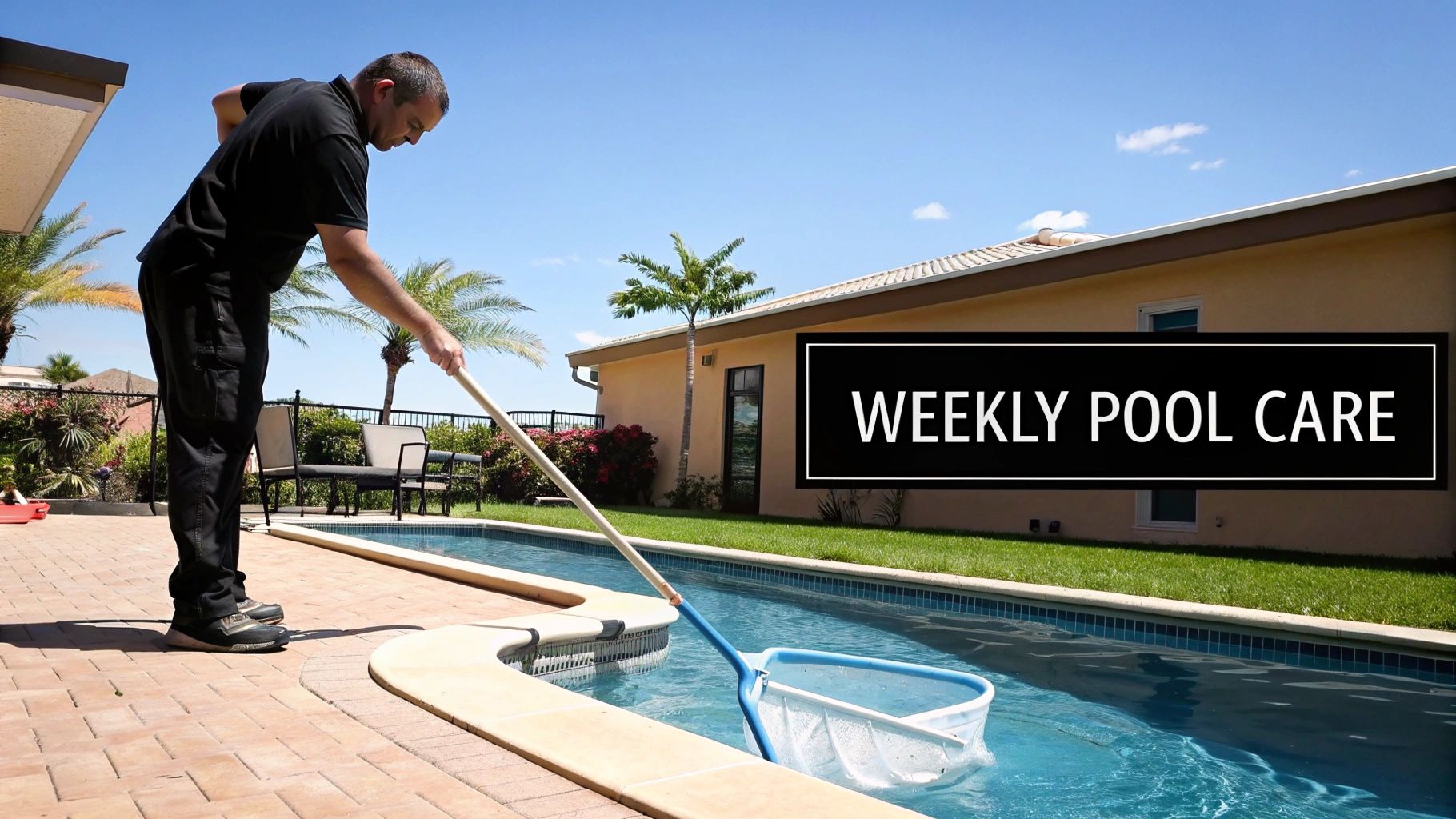
Consistency is everything when it comes to effective pool cleaning and maintenance. A little work each week goes a long way in preventing the buildup of leaves, dirt, and other gunk that leads to cloudy water, algae, and a strained filter system. For many homeowners, this routine can feel like a part-time job.
That's why our dedicated weekly pool service is so popular—we handle every last detail so you can just enjoy a perfect pool. But if you're the DIY type, focusing on a few key tasks will keep your pool healthy and inviting, even in our demanding Southwest Florida climate.
Skimming The Surface For Immediate Results
First things first: skimming. Here in Florida, it feels like everything ends up in the pool—palm fronds, flower petals, bugs, and a constant dusting of pollen. This debris is more than just an eyesore; it breaks down quickly and feeds algae.
Grab a long-handled skimmer net and make slow, smooth passes across the water's surface. If you move too quickly, you’ll just push the debris away. Getting this stuff out before it has a chance to sink is a huge win for your pool's health and lightens the load on your filter.
Brushing Walls And Steps To Prevent Algae
Brushing is the unsung hero of weekly pool care. This is the single most important thing you can do to stop algae from getting a foothold. Even when your pool walls look clean, microscopic algae spores are there, just waiting for a chance to attach and bloom.
A good, stiff-bristled brush is perfect for gunite or plaster pools. You want to scrub those invisible invaders off the surface so the sanitizer can do its job. Be sure to hit the spots where water circulation is lowest, as that's where algae loves to hide.
- Steps and benches
- Corners and tight crevices
- Around ladders and lights
A thorough brushing once a week sends these potential problems floating into the water, where your filter and sanitizer can zap them. Skip this, and you’ll find yourself constantly fighting algae instead of preventing it.
A common mistake is waiting until you see green or black spots to start brushing. By then, the algae has already formed a colony. Weekly brushing is proactive—it removes the biofilm and spores before they become a visible problem, saving you a ton of time and money on chemical treatments down the road.
Vacuuming For A Polished Finish
Once you've skimmed the surface and brushed the walls, it's time to vacuum. This final step sucks up all the fine silt, sand, and other debris that has settled on the pool floor. Whether you're using a manual vacuum or a robotic cleaner, it's what gives the water that truly sparkling, crystal-clear look.
Always brush before you vacuum. This pushes all the loosened particles down to the floor, making them easy to capture. It’s a simple one-two punch that guarantees a comprehensive clean. This weekly routine is the foundation, but to see how it fits into a larger strategy, check out our guide on professional monthly pool maintenance.
Cleaning Baskets Is Non-Negotiable
Finally, don't forget the baskets. Cleaning out your skimmer and pump baskets is absolutely crucial for the health of your equipment. They are your pool’s first line of defense, catching leaves and larger debris before they can get into the pump impeller and cause a clog.
A full basket restricts water flow, forcing your pump to work much harder. This drives up your energy bill and can cause the pump to overheat and fail. Emptying these baskets weekly—and more often after a storm—is a five-minute task that can save you from a multi-thousand-dollar repair bill. It's the key to ensuring your entire circulation system runs smoothly, which is the cornerstone of all other pool cleaning and maintenance efforts.
Mastering Pool Chemistry For Safe Water
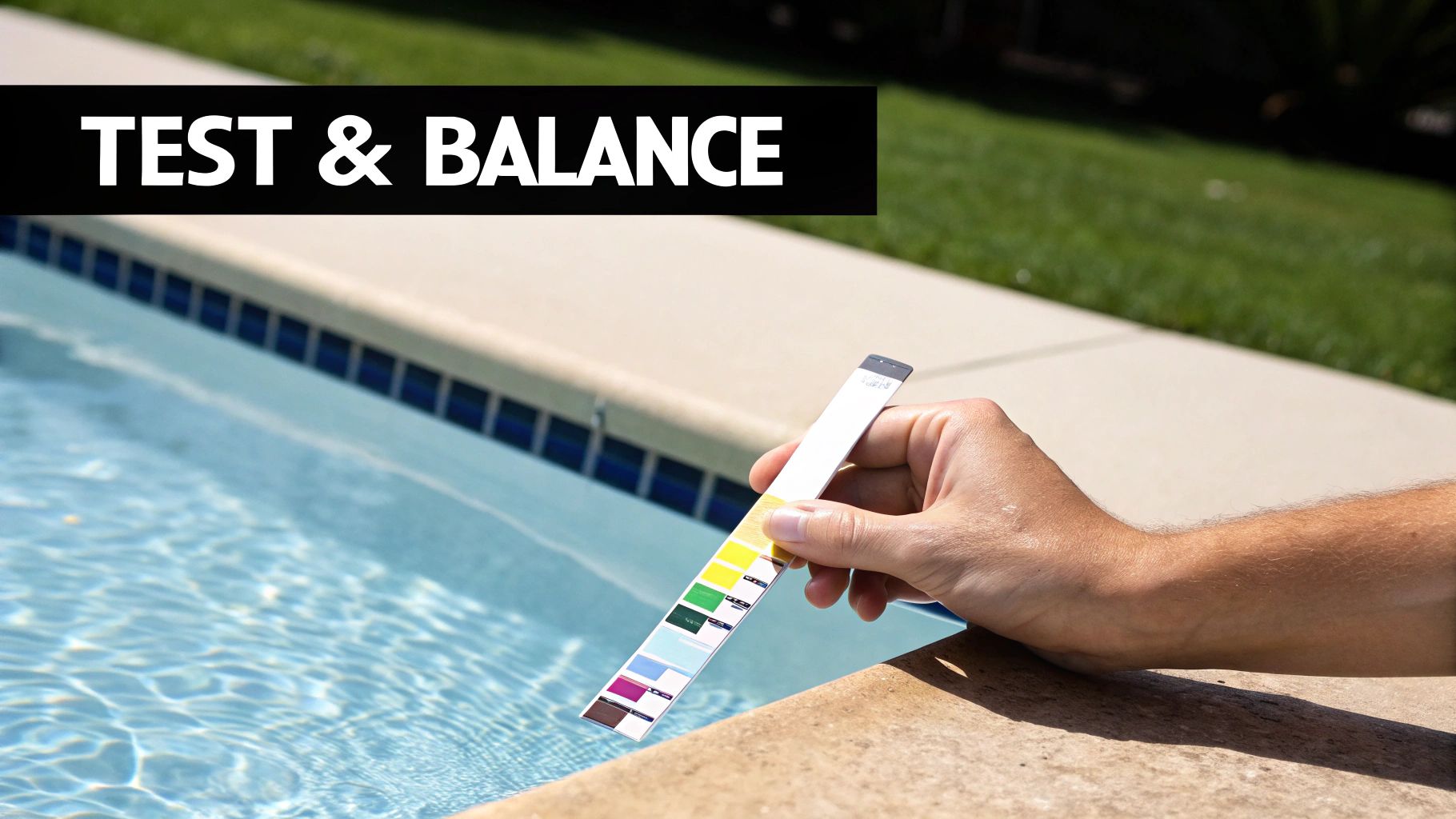
Let's be honest, pool chemistry can seem like a complex science project. But getting it right is the single most important part of your pool cleaning and maintenance routine. It's what keeps your water safe, prevents costly equipment damage, and gives you that sparkling oasis you love.
Here in Southwest Florida, our pools are constantly fighting a battle. The intense sun, heavy rains, and frequent use can throw your water balance out of whack in a hurry. One minute it's perfect, the next it's cloudy. This is why having a professional manage your water chemistry is the surest path to a perfect pool.
The Core Four Of Water Chemistry
While you can test for a dozen different things, the vast majority of water quality problems come down to just four key parameters. If you can keep these in line, you've won half the battle.
- pH Level: This is simply a measure of how acidic or basic your water is. If it drops too low (acidic), it’ll start eating away at your pool surfaces and equipment. If it creeps too high (basic), your chlorine becomes lazy and ineffective, leading to cloudy water and scale buildup.
- Total Alkalinity (TA): Think of this as the anchor for your pH. Good alkalinity levels prevent your pH from swinging wildly every time it rains or you have a pool party. It provides stability.
- Chlorine (Sanitizer): This is your frontline soldier, actively killing bacteria, algae, and other nasty contaminants. Proper chlorine levels are what make the water truly safe for swimming.
- Cyanuric Acid (CYA): In a place like Florida, CYA is your chlorine’s best friend. It acts like sunscreen for your sanitizer, protecting it from being zapped away by the sun's harsh UV rays. Without it, you'd be adding chlorine constantly.
Understanding how these elements work together is crucial. For example, a classic Southwest Florida afternoon downpour doesn't just add water—it adds acidic rainwater that can crush your pH and alkalinity, making your chlorine almost useless overnight. It's a chain reaction.
With over 25 years of hands-on experience in this area, we've seen it all. The biggest mistake homeowners make is "chasing" one chemical level without seeing the bigger picture. It’s a delicate dance, and knowing how one adjustment affects everything else is the key to protecting your family and your pool.
Ideal Chemical Ranges For A Southwest Florida Pool
Maintaining balanced water is all about hitting the right targets. Because of our unique climate, the ideal ranges for a pool here are quite specific. Here’s a quick-reference chart to keep you on track.
| Chemical Parameter | Ideal Range (PPM) | Primary Function |
|---|---|---|
| pH Level | 7.4 – 7.6 | Balances water acidity; optimizes chlorine effectiveness. |
| Total Alkalinity | 80 – 120 PPM | Stabilizes pH levels to prevent rapid fluctuations. |
| Free Chlorine | 2.0 – 4.0 PPM | Actively sanitizes the water, killing harmful contaminants. |
| Cyanuric Acid | 30 – 50 PPM | Protects chlorine from being destroyed by UV sunlight. |
Using a quality test kit and aiming for these numbers will help you avoid the most common frustrations like algae blooms and cloudy water.
Why Professional Water Balancing Makes A Difference
Getting these levels right isn't just about dumping in some chemicals; it's a science that requires precise measurements and adjustments. There's a reason the global swimming pool cleaner market, a huge part of overall pool care, was valued at $3.2 billion in 2023 and is expected to reach $5.7 billion by 2032. People are realizing that proper care saves money.
In fact, consistent professional maintenance can head off up to 90% of common pool problems before they start. You can learn more about the growth drivers in the pool maintenance industry and see why it's a smart investment.
For homeowners in our area, trusting this to the experts at Water Medic of Cape Coral means your pool is always ready. Our techs understand the local conditions and make precise adjustments to keep your water genuinely healthy—protecting your plaster from etching and your pump from premature failure. It’s the easiest way to get total peace of mind. For a closer look at your system, check out our guide to essential equipment checks.
Essential Equipment Checks To Avoid Costly Repairs
Your pool's circulation and filtration system is its life support. The pump is the heart, and the filter is the lungs, working together to keep the water clean and clear. When this system gets neglected, you don't just get cloudy water—you set yourself up for a chain reaction of expensive, frustrating equipment failures.
Think of it like this: a clogged filter forces your pump to work way too hard, kind of like trying to breathe through a wet towel. That constant strain chews through electricity and can burn out your pump motor in no time. A little proactive attention to your equipment is one of the smartest things you can do to avoid surprise repair bills.
Keeping Your Pool Filter in Top Shape
The filter is the unsung hero, silently grabbing all the dirt, oils, and gunk you don't want in your pool. But it needs a hand to keep doing its job. Most residential pools in Southwest Florida use one of three types, and each has its own cleaning routine.
- Cartridge Filters: These are incredibly common. You just pull out the fabric-like cartridge and give it a good hosing down. Every so often, it needs a deeper clean with a special filter cleaner to break down stubborn oils and mineral buildup.
- Sand Filters: These use a bed of specialized sand to trap debris. When the pressure gauge creeps up 8-10 PSI higher than its normal "clean" reading, it’s time to backwash. This process reverses the water flow and flushes all that trapped junk out to waste.
- Diatomaceous Earth (D.E.) Filters: D.E. filters give you the finest filtration, but they also need backwashing. The key difference is that after you backwash, you have to add new D.E. powder through the skimmer to recoat the internal grids.
Putting off a filter cleaning is one of the fastest ways to kill your pool equipment. A dirty filter leads to weak circulation and puts a massive strain on the pump motor, which is a recipe for premature failure.
Listen to What Your Pump Is Telling You
A healthy pool pump should run with a steady, low hum. If it starts making new or strange noises, it's telling you something is wrong. Paying attention to these sounds can help you catch a small problem before it becomes a disaster.
A high-pitched whine or a screaming sound is a classic sign of bad motor bearings. If you hear more of a rattling or grinding, you might have debris stuck in the impeller. Don't just cross your fingers and hope these noises go away—they won't.
A technician can often replace bearings for a reasonable price, but if you let it go, you'll eventually be looking at replacing the entire motor, which is a much bigger expense.
It's no surprise that the entire pool equipment and maintenance market is projected to grow to $52.61 billion by 2032. Homeowners are realizing that investing in professional, preventative care is far cheaper than dealing with emergency breakdowns. You can learn more about the growing pool maintenance market and see why proactive service is becoming the new standard.
Why a Professional Eye Matters
You can definitely handle the basic checks, but a trained professional can spot subtle signs of trouble that are easy to miss. A tiny leak at a pump seal, a hairline crack in the filter tank, or a slight vibration that wasn't there last week are all red flags for future problems. This is where having an expert on your side really pays off.
Our technicians do more than just skim leaves. On every visit, they're running a full inspection of your equipment pad. They know exactly what to look for and can fix minor issues before they spiral out of control. It's all about prevention. If you think you hear a new noise or see a drip, our team can provide a full diagnosis and handle any pool equipment repair to get your system running perfectly again.
How To Prepare Your Pool For Florida Storms
Here in Southwest Florida, storm season is a fact of life. Prepping your pool for a hurricane or tropical storm isn't just a good idea—it's an essential part of protecting your property. Taking the right steps beforehand can make the difference between a quick cleanup and a weeks-long struggle with a swampy, debris-filled disaster.
Trust me, ignoring a storm forecast can be a costly mistake. High winds are notorious for turning patio chairs, umbrellas, and even pool toys into dangerous projectiles. They can easily damage your pool's surface or shred your screen enclosure. On top of that, the torrential rain dumps a ton of contaminants into the water, throwing your chemical balance into total chaos. A little proactive defense goes a long way.
Pre-Storm Preparations Your Pool Needs
As a storm approaches, your goal is to lock down the area and give your pool water its best shot at staying clean. This isn't your typical pool cleaning and maintenance routine; it’s about strategic defense.
In the days before the storm hits, focus on these critical actions:
- Super-Chlorinate the Water: Go ahead and give your pool a strong dose of liquid chlorine or granular shock. The sheer volume of rainwater and organic debris will devour sanitizer. "Shocking" the pool beforehand gives it a fighting chance against contaminants and helps prevent an instant algae bloom.
- Secure All Loose Items: This one is non-negotiable. Get all your patio furniture, the grill, potted plants, pool floats, and cleaning equipment stored safely in a garage or shed. If the wind can lift it, it needs to be secured.
- Turn Off the Power: After your chemical prep is done, shut down all power to your pool equipment at the main circuit breaker. This is crucial for protecting your pump motor, heater, and lights from power surges or electrical shorts caused by flooding.
A dangerous myth circulates every storm season: draining your pool. Never do this. The weight of the water is essential for holding the pool shell in the ground, especially when heavy rain saturates the soil. An empty or even partially drained pool can literally pop out of the ground—a catastrophic and incredibly expensive failure.
Navigating The Post-Storm Cleanup
Once the storm has passed and it’s safe to head outside, the recovery begins. Your first priority is always safety. Never go near your pool equipment if there's standing water in the area. After you've confirmed it's safe, you can start the cleanup.
This is where things can feel overwhelming. You’ll likely find everything from leaves and small branches to large limbs in your pool. Carefully remove the big stuff by hand or with a leaf rake, taking care not to tear your liner or scratch the pool’s surface.
Now, your filter, pump, and entire circulation system are about to be put to the test. This visual guide shows the core components you’ll need to inspect carefully after a storm.
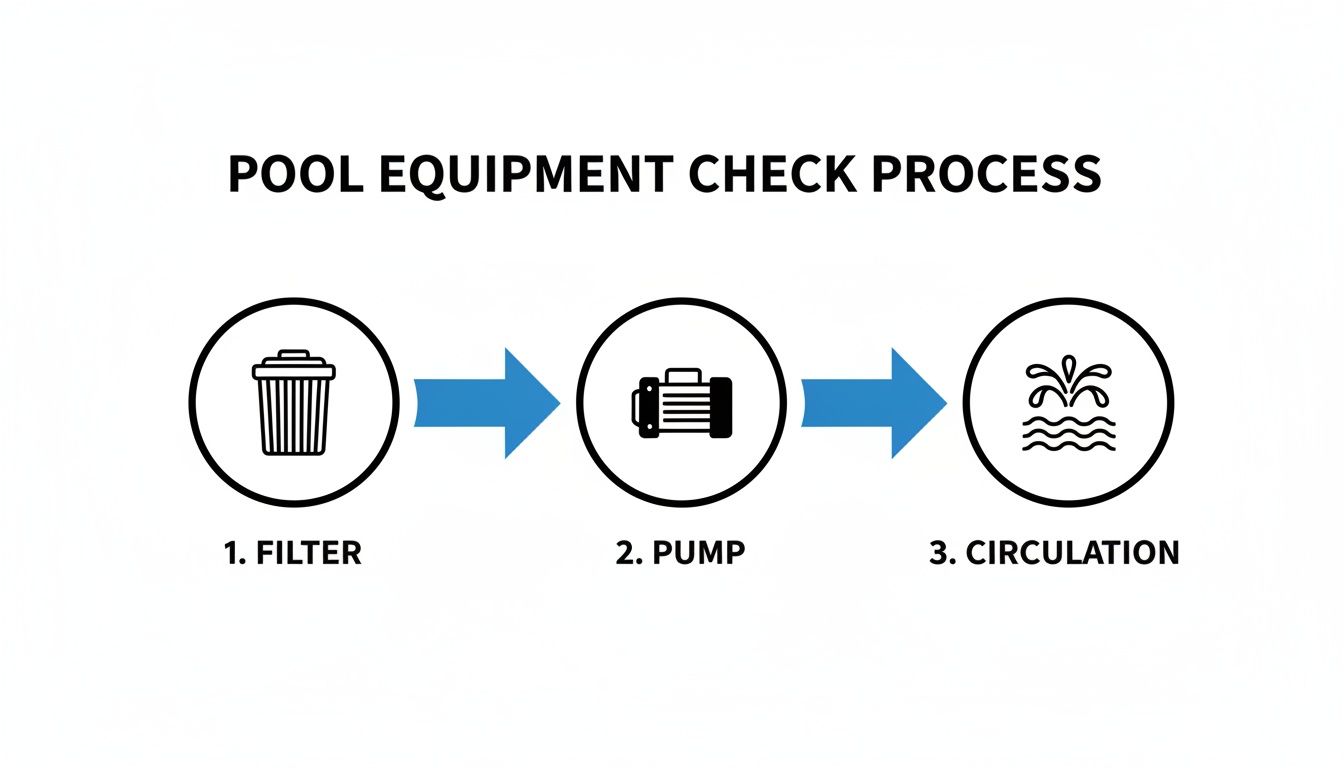
Before you even think about flipping that breaker back on, each part of this system—the filter, the pump, and the circulation jets—must be checked for clogs and damage.
With the large debris out, you can begin the slow process of rebalancing the water and filtering out all the fine sediment. Be prepared for this to take days of work, constant testing, and cleaning your filter multiple times.
Even with perfect preparation, severe weather can cause unexpected problems. If you find your pool or property has sustained damage, you may need to understand storm damage insurance claims.
Dealing with the aftermath of a hurricane is stressful enough. The last thing you need is a massive pool cleanup on your to-do list. The team at The Water Medic of Cape Coral can handle the entire process for you. We’ll take care of everything from safe debris removal and equipment inspection to shocking and rebalancing your water, getting your backyard oasis back to normal quickly and safely.
When To Call A Pool Maintenance Professional
A solid DIY routine is the backbone of a healthy pool, but even the most dedicated owner will run into situations that are best left to the pros. Knowing when to trade your test kit for the phone isn't admitting defeat; it's just smart pool cleaning and maintenance. It can save you a ton of time, money, and headaches down the road.
Sometimes, a problem just won't quit. You've shocked the pool twice, but the water is still stubbornly hazy. Or that same patch of green algae keeps creeping back into the corner no matter what you do. These are classic signs of a deeper issue that DIY treatments can't touch—often a complex chemical imbalance that needs an expert diagnosis and professional-grade solutions.
Beyond Basic Upkeep
Learning to spot the red flags that call for an expert eye is crucial. Some problems are clear-cut signals that it's time to bring in a trained technician.
- Stubborn Cloudy Water: If your water hasn't cleared up after 24-48 hours of proper filtration and chemical adjustments, there’s another culprit at play.
- Recurring Algae: Constantly battling the same algae bloom points to an underlying problem with your water chemistry, circulation, or filtration that needs to be properly diagnosed.
- Suspected Leaks: Is your water level dropping faster than usual? Don't guess. Finding and repairing leaks requires specialized equipment and is definitely a job for a professional.
- Equipment Problems: If your pump is making a strange noise or your heater won't fire up, step away. For safety's sake, any electrical or mechanical issues should always be handled by a qualified technician.
One of the biggest mistakes we see is people just dumping more and more chemicals into cloudy water, hoping something will work. This often creates a "chemical soup" that's even harder and more expensive to fix. A pro can pinpoint the real cause—whether it’s high phosphates, a filtration issue, or something else entirely—and solve it the right way, the first time.
At the end of the day, your time is valuable. If you're spending more of your weekend fighting with the pool than enjoying it, it's time to make a change. The whole point of owning a pool is to have a backyard oasis that’s always clean, safe, and ready for you to jump in.
For expert care you can count on, backed by over 25 years of local Southwest Florida experience, check out our weekly pool service. We take care of everything, from tricky chemical balancing to proactive equipment checks, so all you have to do is relax and enjoy your investment.
Common Questions About Pool Maintenance In Florida
Even with the best routine, questions are bound to pop up. After all, keeping a pool pristine in Southwest Florida's climate is its own unique challenge. We get calls about these things all the time, so let's clear up a few of the most common issues homeowners run into.
Getting these little details right can be the difference between a sparkling oasis and a frustrating money pit. A few simple tweaks can slash your energy bill, keep your water crystal clear, and debunk some old myths that lead to expensive mistakes.
How Many Hours A Day Should My Pool Pump Run?
This is easily one of the most frequent questions we get, and for good reason—it hits your wallet directly through your power bill. The core principle is simple: you need to run the pump long enough to cycle the entire volume of your pool's water at least once a day. This is called "turnover."
- In the Summer: During our blazing hot summers, you're fighting against intense sun, heavy rain, and more people swimming. Your pump needs to run a solid 8 to 12 hours a day to keep up.
- In the Winter: When things cool down, you can usually dial it back. Running the pump for 6 to 8 hours a day is often plenty to maintain water quality without wasting electricity.
Why Does My Pool Have Such A Strong Chlorine Smell?
Let's bust a huge myth right now. That strong, chemical "pool smell" doesn't mean your pool is clean. In fact, it’s a red flag signaling the exact opposite.
That sharp odor isn't from chlorine; it's from chloramines. These are nasty little compounds that form when the free chlorine in your water gets used up neutralizing contaminants like sweat, sunscreen, and body oils.
A healthy, properly sanitized pool has almost no smell at all. If you can smell your pool from across the lanai, it's screaming for help. It's a clear sign the water is loaded with contaminants and needs a good shock treatment to break down the chloramines and let your chlorine get back to work.
So, What's The Real Story With Saltwater Pool Maintenance?
While saltwater pools are a fantastic option, the idea that they are "maintenance-free" is a bit of a myth. They aren't magic. The system uses a salt-chlorine generator to create its own chlorine, which is incredibly convenient, but it doesn't eliminate the need for regular pool cleaning and maintenance.
You still have to skim, brush, and vacuum just like any other pool. More importantly, you're still responsible for testing and balancing the pH, alkalinity, and cyanuric acid. The salt cell is the heart of the system, and it needs to be cleaned periodically to remove scale buildup, otherwise it can't produce chlorine efficiently.
To keep your system running smoothly, our expert pool equipment repair services include a thorough salt cell inspection and cleaning, giving you total peace of mind.
At Water Medic of Cape Coral, we believe your pool should be a source of relaxation, not a constant chore. With over 25 years of hands-on experience right here in the area, we know exactly what it takes to keep a Florida pool perfect. Let us handle the hard work.
Get your free quote today and see how easy it is to enjoy a flawlessly maintained pool all year long at https://watermedic.com.